Oversized art can make a learning space feel calm, clear, and fun. It also gives kids simple ways to look, talk, and make choices together.
1. Giant Alphabet Wall Panels
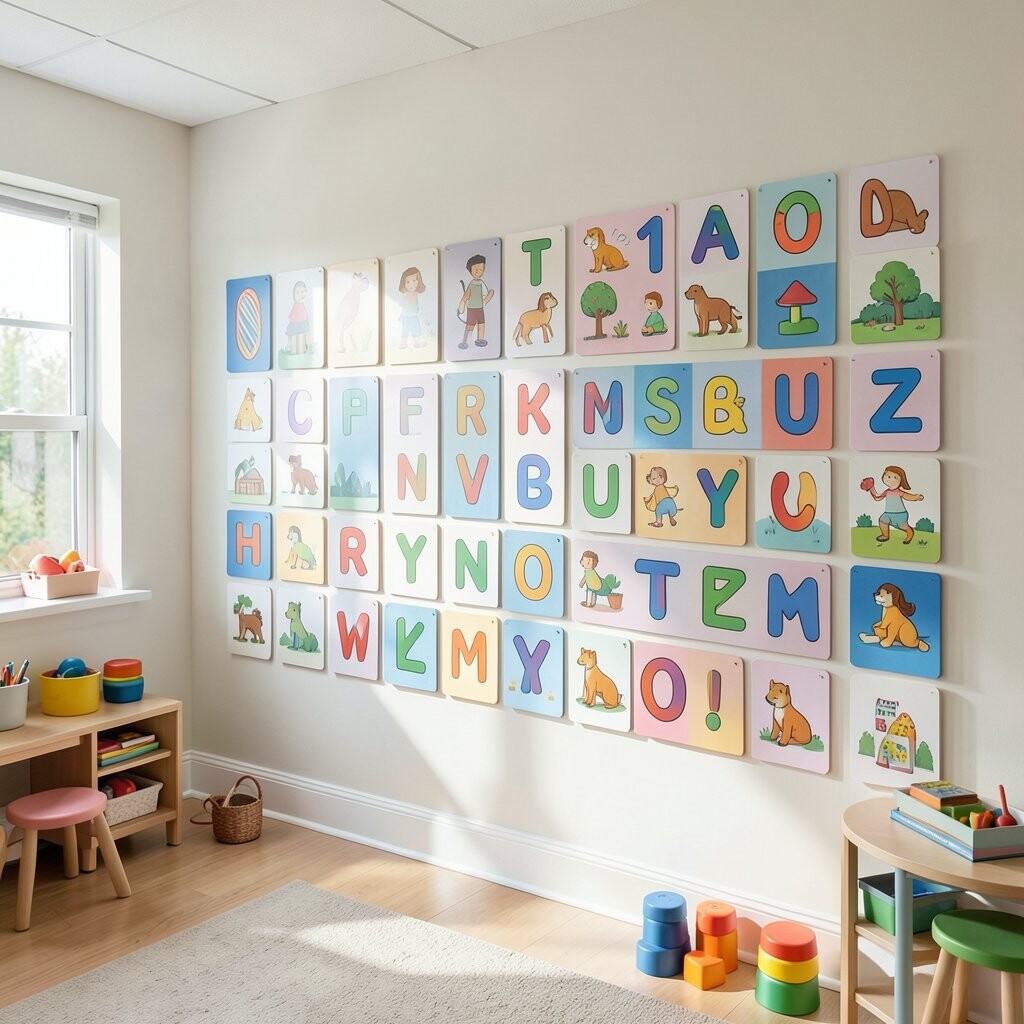
Giant alphabet wall panels give kids a bold, easy-to-see way to learn letters. The large shapes can use bright colors, soft pastels, or a mix of both, so the wall fits many room styles.
This kind of art helps young learners match letters with sounds, which can support early reading. It can also help shy kids point, name, and group letters during quiet time or class play.
You can make the panels from foam board, wood, or thick printed paper, so the cost can stay low or medium. A nice trend is to add small lift-up parts, rough textures, or picture cards next to each letter for more hands-on use.
2. Oversized Number Path Floor Art
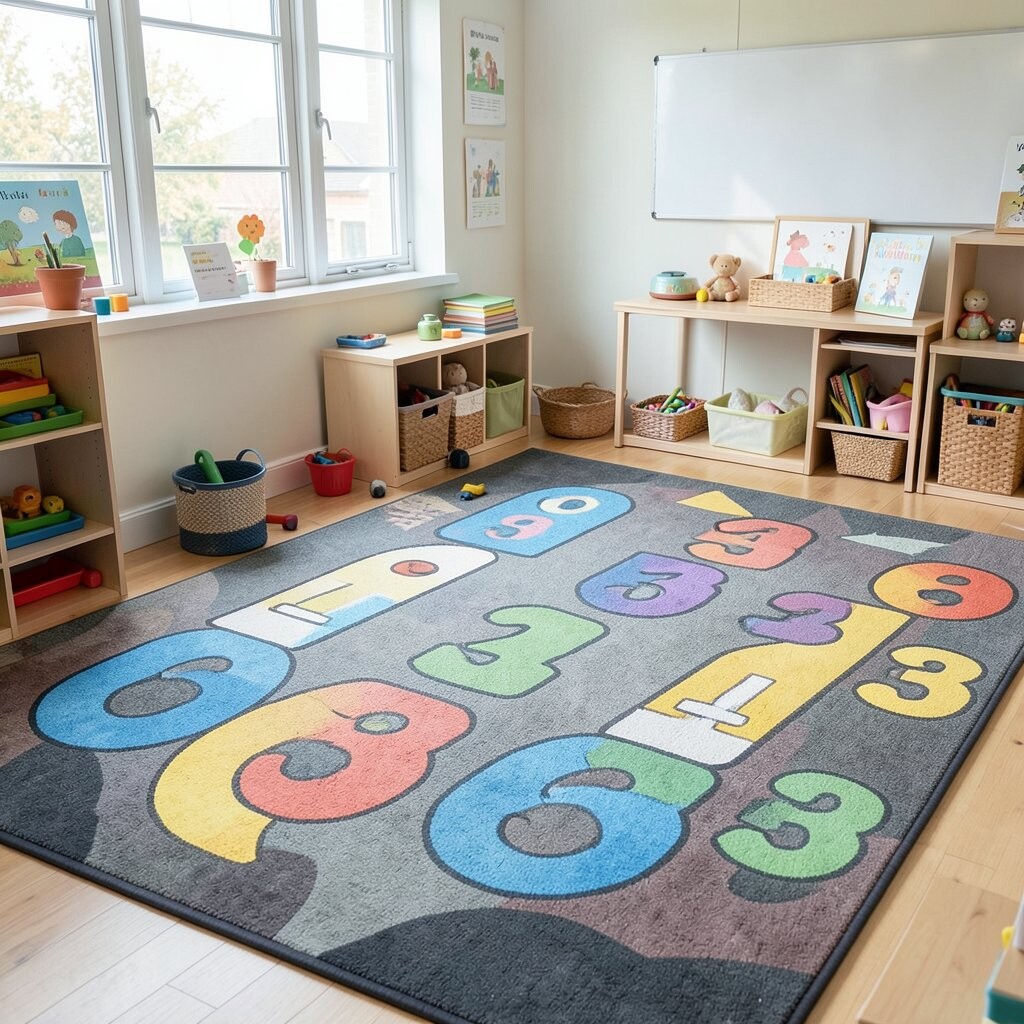
An oversized number path on the floor looks like a game and a lesson at the same time. Kids can hop, walk, or trace the numbers while they move through the room.
This setup helps with counting, order, and simple math words in a very natural way. It also gives active kids a safe outlet for movement, which can make it easier for them to focus later.
Vinyl floor decals are a low-cost choice, while painted rubber mats can last longer in busy spaces. You can personalize the path with favorite colors, class mascots, or small icons like stars, dots, or animals.
3. Big Storybook Scene Murals
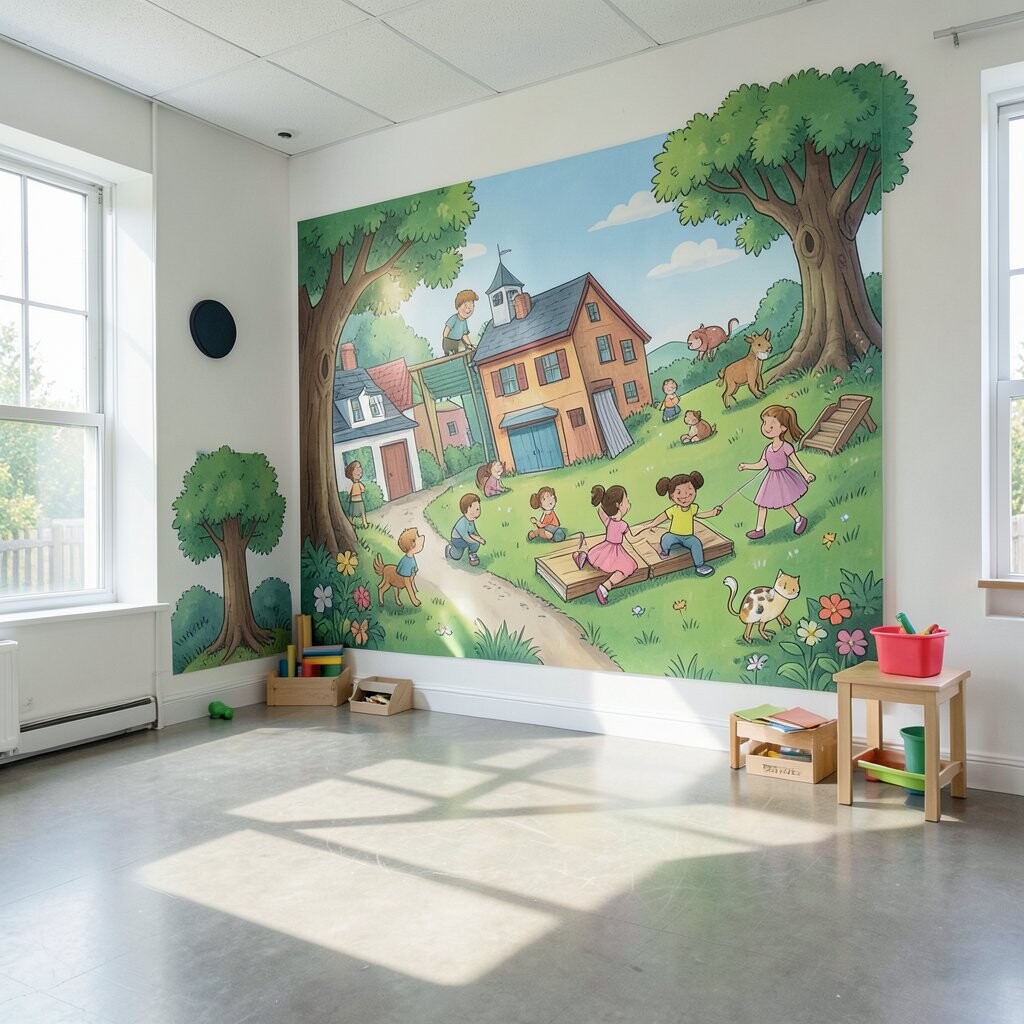
Big storybook scene murals bring a full story onto a wall in a way kids can read with their eyes. The art might show a forest path, a city block, a farm, or a beach with simple details that are easy to name.
These murals help kids talk about setting, characters, and events in a story. They also give teachers a nice tool for memory games, retelling tasks, and quiet reading chat.
A mural can be painted by hand or made with printed panels, and both can work at many price points. A current idea is to leave small blank spots where kids can add paper clouds, birds, leaves, or paper stars each season.
4. Large Shape and Color Matching Boards
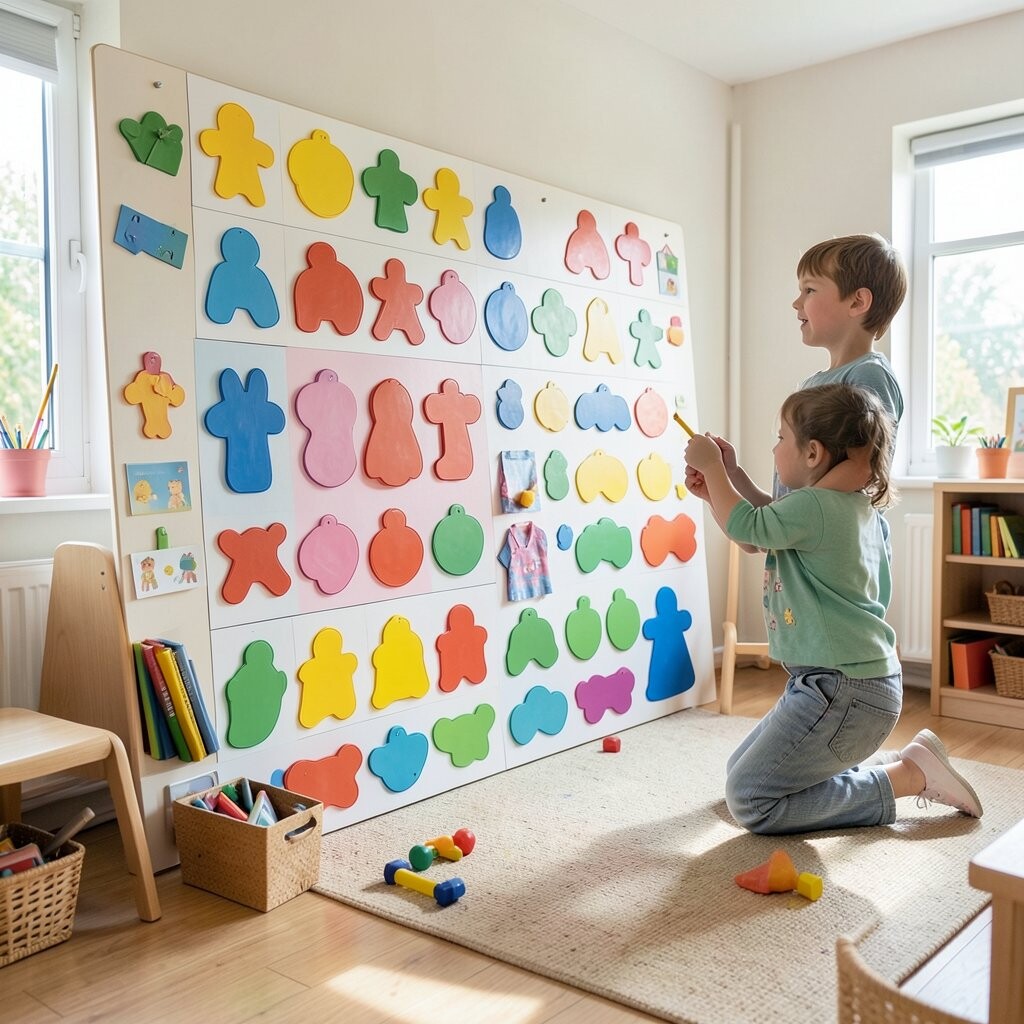
Large shape and color matching boards look neat and clear on a wall or easel. Kids can move large circles, squares, triangles, and color pieces into the right places.
This art helps build early sorting skills, hand control, and clear thinking. It can also support kids who learn best by touch and movement instead of just looking at a page.
Foam pieces, felt shapes, or magnetic parts are common and can keep costs fair. To make it feel personal, you can use colors from the school logo, local animals, or small art made by the kids.
5. Life-Size Nature Cutouts
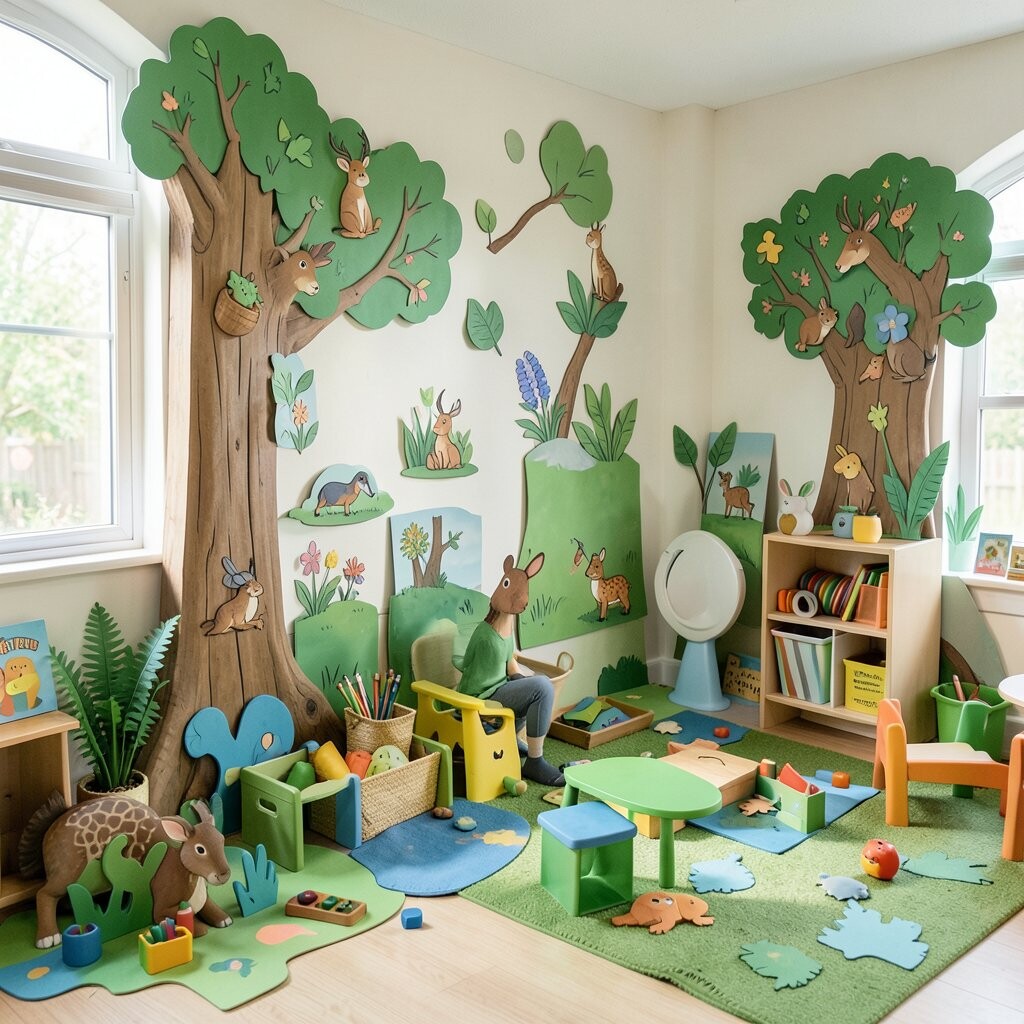
Life-size nature cutouts can show trees, flowers, bugs, birds, or fish in a bold and friendly way. The large scale makes the room feel more open and gives kids a lot to notice.
These pieces can support science talk because children can point to parts and name them with ease. They may also help calm the room since nature images often feel soft and steady.
Cardboard, plywood, and wall-safe printed sheets are all common choices, so the price can be kept simple. A nice trend is to add layered cutouts that cast small shadows and make the wall feel a little more real.
6. Interactive World Map Wall
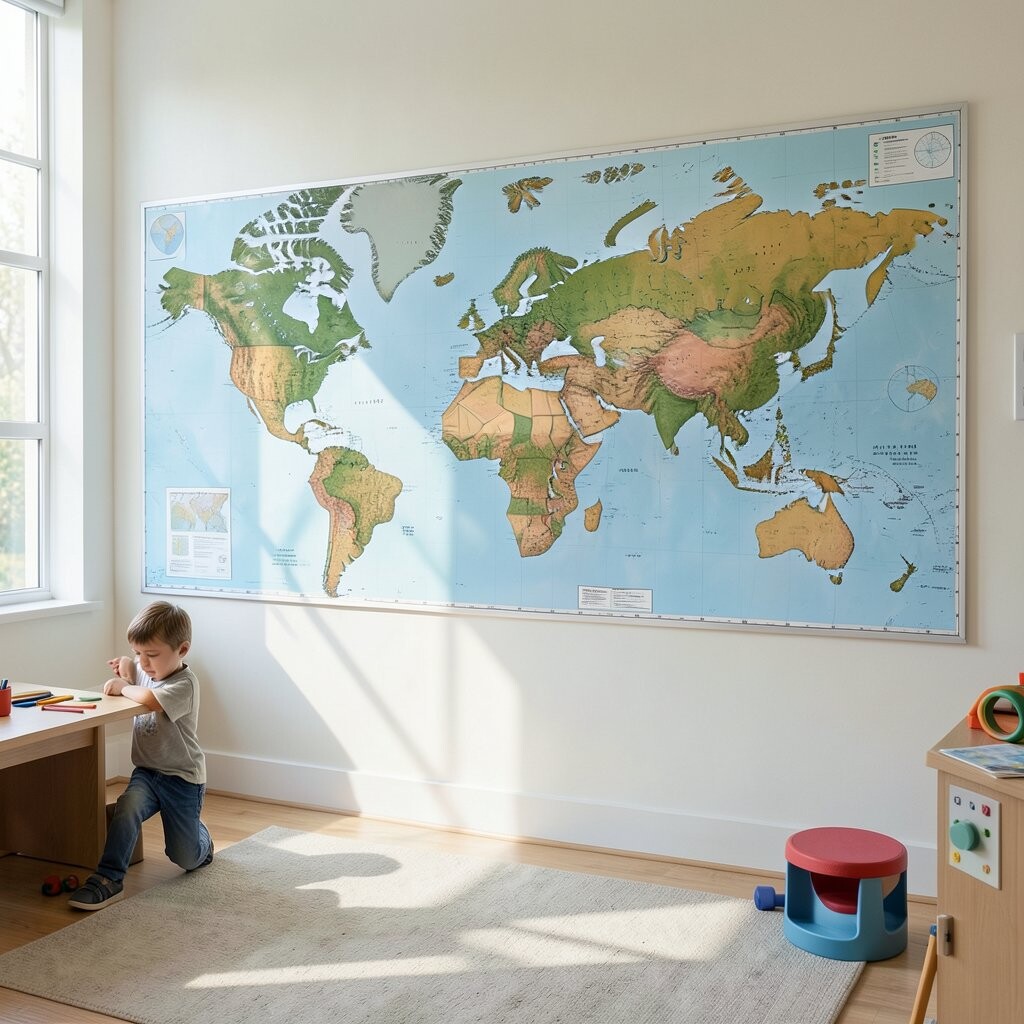
An interactive world map wall gives kids a big view of countries, water, and land shapes. The map can use strong colors and large labels so it is easy to see from across the room.
This idea helps children learn about place, culture, and distance in a simple way. It also makes room for questions about travel, weather, food, and where books or stories come from.
You can keep the cost low by using a printed wall decal, or you can spend more on magnets, touch points, and fabric pieces. Personal touches like class travel pins, family flags, or stickers can make the map feel like it belongs to the kids.
7. Giant Feelings Faces Board
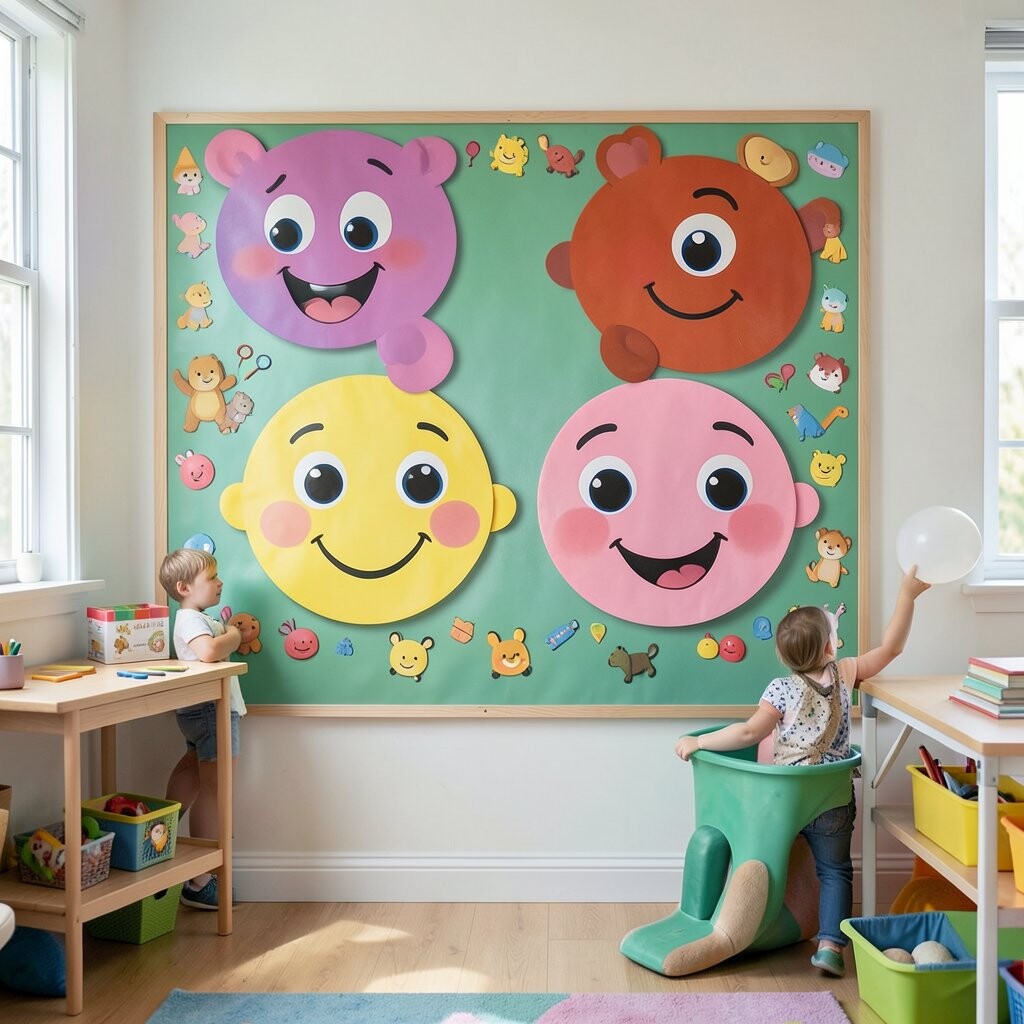
A giant feelings faces board uses oversized faces with clear looks like happy, calm, sad, or worried. Kids can point to the face that matches their mood and talk about why they picked it.
This kind of art helps build social skills and gives children a simple way to share feelings. It can also help teachers check in with the class fast, even at the start of a busy day.
Many rooms use felt, magnets, or sliding cards for this idea, and each option can fit a different budget. A current trend is to include many skin tones, hair styles, and faces that show real daily moods, not just simple happy and sad looks.
8. Oversized Science Diagram Panels
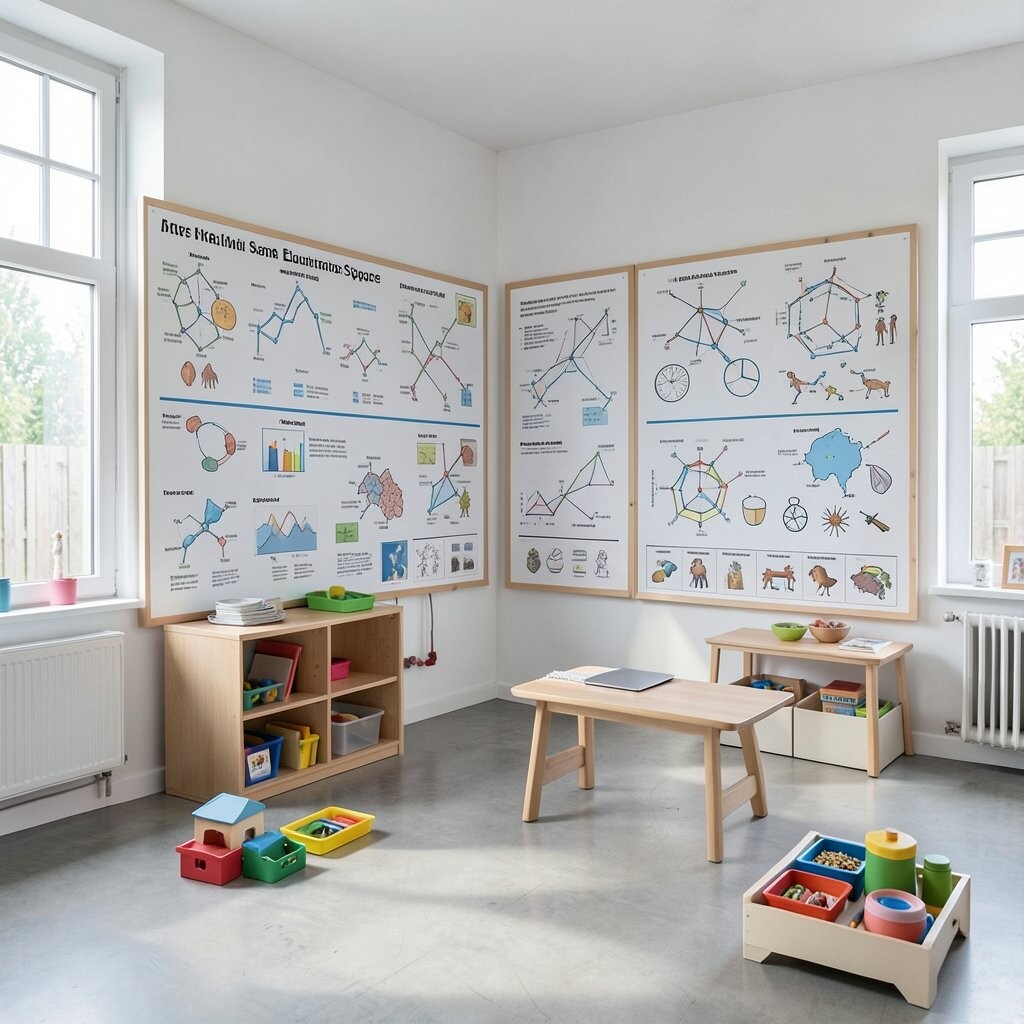
Oversized science diagram panels make hard topics feel more plain and clear. A huge plant, body, weather chart, or solar system image can give kids a strong visual to study.
These panels help with memory because kids can see the parts and talk through them out loud. They also fit well in rooms where hands-on science tasks are part of the day.
Printed foam panels and laminated posters are often low-cost and easy to replace if needed. To make them more personal, you can add local plants, local animals, or class notes written in kid-friendly words.
9. Texture Touch Art Wall
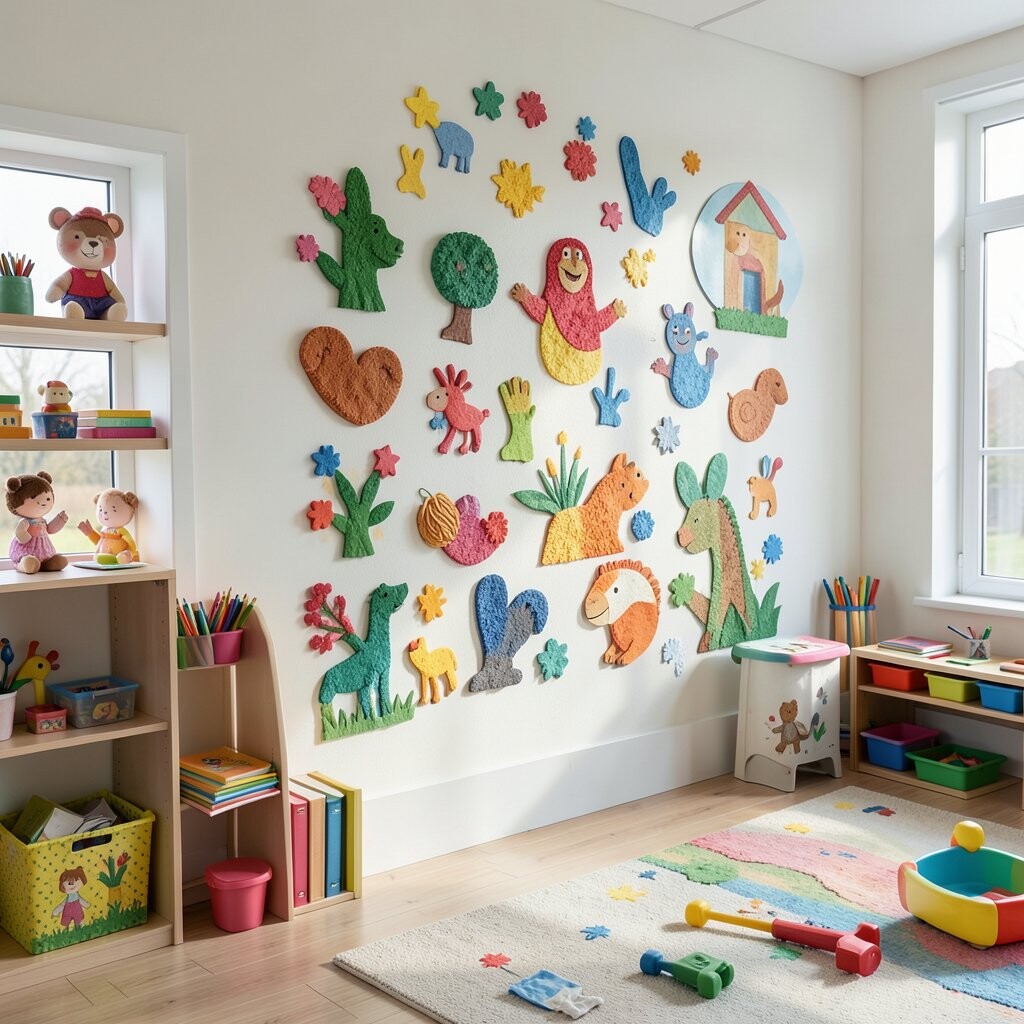
A texture touch art wall gives kids many surfaces to feel, such as soft fabric, rough rope, smooth plastic, and bumpy foam. The wall can look bright and busy, but it can still stay neat if the shapes are grouped well.
This type of art helps with touch learning and fine motor practice. It can be especially useful for kids who need calm sensory time during the day.
You can build it from low-cost craft items, sample fabric, and recycled parts, so the setup can stay budget friendly. A growing trend is to make the pieces easy to swap, so the wall can change with seasons, themes, or student art.
10. Big Community Helpers Collage
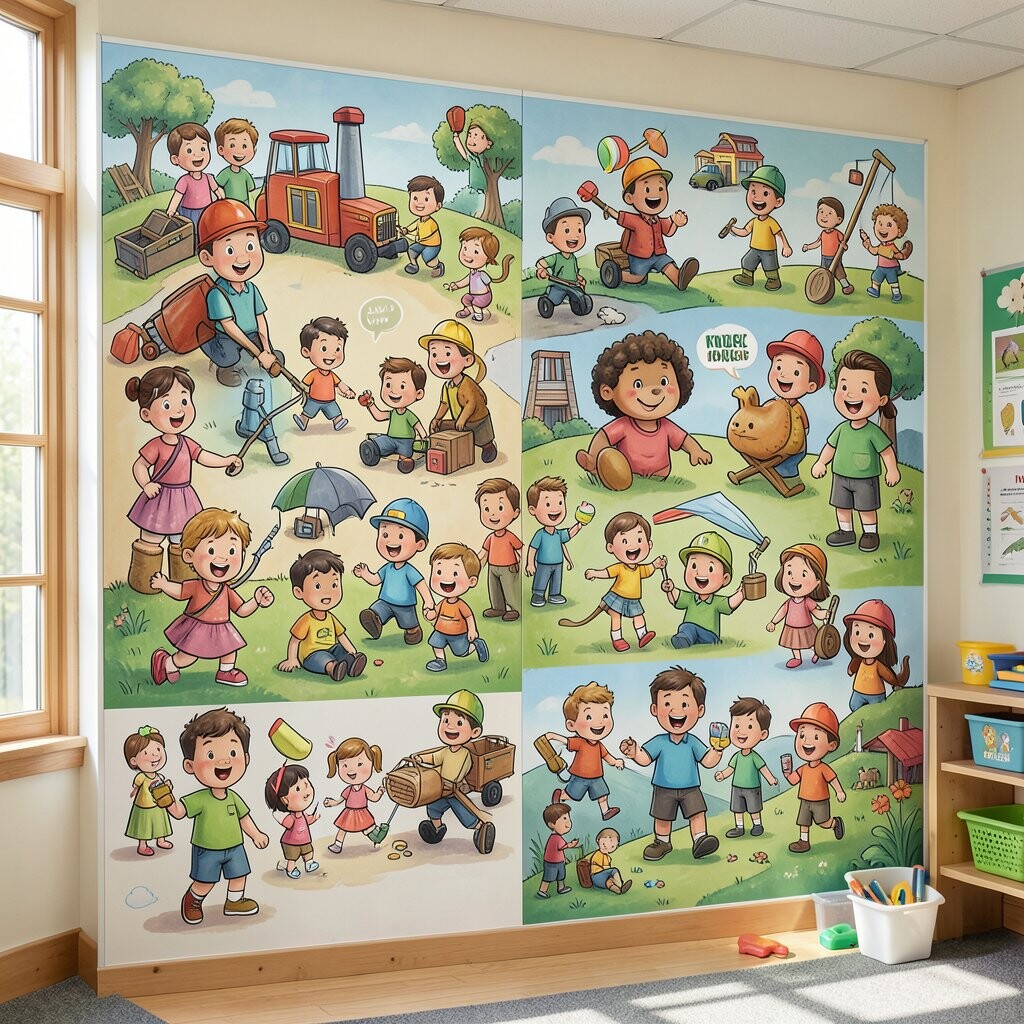
A big community helpers collage shows large images of people like firefighters, nurses, teachers, builders, and mail carriers. The art can use friendly faces, clear tools, and simple scenes from daily life.
This collage helps kids learn about jobs, teamwork, and care in the world around them. It can also lead to class talk about family work, neighborhood roles, and what each helper does.
Paper cutouts, photo prints, or painted boards can keep the cost low, and each one can still look strong on the wall. To make it personal, you can add local helpers, family photos, or child-made drawings of people they know.
11. Giant Musical Notes and Rhythm Wall
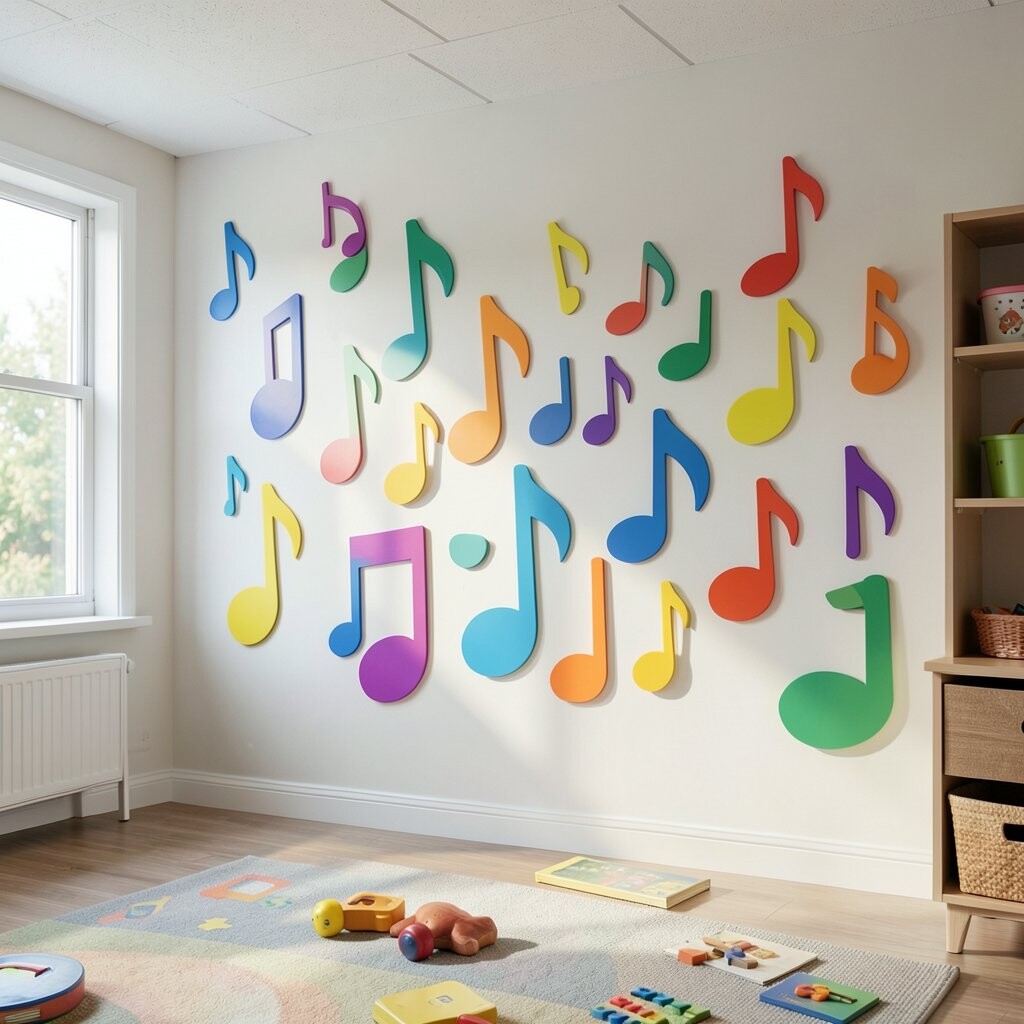
A giant music wall with notes, instruments, and beat marks can make sound learning feel active and clear. The large shapes can be arranged in a wave, line, or circle to fit the room shape.
This kind of art helps kids match rhythm, count beats, and see music ideas in a simple visual form. It also gives children a place to move their hands, clap along, or point while they listen.
Foam notes, painted wood, and wall stickers are all common choices, and they can fit many budgets. A popular trend is to add small moveable parts like drum taps, sound symbols, or color bands for different music moods.
12. Kids-Made Oversized Patchwork Display
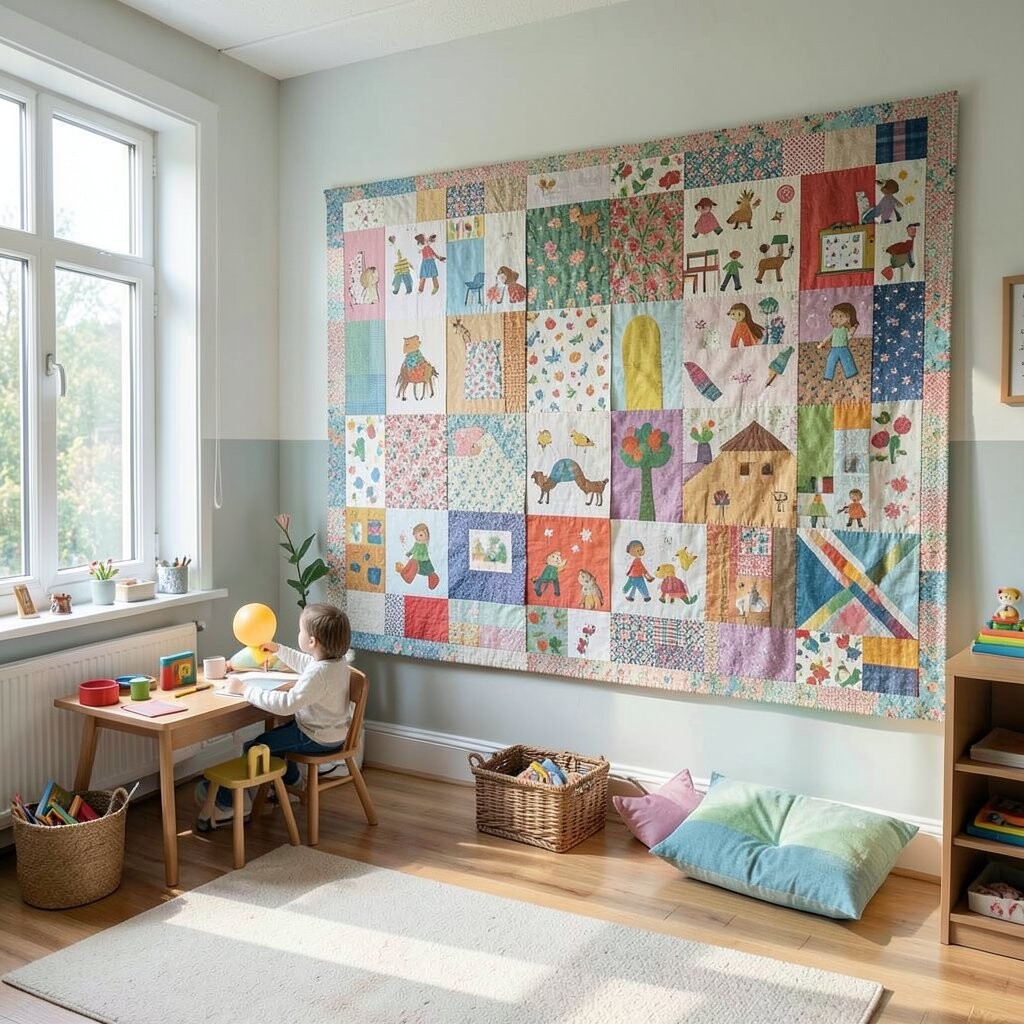
A kids-made oversized patchwork display brings many small works into one large art piece. Each child can add a square, shape, or tile with their own marks, names, or small drawings.
This display gives kids pride because they can see their work beside their friends’ work in one shared space. It also helps build a sense of group care, since everyone adds something that matters.
The cost can stay low if you use paper, recycled board, or fabric scraps from home or school. A nice trend is to update the patchwork through the year, so new themes, class goals, or student ideas can be added as the room grows.