An art studio can feel calm, busy, and full of ideas at the same time. Mosaic tile designs can add color, texture, and a clear style that works well in such a space.
1. Soft Neutral Wall Grid

A soft neutral wall grid uses small tiles in white, gray, sand, or cream. The clean look gives the studio a calm feel and helps art pieces stand out on the walls.
This style works well if you want a space that feels bright and neat. It is also easy to match with wood tables, metal shelves, and simple paint colors.
The cost can stay fair if you use basic tile shapes and plain grout. You can also make it more personal by mixing warm and cool shades in a pattern that fits your own taste.
2. Bold Color Patchwork

Bold color patchwork uses mixed tile colors in small blocks across one wall or a work area. The look feels lively and gives the studio a fresh art feel right away.
This idea is good for artists who like strong color and a busy visual field. It can help a blank room feel more alive and can make the studio a more fun place to work.
Patchwork tiles can be made from leftover pieces, which may lower cost. You can also plan the color mix around your favorite paints, posters, or tools so the space feels more like yours.
3. Floor Medallion Centerpiece

A floor medallion uses tiles to make a clear center point on the studio floor. It can guide the eye, mark a main work zone, or simply give the room a special look.
This kind of design feels unique because it turns the floor into part of the art. It works well in open rooms where you want one strong feature without filling every surface.
Tile medallions can cost more if the pattern is detailed, but simple shapes can keep the price down. A custom design can include your initials, a favorite shape, or a color story that fits your work.
4. Shimmer Accent Backsplash

A shimmer accent backsplash uses tiles with a soft shine behind a sink, shelf, or wet area. The light bounce can make the studio look brighter without being too loud.
This style is useful in studios where water, paint, or glue may hit the walls. It also adds a neat finish that feels clean and modern.
Glass or glazed tiles may cost more than plain ceramic, but you can use a small area to keep it simple. For a personal touch, try mixing matte and shiny tiles to make the wall feel less flat.
5. Handmade Rustic Texture

Handmade rustic texture uses tiles with small marks, uneven edges, or soft color changes. The look feels warm and human, which can suit a studio full of hand-made work.
This design is nice if you want the room to feel less strict and more natural. It can pair well with clay tools, wood frames, and woven storage baskets.
Handmade tiles may cost more than mass-made ones, but they often give the studio a richer look. You can make the design your own by choosing earth tones that match your art style or your work table.
6. Black And White Chess Style

Black and white chess style uses a strong contrast that feels sharp and clean. The pattern can work on floors, walls, or a work nook where you want a clear visual break.
This design is unique because it stays simple but still has a bold edge. It can help busy art tools and colorful works stand out without making the room feel crowded.
Cost can be kept under control with common tile shapes and basic colors. If you want a softer look, you can make the pattern more open by spacing the tiles with a light grout.
7. Blue Water Wave Pattern
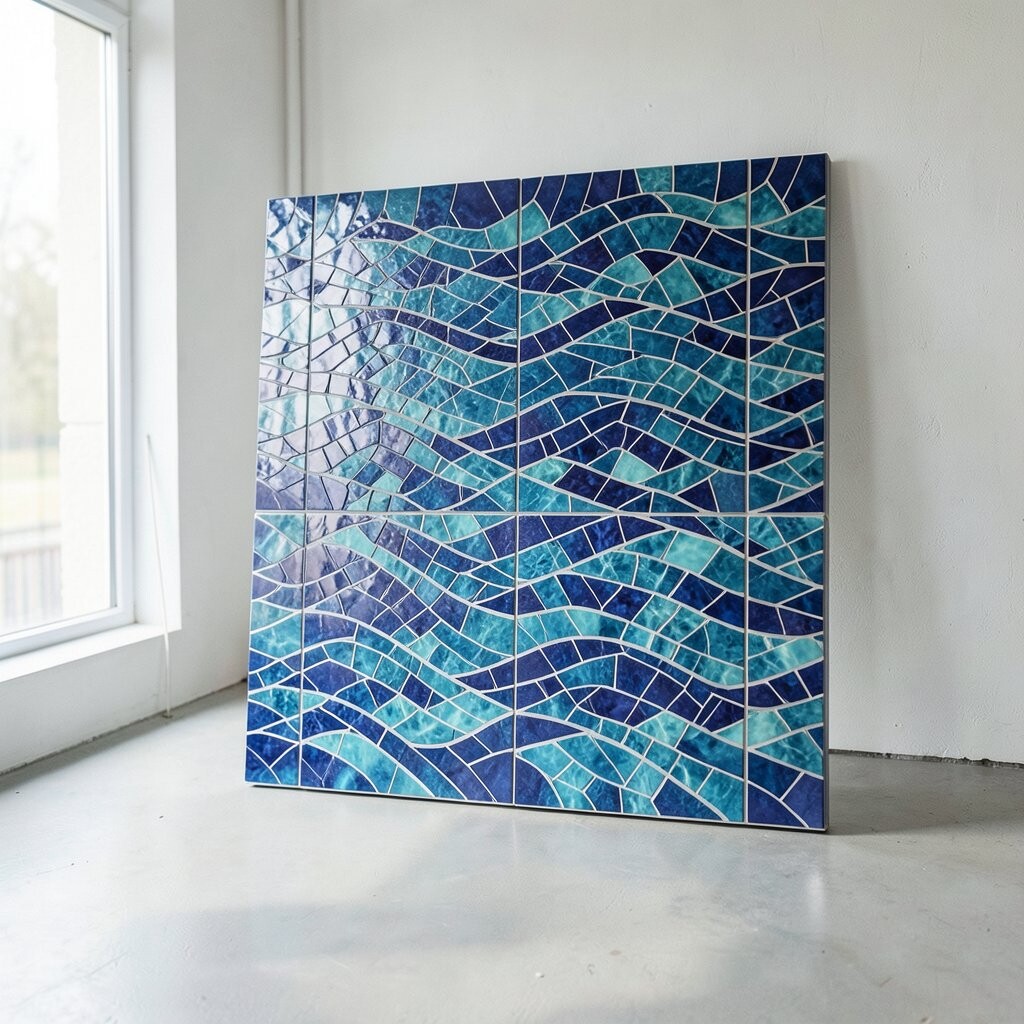
A blue water wave pattern uses curved lines and different blue shades to make the surface feel calm. It can look like moving water, which brings a fresh mood to the studio.
This idea works well near sinks, wash areas, or a wall where you clean brushes. It can also give the space a restful feel during long hours of work.
You can keep the cost fair by using simple wave lines instead of a full wall scene. Personal touches like pale green or white tiles can make the pattern feel closer to your own style.
8. Small-Scale Dot Mosaic

Small-scale dot mosaic uses tiny round or square tiles in repeated dots across a surface. The result feels light, playful, and easy on the eyes from a short distance.
This style is good if you want detail without a loud pattern. It can help soften a room with hard edges and bring a gentle rhythm to the studio.
Smaller tiles may take more time to place, which can raise labor cost, but the final look often feels worth it. You can make it personal by changing the dot colors in bands or clusters that fit your own art tools and supplies.
9. Earth Tone Stair Risers

Earth tone stair risers use tile on the front part of each step in soft brown, tan, clay, or moss shades. This makes stairs feel less plain and adds detail in a spot people often miss.
The style is useful in a studio with a loft, storage level, or split room layout. It also gives the space a steady, grounded look that feels easy to live with.
Cost can stay moderate if you use simple tile pieces on only the risers. For a custom touch, you can place different shades in a repeating order that matches your studio walls or flooring.
10. Sunburst Feature Circle
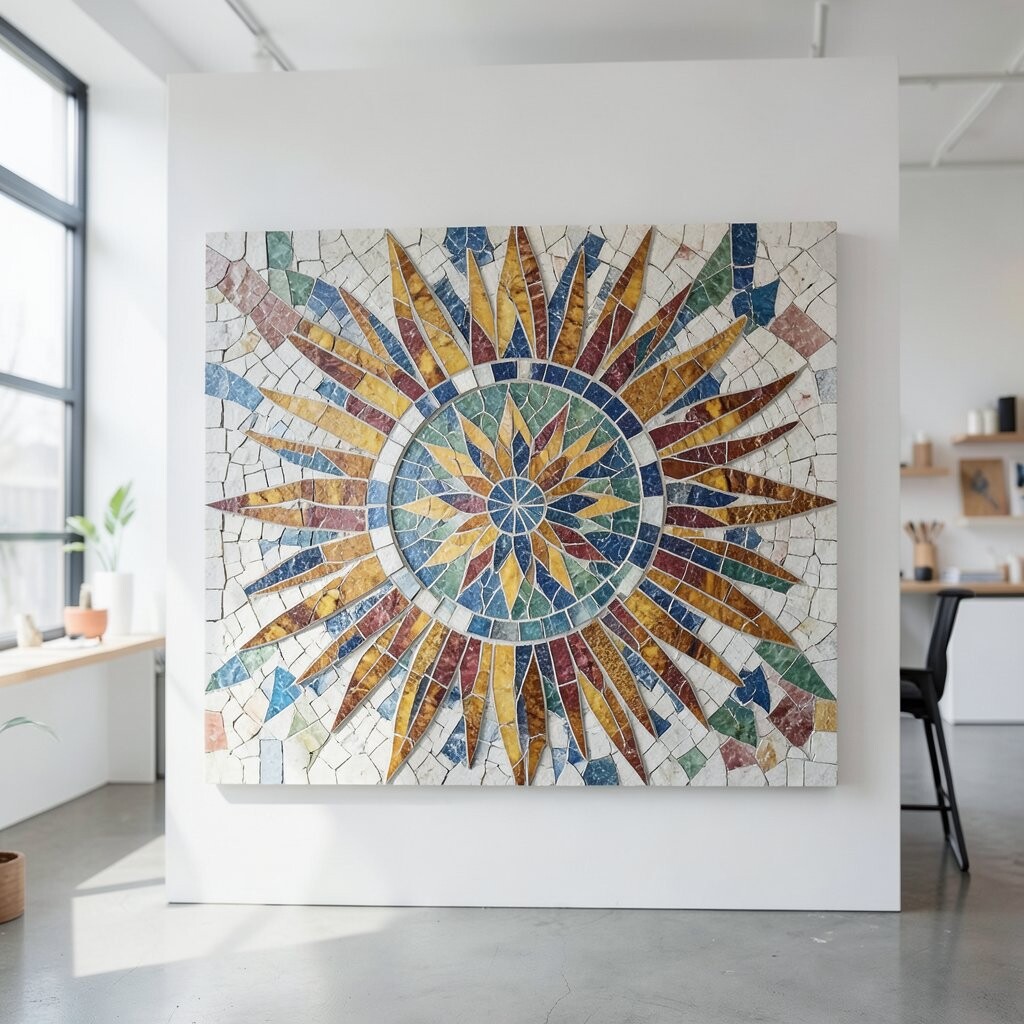
A sunburst feature circle uses tile lines that spread from one center point like rays. It can sit on a wall, floor, or entry area and act as a strong visual mark.
This design feels unique because it adds motion without needing a full mural. It can also make a small studio seem more lively and planned.
Intricate sunburst work may cost more because it needs careful tile cutting. A simpler version with bold colors and basic lines can still make a big impact and let you choose colors that match your own work.
11. Soft Pastel Frame Edge

A soft pastel frame edge uses tiles in pale pink, light blue, mint, or lilac around the edge of a wall or mirror. The look is gentle and gives the room a quiet, friendly mood.
This idea is nice for studios that need calm energy during long art sessions. It also helps frame shelves, windows, or work zones without using a heavy pattern.
Pastel tiles can cost about the same as other glazed tiles, so the design may be easy to manage. You can make it more personal by matching the pastel edge to the color of your sketchbooks, jars, or chair cushions.
12. Mixed Material Tile Band

A mixed material tile band combines ceramic, glass, stone, or metal-look pieces in one long strip. The mix gives the studio a layered look that feels modern and a little unexpected.
This is a smart choice if you want texture without covering a whole wall. It can add interest above a counter, around a sink, or along a display wall.
Different materials can raise cost, so a narrow band may be the best way to keep it reasonable. Personal style comes through when you pick finishes that match the tools and art you use each day.
13. Large Tile Calm Panel

Large tile calm panel uses bigger tile pieces with fewer grout lines for a smooth look. The surface feels simple and calm, which can help balance a room full of art supplies and bright work.
This design is great when you want easy cleaning and a more open feel. It also works well in modern studios where the goal is to keep the room neat and clear.
Large tiles may lower labor cost because they cover space faster than tiny ones. You can still make the panel personal by choosing a soft color with a slight glaze or a subtle pattern in the surface.
14. Leaf Line Border

A leaf line border uses small tile leaves or leaf-like shapes along the edge of a wall or floor area. The design adds a natural note and brings a softer mood into the studio.
This idea fits well for artists who work with plants, paper, or nature themes. It can also help break up plain walls and give a room a more careful finish.
Simple leaf borders can cost less than a full floral wall, which makes them a good middle choice. You can personalize the border by using leaf colors that connect with your own artwork or room decor.
15. Custom Name Tile Wall

A custom name tile wall uses mosaic letters, symbols, or a studio name made from tile pieces. It gives the room a strong identity and makes the space feel clearly yours.
This idea is unique because it can be shaped around your own brand, art name, or favorite word. It works well behind a desk, near a front entry, or on a wall that appears in photos.
Custom tile work can cost more than standard patterns, especially if the letters are detailed. You can keep it simple by using one color family and a clean font style that still feels special and easy to read.