Art Deco style has clean lines, bold shapes, and a look that feels neat and calm. It can fit in a home, store, or public space with simple changes.
1. Geometric Front Facade
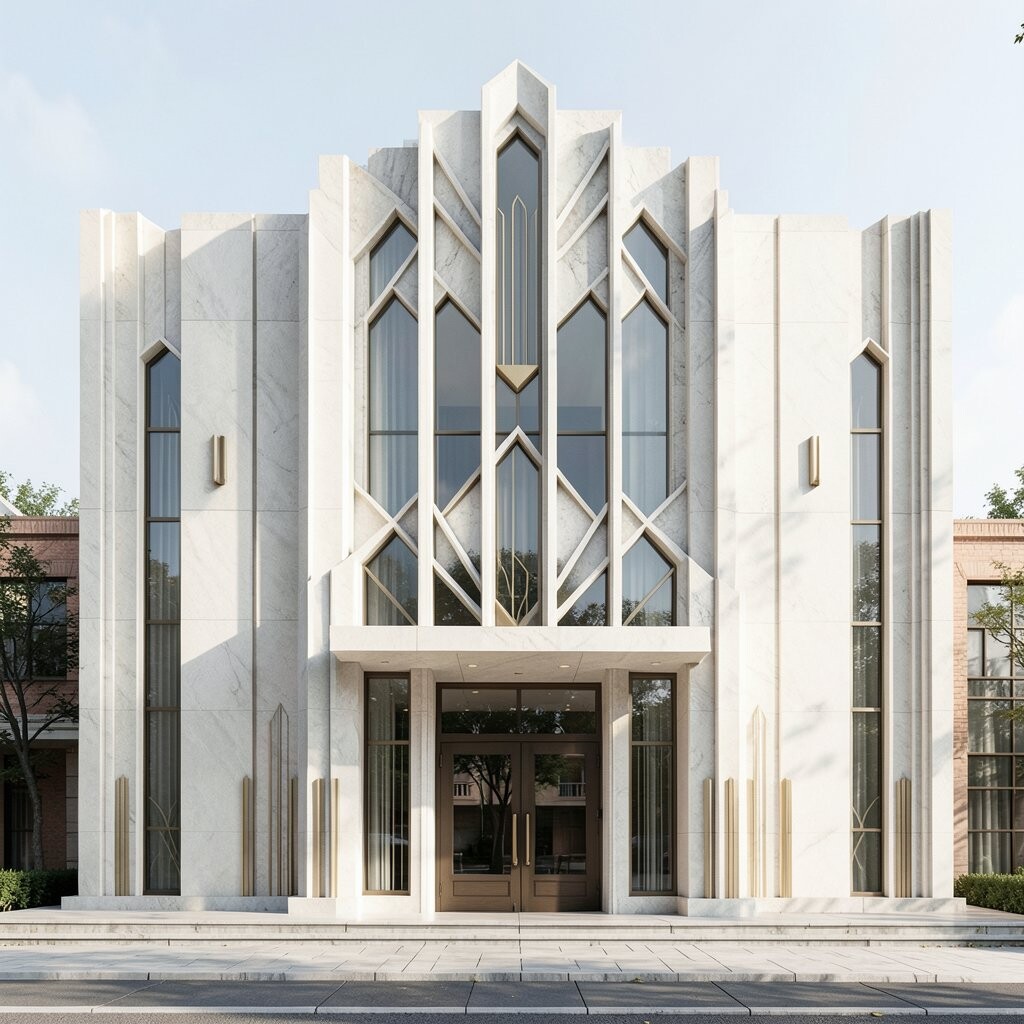
A geometric front facade uses clear shapes like zigzags, steps, circles, and straight lines. It gives a building a sharp look that feels neat and easy to read from the street.
This style works well because it adds order without feeling plain. You can use it on a full building or just on one wall if you want a lower cost idea.
Paint, stone, or stucco can all help make the shape stand out. If you want a more personal look, try mixing soft colors with one strong accent color.
2. Sunburst Wall Detail
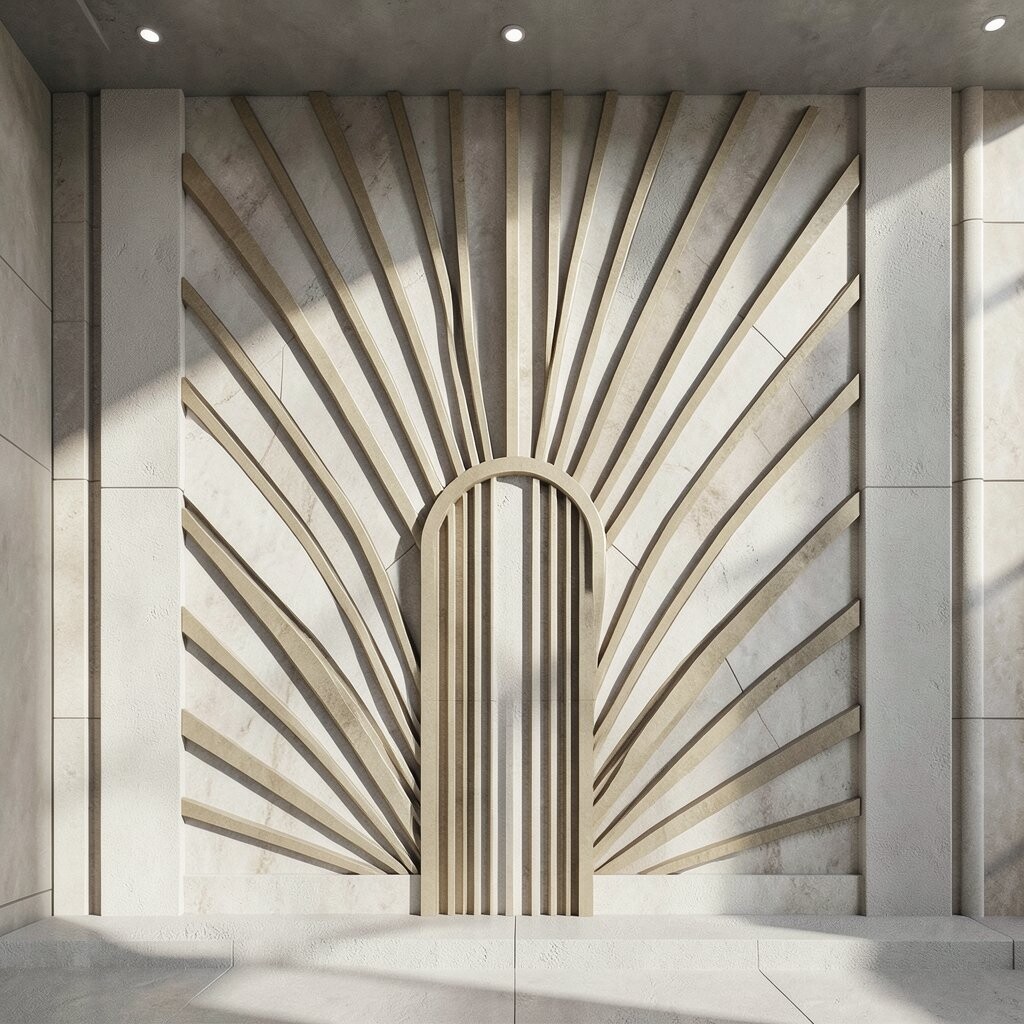
A sunburst detail brings a bright fan shape into the design. It often sits above a door, on a wall panel, or near a ceiling line, and it gives the room a clear Art Deco feel.
This idea is popular because it is easy to notice but not too busy. It can make a small space feel more special without needing a full room update.
You can use wood, metal, tile, or even paint to make the shape. For a low-cost version, a simple wall stencil can give you the same mood for less money.
3. Bold Vertical Lines
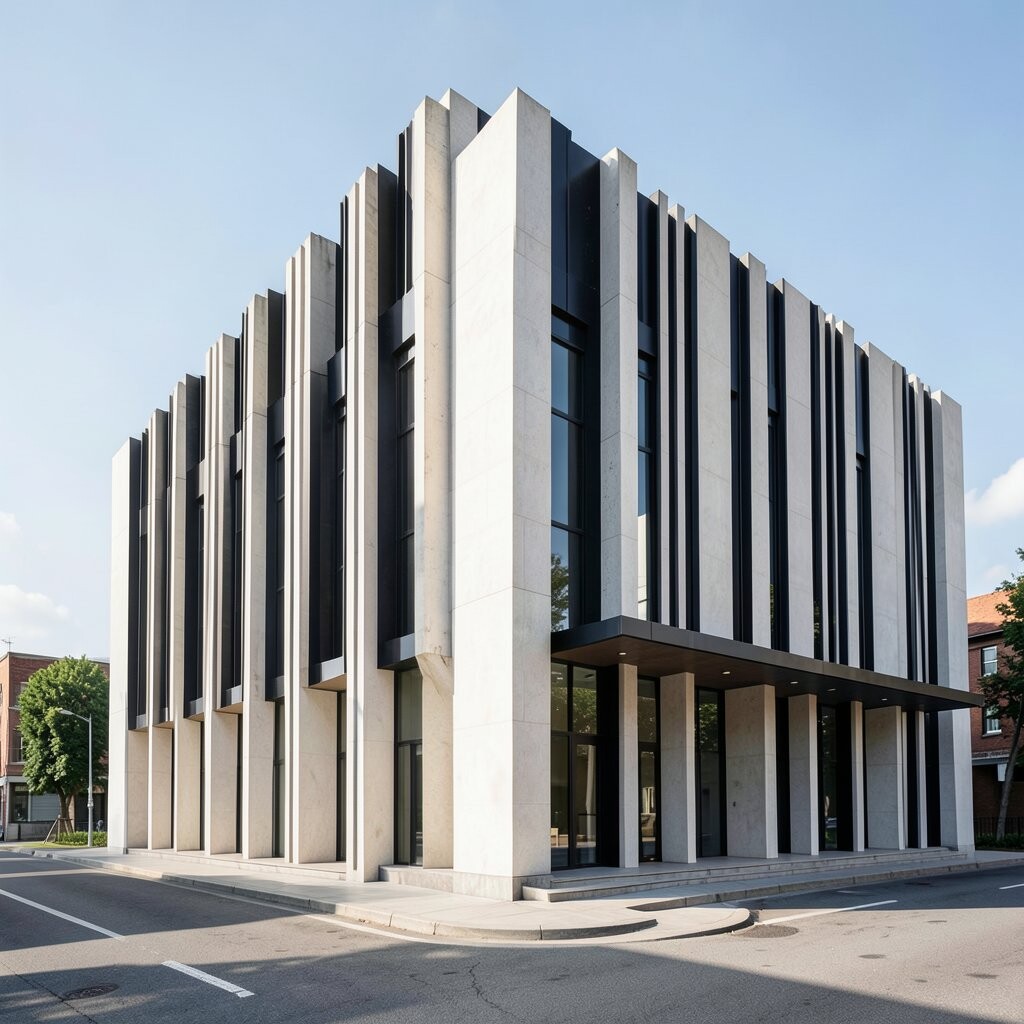
Bold vertical lines help a building or room feel taller and more balanced. They are often used on walls, windows, and doors to bring a strong Art Deco look.
This choice is useful in small spaces because it can make ceilings seem higher. It also works well in modern homes since the lines are simple and easy to match with other decor.
You can paint the lines, add panels, or use trim for a cleaner finish. If you want a softer style, use the same color in two shades instead of sharp contrast.
4. Chrome and Metal Accents
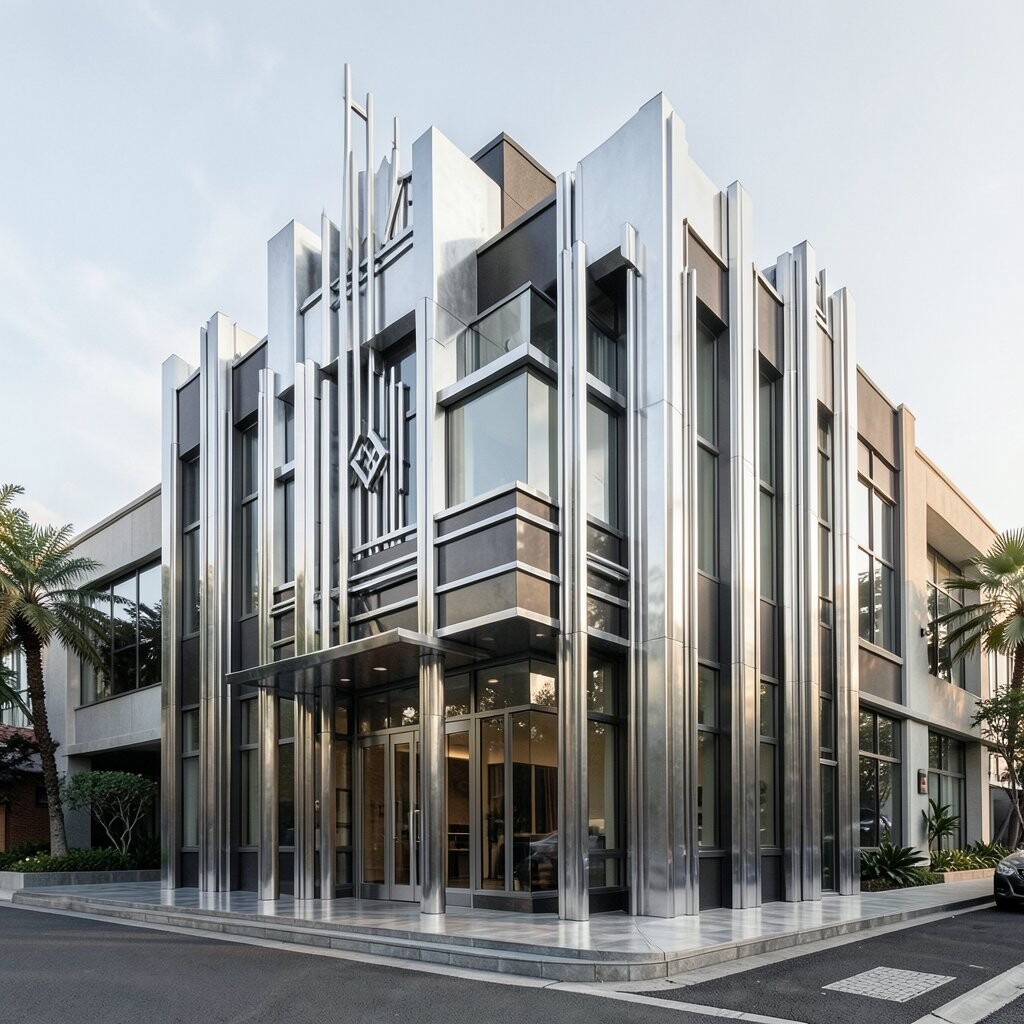
Chrome and metal accents add a smooth shine that fits Art Deco design well. You may see them on railings, light fixtures, door handles, and trim pieces.
These accents help a space feel polished and neat. They are also easy to mix with wood, glass, or stone, which makes them a flexible choice for many homes.
Metal details can cost more than paint, but small touches can still make a big change. Try using one or two key pieces first, like a lamp or mirror frame, to keep the budget under control.
5. Black and Gold Color Scheme
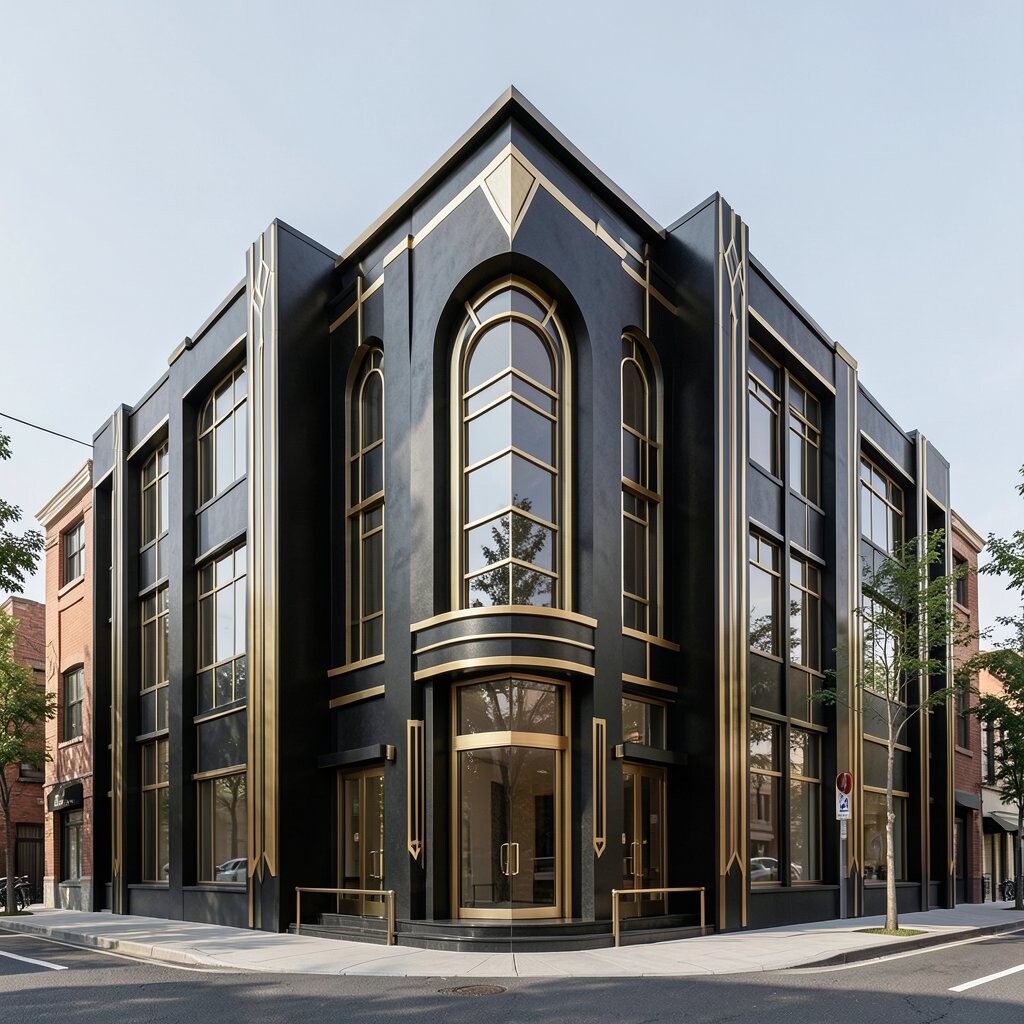
Black and gold is one of the most known Art Deco color pairs. The dark color gives a strong base, while gold adds warmth and a bit of shine.
This mix works well in living rooms, entryways, and dining spaces. It feels rich without needing many extra items, which makes it a smart choice for simple styling.
You can use black walls with gold trim, or use gold in small decor pieces if you want a lighter look. To make it feel more personal, add cream, white, or deep green for balance.
6. Curved Doorways
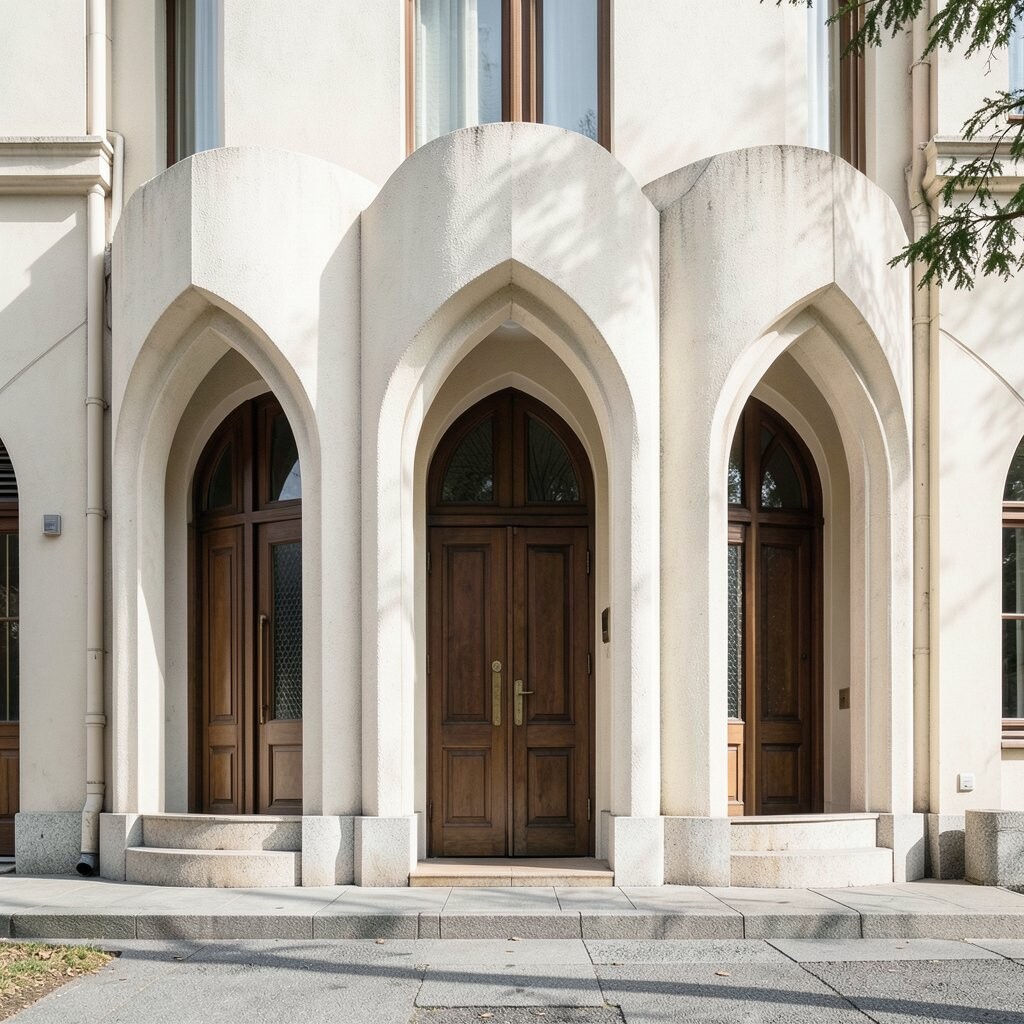
Curved doorways soften the sharp lines that often show up in Art Deco design. They make a room feel smooth and graceful while still keeping a strong style.
This detail is unique because it changes the shape of a space in a simple way. It can help a hallway, entry, or room opening feel more open and less boxy.
Full remodels can cost a lot, so many people use curved trim or arch-shaped frames instead. If you want a custom touch, pair the curve with bold paint or a mirrored finish.
7. Stepped Roofline
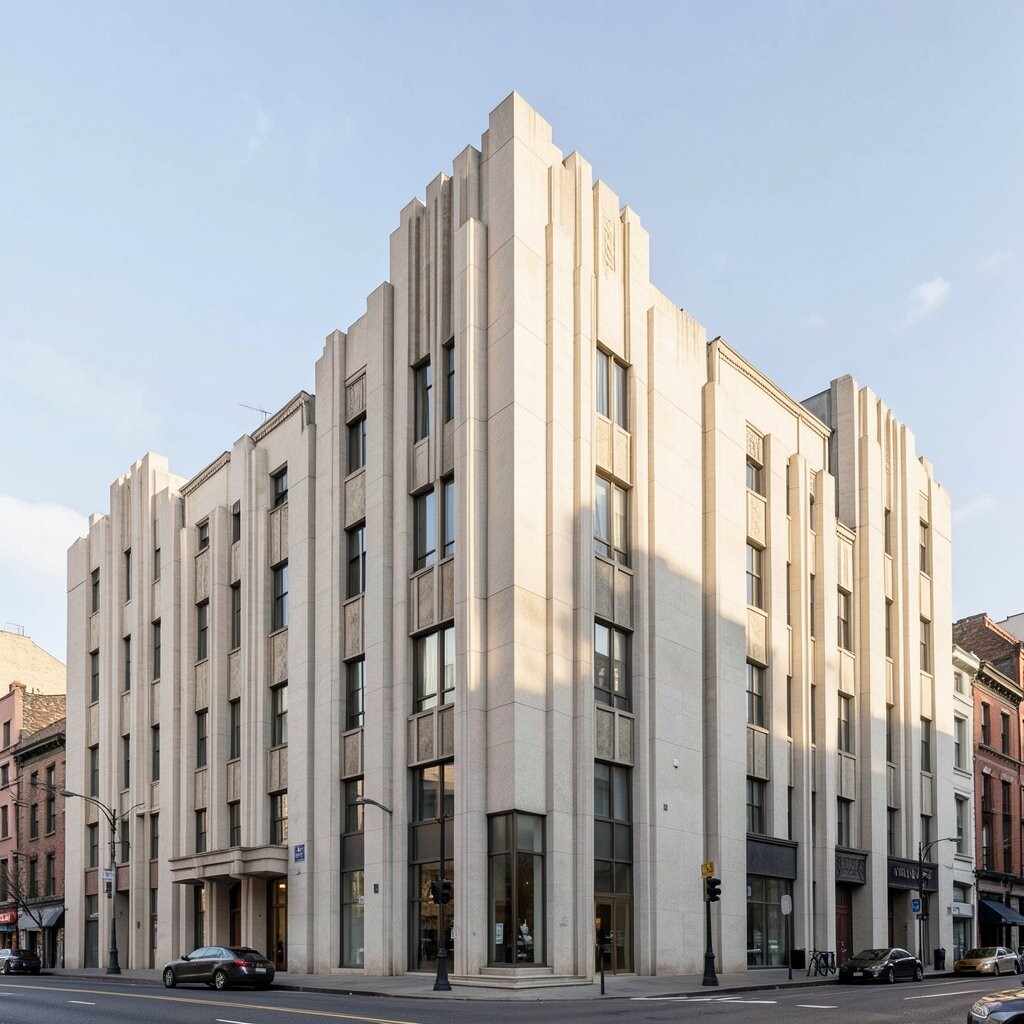
A stepped roofline uses layers that rise in clear blocks. It gives the outside of a building a skyline look that fits classic Art Deco design.
This style stands out because it adds depth and shape from far away. It can also help a plain building look more planned and finished.
For homes, you can copy this idea with layered trim, shelf shapes, or wall panels inside. It may take more work on the outside, but a smaller detail version can keep the cost much lower.
8. Mirrored Surfaces
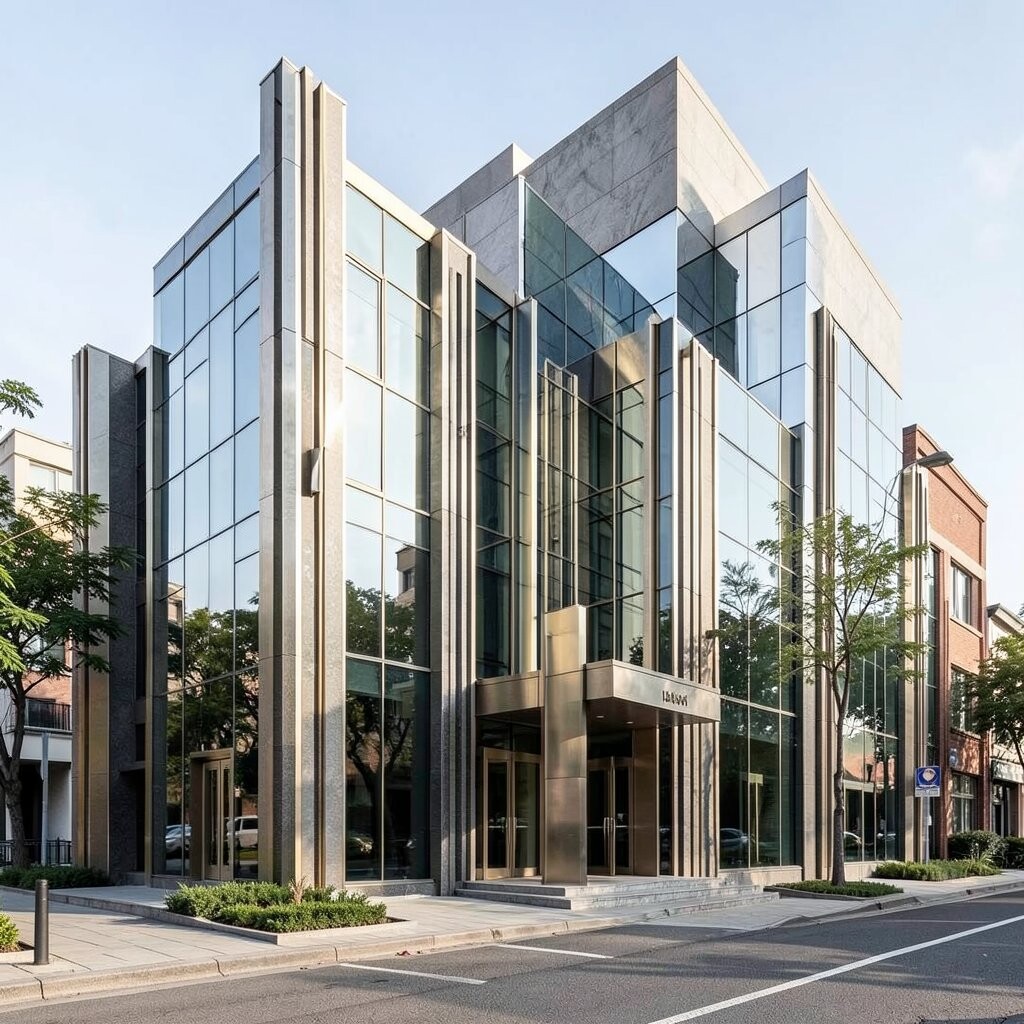
Mirrored surfaces help bounce light around a room and make it feel brighter. They are a common part of Art Deco rooms because they add shine and a clean look.
Mirrors can also make a small room seem larger, which is a useful benefit in apartments or narrow halls. They work well with both dark and light color schemes.
You can use a full mirror wall, a mirrored side table, or a framed mirror with a bold shape. If you want a more personal style, choose a frame with a soft curve or a strong geometric edge.
9. Patterned Floor Tiles
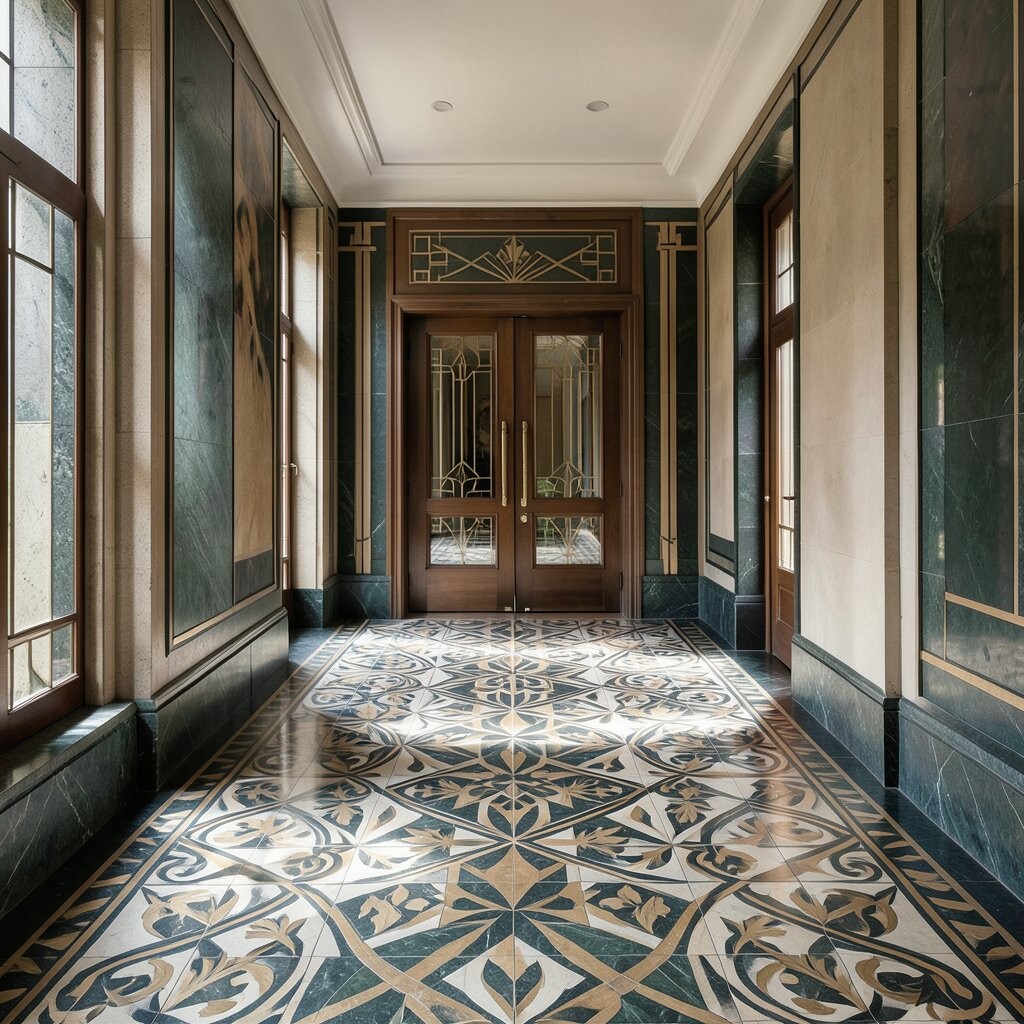
Patterned floor tiles can bring Art Deco style to kitchens, baths, and entry spaces. Common looks include checks, fans, diamonds, and repeated line patterns.
These tiles add visual interest right away and can make a room feel more put together. They are also easy to clean, which makes them a practical choice for busy homes.
Tile cost can vary a lot, so small spaces are often the best place to use them. If full tile work is too much, try a patterned rug or peel-and-stick floor tile for a lower-cost option.
10. Fluted Wall Panels
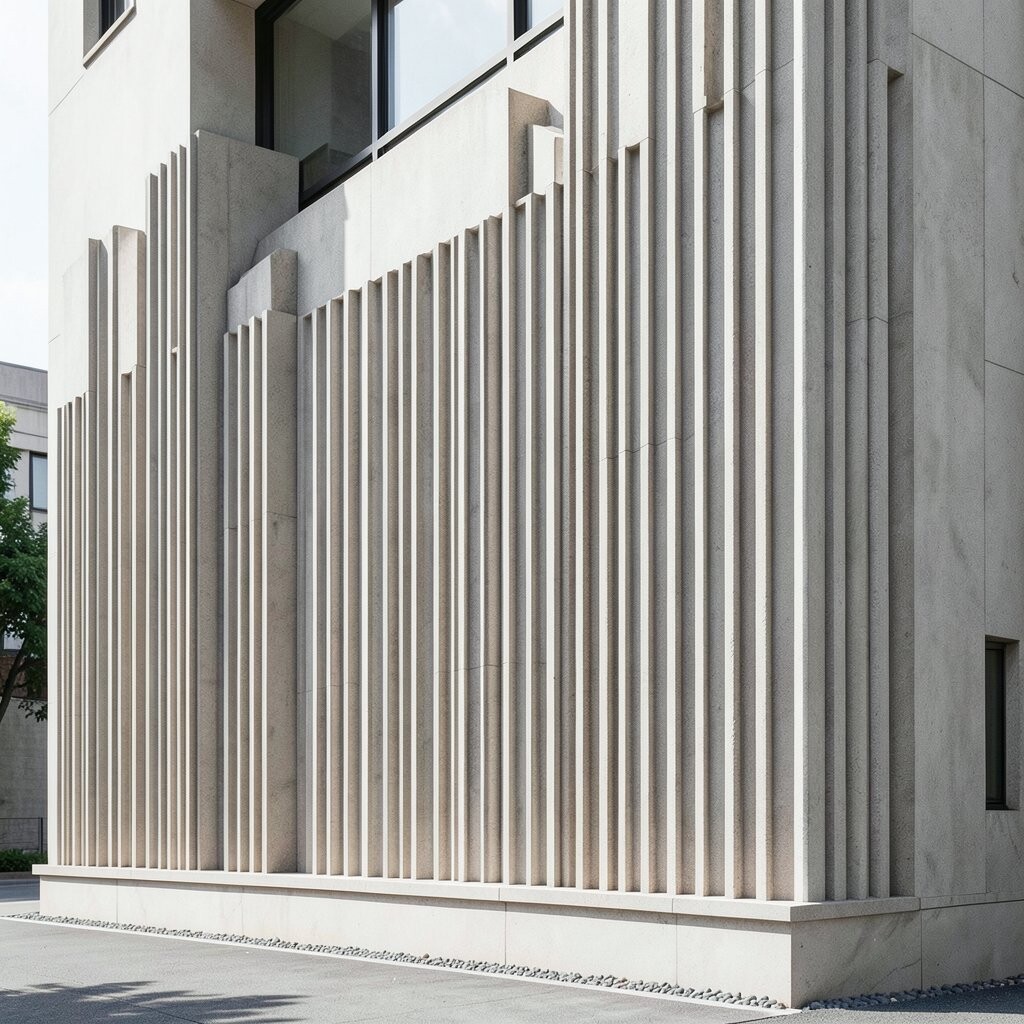
Fluted wall panels use repeated grooves that catch light in a soft way. They give a room texture without making it look crowded or heavy.
This detail fits Art Deco because it feels neat, ordered, and a little elegant. It can work on a full wall, around a fireplace, or behind a bed or sofa.
Wood panels may cost more, but painted MDF or even wall trim can give a similar look. For a personal touch, use a bold color on one wall and keep the rest simple.
11. Decorative Light Fixtures
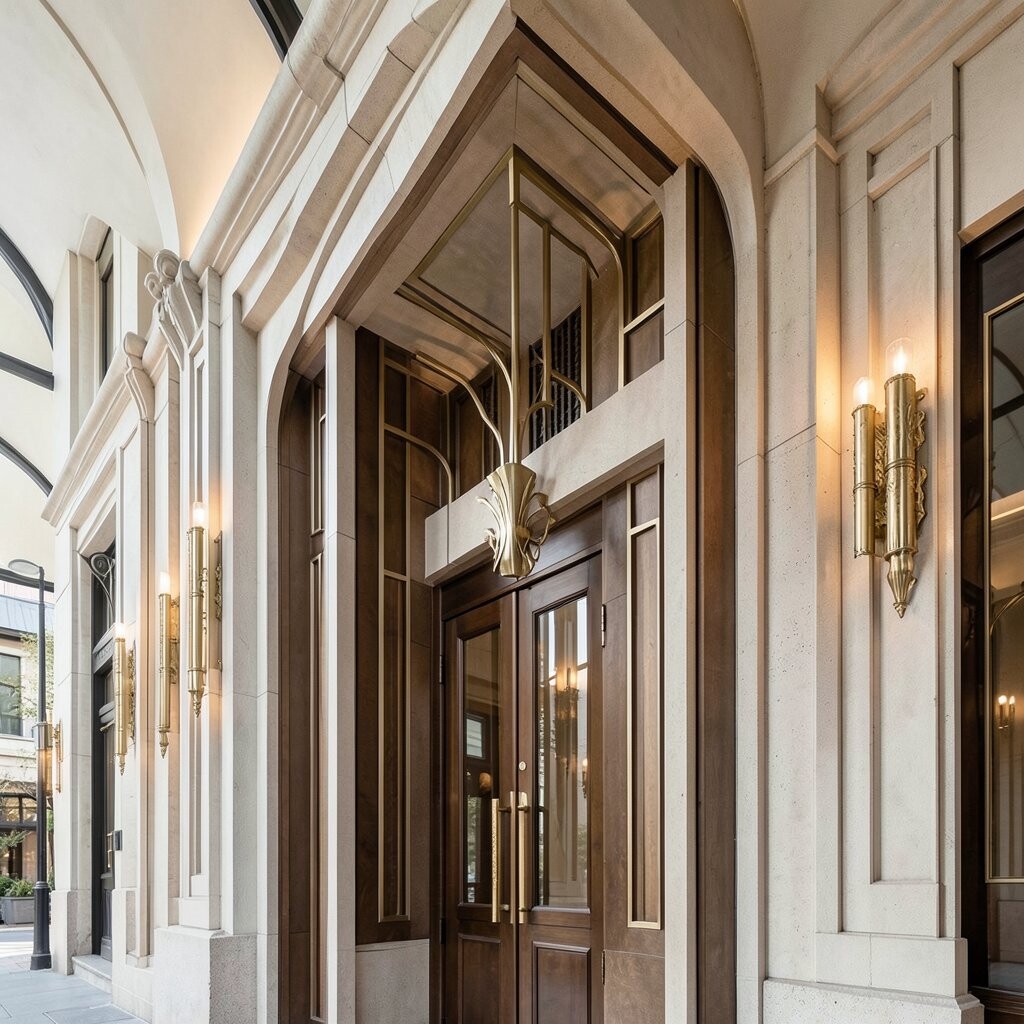
Decorative light fixtures are a key part of Art Deco spaces. Look for globe lights, tiered shades, frosted glass, and metal frames with clean shapes.
Good lighting does more than light a room. It also sets the mood and helps the other design parts stand out in a clear way.
Some fixtures can be pricey, but there are many budget-friendly choices now that copy older styles. If you want a current trend, mix vintage-inspired lights with simple modern furniture.
12. Glass Block Windows
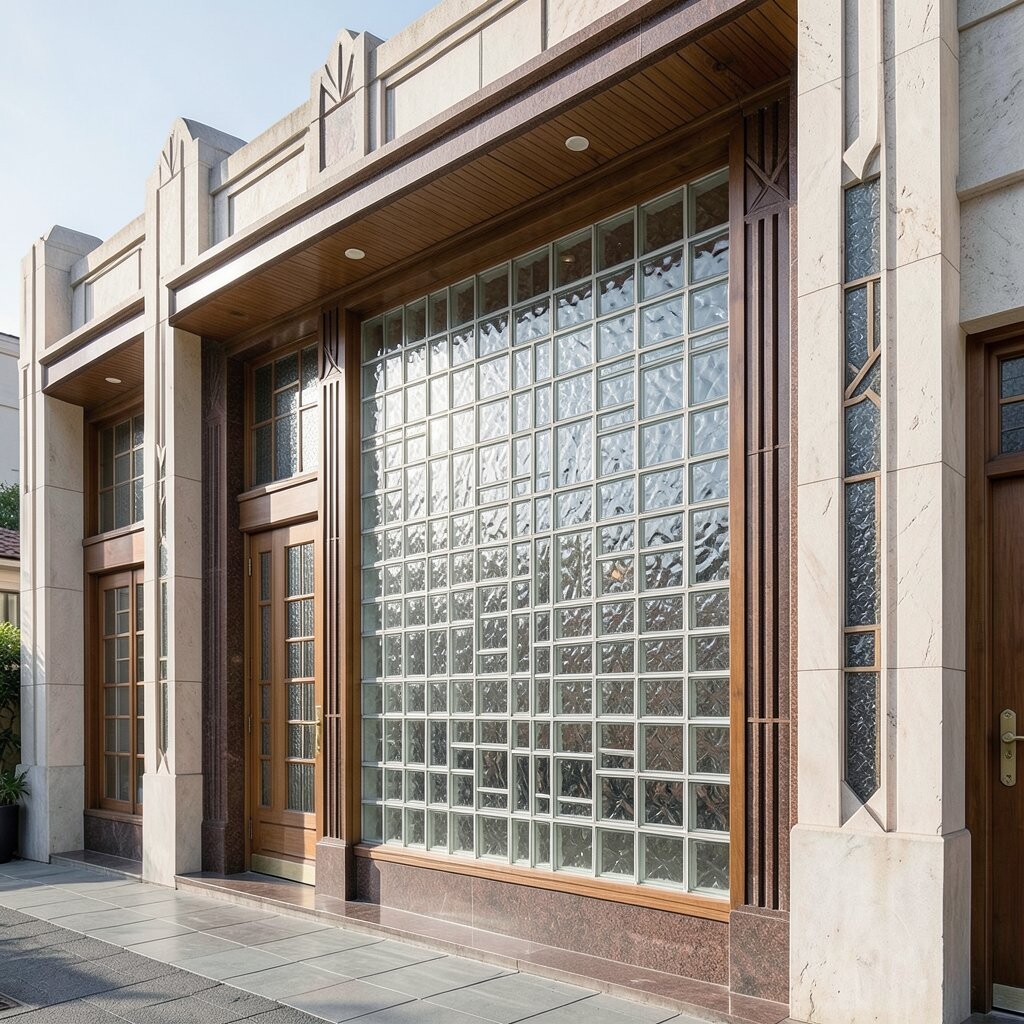
Glass block windows give a space a strong old-school feel with a clean look. They let in light while still giving privacy, which is useful in baths, stair areas, and side walls.
This feature is unique because it makes the wall feel solid and bright at the same time. It also fits well with the smooth, geometric side of Art Deco design.
Full glass block installs can cost more than standard windows, so many people use them in small spots. If you want a softer version, try glass block style decor or a frosted glass panel.
13. Velvet Furniture
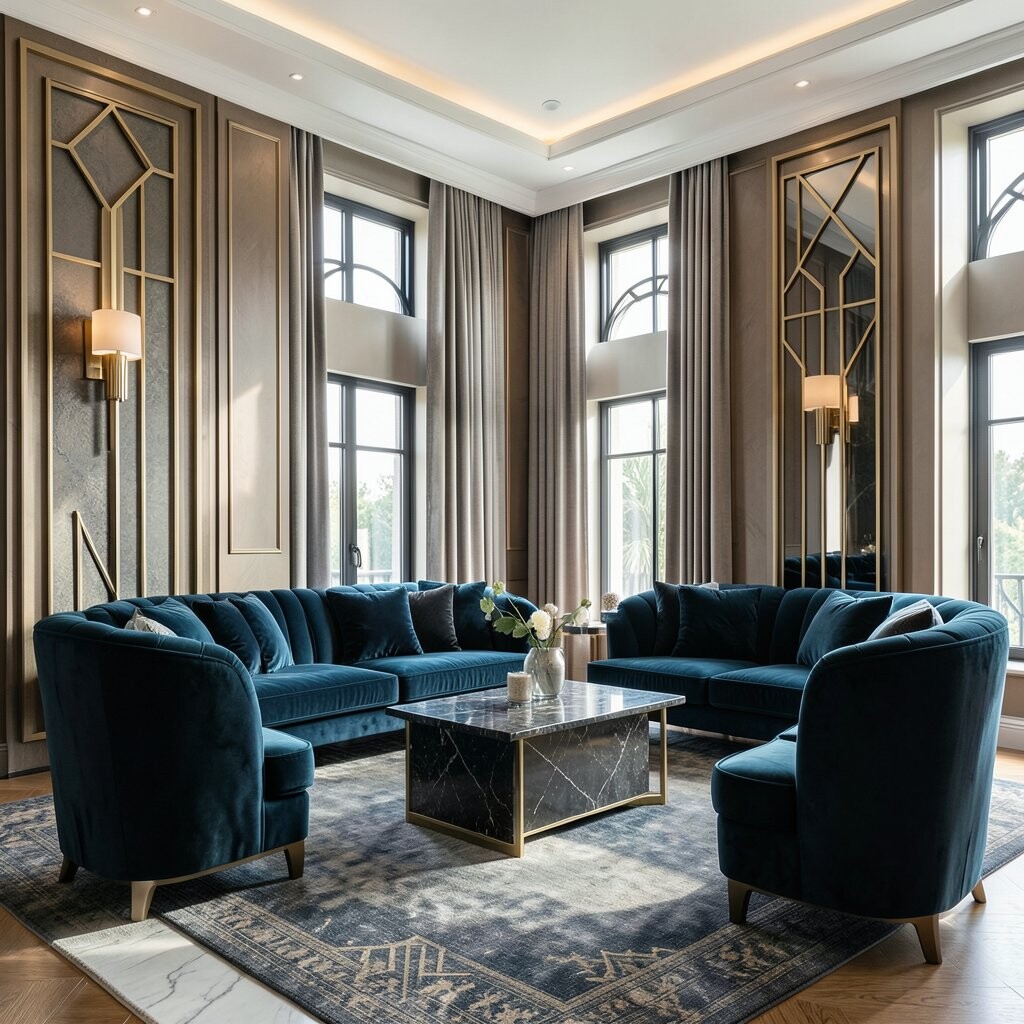
Velvet furniture adds a soft touch that fits Art Deco rooms very well. Chairs, sofas, and benches in velvet often look rich and feel comfortable at the same time.
This material works because it catches light in a gentle way and brings depth to a room. It also pairs well with metal, glass, and dark wood.
Velvet can cost more than plain fabric, but one key piece is often enough to set the tone. Try a deep blue, green, or burgundy color if you want a look that feels classic and personal.
14. Symmetrical Layout
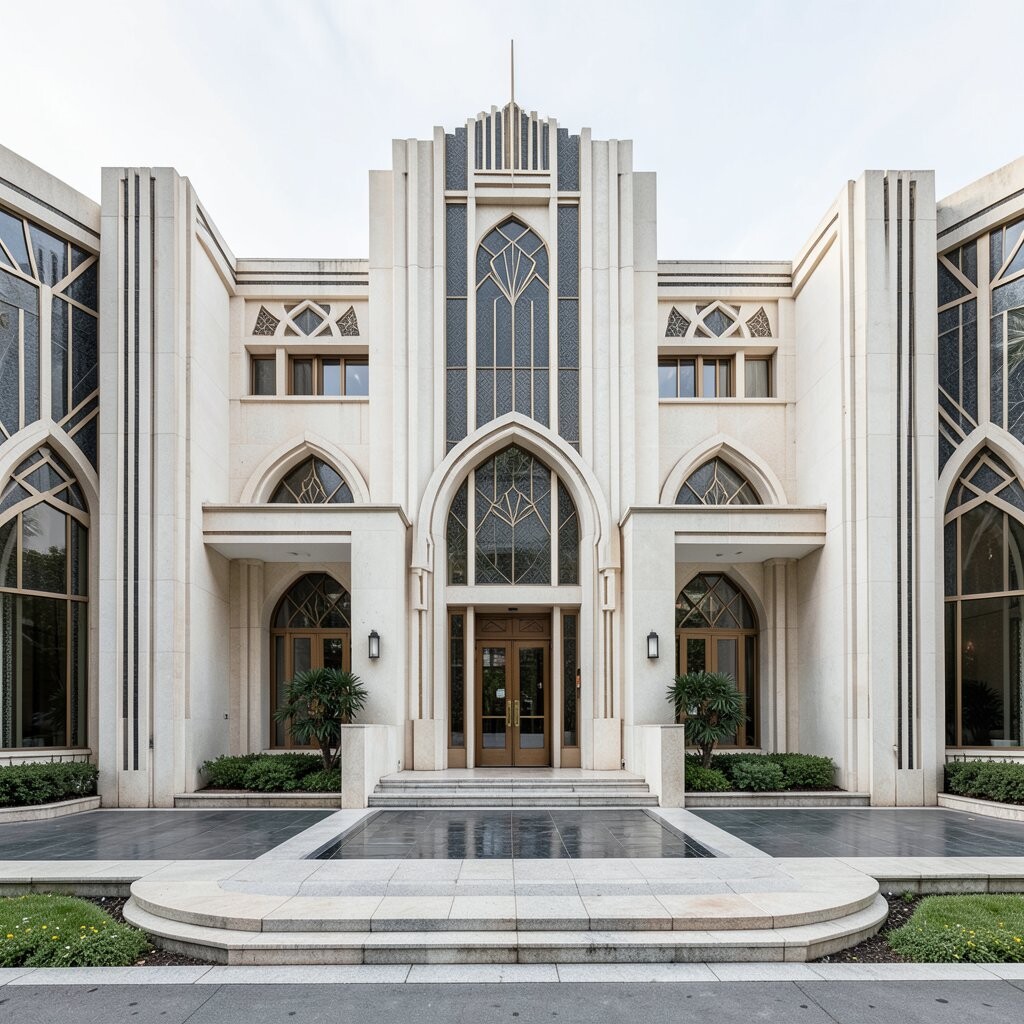
A symmetrical layout means both sides of a room or front look balanced. This is a big part of Art Deco design and helps a space feel calm and clear.
It works well because the eye can move around the room with ease. The result is a tidy look that feels planned, even when the design is simple.
You can make symmetry with matching lamps, chairs, art, or wall decor. It costs little to no extra money if you already have the right pieces at home.
15. Mixed Material Details
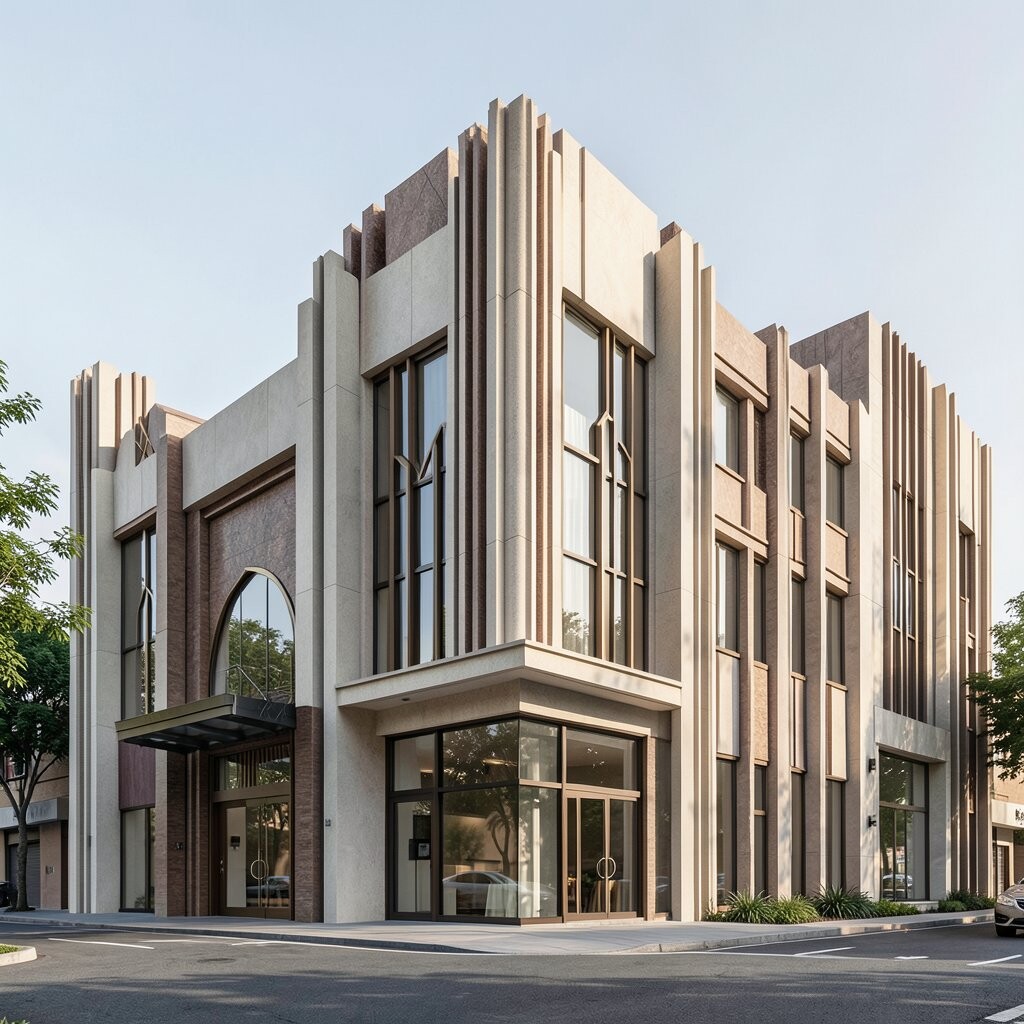
Mixed material details bring wood, stone, glass, metal, and fabric into one space. This mix gives Art Deco style more depth and helps each part stand out.
It is useful because you can make the space feel rich without using only one costly material. You can also change the mix to fit your taste, from soft and warm to sharp and sleek.
Many current trends use mixed materials in a careful way, with just a few strong pieces. Try one bold material for the main focus and use simpler ones around it so the room stays easy to live in.