Artisan workshops can give people a calm place to make things by hand. They also help turn simple tools and plain materials into work that feels personal and useful.
1. Pottery Wheel Studio
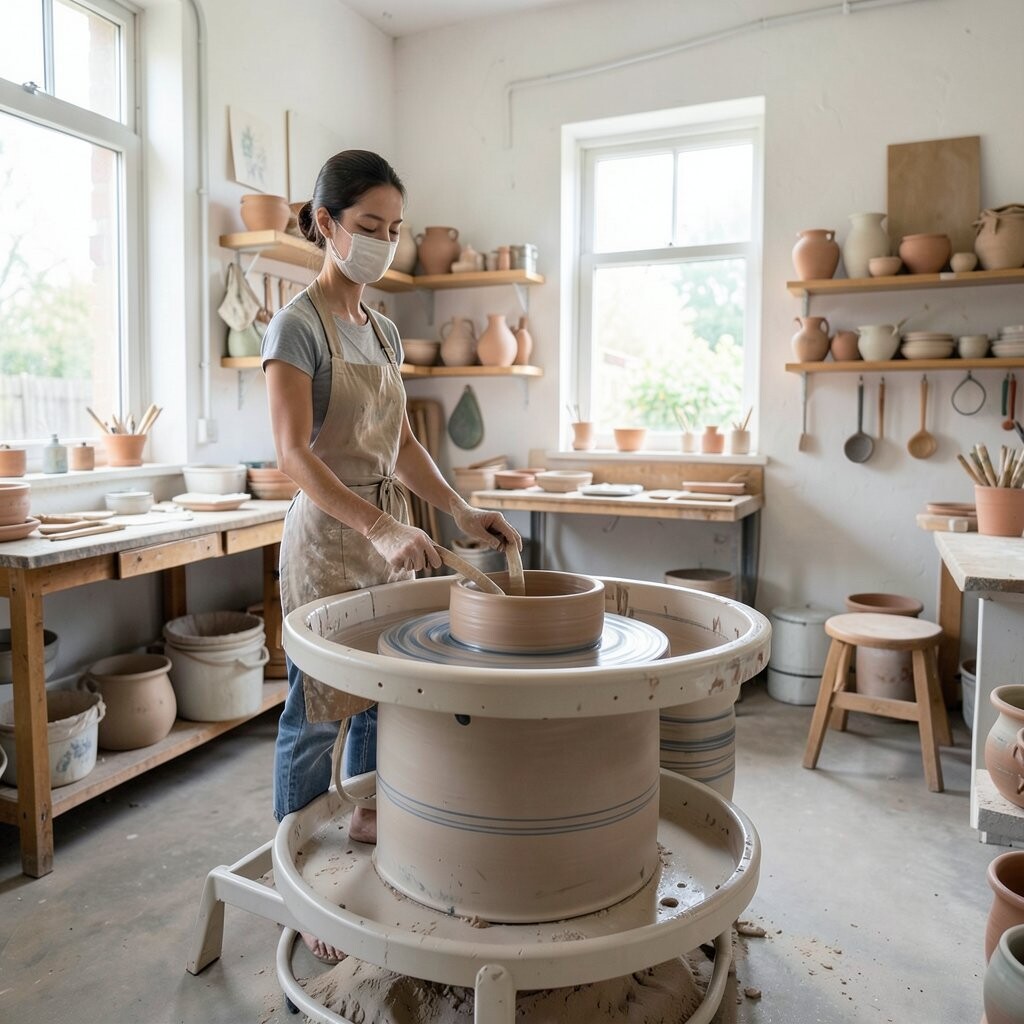
A pottery wheel studio gives people a hands-on way to shape clay into bowls, cups, and vases. The look of wet clay spinning on the wheel feels steady and calm, and the finished pieces can have soft lines and small marks that show the maker’s hand.
This kind of workshop is useful because it gives both skill and a useful object at the end. It can fit many budgets, too, since a small setup can start with a few wheels, clay, water, and basic tools, while a larger studio can add shelves, glazes, and a kiln later.
One reason people like pottery right now is that handmade tableware is still a strong trend. You can make the space feel personal by adding local clay, simple paint colors, or a shelf for test pieces so students can see how their work changes after firing.
2. Candle Making Corner
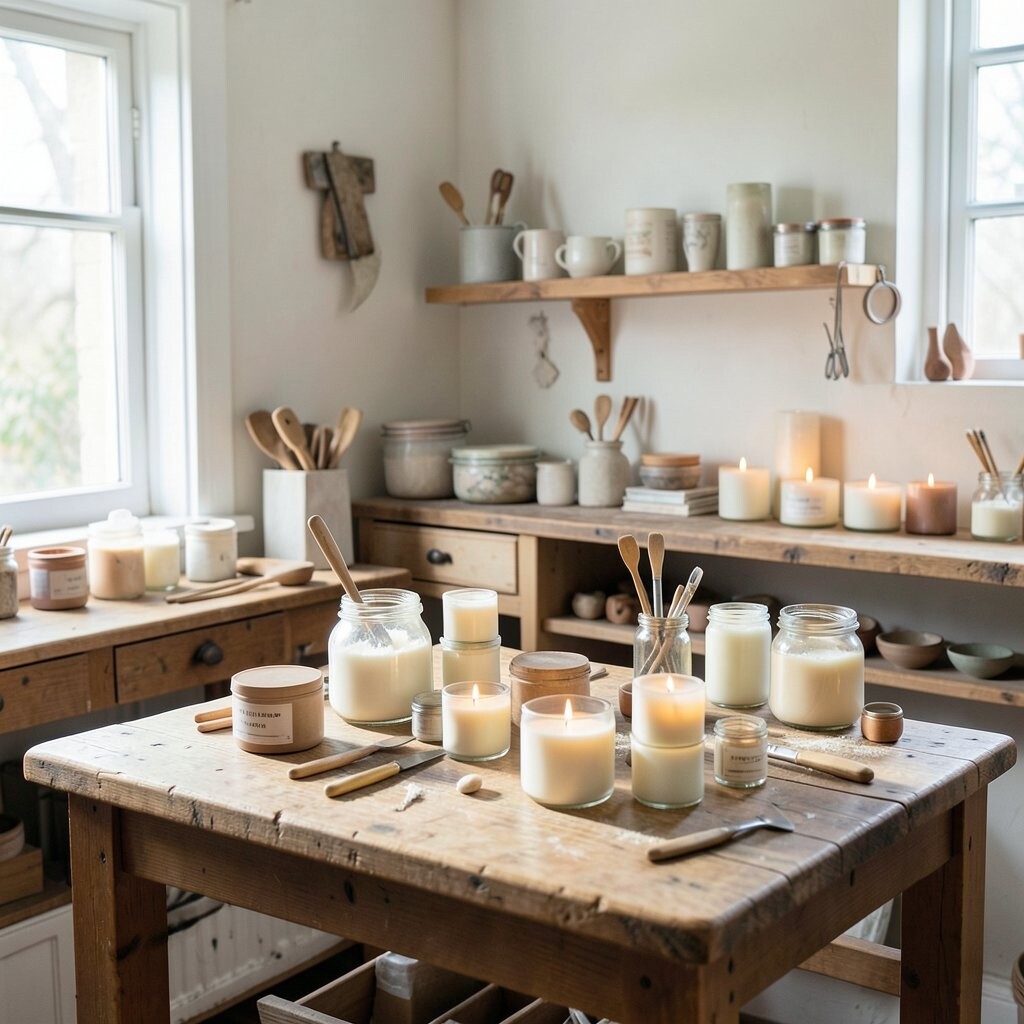
A candle making corner can feel warm and neat, with jars, wax blocks, wicks, and small scent bottles lined up on a table. The finished candles can look clean and simple, or they can have dried flowers, color layers, and paper labels for a more personal touch.
This workshop works well because people can make useful gifts without needing a lot of space. The cost can stay low if you start with basic wax, a few molds or jars, and simple scent oils, then add more choices as the workshop grows.
Many people enjoy candles that match home decor, so this idea fits a current trend. You can let people choose scent blends, jar shapes, and label styles so each candle feels like it came from their own taste.
3. Wood Carving Bench
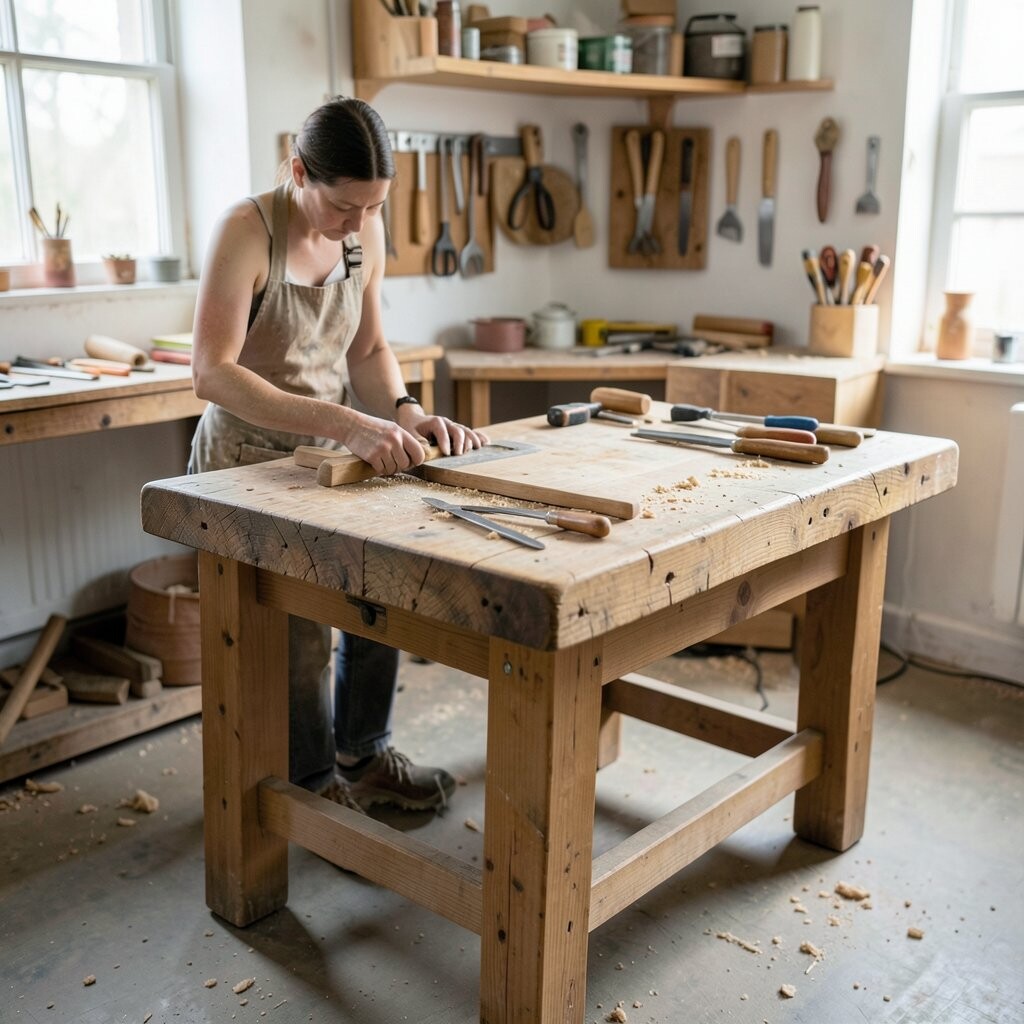
A wood carving bench brings a natural look with wood shavings, hand tools, and small blocks ready to shape. The room can feel quiet and focused, and the pieces can range from simple spoons to small figures, signs, or wall art.
This idea helps people build hand skill, patience, and care with tools. It can be set up at a fair cost if you begin with a strong table, safe knives, clamps, and soft woods like basswood or pine.
Personal style matters a lot here because each maker can choose shapes that mean something to them. Many people also like the current move toward slow-made home goods, so carved items can be both useful and easy to sell or gift.
4. Soap Making Table

A soap making table can look bright and tidy, with molds, oils, color powders, and bars lined up in rows. The finished soap can have clean edges, swirls, herbs, or pressed flowers, which makes it feel both plain and pretty at the same time.
This workshop gives people a useful item they can use at home or share with others. It can start at a low cost if you keep the first setup simple with melt-and-pour soap, basic molds, and a few safe add-ins.
Soap making also fits well with the trend for natural and handmade bath items. You can make the workshop feel more personal by letting people pick scents, colors, and wrap designs that match their home or gift plan.
5. Leather Craft Station

A leather craft station has a strong, rich look with brown strips, metal snaps, punches, and thread laid out on the table. Small bags, key rings, belts, and card holders can all come from the same space, and each piece can show clean lines and neat stitching.
This workshop is good for people who like useful items with a handmade feel. The cost can vary, but a small start is possible with a few cutting tools, leather scraps, thread, and simple hardware.
Leather goods are still popular because people want items that last and age well. You can make the space more personal by offering stamp letters, color choices, and shape templates so each person can make something that feels like theirs.
6. Printmaking Studio
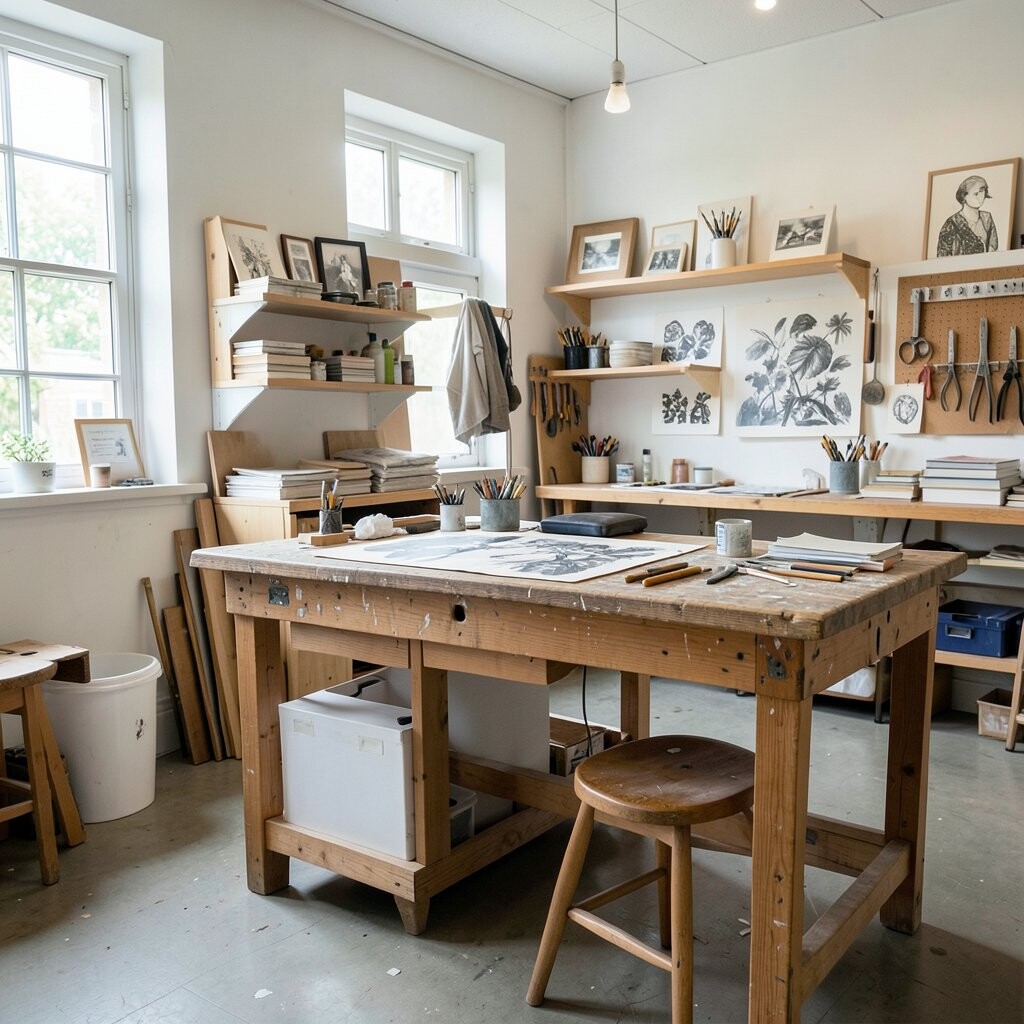
A printmaking studio can be full of bold shapes, ink pads, rollers, and carved blocks. The finished prints often have strong lines, repeated patterns, and a handmade look that feels different from store-bought art.
This kind of workshop helps people make art they can frame, gift, or use on cards and posters. It can stay fairly low cost if you use simple tools like linoleum blocks, paper, ink, and a hand press or baren.
Printmaking works well with current home art trends, since many people like wall pieces that feel personal and simple. You can let makers use local scenes, plants, or family words so each print has its own story.
7. Textile Dye Lab
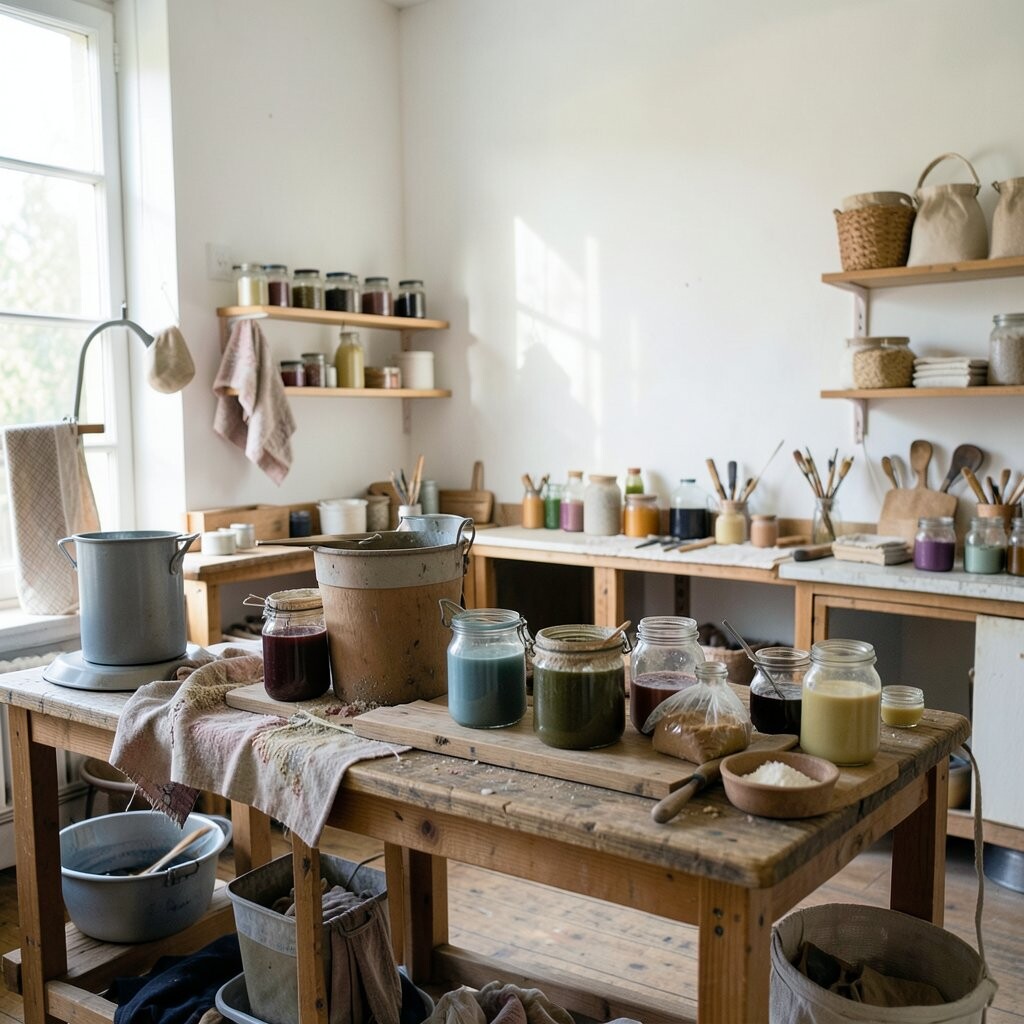
A textile dye lab can look lively, with bowls of dye, gloves, fabric strips, and drying racks full of color. The results can be soft and washed out or bright and sharp, and each piece can turn out a little different.
This workshop gives people a fun way to work with cloth and color without needing advanced sewing skills. The cost can be managed by using cotton cloth, basic dye kits, buckets, and a few tools for tying, folding, or dipping.
It also fits well with the trend for custom clothing and home textiles. You can add personal choice by letting people make scarves, tote bags, pillow covers, or tea towels in colors they already like.
8. Jewelry Making Bar

A jewelry making bar can feel neat and bright, with beads, wire, clasps, stones, and small trays spread across the table. The finished pieces can be tiny and simple or more detailed, with a mix of shine, color, and texture.
This workshop is helpful because people can make gifts, keep a piece for themselves, or even start a small side business. It can be set up at many price points, since basic bead kits are low cost while metal tools and better stones can be added later.
Jewelry is a strong trend because people like items that show style without taking up much space. You can make the workshop more personal by offering birthstone colors, charm choices, and simple design boards to guide each maker.
9. Glass Fusion Room
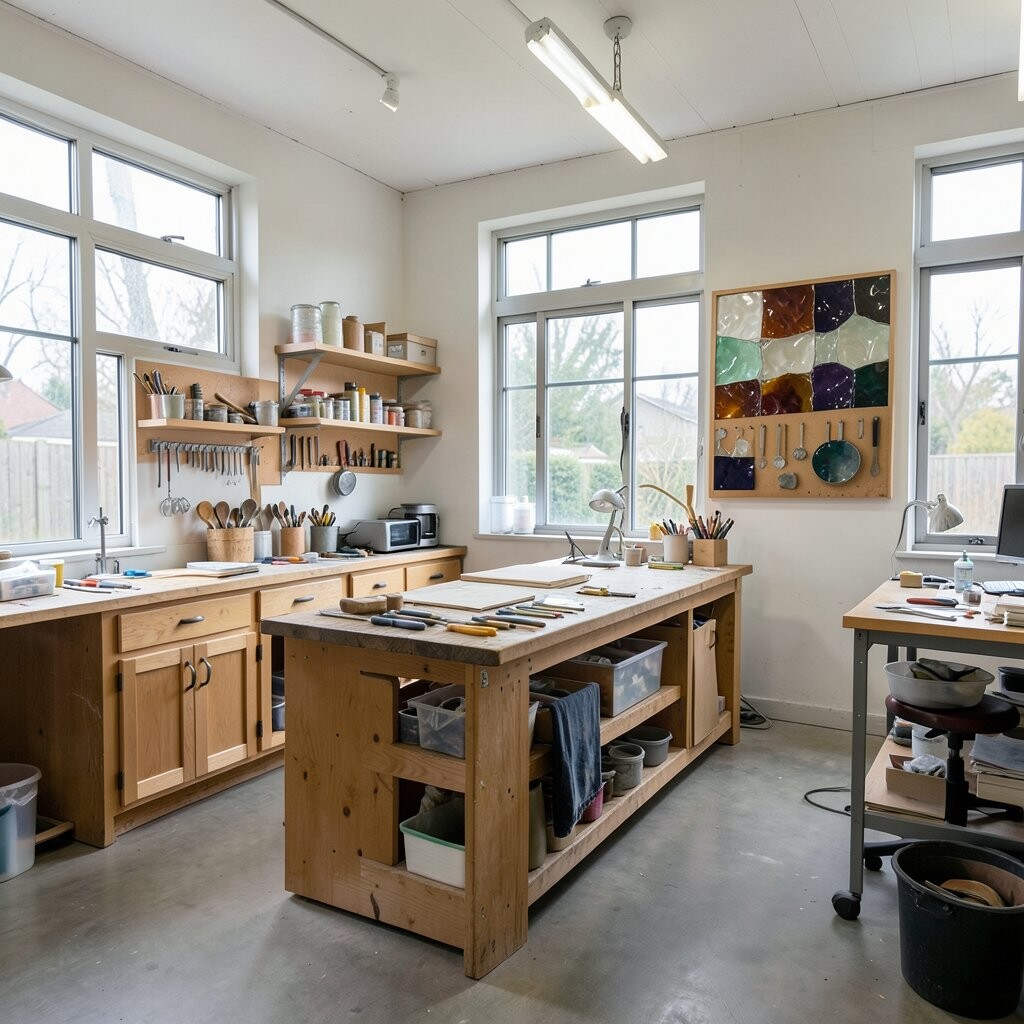
A glass fusion room has a bright, clean look, with colored glass bits, clear sheets, and careful tools on each table. The finished work can glow in the light, with smooth edges and layered color that looks modern and fresh.
This workshop gives people a chance to make sun catchers, small dishes, and wall hangings that feel special. The cost is higher than some other crafts because it needs a kiln, but the setup can still begin with small projects and a few core tools.
Glass art fits with today’s love for light, color, and home decor pieces that feel handmade. You can make the space personal by letting people choose color themes, shapes, and metal stands or frames for display.
10. Basket Weaving Studio
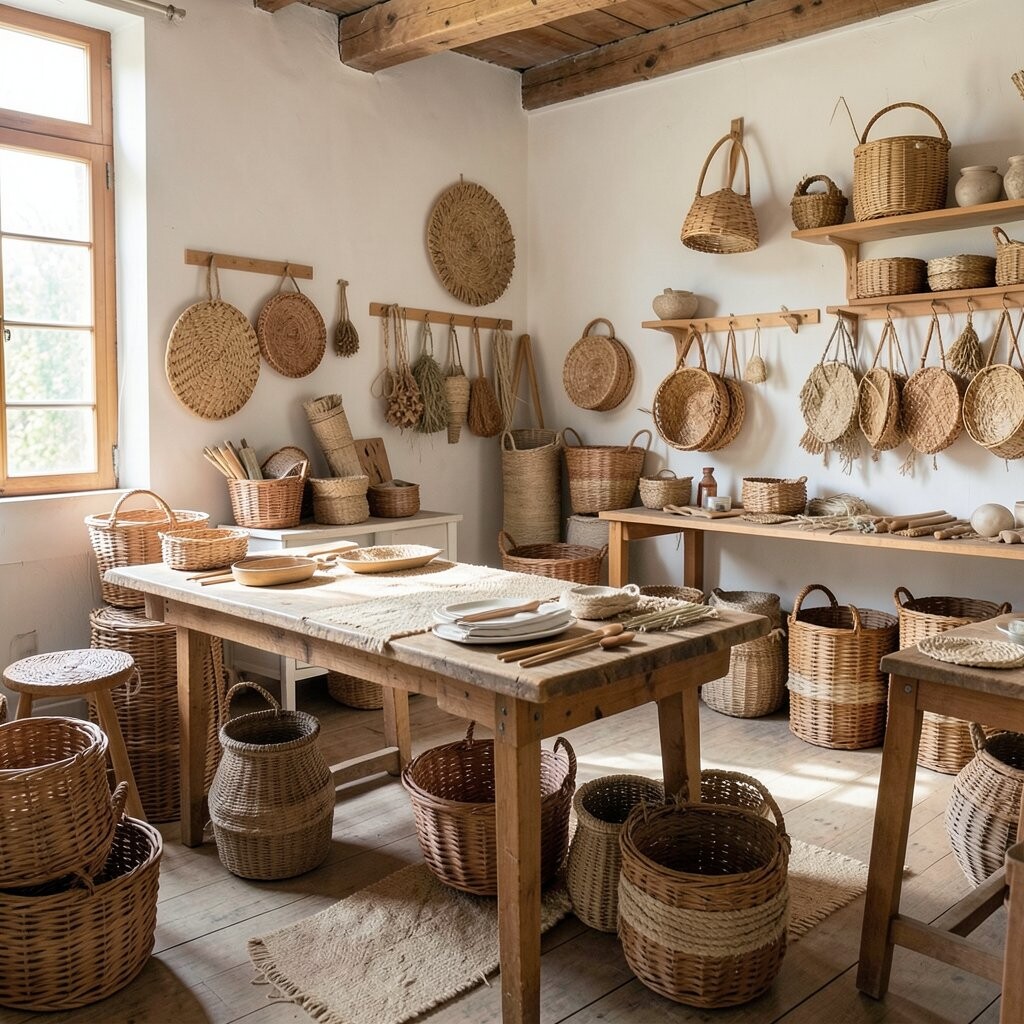
A basket weaving studio can feel warm and natural, with reed, cane, rope, and wood forms stacked nearby. The finished baskets often have a soft, earthy look and can be used for storage, gifts, or home display.
This workshop is useful because it teaches a classic craft that still has a real place in daily life. The cost can be fair if you start with simple weaving material, a few forms, scissors, and water tubs to soften the fibers.
Basket weaving also fits the trend for natural home items and slow-made goods. You can make it more personal by offering different sizes, handle styles, and color bands so each basket feels one of a kind.
11. Screen Printing Workshop
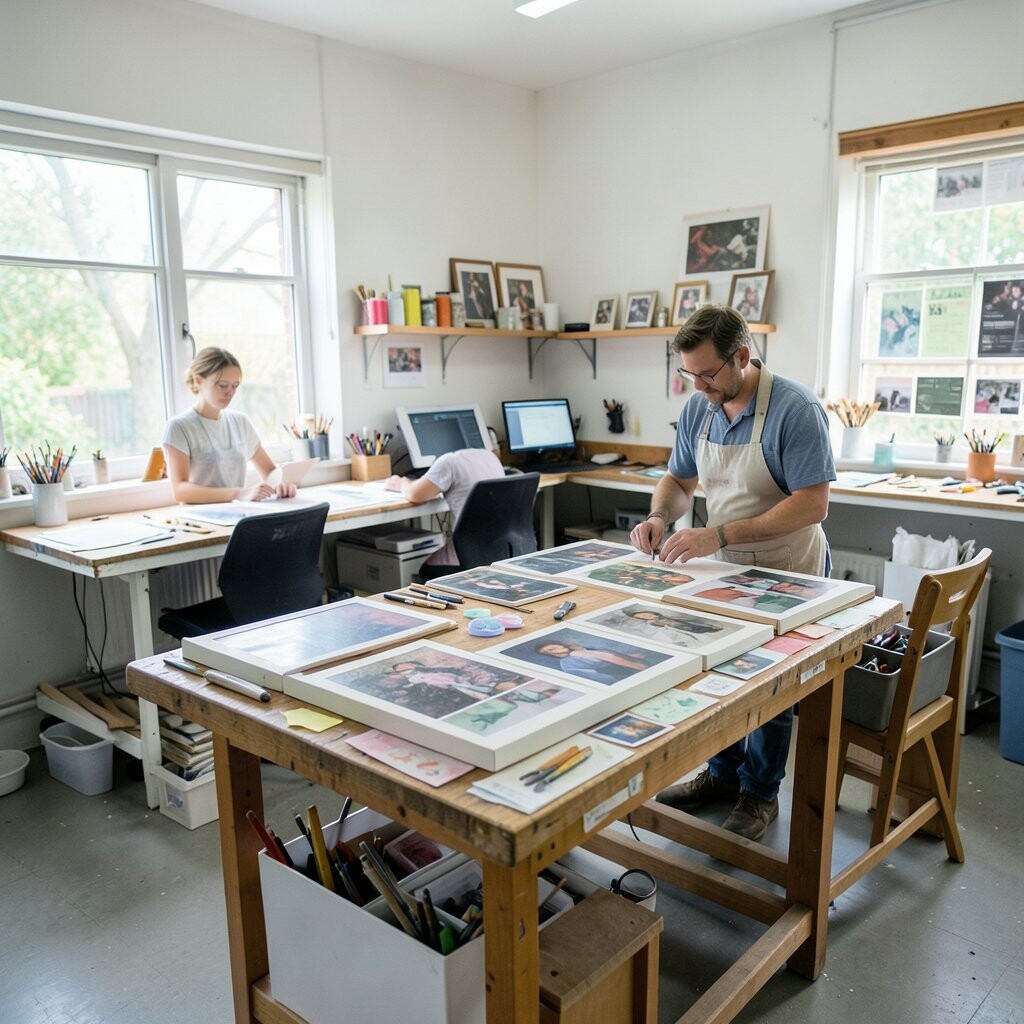
A screen printing workshop has a clean, active feel, with frames, ink, squeegees, shirts, and paper stacked in neat rows. The finished prints can be bold and flat, with strong color blocks that look sharp on clothing, bags, and posters.
This workshop helps people make items they can wear or sell, which makes it useful for hobby makers and small brands. It can start at a moderate cost, since screens, ink, and basic press tools are needed, but the same setup can be used again and again.
Screen printing is still a popular trend because people like custom shirts and simple graphic art. You can let makers bring their own slogans, icons, or drawings so the final print feels tied to their own taste.
12. Paper Craft Studio
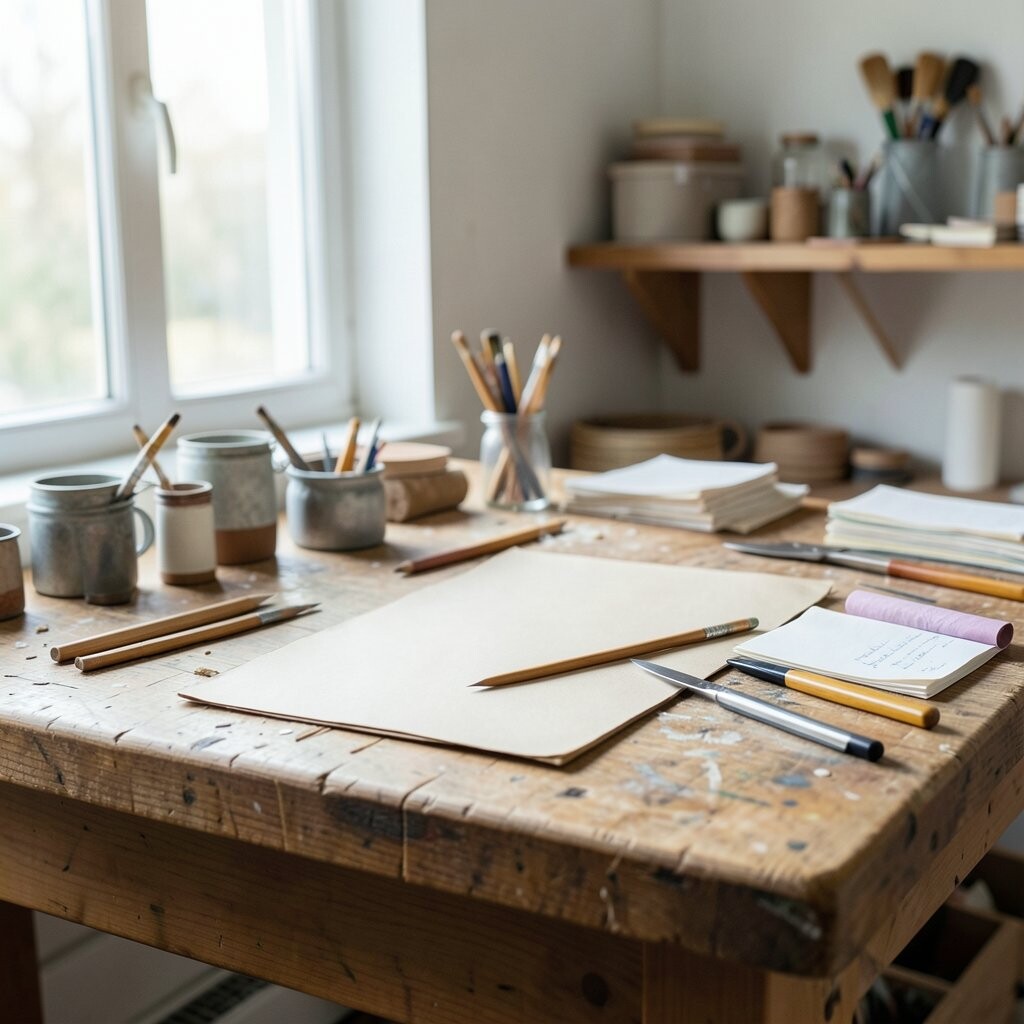
A paper craft studio can look light and colorful, with stacks of paper, scissors, glue, stamps, and ribbons on open tables. The finished pieces can include cards, boxes, notebooks, and paper flowers, all with clean edges and neat folds.
This idea is great for people who want a low-cost workshop with many possible projects. Paper, glue, and basic tools are easy to find, and the setup can grow with punches, cutting mats, and decorative extras.
Paper crafts fit well with today’s love for handmade gifts and small event decor. You can make the workshop more personal by offering custom themes for birthdays, weddings, or home notes, so each person makes something useful right away.
13. Metal Stamping Studio
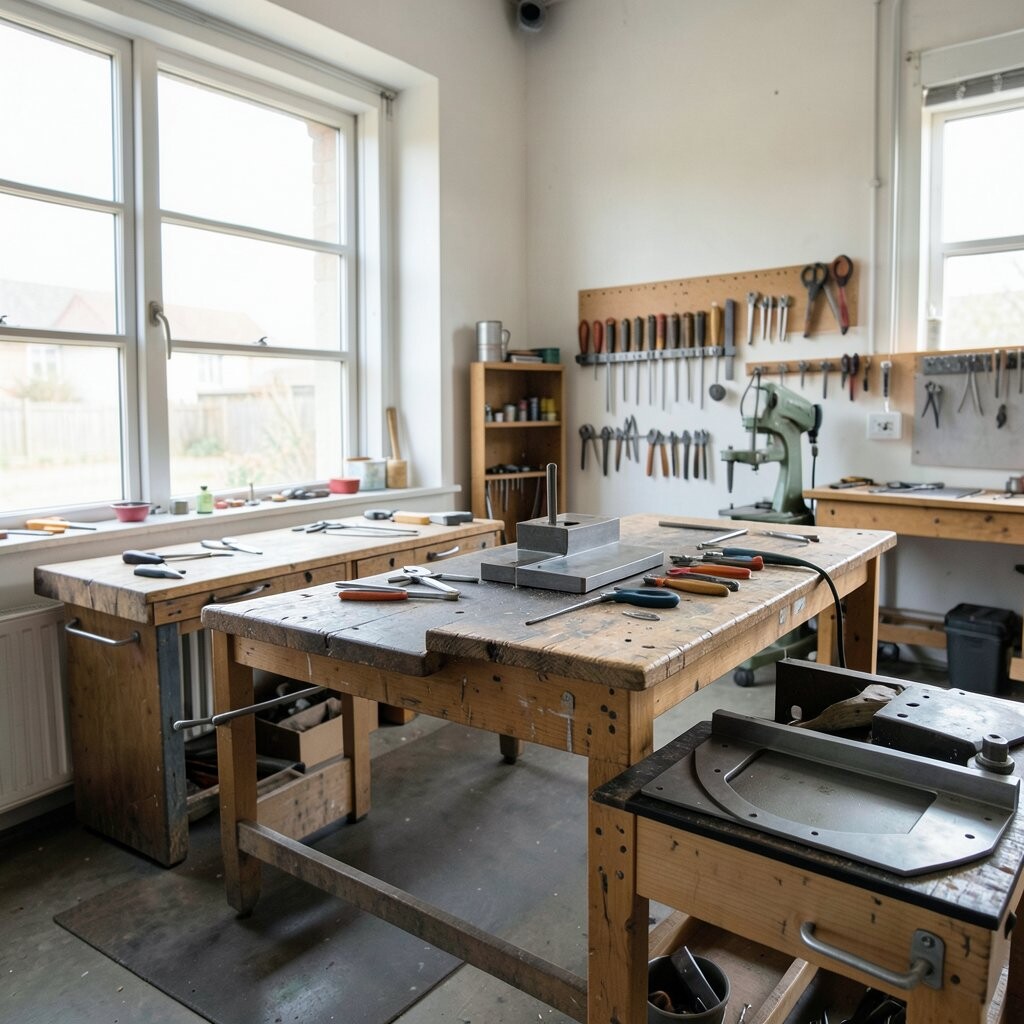
A metal stamping studio has a crisp, solid look, with blanks, letter stamps, hammers, and polished tags spread across the bench. The finished pieces can be bracelets, key rings, dog tags, or small signs with clean letters and a simple shine.
This workshop is useful because it lets people make lasting keepsakes with names, dates, or short words. The cost can stay in a middle range, since the main tools last a long time and metal blanks can be bought in packs.
Personal touch matters a lot here, and that is part of the appeal. People often like this craft because it matches the trend for simple, custom items that feel meaningful without being too fancy.
14. Floral Design Studio
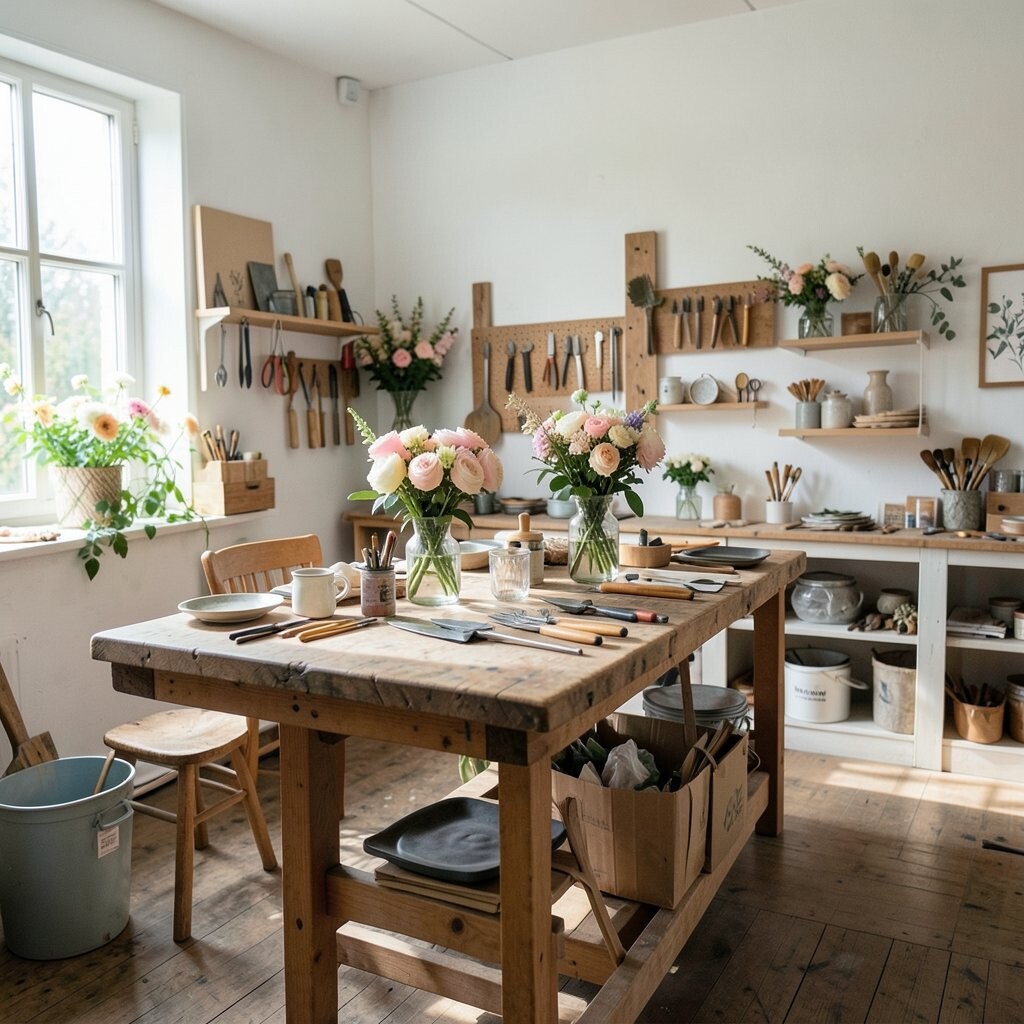
A floral design studio can smell fresh and look full of color, with stems, shears, buckets, and ribbon on every side. The finished bouquets can be loose and natural or neat and shaped, and each one can show a different mix of texture and color.
This workshop helps people learn how to arrange flowers for home, gifts, and events. The cost can change based on flower type, but a good start can use local blooms, greenery, and simple wrap paper to keep waste and expense down.
Floral work fits current trends for small event decor and home table pieces. You can make it personal by letting people choose a color mood, favorite flowers, or a style that fits a room or special day.
15. Mixed Media Art Room
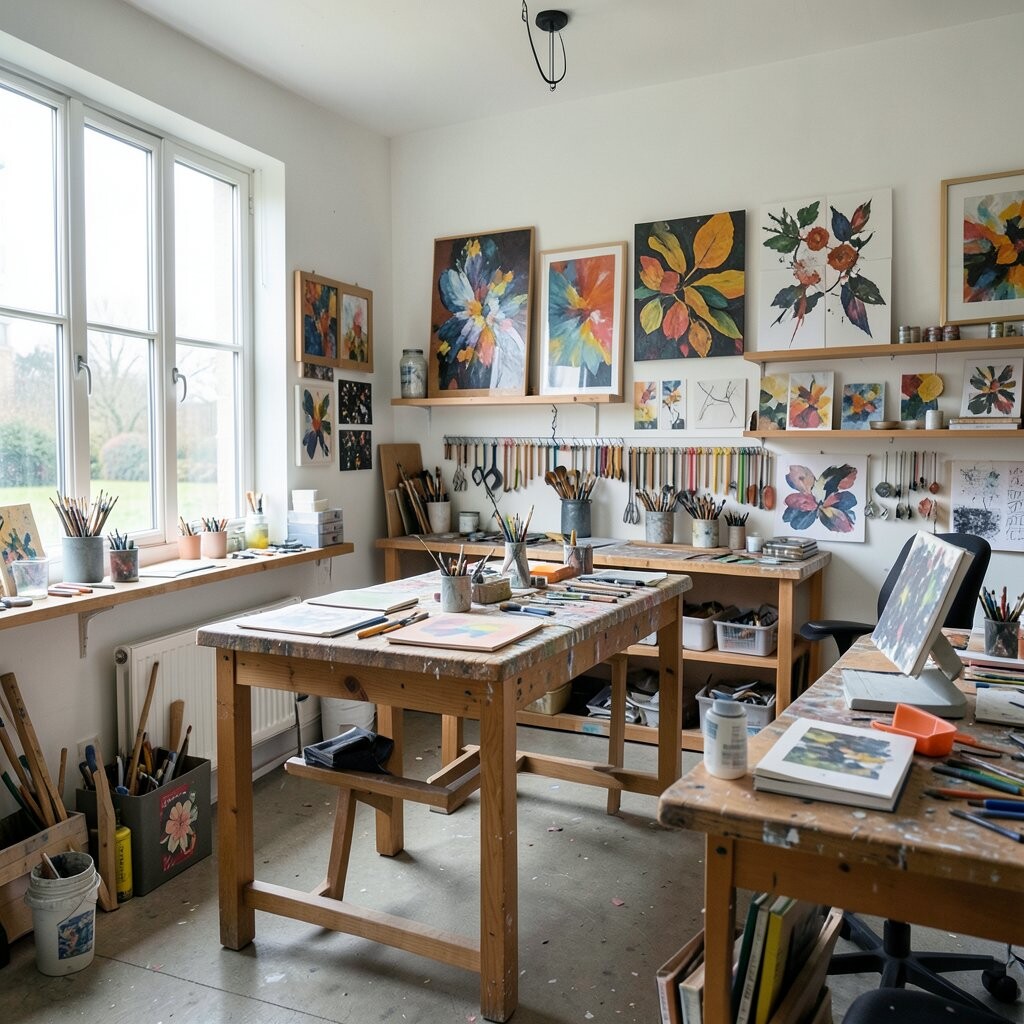
A mixed media art room can feel lively, with paint, fabric, paper scraps, ink, glue, and found items all in one place. The finished art can look layered and full of texture, with marks, shapes, and small objects that make each piece stand out.
This workshop is great because it gives people freedom to try many materials without sticking to one rule. The cost can be kept in check by using recycled items, leftover supplies, and basic paints, which also makes the workshop feel more open and easy to run.
Mixed media fits well with the trend for art that feels personal and a little rough around the edges. You can make it more unique by asking people to add photos, notes, maps, or fabric from home so the final work tells a real story.