Built-in dining rooms can make a home feel calm and neat. They also help you use space in a smart way and add style that fits daily life.
1. Built-In Banquette Seating
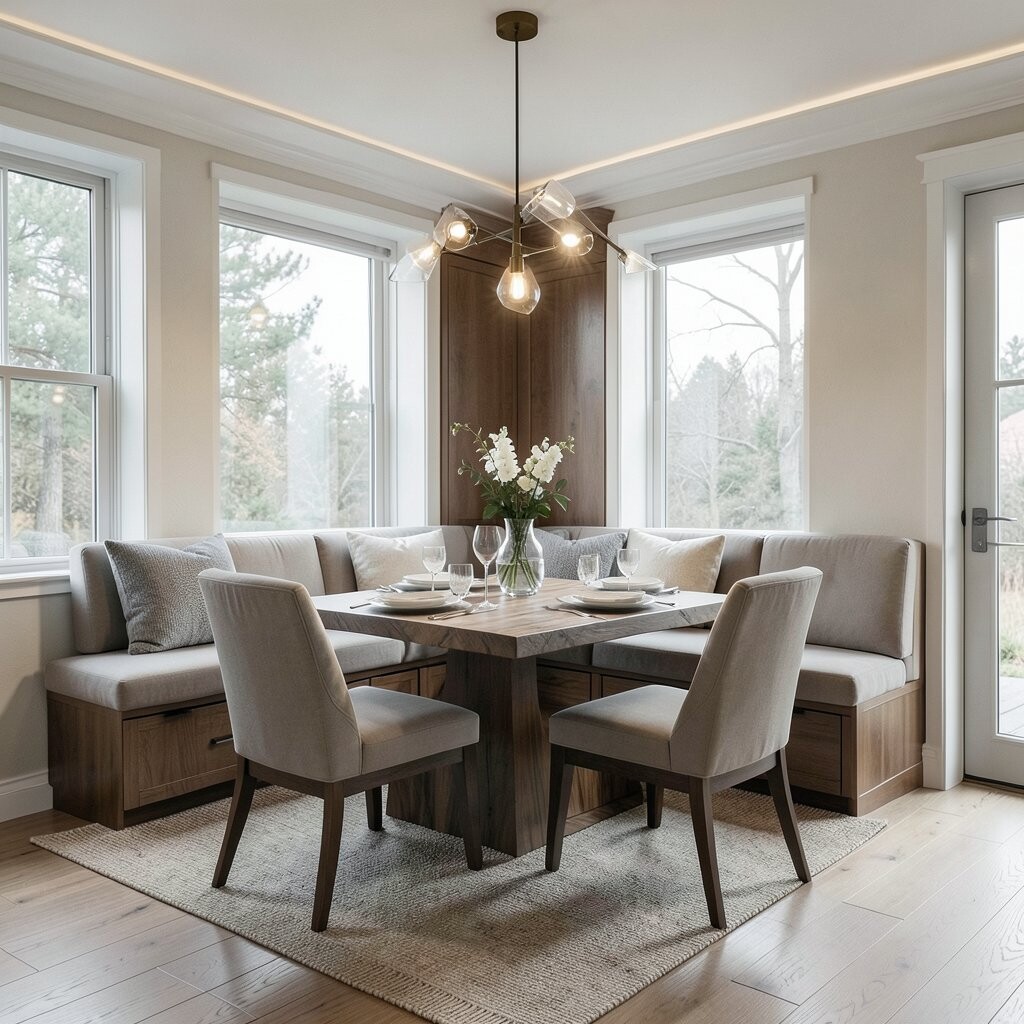
A built-in banquette is one of the most common dining room ideas, and it works well in both small and large homes. It uses a fixed bench along a wall or in a corner, which can make the room feel tidy and open.
This setup is useful because it gives you more seats without taking up as much floor space as loose chairs. It can also make meals feel more relaxed, since people can sit close together and talk with ease.
You can keep the look simple with plain wood and soft cushions, or you can add fabric that brings in color and pattern. If you want a custom feel, match the bench finish to your table or trim for a more pulled-together look.
2. Window Seat Dining Nook

A dining nook near a window can make everyday meals feel bright and easy. Natural light helps the room feel larger, and a built-in seat under the window gives the space a calm, homey feel.
This idea works well for homes that do not have a full dining room. It can also help you make use of an odd corner or a narrow wall that might not fit a full set of chairs.
Many people like to add drawers or hidden storage under the seat for table linens, games, or extra dishes. This can help cut clutter and keep the room useful without adding more furniture.
3. Corner Built-In Booth
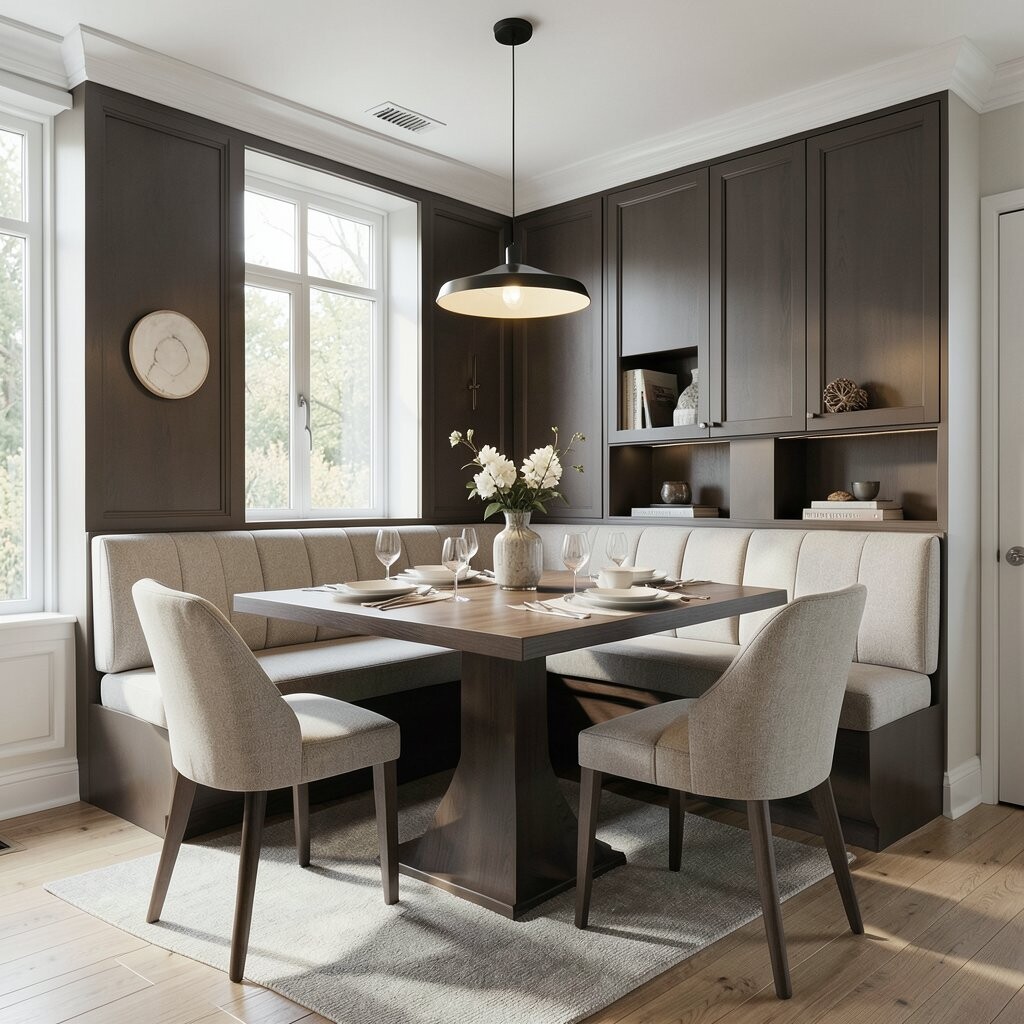
A corner booth is a smart choice when you want a dining space that feels cozy and private. It can turn a plain corner into a spot that feels planned and useful.
This style is often seen in modern homes because it saves space and gives the room a clean look. It also works well for families, since the booth can fit more people than it may seem at first glance.
You can keep it light and simple with pale paint and smooth seats, or make it stand out with darker wood and bold fabric. A round table often fits this setup well and makes it easier to move around.
4. Built-In Storage Sideboard
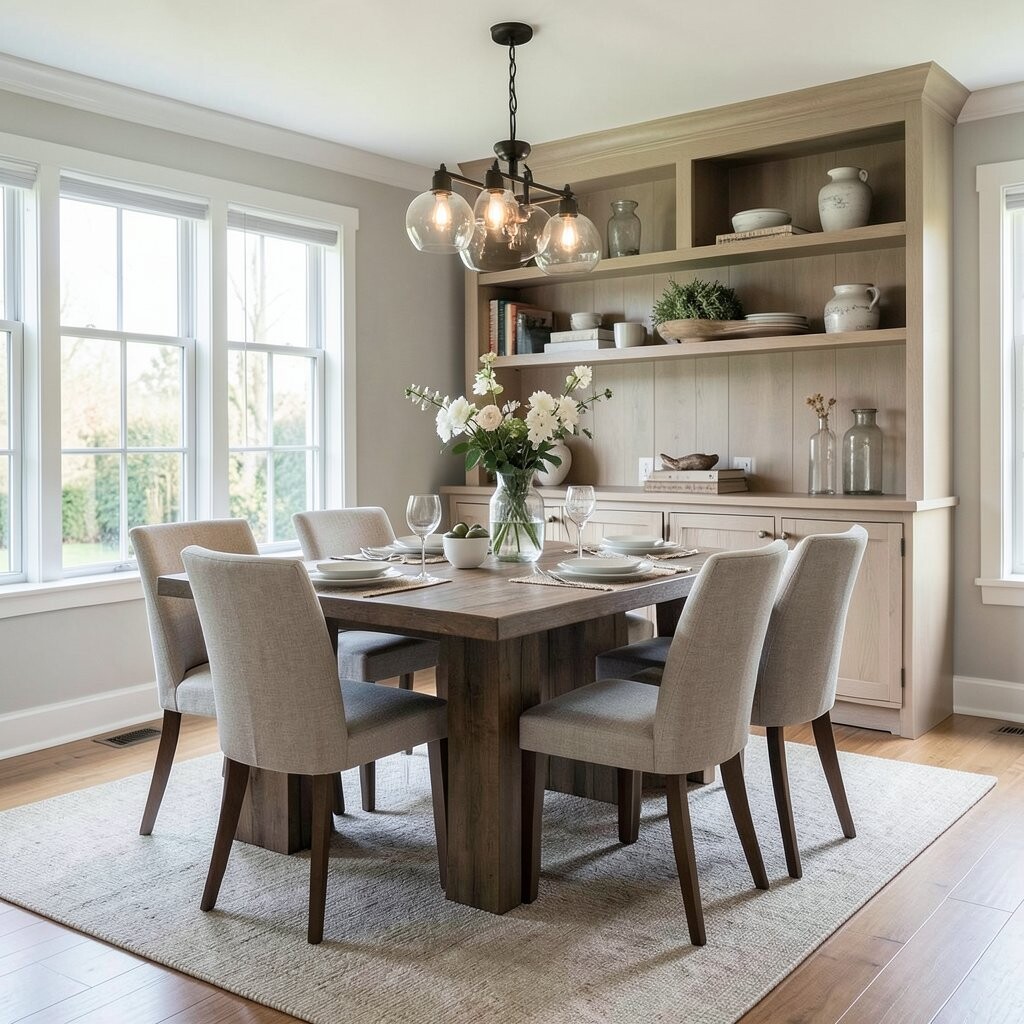
A built-in sideboard adds both style and storage to a dining room. It can run along one wall and give you a place to keep dishes, serving pieces, and table items close by.
This kind of built-in helps the room stay neat, which is a big plus if you use the space often. It can also make the room feel more finished, since the storage looks like part of the home instead of extra furniture.
Some people like open shelves for display, while others prefer closed cabinets for a cleaner look. If you want a lower-cost option, you can use simple painted boxes or stock cabinets and add trim to make them feel custom.
5. Built-In Display Shelves
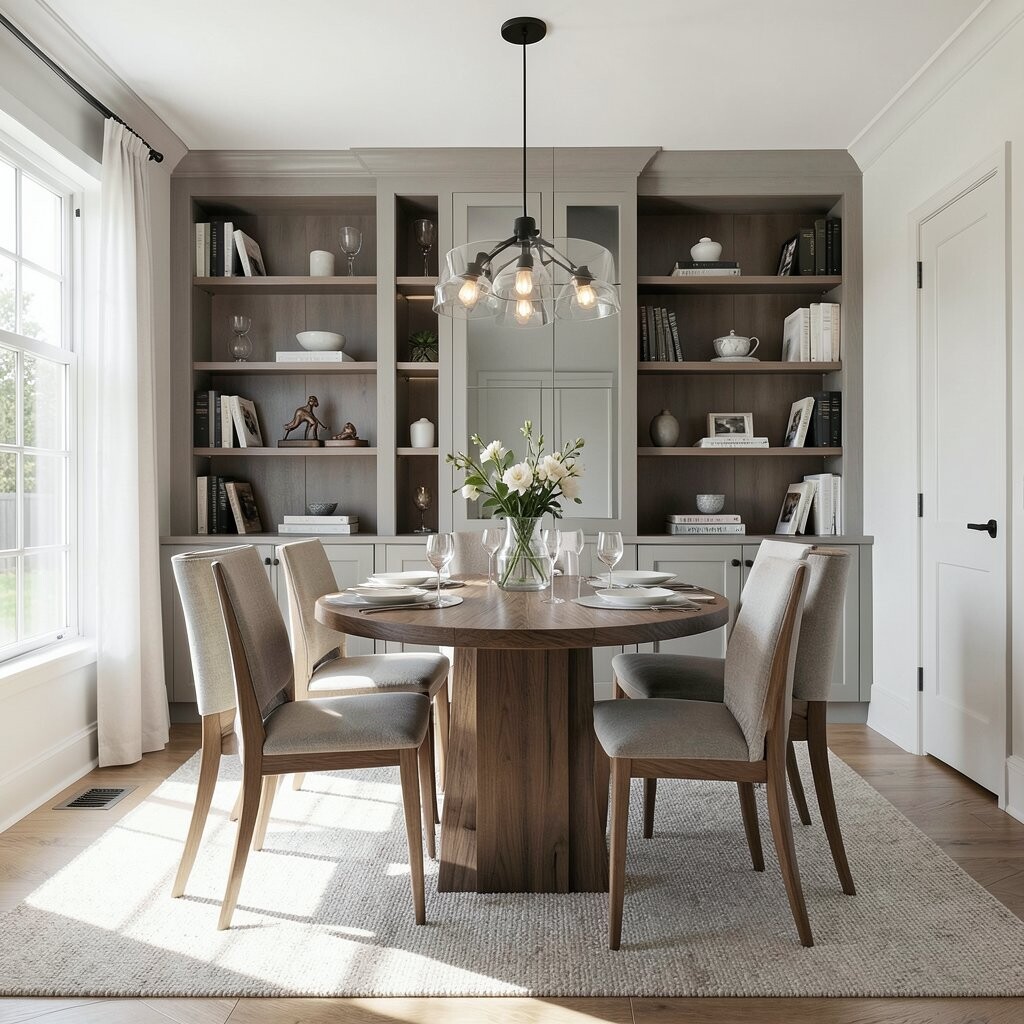
Built-in display shelves can give a dining room a warm and personal look. They let you show plates, glassware, books, or family items in a way that feels neat and planned.
This idea is nice if you want the room to feel more lived-in without looking messy. It also gives you a way to add style without filling the floor with more furniture.
You can style the shelves with a mix of everyday items and a few small decor pieces. To keep the space from feeling crowded, leave some open space between objects and stick to a color set that works with the room.
6. Built-In Bench With Hidden Storage

A built-in bench with hidden storage is a practical choice for busy homes. It gives you a place to sit and also gives you room to tuck away items you do not want to leave out.
This can be a good fit for homes that need to make the most of every inch. It also helps if you want a dining room that feels calm, since less stuff is left on view.
You can use lift-up lids, drawers, or cabinet fronts under the seat. If you want a more modern look, choose flat fronts and simple hardware, but if you want a softer feel, add cushions and warm wood tones.
7. Built-In Curved Banquette

A curved banquette can make a dining room feel soft and a little more special. The shape breaks away from hard lines and can help the room feel smooth and welcoming.
This idea works well in rooms with round or oval tables, since the shapes fit together in a natural way. It can also help people see each other more easily during meals and chats.
Curved seating may cost more than a straight bench because it takes more planning and work. Still, many people like it for the custom feel and the way it gives a room a more unique look.
8. Built-In Dining Wall With Paneling

A dining wall with paneling can add depth and style without needing a lot of decor. The wall itself becomes part of the design, so the room can look rich even if the rest stays simple.
This idea is good for homes that want a classic look with a fresh feel. Paneling can also help a plain room feel more complete and less empty.
You can paint the paneling the same color as the walls for a soft look, or use a deeper shade to make it stand out. This style is popular in many homes now because it feels clean, calm, and easy to match with other pieces.
9. Built-In Dining Alcove

A built-in dining alcove makes use of a small nook or cut-out space in the home. It can turn an area that might be ignored into a useful spot for meals and daily tasks.
This is a strong choice for apartments, small homes, or open layouts that need a clear dining zone. It gives the room a set shape, which can help the whole space feel more organized.
You can keep the alcove simple with a small table and built-in seating, or add shelves above for more use. Many people like this idea because it feels private without needing walls or doors.
10. Built-In Dining Room With Mixed Materials

Mixing wood, paint, stone, or metal in a built-in dining room can give the space more depth. The mix of textures makes the room feel less flat and more personal.
This style can help you match the dining room to the rest of the home. For example, wood can bring warmth, while painted trim or metal lights can add a clean and current feel.
If you want to keep costs in check, use one main material and add smaller parts of another finish. A mix like this can look high-end without needing a full custom build.
11. Built-In Dining Room With Open Flow

A built-in dining room with open flow works well in homes where the dining area connects to the kitchen or living room. Built-ins can help mark the space without blocking views or making the room feel closed off.
This style is helpful because it keeps the home easy to move through. It also makes the dining area feel like part of the whole house, not a space that sits apart.
Low benches, slim shelves, and simple storage can help keep the look open. If you want a more current feel, choose clean lines and light colors so the room feels airy and easy to use.
12. Built-In Dining Room With Bold Color

Bold color can make a built-in dining room feel lively and full of character. A painted bench, cabinet, or wall can give the room a clear focal point without needing many extra pieces.
This is a good way to make a dining room feel more personal. It can also help a plain room feel less dull, which is useful if the space does not get much natural light.
Deep green, navy, clay, and warm red tones are all common choices in current home design. If you want the look to last, choose a color you enjoy and pair it with simple wood or neutral fabric.
13. Built-In Dining Room With Custom Details
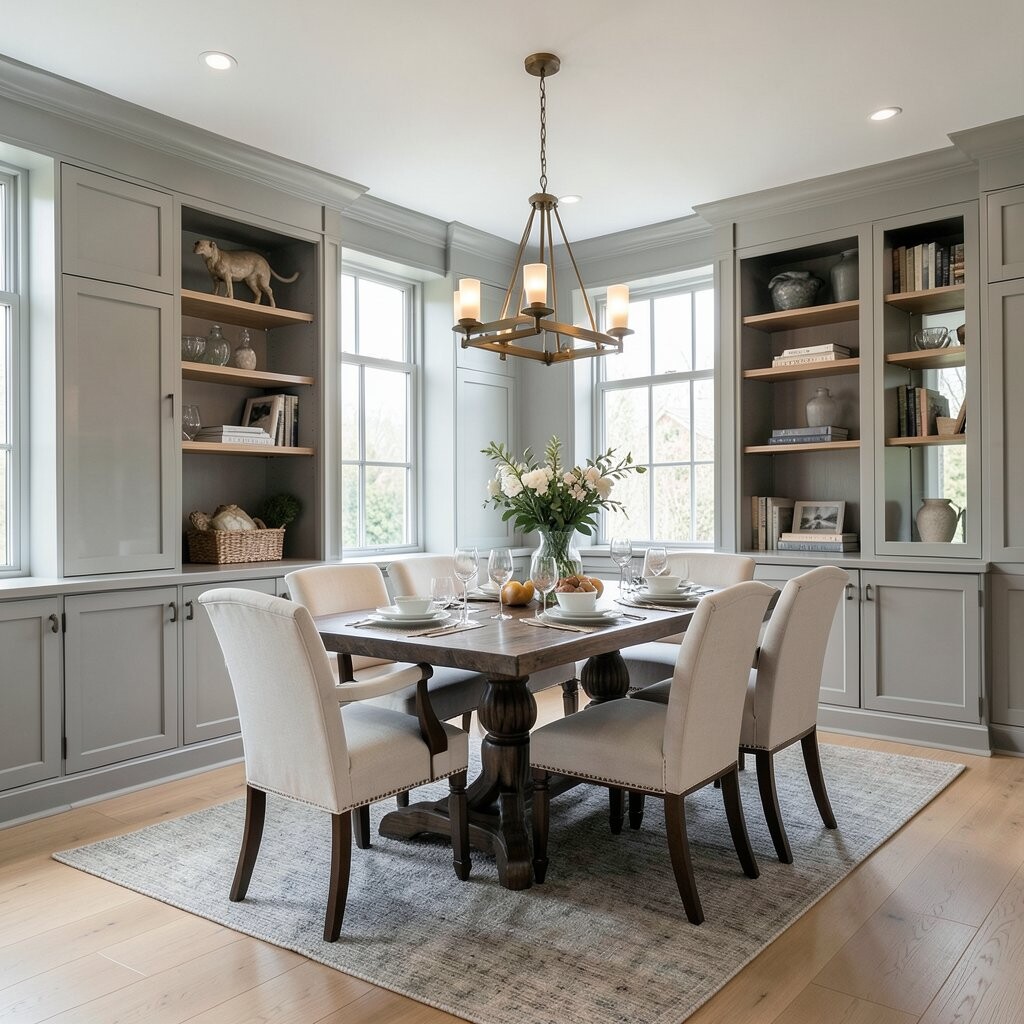
Custom details can make a built-in dining room feel special and made for your home. Small choices like trim, cushion shape, shelf size, or cabinet pulls can change the whole look.
This idea gives you a lot of room to make the space fit your needs. You can plan it for family meals, homework, work time, or quiet coffee breaks, all in one spot.
Custom work may cost more than ready-made furniture, but it often uses space better and lasts longer. If you want a lower-cost path, start with one built-in piece and add small details over time as your budget allows.