Exposed brick can give a kitchen a warm and lived-in look. But a few common mistakes can make the space feel messy, hard to clean, or out of balance.
1. Leaving the Brick Too Dirty

One common mistake is keeping the brick in rough shape and calling it style. Dust, grease, and old stains can make the wall look dull instead of rich and warm.
A clean brick wall shows off the color and texture much better. It also helps the kitchen feel fresher and more cared for.
Use a soft brush, mild soap, and a gentle touch when cleaning. If the brick is very old, test a small spot first so you do not cause damage.
2. Sealing It the Wrong Way

Brick needs some care, but using the wrong sealer can change the whole look. A shiny coat may make the wall look fake or too smooth for a kitchen with a natural feel.
Some sealers also trap moisture, which can lead to problems later. That can be a big issue near sinks, stoves, and dish areas.
Pick a sealer made for brick and for indoor use. A matte or low-sheen finish often looks better in a kitchen and keeps the wall more natural.
3. Ignoring Grease Near the Stove
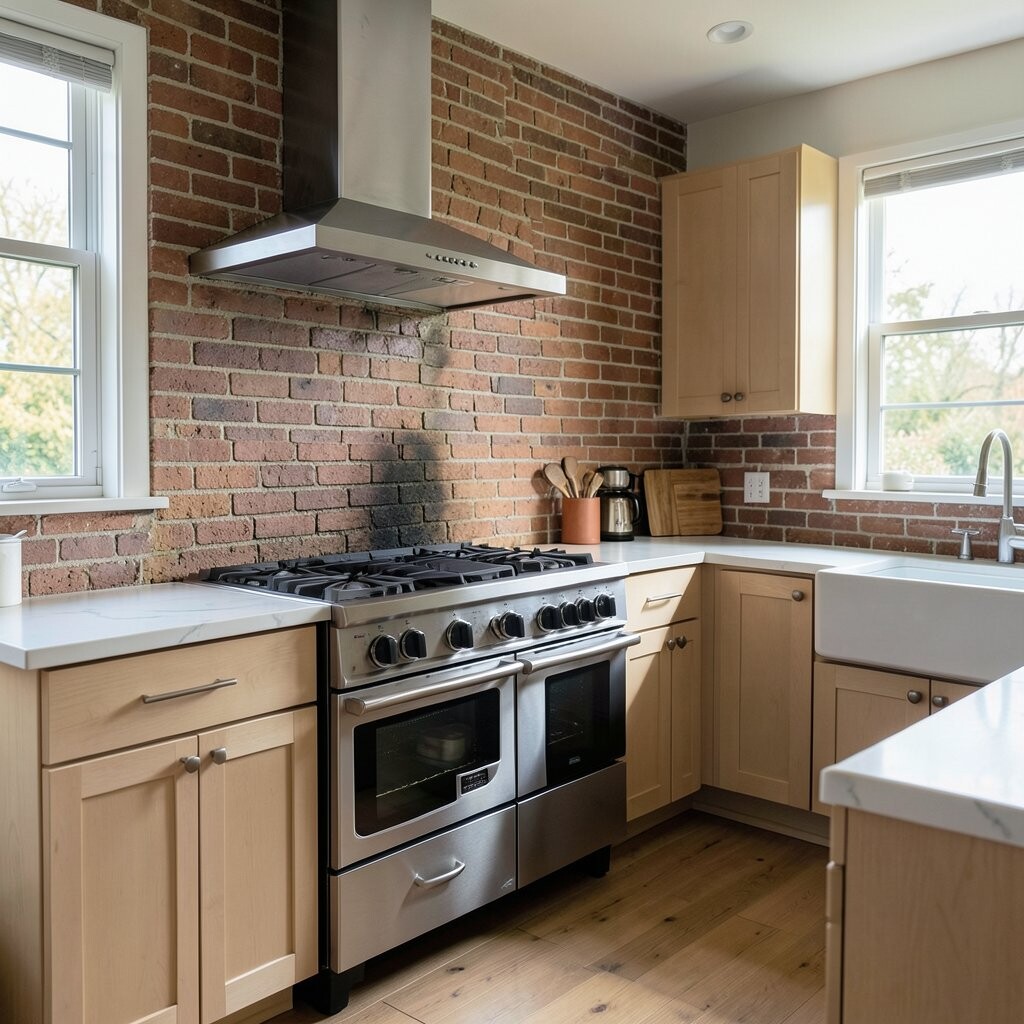
The area near the stove gets hit with grease more than any other part of the kitchen. If you leave exposed brick too close to heat and splatter, it can stain fast.
Those marks can be hard to remove once they sink in. The wall may start to look patchy and worn in a bad way.
Use a splash guard, a range hood, or a sealed finish in that area. These small steps can help keep the brick looking good for a long time.
4. Picking Brick That Does Not Fit the Room

Not every brick wall works in every kitchen. A very dark or rough wall can make a small room feel tight, while a pale wall may look too flat in a large space.
The wrong brick can also clash with cabinets, floors, and counters. When that happens, the kitchen may feel split instead of calm and put together.
Try to match the brick to the rest of the room’s colors and style. A warm red brick, soft white brick, or mixed tone wall can each give a very different feel.
5. Not Balancing the Brick With Other Surfaces

Exposed brick is bold, so it needs balance. If every other surface is also rough, dark, or busy, the room can feel crowded.
Plain cabinets, smooth counters, and simple floors can help the brick stand out. That mix often looks more clean and modern.
Think about how the wall sits next to wood, stone, metal, and paint. A mix of soft and hard surfaces makes the kitchen feel more easy to use and nicer to look at.
6. Using the Wrong Lighting

Brick changes a lot based on light. Poor lighting can make it look flat, muddy, or too red, while bright light can show off its texture in a better way.
Many people forget that shadows can also change how the wall feels. In a dim kitchen, the brick may seem heavy and dark even if it looked fine in the store or online.
Try warm lights, under-cabinet lights, or wall lights that point across the brick. This helps bring out the surface and makes the kitchen feel more open.
7. Making the Room Too Rustic

It is easy to go too far with a rustic look. If you add brick, wood beams, old metal, and worn decor all at once, the kitchen may feel like a theme room.
That can make the space feel less fresh and less useful for daily life. A kitchen should still feel easy to cook in and easy to live with.
Mix in some simple modern pieces to keep things balanced. Clean lines, plain stools, or smooth cabinet fronts can help the brick feel more current.
8. Forgetting About Maintenance
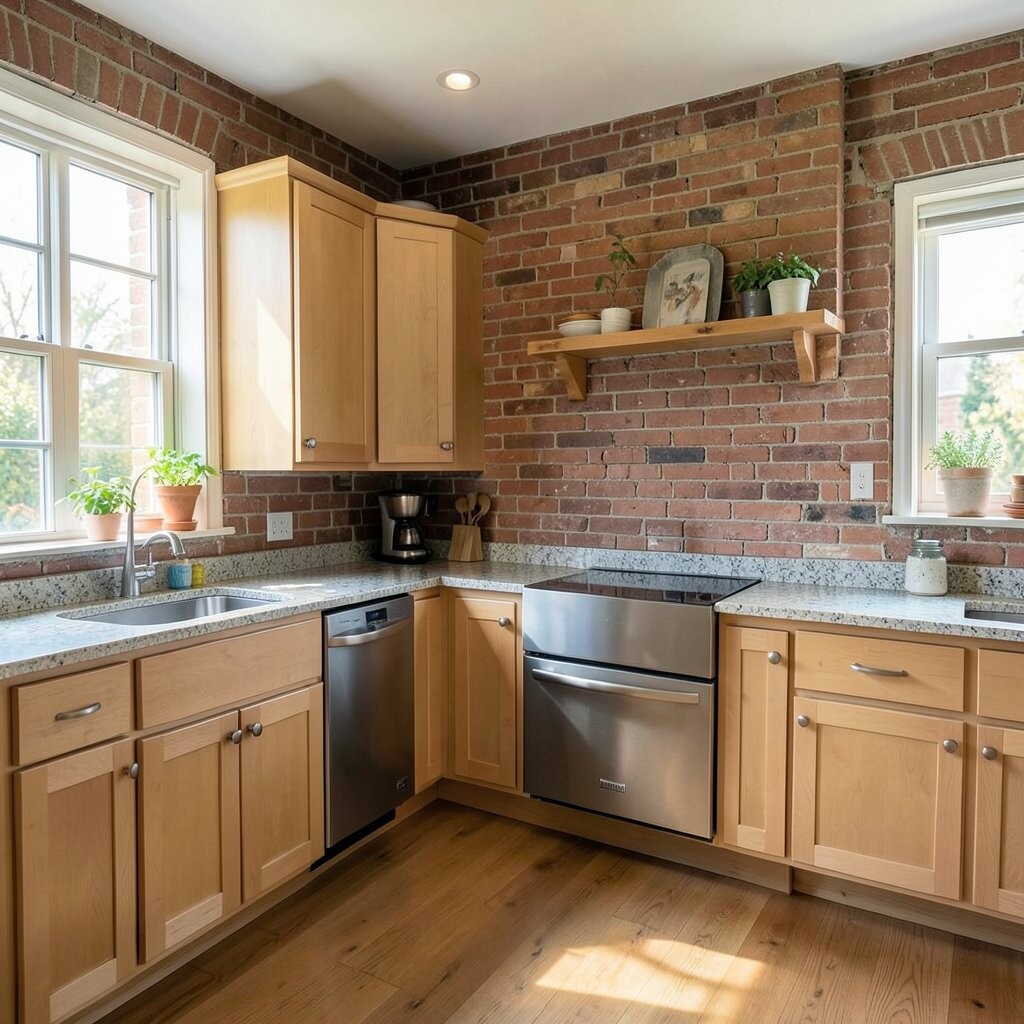
Exposed brick is not a set-it-and-forget-it feature. It can collect dust, soak up stains, and need a little care from time to time.
Some people think brick is easier than tile or paint, but that is not always true. If you ignore it, the wall can lose its charm and start to look tired.
Make a simple care plan based on how much cooking you do. A quick dusting and a check for stains can help keep the wall in good shape.
9. Blocking the Brick With Too Much Decor

Brick looks best when you can see it. If you cover it with too many shelves, signs, hooks, or wall art, the wall loses its main appeal.
The texture and color are part of what makes it special. Too many items can make the room feel busy and hide the unique look you wanted in the first place.
Choose a few pieces that fit the wall and leave some open space. A simple shelf, one art print, or a few plants can be enough.
10. Choosing Cabinets That Fight the Brick
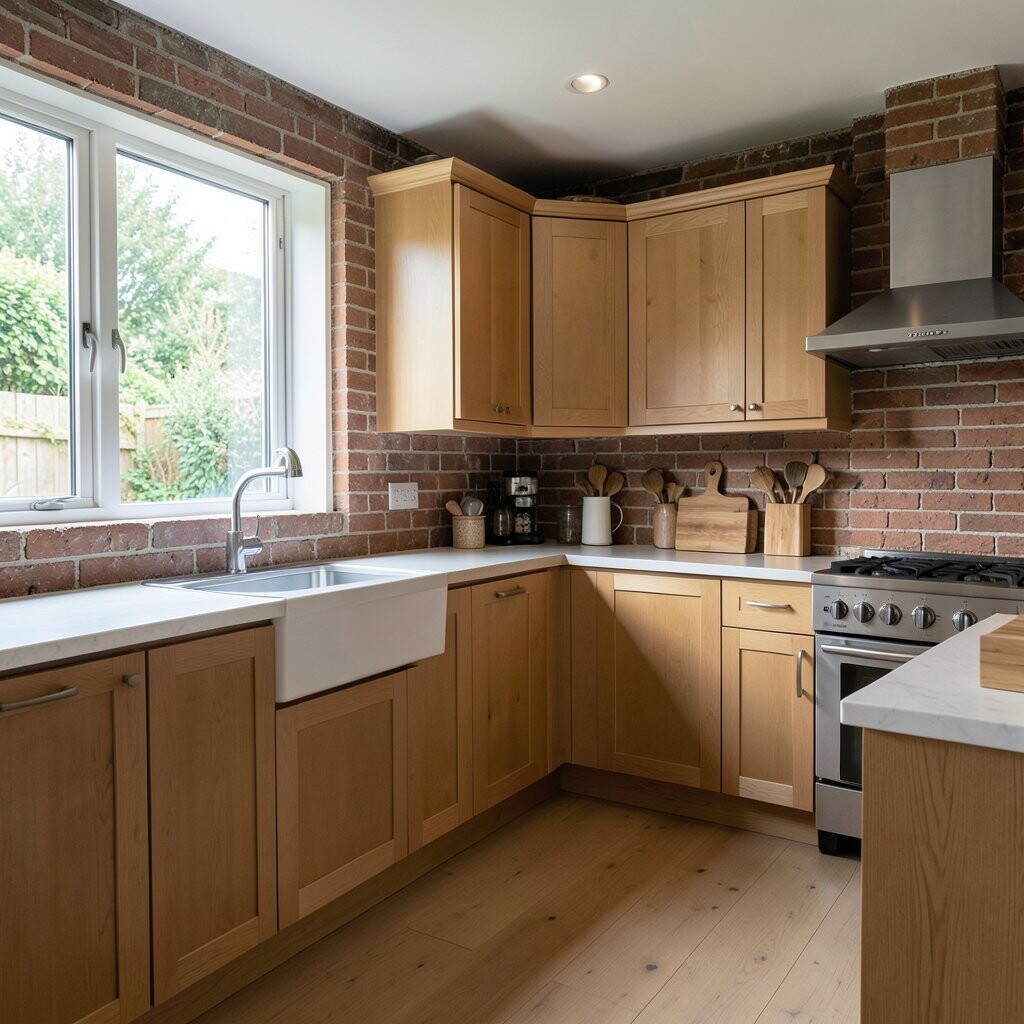
Cabinets can help the brick look better, or they can make it look awkward. Very loud cabinet colors or heavy wood tones may clash with the wall.
When the cabinet style does not match, the kitchen can feel split into parts. That makes it harder for the eye to rest and enjoy the room.
Try cabinet colors that work with the brick, not against it. Soft white, warm gray, natural wood, or even deep green can look good if the tones are chosen with care.
11. Forgetting the Cost of Prep Work

Many people focus on the brick itself and forget the work around it. Cleaning, sealing, fixing loose spots, and adding support can add to the total cost.
If the wall is old, you may also need repairs before you can use it safely. That can change your budget fast if you did not plan for it.
Ask about prep work before you start the project. A clear budget helps you make smart choices and avoid stress later.
12. Using Brick in a Kitchen That Is Too Small or Too Dark

Brick can look great in a small kitchen, but only if it is used with care. A full dark wall in a tight room can make the space feel even smaller.
That does not mean you should avoid brick at all. It just means you may want to use it on one wall, part of a wall, or a lighter brick color.
Light paint, bright counters, and good lighting can help a lot. These choices keep the room open while still giving you the brick look you want.
13. Not Thinking About Heat and Moisture

Kitchens have steam, heat, and water all the time. If the brick is not ready for that, it can stain, crack, or wear down faster than expected.
Areas near sinks and dishwashers need extra care. Even a nice-looking wall can have problems if it is not made to handle the room.
Use the right seal, and check the wall now and then for signs of damage. Good care helps the brick stay strong and look better for years.
14. Following Trends Too Closely

Some brick kitchen looks are very trendy right now. But a style that is hot today may feel old fast if it is copied too closely.
That can leave you with a kitchen that does not feel like your own. It may also make the room harder to enjoy in the long run.
Use trends as a guide, not a rule. Add your own taste through color, lighting, shelves, and decor so the space feels personal.
15. Not Making the Brick Feel Like Part of the Whole Home
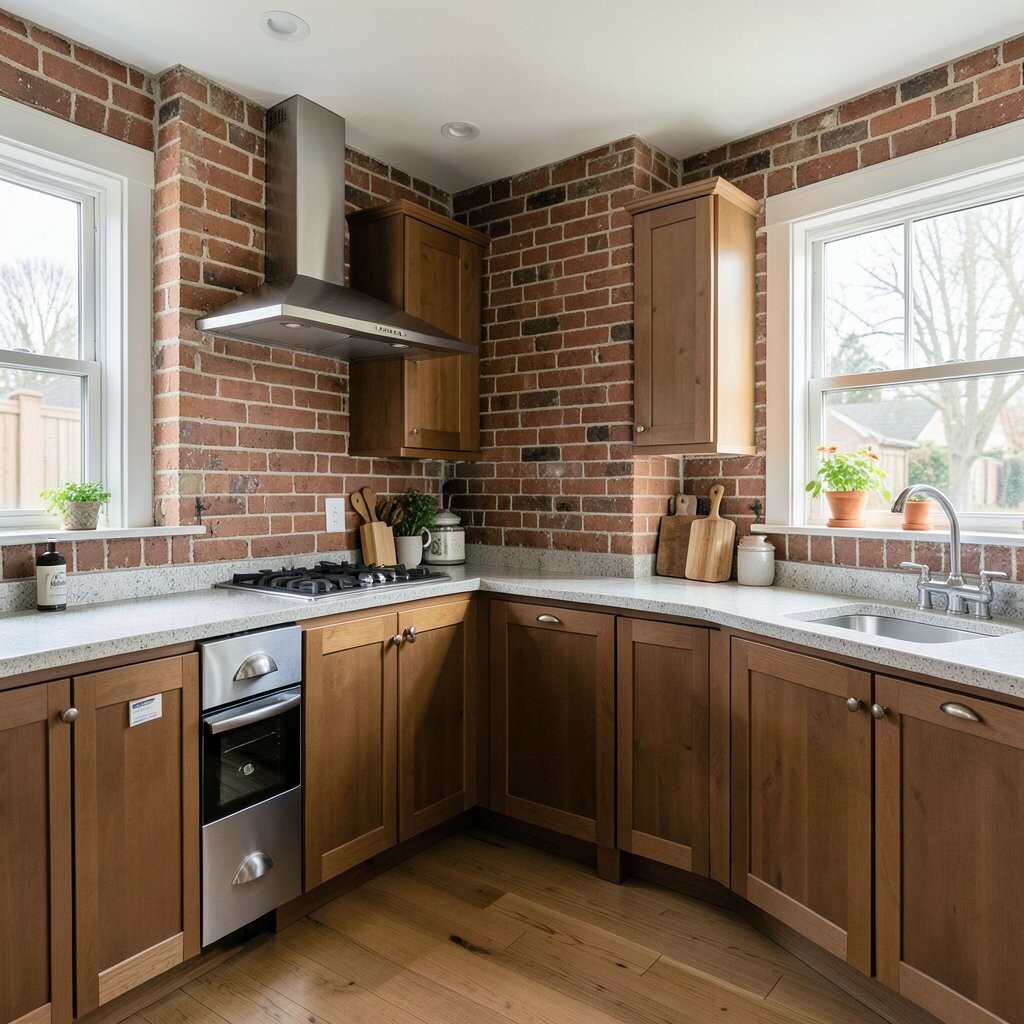
A brick kitchen should still fit the rest of the house. If the wall feels totally separate from nearby rooms, the home can seem uneven.
This is a common mistake when the kitchen is planned on its own with no thought for flow. The result can be a space that looks nice alone but odd when you walk through the home.
Try to repeat a few colors, finishes, or shapes from other rooms. That small link can help the kitchen feel more natural and more connected to the rest of the house.