Desert homes need careful planning so they stay cool, calm, and easy to use. Good design can make dry land feel open, clean, and comfortable for daily life.
1. Low-Profile Adobe Forms
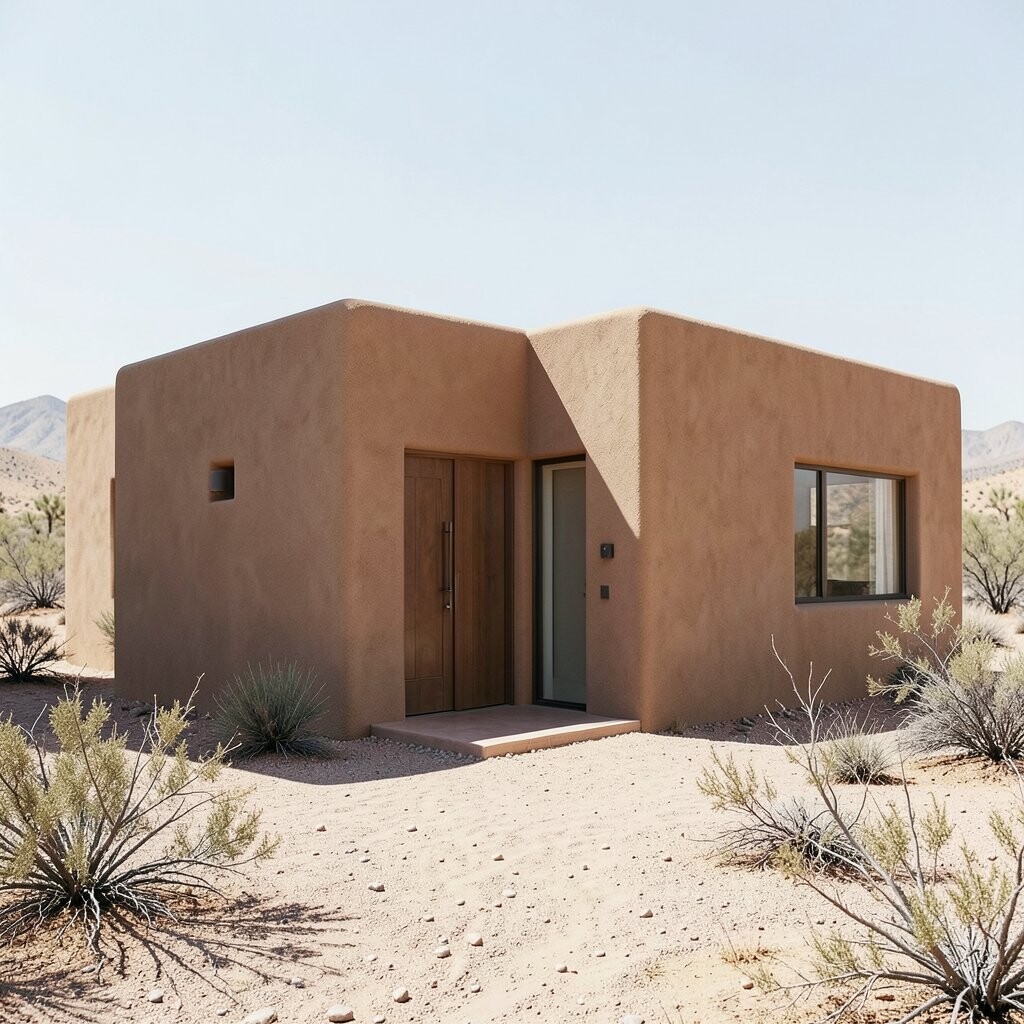
Low-profile adobe homes sit close to the ground and often use thick walls with soft edges. Their shape helps the house feel steady in strong sun and wind.
This style works well because the walls can hold heat during cool nights and stay more even during the day. It also gives rooms a calm look that feels simple and easy to live in.
You can use earth tones, smooth plaster, and small window openings to keep the style honest and clear. This idea is often a good choice for people who want a classic desert feel without a high cost.
2. Courtyard-Centered Layouts
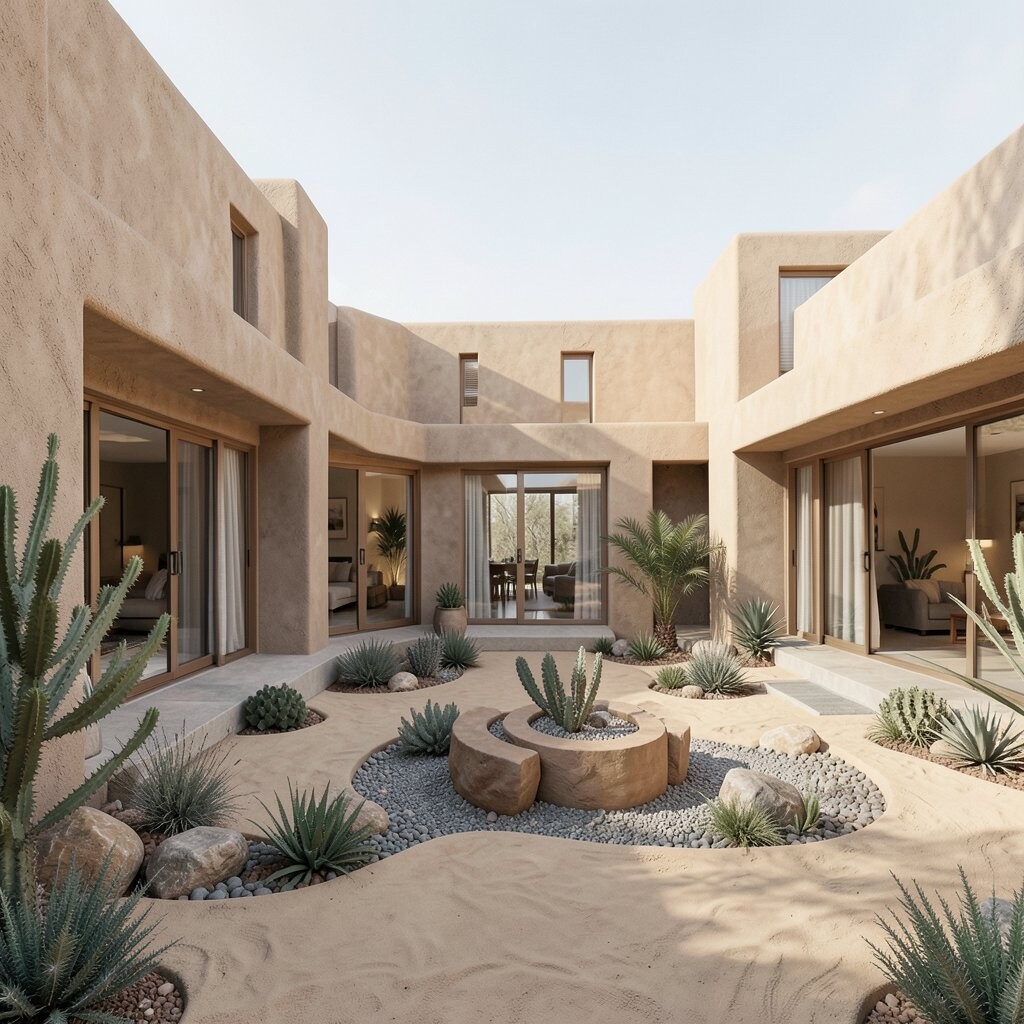
A courtyard home puts the main open space in the middle of the house. This can give people a private place to sit, eat, or rest without facing the street.
The courtyard helps bring light and air into the home while still giving shade in hot weather. It also makes the plan feel special because the rooms can look out toward one shared space.
You can keep the courtyard simple with gravel, a tree, and a few chairs, or make it more detailed with tile and water features. Many new homes use this idea because it works well for both style and daily use.
3. Rammed Earth Walls
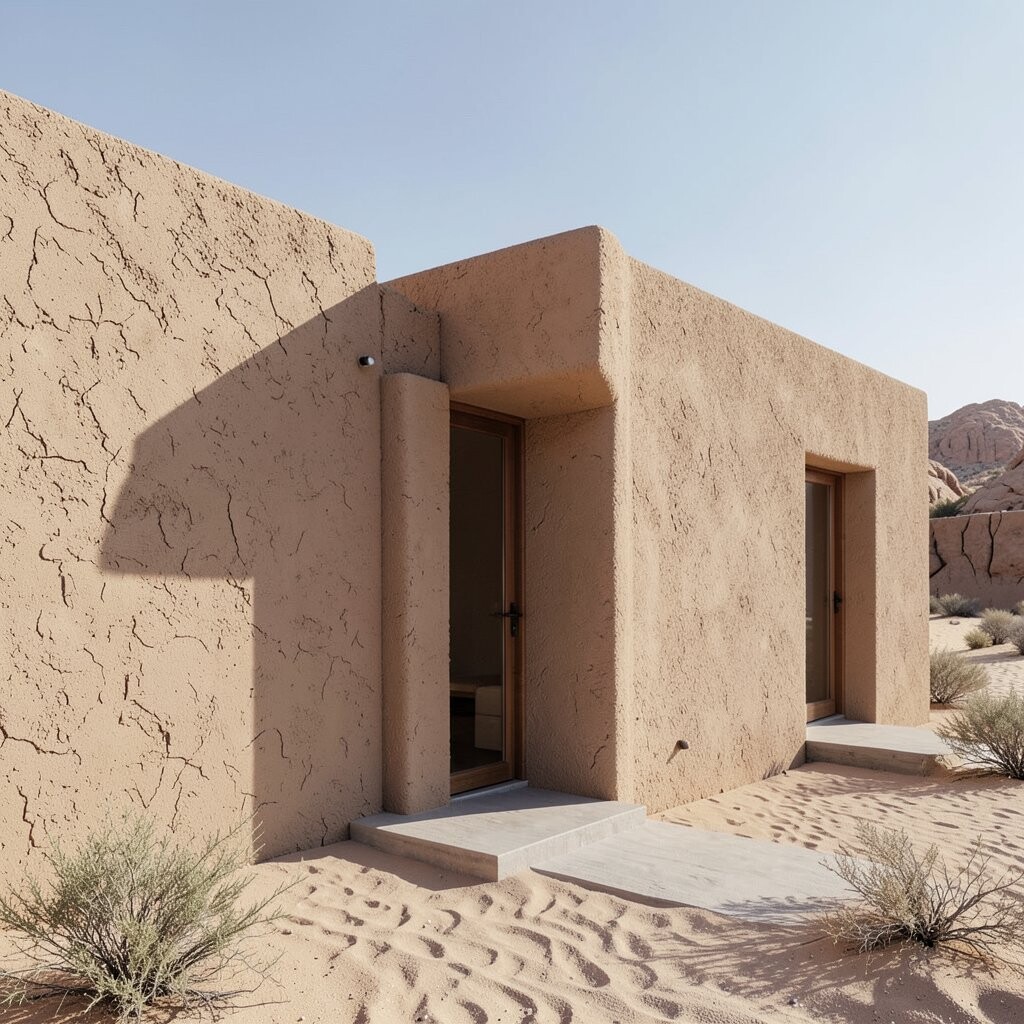
Rammed earth walls have a strong, layered look that fits desert land very well. The surface often shows soft bands of color that come from the soil used in the wall.
These walls can help with indoor comfort because they hold heat and slow down fast changes in temperature. They also last a long time and can cut down on the need for extra wall finishes.
Many people like this choice because it feels natural and plain in a good way. It can cost more at first than basic framing, but it may save on long-term care and energy use.
4. Deep Roof Overhangs
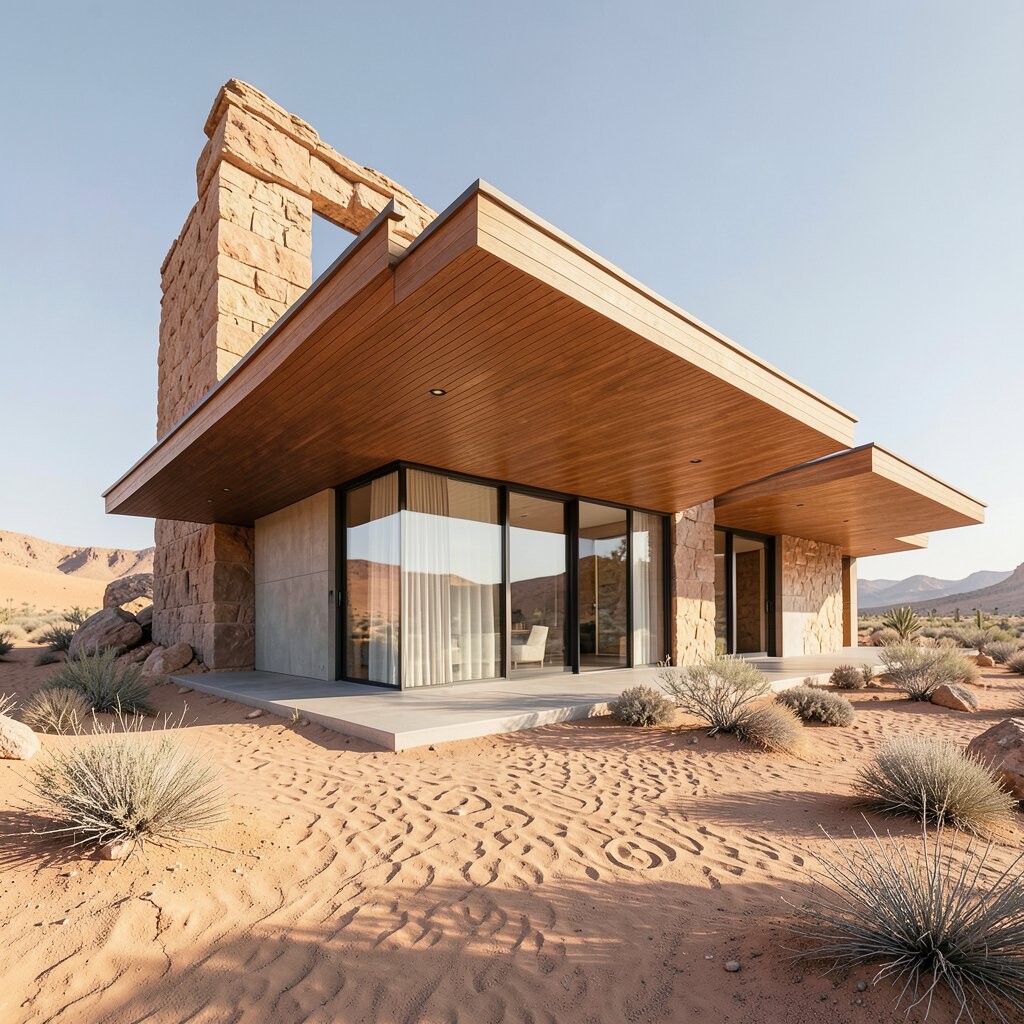
Deep roof overhangs give windows and walls a break from strong sun. They also make the home look sharp and well planned from the outside.
This feature helps keep rooms cooler and can lower the need for heavy window coverings. It also protects walls from dust and rain, which can be useful in dry places with rough weather.
You can make the overhangs match a modern home or a more rustic one, depending on the look you want. This is a smart place to spend money because it helps comfort and also adds style.
5. Shaded Outdoor Living Rooms
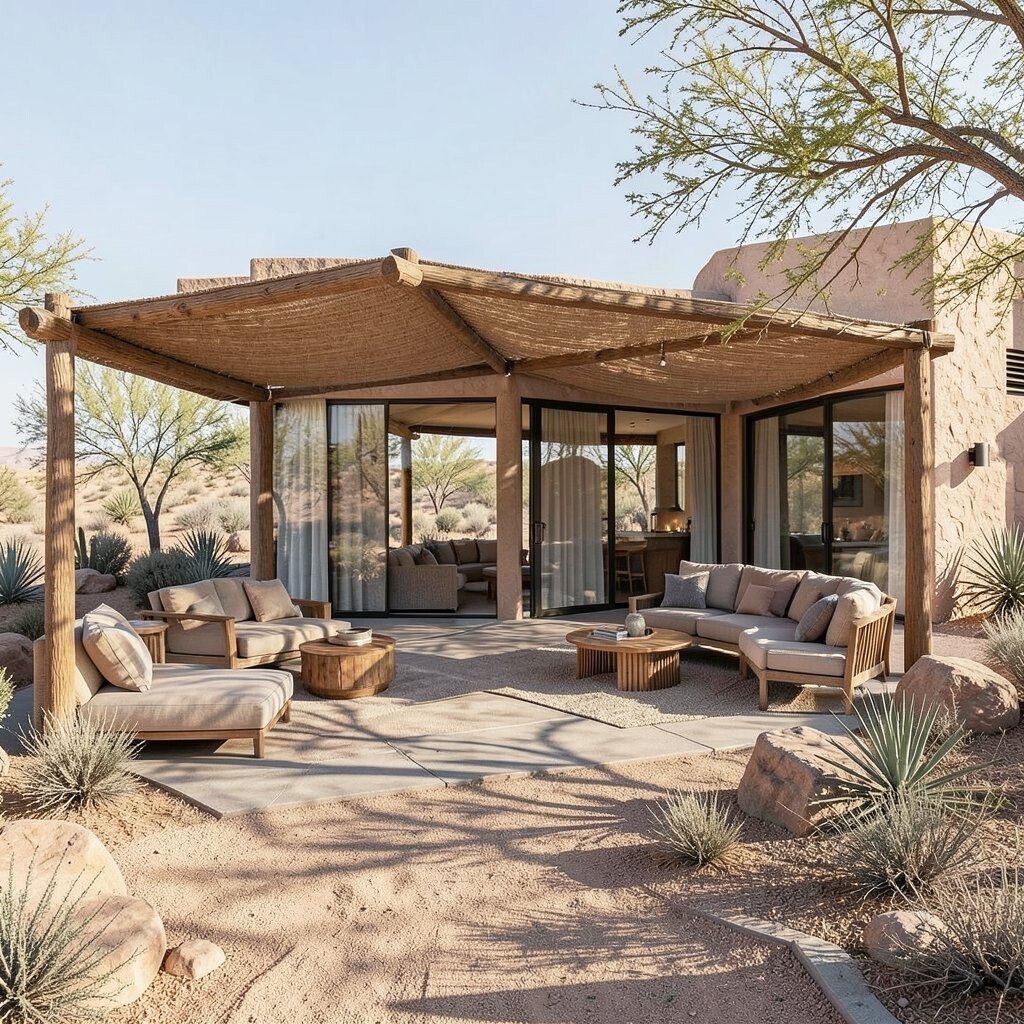
A shaded outdoor living room gives you a place to sit outside without full sun. It can use a pergola, a roof, or even a fabric cover to make the space feel usable for more of the day.
This kind of space helps families spread out and enjoy the land around them. It also makes the home feel bigger without adding a full indoor room.
Try using outdoor rugs, simple wood furniture, and soft lighting to make the area feel warm and lived in. Many people now want outdoor spaces that work like real rooms, and this trend fits desert homes very well.
6. Small, Well-Placed Windows
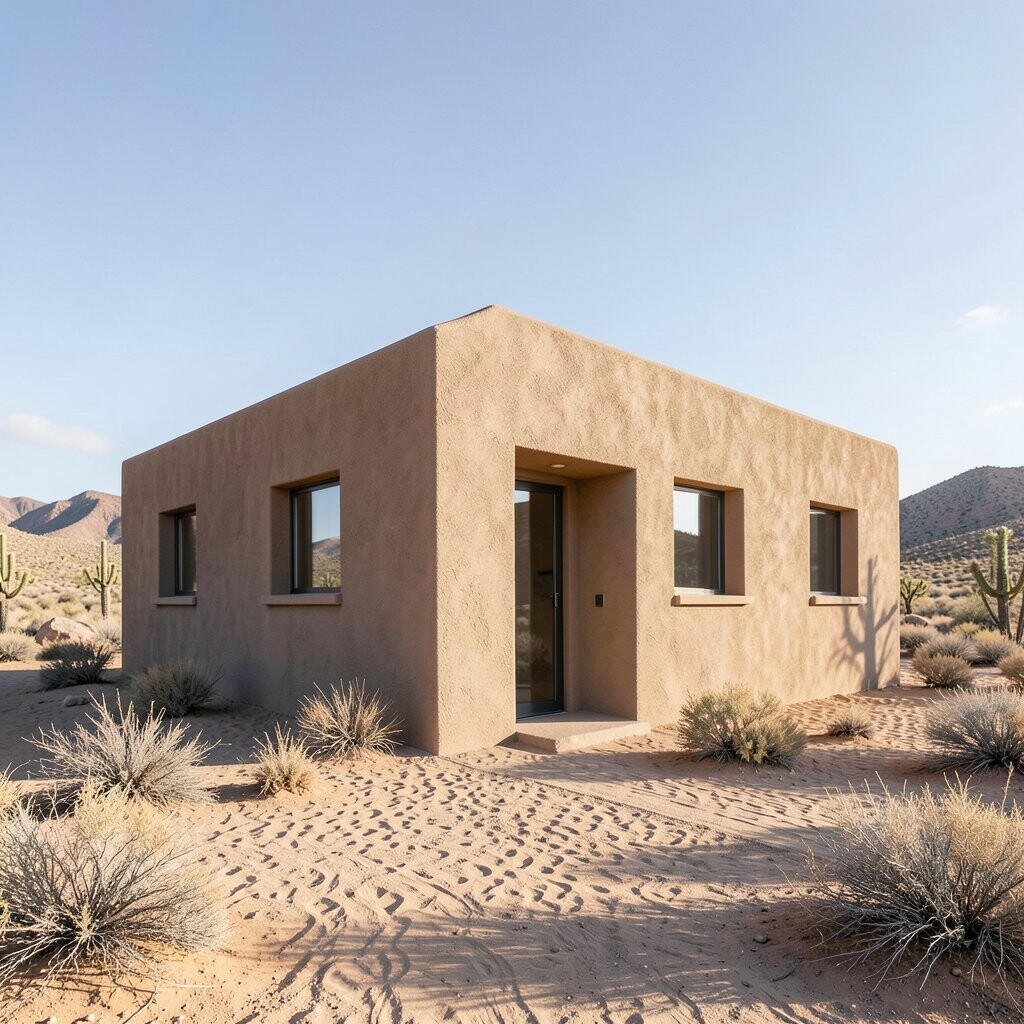
Small windows can help control heat and glare in a desert home. When they are placed with care, they still give good light without making the house feel too hot.
This idea can also add privacy, which is useful in open desert settings. The outside look often feels neat and calm because the wall surfaces stay strong and simple.
You can use deep window frames or shades to add more comfort and style. This choice often keeps building costs lower than large glass walls, and it can help reduce energy use over time.
7. Earth-Tone Color Palettes
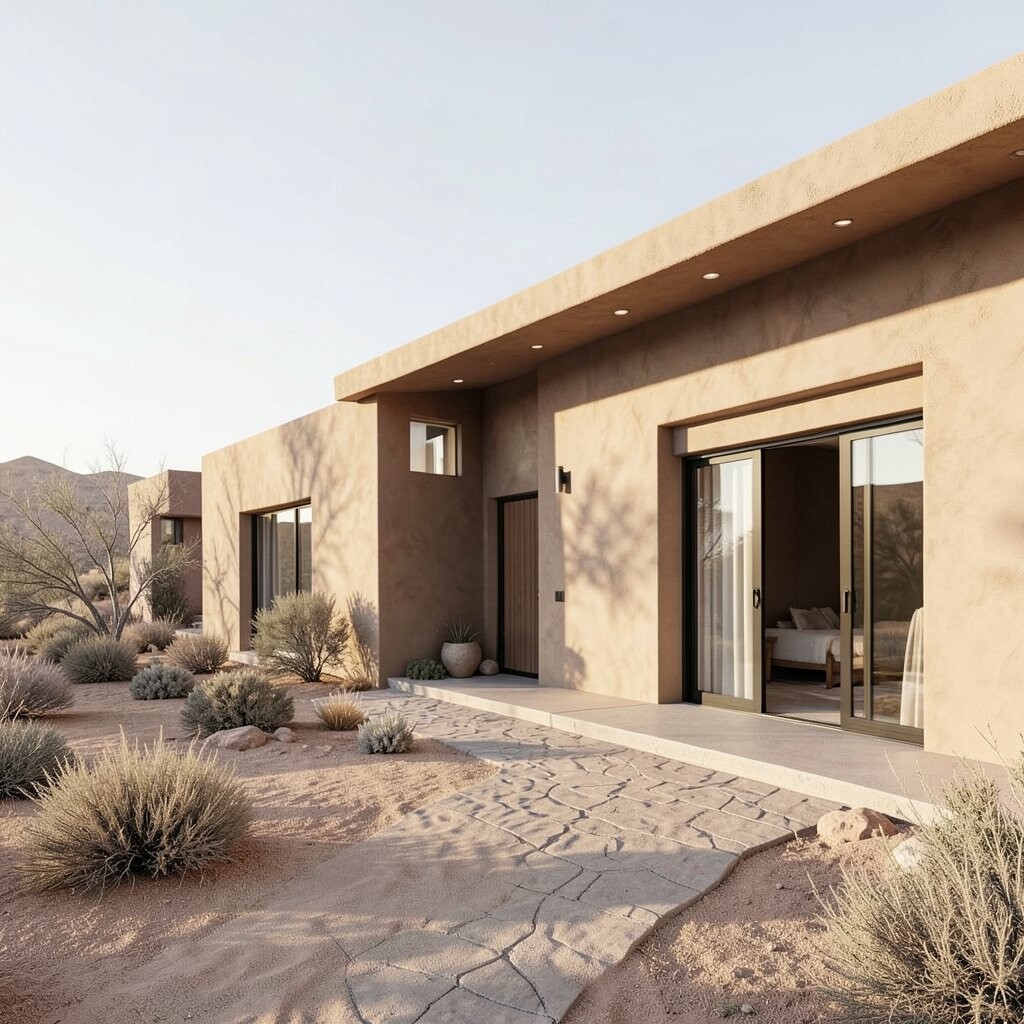
Earth-tone colors help a desert retreat blend with the land around it. Soft browns, warm sand shades, clay reds, and muted gray tones often work well.
These colors make the home feel calm and easy on the eyes. They also hide dust better than bright white or dark paint, which is a real help in dry places.
You can use these tones on walls, floors, furniture, and even fabric. This is a simple way to make the whole home feel connected without spending a lot.
8. Open-Air Hallways
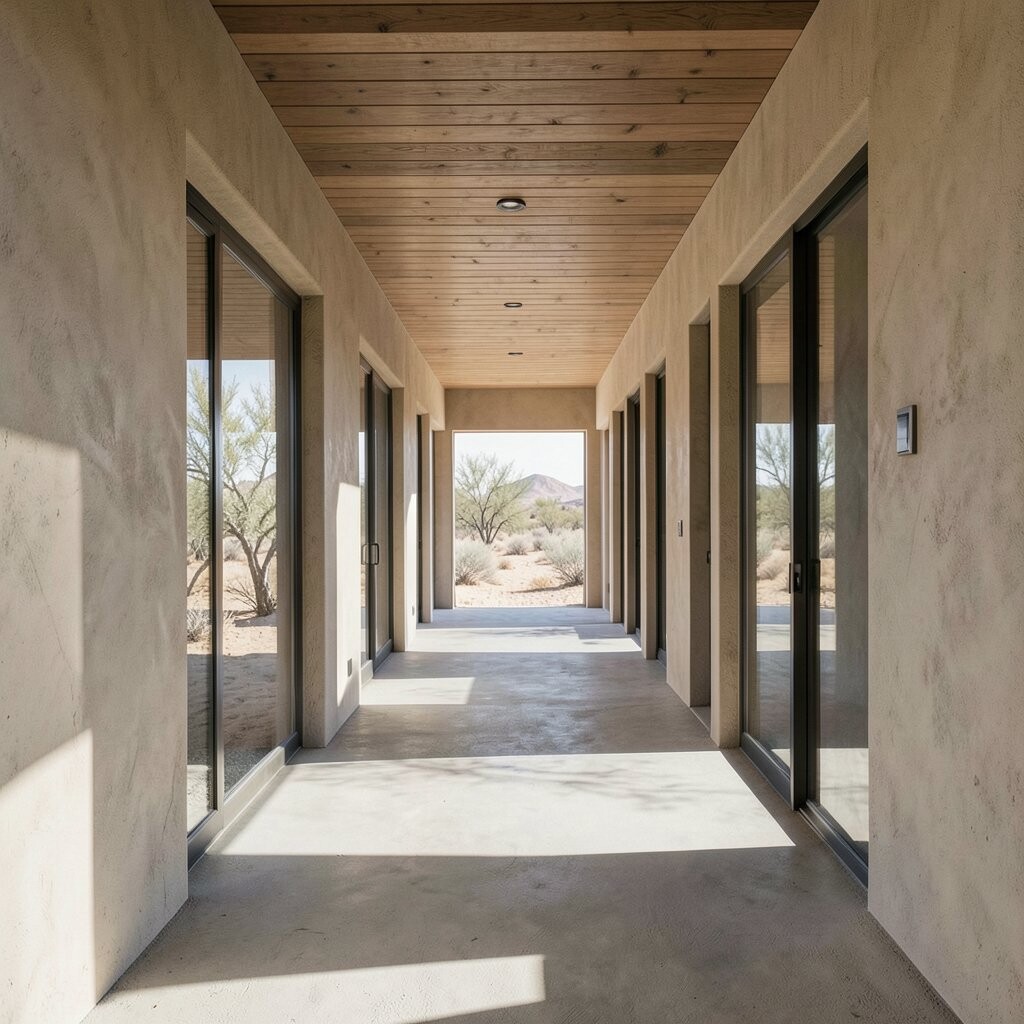
Open-air hallways let people move through the home with fresh air and natural light. They can connect rooms while still giving a sense of space and freedom.
This layout can help cut down on the need for extra cooling during mild parts of the day. It also gives the home a relaxed feel that fits desert life well.
Use stone floors, simple railings, and shade from overhangs or screens to make the walkways more useful. This idea is often seen in newer desert homes because it feels light and practical.
9. Stone and Timber Mixes
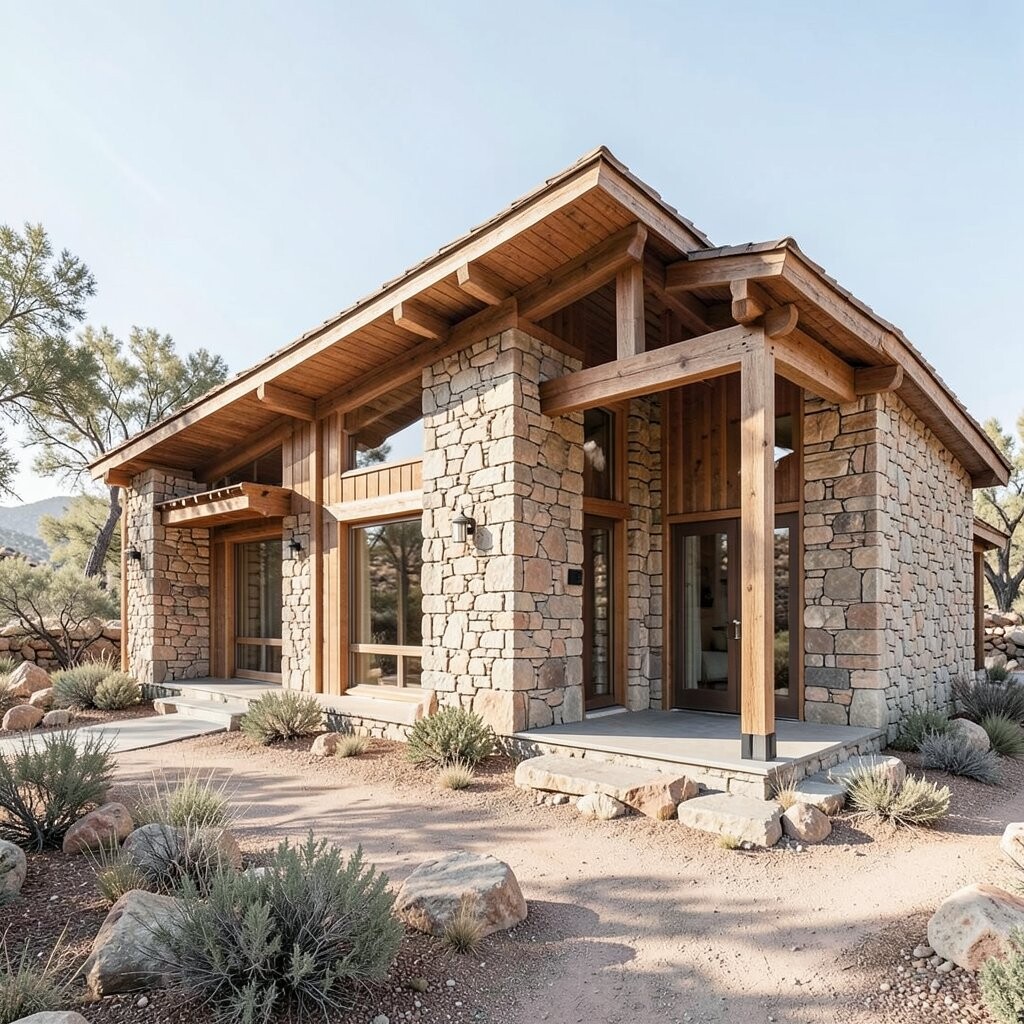
Mixing stone and timber can give a desert retreat a warm but grounded look. The hard stone and the softer wood balance each other in a nice way.
This style works well because stone feels strong and timber adds comfort and human scale. Together, they can make a home feel both sturdy and inviting.
You can use local stone to keep costs in check and choose wood in spots where people touch and gather most. This mix also fits many current design trends that favor honest materials and simple forms.
10. Indoor-Outdoor Sliding Walls
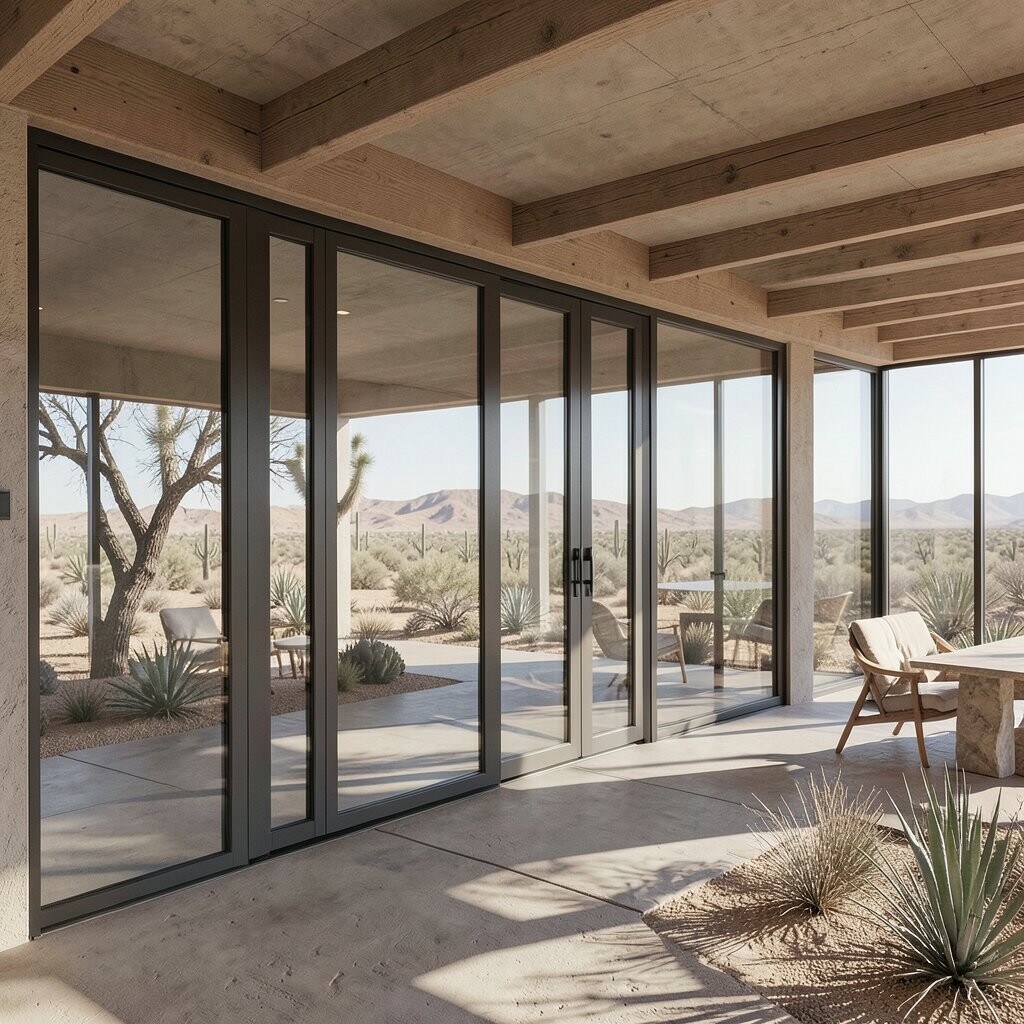
Sliding walls can open a room to the outside and make the home feel larger. They work well in desert settings where views and breezes are part of daily life.
When the walls are closed, they help with shade and comfort. When they are open, they make it easy to move between a living room, patio, or pool area.
This idea can cost more than basic windows, but it gives a strong return in daily use and style. For a personal touch, you can pick frame colors and glass types that match the rest of the home.
11. Native Plant Courtyards
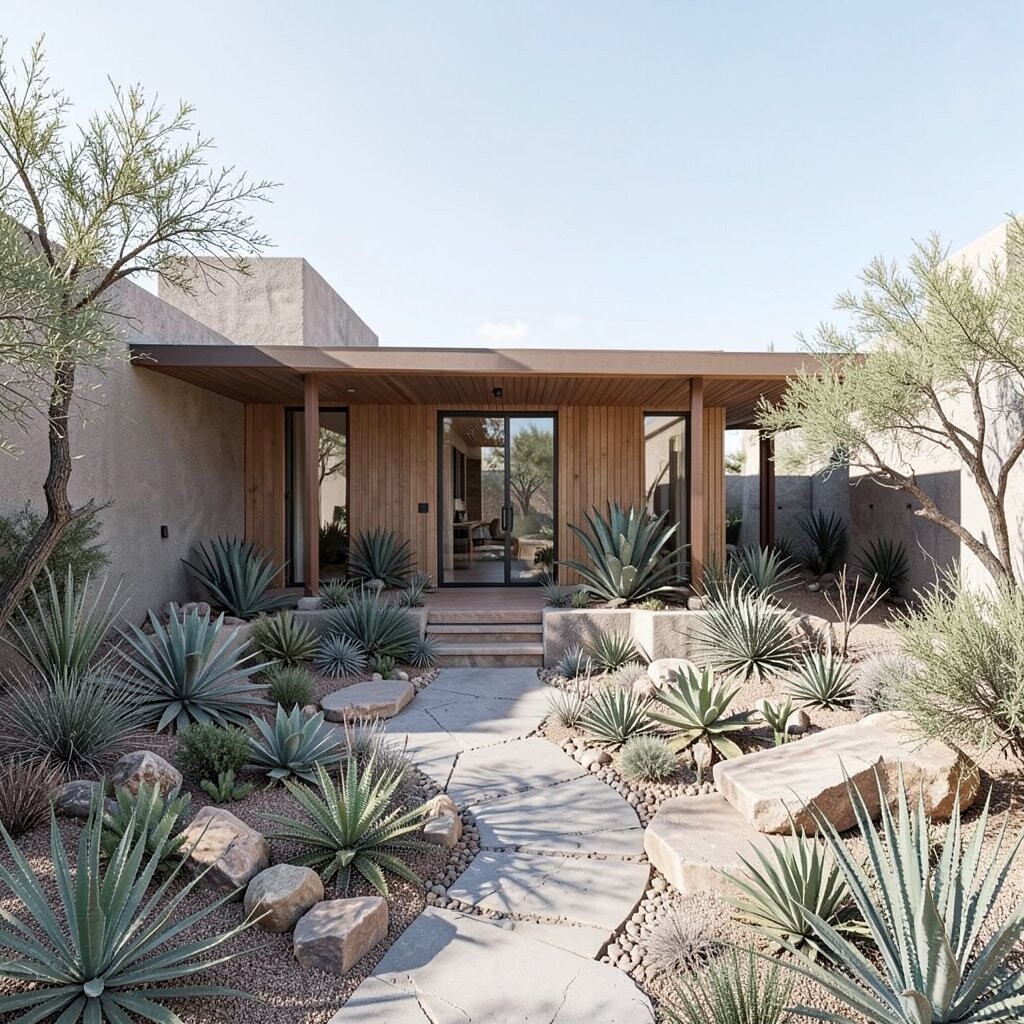
Using native plants in courtyards makes the space easier to care for and better suited to dry land. Plants like agave, yucca, sage, and desert grasses often need less water.
This choice helps the home feel alive without asking for too much work. It also keeps the look true to the place, which can make the retreat feel more honest and calm.
You can add gravel, boulders, and simple drip lines to keep the garden neat and low cost. Many homeowners now want outdoor areas that use less water, and this is one of the best ways to do that.
12. Cool-Toned Interior Finishes
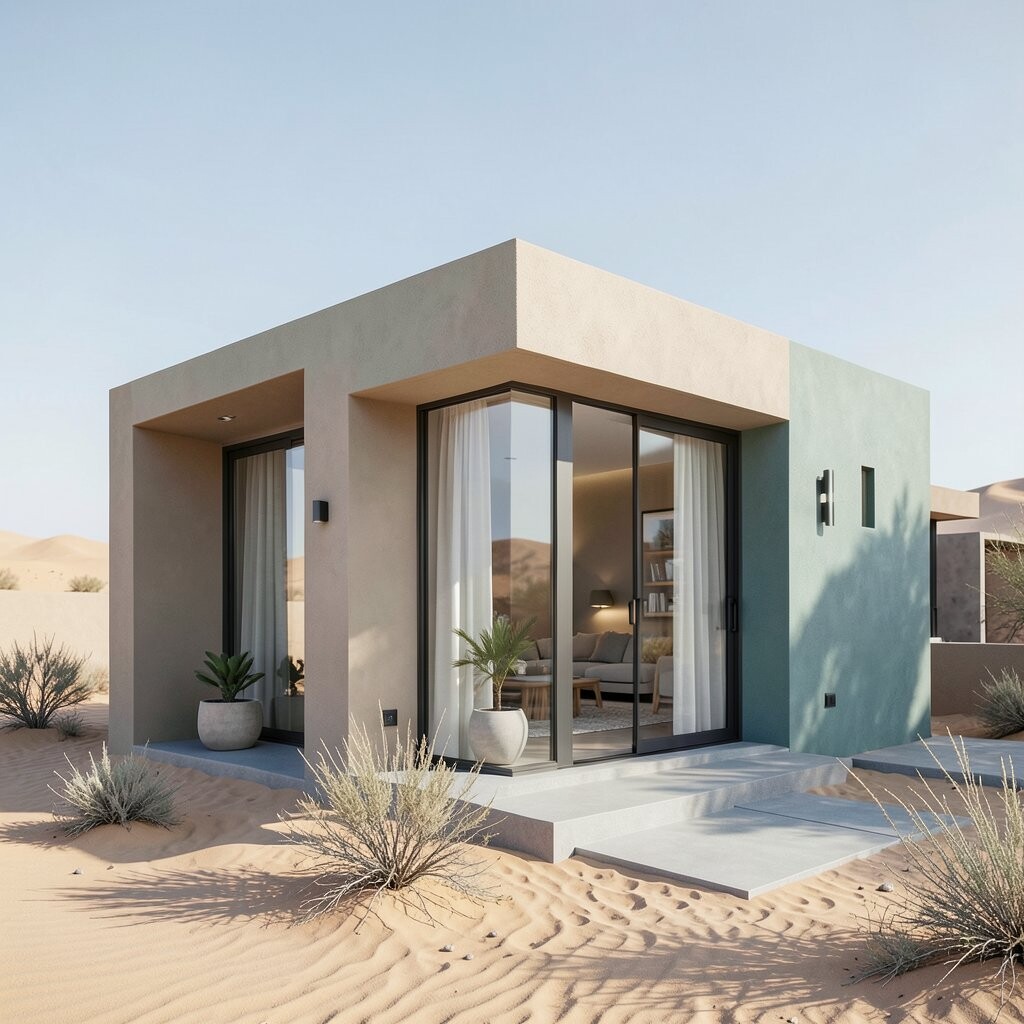
Cool-toned finishes can help a desert home feel fresh and steady. Pale stone, soft gray tile, light wood, and matte paint all work well in bright heat.
These finishes keep the rooms from feeling too heavy or dark. They also help light move around the home, which can make smaller spaces feel more open.
Try using a few soft textures so the rooms do not feel plain or cold. This idea is easy to personalize with rugs, pillows, and art in colors you enjoy.
13. Thick Rammed Courtyard Walls
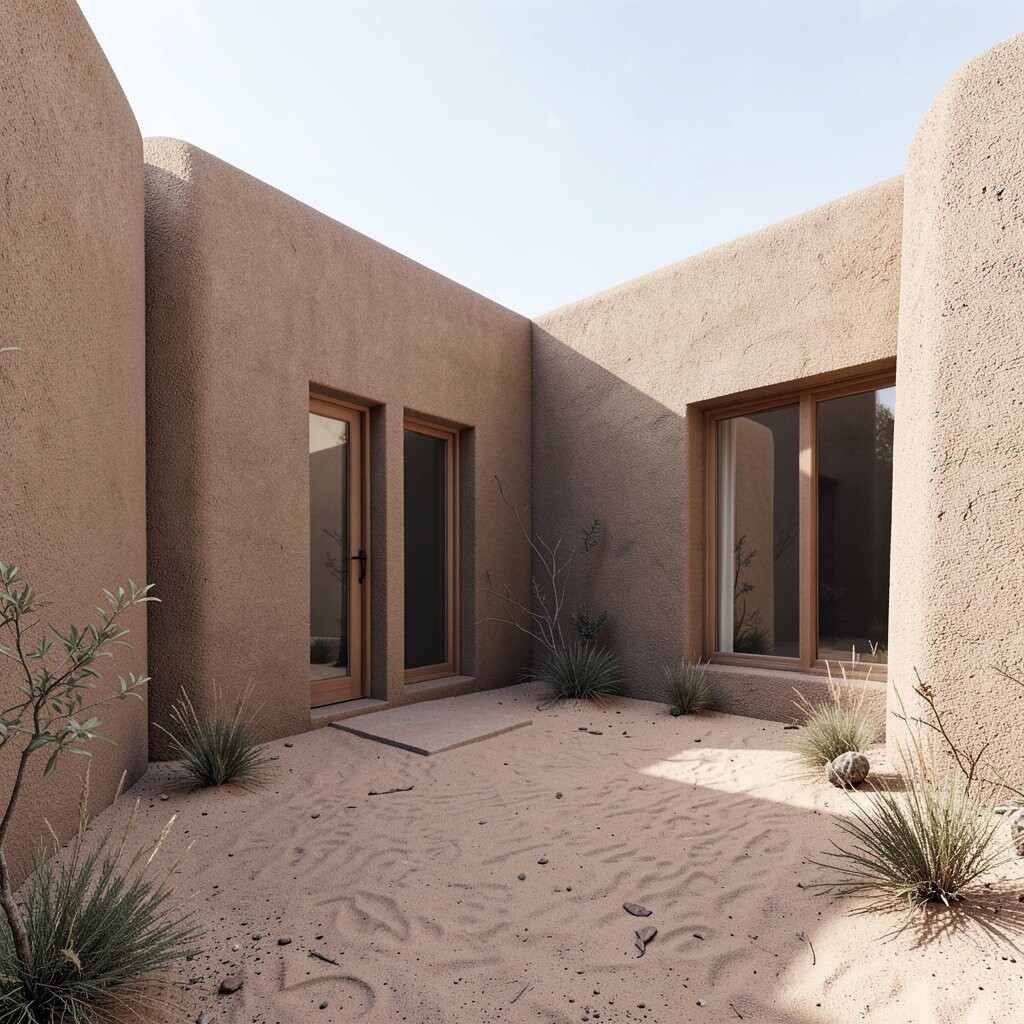
Thick courtyard walls can make a retreat feel private and safe from wind and dust. They also create a quiet outdoor room that feels separate from the outside world.
The walls can hold the shape of the courtyard and help guide the look of the whole house. Their solid form gives the retreat a strong visual base that feels right in desert land.
You can finish the walls with plaster, stone, or raw earth, depending on the look and budget you want. This is a useful idea for people who want a simple space that still feels special.
14. Covered Water Features
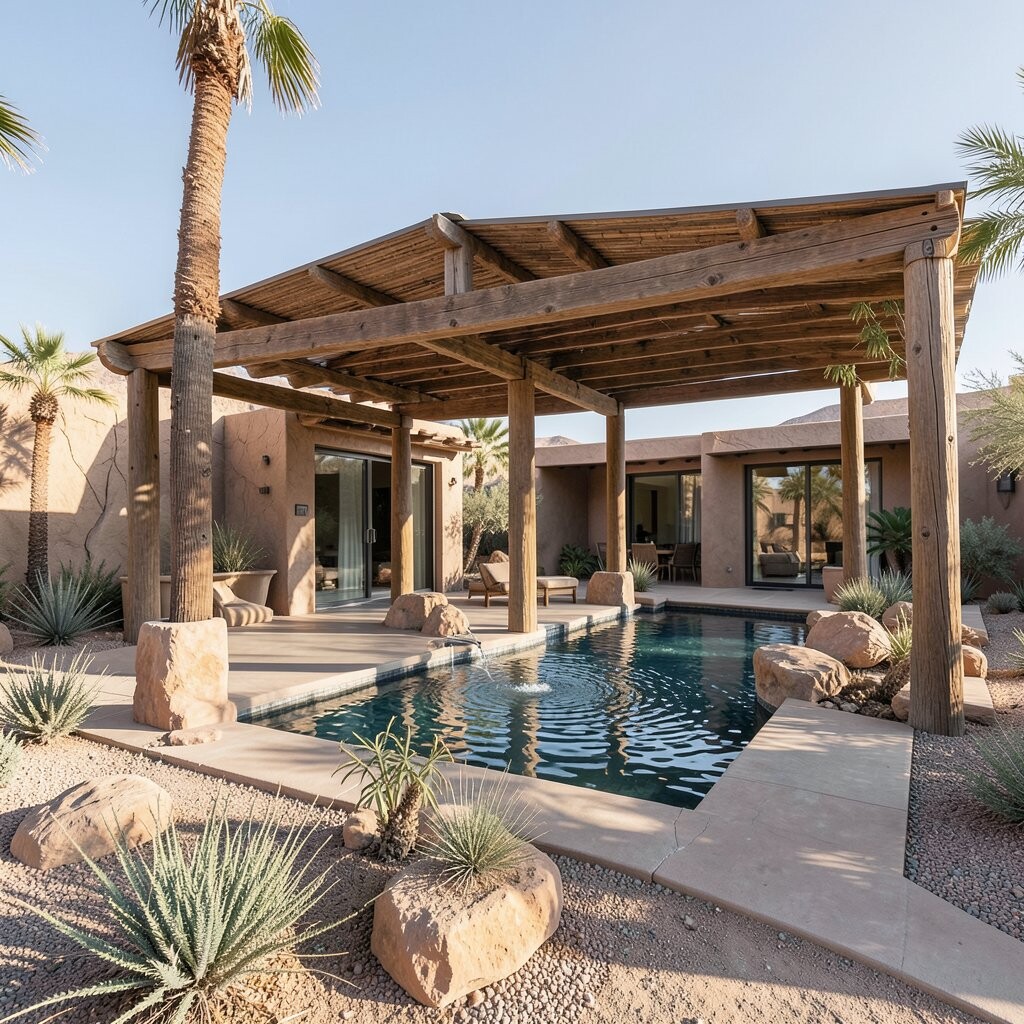
A covered water feature can bring a soft sound and a cool look to a desert retreat. Small basins, narrow rills, or simple fountains can work well without using too much space.
Water can help the courtyard or patio feel calmer and more inviting. Even a small feature can make the area feel more finished and unique.
Because water use matters in dry places, it is smart to keep the feature small and efficient. Many people now choose low-flow systems and recycled water setups to keep costs and waste down.
15. Minimal Desert Modern Lines
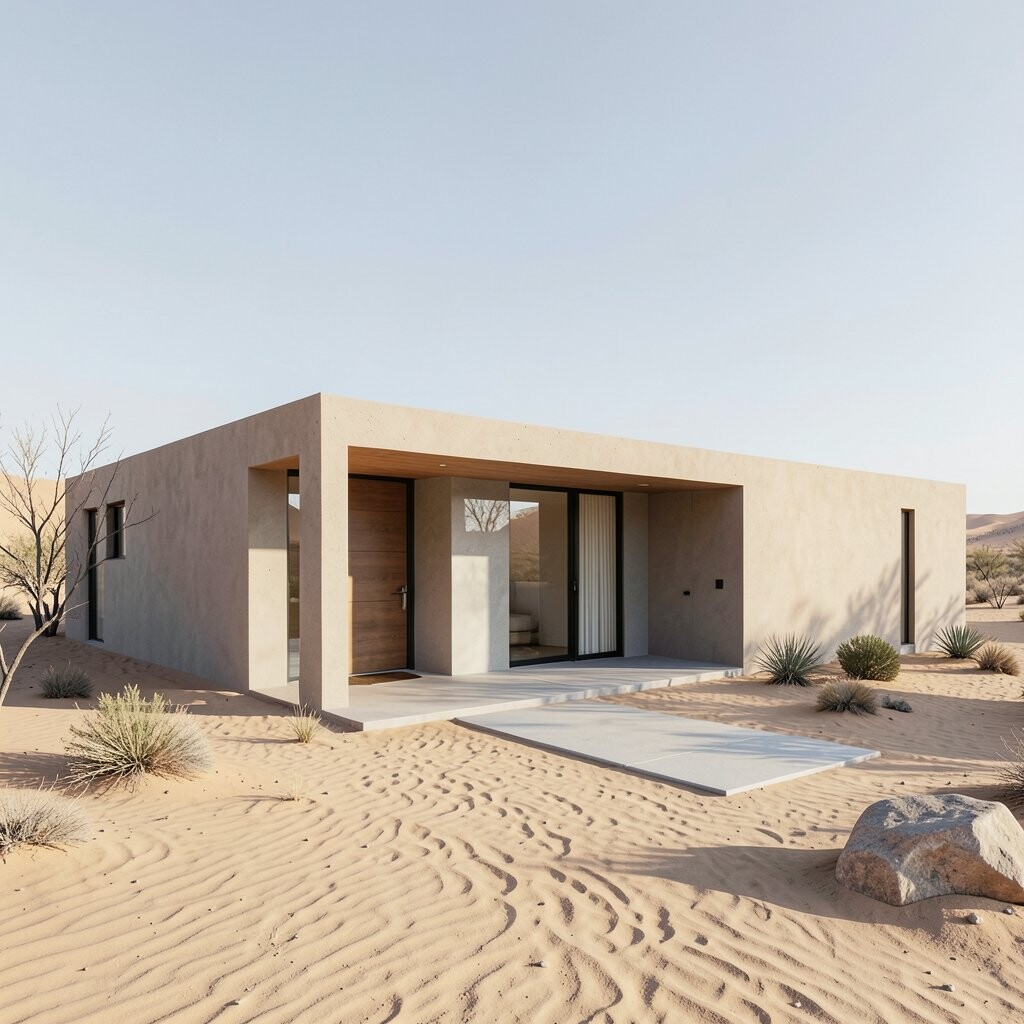
Minimal desert modern design uses clean lines, flat roofs, and simple shapes. It keeps the home looking neat and clear without too much extra detail.
This style works well in open land because it lets the view and the light take the lead. It also makes building and upkeep easier in many cases.
You can make the home feel personal with texture, art, and a few bold pieces of furniture. This look remains popular because it feels current, simple, and easy to live with.
16. Fire Pits and Evening Gathering Spots
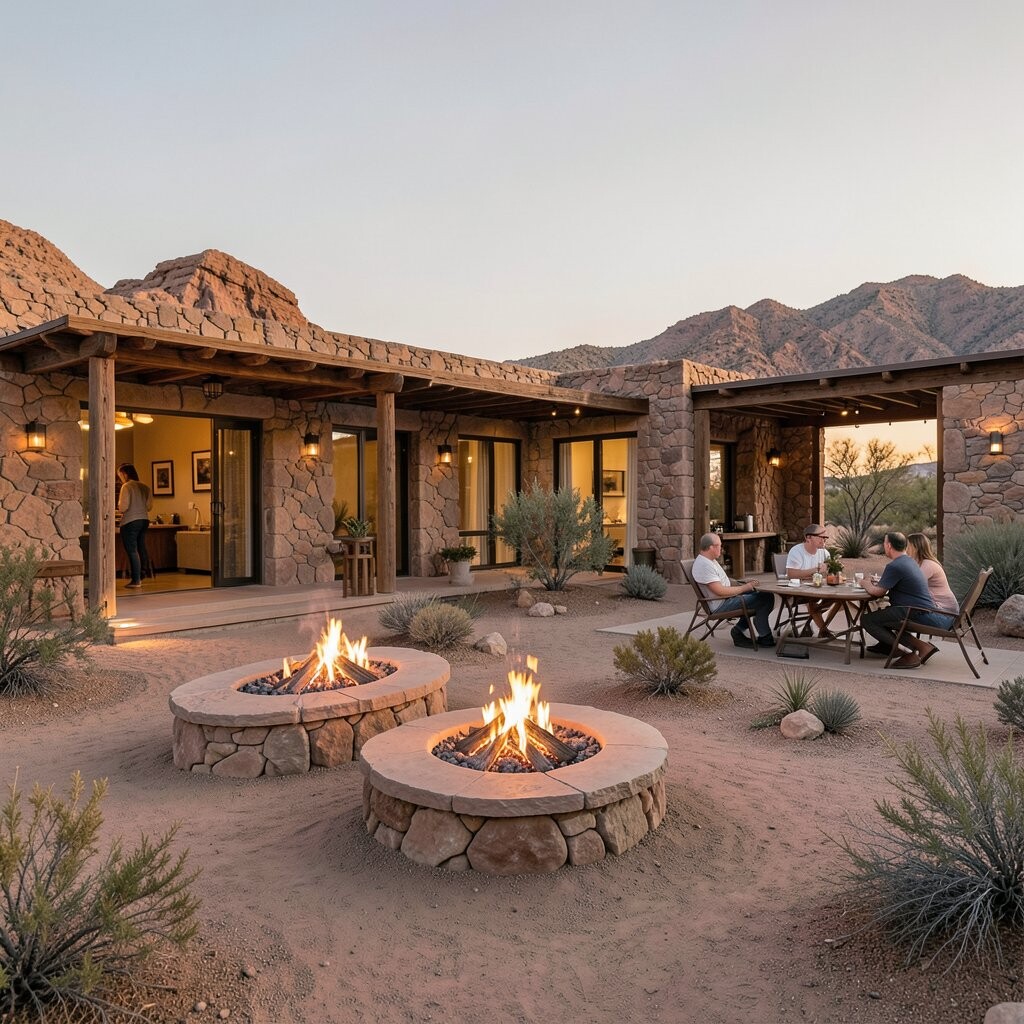
A fire pit gives the desert retreat a place for people to sit together after sunset. The glow can make the outdoor area feel warm and calm when the air cools down.
This feature is useful because desert nights can be much cooler than the day. It also creates a natural spot for talking, reading, or sharing food with friends and family.
Choose a safe material like stone or metal and keep the seating simple and close enough for comfort. Fire pits are often a modest cost compared with larger outdoor features, but they add a lot of use.
17. Built-In Bench Seating
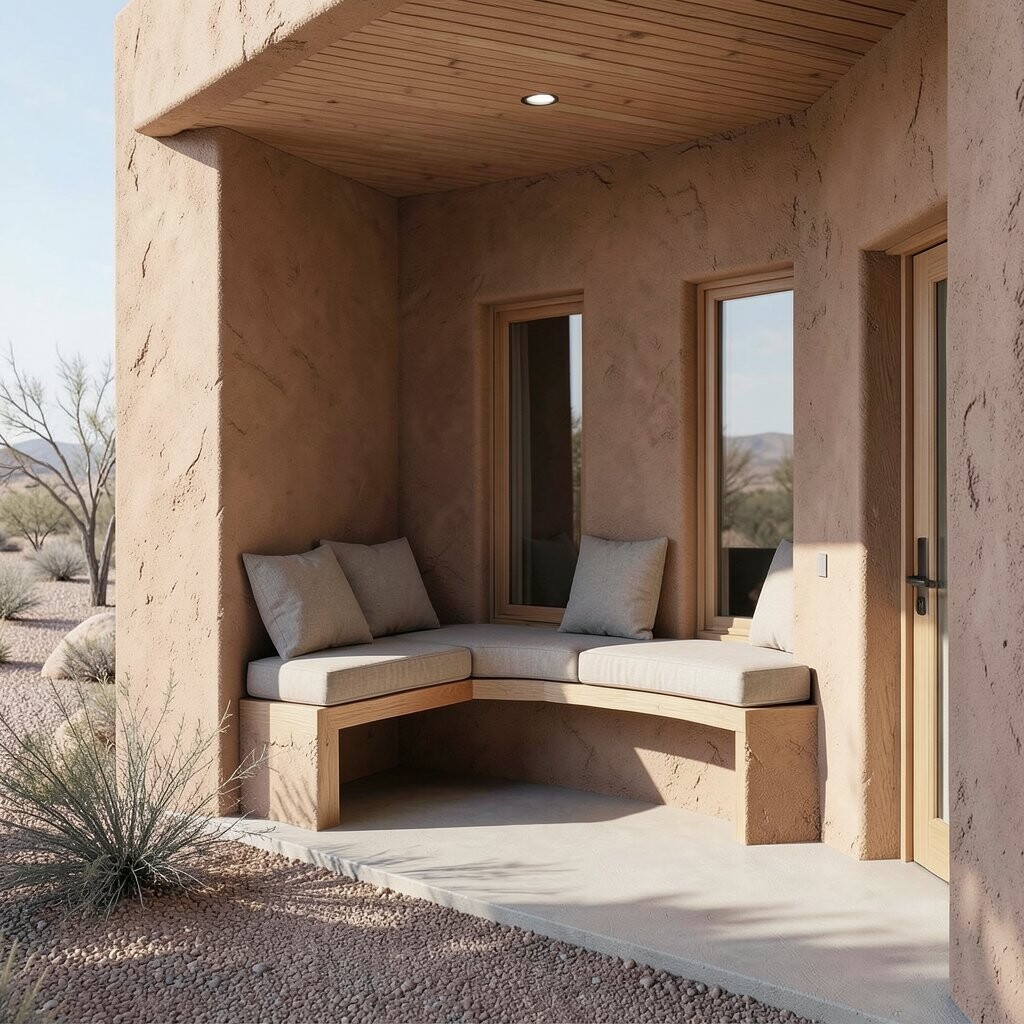
Built-in benches can save space and make a retreat feel tidy. They work well in courtyards, entry areas, and covered patios where extra chairs may crowd the space.
This kind of seating can also match the walls and floors, which helps the design feel smooth and planned. It is a good way to make a small area feel useful without adding clutter.
You can add cushions in soft desert colors for comfort and style. Built-ins are often a smart budget choice because they can be made from the same materials as the home itself.
18. Screened Shade Structures
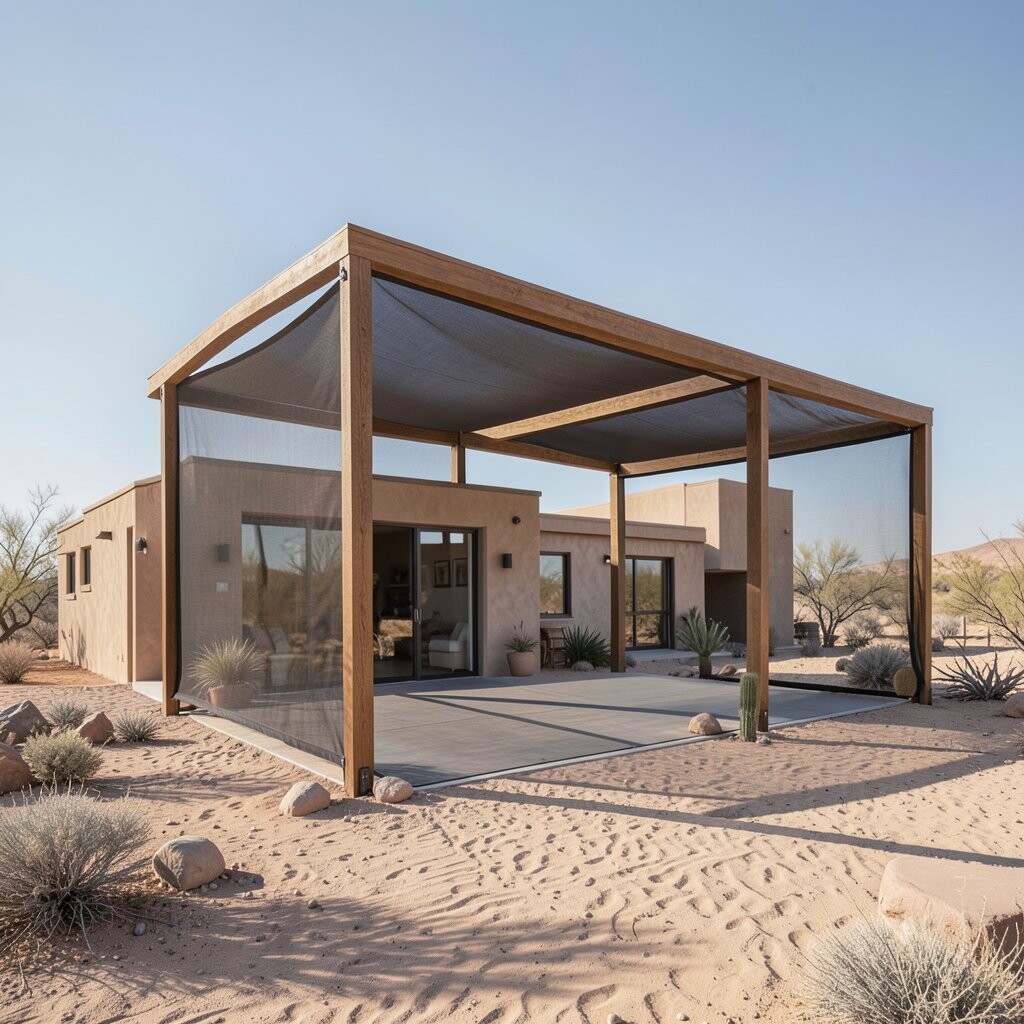
Screened shade structures help block harsh sun while still letting air move through. They are useful for patios, walkways, and car areas where full walls are not needed.
The screens can make strong sunlight feel softer and more pleasant. They also add a nice layer to the outside look of the home, which can make the design feel more complete.
Use wood slats, metal mesh, or woven panels depending on the style you want. This is a good place to try current trends that mix function with a light, simple look.
19. Warm Textures and Soft Fabrics
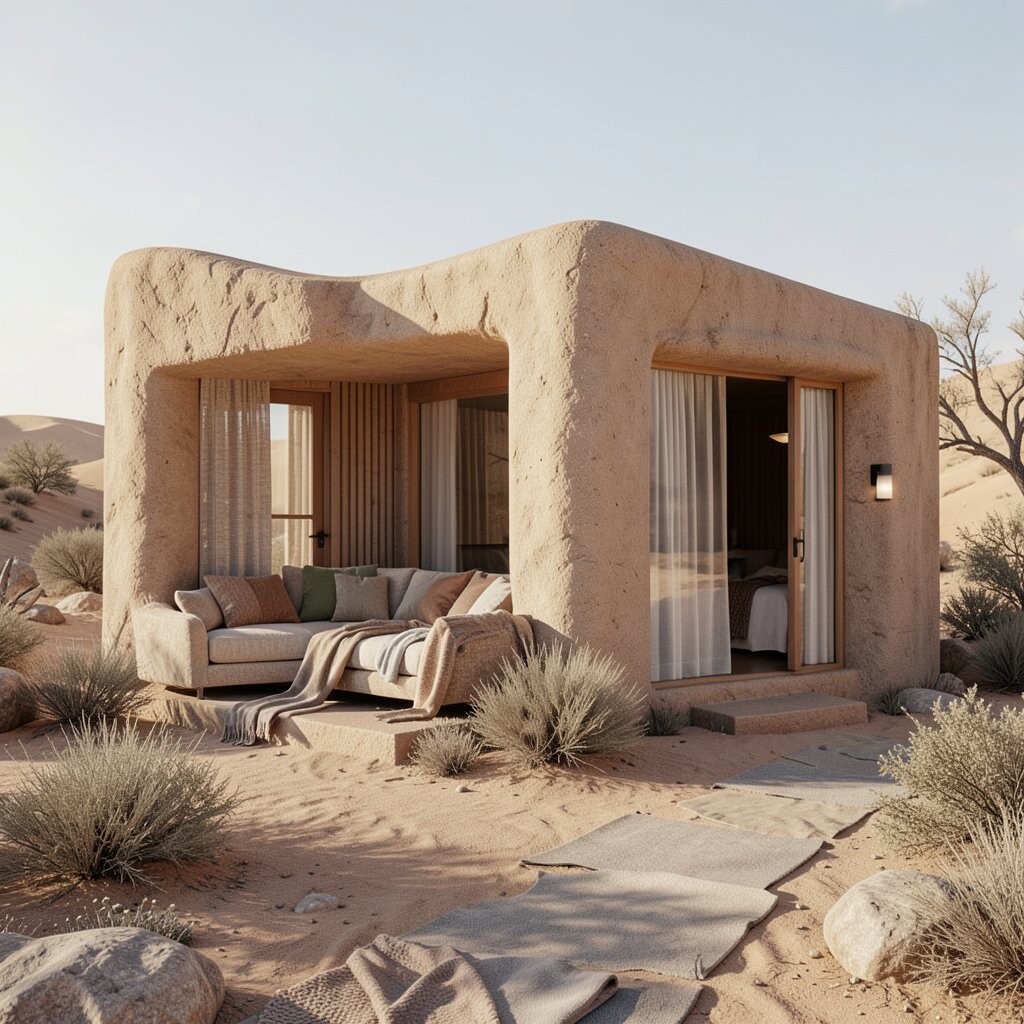
Warm textures and soft fabrics help a desert retreat feel comfortable inside. Linen, cotton, wool, and woven rugs can make hard floors and plain walls feel more lived in.
These materials are useful because they add comfort without making the room feel heavy. They also let you change the mood of the home with small updates instead of large repairs.
Pick colors that match the earth around the house, or add a few deeper shades for contrast. This is one of the easiest ways to make the retreat feel personal and easy to enjoy.
20. Energy-Smart Roof Design
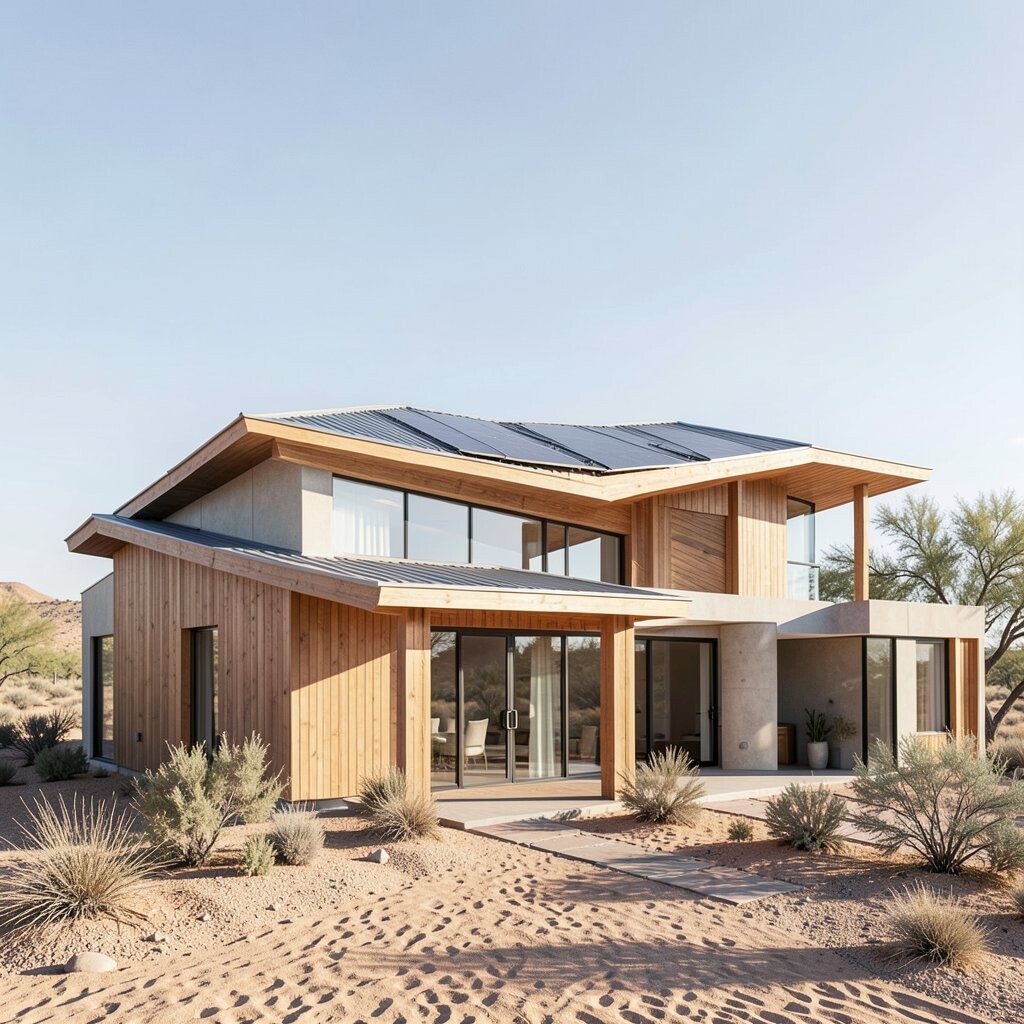
An energy-smart roof can help a desert home stay cooler and use less power. Light roof colors, good insulation, and smart venting all play a part in that result.
This type of roof can also support solar panels, which is a common trend in desert building. That makes the home feel more ready for the future while still fitting the setting.
Although better roof systems may cost more at first, they can help lower bills over time. For many owners, that makes them a practical choice as well as a design choice.
21. Flexible Guest Spaces
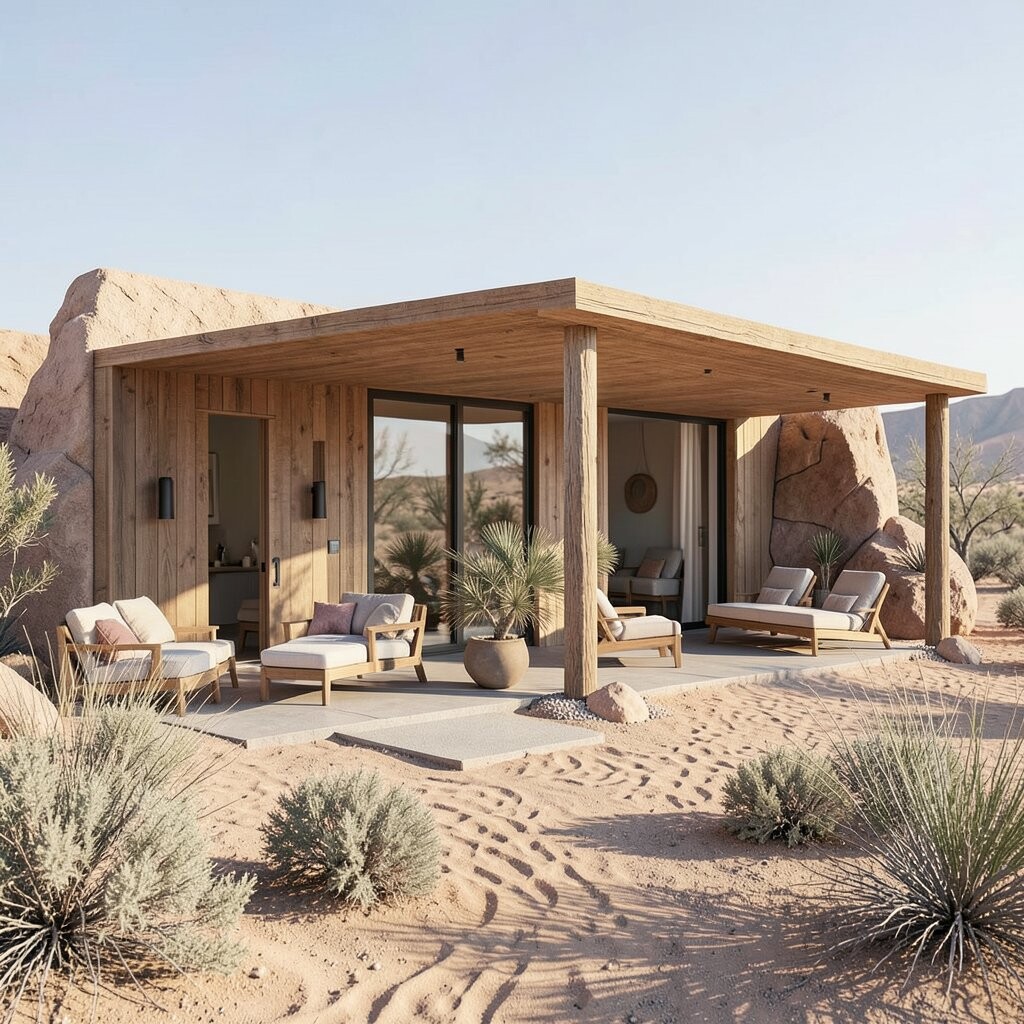
Flexible guest spaces work well in desert retreats because they can serve more than one need. A room can be a guest room, office, art space, or quiet reading spot.
This kind of plan helps the home stay useful as life changes. It also keeps the retreat from feeling too fixed, which is helpful for families, hosts, and people who work from home.
You can use a fold-out bed, built-in storage, and simple decor to keep the room easy to change. This idea is popular because it gives good value, saves space, and makes the home more personal.