City facades can make a street feel calm, neat, and easy to walk through. Good wall design can also help a building fit the area and look useful for many years.
1. Brick Facades With Clean Lines

Brick walls with clean lines are a simple choice for many city streets. They often look warm and steady, and they work well with older homes and new shops.
This style is easy to keep in good shape, which helps with cost over time. Many owners like brick because it can last a long time and still look neat with little care.
You can make a brick front feel more personal by changing the color of the brick or the pattern of the joints. Small details like dark frames, metal trim, or a plain sign can help the building stand out without looking too busy.
2. Glass Fronts With Soft Frames

Glass fronts can make a street feel open and bright. When the frame is soft and slim, the building can look calm and modern without taking over the block.
These fronts help bring in more light, which can make stores and offices feel better inside. They also let people see activity from the street, which can make the area feel more alive and safe.
Glass can cost more at the start, but it may help lower light use during the day. To make it feel less plain, many people add wood, stone, or metal around the edges.
3. Stone Facades With Small Details
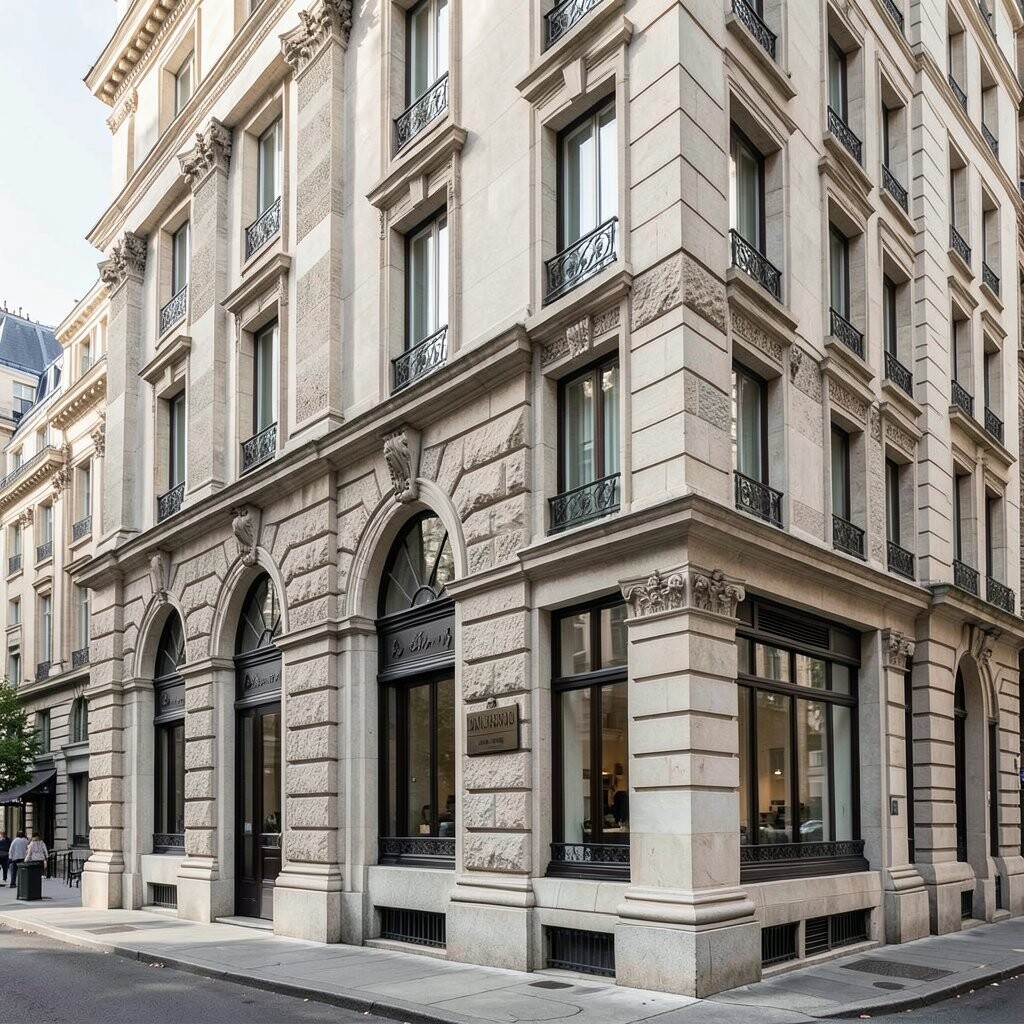
Stone facades often give a building a strong and steady look. On city streets, they can help a place feel tied to the ground and fit in with older blocks.
Stone can be a smart choice if you want a front that holds up well in rain and wind. It may cost more than some other options, but many people like it because it needs less repair over time.
Small details matter a lot with stone, such as a simple arch, a cut edge, or a narrow band of color. These small parts can make the front feel more personal and less flat.
4. Painted Facades With Bold Color Use
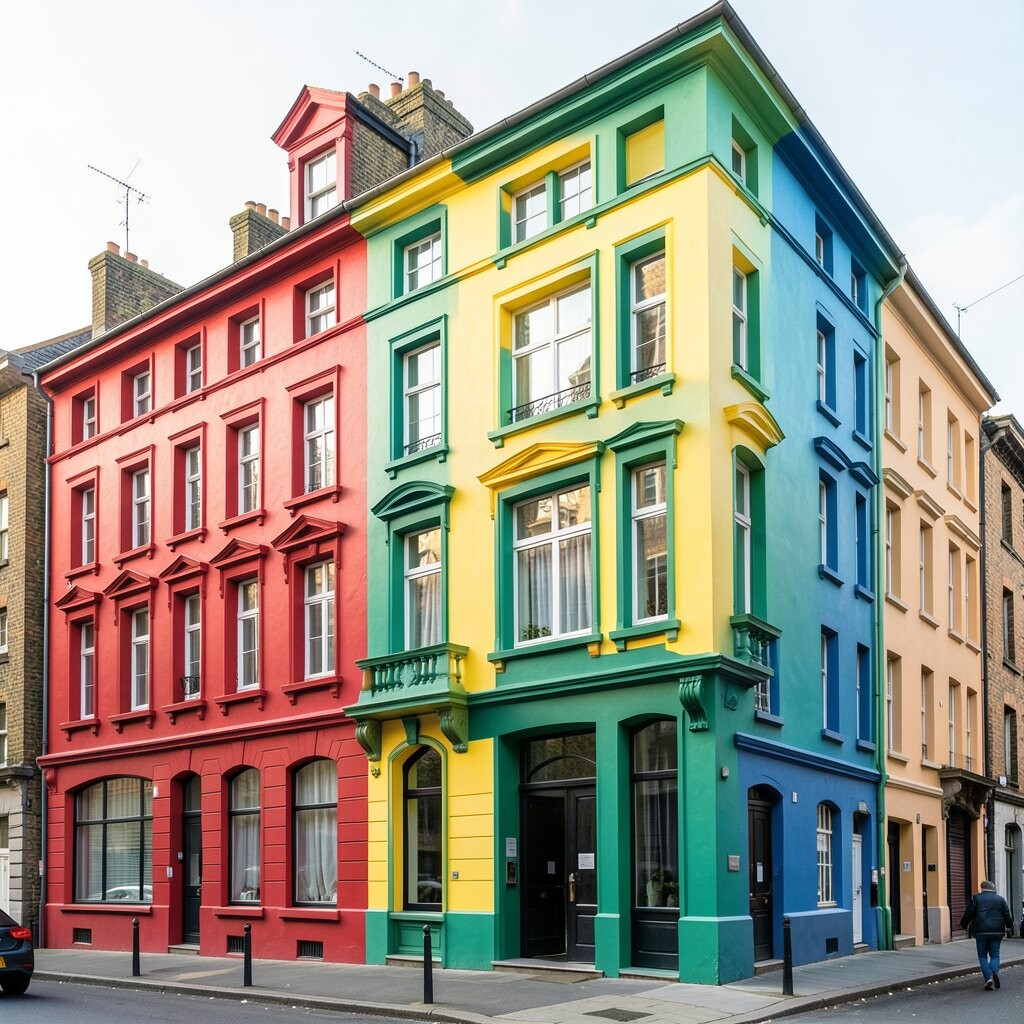
A painted facade can bring life to a dull street. Soft white, deep blue, warm green, or even a dark gray can make a building feel fresh and clear.
Paint is often one of the lower-cost ways to change a front. It is a good choice for owners who want to try a new look without a large build job.
The best painted fronts often use one main color and a few small accents. You can add trim, window frames, or door color to give the building a style that feels right for the block.
5. Wood Facades With Warm Texture

Wood facades can make a city street feel softer and more human. The grain and color of the wood add texture that plain walls do not have.
This style works well when the design is kept simple and neat. It can also help a building feel less cold, which many people enjoy in busy areas with a lot of hard surfaces.
Wood may need more care than brick or stone, so it helps to plan for sealing and repair. Many owners now use treated wood or wood-like panels to keep the look while making upkeep easier.
6. Metal Facades With Sharp Edges
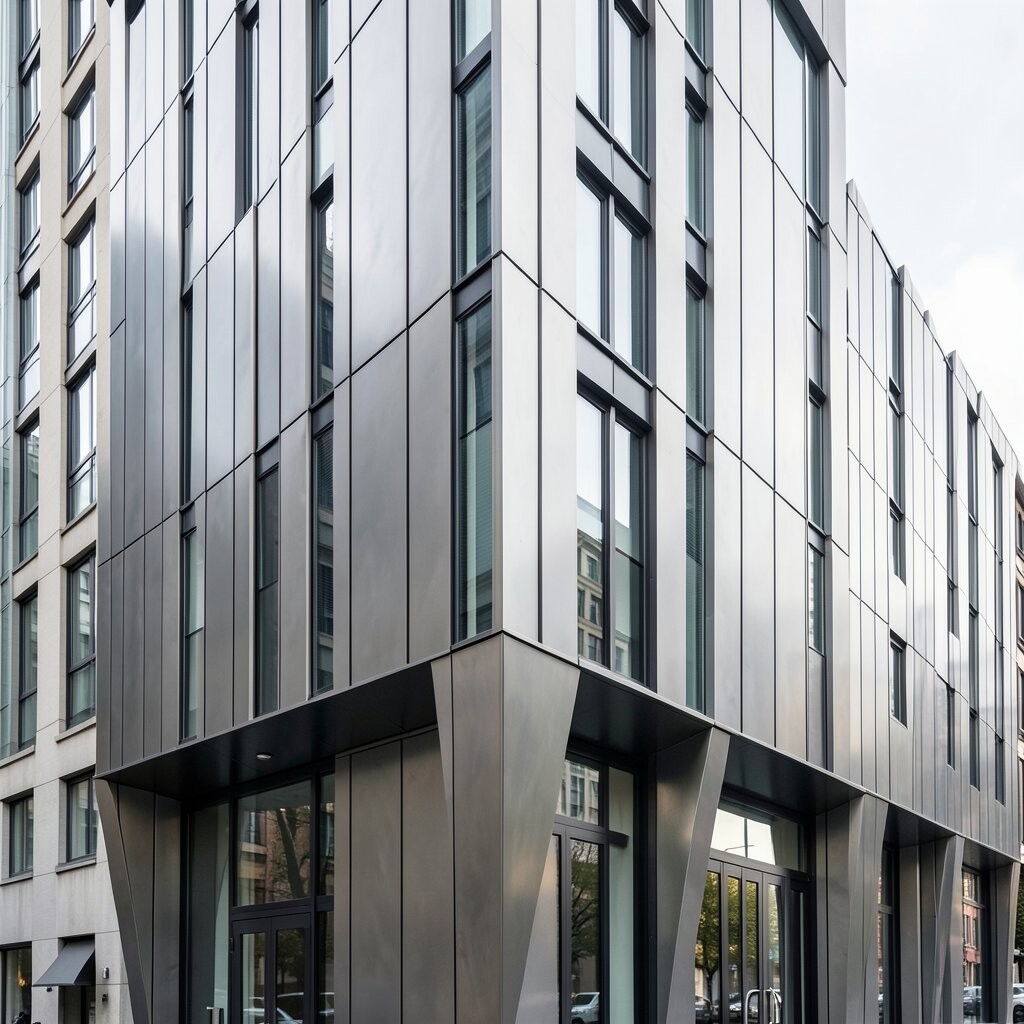
Metal facades can give a street a crisp and clean look. They often work well on new buildings that want a modern feel without too much detail.
These facades can be made from aluminum, steel, or other panels, and each one has a different cost and care level. They are often chosen for their long life and simple upkeep.
You can make metal fronts feel less hard by mixing them with glass, wood, or brick. Some owners also use soft colors or matte finishes so the building does not shine too much in bright sun.
7. Facades With Deep Window Frames

Deep window frames can add shadow and depth to a building front. This makes the wall feel more shaped and less flat when seen from the street.
They also help windows stand out in a neat way, which can make a facade easier to read. People often like this because it gives the building a clear face and helps the street feel more ordered.
These frames can be made from stone, metal, or painted wood, depending on the budget. A simple frame can make a big difference without a large cost.
8. Facades With Green Planters
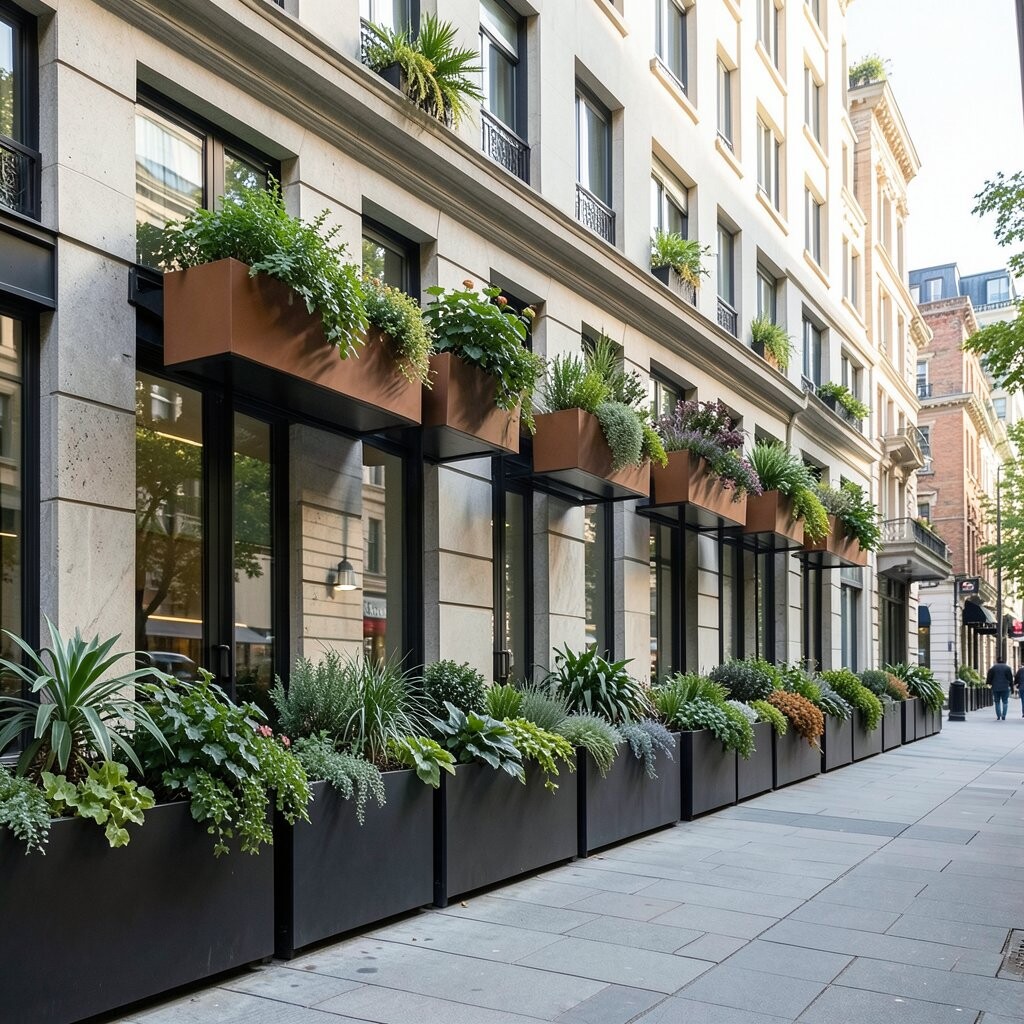
Planters on a facade can soften a hard city block. Plants bring color and life to walls that might otherwise feel plain or too sharp.
This choice can help with shade, air feel, and street comfort, especially near shops and cafes. It also gives owners a way to make their building feel more personal and cared for.
Planters can be low cost if they are small and simple, or more costly if they are built into the wall. Many people now like this look because it fits the trend of adding more green to city spaces.
9. Facades With Patterned Brickwork

Patterned brickwork can make a building front feel special without using many extra parts. The pattern may be made with color changes, brick turns, or small gaps that cast shadow.
This style gives a street visual interest while still feeling solid and easy to trust. It works well for homes, small stores, and mixed-use buildings that need a bit of character.
It may cost more than plain brick because the work takes more time. Still, many owners like it because it gives a custom look that feels tied to the building itself.
10. Facades With Mixed Materials
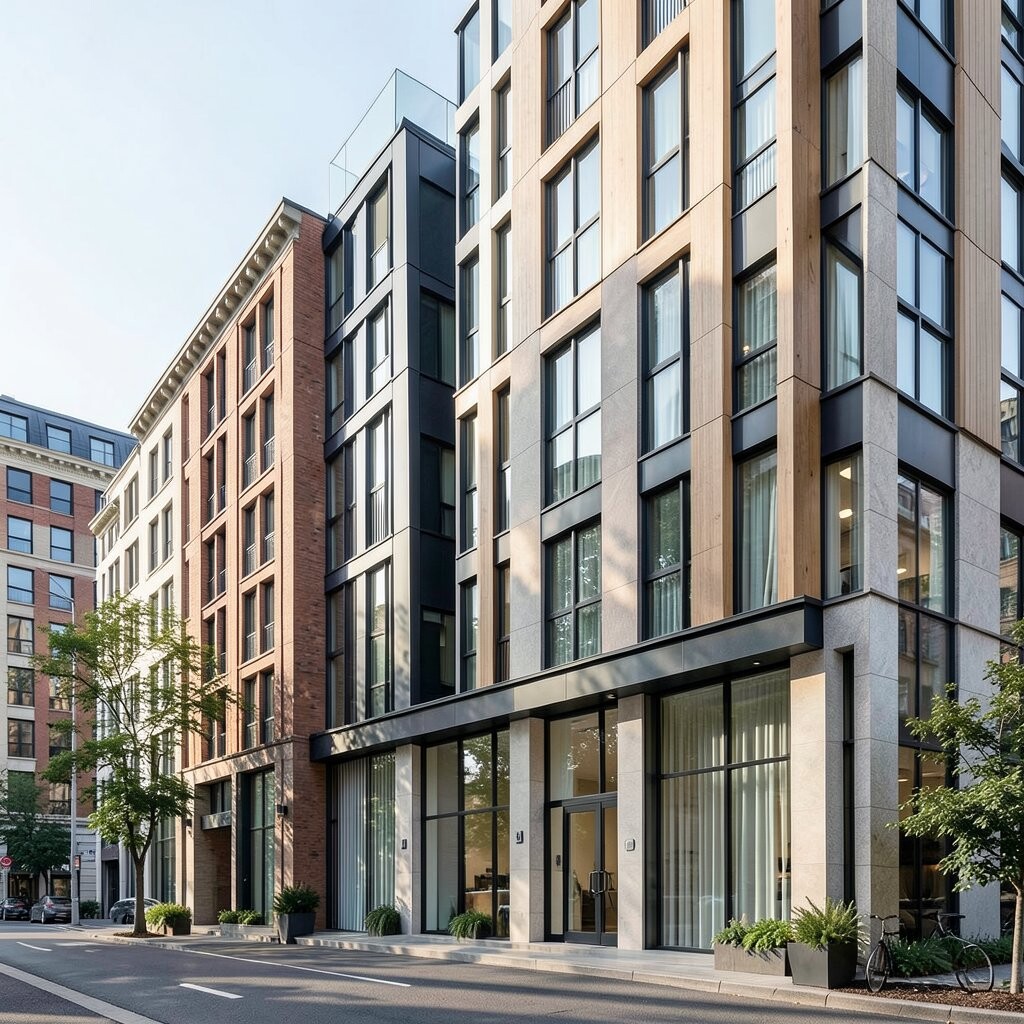
Mixed material facades use two or more surface types on one building. A front may use brick below, glass in the middle, and metal or wood near the top.
This mix can help the building fit the street better by breaking up a large wall. It can also make the front more useful, since each material can do a different job.
To keep the look neat, it helps to use only a few materials and repeat them in clear ways. This style can cost more to plan, but it often gives a building a richer look that feels current.
11. Facades With Recessed Entryways

Recessed entryways pull the door back from the main wall. This small move can make a building feel more welcoming and give people a bit of shelter from rain or sun.
It also helps the front look deeper and more layered, which can make a plain facade feel more thoughtful. Many stores and homes use this to guide people toward the entrance in a simple way.
A recessed entry does not always need a big budget. A clean doorway, a light above it, and a small sign can be enough to make the front feel complete.
12. Facades With Strong Vertical Lines

Vertical lines can make a building look taller and more neat. On a city street, they can help a front stand out without using bright color or heavy detail.
This style works well on narrow lots and tall buildings because it matches the shape of the site. It can also help break up a wide wall so it feels less empty.
Vertical lines can come from panels, narrow windows, or slim trim strips. Many newer buildings use this look because it feels clean and fits a simple modern trend.
13. Facades With Soft Curves

Soft curves can make a city facade feel calm and easy on the eyes. A curved corner, rounded window, or gentle edge can soften the hard lines found on many blocks.
This style can help a building feel more friendly to people walking by. It often works well near parks, corner lots, and busy paths where a softer shape can help the street feel less stiff.
Curved work may cost more than a flat wall, but even a small curve can change the whole feel. Owners can use this look in a full front or just around the entry to keep the cost lower.
14. Facades With Simple Night Lighting
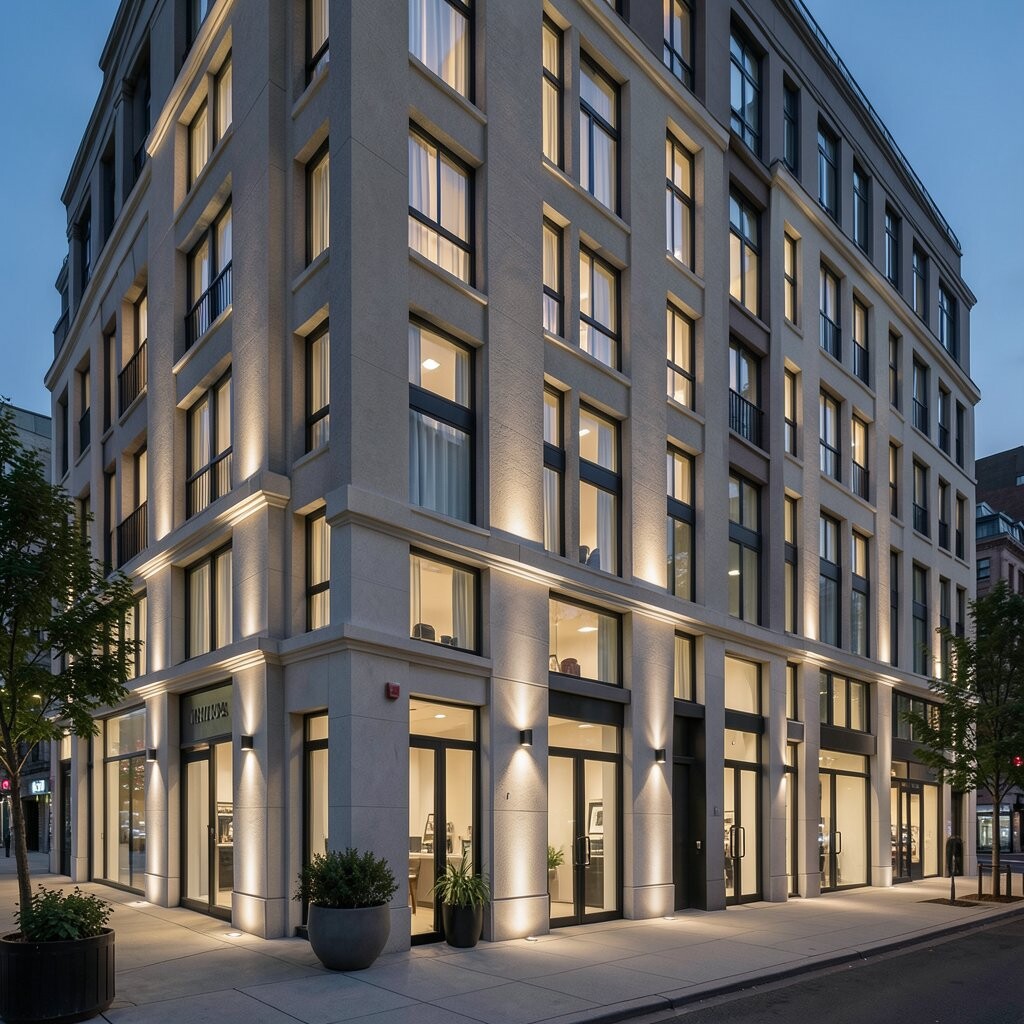
Simple night lighting can make an urban facade look clear after dark. Soft lights near the door, windows, or wall edges help people see the shape of the building.
This can also help with safety and make shops or homes feel more active in the evening. Good lighting does not need to be bright or flashy to work well.
Many people now choose warm LED lights because they use less power and last a long time. A small lighting plan can be a low-cost way to make a facade feel finished and easy to enjoy at night.