Glass walls can make a room feel open and calm. They also bring in more light and help spaces feel connected.
1. Clear Glass Room Divider

A clear glass room divider keeps a space open while still giving each area its own place. It works well in homes that need a small office, dining spot, or reading corner without heavy walls.
The clean look fits many styles, from simple modern rooms to older homes that need a fresh feel. Clear glass is also easy to match with wood, metal, stone, or painted trim.
One benefit is that it lets light move through the whole room, which can help a small space feel less tight. If you want more privacy, you can add curtains, shades, or light film later.
2. Frosted Glass Wall
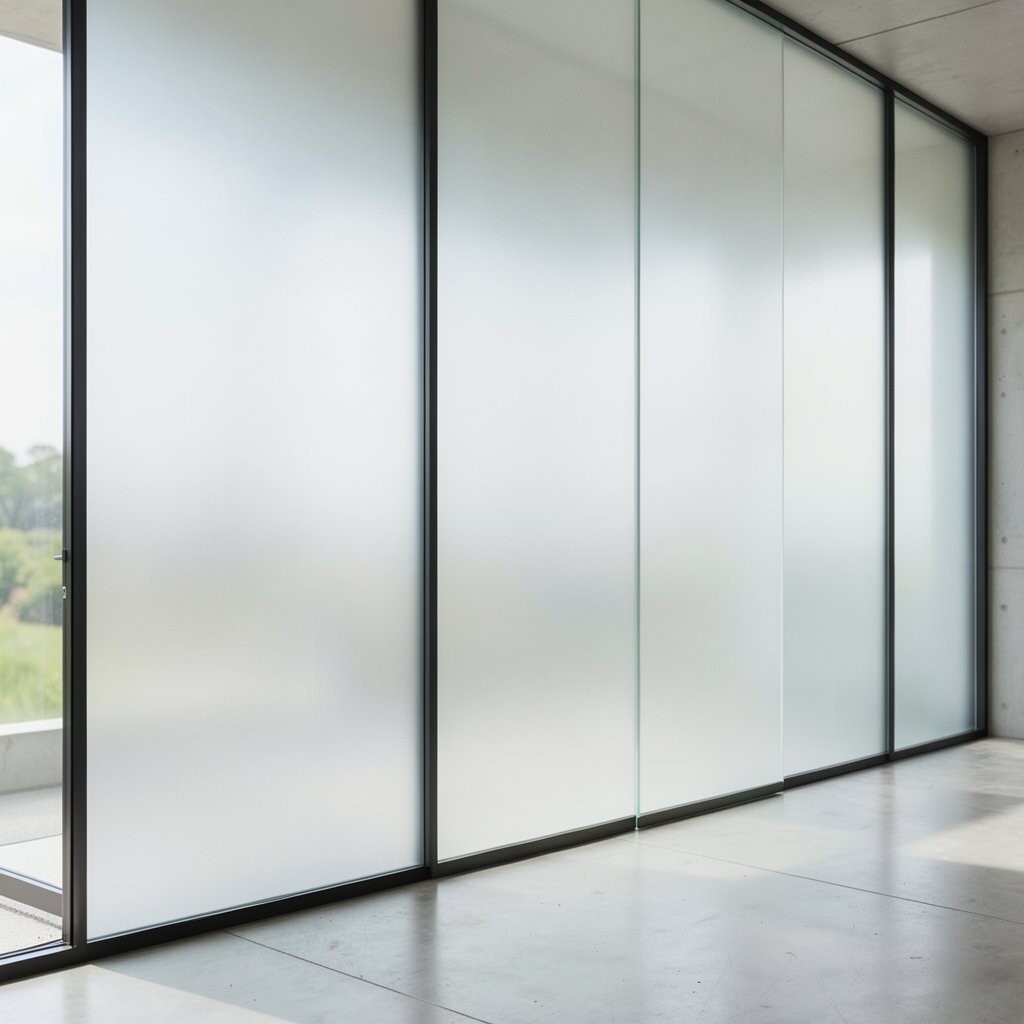
Frosted glass gives a soft look that blocks direct views but still lets light pass through. It is a good choice for bathrooms, bedrooms, or work areas where you want calm and some privacy.
This style looks neat and simple, and it can make a room feel more polished without being too bold. Many people like it because it hides clutter and busy spots better than clear glass.
You can use full frosted panels or only add them to part of the wall. The cost is often a bit higher than plain clear glass, but it can be worth it when privacy matters.
3. Black Frame Glass Wall
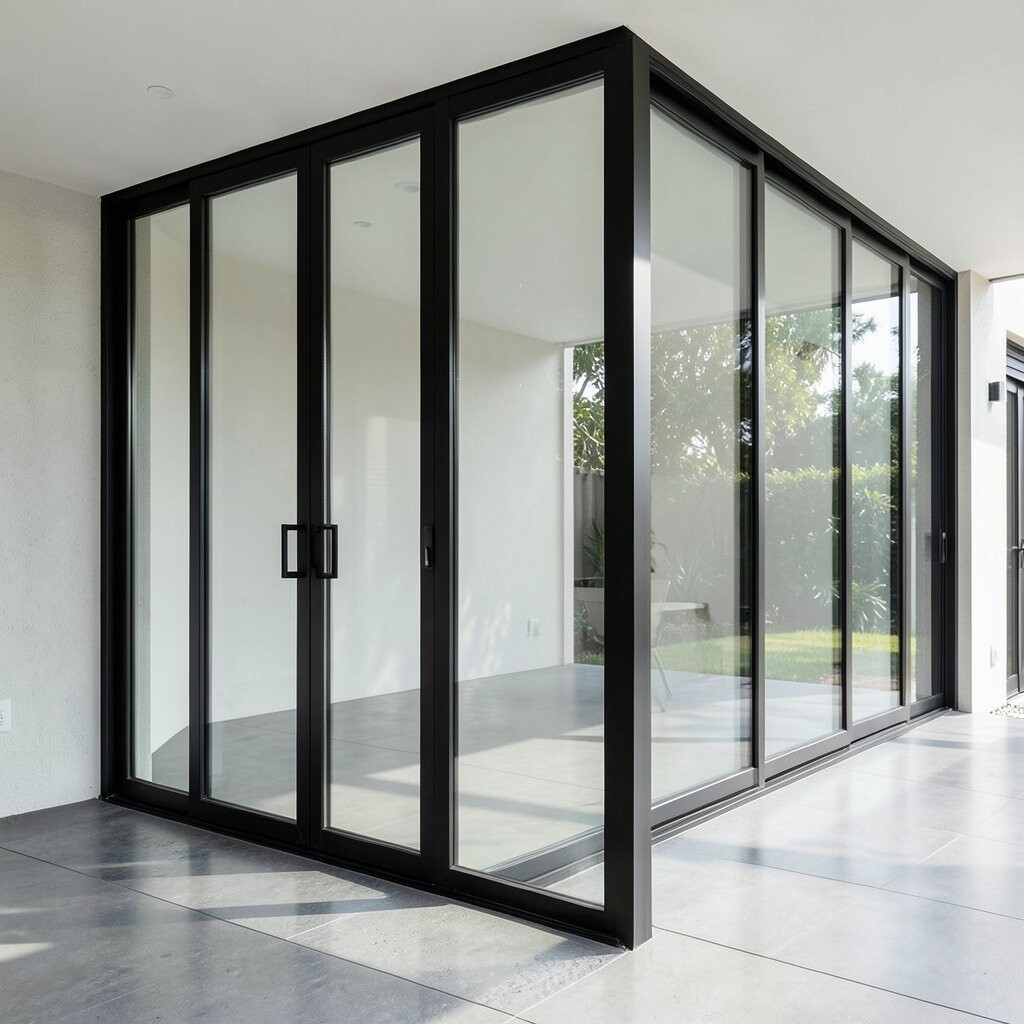
Black frame glass walls have a strong outline that gives a room a sharp, modern look. The dark lines stand out against the glass and make the wall feel like part of the design.
This idea works well in lofts, kitchens, and home offices where you want a clean edge. It also pairs well with white walls, wood floors, and simple furniture.
Many people choose this style because it feels current and easy to live with. You can make it more personal by using wide frames for a bold look or thinner frames for a lighter feel.
4. Sliding Glass Wall
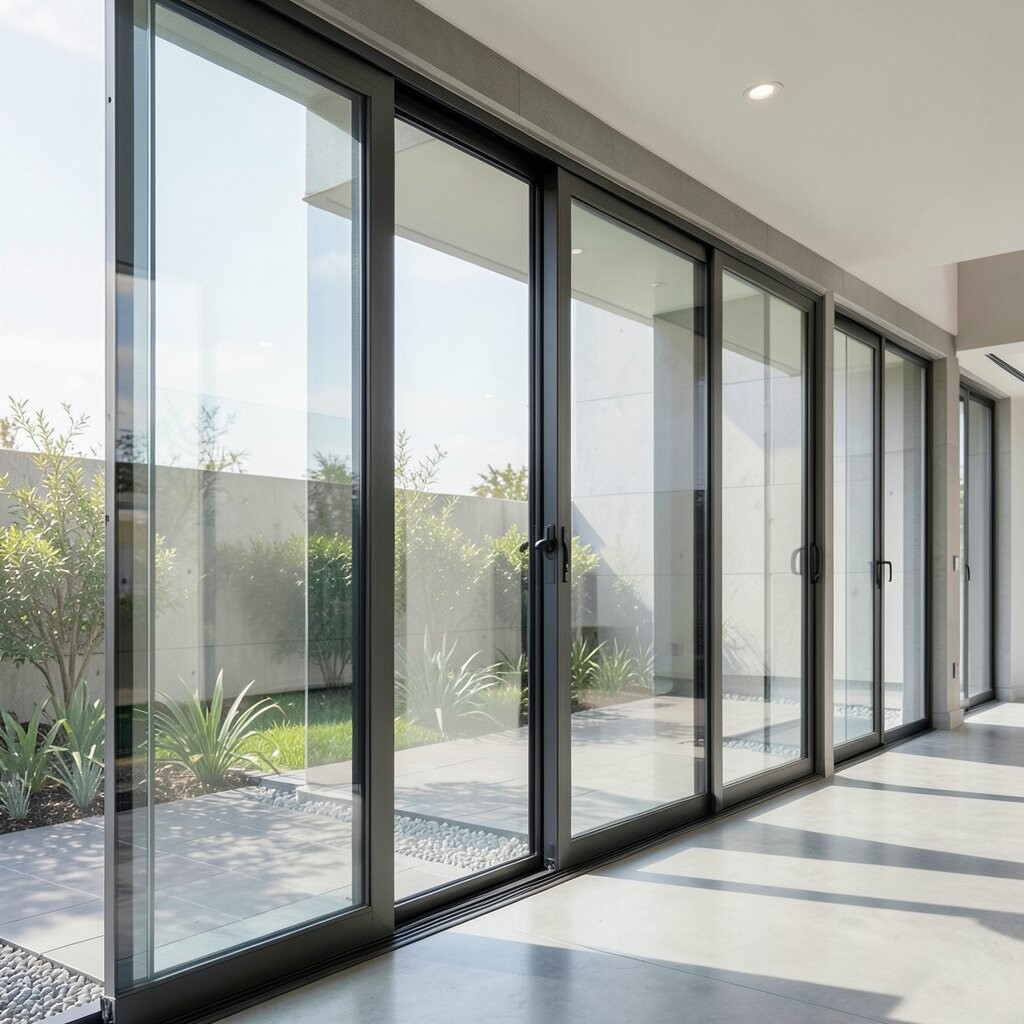
A sliding glass wall is a smart way to open or close a space as needed. It is useful when you want a room to feel open during the day and more private at night.
The panels move along a track, so they do not take up much floor space. That makes them a good fit for small homes, patios, and rooms that need flexible use.
Sliding glass walls can cost more than fixed panels, but they add a lot of use to the room. If you want a softer look, you can choose frames in wood tone or painted metal.
5. Floor-to-Ceiling Glass Wall

Floor-to-ceiling glass walls bring in a large amount of light and make a room feel tall. They are often used in living rooms, sunrooms, and spaces that look out to a yard or city view.
The tall glass panels create a clear link between inside and outside. This can make daily life feel more open and give the room a calm, airy look.
Because these walls use a lot of glass, they can cost more and may need strong support. You can make them feel more personal with shades, plants, or warm furniture that balances the cool glass.
6. Glass Wall With Wood Trim
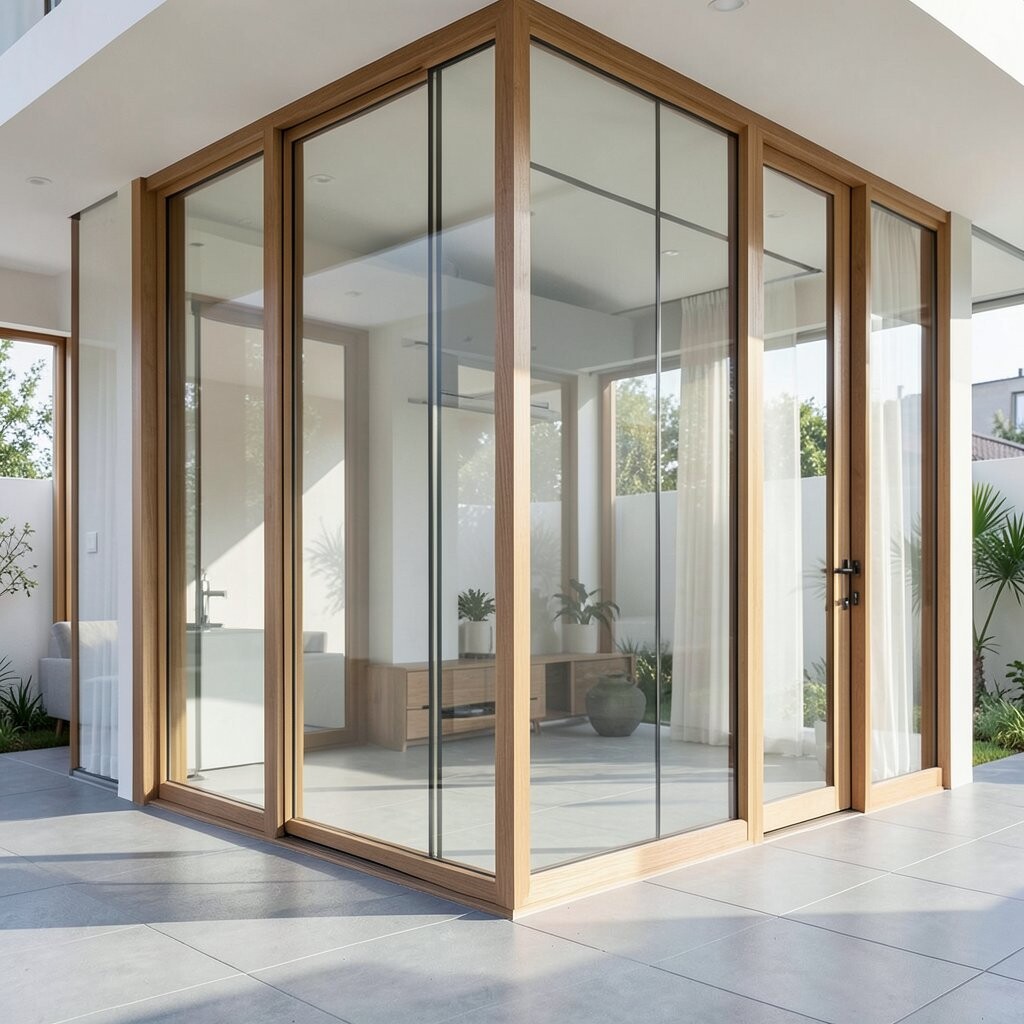
Glass walls with wood trim mix a light look with a warm touch. The wood softens the glass and helps the space feel more homey and less plain.
This style works well in family rooms, bedrooms, and home offices. It can fit both modern and classic homes because wood brings a natural feel that many people enjoy.
You can use light wood for a soft, calm look or darker wood for a richer style. The cost depends on the wood type, but even a simple trim can make the wall feel more finished.
7. Industrial Style Glass Wall
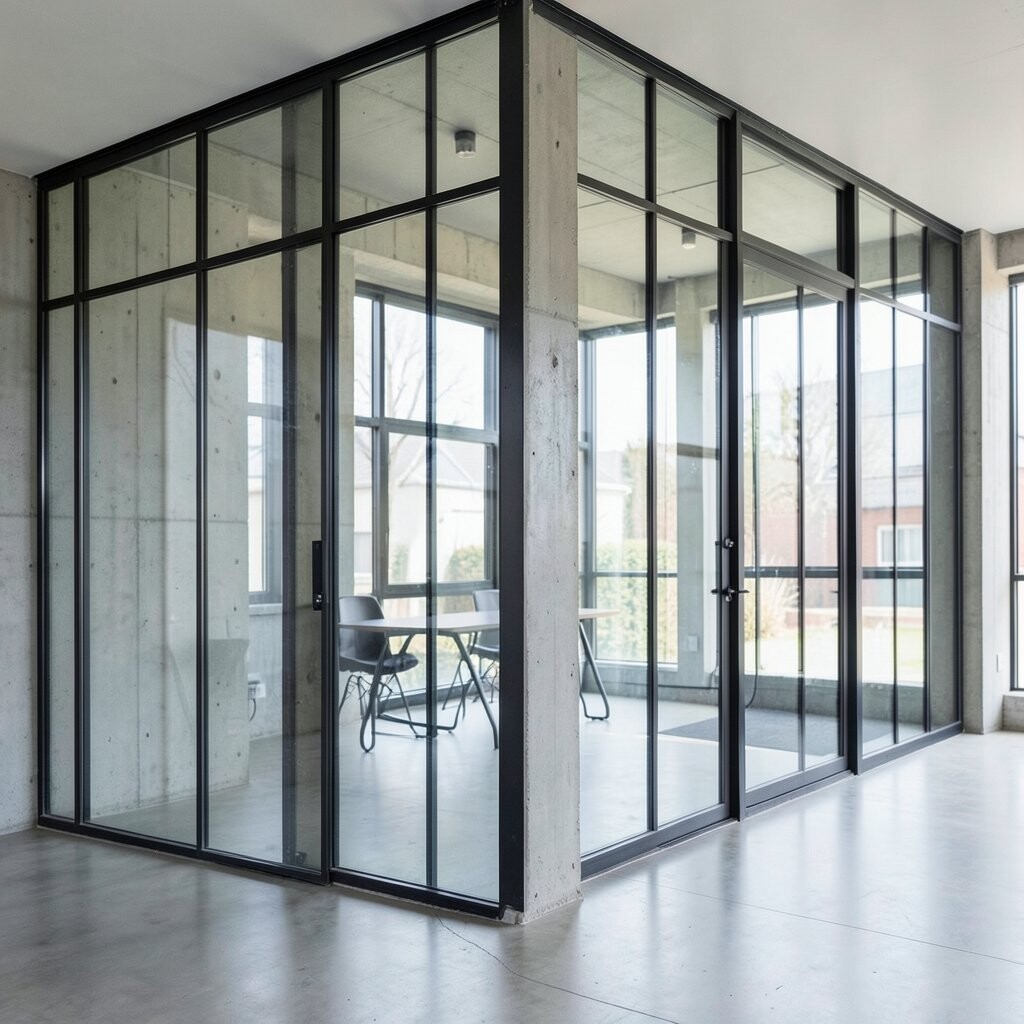
An industrial style glass wall uses metal frames, simple lines, and a strong shape. It often looks a bit like a studio or old factory space, but in a home it can feel neat and stylish.
This idea is good for kitchens, offices, and open living rooms. The mix of glass and metal helps the room feel open while still giving structure to the layout.
Many people like this style because it feels current and easy to pair with rough wood, brick, or concrete. If you want a softer look, you can add warm lights, rugs, and fabric chairs.
8. Glass Wall With Built-In Shelves
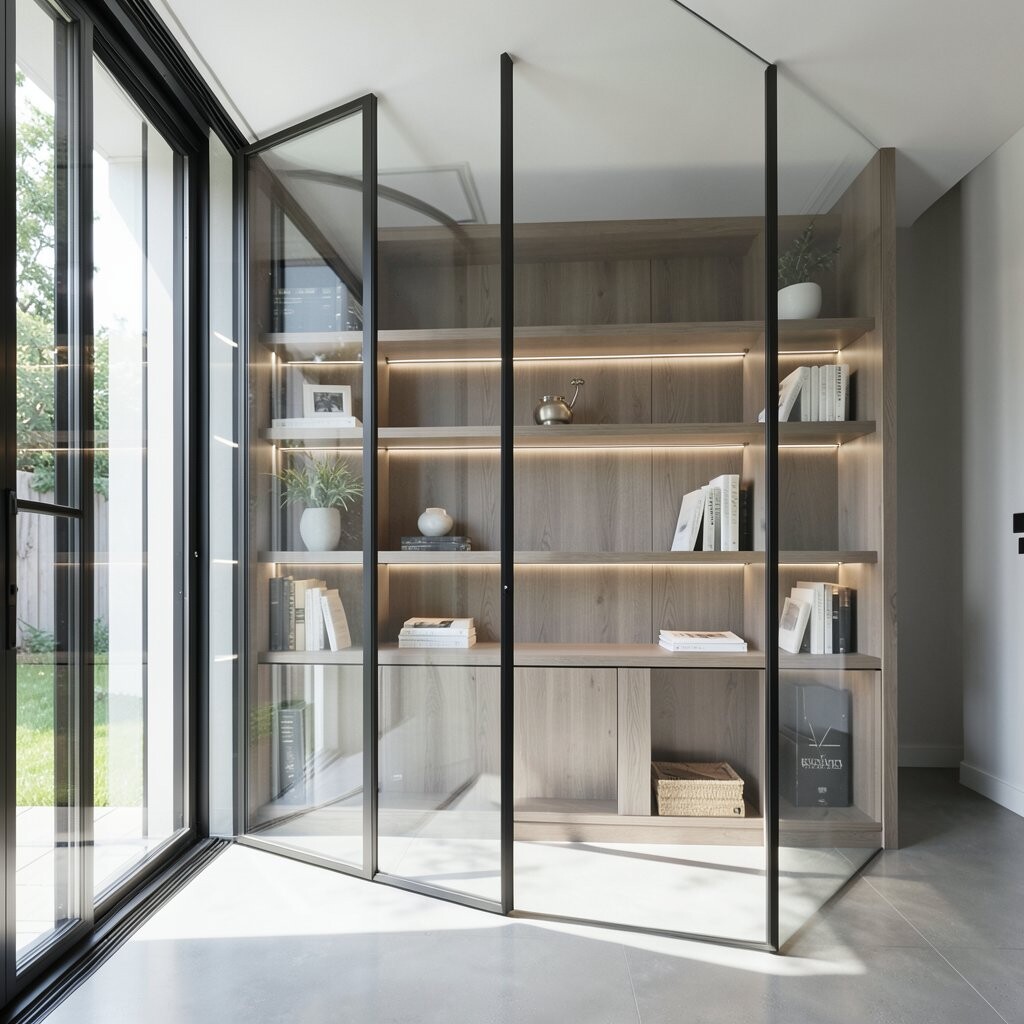
A glass wall with built-in shelves gives you light and storage in one design. The shelves can hold books, plants, art, or daily items while the glass keeps the room from feeling closed in.
This is a smart choice for small homes where every bit of space matters. It can also help a room feel more personal because you can show things that matter to you.
The cost can go up if the shelves are custom made, but the added use may make it worth it. Try using simple shelf shapes and a few well-chosen items so the wall stays neat.
9. Curved Glass Wall
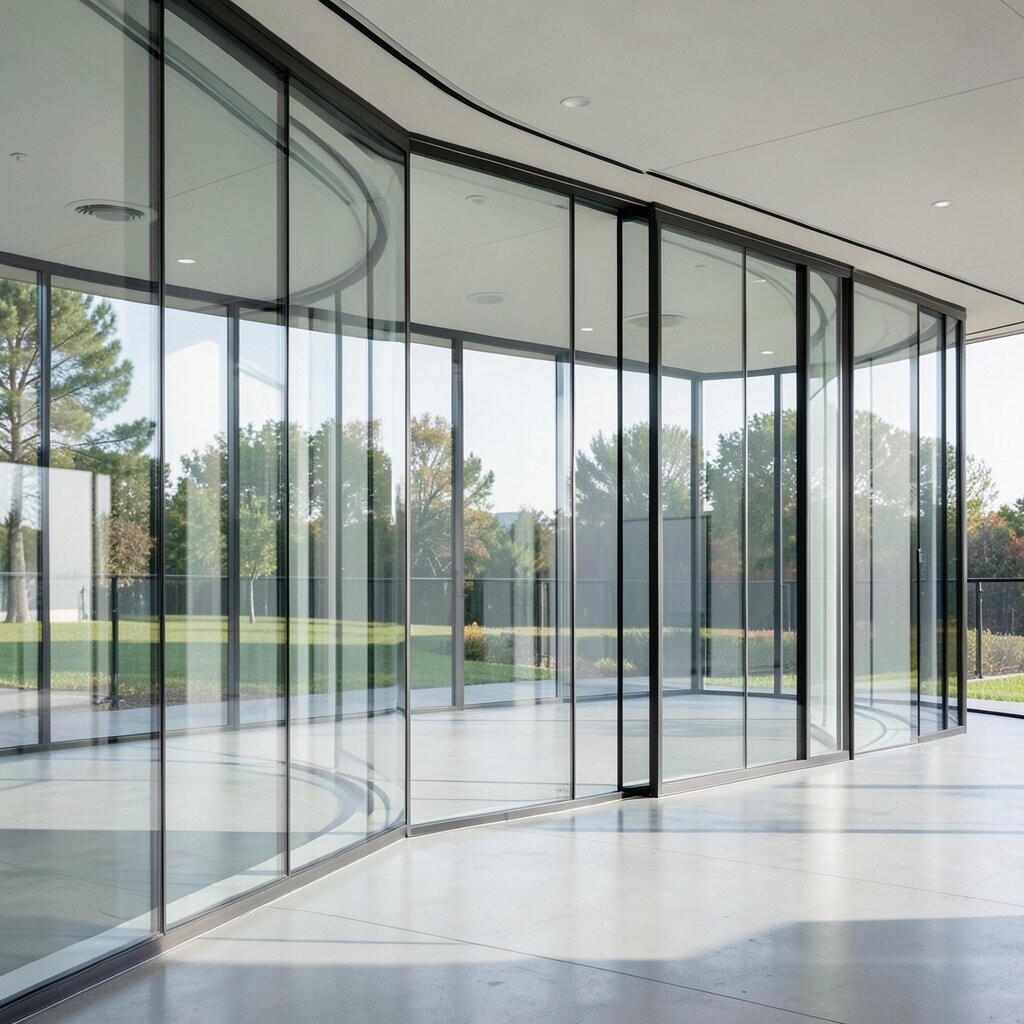
A curved glass wall gives a room a soft shape that feels different from straight lines. It can make a hallway, stair area, or lounge feel more smooth and easy to move through.
This kind of wall stands out because it is less common than flat glass panels. It can make a home feel special without needing loud colors or heavy decor.
Curved glass often costs more because it takes more skill to make and install. If you want a personal touch, use it in one key spot instead of the whole home.
10. Glass Wall Around a Staircase
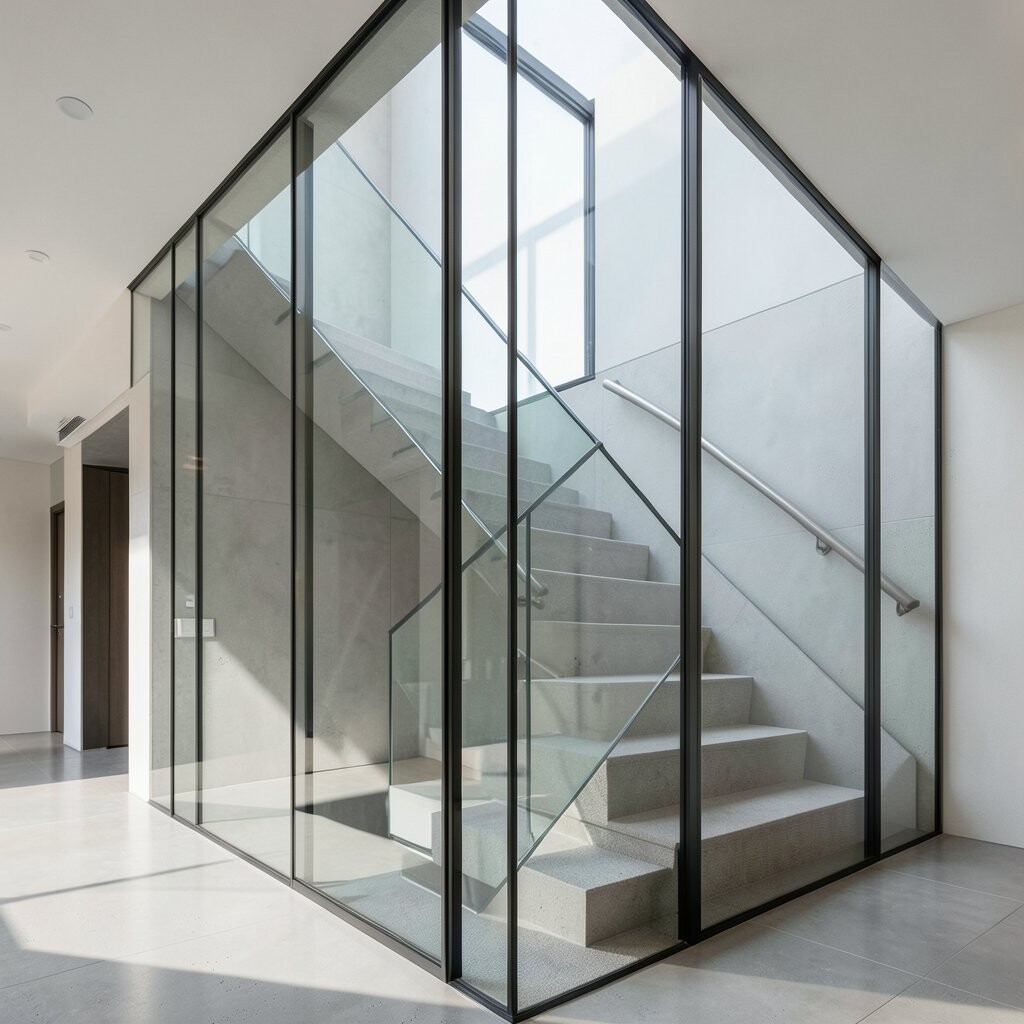
Glass walls around a staircase can make a stair area feel brighter and safer to see. They also help the stairs feel like part of the room instead of a dark corner.
This design works well in homes with open plans, where the stair area can affect the whole look. The clear panels keep sight lines open and help light move between floors.
Many homeowners like this idea because it feels clean and modern. You can use clear glass for a light look or frosted glass if you want a little more privacy.
11. Glass Wall for a Home Office
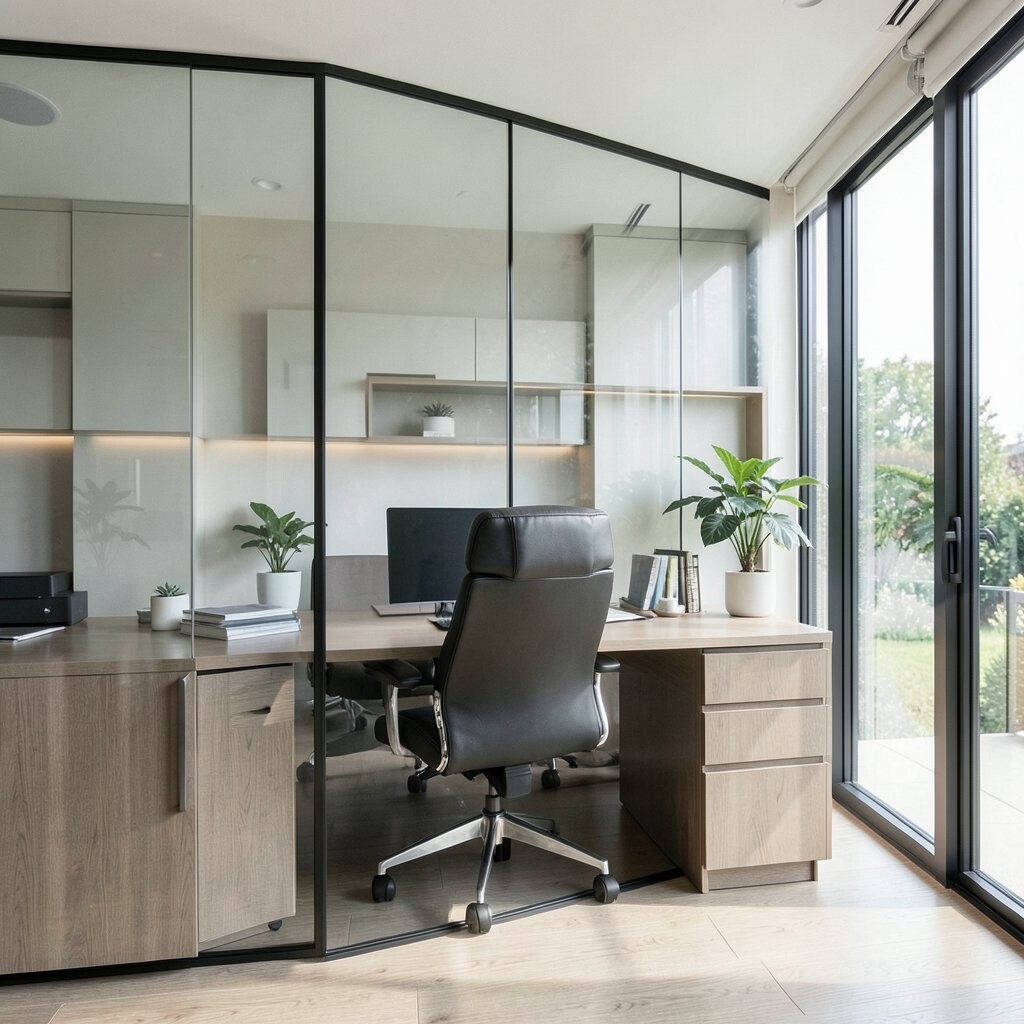
A glass wall for a home office helps you stay connected to the rest of the home while still having a work space. It can make the office feel less boxed in and more pleasant to use.
This setup is useful for people who want quiet but do not want to lose natural light. It also helps parents keep an eye on a work area while still giving it a clear boundary.
You can make it more private with blinds, film, or a sliding panel. The cost can vary a lot, so many people start with one glass wall instead of a full room build.
12. Glass Wall With Colored Film
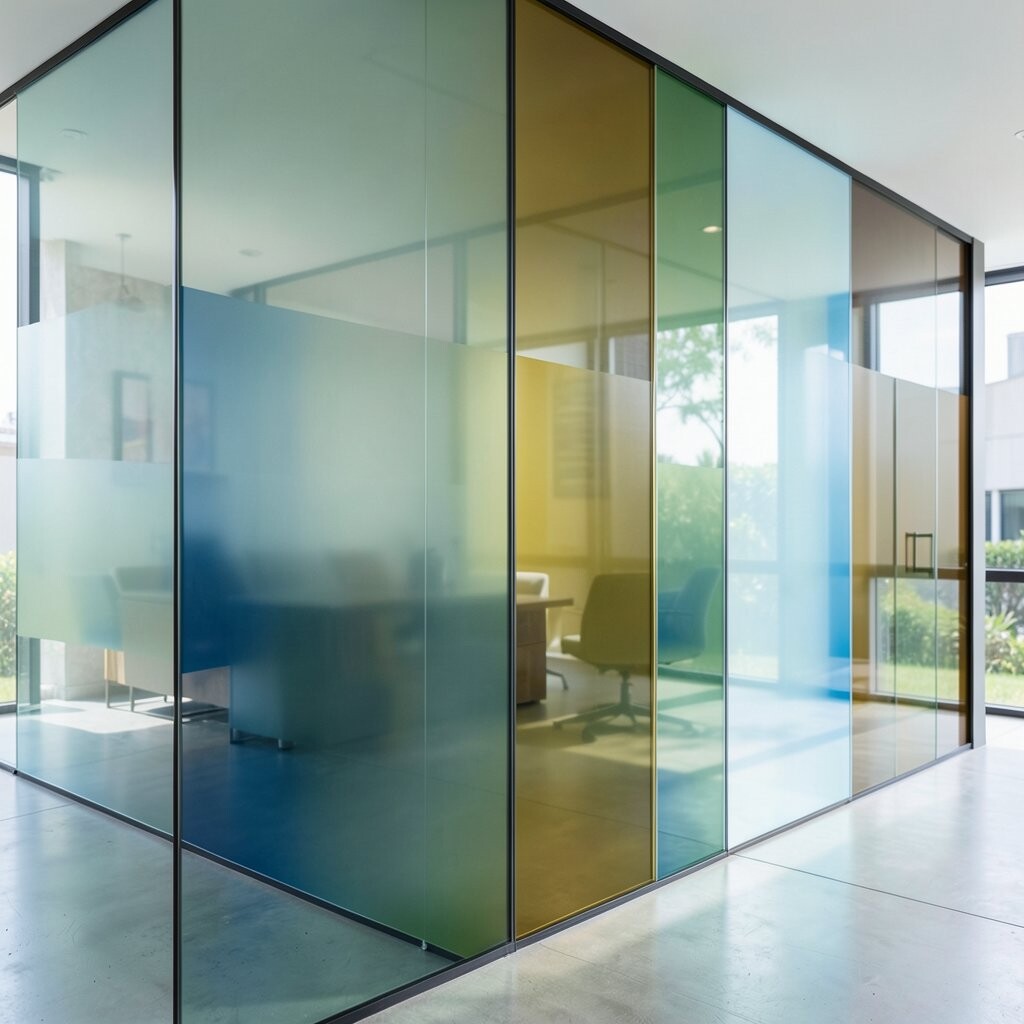
Glass walls with colored film add a bit of style while keeping the room bright. The film can be soft and light or more bold, depending on the look you want.
This is a good way to make a plain wall feel more personal without replacing the whole structure. It can also help with glare, which is useful near windows or screens.
Colored film is often a lower-cost choice compared with custom glass. Since it can be changed later, it is a nice option for people who like to update their space over time.
13. Glass Wall With Indoor Plants

A glass wall with indoor plants can make a room feel fresh and lively. The clear surface gives the plants a strong place to stand out, so the space looks full but still open.
This idea works well in sunrooms, kitchens, and living rooms with good light. Plants can also help soften the hard feel of glass and metal.
Try using tall plants near the wall or small pots on a shelf beside it. The cost can stay low if you choose easy plants and simple planters that fit your style.
14. Glass Wall in a Bathroom

A glass wall in a bathroom can make a small room feel less tight and more open. It works well for shower areas, wet rooms, or spaces that need light to move around better.
Frosted or textured glass is often used here because privacy matters. The soft look can also make the room feel calm and neat.
Bathroom glass walls need the right care and strong materials, so the cost may be higher than a simple wall. Many people like the clean look because it is easy to match with tile, stone, and simple fixtures.
15. Textured Glass Wall
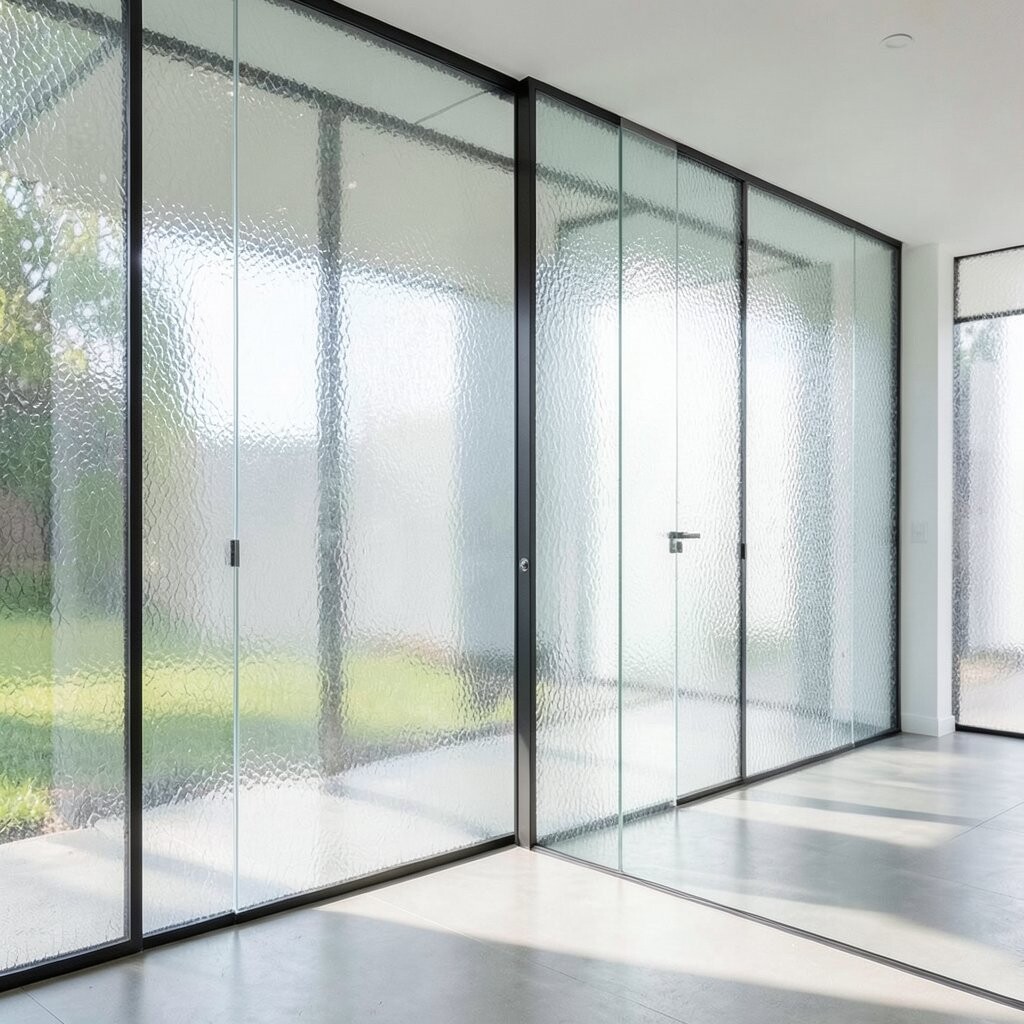
Textured glass walls have a pattern that changes how light moves through the space. The surface can look rippled, ribbed, or lightly etched, which adds interest without making the room feel busy.
This style is good when you want some privacy but still want a bright room. It can work in entry areas, baths, and side rooms that need a little more style.
Textured glass is a nice choice for people who want something different from plain clear panels. The cost depends on the pattern, but even a simple texture can make the wall feel special.
16. Glass Wall With Metal Grid
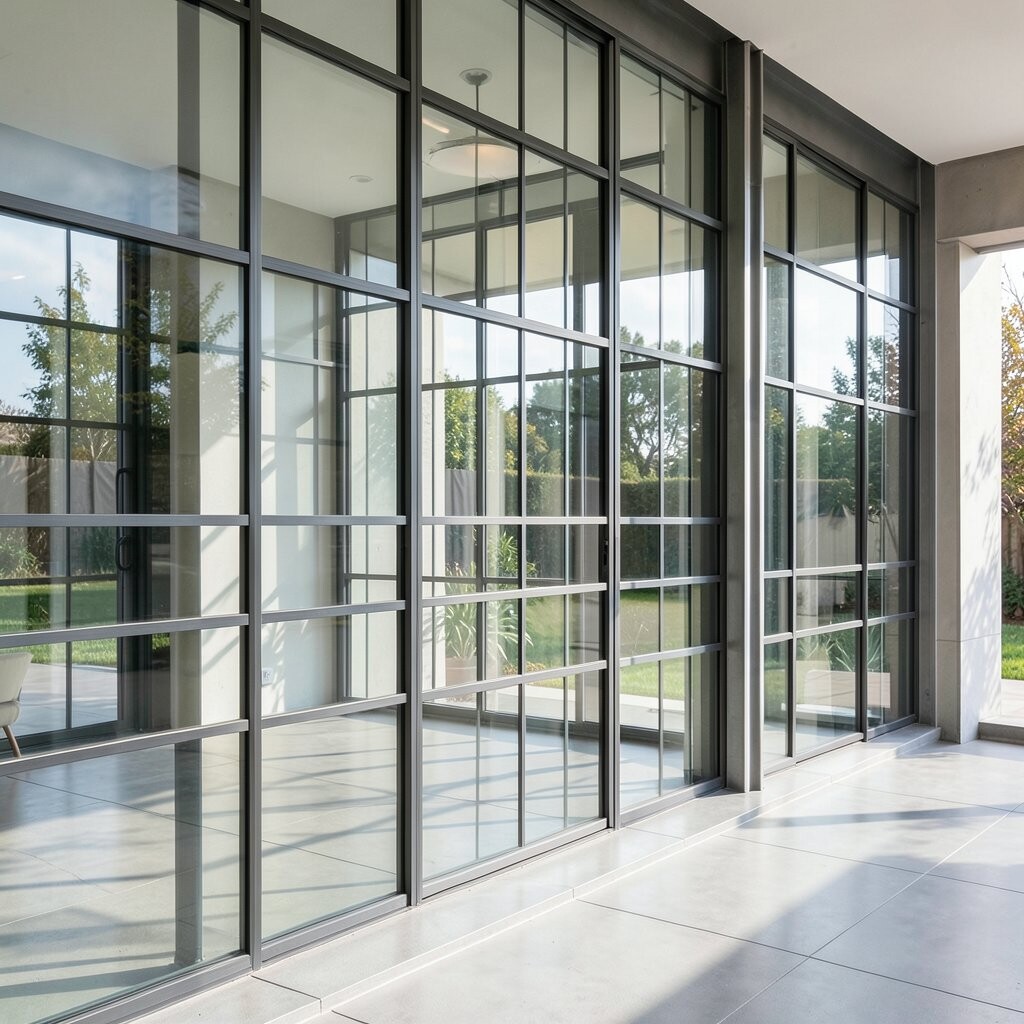
A glass wall with a metal grid has a neat pattern that breaks the glass into smaller sections. It gives the wall a classic feel while still keeping the room open and bright.
This look is popular in modern homes, cafes, and office spaces because it feels tidy and strong. The grid can also help the wall look more balanced and less plain.
You can choose thin grid lines for a light look or thicker ones for a stronger style. This design may cost more than plain glass, but it can add a lot of character to the room.
17. Glass Wall for a Dining Area
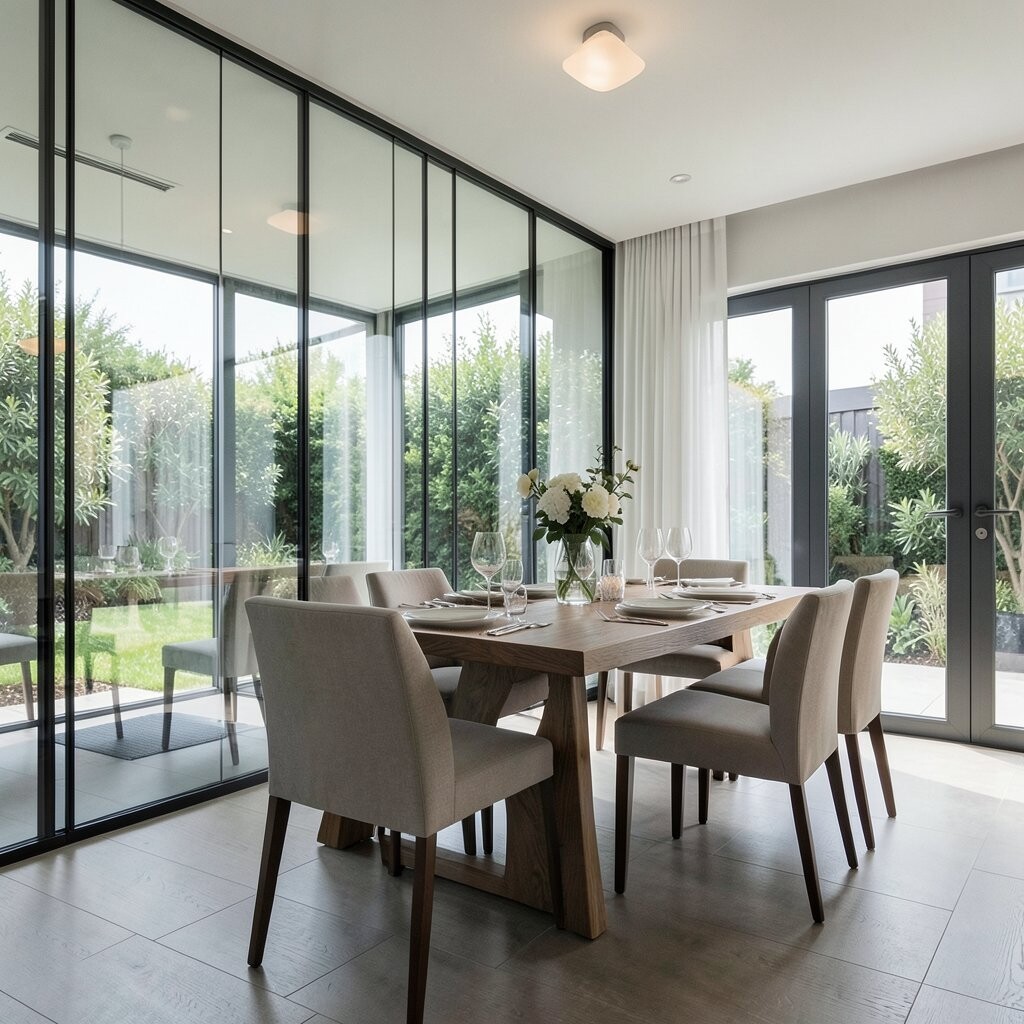
A glass wall in a dining area can make meals feel more open and connected to the rest of the home. It is a good way to keep the space bright without losing the feeling of a separate room.
This setup works well near patios, kitchens, or living rooms. It can help guests feel more at ease because the space looks clear and easy to move through.
You can make the dining area feel more personal with warm lights, a wood table, or curtains for evening use. The cost depends on size and frame type, so it helps to plan the layout early.
18. Custom Glass Wall With Mixed Materials
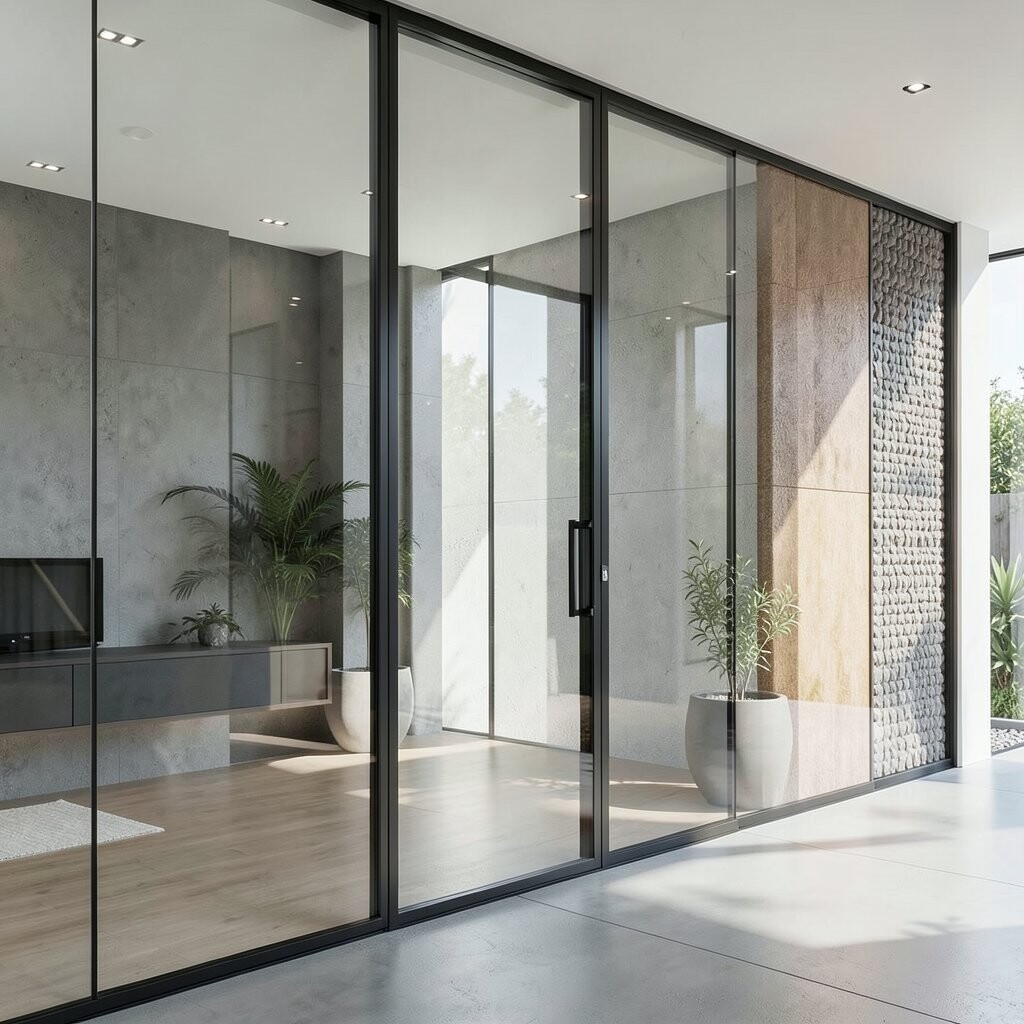
A custom glass wall with mixed materials lets you blend glass with wood, stone, metal, or fabric details. This gives you more control over how the wall looks and how it fits the rest of the home.
It is a good choice for people who want a one-of-a-kind space. You can use it to match a room theme, support a favorite color, or make a strong design point without making the room feel heavy.
Custom work usually costs more, but it can solve layout needs that ready-made panels cannot. Many current trends use mixed materials because they feel warm, useful, and easy to make your own.