Greenhouse shelves can help plants get more light, air, and space. The right shelf setup can also make daily care feel easier and more neat.
1. Wire Shelves for Good Air Flow

Wire shelves are a simple choice for many greenhouses. They look light and open, and they let air move around plant pots with ease.
This can help keep leaves and soil drier after watering. That can lower the chance of mold and other problems that come from still air.
Wire shelves are also easy to clean with a hose or cloth. Many gardeners like them because they are not too costly and come in many sizes.
2. Wooden Shelves for a Warm Look

Wooden shelves give a greenhouse a soft, natural look. They can make the space feel calm and tidy, which many people enjoy.
They work well for small pots, seed trays, and tools. If you seal the wood, it can last longer in damp air and hold up better over time.
Wood shelves can be made at home for less money than some store options. You can also paint or stain them to match your own style.
3. Tiered Shelves to Save Space

Tiered shelves use vertical space, which is helpful in a small greenhouse. They let you keep more plants in one area without crowding the floor.
This setup works well for plants with different light needs. Place taller plants on top and smaller ones below so each one gets a fair share of sun.
Many gardeners like tiered shelves because they make the greenhouse look full but still neat. You can buy them ready-made or build a simple version with basic tools.
4. Rolling Shelves for Easy Moving

Rolling shelves are handy when you need to shift plants for light or cleaning. They can also help when you want to move heavy pots without much lifting.
This kind of shelf is useful in changing weather. You can roll plants closer to the warm side of the greenhouse or away from a hot window.
They are a good pick for gardeners who like flexible spaces. The cost can be higher than basic shelves, but many people think the ease of use is worth it.
5. Adjustable Shelves for Changing Plant Needs

Adjustable shelves let you move shelf heights as plants grow. This is useful when seedlings are short at first but need more room later.
They also help if you grow many kinds of plants in one place. You can make room for taller leaves, hanging vines, or trays that need more head space.
This shelf style fits the trend of flexible home gardening. It gives you more control, and that can make plant care feel simpler day to day.
6. Slatted Shelves for Better Drainage
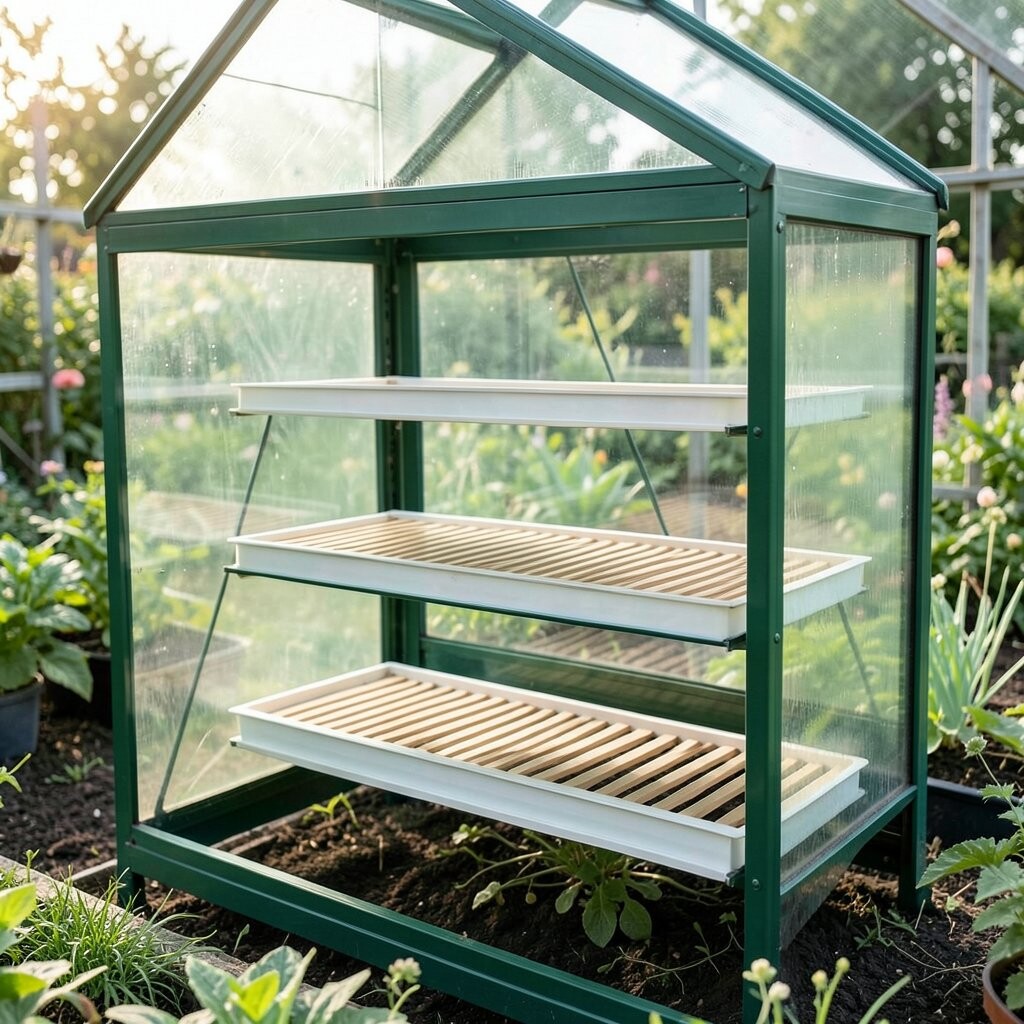
Slatted shelves have small gaps that let extra water drip away. This is helpful after watering because it keeps pots from sitting in wet spots.
Plants that do not like soggy roots often do well on this kind of shelf. The open design also helps air move around the base of each pot.
Slatted shelves can be made from wood, plastic, or metal. They are a smart choice if you want a shelf that helps with plant health and stays easy to use.
7. Corner Shelves for Tight Spaces

Corner shelves make use of spots that often go empty. They are a good way to add more growing space without changing the whole greenhouse layout.
These shelves can hold small herb pots, starter trays, or tools. They also help break up a plain room and make the space feel more complete.
Many people like corner shelves because they are simple and low cost. You can buy a ready one or build one to fit a strange corner shape.
8. Hanging Shelf Units for Extra Room

Hanging shelf units free up floor space and keep plants off crowded tables. They can give a greenhouse a neat, layered look that many gardeners enjoy.
These shelves work well for light pots, small succulents, and plant starts. They can also help plants get more light if they are placed near a bright roof panel.
Hanging units are a good fit for people who want a fresh, modern style. They are often used in small greenhouses where every inch matters.
9. Metal Shelves for Strong Support

Metal shelves are strong and steady, so they can hold heavier pots with less worry. They often work well for large plants, water trays, and bags of soil.
Many metal shelves have a clean look that fits well in a neat greenhouse. Some come with a coated finish that helps protect them from rust and damp air.
They may cost more than simple wood or plastic shelves, but they can last a long time. If you want a shelf that feels solid, this can be a good choice.
10. Plastic Shelves for Light and Easy Care
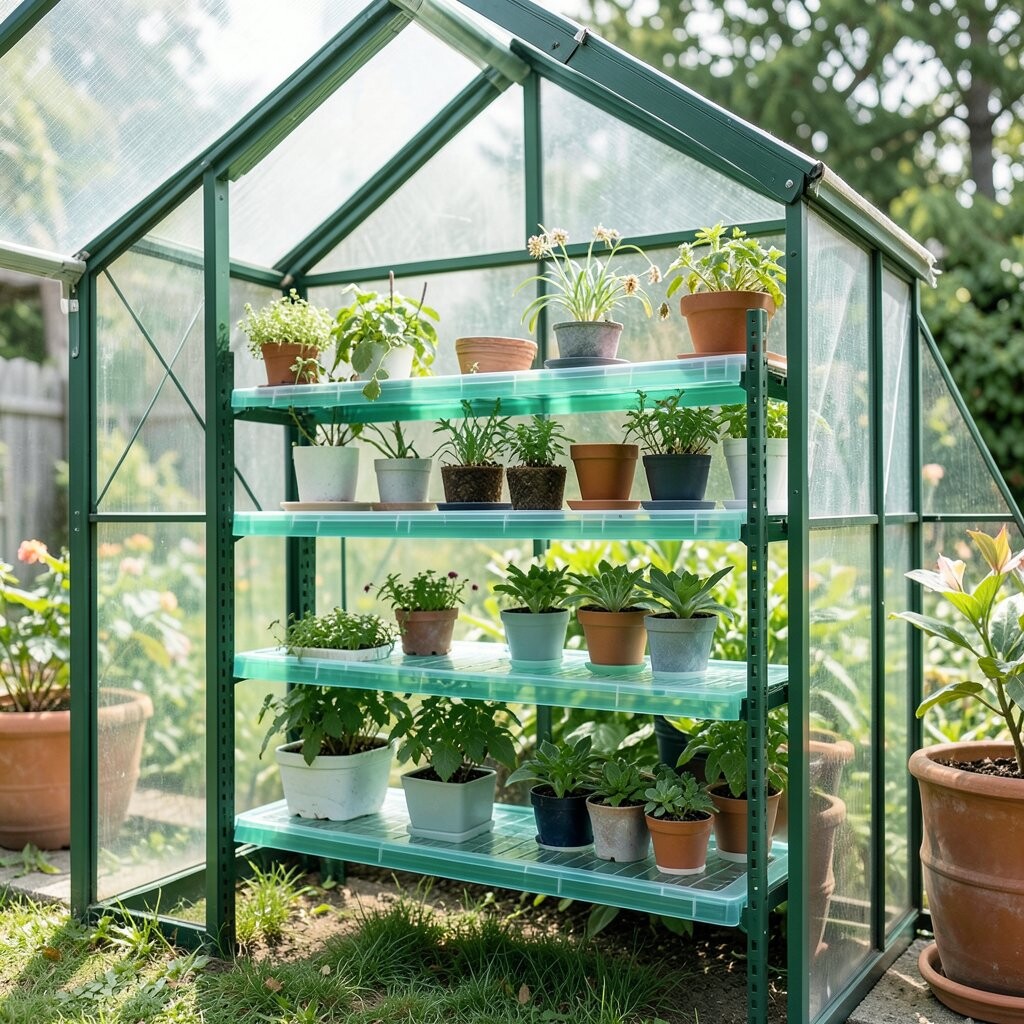
Plastic shelves are light, easy to move, and simple to wipe clean. They are often a good pick for people who want a low-fuss setup.
They do not rust, and many hold up well in wet spaces. This makes them useful for seed starting, herb pots, and small plant groups.
Plastic shelves are often one of the more budget-friendly choices. They may not look as rich as wood or metal, but they can still work well and save money.
11. Bench-Style Shelves for Wide Plant Rows

Bench-style shelves give you a wide, flat surface for many pots at once. They are useful when you want to line up plants in rows and keep them easy to reach.
This style works well for growers who move many trays at one time. It can make watering, pruning, and checking plants feel more simple and fast.
Bench shelves are a common trend in both home and hobby greenhouses. They can be built in a plain way or made to match a more polished look.
12. DIY Shelves Made to Fit Your Space

DIY shelves let you build a setup that fits your exact greenhouse size. This can be helpful if your space is small, odd-shaped, or has low walls.
You can choose the height, width, and material based on what your plants need. That means you can make room for seed trays, tall pots, or tools all in one plan.
Many gardeners like DIY shelves because they can keep costs down and add a personal touch. They also let you try ideas that store shelves may not offer, which can make the space feel more like your own.