Staircases can do more than connect floors. Small changes in shape, light, and finish can make them feel calm, useful, and easy to enjoy.
1. Open riser steps
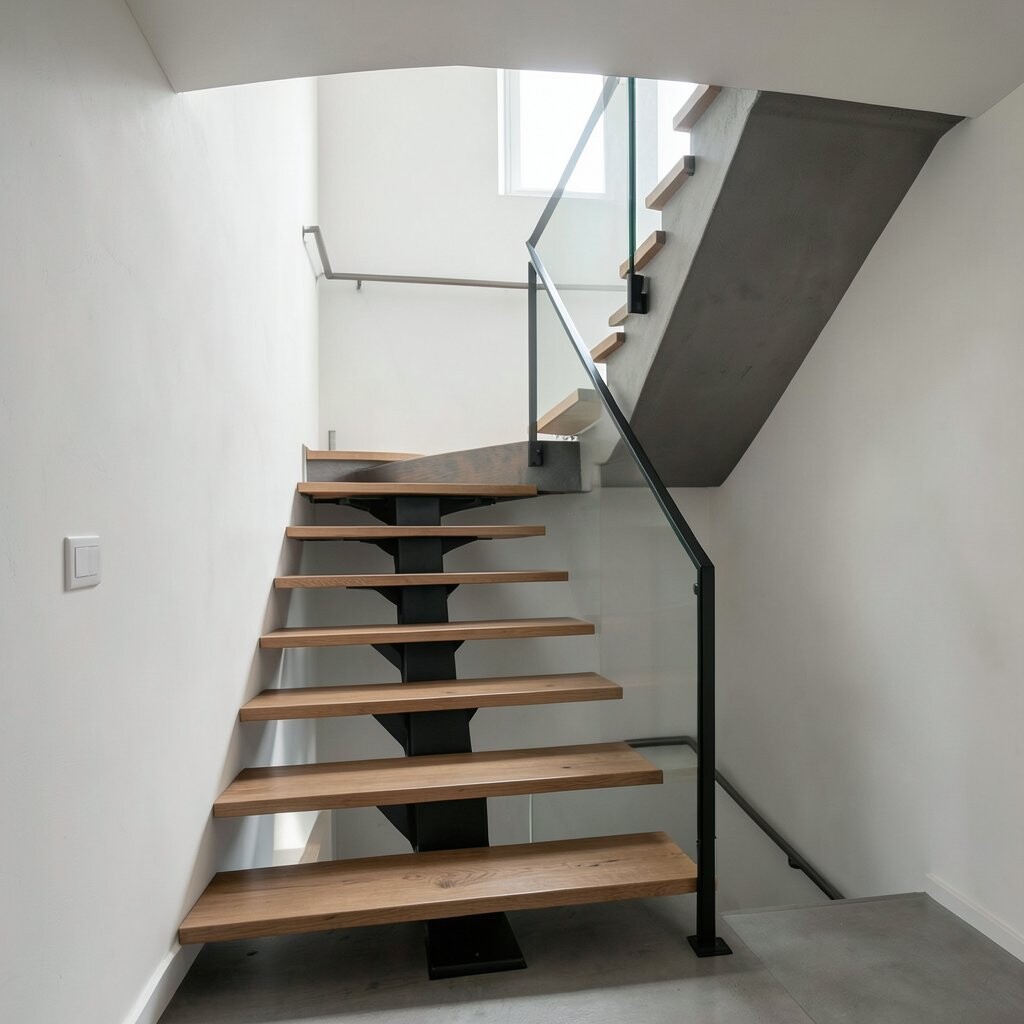
Open riser steps leave space between each tread, so the stair looks light and simple. This style can make a small hall feel less tight and can help the whole room seem more open.
Many homes use this look because it fits clean, modern spaces without much fuss. It can cost more than a basic closed stair, since the build needs careful work and strong support.
You can keep the look soft by using wood treads with slim metal rails. If you want a warmer feel, add a runner nearby or place art on the wall beside the stair.
2. Floating stair treads
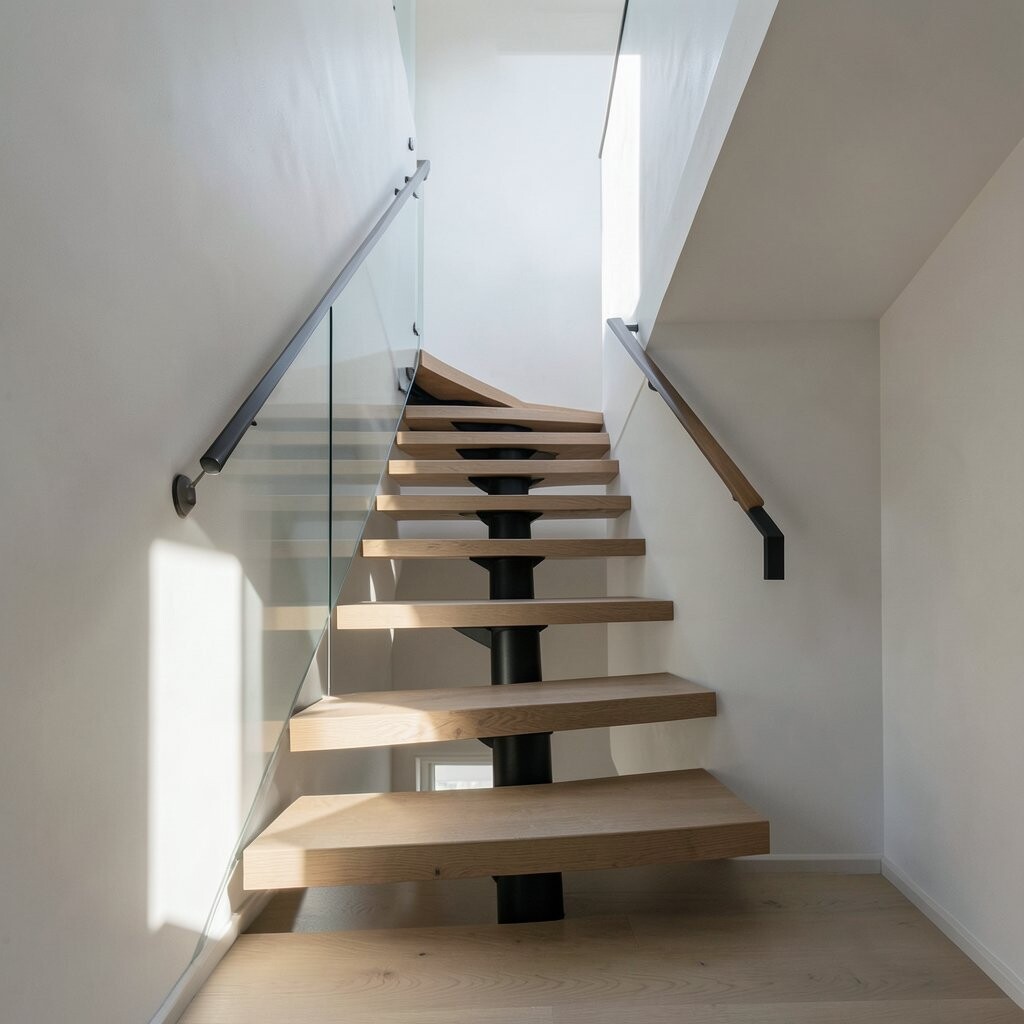
Floating treads look like each step sits on its own, with no heavy support under the middle. This gives a sharp visual line that can make a stair feel like part of the room, not just a path through it.
People like this idea because it feels fresh and neat in homes with open plans. It can be pricey, since the wall support and build work need to be strong and exact.
Wood is common here, but stone or painted steel can also work well. To make it fit your home, match the tread finish to your floor or use a dark wall behind it for contrast.
3. Curved stair shape
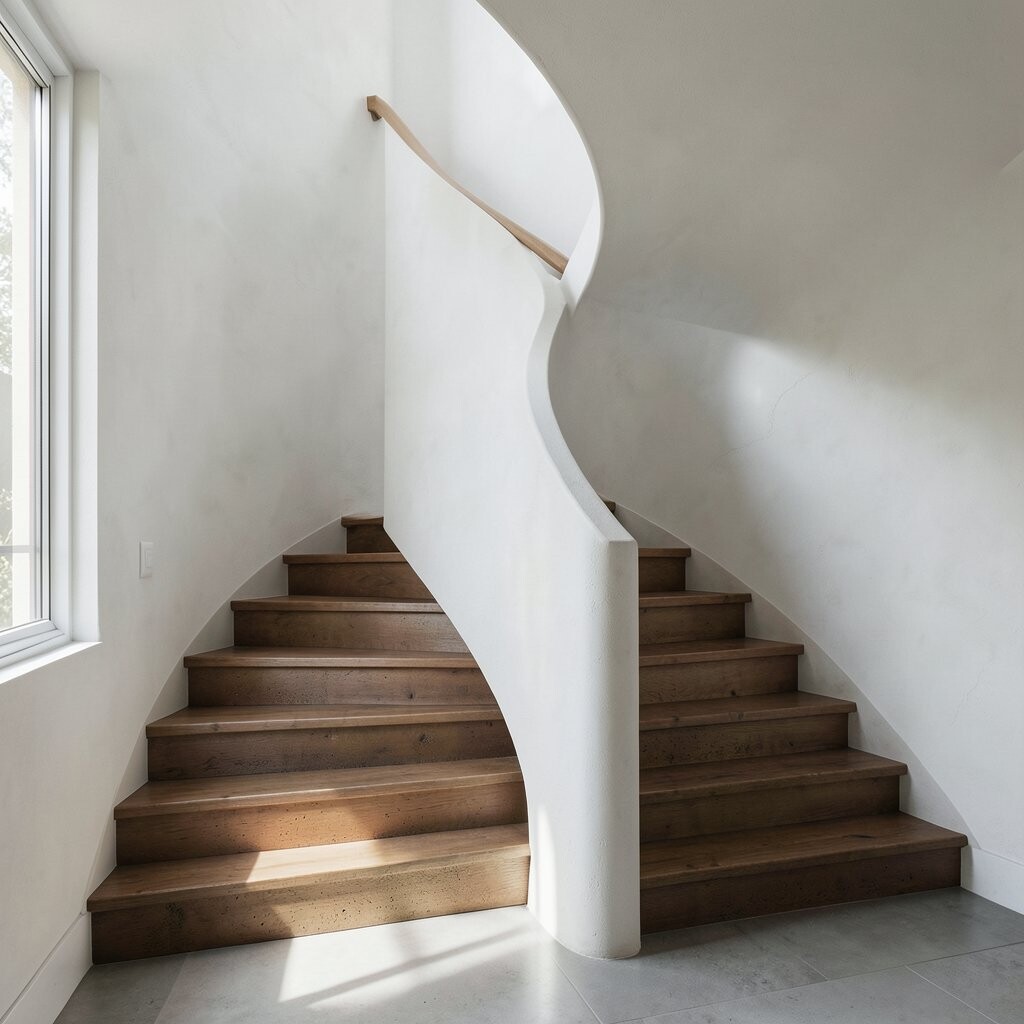
A curved stair has a soft bend instead of a sharp turn. It can make an entry feel calm and smooth, and it often gives the home a more custom look.
This style stands out because it feels more like a piece of furniture than a plain stair. It usually costs more than a straight stair, since the parts are harder to make and fit.
Curved stairs work well with wide landings and tall ceilings. If your home is small, a gentle curve near the bottom can add style without taking over the room.
4. Spiral stair with slim lines
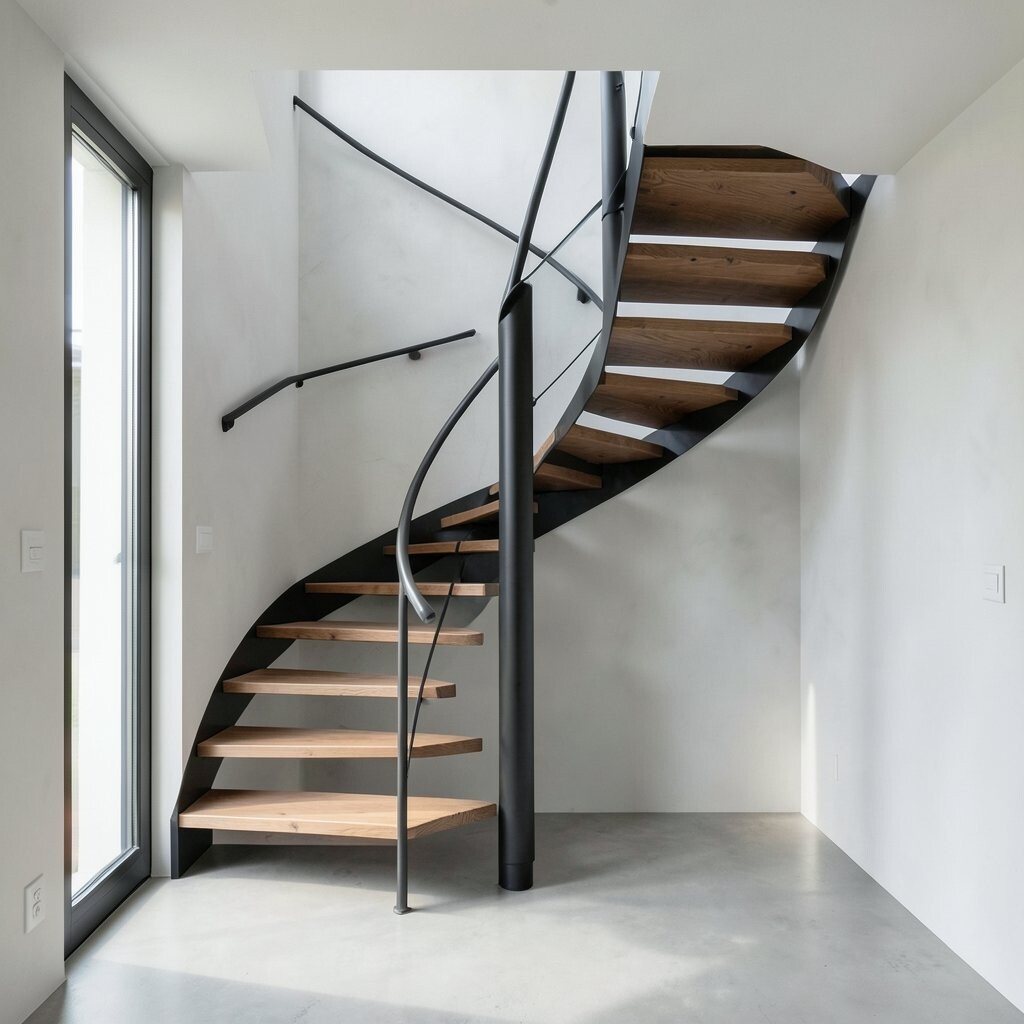
A slim spiral stair takes up very little floor space and can fit in a tight corner. The round shape also gives a room a strong visual point, which can be useful in a loft or studio.
Many people use this idea when they want a second path without losing open space. It can be more affordable than a full custom stair, but the final cost still depends on metal work, finish, and size.
Light colors can make a spiral feel less heavy, while black steel can give it a bold look. Make sure the steps are easy to use, since comfort matters as much as style.
5. Staircase with built-in storage
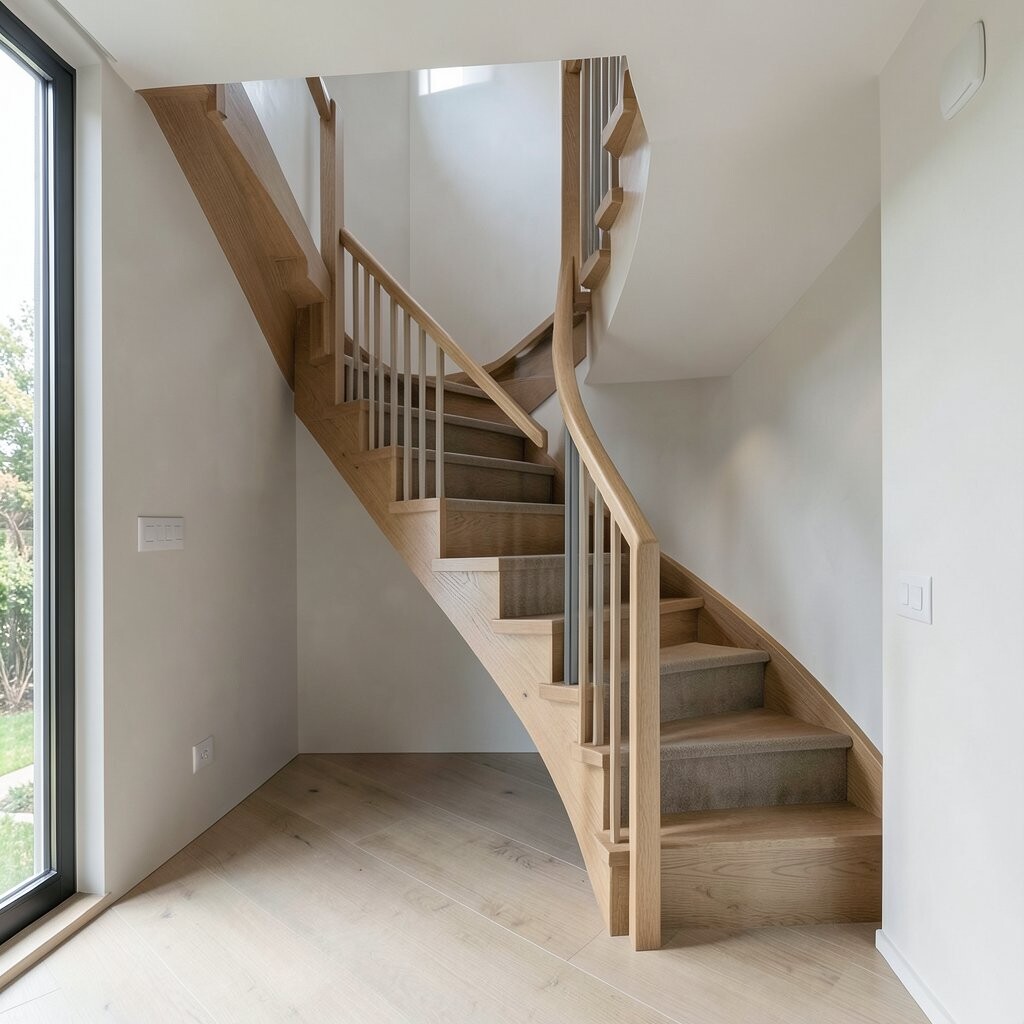
Built-in storage under stairs makes use of space that often sits empty. You can add drawers, cabinets, or pull-out bins for shoes, books, games, or cleaning items.
This idea helps keep the home tidy and can cut down on the need for extra furniture. It is also a smart choice for small homes, where every bit of storage matters.
The cost can range a lot based on the size and the type of wood or hardware used. For a simple update, try open cubbies or a few deep drawers with plain fronts that match the stair trim.
6. Glass balustrade panels
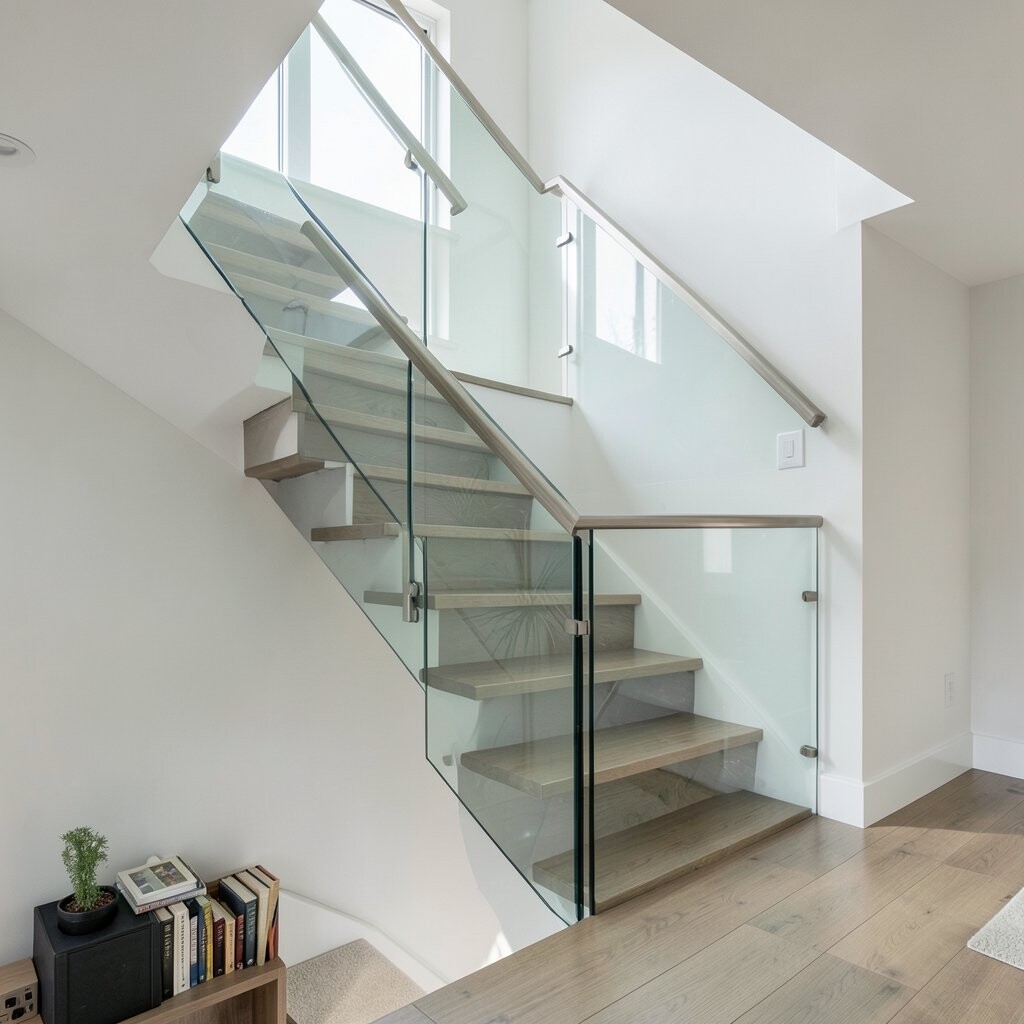
Glass panels beside a stair let light pass through and keep views open. This can make a narrow hall feel brighter and can help a stair sit well in a modern home.
The clean look is a big reason people choose it, since it keeps the focus on the steps and the room around them. It can cost more than wood rails, and it may need more care to stay free of marks.
Clear glass works well in bright homes, while frosted glass can give a bit more privacy. Pair it with wood, stone, or metal steps to make the stair feel balanced and not too cold.
7. Mixed material steps
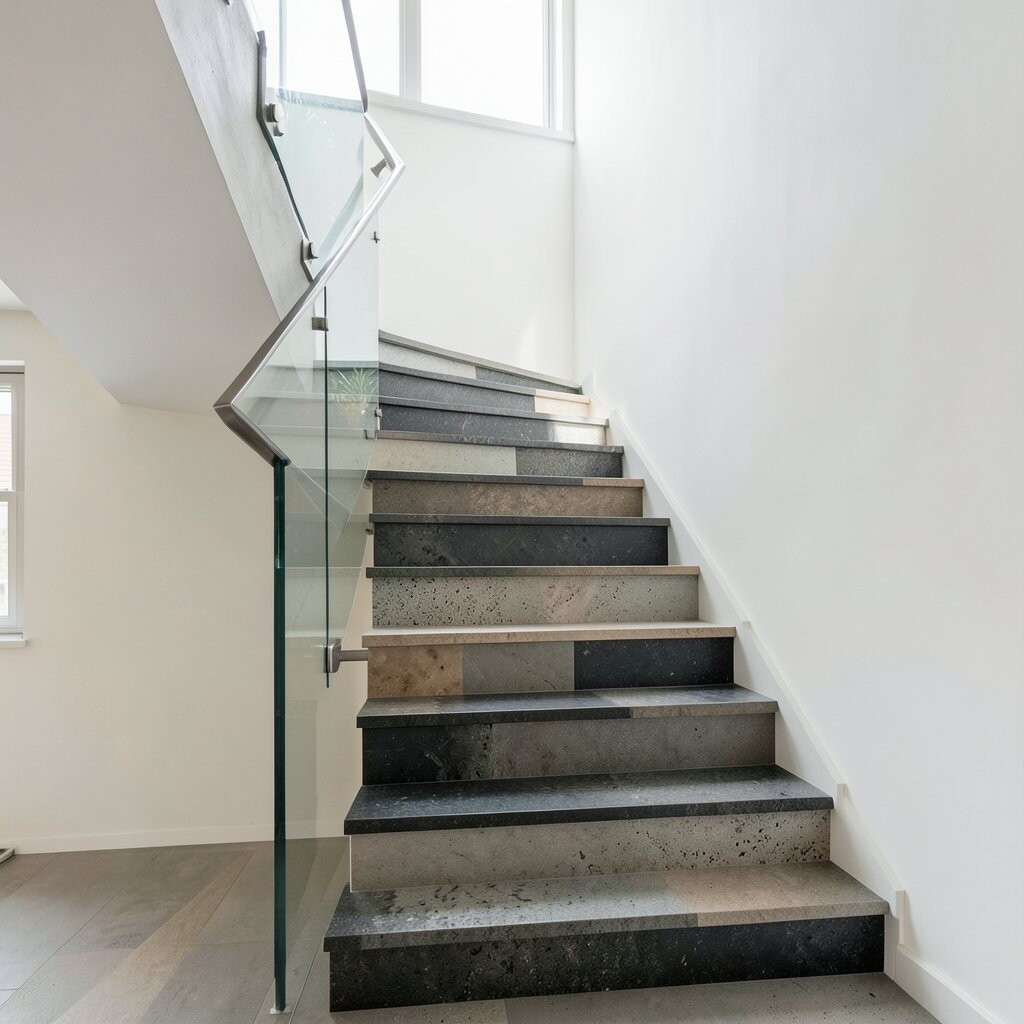
Mixed material steps use two or more finishes, such as wood with metal, or stone with painted trim. This can make the stair look more layered and give it a custom feel without a full rebuild.
People often like this style because it fits many home types, from old houses to new builds. The cost depends on the materials you pick, but small changes can still make a big visual difference.
Try a wood tread with a metal stringer for a neat, modern look. If you want a softer style, use warm wood with a painted side and simple rail detail.
8. Under-stair reading nook
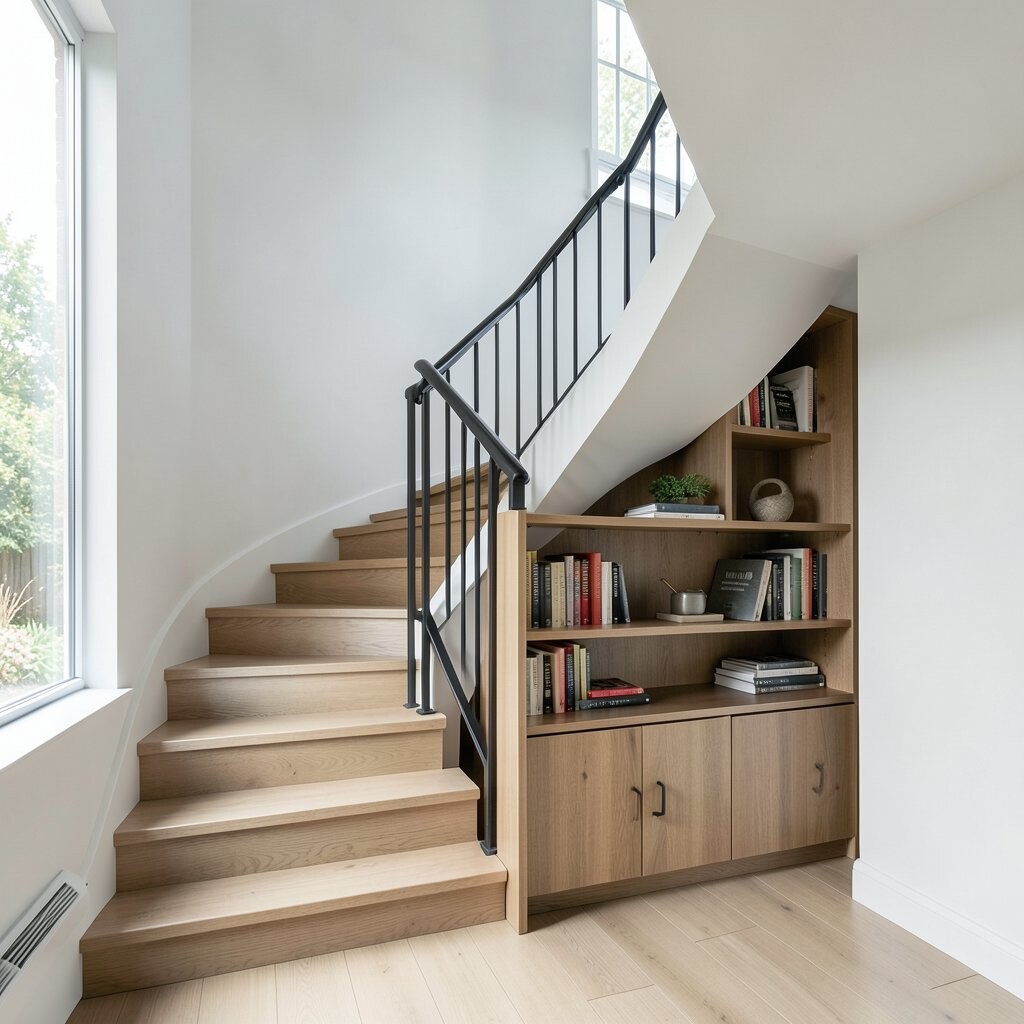
An under-stair reading nook turns a plain spot into a small place to sit and relax. A bench, cushion, and a few shelves can make the area feel useful and cozy.
This idea adds charm without needing much room, so it works well in family homes and apartments. It can also be a lower-cost project if you use simple built-ins and soft fabric pieces.
Good light is important, so add a wall lamp or a small sconce near the seat. You can make the nook feel personal with books, baskets, or a color that matches the rest of the home.
9. Staircase with hidden drawers
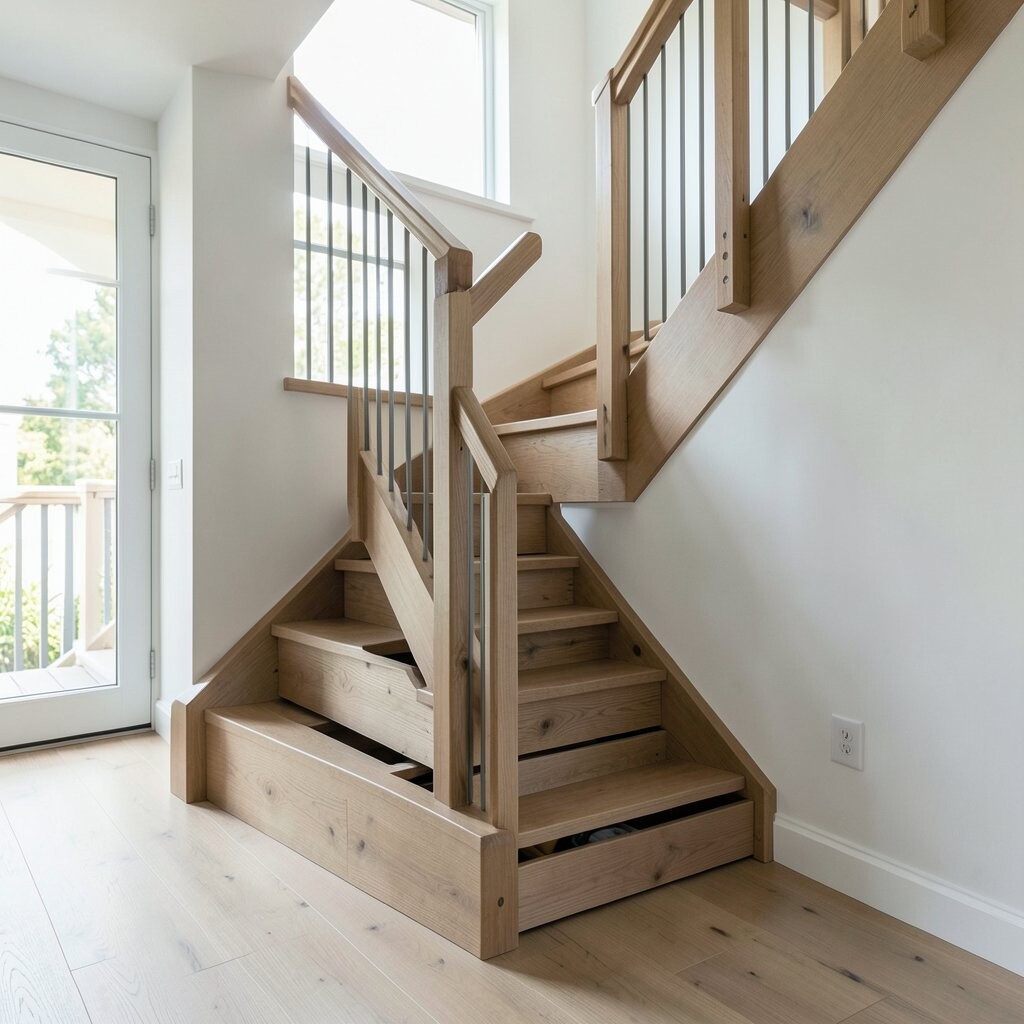
Hidden drawers can sit inside the stair risers or under the lower steps. They are a clever way to store small things while keeping the stair face neat and plain.
This idea works well when you want storage but do not want extra cabinets in the room. It can cost more than open shelves because the parts need a careful fit and smooth slides.
Use hidden drawers for items you need close by, like pet supplies, mail, or craft tools. A simple handle or push-latch system can keep the front clean and easy to use.
10. Painted stair risers
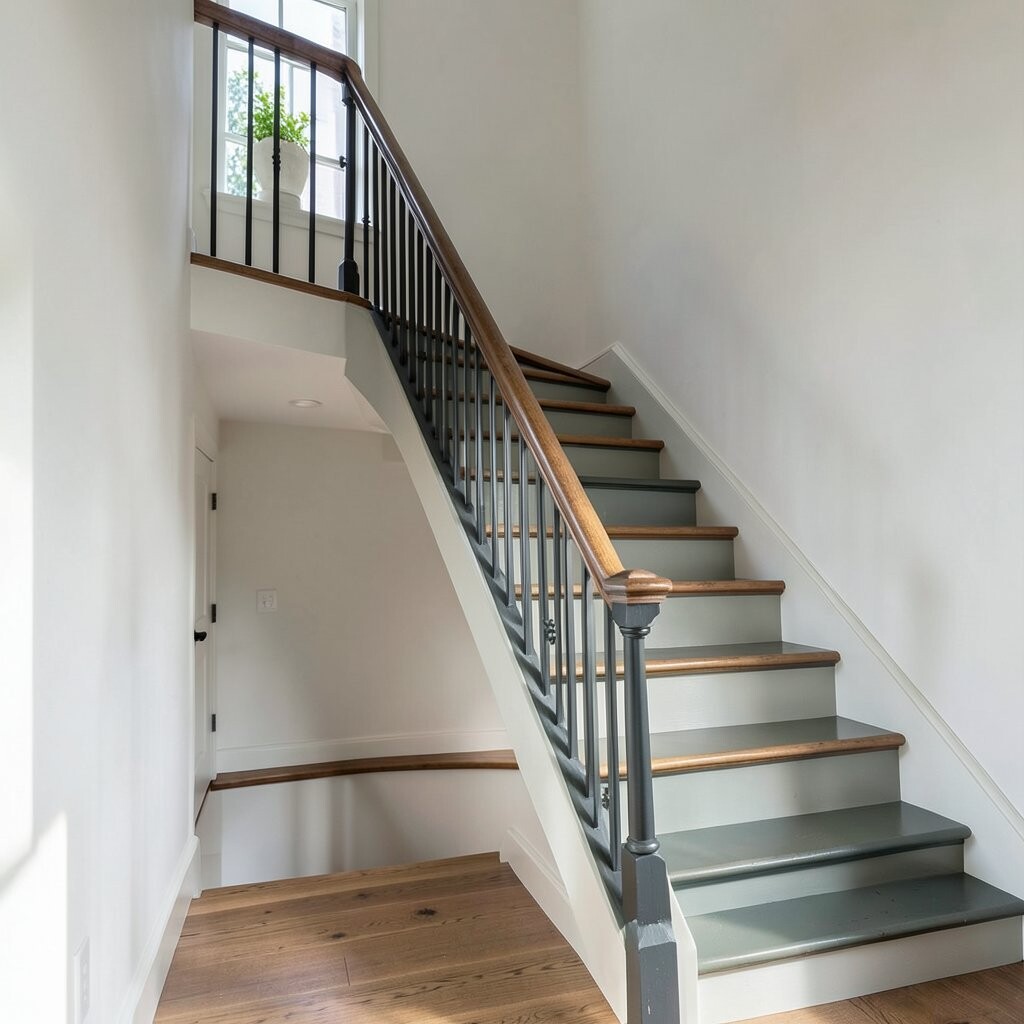
Painted risers can bring color and life to a stair without changing the whole structure. You can use one calm shade, a set of soft tones, or a bold pattern that matches the room.
This is one of the easiest ways to give stairs a fresh look on a smaller budget. It also works well in older homes where the stair shape is plain but still solid.
Light colors can make the stair feel open, while deeper shades can add depth and contrast. If you want a simple update, paint the risers and keep the treads natural wood for balance.
11. LED strip lighting
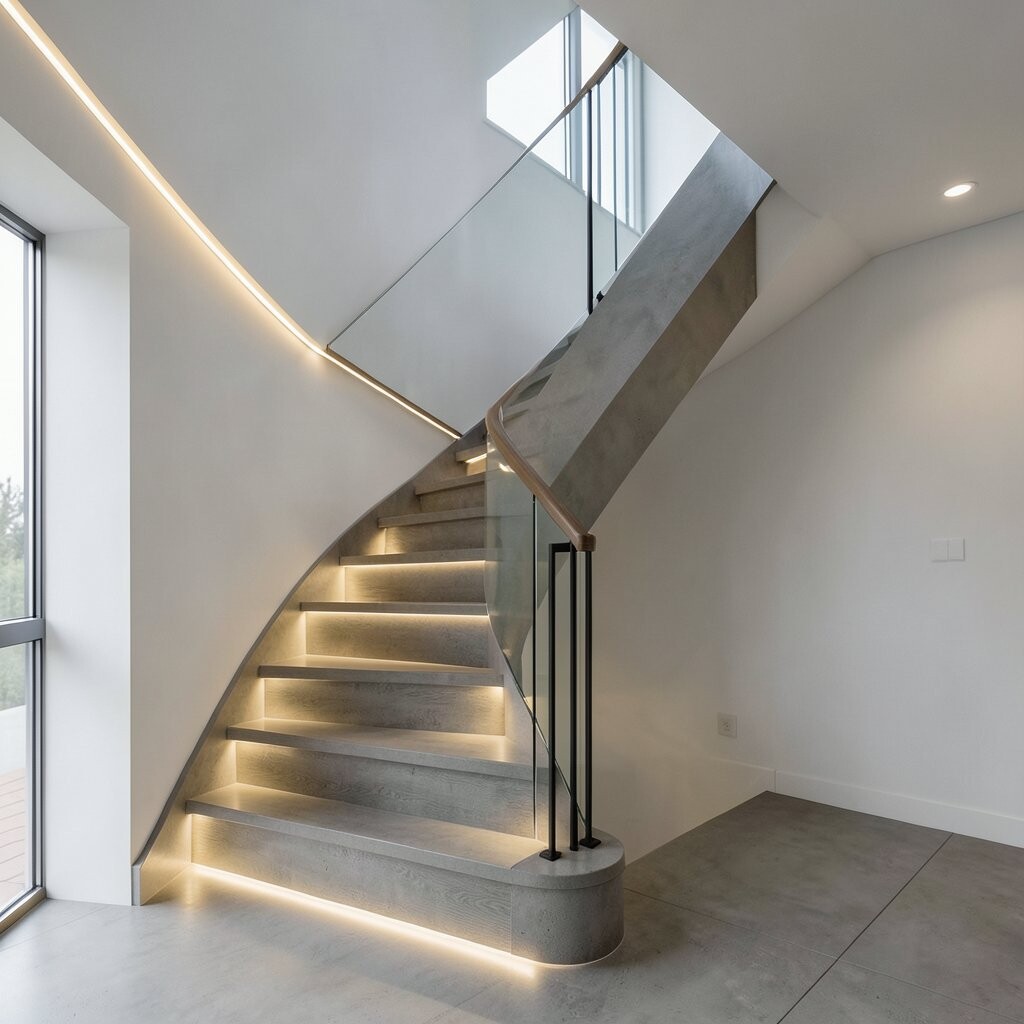
LED strip lighting can sit under each tread, along the handrail, or near the base of the stair. It gives a soft glow that helps people see the steps at night and adds a calm look.
This kind of lighting is useful in homes with children, older adults, or anyone who moves around after dark. It can also make a stair feel more current without a full redesign.
Warm white light often feels best in a home, while cool light can look sharper and more modern. The cost is often fair, but the final price changes with wiring, controls, and the size of the stair.
12. Library stair wall
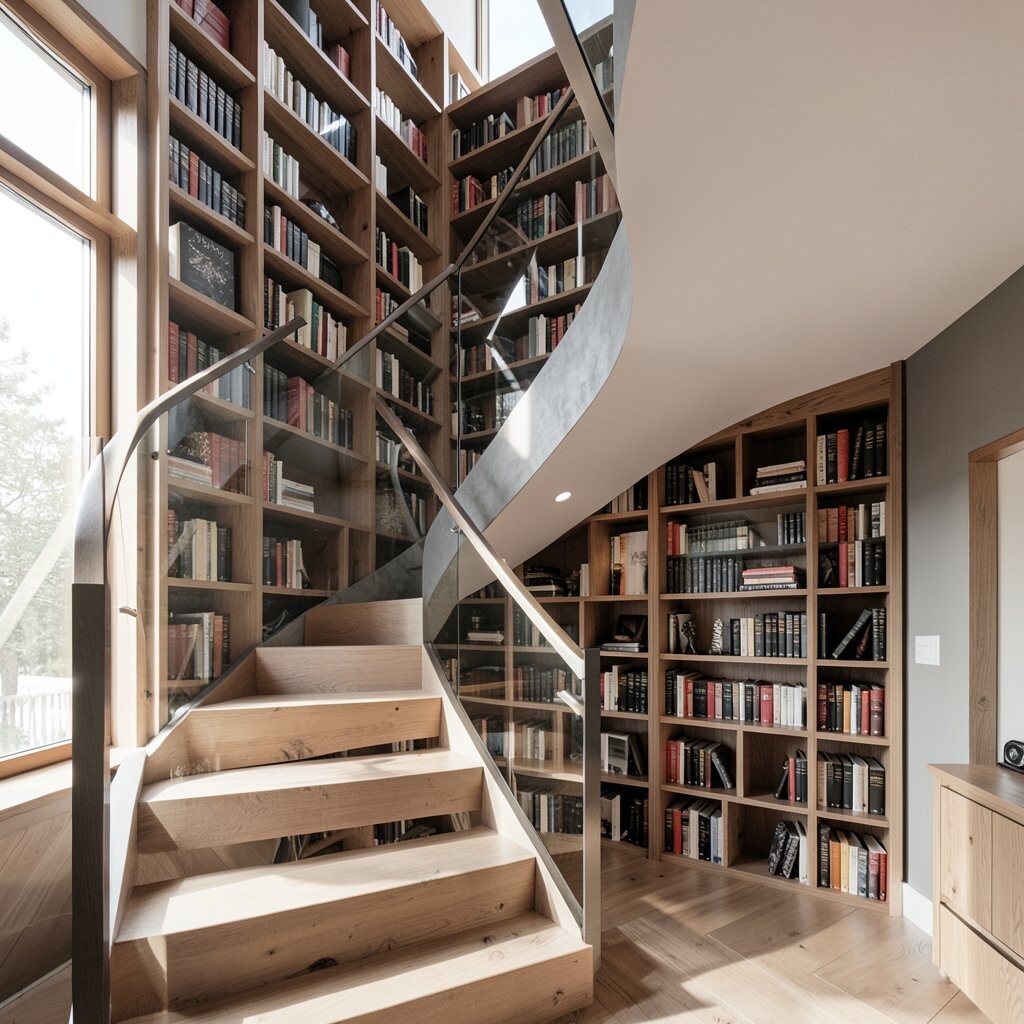
A library stair wall uses the space beside the stair for shelves, books, and small decor pieces. This makes the stair area feel full of purpose instead of just being a pass-through.
It is a good fit for readers and for homes that need more storage in a simple way. The shelves can be built-in or added as open units, which helps keep the cost in check.
To keep the look neat, group books by size or color and leave some open space on the shelves. Add a small lamp or picture frame to make the wall feel more like part of the home.
13. Industrial metal railing
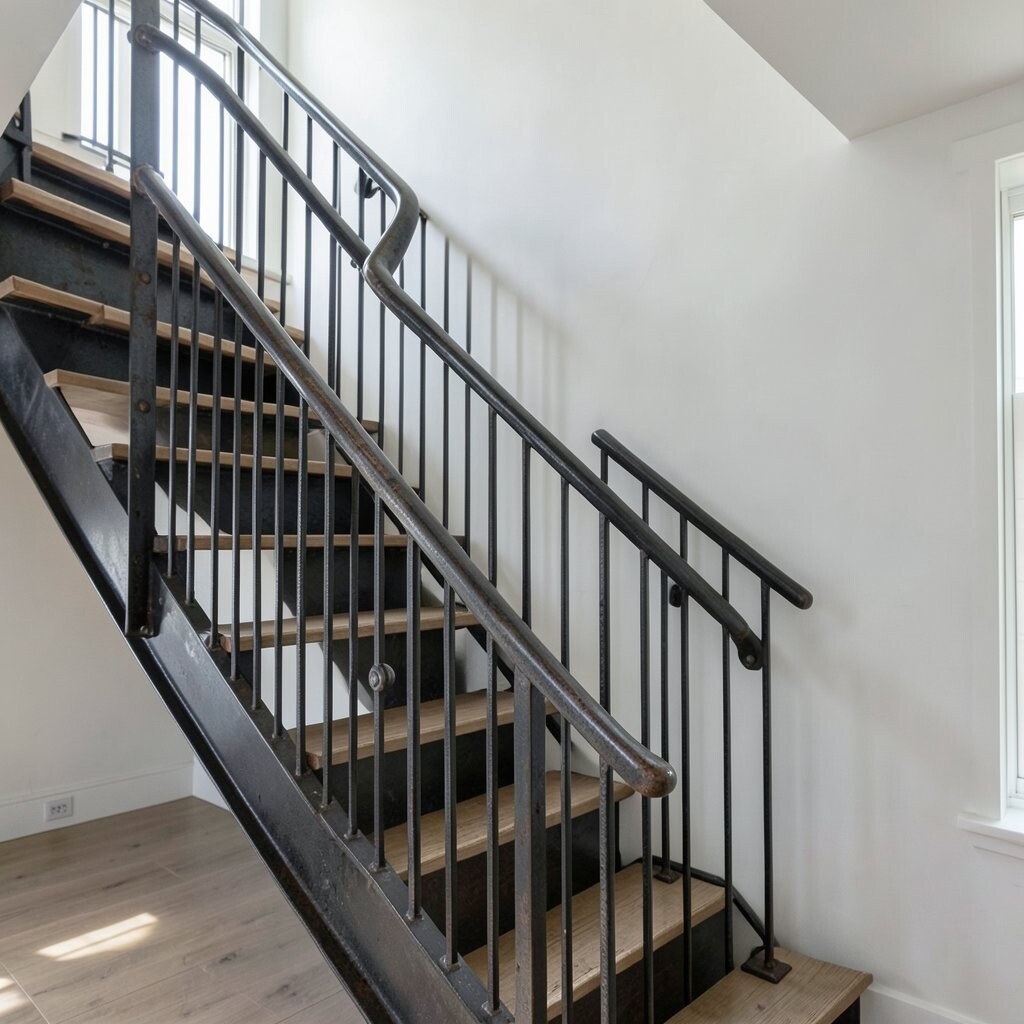
An industrial metal railing uses slim bars, dark frames, or raw-looking finishes. It gives the stair a simple, sturdy look that works well with brick, wood, and concrete.
This style is popular in lofts and city homes because it feels honest and direct. It can be less costly than some custom wood rail ideas, though finish and detail still affect the price.
Black is a common choice, but gray or brushed steel can also look good. If the room already has strong lines, this railing can help the whole space feel steady and clean.
14. Winding stair with a wide landing
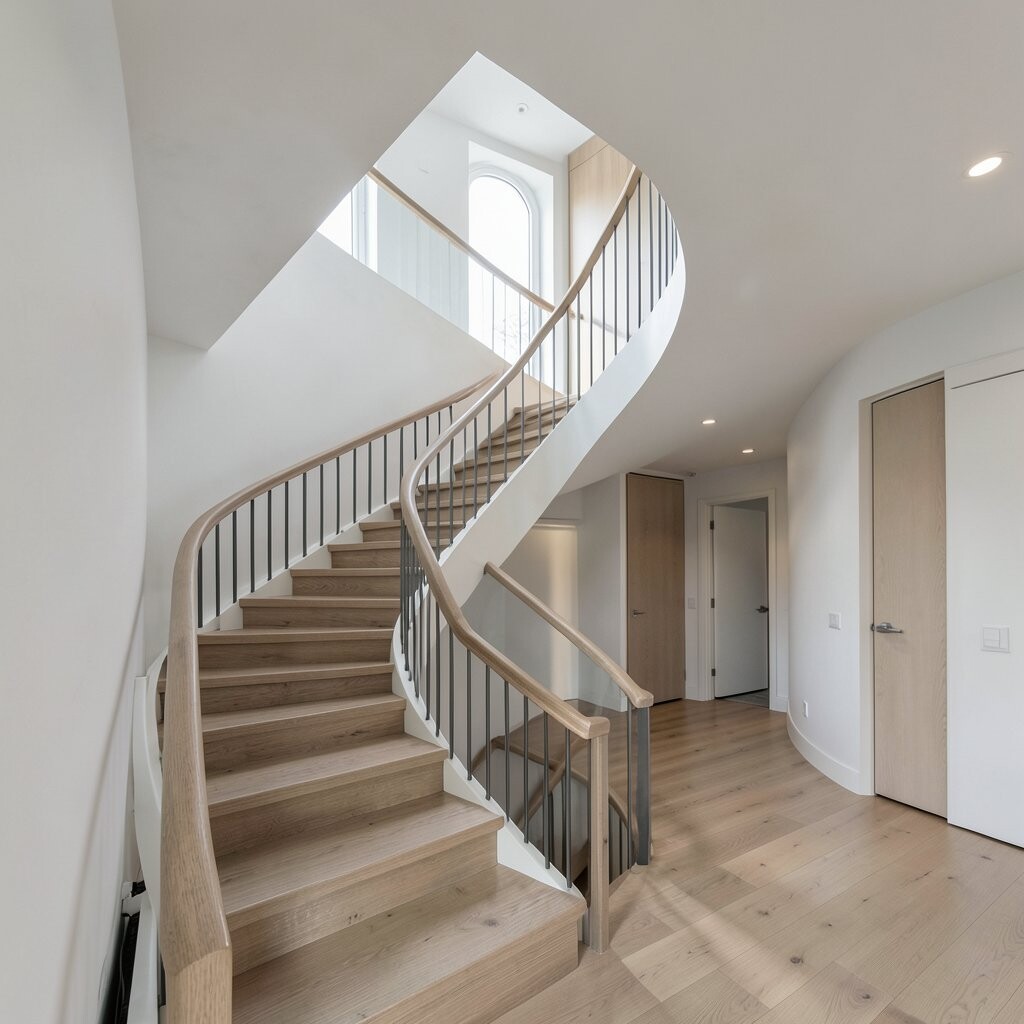
A winding stair with a wide landing can make a tall stair feel easier to use. The landing gives people a place to pause, turn, or carry items more safely.
This layout adds visual interest because the stair does not run in one plain line. It often costs more than a simple straight stair, since the shape needs more planning and work.
You can make the landing useful with a small table, a plant, or a wall light. If your home has a lot of open space, this type of stair can help guide the eye without feeling heavy.
15. Staircase with a skylight above
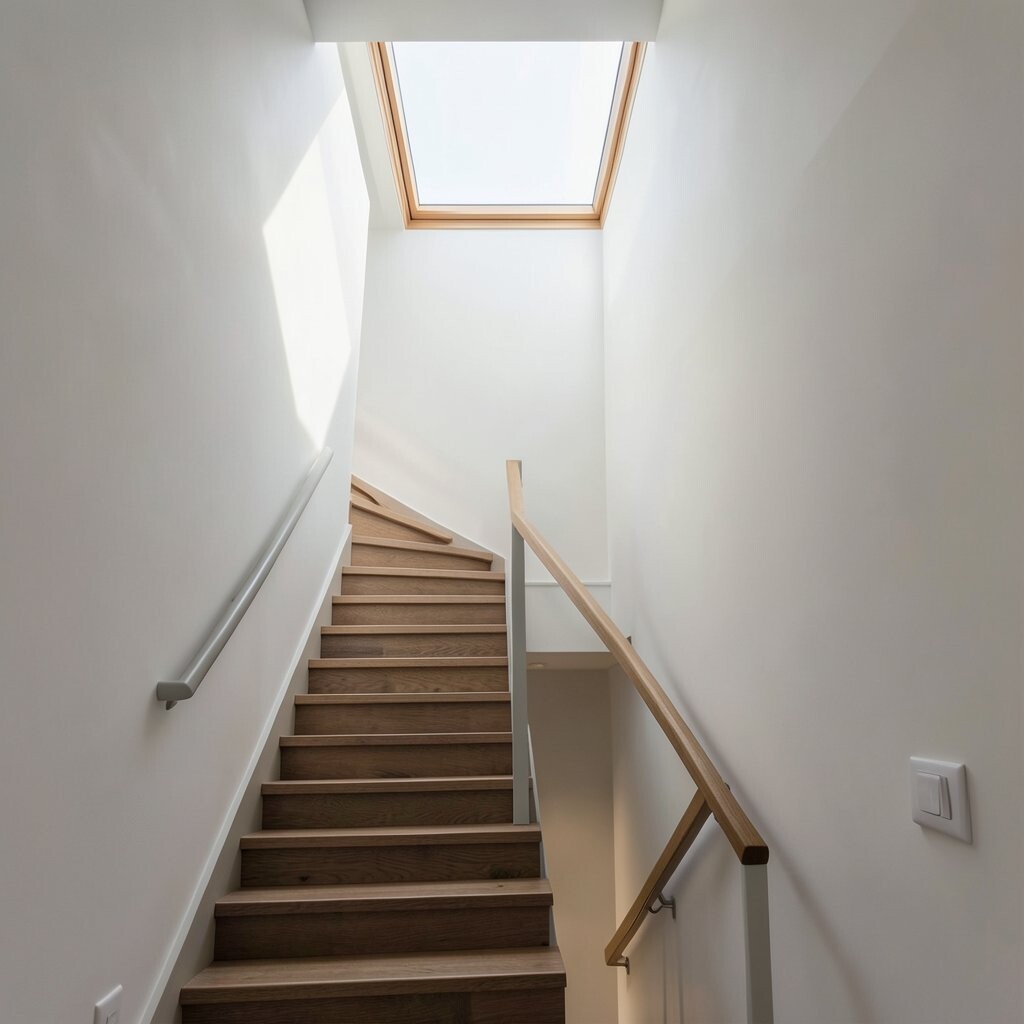
A skylight above the stair brings in natural light and can make the whole area feel bright in the day. Sunlight on the steps can also show the shape and grain of the materials in a nice way.
This idea works well in narrow halls or middle rooms that do not get much window light. It may add to the cost because roof work and framing need careful planning.
Pair the skylight with light paint and simple railings to keep the space airy. If heat or glare is a worry, use glass that softens the light a bit.
16. Tucked-away side storage steps
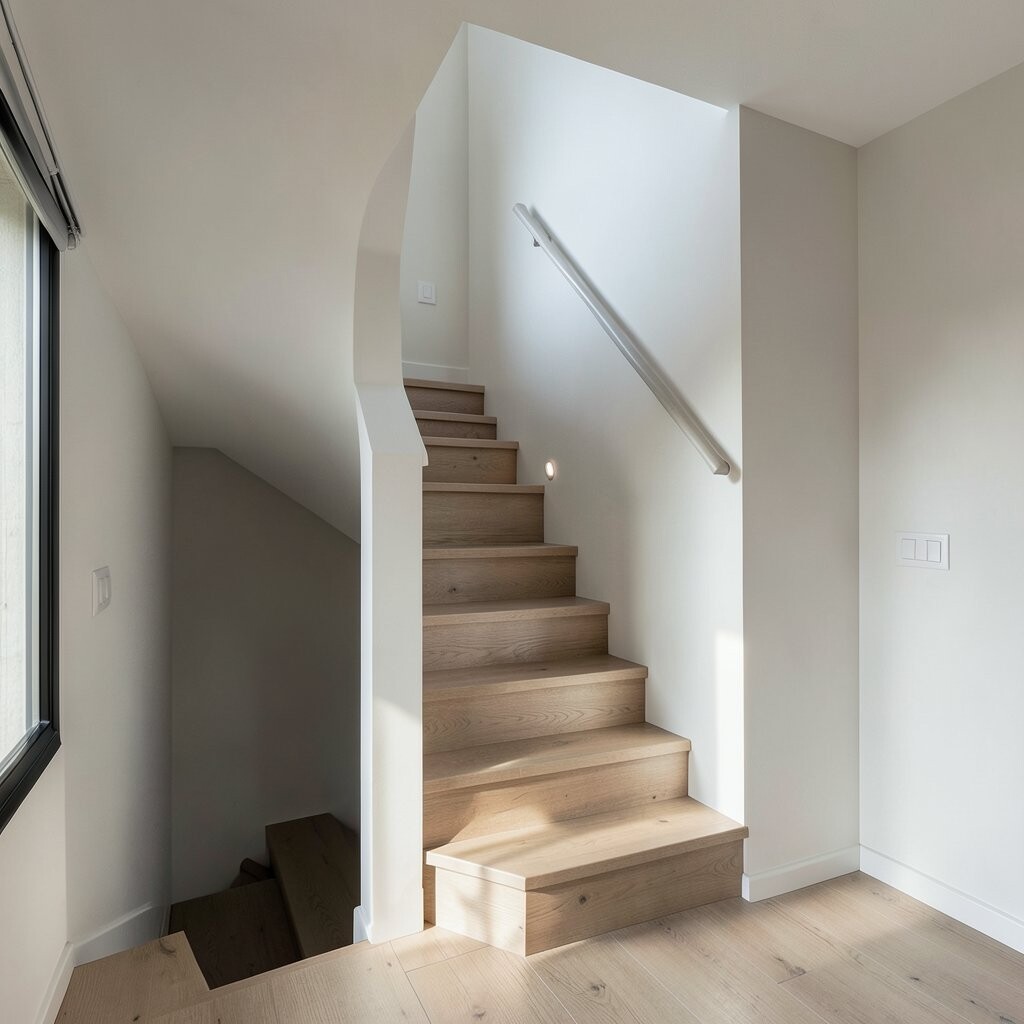
Side storage steps use the space beside the stair, not just under it. You might see slim shelves, pull-out bins, or small cabinets built into the side wall.
This idea is handy in busy homes where shoes, bags, and daily items need a quick home. It keeps clutter out of sight and can make the stair zone feel more organized.
The look can be plain or detailed, depending on your trim and doors. For a lower-cost version, use open shelves with baskets that match the rest of the room.
17. Staircase with a bold runner
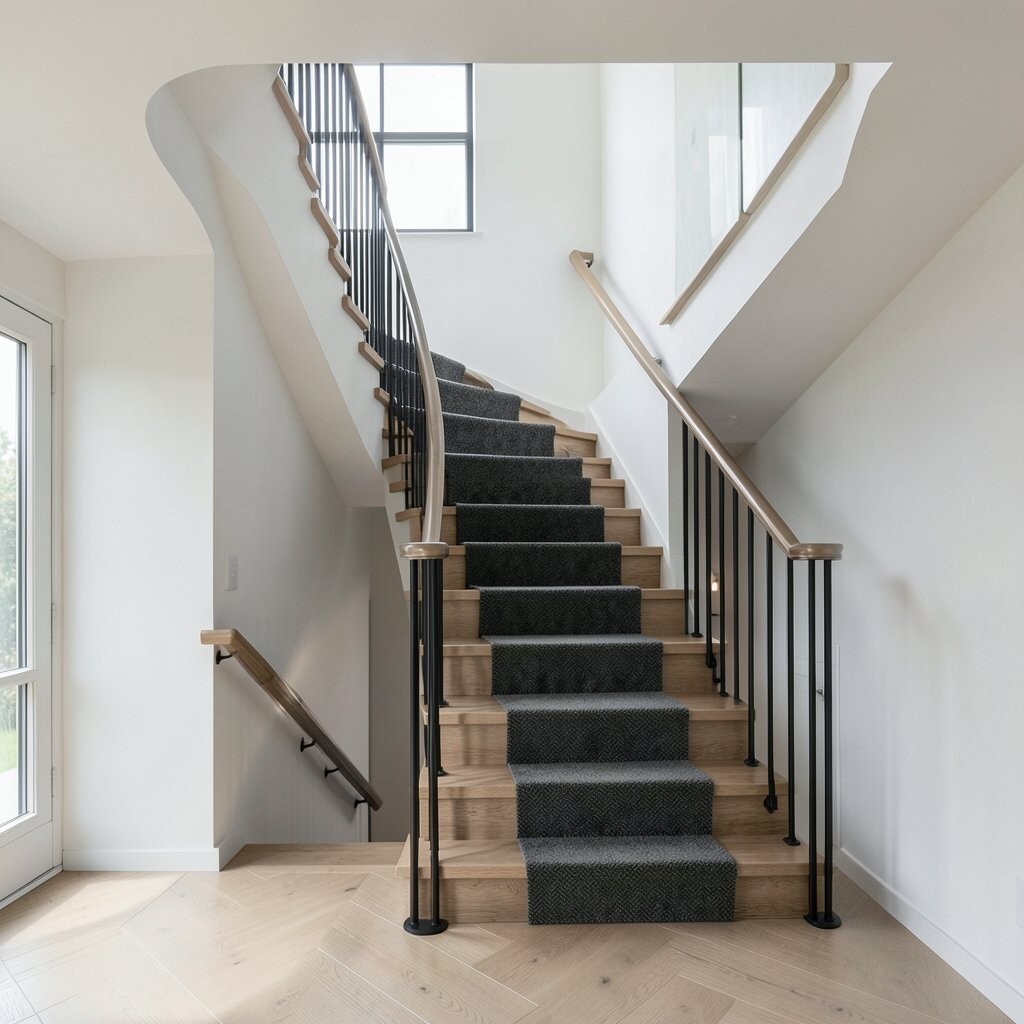
A bold runner adds color, pattern, and a soft feel underfoot. It can also help cut noise and make the stair safer to use, which is useful in family homes.
This is a good way to give an older stair a fresh look without replacing the whole thing. The cost can stay fairly low if you choose a ready-made runner and simple install work.
Stripes, checks, or small prints can work well, but plain colors can feel calm and neat too. Pick a runner that fits your walls and floor so the stair feels part of the same room.
18. Split-level stair design
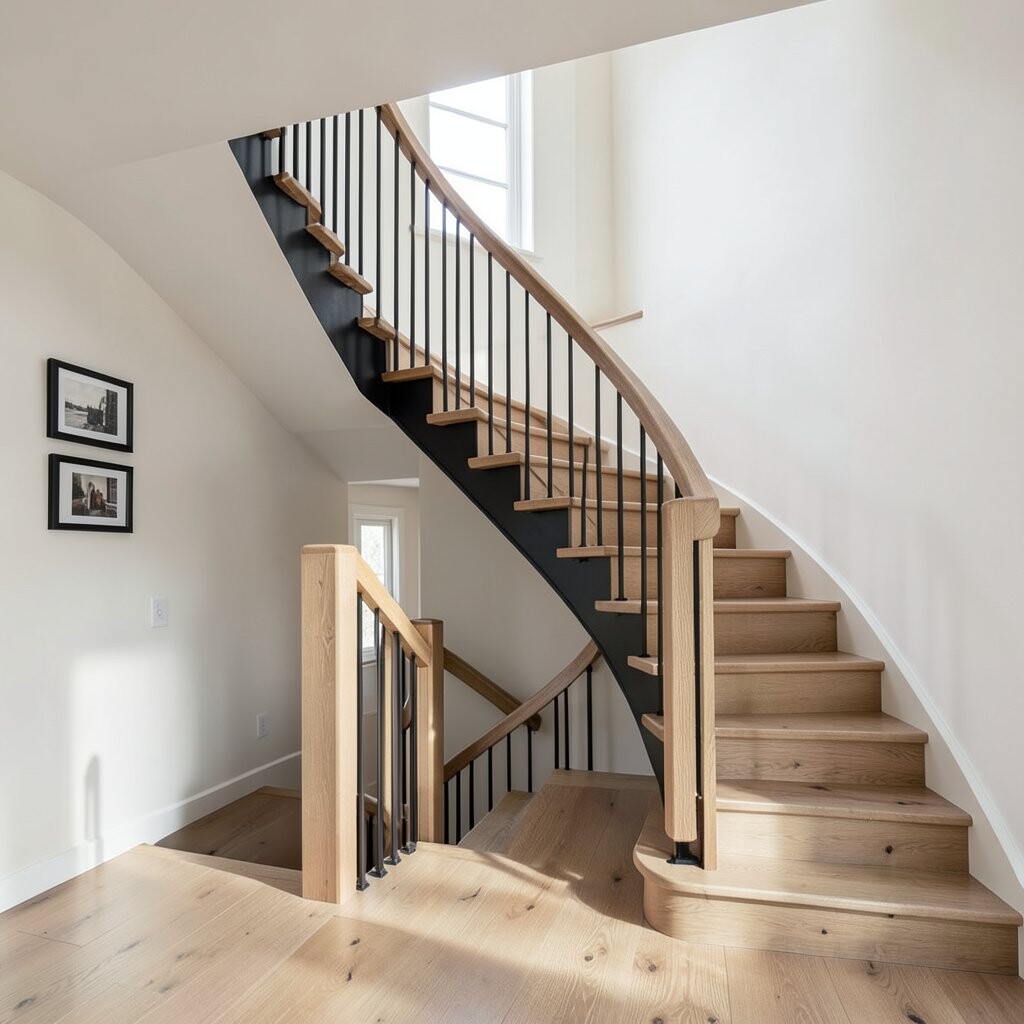
A split-level stair design uses short runs and small turns to fit a home with different floor heights. It can make the layout feel more natural and help each level connect in a clear way.
This style can be useful in older homes where the floors do not line up in a simple way. It may cost more than a straight stair, but it can solve a layout problem while also adding style.
Keep the materials simple if you want the shape to stand out on its own. A clean handrail and matching trim can help the stair feel tidy and easy to read.
19. Sculpted handrail
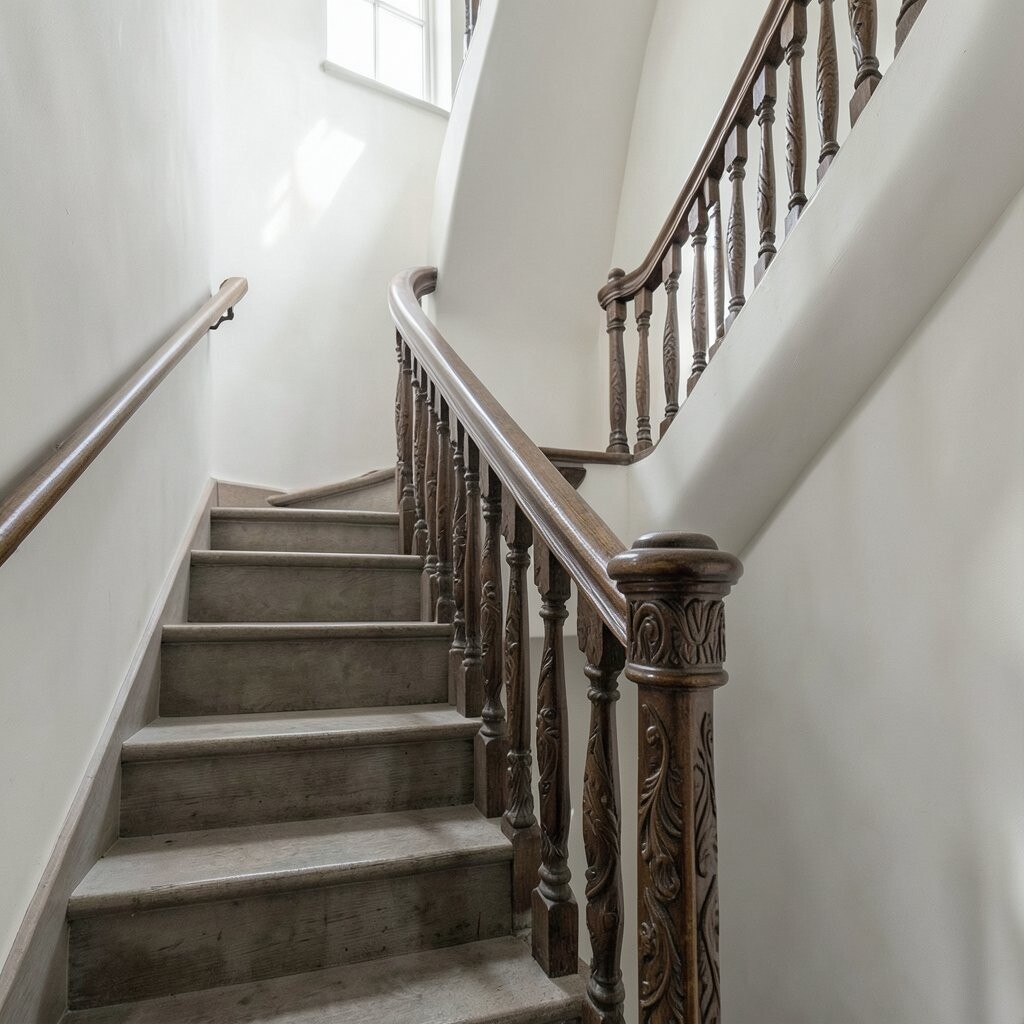
A sculpted handrail has a shape that feels smooth in the hand and looks more special than a plain rail. It can be rounded, carved, or bent in a way that gives the stair a soft finish.
This small detail can change the feel of the whole stair, even if the steps stay simple. The cost depends on the wood or metal work, and custom rails often sit at a higher price.
Choose a rail shape that feels good to hold and fits the rest of the home. A stained wood rail can feel warm, while a painted one can blend in with the wall.
20. Staircase with wall niches
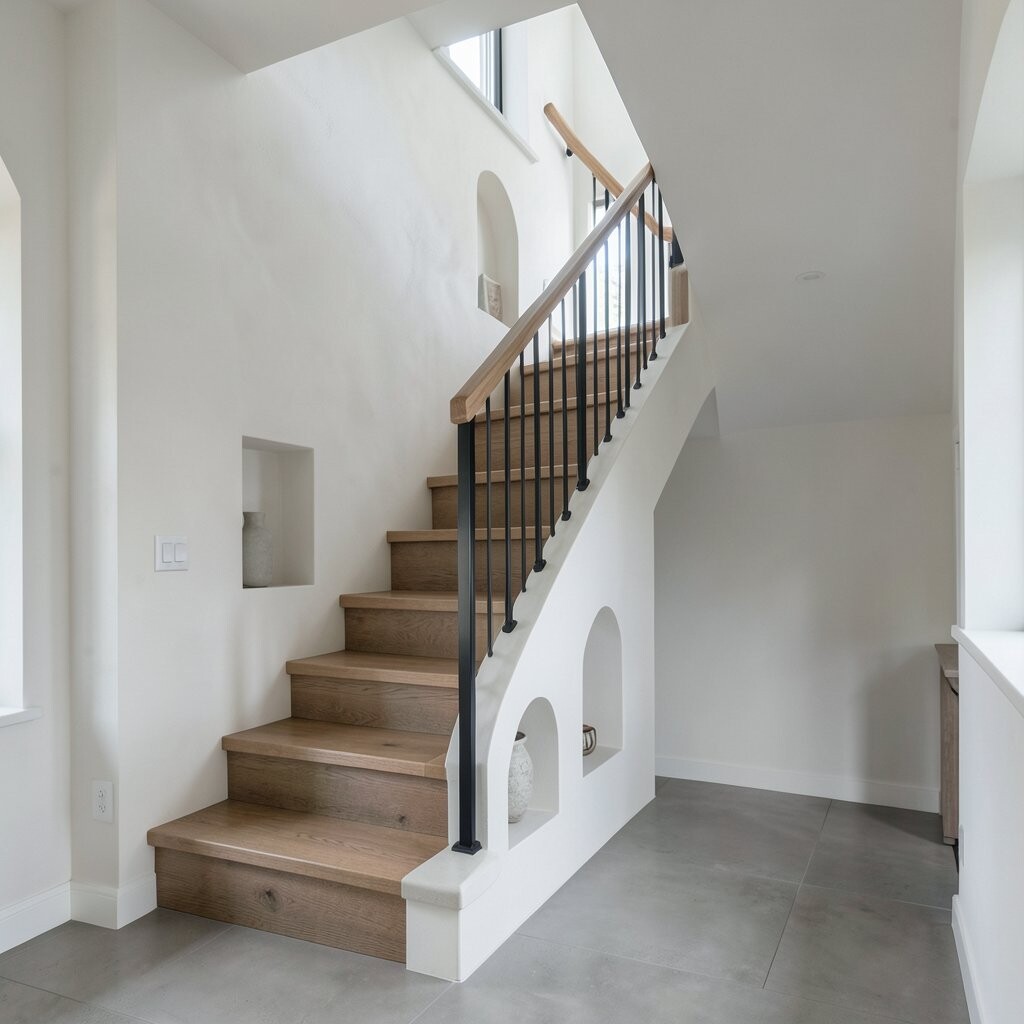
Wall niches beside the stair create small cut-ins for art, plants, or simple objects. They add depth to the wall and can help a plain stair area feel more finished.
This idea works best when you want detail without adding a lot of furniture. It can be a mid-range cost project, since the wall work needs care but not a full rebuild.
Use a few niches rather than too many so the wall does not feel busy. Soft lighting inside each niche can make the objects stand out in a calm way.
21. Minimal white stair box
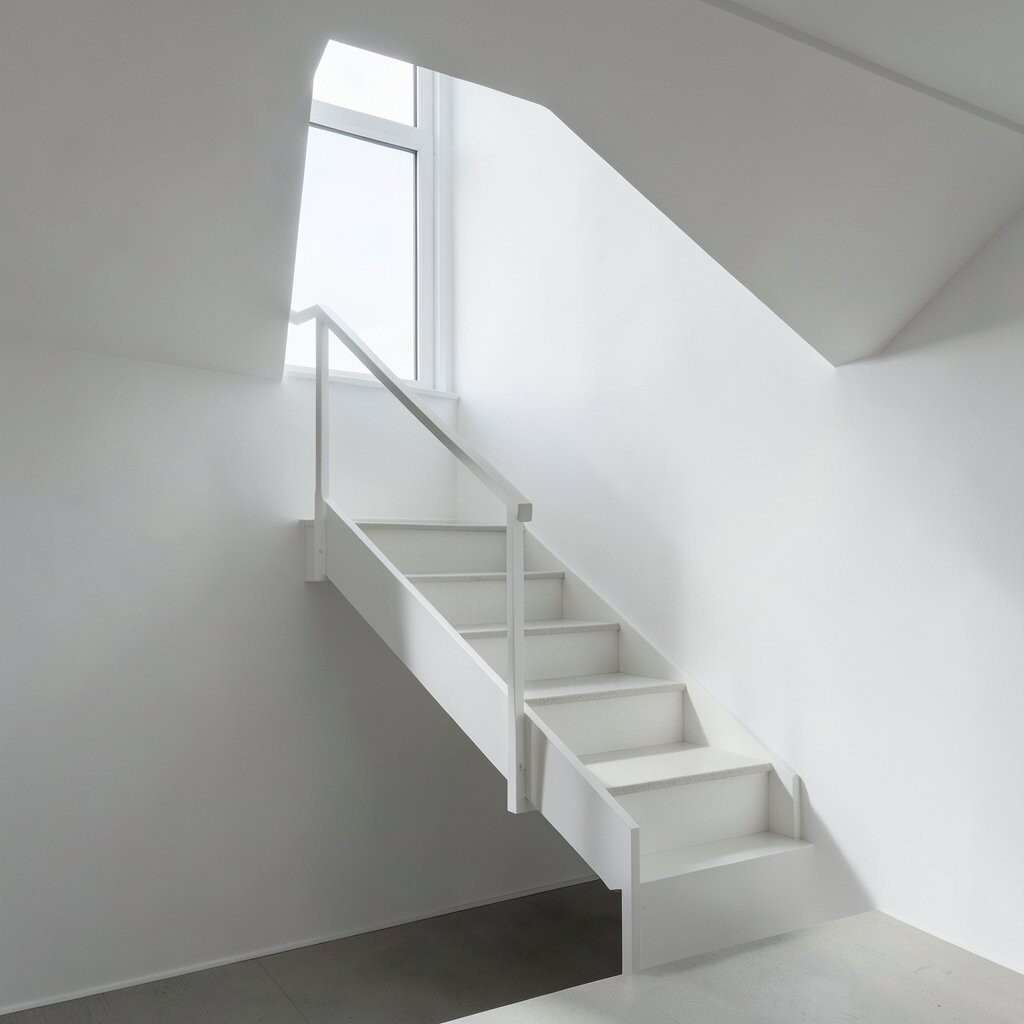
A minimal white stair box uses plain white walls, white trim, and simple step lines. This can make the stair feel clean, bright, and easy to match with many home styles.
People like this look because it keeps the focus on shape and light instead of extra detail. It can also be a smart budget choice if you are painting over an older stair setup.
To keep it from feeling flat, add a wood tread, a warm rug, or a small plant nearby. A white stair can work well in homes that want a calm and simple look.
22. Rustic wood stair beams
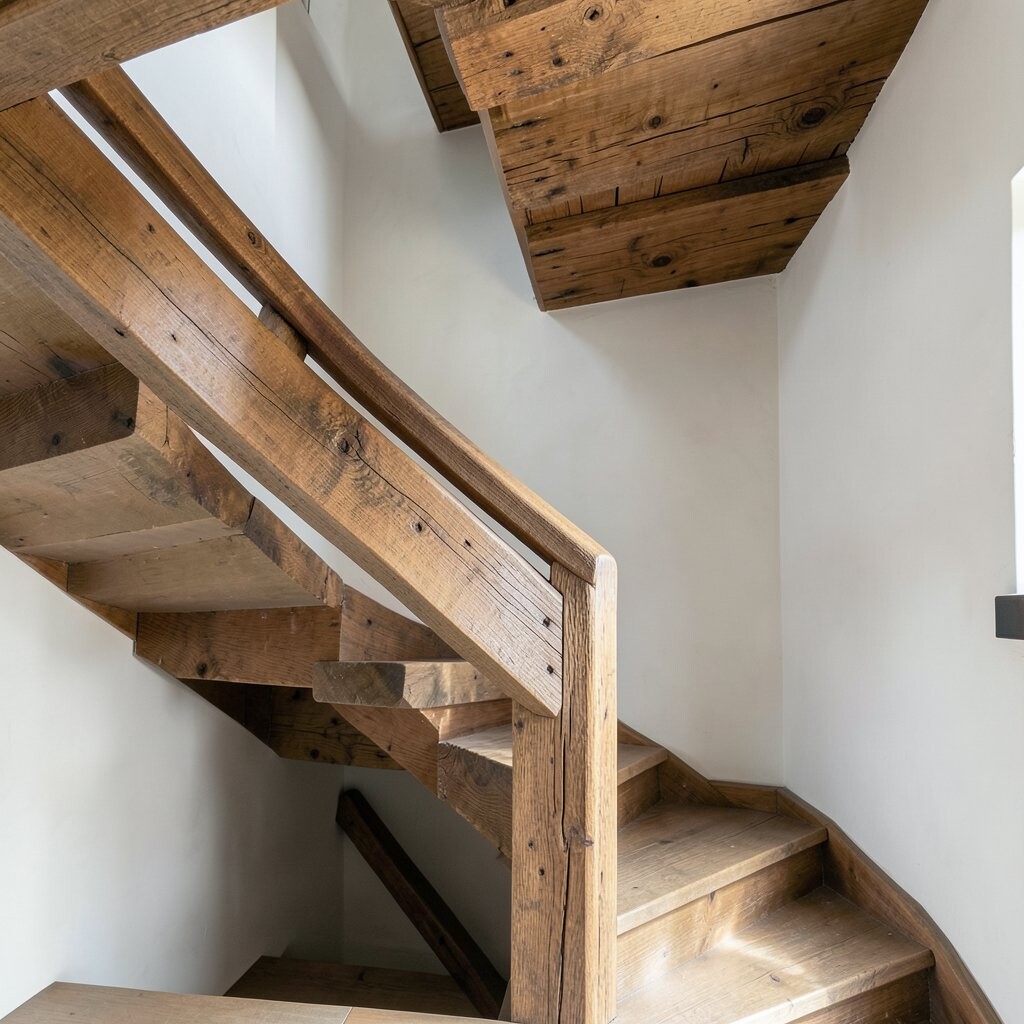
Rustic wood stair beams bring a warm, natural feel to the space. The grain, knots, and texture can make the stair feel more lived-in and less formal.
This style fits cabins, farm homes, and any house that wants a cozy mood. The cost can vary a lot based on the wood type, but reclaimed pieces may help keep spending in check.
Mix rustic beams with simple railings so the stair does not feel too heavy. Soft wall colors and plain lighting can help the wood stand out in a nice way.
23. Hidden under-step lighting
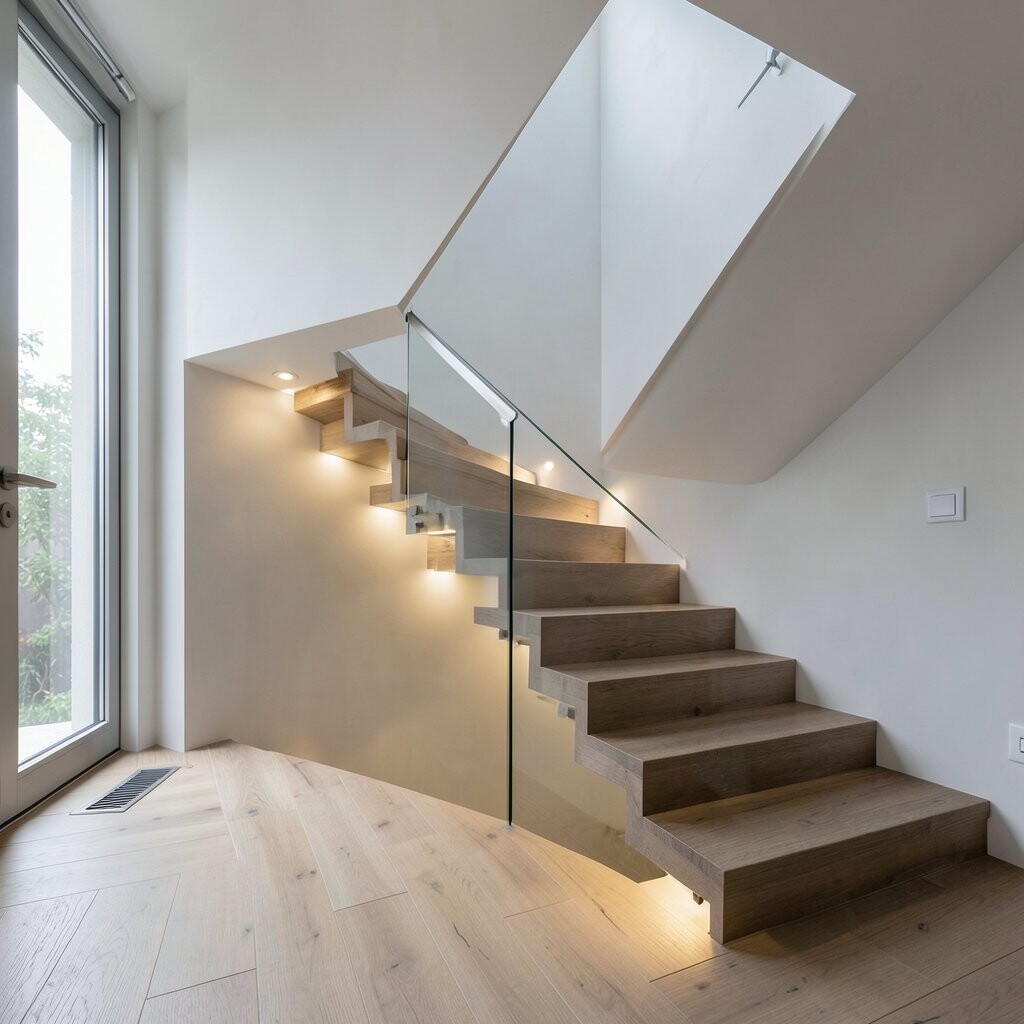
Hidden under-step lighting sits beneath the edge of each tread and gives off a soft line of light. It makes the stair easy to see at night and adds a neat, modern look.
This is a good choice for homes that want both safety and style. It can cost more than a plain stair, but the effect is clean and often worth it for many people.
Try warm light if you want a calm mood, or cooler light for a sharper feel. Keep the rest of the stair simple so the lighting can do the main work.
24. Staircase as a display wall
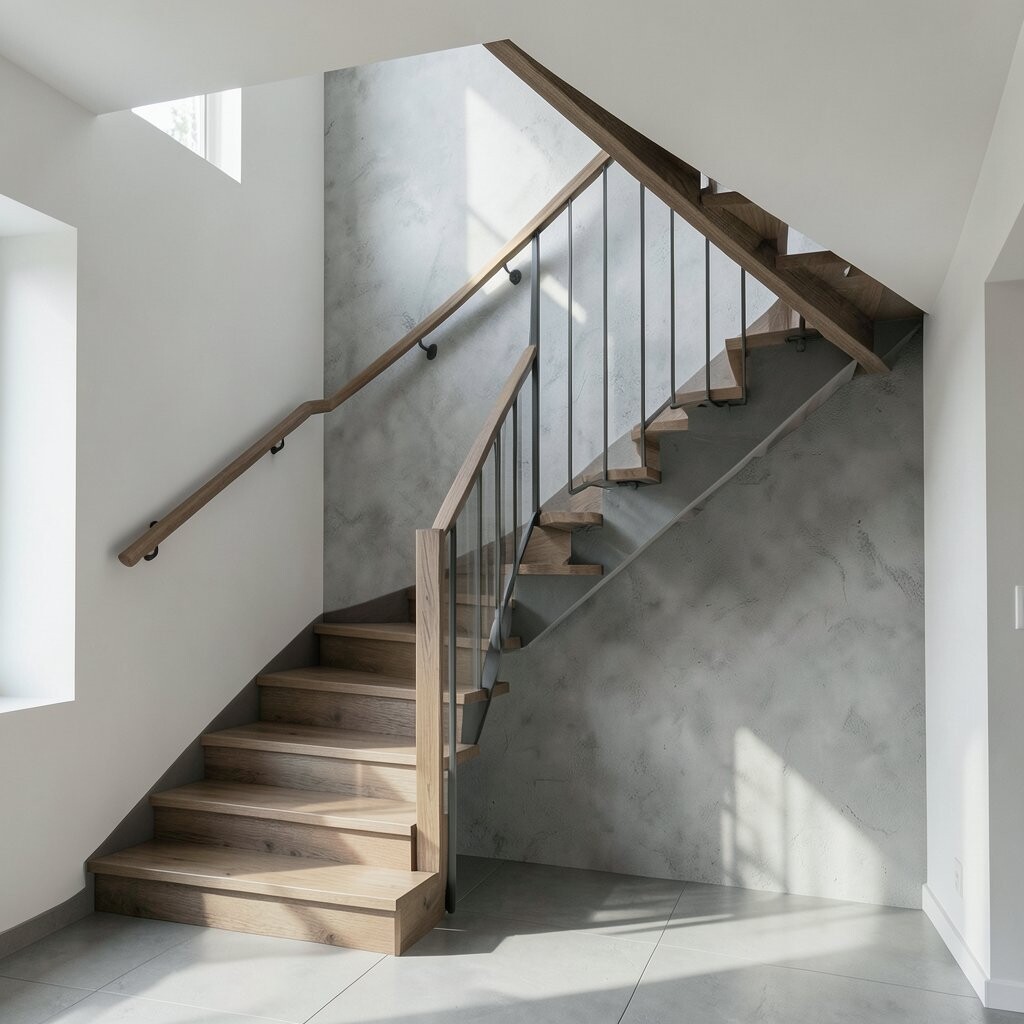
A staircase can act like a display wall for framed photos, prints, or small art pieces. The wall beside the stair often has a long shape that works well for a neat gallery look.
This idea makes the stair area feel personal and can help tell the story of the home. It is also a lower-cost update, since you may only need frames, hooks, and a bit of planning.
Keep spacing even so the wall feels calm and not crowded. You can change the display over time, which makes this idea easy to update as your taste changes.
25. Custom stair with mixed lighting and texture
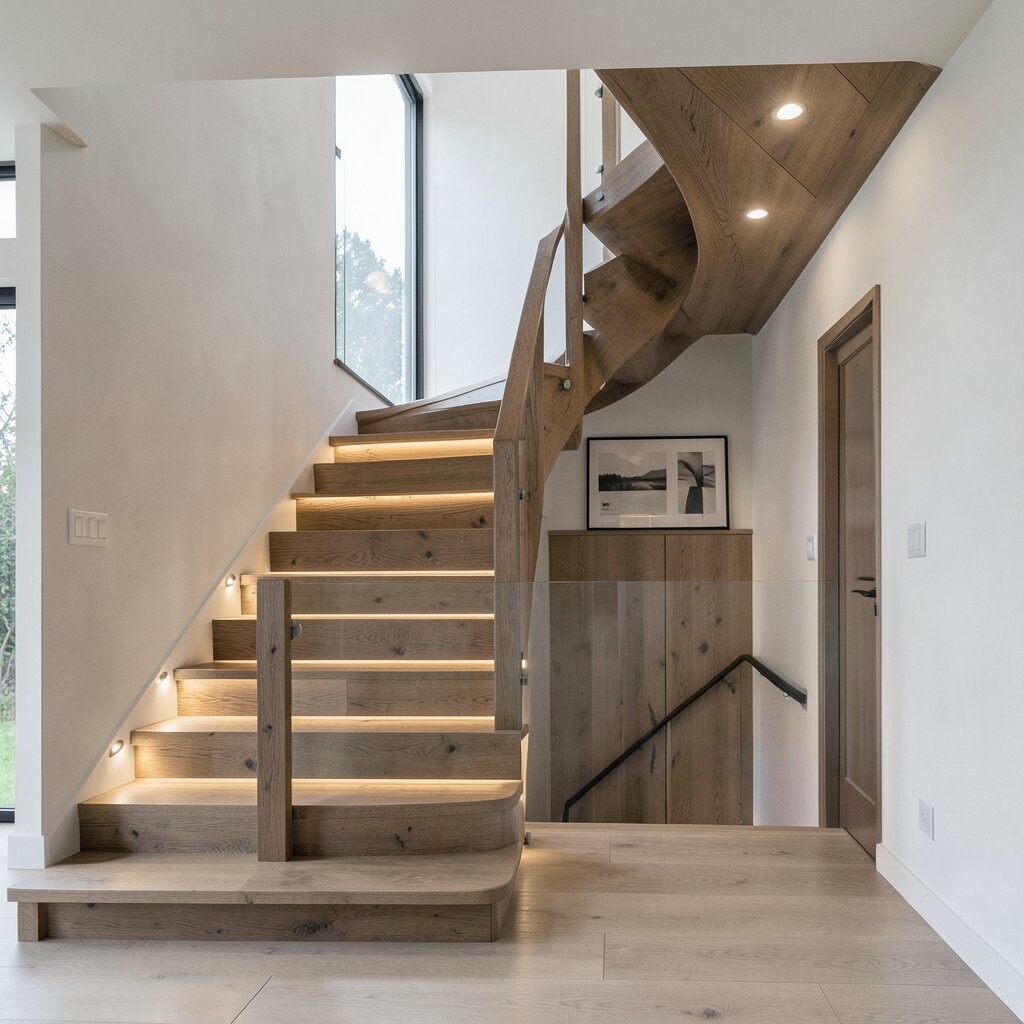
A custom stair with mixed lighting and texture brings together a few ideas at once, like wood steps, metal rails, and soft light. The mix can make the stair feel rich in detail while still staying simple to use.
This is a strong choice for people who want a stair that feels made for their home. It often sits at the higher end of the cost range, since custom work, lighting, and finish choices all add up.
To make the look feel balanced, keep one part as the main focus and let the others stay quiet. Trends now lean toward clean shapes, warm materials, and smart light, so a mixed design can feel current without being too loud.