Children’s play areas can feel more fun when the floor has color and shape. Mosaic tile designs can help make these spaces easy to use, simple to clean, and nice to look at.
1. Bright Circle Path Mosaic
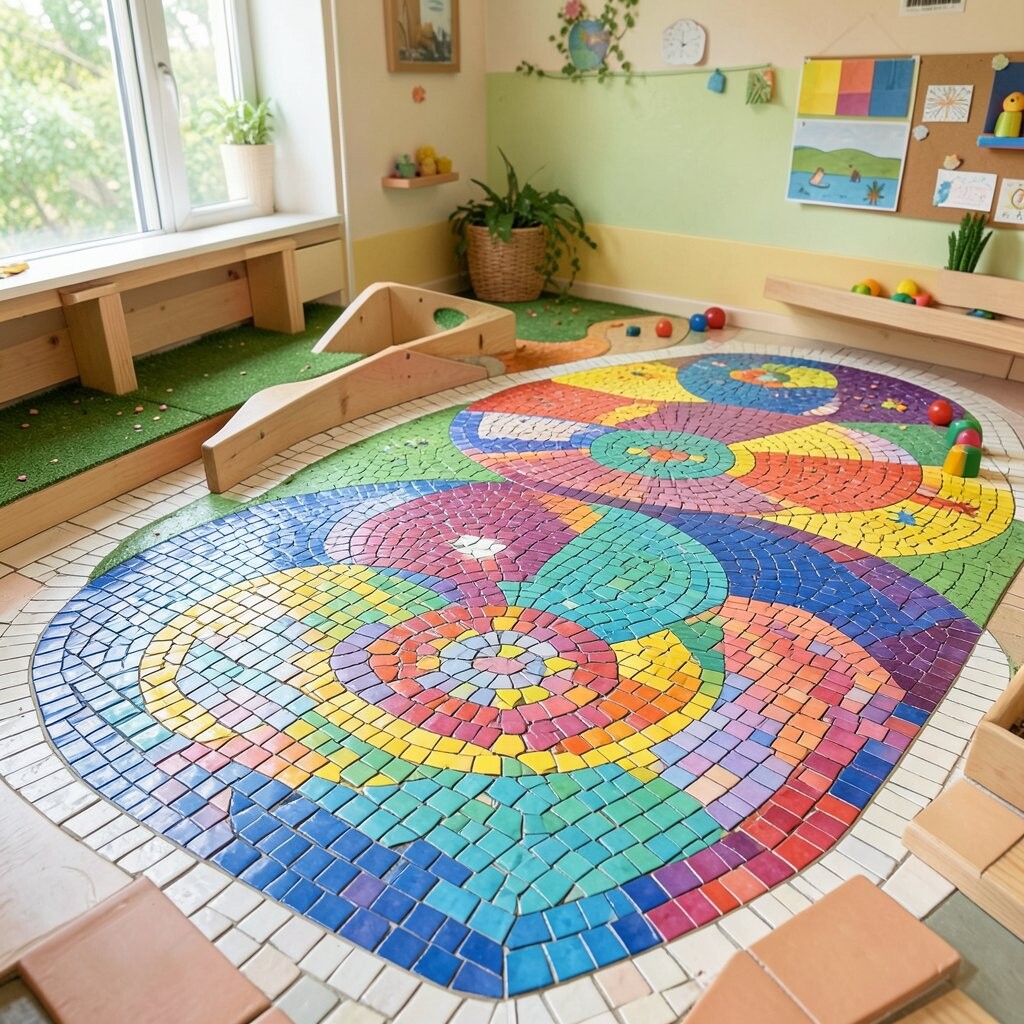
A bright circle path mosaic uses round shapes in bold colors to guide kids across the play area. The look feels open and easy, and the circles can be placed in a neat line or spread out in a playful way.
This style helps children see where to walk, hop, or line up for games. It also gives the space a clear flow, which can help keep play areas more organized.
The cost can stay fair if you use a small set of colors and repeat the same circle shape. You can make it more personal by picking colors that match a school, park, or home yard.
2. Animal Footprint Trail

An animal footprint trail adds small tile marks that look like paws, bird steps, or other simple tracks. These marks can move across the floor like a game and make the area feel more lively.
Kids often enjoy following the trail as they run or play pretend. It can also help with movement games, since children may jump from one print to the next.
This design is unique because it mixes play with direction. For a lower cost, use just one or two footprint styles and repeat them in a simple path.
3. Rainbow Wave Border

A rainbow wave border uses soft curves and many colors along the edge of a play zone. The main floor can stay plain while the border brings in a cheerful look.
This design works well in both indoor and outdoor spaces. It helps define the play area without making the whole floor feel too busy.
You can make it fit your space by choosing calm shades or bright ones, based on the mood you want. A wave border is also a good trend for places that want color without a full floor pattern.
4. Alphabet Tile Squares

Alphabet tile squares place letters in simple blocks across the floor. Each square can hold one letter, and the letters can be spaced out in a clean grid or scattered in a fun way.
This design gives kids a chance to learn while they play. It can help with letter names, spelling games, and early reading practice.
It is easy to personalize by using a favorite font or mixing letter colors. The cost can stay lower if you use the same square size and repeat a small set of tile colors.
5. Star Map Ceiling Floor Look

A star map floor design uses small star shapes and dots that look like a night sky. Dark tile colors with light stars can make the ground feel calm and playful at the same time.
Children may like this design because it feels like a sky under their feet. It can work well in quiet play corners, reading spots, or pretend-space areas.
This style stands out because it is simple but still has a strong look. If you want to save money, use stars in a few key spots instead of covering the whole floor.
6. Puzzle Piece Pattern

A puzzle piece pattern uses tile shapes that fit together in a clear and fun way. The pieces can be large and simple, with each one in a different color or shade.
This design gives a strong sense of order while still feeling playful. It can help children see how parts fit into a whole, which makes it good for learning spaces too.
You can make the look more personal by choosing colors that match toys, games, or school themes. Puzzle piece mosaics are also useful because they can hide small marks better than plain floors.
7. Undersea Wave Scene
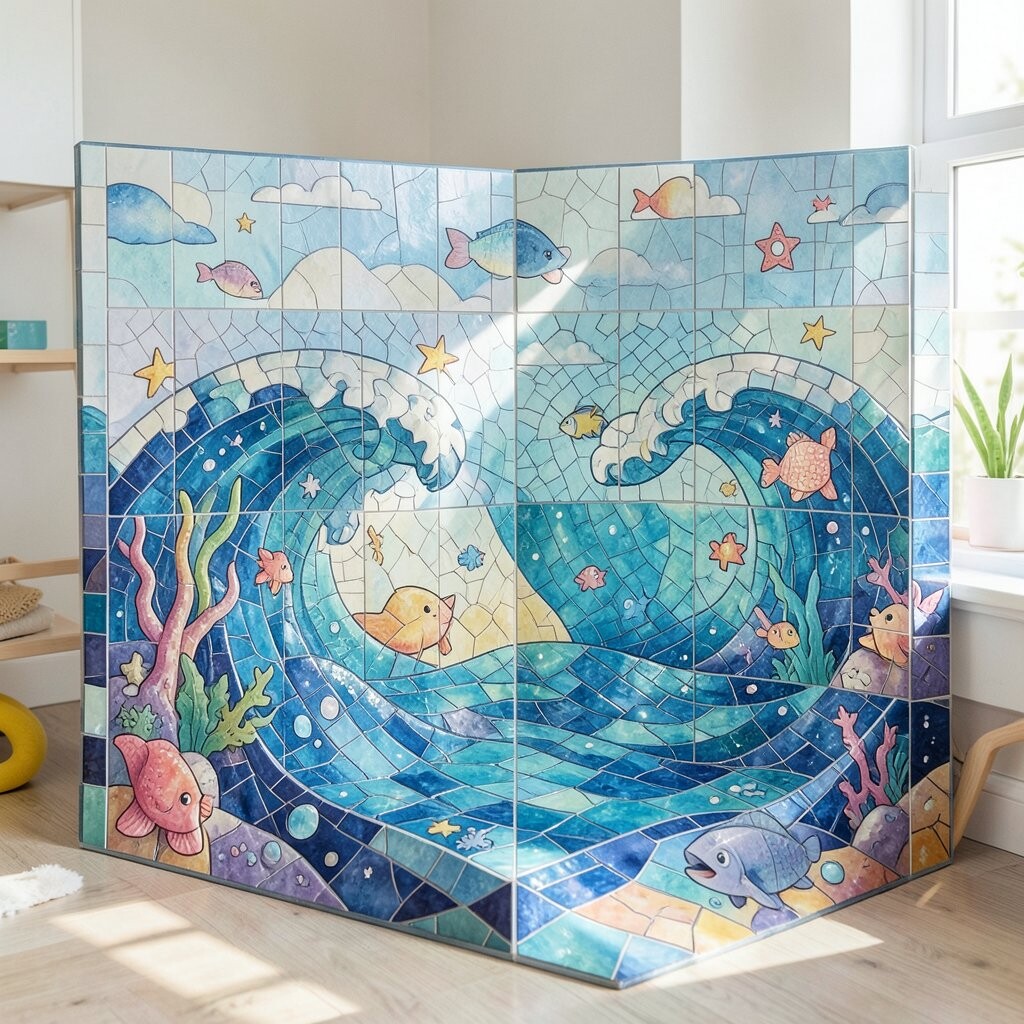
An undersea wave scene uses fish, bubbles, shells, and soft wave lines. The colors often include blue, green, and sandy tones, which give the floor a calm water feel.
Kids may enjoy naming the fish or pretending they are walking under the sea. This can make a play area feel more active without adding extra toys.
The design can be as simple or detailed as you want, so it fits many budgets. A trend in this style is to use a few large sea shapes instead of many tiny ones, which can keep the work easier.
8. Hopscotch Tile Grid

A hopscotch tile grid turns the floor into a game that children already know. The squares can be made with strong lines and bright numbers or simple marks.
This design helps kids move, balance, and count while they play. It also gives them a clear game area that can be used again and again.
Hopscotch tiles are a smart choice for schools and parks because they are both useful and fun. To keep costs down, use a small set of colors and a simple grid shape.
9. Nature Leaf Patchwork
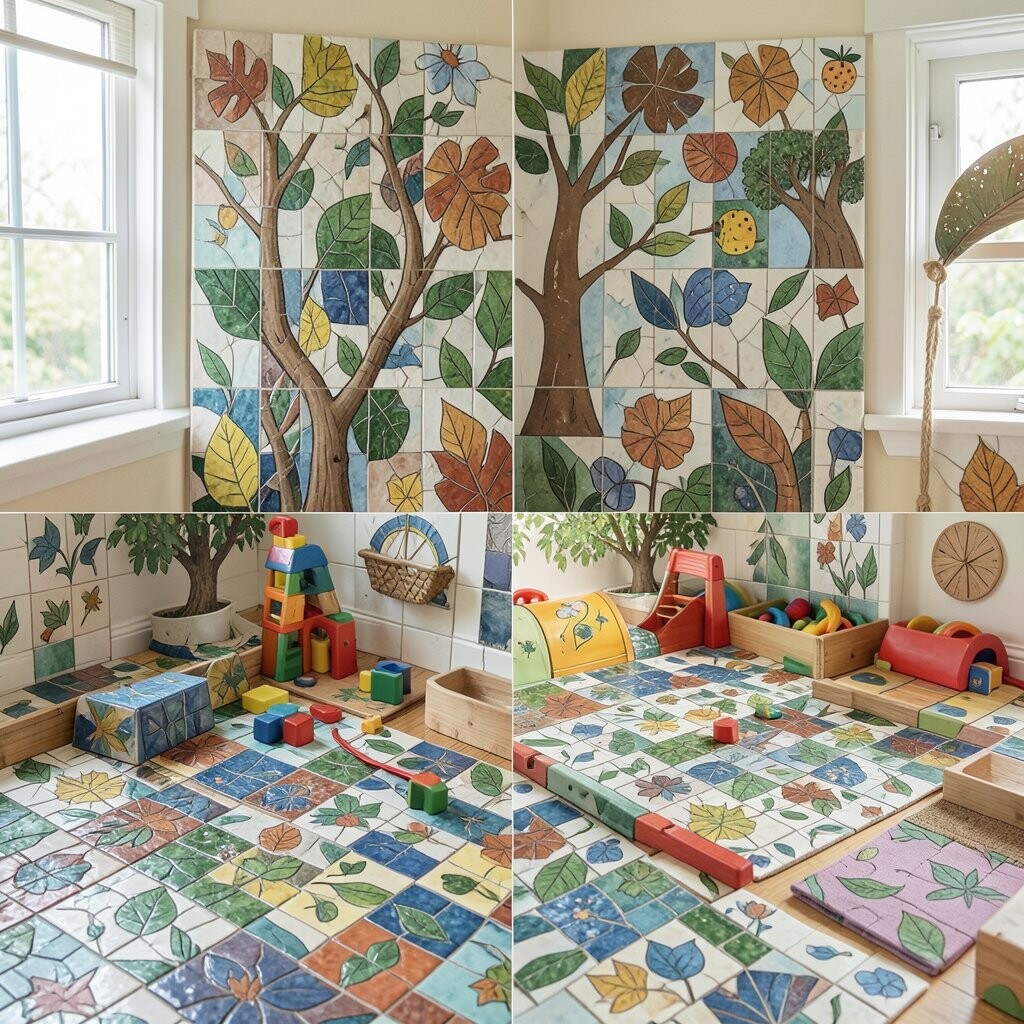
Nature leaf patchwork uses leaf shapes in many sizes and shades of green, brown, and gold. The floor can look soft and calm, like a little garden path.
This style works well in play areas that want a more natural feel. It can help the space seem less hard and more friendly for kids and adults.
You can add personal touches by using local leaf shapes or colors from nearby plants. It is also a good trend for spaces that want a gentle look instead of very bright patterns.
10. Giant Flower Medallions
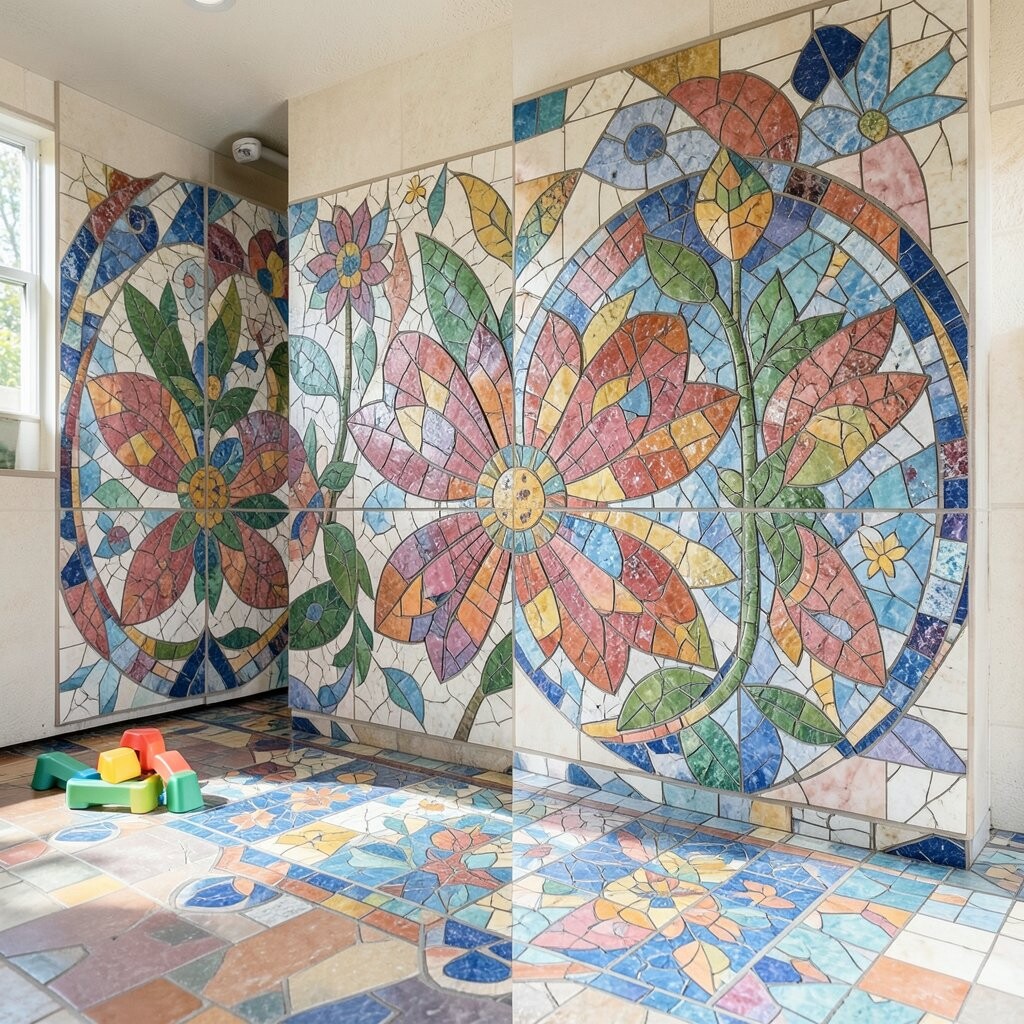
Giant flower medallions place large flower shapes in the floor as main art pieces. Each flower can use many tile colors, or it can stay simple with just a few shades.
These flowers give kids a clear spot to sit, stand, or play pretend. They also make the area feel warm and welcoming without needing wall art.
This design can fit many styles, from soft and calm to bright and bold. If you want to control cost, use a few large flowers instead of many small ones.
11. Color Block Maze

A color block maze uses tile blocks to make a path that children can follow. The blocks can twist, turn, and open into small play spots along the way.
This design helps kids move with purpose and can support games that use finding, chasing, or simple problem solving. It also gives the floor a neat and modern look.
You can make the maze feel more personal by using school colors or favorite shades from the play area. A color block maze is often easier to plan than a full picture scene, which can help keep labor costs in check.
12. Friendly Face Tiles

Friendly face tiles use simple smiling faces, eyes, and curved shapes. The faces can be made in a soft style that feels cheerful without being too busy.
Children often enjoy spaces that seem to have a happy mood. These tiles can make a play area feel more open and less plain.
This design is unique because it adds character without needing a full scene. You can use just a few face tiles in key spots to keep the price lower while still making a clear impact.
13. Mixed Shape Play Patch

A mixed shape play patch brings together circles, triangles, squares, and waves in one floor design. The mix can feel lively and fresh, with each shape giving kids something new to look at.
This style is useful for play areas that need both fun and simple order. It can help children sort shapes, make patterns, and invent their own games.
Mixed shape mosaics are a strong trend because they work in many spaces and are easy to change to fit a theme. You can make the design more personal by choosing a color set that matches the rest of the room or yard.