Small offices can feel cramped, but they never have to stay that way. With a few smart moves, your desk can work harder than you ever thought possible.
Today’s office world is all about neat systems, clean surfaces, and storage that actually fits your life. You’ll find ideas below that are simple, budget-friendly, and surprisingly fun to set up.
1. Use a Vertical Supply Tower
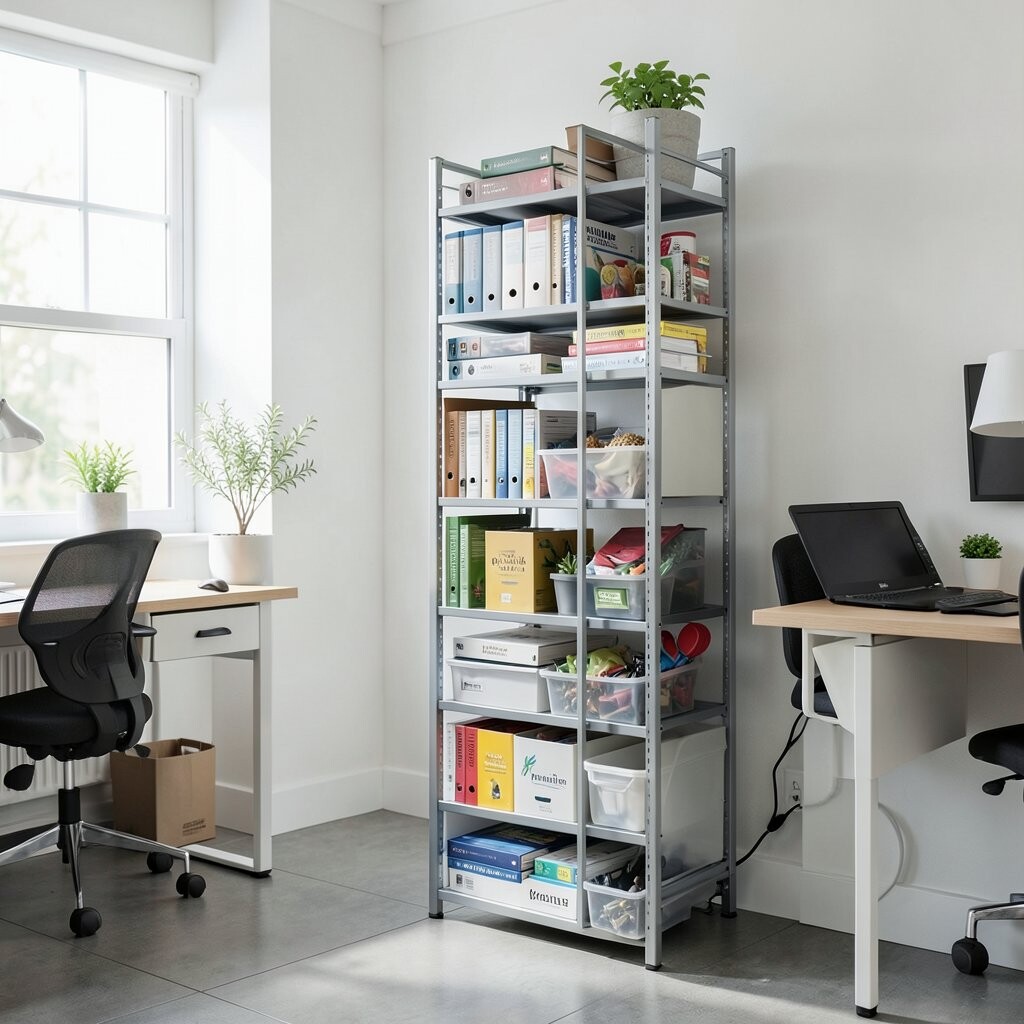
A vertical supply tower looks like a neat stack of labeled homes for the little stuff. You’ll spot pens, sticky notes, paper clips, and tape stored upright instead of floating around your desk.
This approach keeps your most-used items within arm’s reach while freeing desk space for writing. It also reduces the “mess ripple” where one pile turns into many. Choose sizes that match your habits, like a narrow tower for pens and a wider one for notes.
For a personal touch, color-code sections by task, such as “calls,” “plans,” and “inbox.” A budget option is using stackable bins or a slim shelf with removable dividers. If you want a trendier look, search for modular organizers that can grow as your needs change.
2. Add Drawer Liners and Label Everything
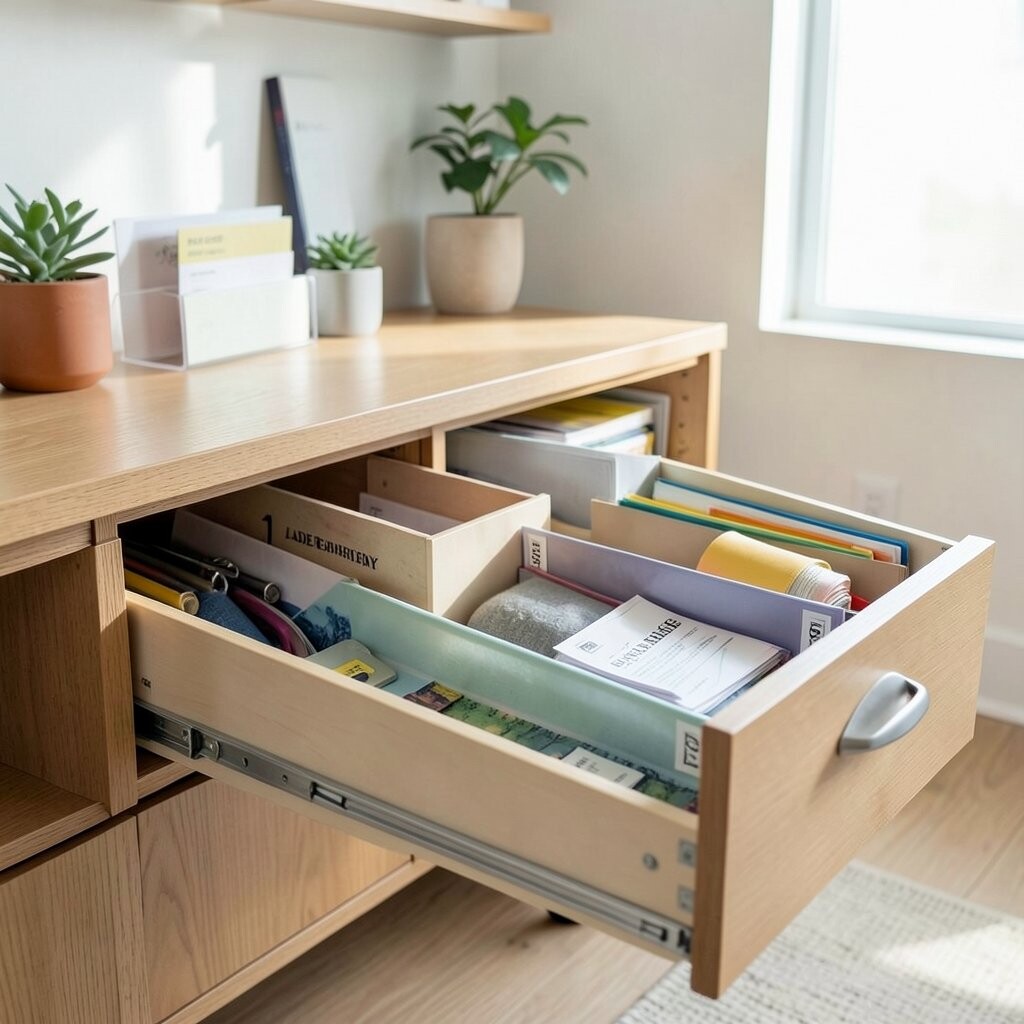
Drawer liners turn a plain drawer into a soft, grippy storage surface. They also help prevent tiny items from sliding around like loose marbles.
When every spot has a label, you spend less time hunting and more time working. It also makes cleanup faster because “put back” is obvious.
Try using removable labels so you can adjust as your supplies change. For cost control, use low-cost label tape and print on paper labels. If you like current styles, look for clean minimalist label designs in muted colors.
3. Go for a Keyboard Tray or Slide-Out Shelf
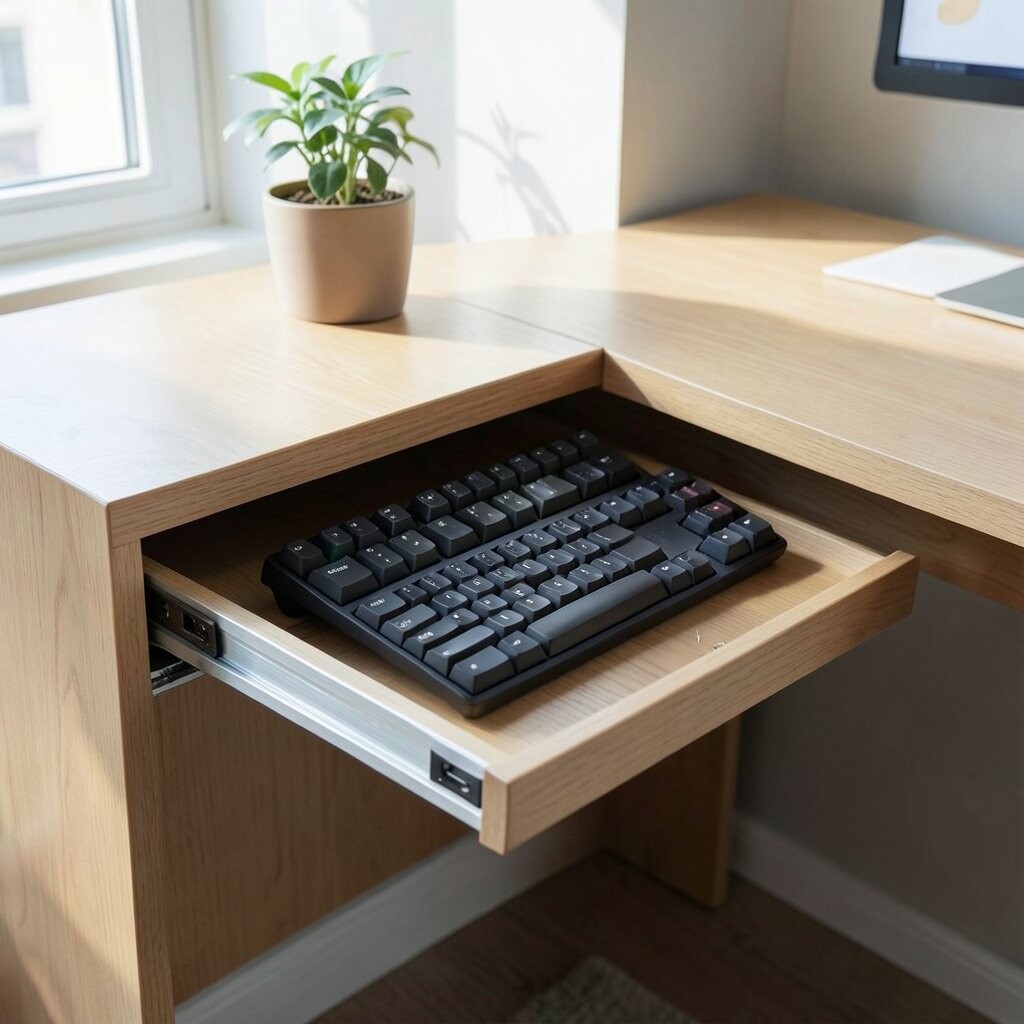
A slide-out keyboard tray can hide the keyboard and give your desk more usable surface. When it tucks away, your workspace looks calmer and more intentional.
This setup improves comfort by helping your body stay in a better posture. It also keeps your desk clutter from building up near the edges.
To personalize, set your most-used items on the fixed portion of the desk and reserve the tray area for a keyboard and small mouse space. For budget, consider a simpler under-desk platform first, then upgrade if you want. A lot of people are choosing adjustable mounts now because they help fit different desk heights and layouts.
Safety tip: secure the tray properly so it won’t wobble. If you rent or move often, look for options that don’t damage the desk. Keep wires routed along the back so they don’t snag when you slide the tray in and out.
4. Use Over-the-Door or Vertical Back-of-Door Storage
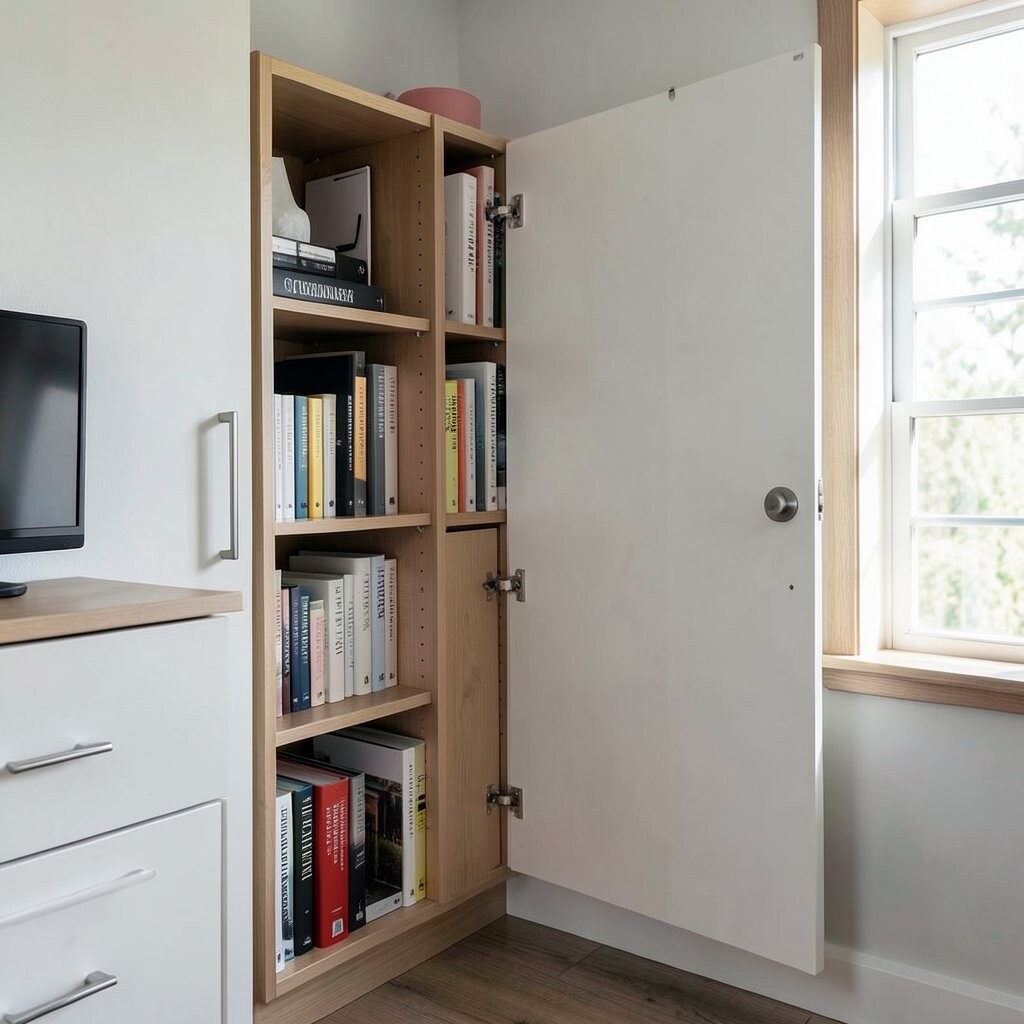
A door can become your secret storage spot, like a hidden organizer wall. You can hang hooks, pouches, or pockets right behind the door so your items stay out of sight.
This idea is great for small rooms because it uses space you already have. It also keeps bulky items, like chargers, headphones, or notebooks, from taking over your desk.
Personalize it by dedicating each pocket to one category, such as “tech,” “reading,” and “supplies.” For low cost, start with a simple fabric organizer. A current trend is using sleek, minimal hanging systems that look neat instead of bulky.
5. Create a One-Minute “Reset Zone”
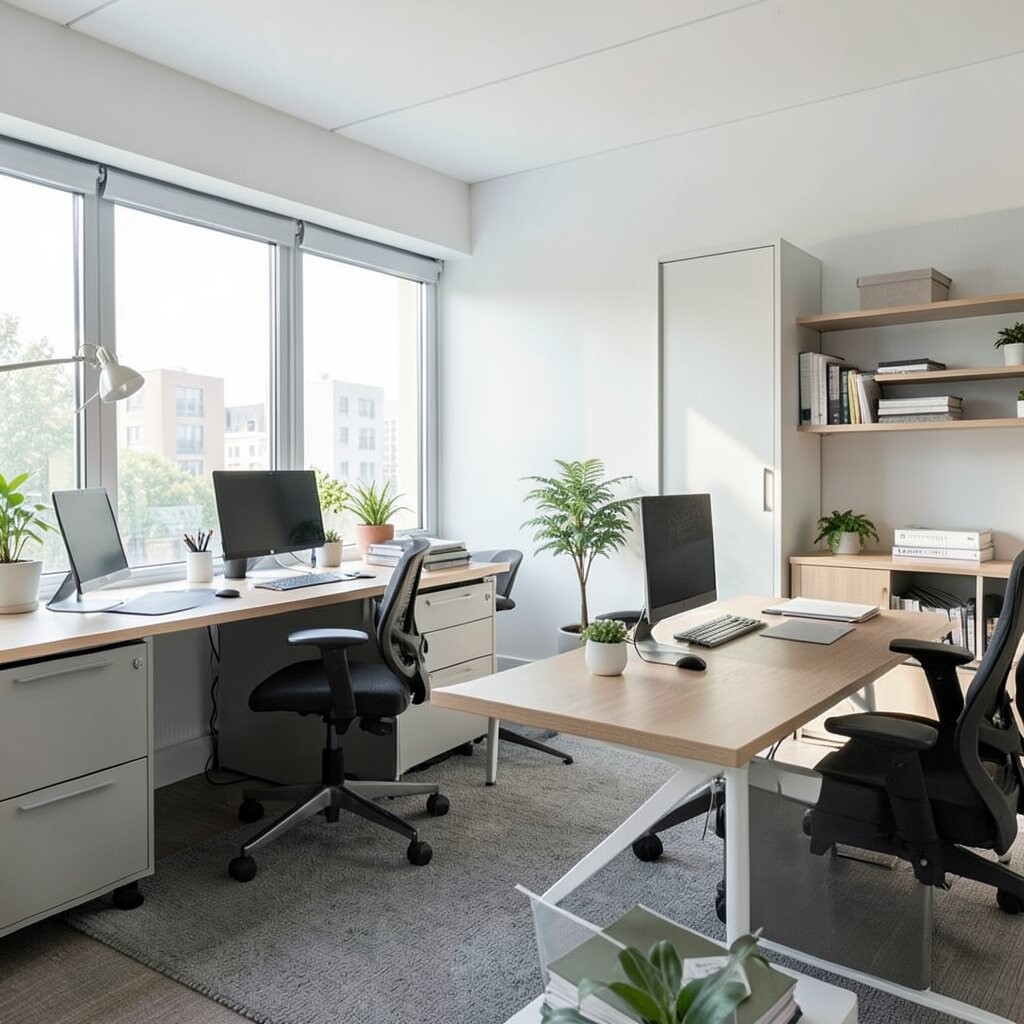
Imagine a small spot on your desk that exists only for quick cleanup. It’s like a tiny landing pad where items can wait while you finish your task.
This keeps your whole desk from turning into a busy map of scattered papers. The benefit is real: you can reset the space fast and feel ready again.
To make it work, choose one shallow tray or a small box and keep it near your main work area. Personalize the zone with a color you love or a cute note like “back to work.” If you’re watching the trend of “calm productivity,” this is a perfect match.
6. Switch to a Stackable Tray System
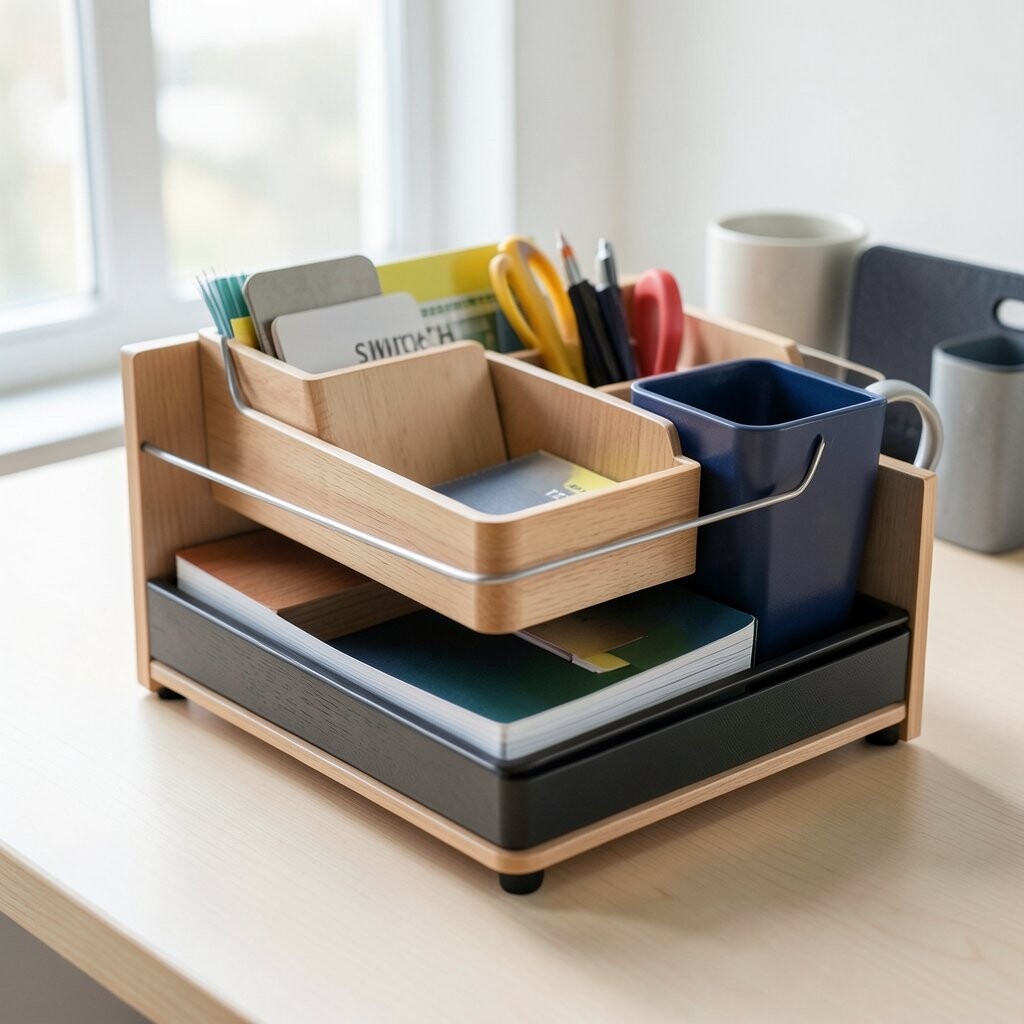
Stackable trays create tidy layers that keep papers from going everywhere. You’ll see your documents organized by stage, like “to read,” “to answer,” and “file later.”
This helps you avoid the messy habit of mixing tasks in one pile. It also supports a clear workflow, so you always know what comes next.
For personalization, assign each tray a matching color label and rotate documents based on priority. Budget-friendly options include simple plastic letter trays or even repurposed boxes with folders inside. Current office organization trends often highlight vertical paper handling, and trays are a simple way to do that.
7. Hang a Pegboard for Tool-Like Organization
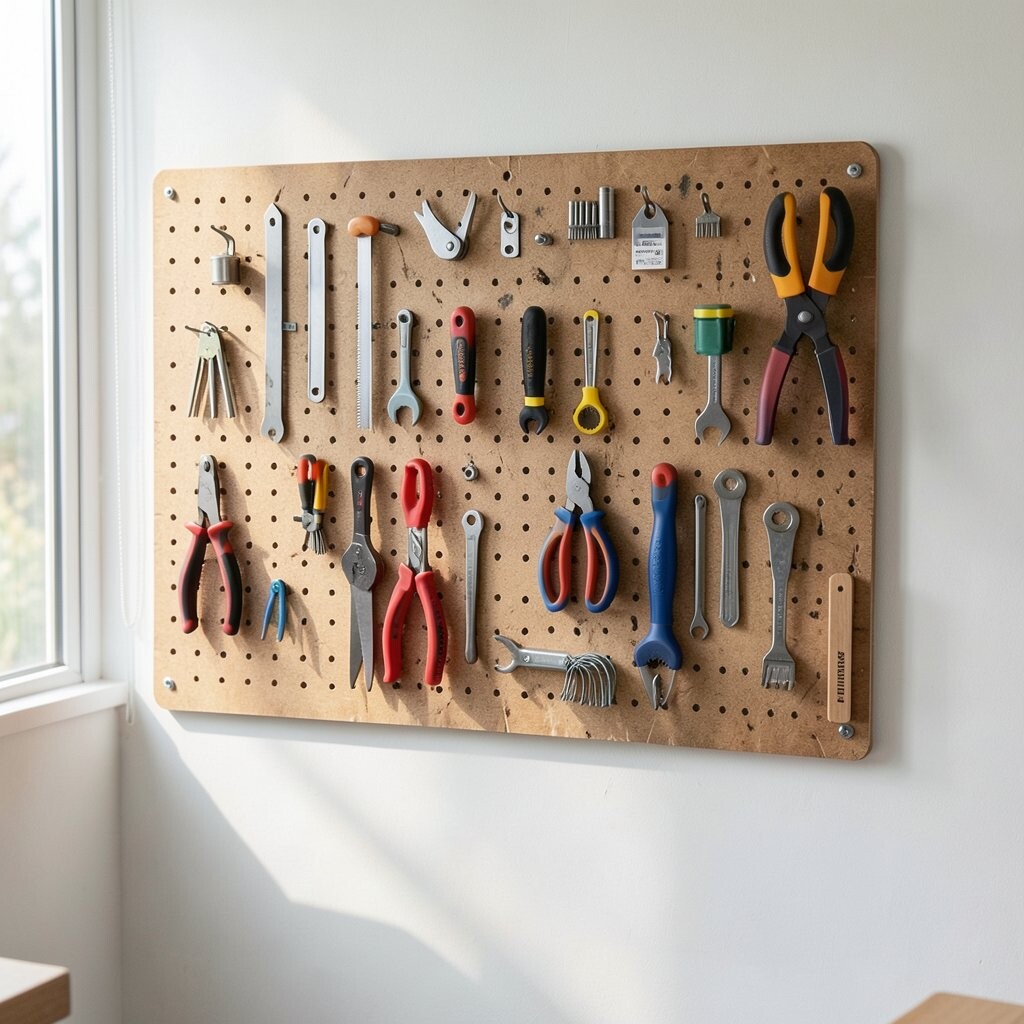
A pegboard can look like a tidy workshop wall, full of small hooks and shelves. You can hang tools for office life, such as scissors, tape, and even a small light.
The benefit is easy access with a clean surface since your desk stays open for actual work. It also makes your supplies easy to reconfigure when your needs change.
Personalize by adding mini bins for cables and a small shelf for sticky notes. For cost, start with a smaller pegboard section and expand later. Many people are choosing pegboards now because they look stylish and allow flexible layouts.
8. Use Desk-Edge Cable Clips and Brackets
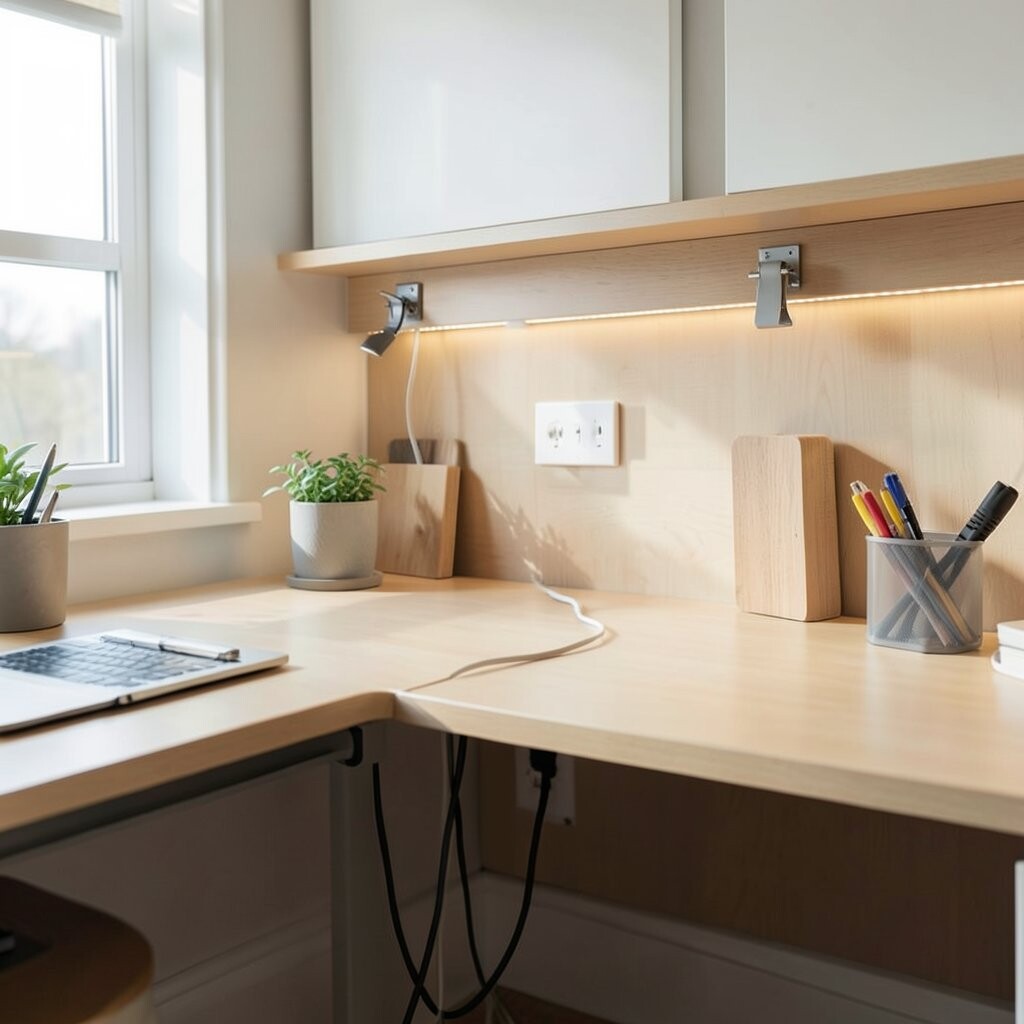
Cable clips keep cords running neatly along the edges of your desk. Instead of seeing tangled wires, you’ll get a clean line that disappears into the background.
This helps your workspace look less chaotic and also makes it easier to plug things in quickly. It can even reduce accidents like stepping on a cord or yanking a charger.
To personalize, group cables by device with small ties or labels. You can buy budget clips or try stick-on organizers that hold well. A current trend is “invisible charging,” where chargers are tucked behind monitors and managed with cable routing.
Tip: leave a little slack where the cable meets your equipment. That small detail prevents strain on ports and keeps everything lasting longer.
9. Set Up a Compact Wall File for Bills and Forms
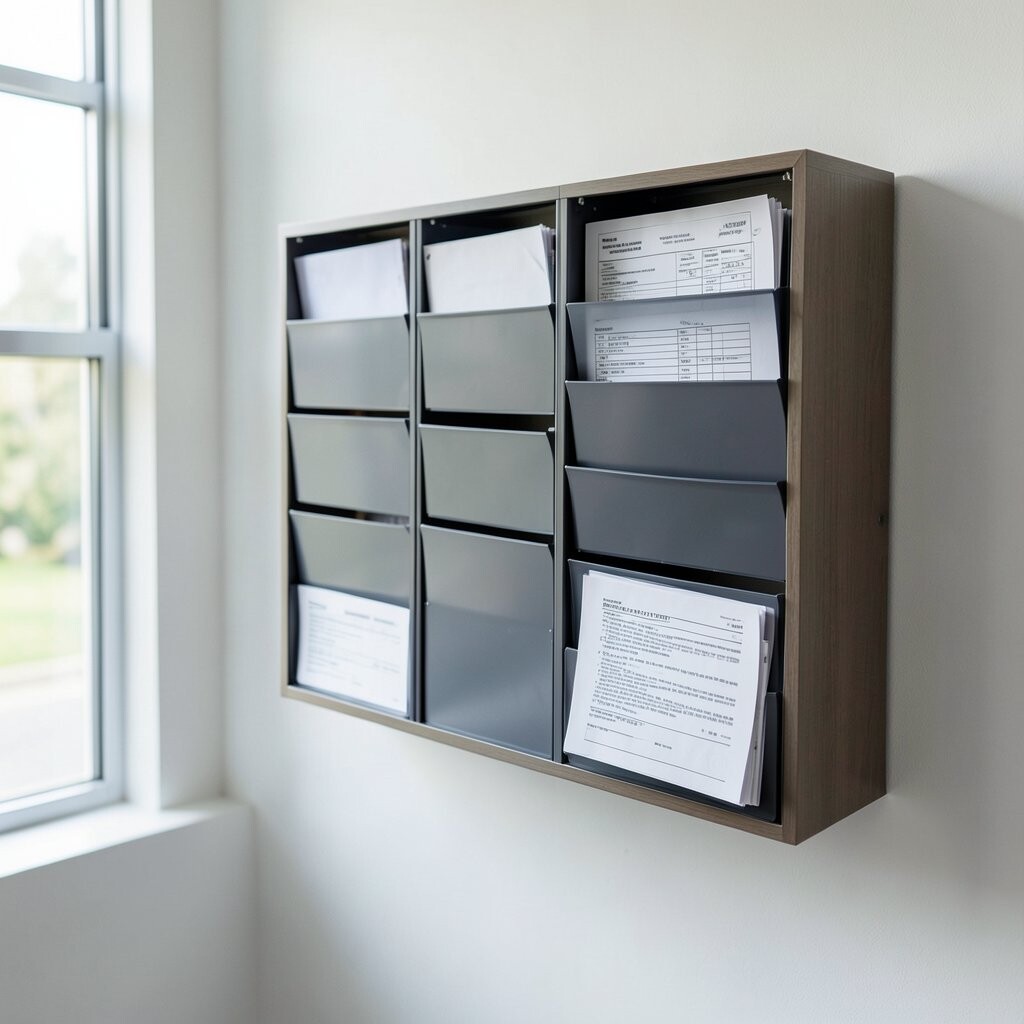
A wall file creates a vertical home for important papers. You’ll love how it keeps bills, forms, and documents upright instead of stacked on the desk.
This improves focus because you’re not constantly scanning for what you need. It also protects important items by keeping them in one place.
Personalize it with pockets labeled by month or category, like “pay,” “warranty,” and “school.” For cost, use a small wall organizer with removable pockets or frame a set of document folders. Many offices now favor wall-based storage because it keeps the floor clear and the desk calm.
10. Try a Vertical Magazine Rack for Books and Notebooks
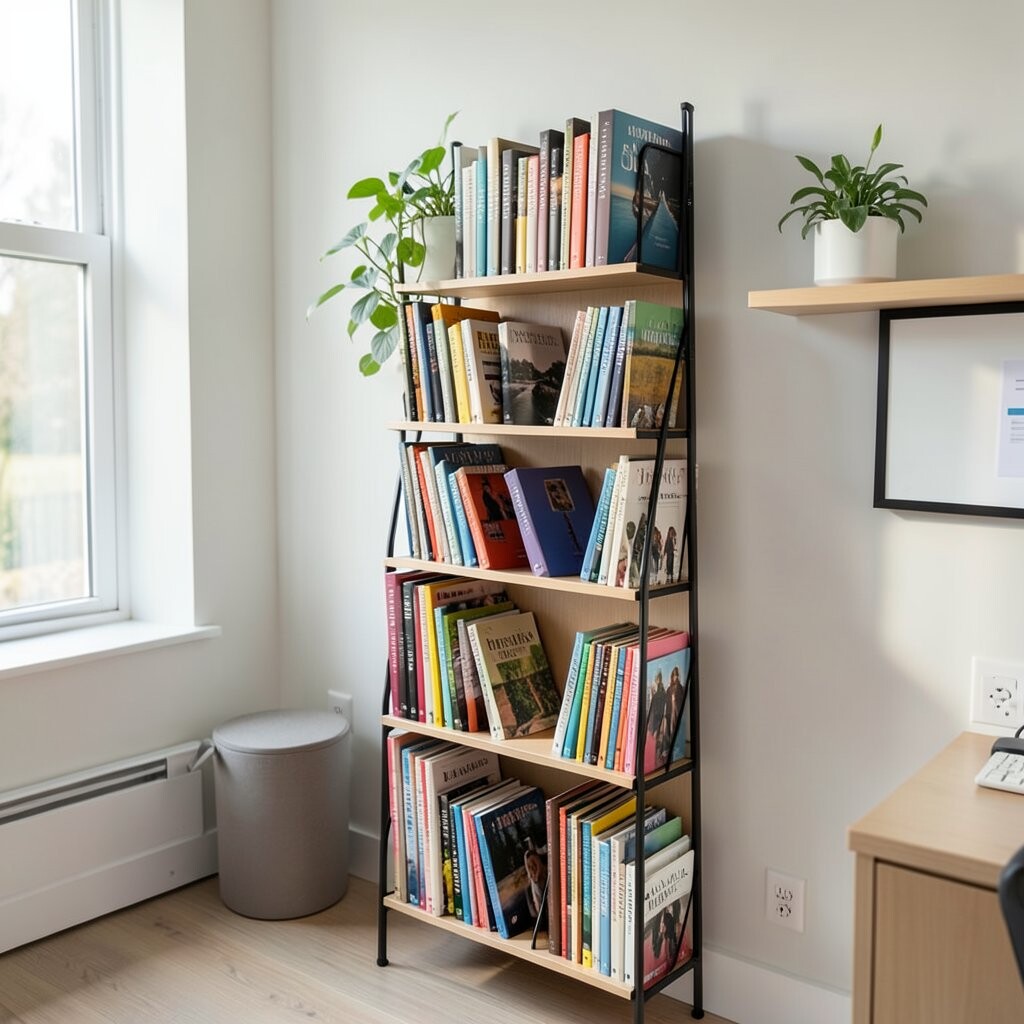
A vertical magazine rack is a simple stand that holds notebooks and books like a tidy library shelf. You can see your choices at a glance instead of digging through stacks.
The benefit is speed: you grab the right notebook faster and keep your focus. It also reduces wear and bending on paper when books get squeezed under piles.
Personalize it by dedicating one side for active projects and the other for backup notes. Budget-friendly options include metal racks or even a sturdy DIY version with careful spacing. A current trend is mixing “office reading” with work items in one visible system so learning stays close.
11. Use Clear Stackable Containers for “Like with Like” Storage
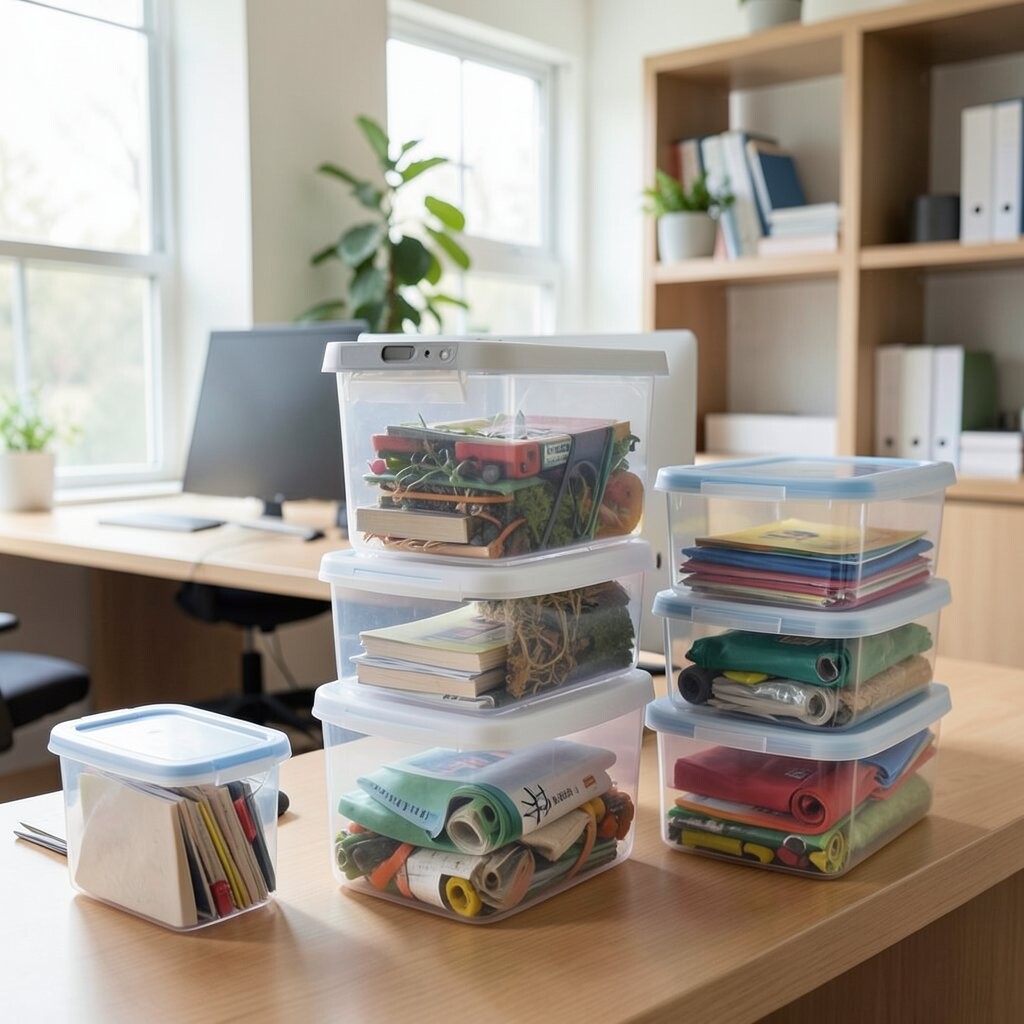
Clear stackable containers show what’s inside, even from across the room. You’ll love the visual calm of seeing neat rows instead of mystery boxes.
This helps you find supplies quickly because you can spot colors and shapes right away. It also makes restocking easier because you can see what’s running low.
Personalize by matching containers to categories like “labels,” “paper,” “office tools,” and “art supplies.” For cost considerations, buy a few larger containers first, then add more as you empty them. Many people are leaning into “see-through storage” lately because it saves time and reduces duplicate purchases.
12. Install a Floating Shelf Above the Desk
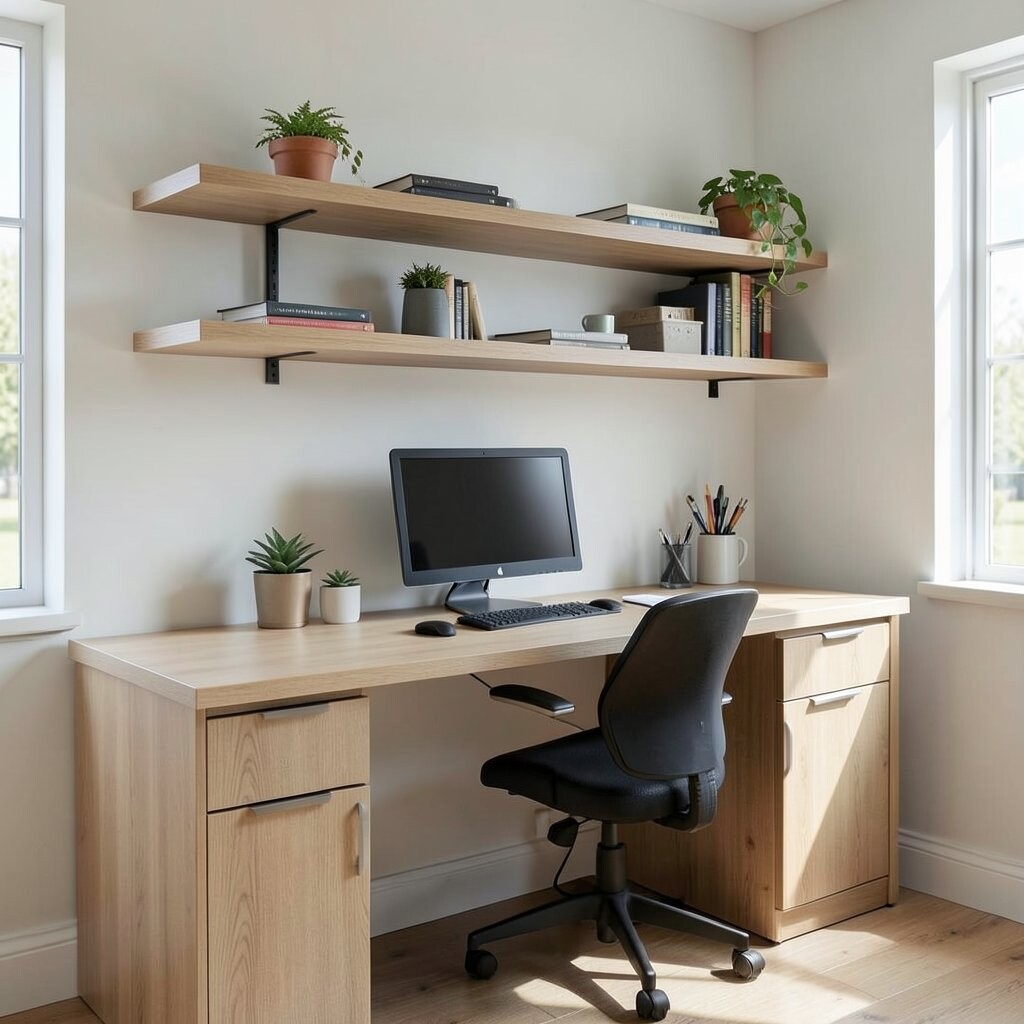
A floating shelf above your desk feels like a light roof for your workspace. It gives you extra storage without taking up the floor or desk surface.
Use it for lightweight items like books, small organizers, or a tidy plant. This keeps your main desk area open for writing and computer work.
Personalize the shelf by arranging items by height, like tall containers in the back and smaller ones in front. Budget-friendly options include simple brackets with a sturdy board. A current trend is “stack styling,” where shelves look curated and not stuffed.
Tip: keep only what you use often on the shelf, and store the rest in closed containers. This helps the shelf stay helpful instead of becoming a new clutter hotspot.
13. Make a Small Filing System with Folders Inside a Bin

A bin with folders can act like a compact cabinet. You’ll see folders standing upright, each one holding documents that belong together.
The benefit is that files stay organized without needing a full filing drawer. It also makes it easy to pull one folder at a time.
Personalize the folder names using your real life categories, like “health,” “work,” “home,” and “taxes.” For cost, use a lidded bin plus standard manila folders. Many offices now encourage minimal systems, and a bin-based folder setup fits that style perfectly.
14. Keep a “Charge Dock” for Devices and Accessories
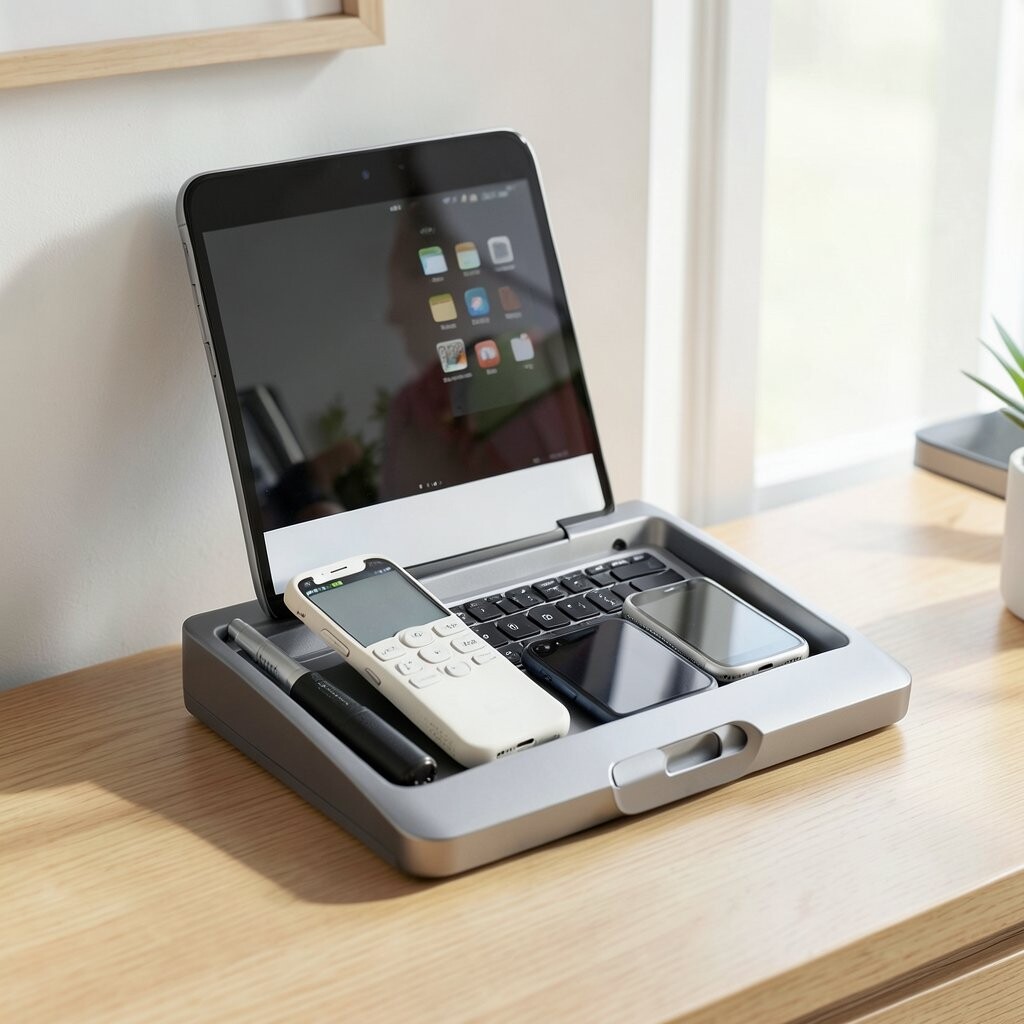
A charge dock turns messy cords into one neat station. You’ll picture your phone, headphones, and a backup battery each landing in the same spot every day.
This idea saves desk space and reduces the daily scramble to find chargers. It also protects cables because they are less likely to get pulled and tangled.
To personalize, choose a dock that matches your room style, like wood-tone or sleek black. Budget options include a multi-cable holder and a simple tray under your monitor. Current trends often focus on “daily ritual setups,” where charging becomes part of a calm routine.
Safety tip: don’t overload power strips, and keep the dock away from water sources. Check that vents on devices aren’t blocked so they can cool properly.
15. Add a Small Trash and Recycling Station Under the Desk
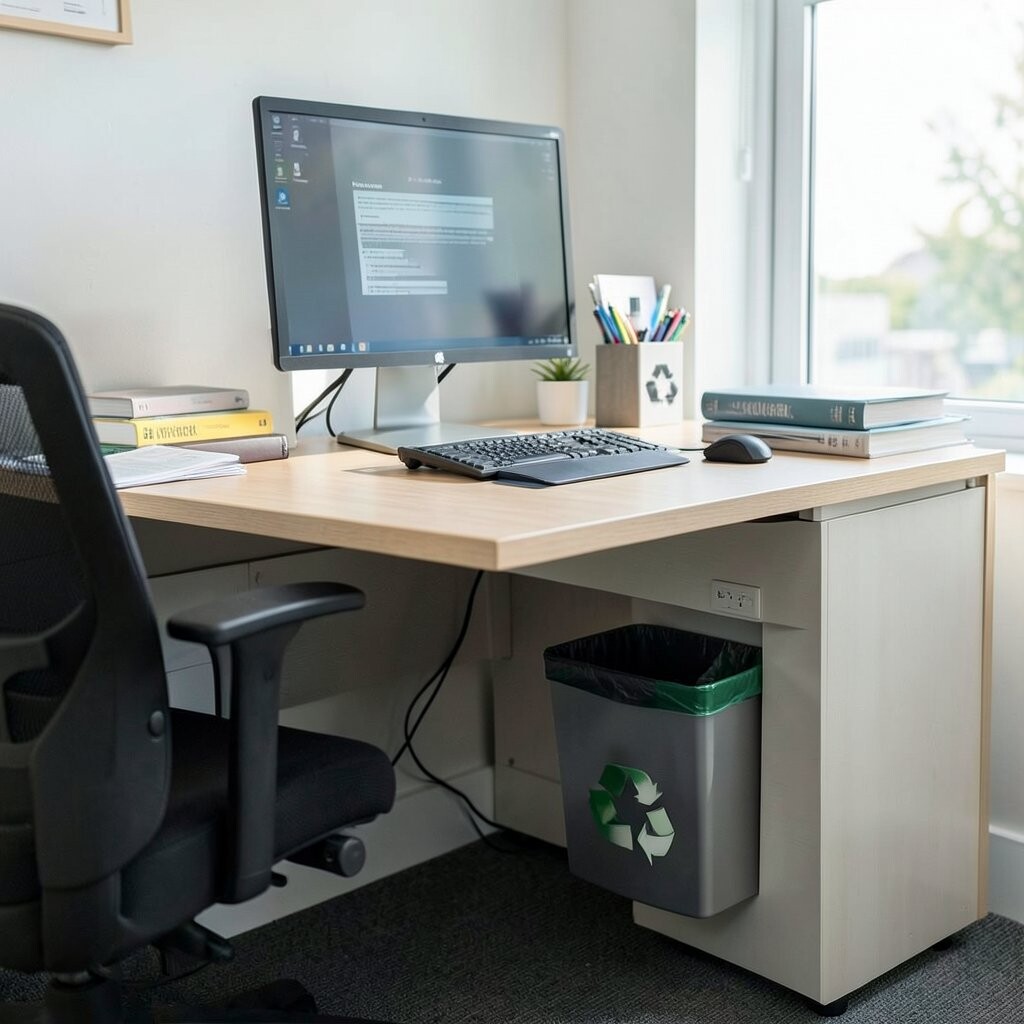
Having a tiny trash and recycling station under your desk keeps your workspace clean. You’ll notice fewer wrappers and paper scraps piling up near your working area.
The benefit is simple: tidying becomes part of the flow, not an annoying chore. It also helps you see the surface of your desk more clearly, which supports focus.
Personalize the bins with color so you remember what goes where. For cost, use slim pedal bins or simple pull-out pouches designed for small spaces. A recent trend is small “hygiene-friendly” stations that encourage quick cleanups.
Tip: place a small bag holder or spare liner nearby so you never get stuck when it’s time to change bags.
16. Build a Mini Tool Caddy for Frequent Desk Tasks
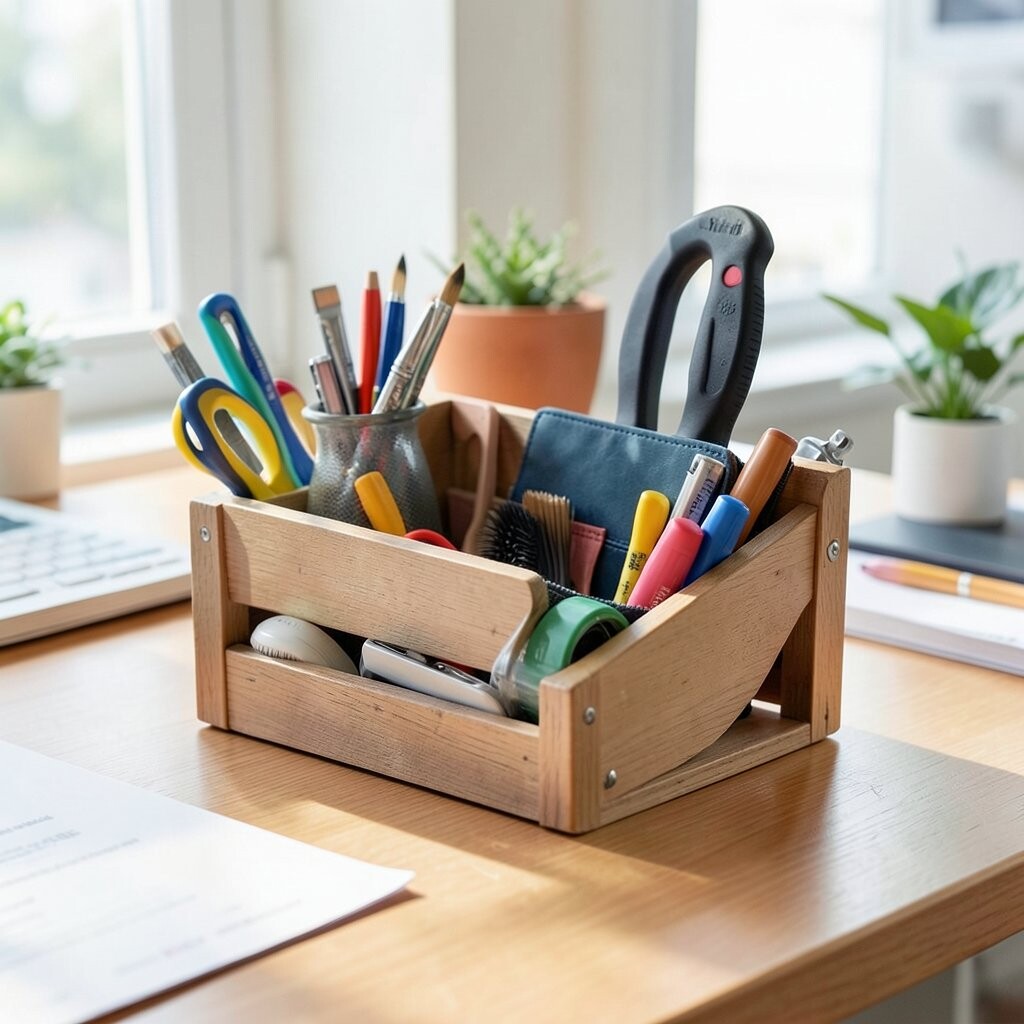
A mini tool caddy is like a portable workbench for everyday desk actions. You’ll keep scissors, a ruler, tape, pens, and a notebook all together in one grab-and-go spot.
This keeps your desk organized because you’re not hunting for tools across drawers and shelves. It also helps you finish tasks faster because everything is ready at the moment you need it.
Personalize by using compartments sized for your exact tools, like a narrow slot for correction tape and a wider spot for markers. Budget cost can stay low with a small box, a drawer divider set, or a repurposed container. Current trends include “single-hand access” setups, where the caddy is meant to be carried without fuss.
17. Create a Rotating “Project Shelf” for Active Work
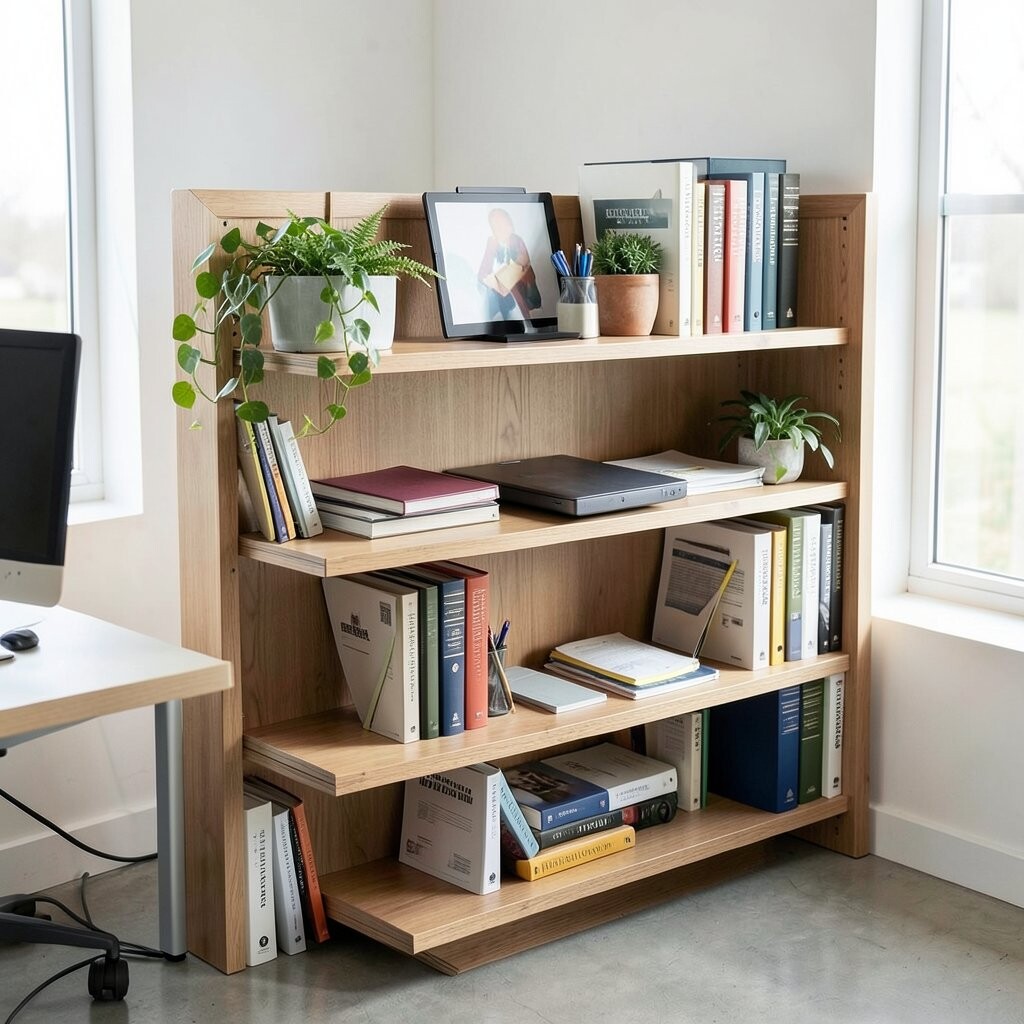
A rotating project shelf keeps your active tasks visible without becoming messy. You’ll see a small section for what’s currently happening, while completed work can move out of the way.
This is helpful because it reduces the stress of unfinished piles. It also stops the desk from becoming a storage place for everything you started.
Personalize it by setting simple rules, like “only three projects can be out” and “completed items move back to storage.” For cost, use a small turntable, a rotating stand, or even a basic shelf with labeled zones. Many people are following a current trend called “active workspace zoning,” where the desk shows only what matters right now.
To make it feel irresistible, add a small visual cue like a sticky note sign that says “today’s focus.” When you rotate items, you get a satisfying moment of reset that keeps momentum going.