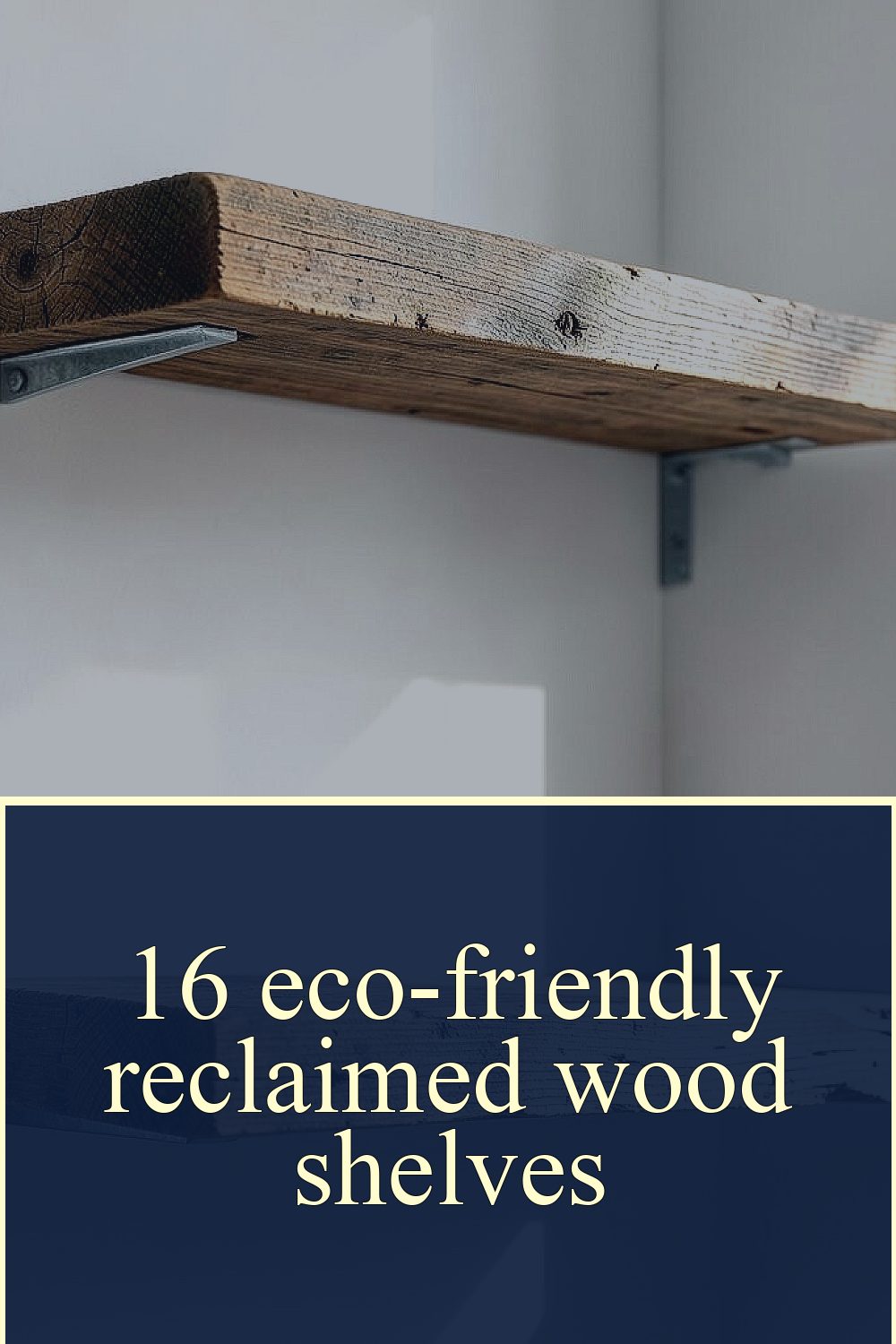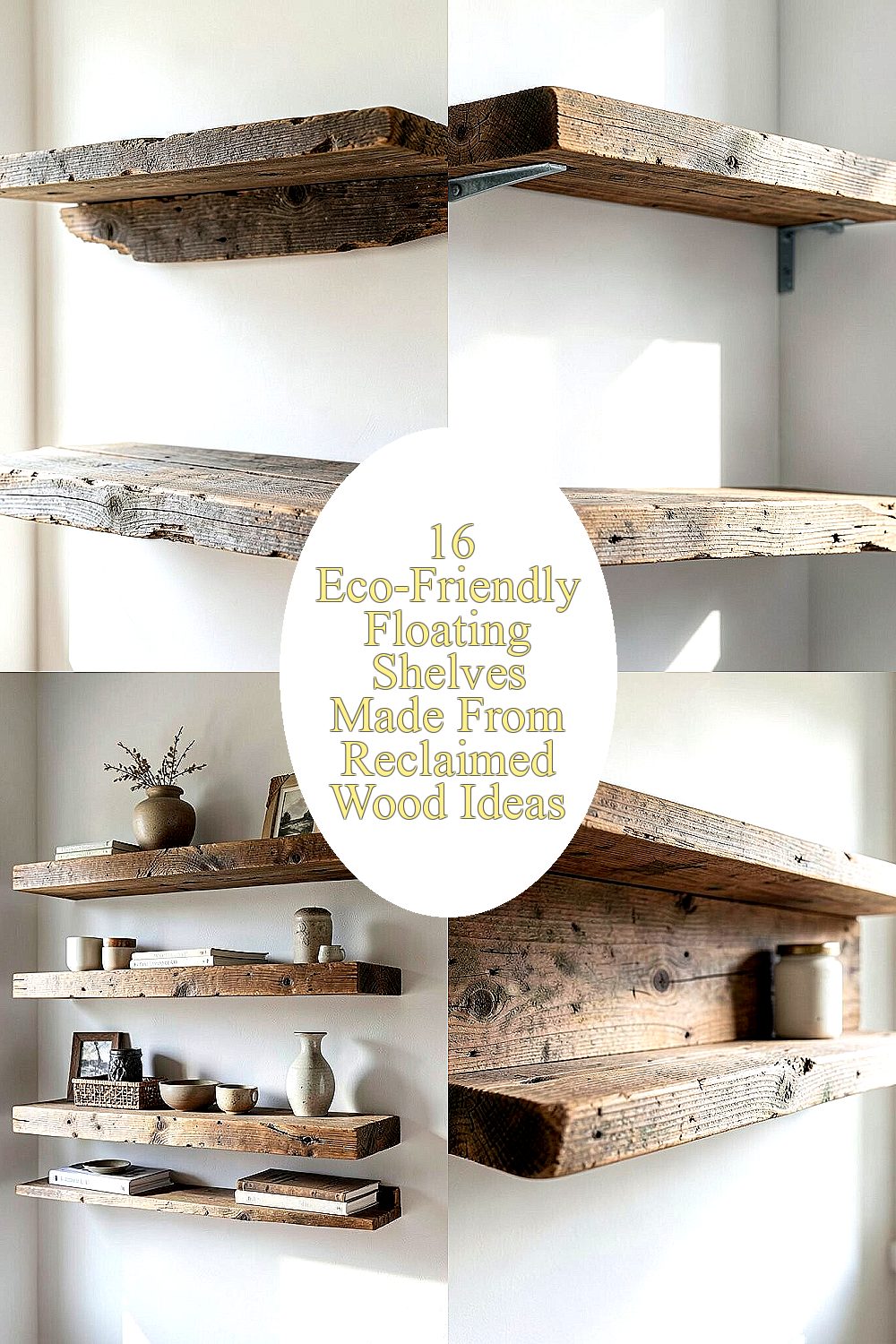
Wood with a past can make your walls feel warm and alive. These shelves are small upgrades that change how a room feels every day.
Reclaimed wood brings character, and eco-friendly builds help you use materials more wisely. You get storage plus style, without that “new and empty” look.
1) Weathered plank shelves with a raw edge

Imagine a long, flat shelf with a slightly rough edge, like it still remembers old barns. The grain looks like swirling river lines, and every knot feels like a tiny story.
Because it’s made from reclaimed boards, the wood is already aged and ready to look interesting. You also avoid cutting down fresh trees just for your project. Keep the color natural with a clear low-sheen finish so the shelf stays bright and honest. To personalize it, match the shelf length to your wall art or place small plants along one side for balance.
If you want it to feel extra cozy, paint the wall in a soft warm white first, then let the wood stand out. For cost, look for locally saved timber, pallet boards, or building salvage stores before buying new lumber. A simple tip: sand only the top surface lightly so the edges still show texture. Right now, lots of homes are leaning into rustic-meets-modern styles, and this design fits that trend easily.
2) Reclaimed wood shelves with hidden brackets for a clean look

Picture a shelf that looks like it’s floating in midair, with no obvious hardware in sight. The wood stays center stage, smooth in the front and charmingly uneven on the underside.
Hidden brackets make the whole setup look neat, especially in small rooms where you want a calm feel. It’s also helpful for safety, since the brackets are tucked out of view and you can choose strong mounting points. For a personal touch, stain the wood a soft walnut tone so the grain looks darker and richer.
When you plan cost, think about where you’ll spend: good brackets and proper anchors are worth it. Salvaged wood can be affordable, but the mounting hardware should be reliable. A smart tip is to mark the studs carefully and use a level so the shelf stays straight and trustworthy. Current trends favor “quiet hardware,” and hidden brackets make your shelves look like they belong in a modern magazine.
3) Narrow reclaimed shelves for a gallery-style wall

Think of a row of thin floating shelves, each one holding a different object like a mini stage. The wood grain stays visible, and the shelves together create a tidy, rhythmic pattern.
Narrow shelves are great when you don’t need big storage, but you still want charm on your wall. They also let you rotate decor often, which keeps your space feeling fresh. Choose reclaimed boards with similar thickness so everything lines up neatly, even if the wood color varies a bit.
For personalization, mix items like small frames, ceramic bud vases, and tiny storage boxes. If you have a kid-friendly corner, use the shelves for non-breakable books and games. Budget-wise, shorter shelves usually use less wood, which can help you stay within your plan. A tip: keep the weight light and avoid heavy planters on very small boards.
4) Wide reclaimed shelf “ledges” with a soft rounded profile

Picture a chunky shelf that feels like a friendly ledge, with a rounded edge that catches the light. The surface looks smooth where your hand would touch it, while the sides still show reclaimed character.
This wide style gives you real function, like holding cookbooks, mugs, or even a small record player setup. Reclaimed wood benefits you by adding texture without needing extra decoration. To keep it comfortable, sand the front edge more than the rest so it feels safe and pleasant.
Personalize it by carving a simple groove line along the front, like a subtle signature. For cost considerations, wide shelves need more wood, but you can often get thicker boards from salvage suppliers. Right now, “heirloom ledge” looks are popular, especially in kitchens and living rooms where shelves act like furniture.
If your space has a lot of vertical lines, a rounded profile helps soften the room. Use a matte protective finish so the shelf doesn’t glare, especially if it’s near bright windows.
5) Reclaimed wood shelf with a limewash or chalky white finish

Imagine reclaimed timber painted in a chalky white that still lets the grain peek through. It looks airy, like beach houses and sunlit hallways, but the wood remains warm beneath the color.
Limewash and chalky finishes can brighten a room while keeping the eco-friendly benefits of using older wood. They also hide minor scratches, which is great if you want a low-stress, lived-in vibe. For personalization, add a faint gray glaze to the knots so they feel even more natural.
When thinking about cost, these finishes are often cheaper than custom stains and can be mixed in small batches. A helpful tip: test the finish on a scrap board first, since reclaimed wood can soak color in different ways. Current trends favor soft, faded finishes that make rooms feel gentle and welcoming.
If you’re styling a bedroom wall, keep the shelves sparse at first, then add a small lamp or a ceramic tray once the color feels right. That way the whole look feels intentional instead of crowded.
6) Floating corner shelves using reclaimed wood offcuts

Picture a cozy corner with shelves that fit like puzzle pieces, stacked right where floor space ends. Small reclaimed offcuts become a purposeful design, and the angles make everything feel intentional.
Corner shelves benefit you by using a “dead zone” that usually goes unused. Since the wood comes from offcuts, you reduce waste and keep more material in the life cycle. For uniqueness, vary the length slightly, so the shelf edges look natural instead of factory-perfect.
Personalize the corner with a theme, like coastal decor, spice jars, or tiny framed photos. Cost-wise, offcuts can be very affordable, but you may need special mounting hardware for corners. A tip: reinforce mounting with corner brackets and use the proper wall anchors so the shelves feel secure.
7) Reclaimed wood shelves stained deep espresso with brass accents

Think of dark reclaimed wood, glossy enough to look rich but still natural, paired with warm brass hardware. The contrast makes the shelf feel bold, like it belongs in a stylish urban loft.
Deep staining helps the grain pop, and brass accents add a modern glow without stealing the show. This is a great benefit for people who like a clean, upscale look. To personalize, use a slightly lighter stain on one side so the wood has an intentional gradient.
Cost can run higher with brass brackets, so set a budget for hardware first. If you want to save money, choose simpler metal brackets and add a single brass detail like end caps. A smart tip is to keep the finish consistent across shelves so they look like a set. Current trends often blend dark wood with mixed metals, which makes this combination feel very “now.”
For styling, use warm lighting, like a small wall sconce nearby, so the dark shelves feel cozy instead of heavy. Even a few books and one vase can look amazing on this finish.
8) Shelf ladder look: reclaimed wood with multiple floating rungs

Picture a wall feature that looks like a gentle ladder, with several shelves at different heights. Each rung holds small items, and the whole structure makes a narrow wall feel taller.
This idea is unique because it turns storage into a vertical design, not just horizontal space. The benefits include easier organizing, plus a fun way to display books without stacking them awkwardly. For personalization, add a subtle curve to the wood rungs or mix in one painted rung for contrast.
When planning cost, remember that multiple shelves use more brackets and mounts, so hardware adds up. Salvaged wood can help offset that, especially if you gather boards from one source. A tip: keep the rungs close enough for easy reach, and double-check weight limits for each shelf.
9) Reclaimed wood shelf with built-in peg hooks for hanging

Imagine a floating shelf where the underside includes small peg hooks, like a compact organizer. The wood looks smooth on top, and underneath it’s ready for keys, hats, or lightweight bags.
This design is extra helpful because it adds storage in two directions at once. You get benefits for daily life—grab-and-go items stay within easy reach. Personalize it by choosing a hook layout that matches your routine, like extra hooks near the entryway.
Cost considerations matter here, because hooks and a rail system add hardware. Still, it can be cheaper than buying two separate organizers, like a shelf plus a separate hook rack. A tip: keep the hooks strong and avoid heavy loads so everything stays safe. Right now, entryway organizers are trending, and this one looks decorative while staying practical.
If you’re styling the shelf, add a small tray for mail and a tiny plant for calm. The whole setup feels neat without needing too many objects.
10) Reclaimed wood shelf with a natural oil finish for “touchable” texture

Picture a reclaimed board that feels warm even before you touch it, finished with natural oil. The surface looks like it’s glowing from inside, and the grain lines are crisp and alive.
This approach highlights wood benefits without covering it up. Oil finishes can be easier to maintain, and they help keep the wood looking friendly instead of shiny. To personalize, try different oils on small sections of the same board to see which tone you like best.
Cost-wise, natural oils can be affordable, especially if you already have basic supplies. A practical tip is to let the finish cure fully before adding items, so it doesn’t mark or stick. Current trends often favor “matte natural,” and an oil-finished shelf fits right in with that vibe.
For styling, use baskets and simple ceramics so the shelf feels like part of the room, not a separate project. If you have kids, the matte look hides small smudges better than high gloss.
11) Reclaimed wood shelf with a mosaic edge using scraps

Imagine a reclaimed wood shelf where the edge includes small mosaic pieces, like bits of tile or glass set into a thin strip. The top looks rustic, but the edge adds sparkle when light hits it.
This is a unique way to recycle tiny leftovers that might otherwise end up in the trash. The benefits include a one-of-a-kind look and a playful detail that makes people pause and look closer. For personalization, choose mosaic colors that match your room—soft blues for calm, warm oranges for energy, or earthy browns for cozy.
Cost considerations can be manageable if you use leftover tile, broken ceramics, or craft-store glass pieces. A tip: keep the mosaic along the edge only, so the shelf stays sturdy and the surface remains easy to clean. Current trends like “micro texture” and artisan details make this design feel modern even though the wood is old.
If you’re nervous about complexity, start with a small accent section rather than covering the whole edge. You’ll still get the special look without too much stress.
12) Dark reclaimed shelf with whitewashed grooves for farmhouse charm
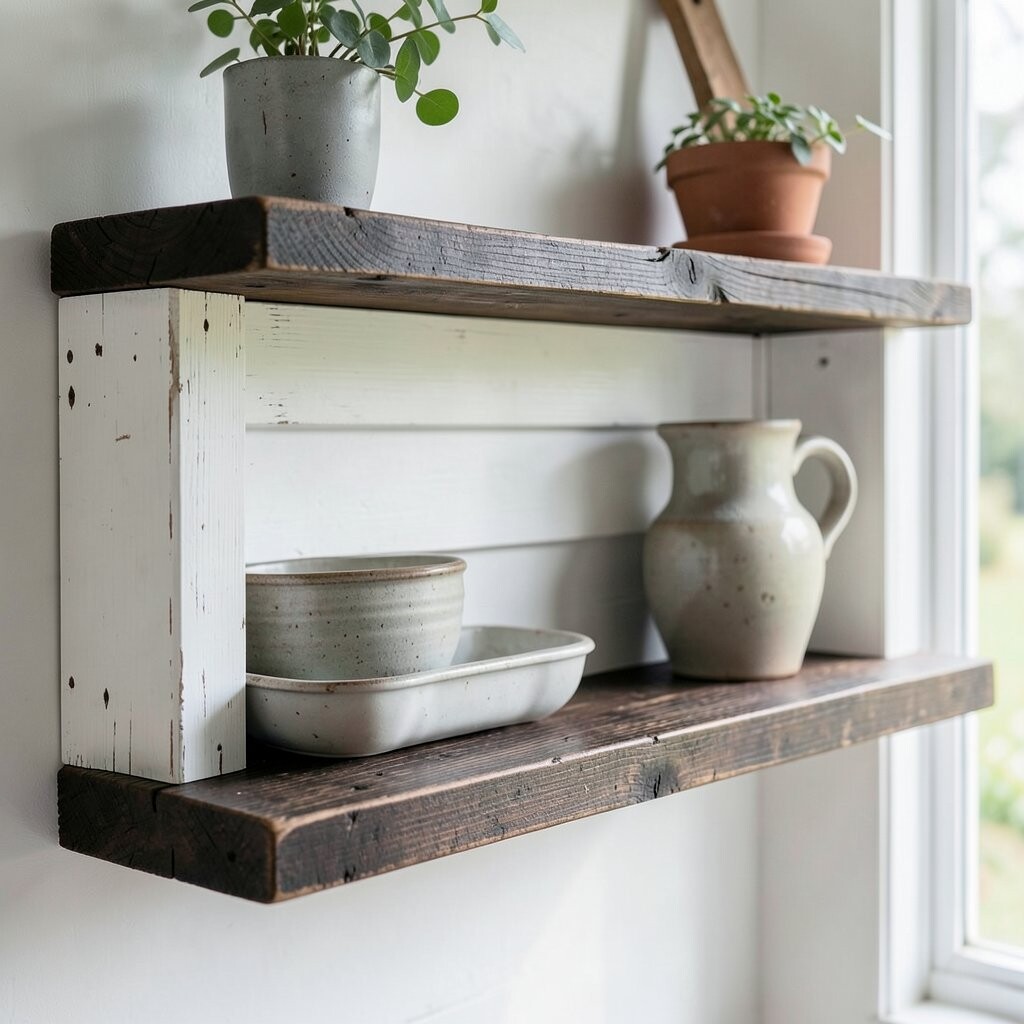
Picture a shelf with shallow grooves along the board, then lightly whitewashed so the grooves stand out. The texture looks like it was hand-made, and the result feels warm and farmhouse-ready.
This style offers visual depth, so even a plain wall looks interesting. The benefits include hiding everyday scuffs and creating a strong “designed” look without lots of extra decor. Personalize it by choosing how wide the grooves are and adding a tiny stain line into the grooves for contrast.
For cost, carving grooves may take time, but it doesn’t usually require expensive materials. A tip: practice on a scrap board first so your spacing matches what you want. Right now, many rooms are leaning into textured farmhouse styles, and this shelf fits nicely with that trend.
13) Reclaimed wood shelf set with matching “bookstop” ends

Imagine two floating shelves that share the same reclaimed wood look, but with small end pieces that act like bookstops. Your books sit neatly, and the shelf edges give a framed feeling to your display.
This idea helps organization, which is one of the best benefits of floating shelves. End pieces keep items from sliding, so the shelves stay tidy even if you bump them. For personalization, add end pieces that curve slightly or use an uneven, natural edge that matches the wood’s character.
Cost considerations depend on end-piece style, but small wood blocks usually cost less than decorative add-ons. A smart tip is to align the bookstop heights so your books look uniform. Current trends often show styling with neat rows, so this design helps your decor look “curated” fast.
To make it feel unique, include one shelf that holds a few large items and another shelf that holds smaller pieces. That variety keeps the look from feeling too strict.
14) Reclaimed wood shelf above a desk for a practical work zone

Picture a floating shelf hovering over a desk, holding a plant, a notebook stack, and a small tray for pens. The wood color warms up your workspace and makes the desk feel less blank.
This setup has big benefits for daily use, because tools and inspiration stay close by. It’s also helpful for keeping the desk surface clearer, which can make focus easier. Personalize it with a chalk marker label on the underside, so you can update storage labels as your needs change.
Cost-wise, a shelf over a desk can be an affordable upgrade compared with buying new cabinets. A tip: use a lower-profile shelf if you spend long hours looking forward, so your sightline stays comfortable. Current trends in home offices favor open storage, and reclaimed wood adds personality without clutter.
If you want extra function, add a slim rail under the shelf for cable management or to hang headphones safely. Just keep heavy items away from the front edge.
15) Reclaimed wood shelf with a chalkboard panel for labels and notes

Imagine a floating shelf where part of the front includes a small chalkboard section. The wood looks warm and old, and the black writing space gives you a creative place to leave messages.
The benefits are practical and fun: you can label jars, write reminders, or doodle a quick quote. Chalkboards also make seasonal changes easy, since you can wipe and rewrite without changing anything else. For personalization, add the chalkboard as a narrow strip or a small inset panel so the shelf still feels like reclaimed wood first.
Cost considerations are usually friendly, because chalkboard paint or a chalkboard sheet can be affordable. A tip: seal the surrounding wood carefully so chalk dust doesn’t stain it, and test your finish on scrap wood. Right now, message boards and labeled organizing are trending in kitchens and entryways because they reduce clutter and stress.
16) Reclaimed wood shelf with a live-edge look for bold natural drama

Picture reclaimed wood that keeps its natural live edge, like the tree’s original outline is still present. The shelf looks dramatic and organic, and it feels like a piece of art on your wall.
This design is very unique, because it celebrates irregular shapes instead of hiding them. The benefits include a strong visual focal point and a conversation-starting style that can’t be replicated exactly. For personalization, pair the live-edge shelf with simple, matte brackets so the wood remains the star.
Cost considerations can vary, since live-edge boards sometimes cost a bit more due to their shape and availability. Still, reclaimed sources can offset the price, especially if you buy from local mills or salvage yards. A helpful tip is to check for stability before mounting—make sure the board won’t wobble and that the underside stays even enough for secure installation.
Current trends love bold organic lines, especially in kitchens, hallways, and reading nooks. Style it with a single large vase, one framed photo, or a small row of candles for an elegant look.