That blank space under your favorite artwork has a chance to shine. With the right floating shelves, your wall can look styled and finished without feeling busy.
Floating shelves add height, order, and a little wow factor, all at the same time.
-
1. Lean-in Charm With a Single Narrow Floating Shelf
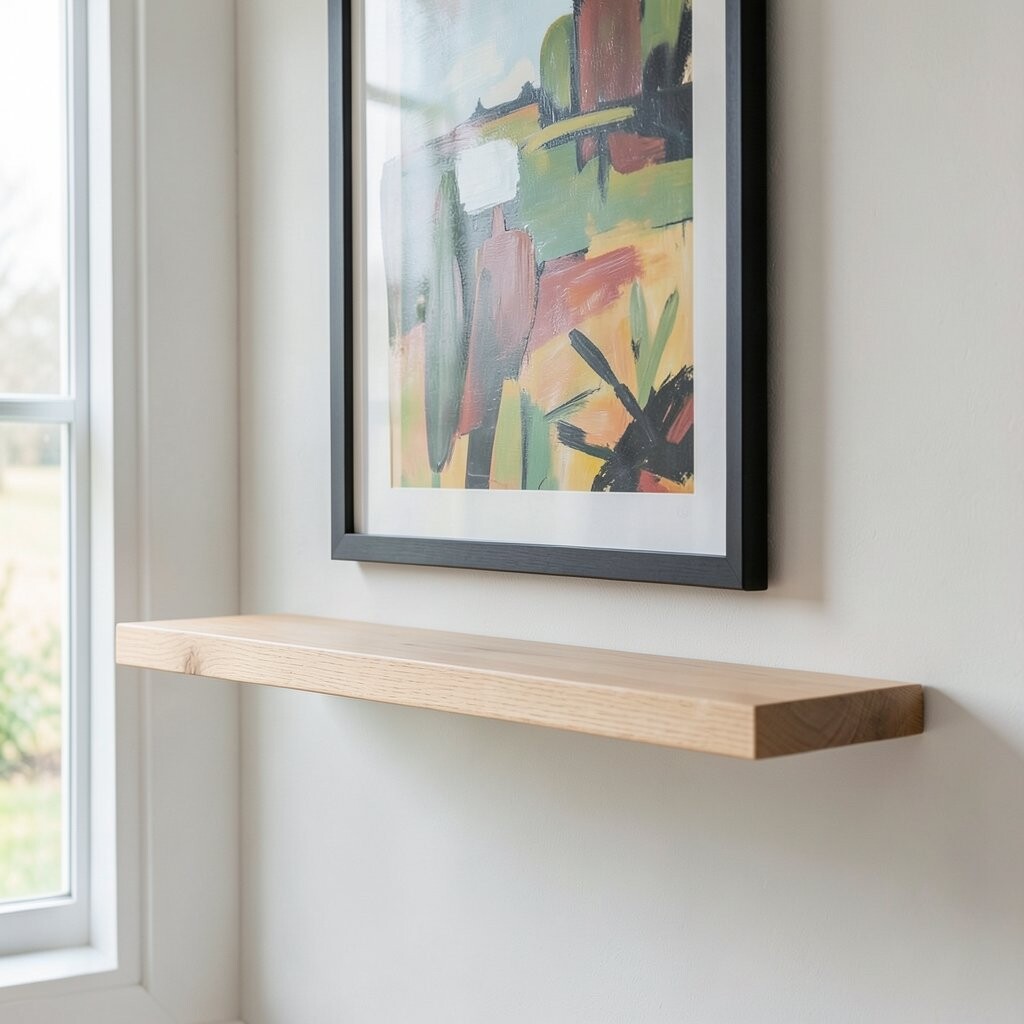
Lean-in Charm With a Single Narrow Floating Shelf A slim floating shelf under a picture frame can make the whole wall feel more intentional. Think of a clean line of wood that visually “pulls up” the decor and keeps the area calm.
Use it for small items like a vase, a rolled print, or a tiny sculptural piece. The benefit is simple: your shelf gives you a spot for meaningful objects without cluttering the wall.
If you want it to feel personal, match the shelf color to the frame finish. For cost, this is usually one of the more budget-friendly options because it uses less material.
Keep the spacing consistent by measuring the distance from the bottom edge of the artwork to the shelf top. A good tip is to start with one shelf, get the look right, and then add a second shelf only if you still feel “something is missing.”
-
2. Double Stacking for a Gallery-Like Flow
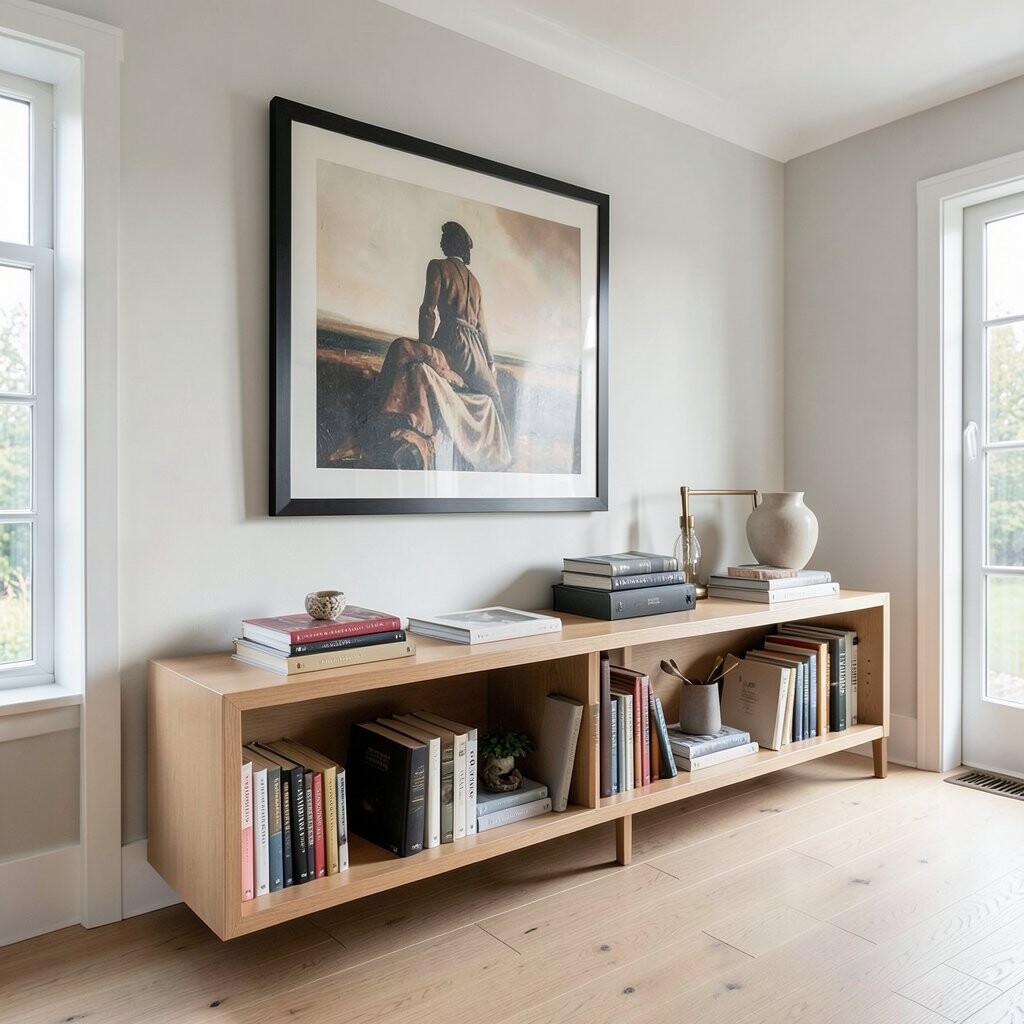
Double Stacking for a Gallery-Like Flow Two floating shelves below one artwork can create a neat, layered look. Picture a stepped arrangement where the upper shelf supports a small tray and the lower shelf holds taller decor.
This setup is great because it adds structure while keeping your wall design flexible. You can rotate items seasonally, like adding a summer candle set or winter ornaments.
To personalize it, choose one “main” piece that repeats your artwork colors, such as a ceramic in a matching shade. For cost, plan for two shelves and the right mounting hardware, which may raise the total a bit, but the impact is worth it.
-
3. Floating Shelf With a Hidden Led Light Moment
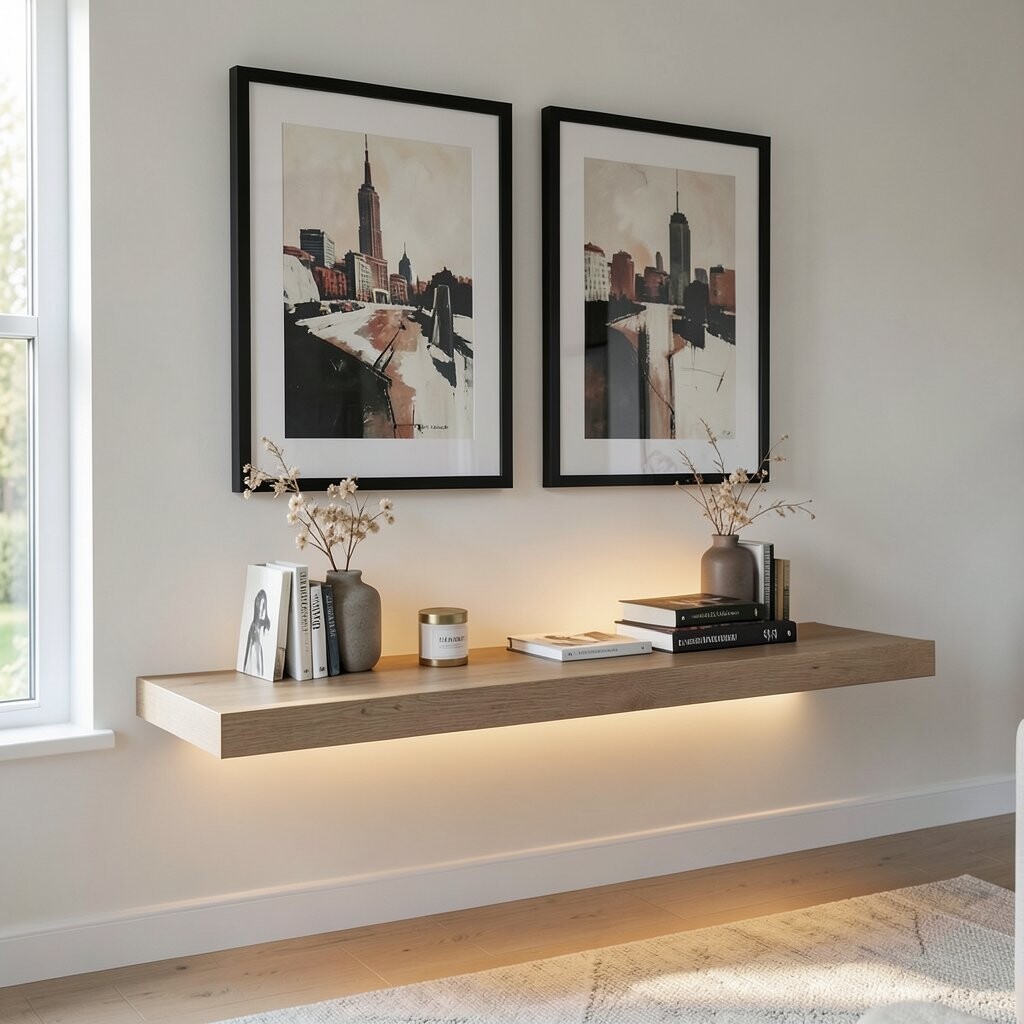
Floating Shelf With a Hidden Led Light Moment Light under shelves changes everything, especially below artwork. Imagine soft glow washing the wall behind a framed print, making your objects look warmer and more premium.
Using a subtle LED strip can highlight small textures like glass, stone, or woven baskets. The benefit is that your wall feels styled even at night, and your decor looks sharper.
Pick a warm white tone for cozy rooms, and consider a dimmer so the brightness fits the mood. For uniqueness, place a thin, reflective item—like a metallic tray—on the shelf to bounce the light.
When planning cost, note that lighting adds an extra layer of parts and installation. Still, many people find it easy to install with a plug-in system or low-voltage kits.
-
4. Use One Shelf as a “Landing Strip” for Books
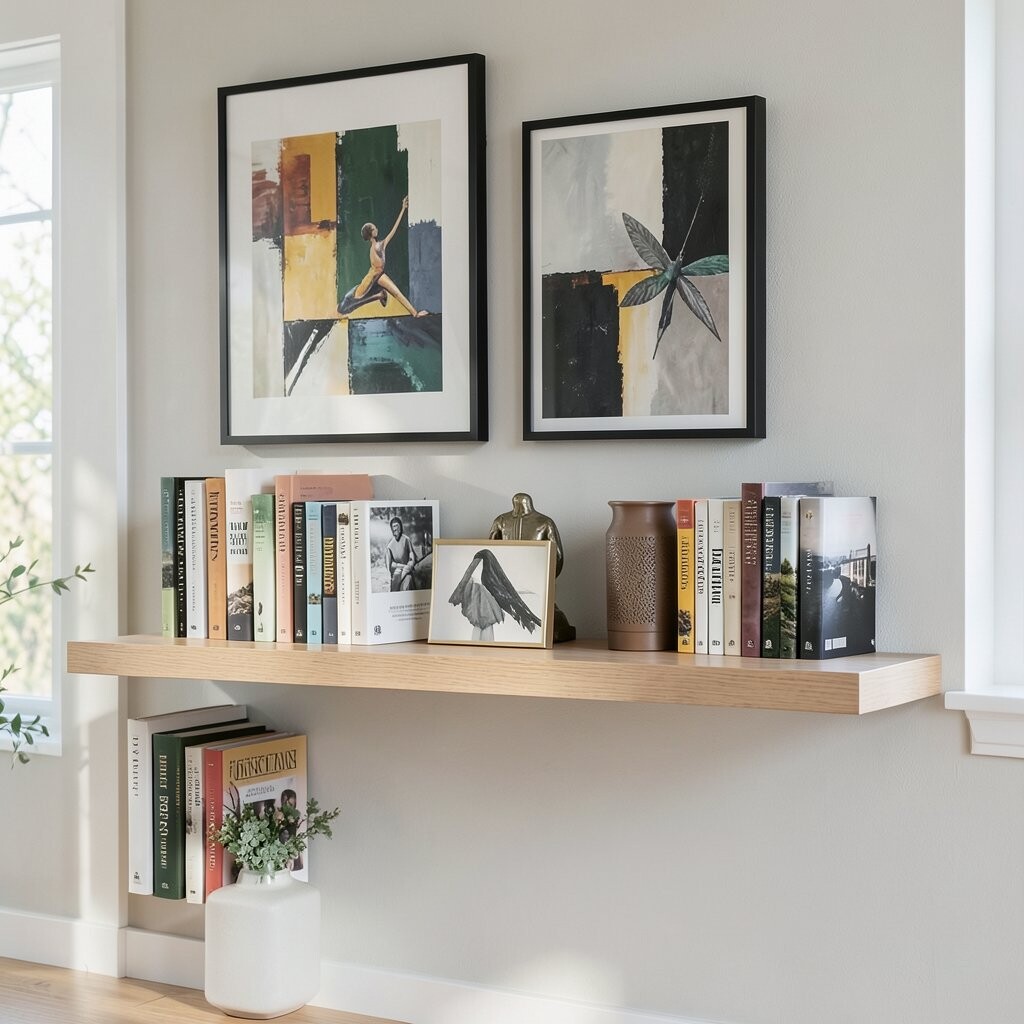
Use One Shelf as a “Landing Strip” for Books If your artwork feels like the main event, let books be the supporting cast. A floating shelf below can hold stacked books, creating a tidy visual base beneath the frame.
This idea is uniquely useful because books look better when arranged intentionally. Try mixing two small book towers and adding a slim book laid flat for a “design moment.”
For personalization, pick covers that match the palette of your artwork or add a book with a meaningful title. Cost is usually reasonable, since books are often easy to swap from your own collection.
To keep it looking clean, avoid overcrowding and leave some breathing room between stacks. Also, anchor the shelf well so it can handle weight, especially with hardcover books.
-
5. A Curved Shelf for Soft Style Under a Straight Frame
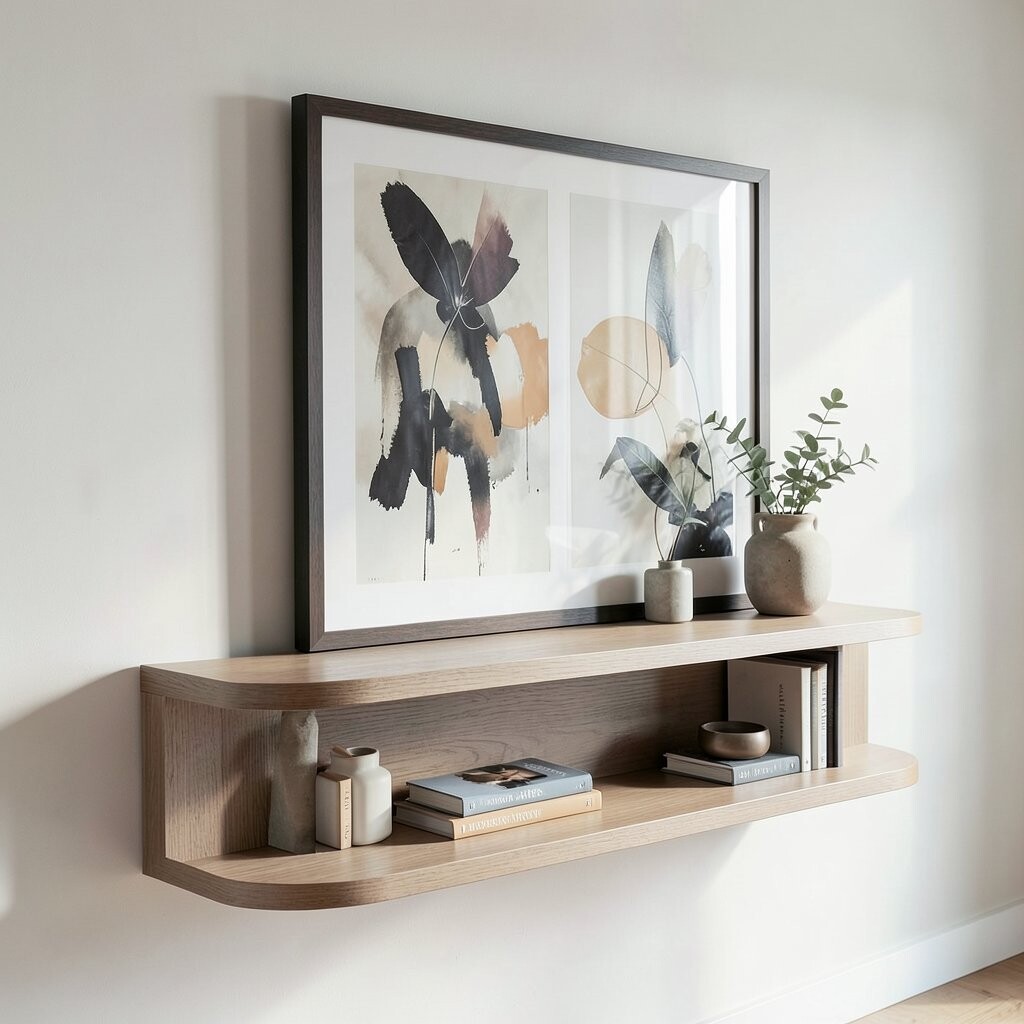
A Curved Shelf for Soft Style Under a Straight Frame Curved floating shelves add a gentle, friendly vibe under artwork with sharp edges. Picture a rounded wooden shelf that makes the wall feel less rigid and more welcoming.
This is a uniqueness win because it breaks the “boxy” feeling that many walls have. The benefit is softer lines, plus it frames decor like small plants or a curved ceramic piece.
For tips, keep your decor simple on a curved shelf, since the shape already adds attention. Consider a small plant in a rounded pot to echo the shelf line.
-
6. Create a Minimal Shelf + Tray Pair
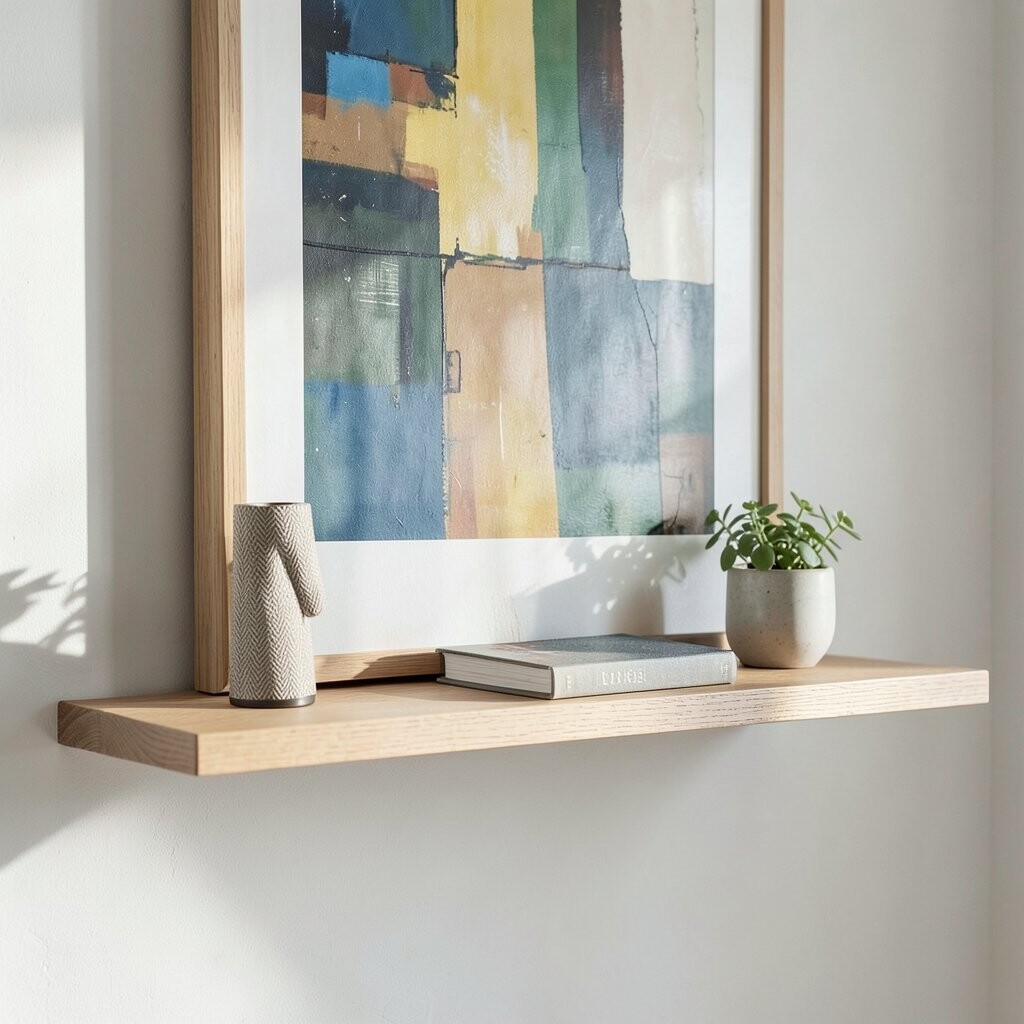
Create a Minimal Shelf + Tray Pair A floating shelf becomes much easier to style when you add one tray. Think of a light wood shelf holding a dark ceramic tray, with a single candle and a couple of small accents.
This approach is helpful because the tray acts like a boundary for your items. The benefit is less visual mess, so your wall stays neat even when you change decor.
To personalize, choose a tray color that echoes the artwork, like using the same warm tones or cool shadows. For cost, you can control spending by buying a mid-size shelf and reusing items you already own.
A current trend is “layered minimalism,” where one or two items look intentional instead of packed. Leave a bit of empty shelf space so the decor has room to be seen.
-
7. Put a Plant Shelf Under Artwork for Fresh Energy
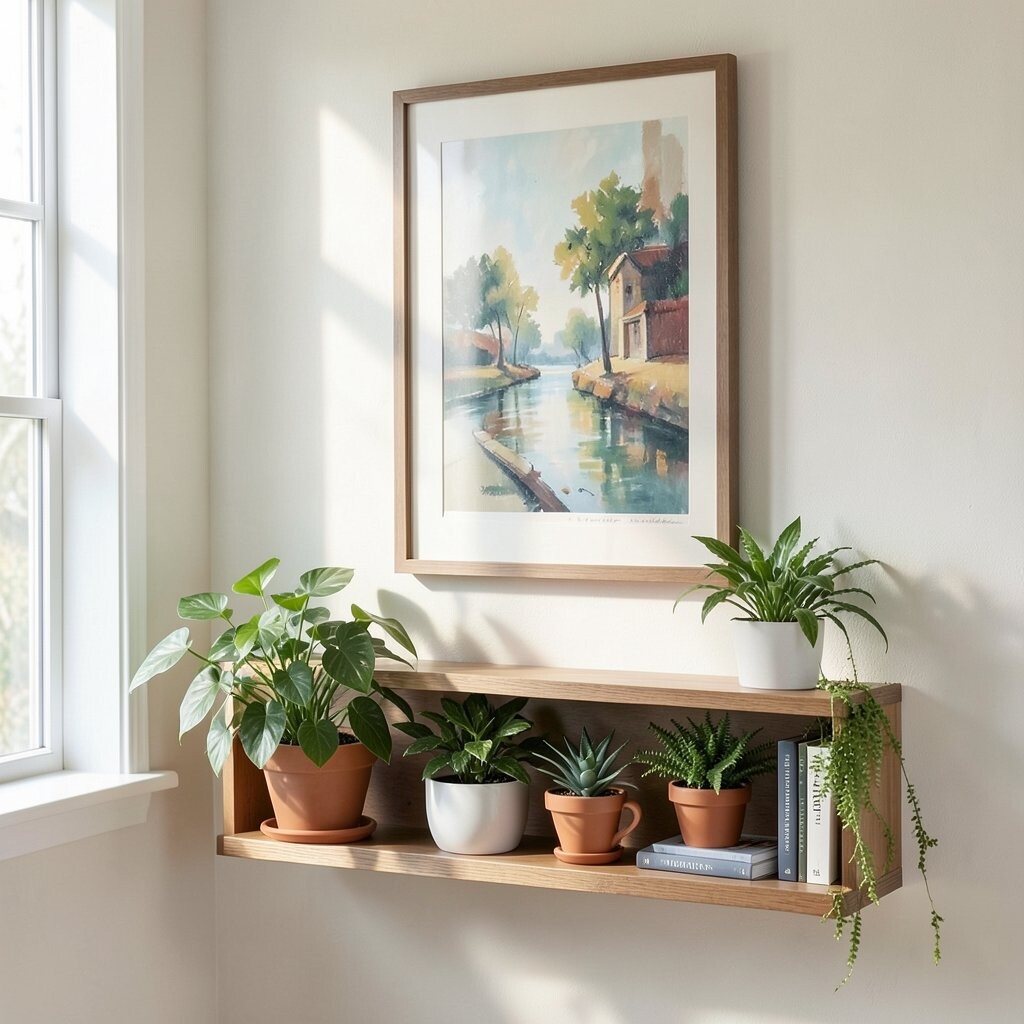
Put a Plant Shelf Under Artwork for Fresh Energy Adding a floating shelf for plants below artwork makes your wall feel alive. Imagine a pothos trailing down slightly, or a small pot centered under the frame like a little spotlight.
Plants bring a calm vibe and help the space feel more natural. The benefit is that you get beauty and a sense of care, plus your decor changes as the plant grows.
For personalization, match the plant pot style to your room—matte black for modern spaces, or textured clay for a cozy look. Cost considerations are easy because you can start with one low-cost plant cutting.
To keep it thriving, choose the right light for your plant, especially if the artwork area blocks sunlight. Consider turning the shelf pot occasionally so the plant grows evenly.
-
8. Style With a Runner Shelf That Mirrors the Artwork Width
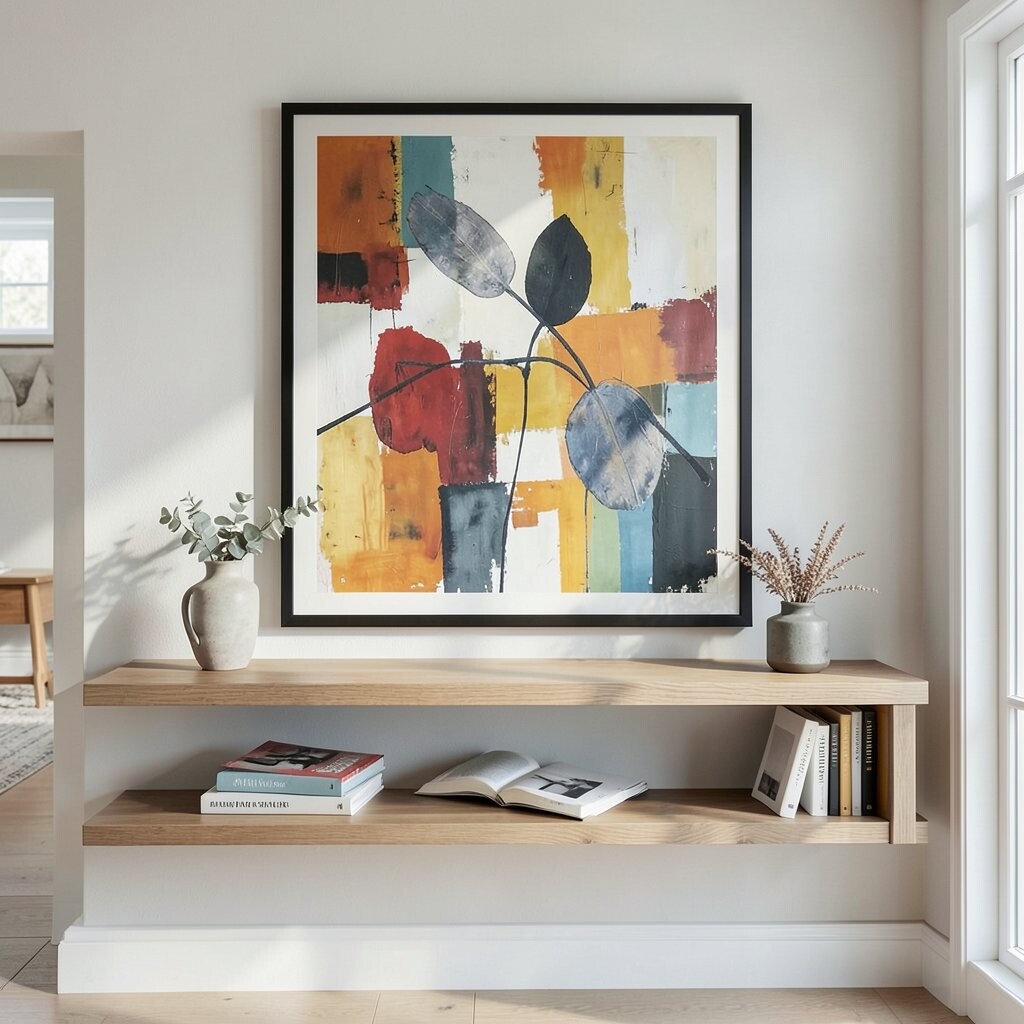
Style With a Runner Shelf That Mirrors the Artwork Width A longer floating shelf directly under the artwork can make the whole wall look “finished.” Picture it like a visual bridge, spanning the same width so the frame feels anchored.
This is great for larger artwork, because it balances size. The benefit is that you can style multiple pieces in an orderly row, instead of cramming everything into a small space.
For uniqueness, vary heights using one tall object, a medium piece, and a low cluster. Add a small vase on one side and a pair of small candles on the other for a styled symmetry.
If cost is a concern, measure first and choose a shelf length that fits your budget. A custom long shelf can be pricier, but many stores have popular sizes that fit common frames.
-
9. Use Shelf Panels as a Color Block Accent
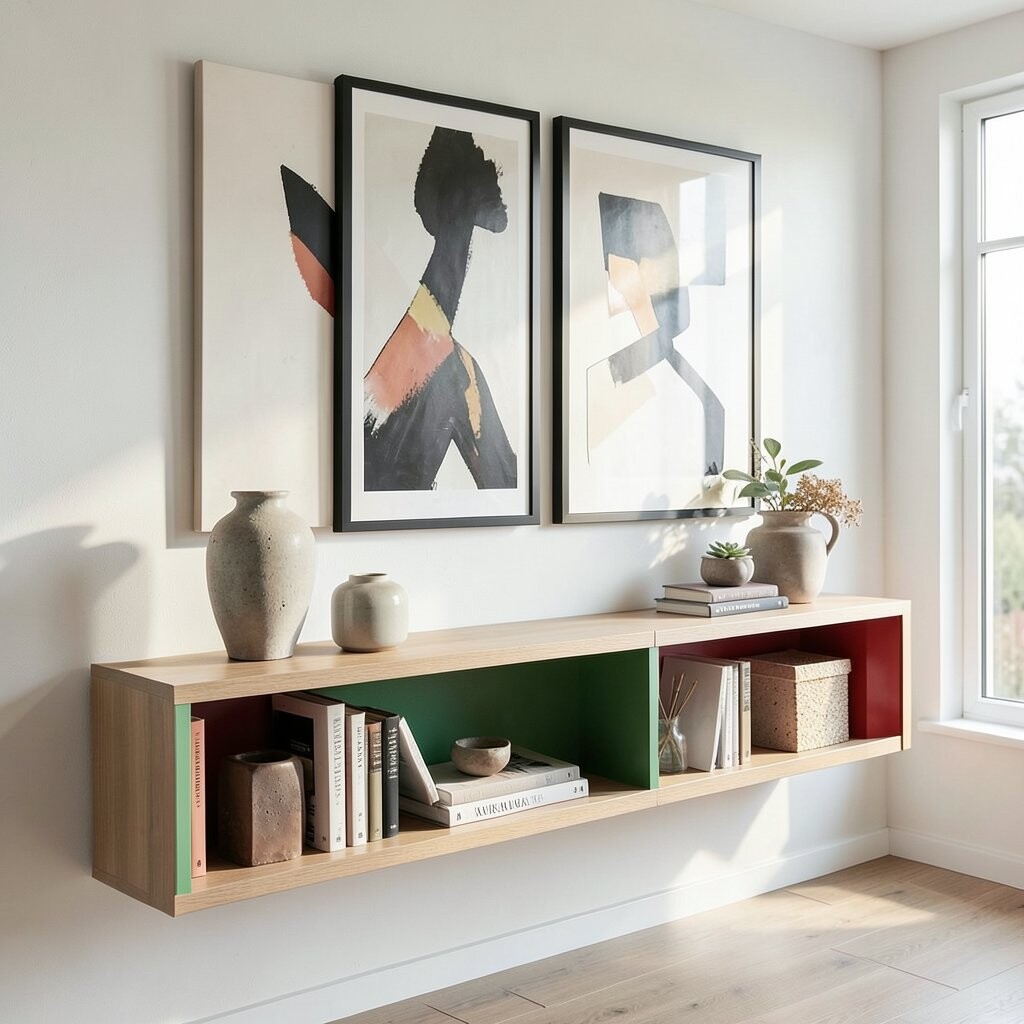
Use Shelf Panels as a Color Block Accent If you want a bold look without heavy decor, paint or stain your floating shelves in an accent color. Imagine a shelf in deep green or warm terracotta beneath neutral artwork.
Color-block shelving is unique because it adds design energy even when your objects are simple. The benefit is that your wall feels curated, not empty, even on days you don’t change decor.
To personalize, pick a shelf shade that appears in the artwork, even if it’s subtle. For cost, painting is often cheaper than buying new shelves, and it can be done with basic tools.
-
10. Floating Shelves for Photo Ornaments and Small Keepsakes
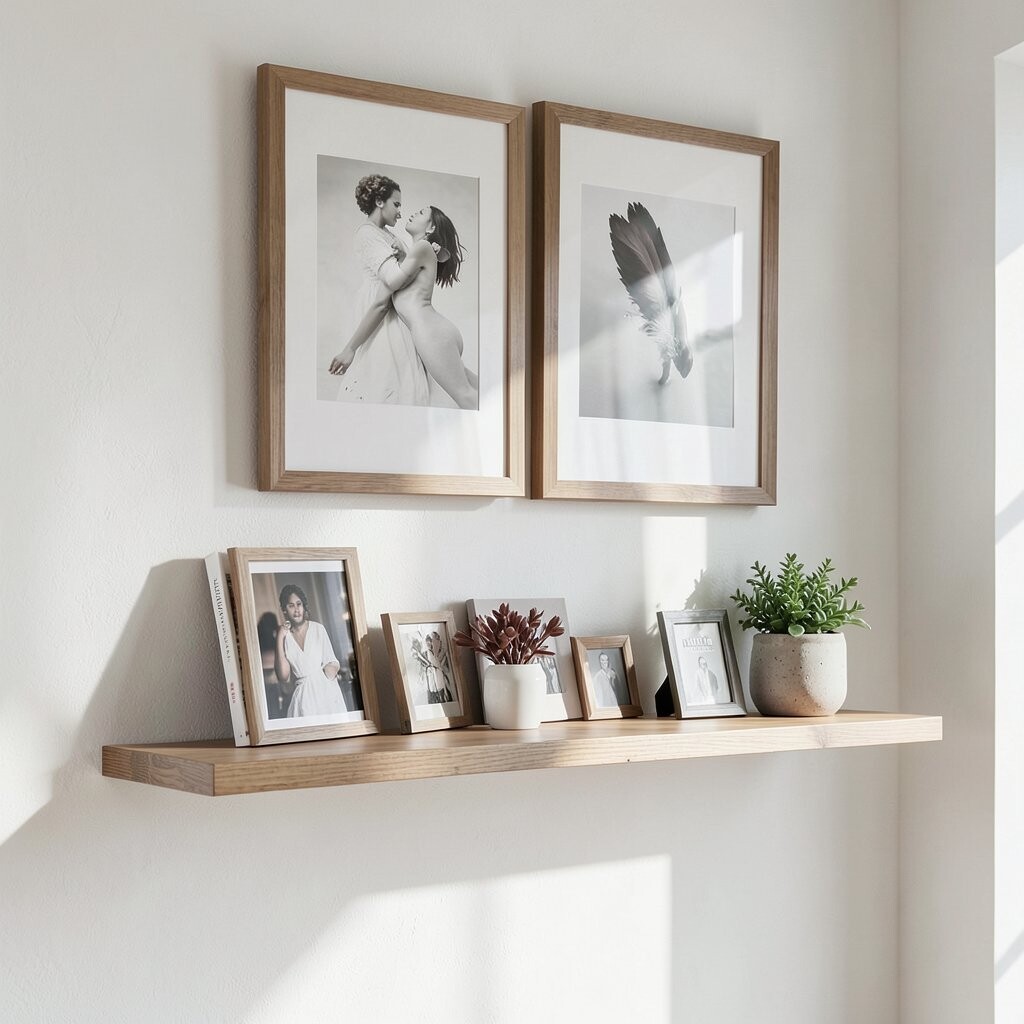
Floating Shelves for Photo Ornaments and Small Keepsakes Small framed photos and keepsakes look amazing on floating shelves under artwork. Picture a mini lineup of tiny frames, each spaced evenly, like a gentle family timeline.
This idea is meaningful and unique because it lets you display personal stories in a tidy way. The benefit is easy swapping, so you can update photos without rehanging nails everywhere.
For personalization, coordinate frame colors with the artwork frame, like matching black metal or natural wood. Cost considerations are flexible because you can use budget frames and still get a premium look.
Keep spacing consistent by using a simple guide or even masking tape marks before mounting. Also, place lighter items on the shelf if the wall stud setup is limited.
-
11. Floating Shelf With Texture: Rattan, Stone, or Woven Baskets
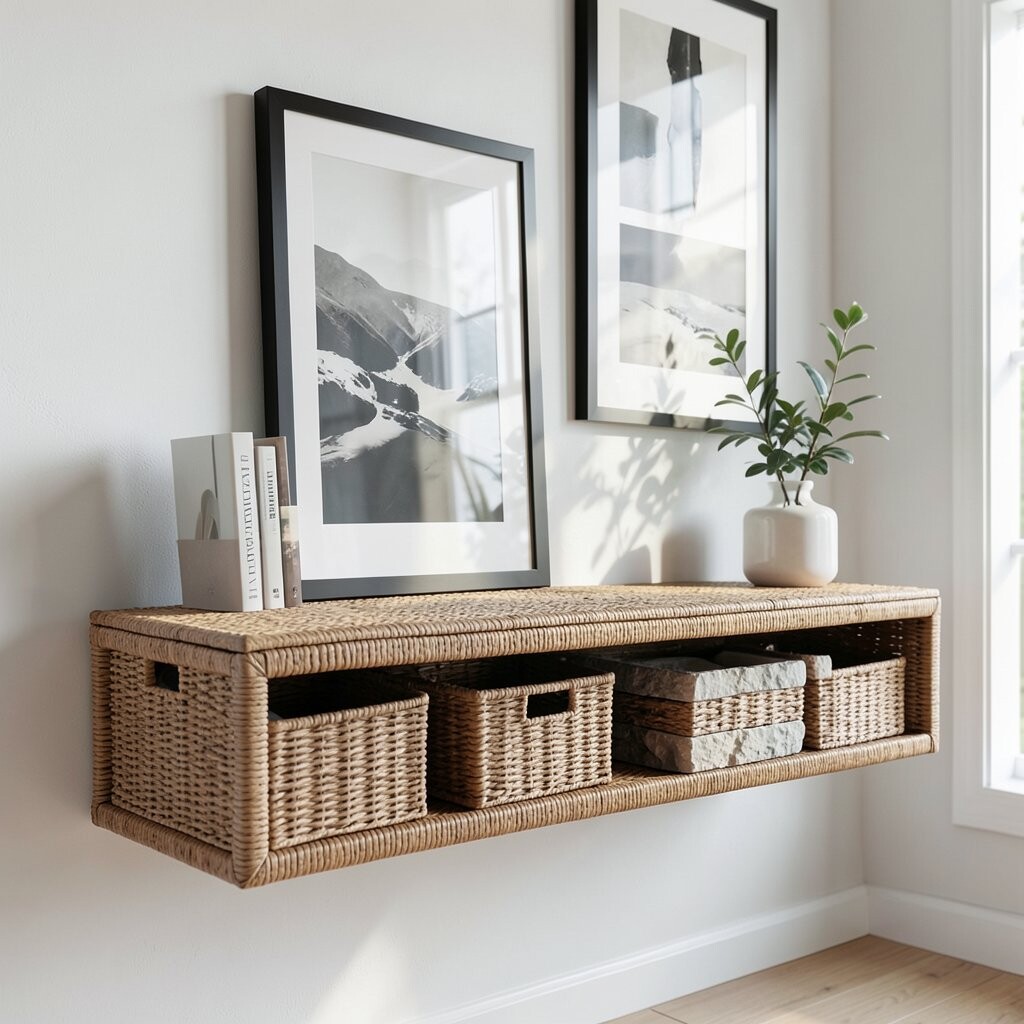
Floating Shelf With Texture: Rattan, Stone, or Woven Baskets Texture adds depth, and a shelf below artwork is perfect for it. Imagine a simple shelf holding a woven basket or a small stone bowl that catches light.
This is unique because textures feel “layered,” even when decor items are few. The benefit is visual warmth, especially in rooms with smooth walls and clean furniture.
To personalize, pick one texture to repeat across items, like woven plus a rattan tray. For cost, focus on a single basket or bowl as the hero item, then keep the rest simple.
Current trends favor natural materials and mixed textures, especially in calm, earthy interiors. A shelf that supports natural textures can blend modern and cozy without trying too hard.
-
12. Create a Mini Sculpture Shelf With Curated Objects
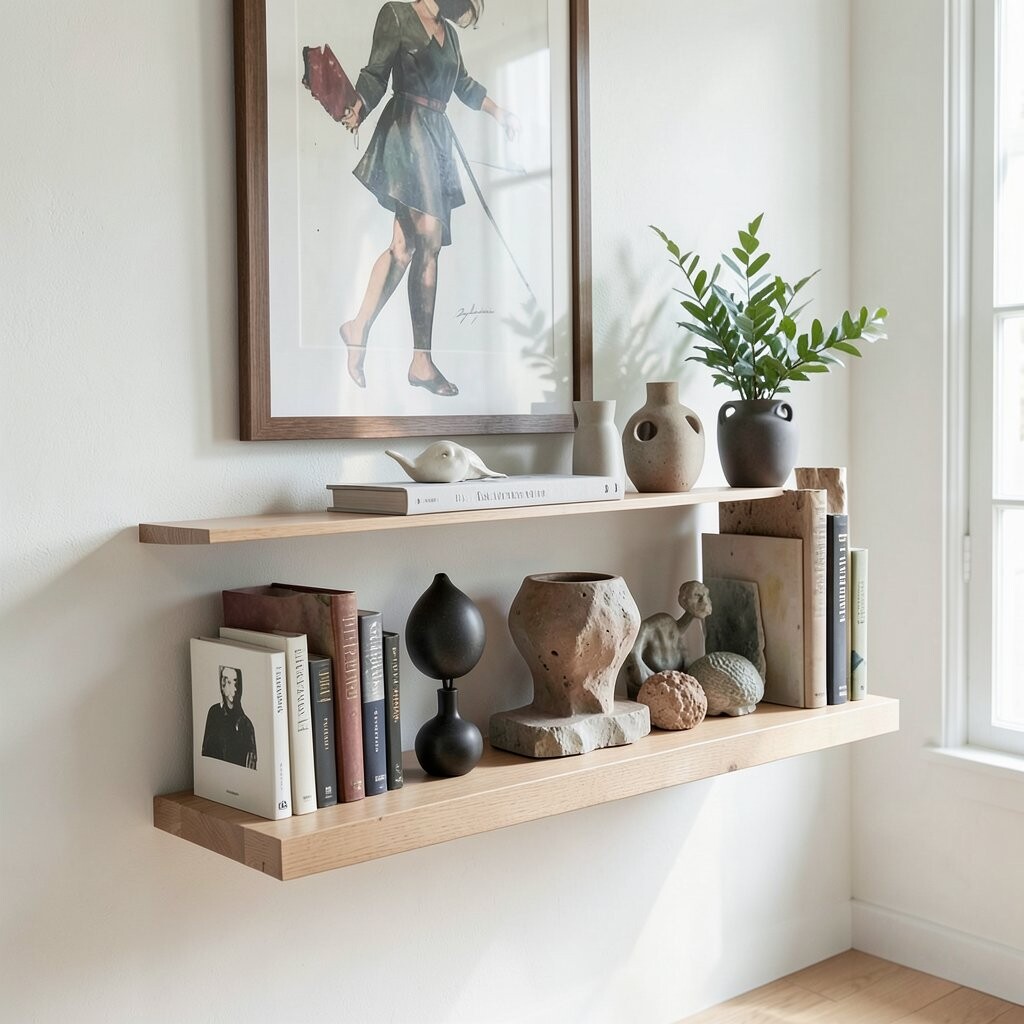
Create a Mini Sculpture Shelf With Curated Objects A sculpture shelf under artwork turns the area into a tiny art corner. Picture one ceramic figure, a small abstract object, and a smooth stone arranged like a calm display.
This approach is unique because it treats the shelf like a museum space. The benefit is that your wall looks intentional, and the objects feel like part of the artwork story.
For personalization, choose pieces you genuinely love, like a souvenir from a trip or a handmade item from a local market. Cost considerations vary, so set a small budget for one standout object and use cheaper fillers like candles or books for balance.
Use a rule of one hero object and two supporting pieces so it stays stylish. If you change decor often, photograph your setup so you can recreate it later.
-
13. Two-Shelf “Ladder Look” With Different Heights
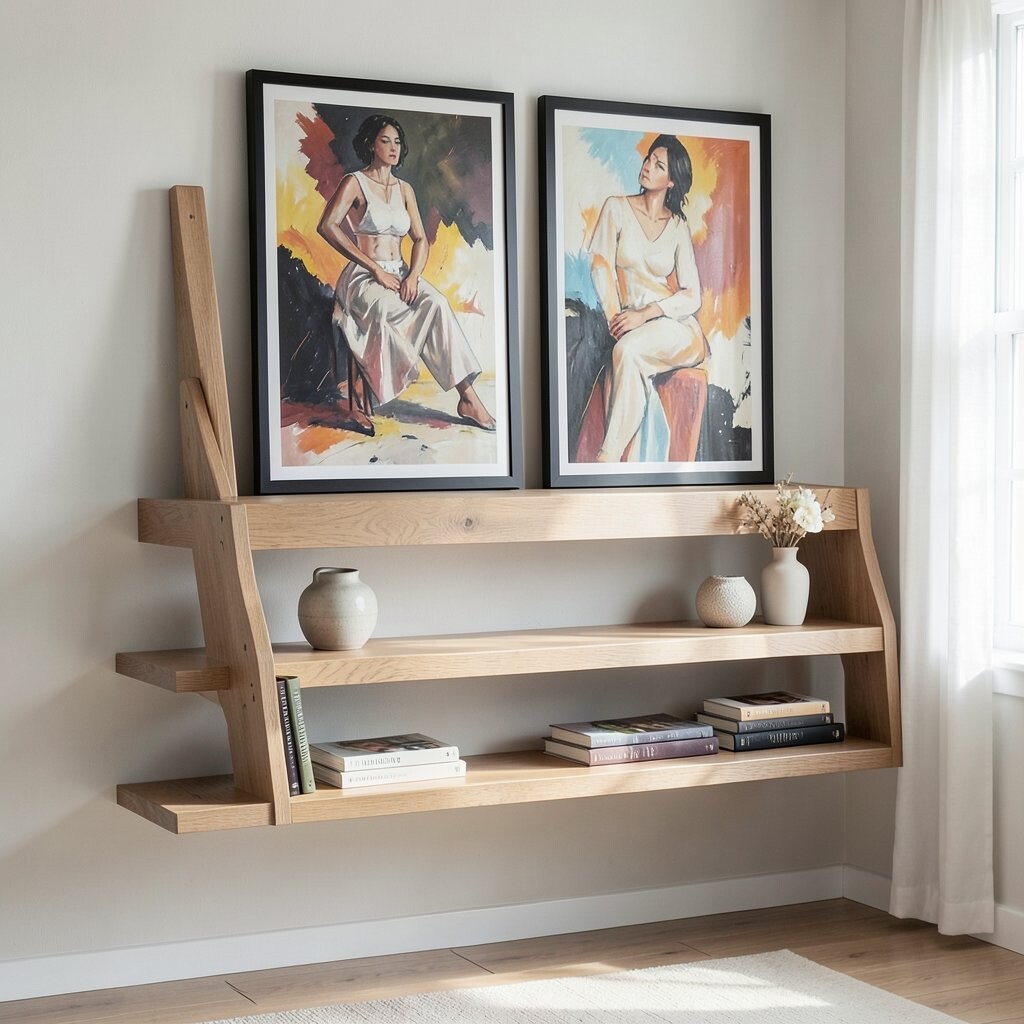
Two-Shelf “Ladder Look” With Different Heights Instead of stacking shelves evenly, make them step up like a ladder. Visualize one shelf a bit higher on the left and another lower on the right, creating a playful diagonal effect.
This design is unique because it adds motion and makes the wall feel dynamic. The benefit is a fresh look that doesn’t feel like every other matching shelf set.
To personalize, place a small object on the higher shelf and a taller plant or vase on the lower shelf so the arrangement feels balanced. For cost, the main expense is still the shelf units, but you may need extra planning to align them neatly.
Tip: measure carefully so both shelves look level even if the heights differ. If you can, use a level tool and a measuring tape for consistent spacing across the wall.
-
14. Floating Shelf With Hooks Under the Artwork (Decor + Function)
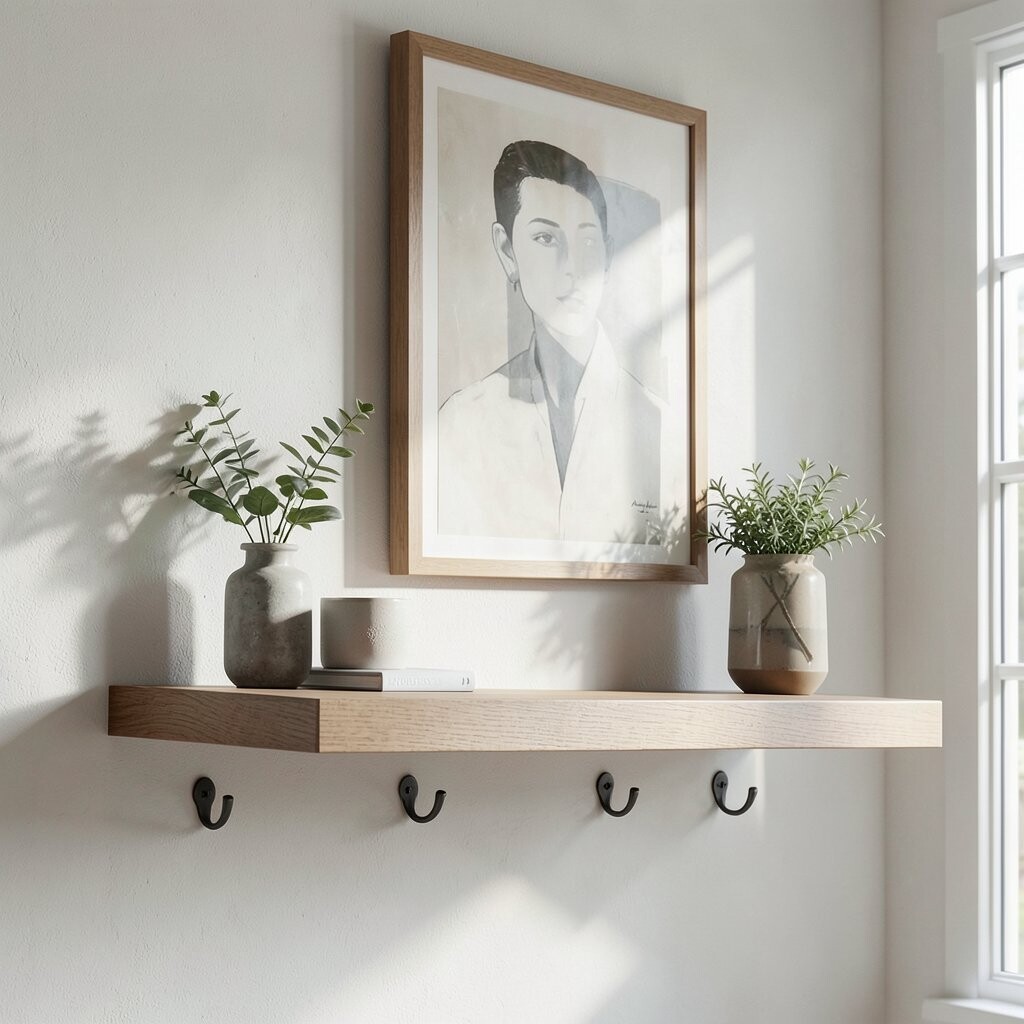
Floating Shelf With Hooks Under the Artwork (Decor + Function) Who says shelves can’t do double duty? Add a floating shelf below artwork and include small hooks beneath or along the side for practical decor items.
This is unique because it mixes function with style, like hanging keys, a lightweight scarf, or small wall baskets. The benefit is that you create a tidy drop zone while keeping the look attractive.
For personalization, match the hook finish to your frame hardware or light fixtures, like black metal or brushed brass. For cost, this can stay affordable because hooks are usually inexpensive compared to adding more furniture.
Choose hooks that hold lightweight items so you don’t overload the shelf mounting. Also, keep the most functional items low and the decorative items centered for a balanced look.
-
15. The Floating Shelf as a Candle and Glass Display
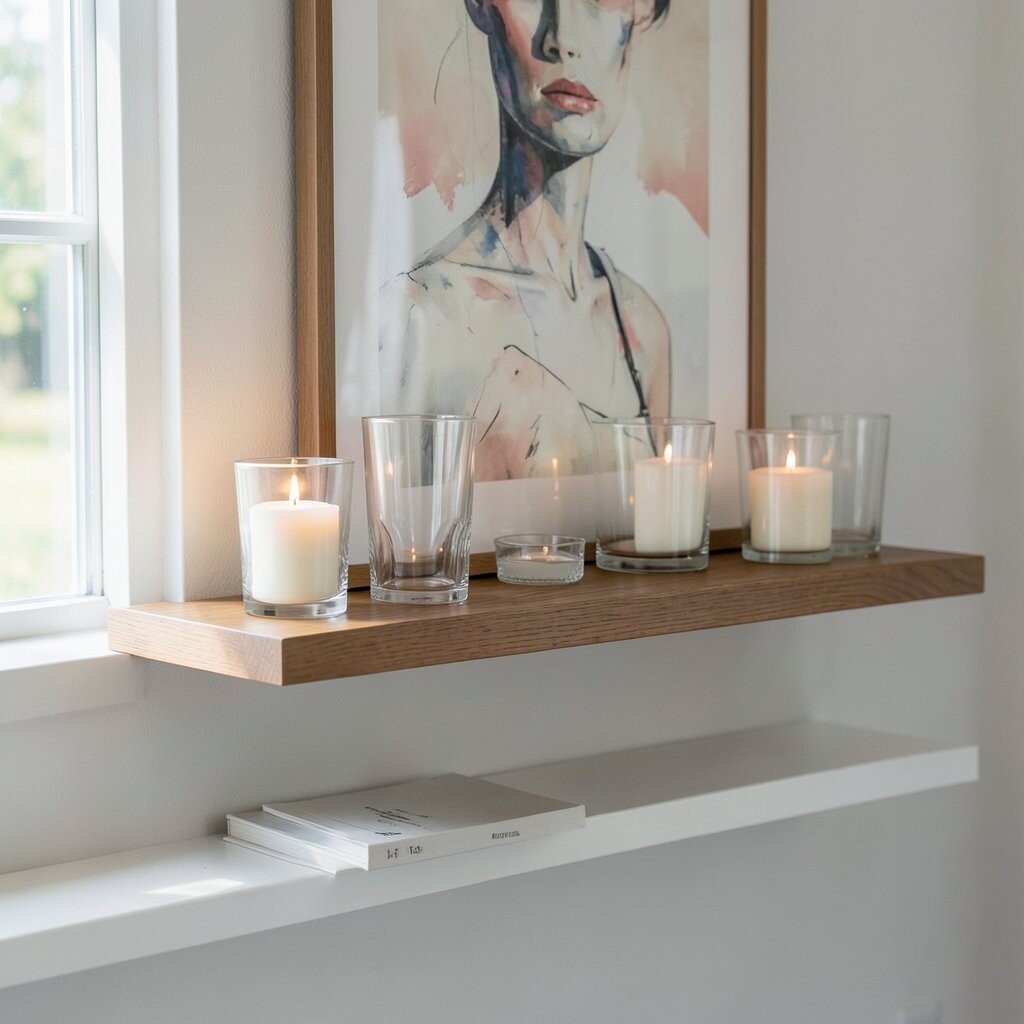
The Floating Shelf as a Candle and Glass Display Candles and glassware create instant “evening vibes” under your wall art. Imagine a shelf styled with a glass jar candle, a small lantern, and a couple of matching holders.
This idea is unique because it feels like you planned a mood, not just set items down. The benefit is that you can switch candle colors to match holidays or your artwork season theme.
To personalize, choose colors that pick up details from the artwork, like a muted blue, warm gold, or soft cream. For cost, candles and holders can range widely, so start with one good set and add pieces slowly.
-
16. Use a Shelf to Break Up Busy Walls With Order
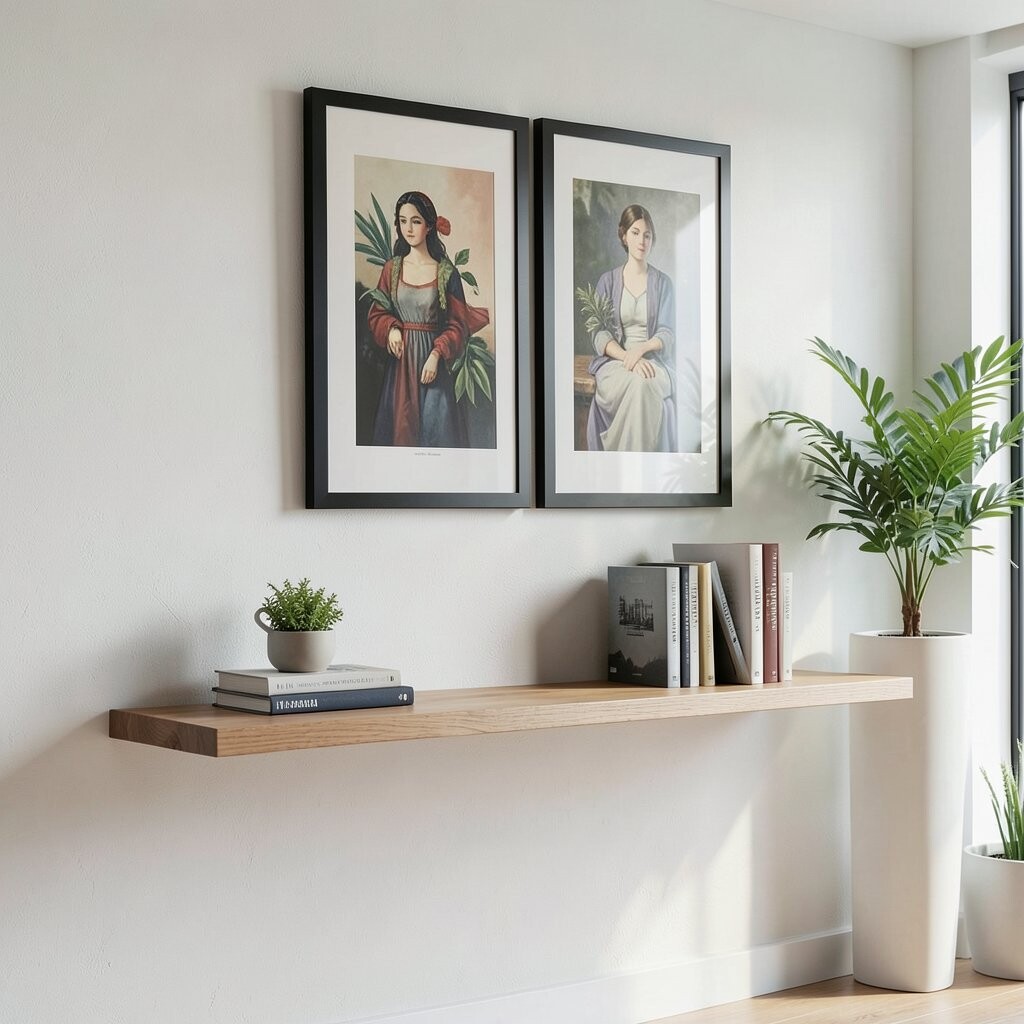
Use a Shelf to Break Up Busy Walls With Order If your wall has patterned wallpaper or many design elements, shelves can bring order. Think of a simple floating shelf that creates a horizontal line and makes everything underneath feel grouped.
This is unique because it’s not only about showing decor—it’s about creating calm. The benefit is that your shelf becomes an anchor, so your eyes know where to land.
For personalization, use matching containers like a clear box, a ceramic canister, or a fabric-lined bin. Cost considerations are often friendly here because storage containers can be budget finds and you can reuse them.
A current trend is “hidden styling,” where objects are partially tucked away but still add texture. On this kind of wall, shelves with bins can look neat all the time without needing daily changes.
-
17. Custom-Tone Shelf Finish to Match Your Art Frame
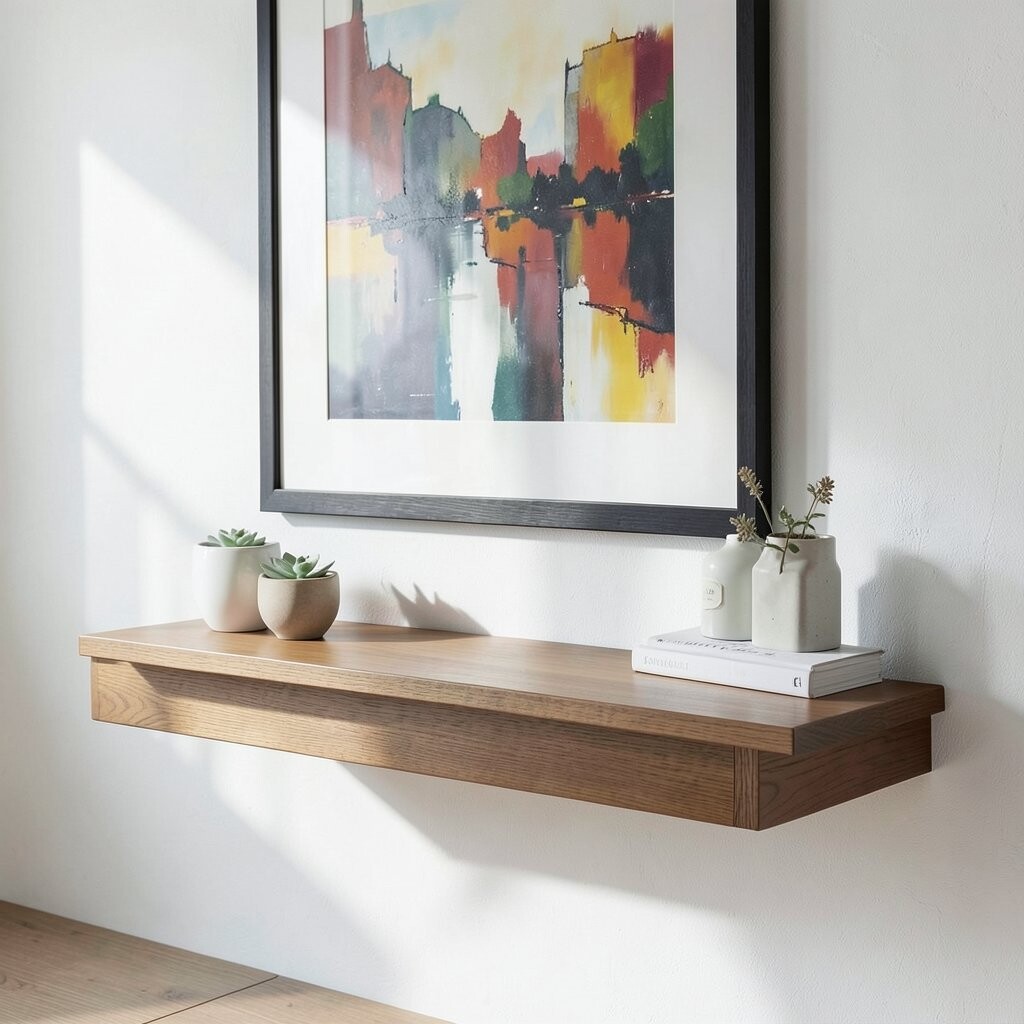
Custom-Tone Shelf Finish to Match Your Art Frame The best-looking shelves often match the artwork frame, even if the materials aren’t identical. Imagine a shelf with the same warm wood tone or the same matte black finish as the frame.
This idea is unique because it creates a cohesive story across the wall. The benefit is that your wall looks designed, and your shelf feels like it belongs with the artwork from day one.
To personalize, compare undertones in your frame—some woods lean yellow, others lean gray. For cost, refinishing a shelf you already own can be cheaper than buying brand-new matching pieces.