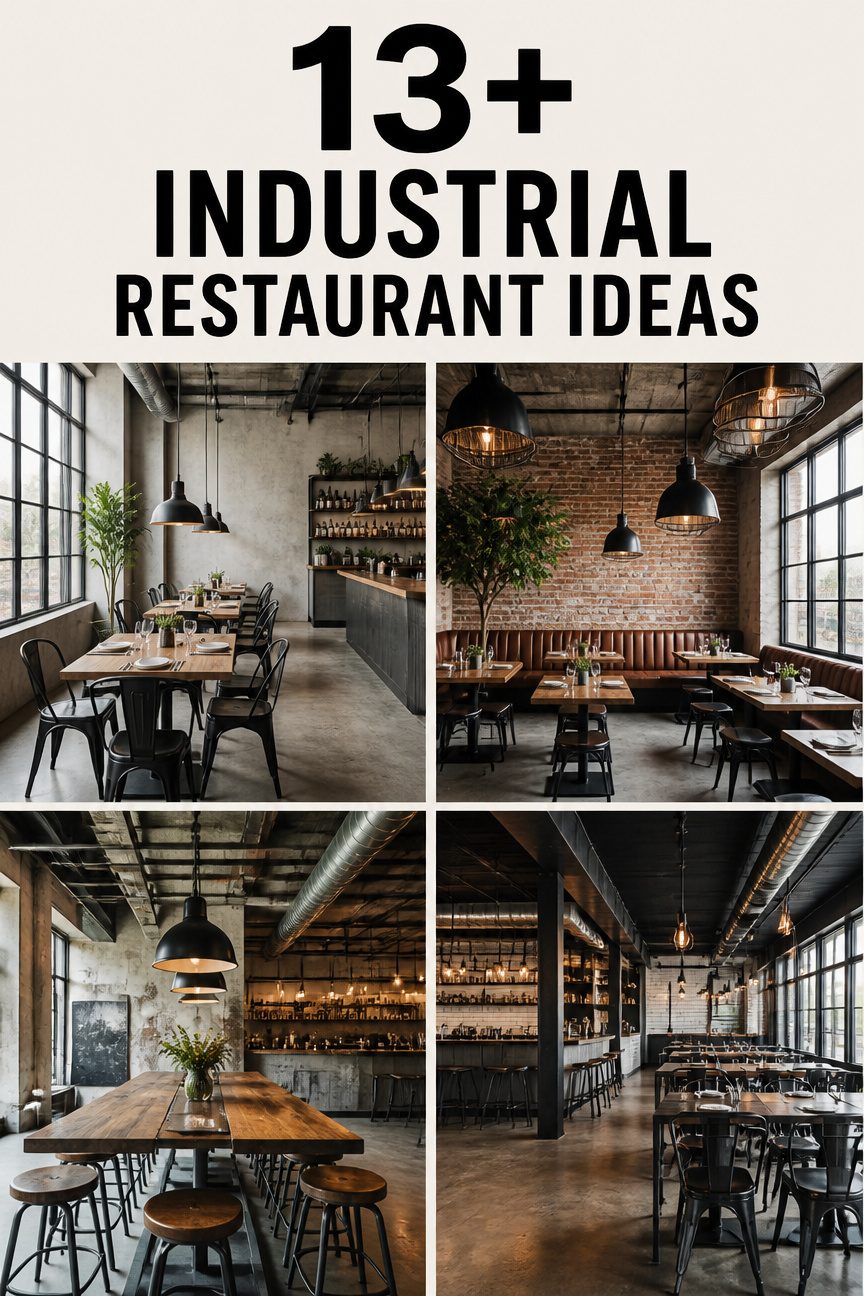
Industrial style can make a restaurant feel clean, open, and easy to use. It also gives you room to mix rough parts with soft details so the space feels warm and simple.
1. Exposed Brick Walls
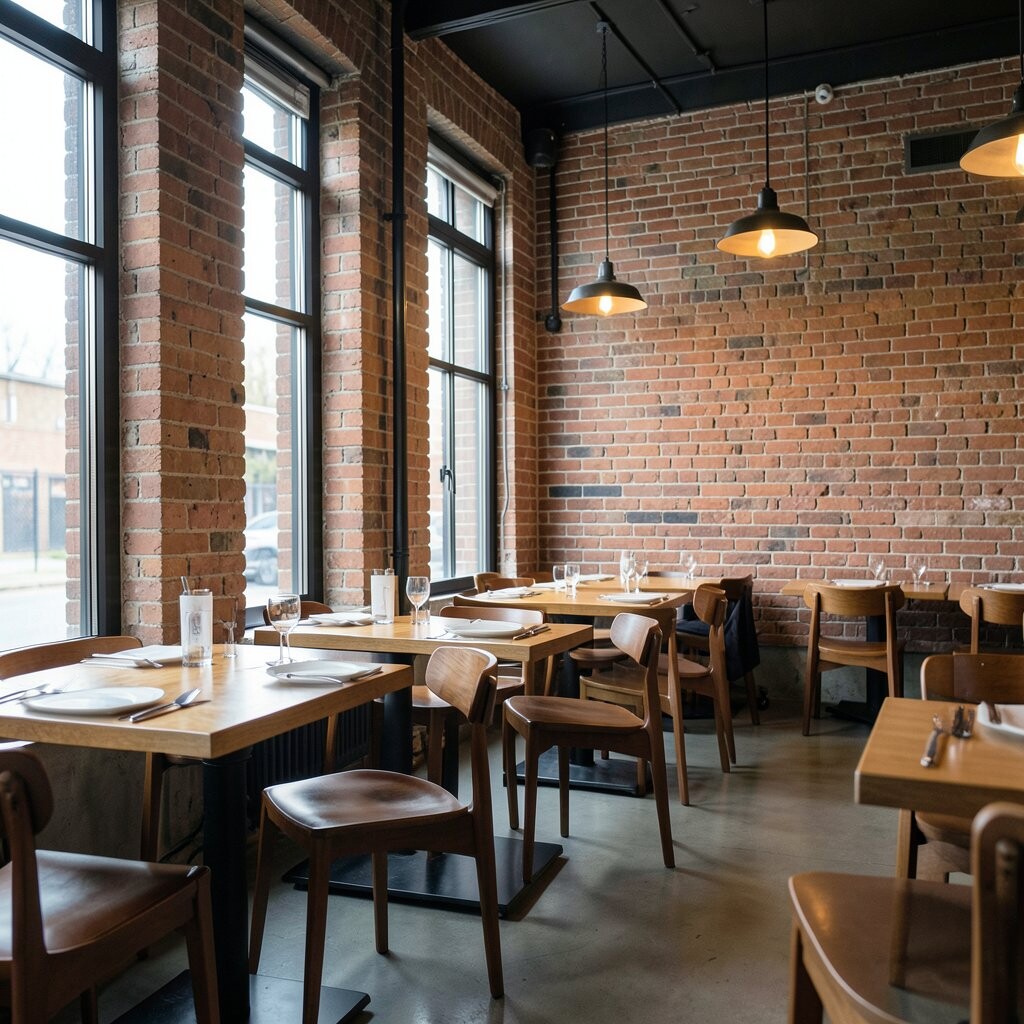
Exposed brick is one of the most known parts of an industrial restaurant. It adds texture right away and gives the room a strong, honest look without much extra work.
This style works well in both old buildings and new spaces with brick veneer. It can help cut the cost of wall finishes because you may not need much paint or paneling.
You can leave the brick in its natural color or paint it white, gray, or black for a calmer feel. Add wood tables and soft lights to keep the space from feeling too hard.
2. Metal Light Fixtures
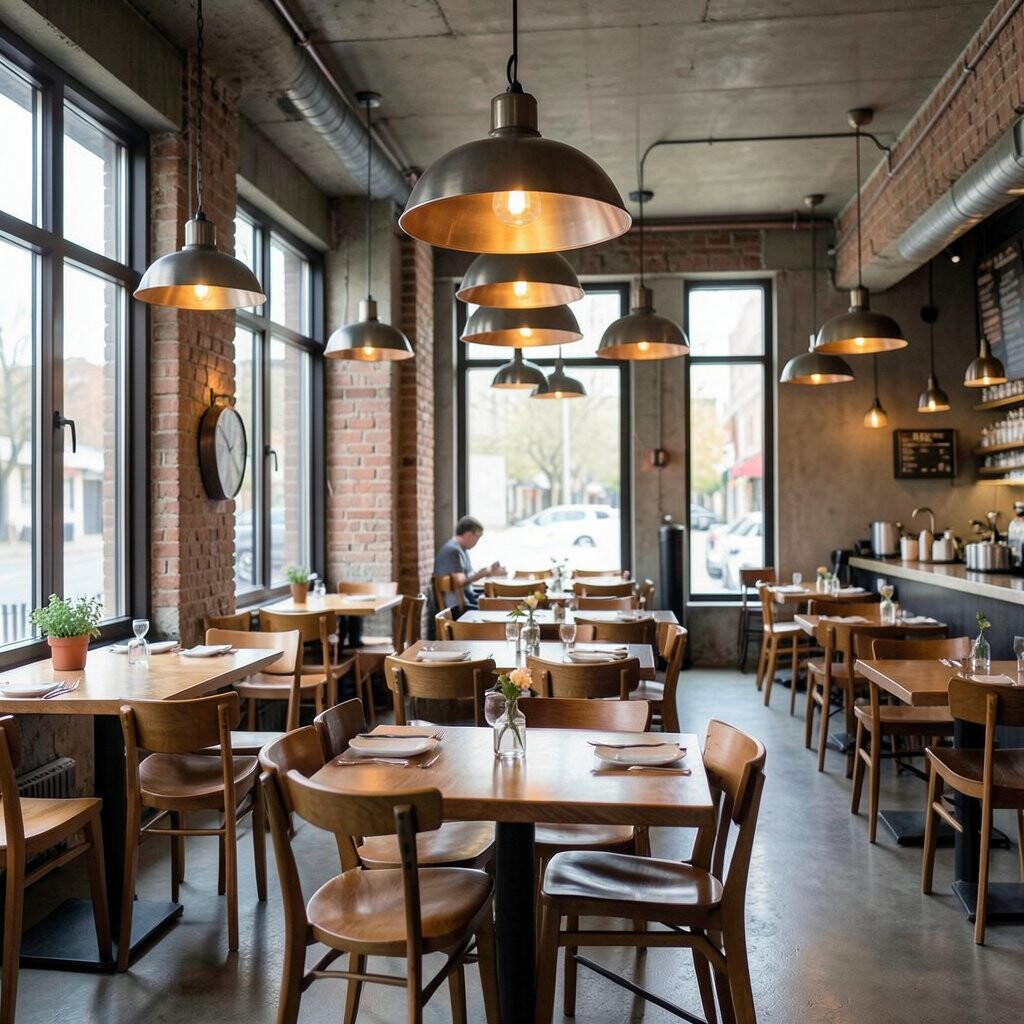
Metal lights fit industrial rooms because they look simple and tough. Black, brass, steel, or iron shades can hang over tables and make the room feel focused.
These lights also help you set the mood in a low-cost way. A few well-placed fixtures can do more than many small lights spread all over the ceiling.
Try mixing hanging lights with wall lamps for a layered look. If you want a more personal touch, choose shades with shapes that match your brand style.
3. Concrete Floors
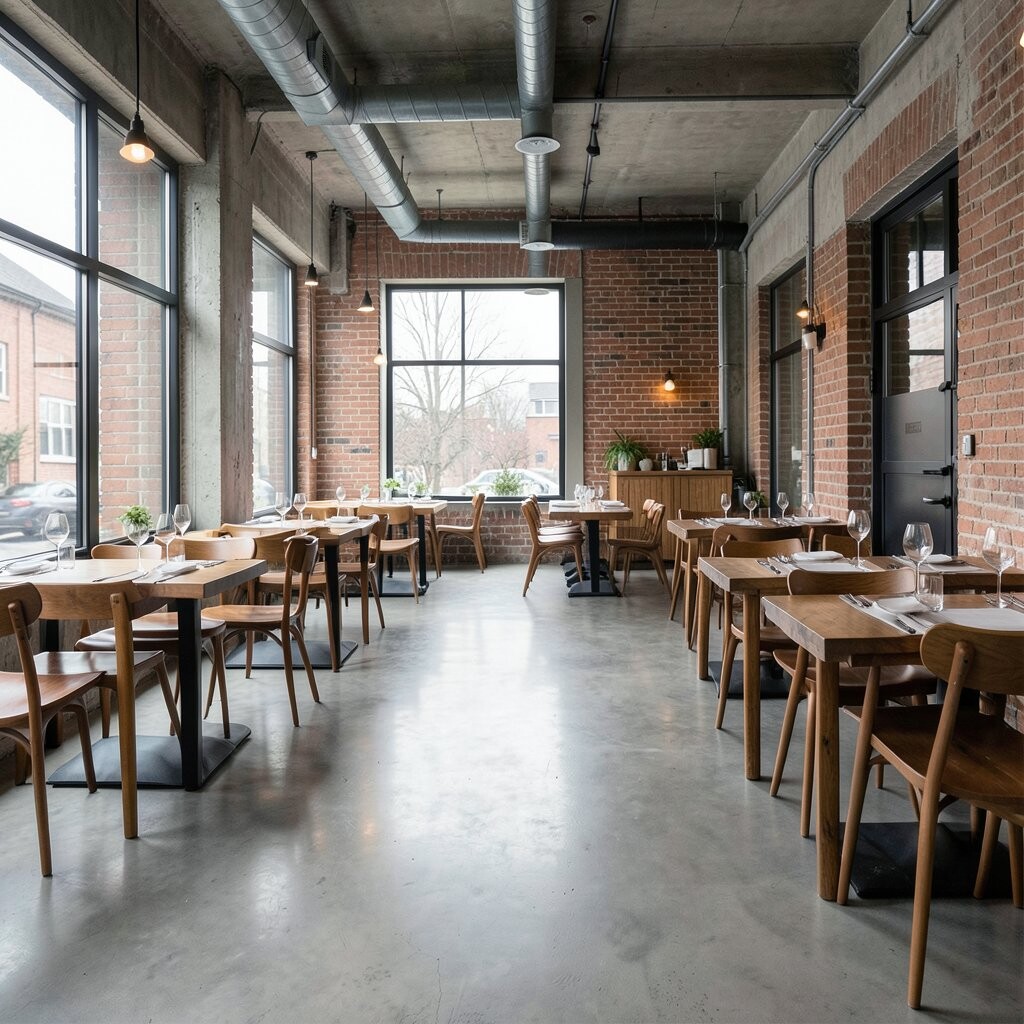
Concrete floors give a restaurant a plain and steady base. They match industrial style well and are easy to clean after a busy day.
Polished concrete can look smooth and modern, while rough concrete feels more raw and simple. It can also save money since you may not need to add tile or wood flooring.
To keep it from feeling cold, add rugs in waiting areas or use warm wood chairs. This mix helps the room feel more friendly while still looking industrial.
4. Open Ceiling Pipes
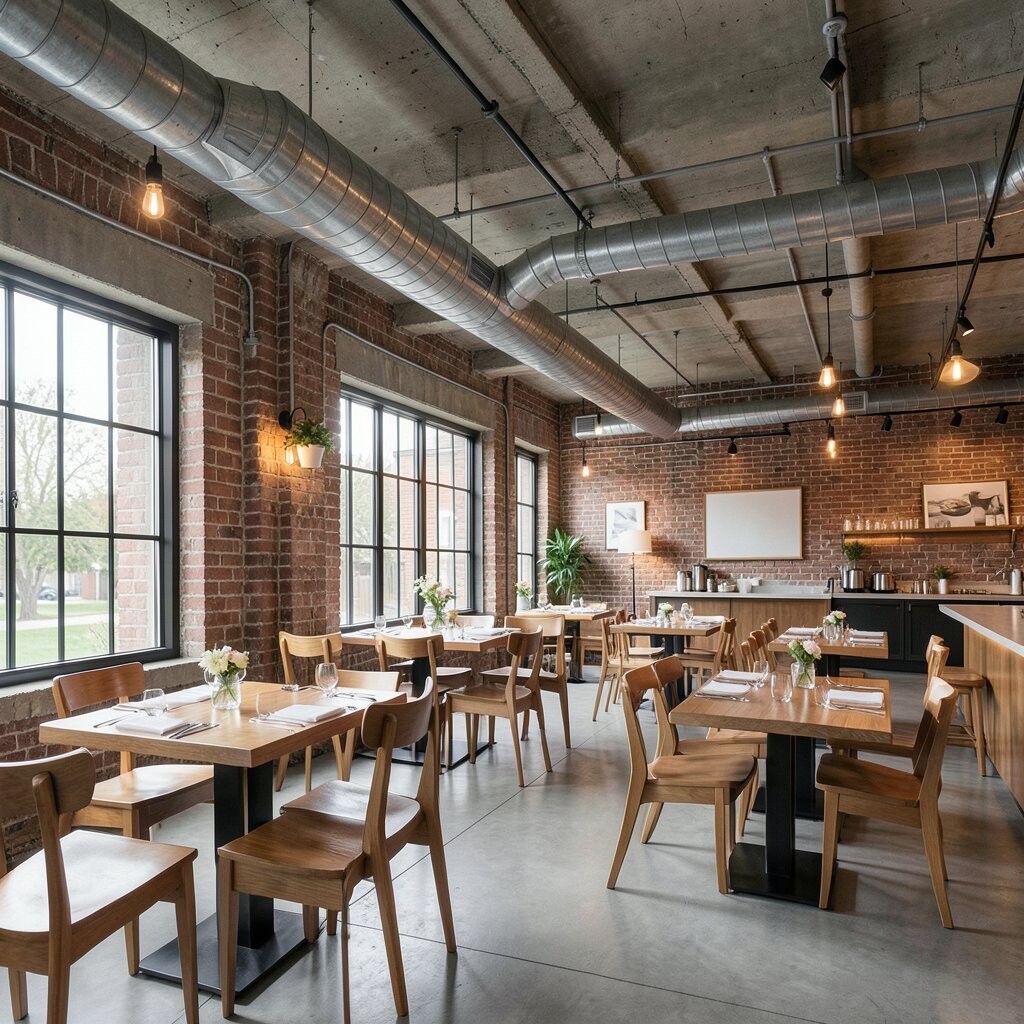
Open ceiling pipes are a clear sign of industrial design. They show the building’s bones and can make the space feel larger and more open.
This look can also help with cost because you do not need to hide every pipe and duct. Many new restaurants use this style since it feels current and easy to keep up.
Paint the ceiling dark if you want the pipes to blend in, or keep them in metal tones for a bold look. Add track lights or fans to make the ceiling part of the design.
5. Reclaimed Wood Tables

Reclaimed wood tables bring warmth into a hard-looking room. The marks, knots, and worn spots make each table feel one of a kind.
Using old wood can also be a smart budget choice if you find local sources or salvage yards. It gives the space a natural feel and helps the room look less stiff.
Pair the tables with metal chairs for a classic industrial mix. You can also stain the wood in a darker or lighter tone to match the rest of the room.
6. Factory-Style Windows
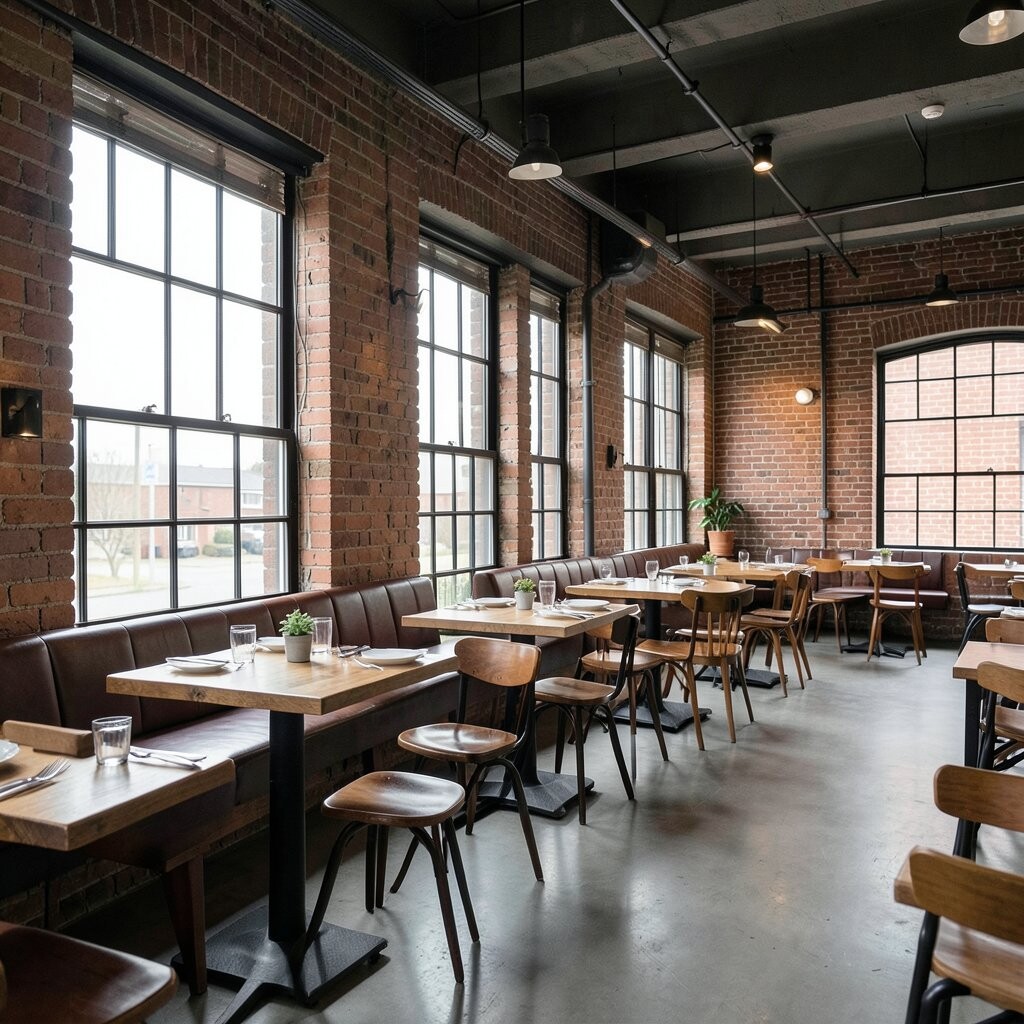
Large factory-style windows bring in daylight and make the room feel bigger. Their dark frames and grid lines fit the industrial look very well.
Natural light can help the food look better and make the dining area feel more open. It may also lower the need for strong lights during the day, which can help with energy use.
If your space does not have real factory windows, use black-framed glass doors or window panels. Add simple curtains only if you need to soften the look or block glare.
7. Mixed Metal Chairs
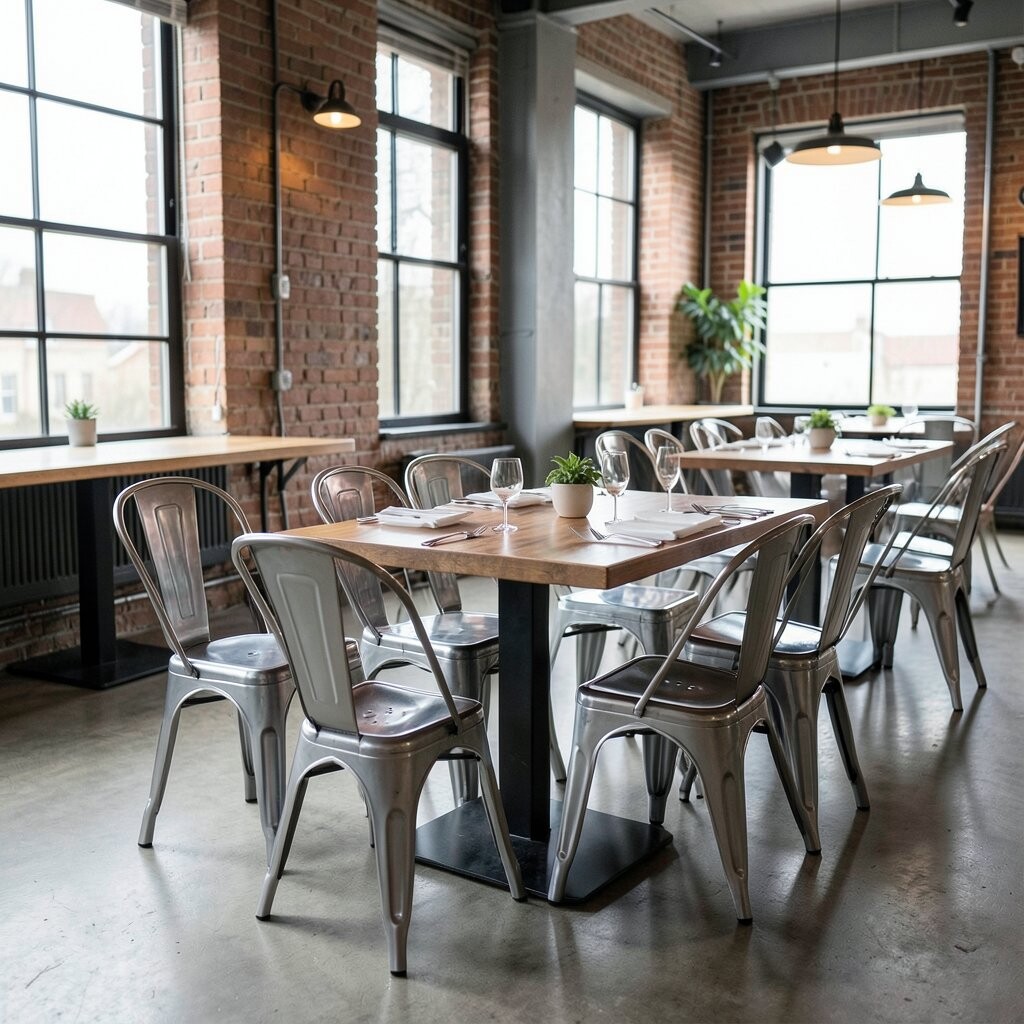
Metal chairs are a simple way to build an industrial feel. They are strong, easy to clean, and often cost less than upholstered seating.
You can use the same chair style across the room or mix a few types for a more lived-in look. Black, silver, and rust tones all work well in this kind of space.
For comfort, add small seat pads or pair the chairs with wood tables. This gives guests a better seat without losing the raw style.
8. Raw Wood and Steel Bar
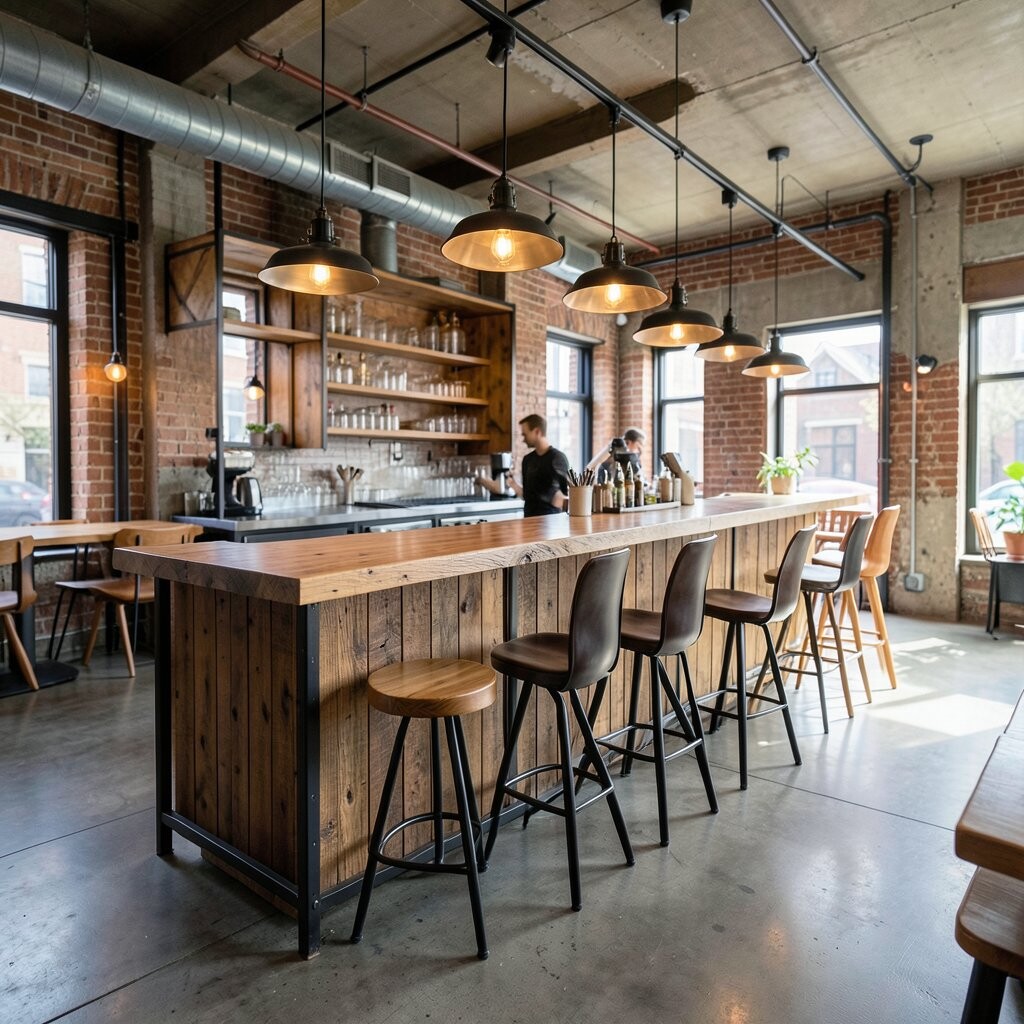
A bar made from raw wood and steel can become the main focus of the room. The mix of warm wood and cool metal feels balanced and fits industrial design well.
This setup works for both small and large restaurants because it looks simple but still stands out. It can also be made in stages, which helps if you are working with a tight budget.
Use open shelves behind the bar to show glassware, bottles, or mugs. Small details like pipe rails or welded brackets can make the bar feel more personal.
9. Open Shelving
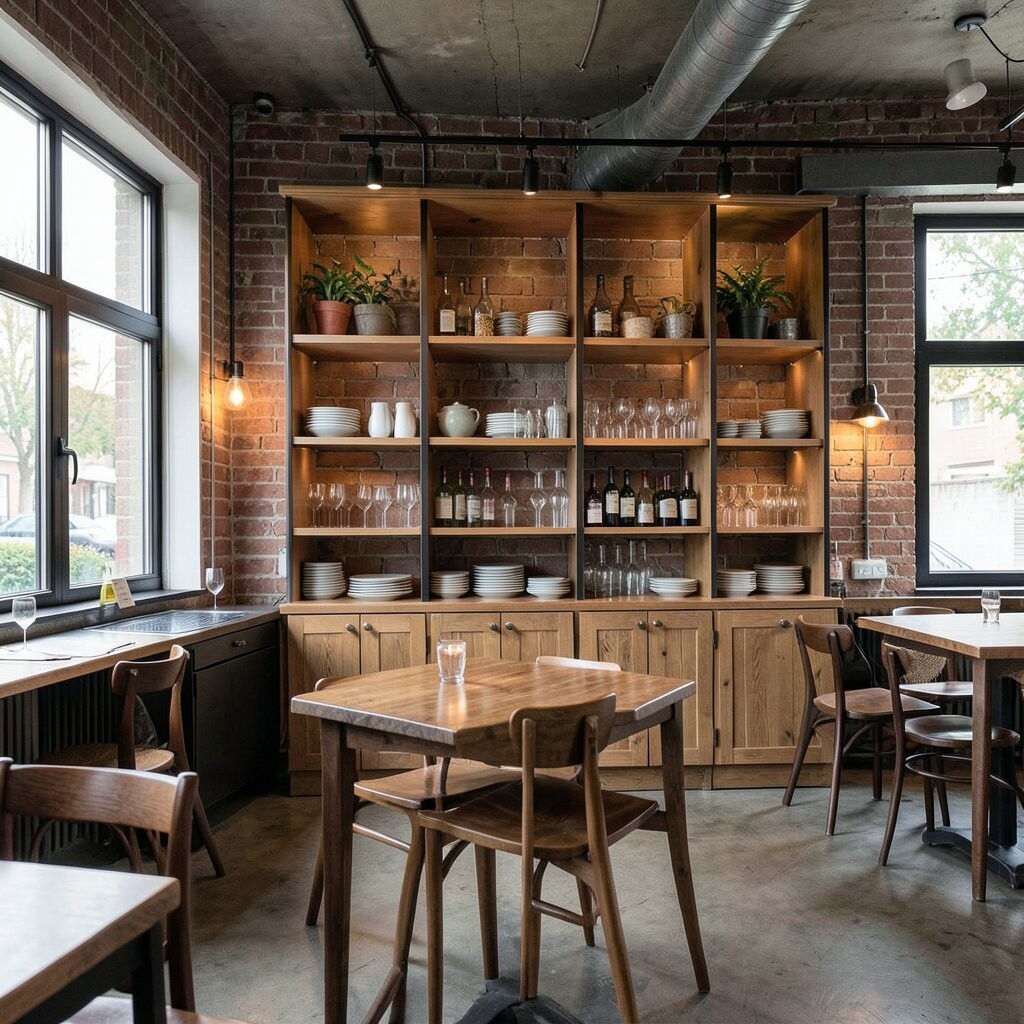
Open shelving helps keep the room light and easy to read. It also gives you a place to show plates, jars, plants, or brand items in a neat way.
This idea works well in kitchens, bars, and service areas. It can cost less than full cabinets and makes it easier for staff to reach what they need.
Keep shelves tidy so the space does not feel messy. Use a mix of metal frames and wood boards to stay close to the industrial look.
10. Dark Paint With Warm Light
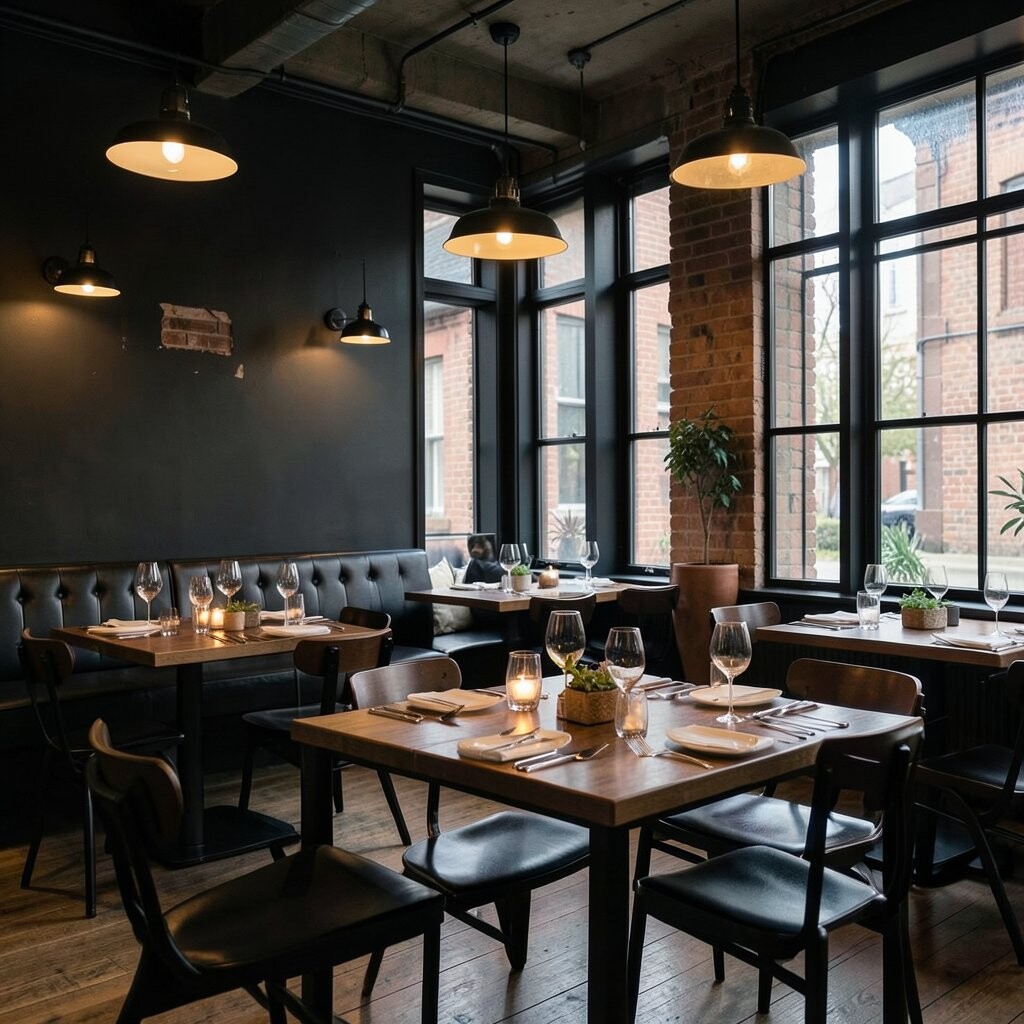
Dark paint can make an industrial restaurant feel rich and calm. Deep gray, black, or brown walls set a strong base for the rest of the room.
Warm light helps balance the dark colors and keeps the space from feeling flat. This mix can make tables, art, and food stand out more clearly.
Try painting one wall dark before doing the whole room if you want to test the look. Add candles or soft lamps in some spots to make the space feel more welcoming.
11. Vintage Signs and Wall Art
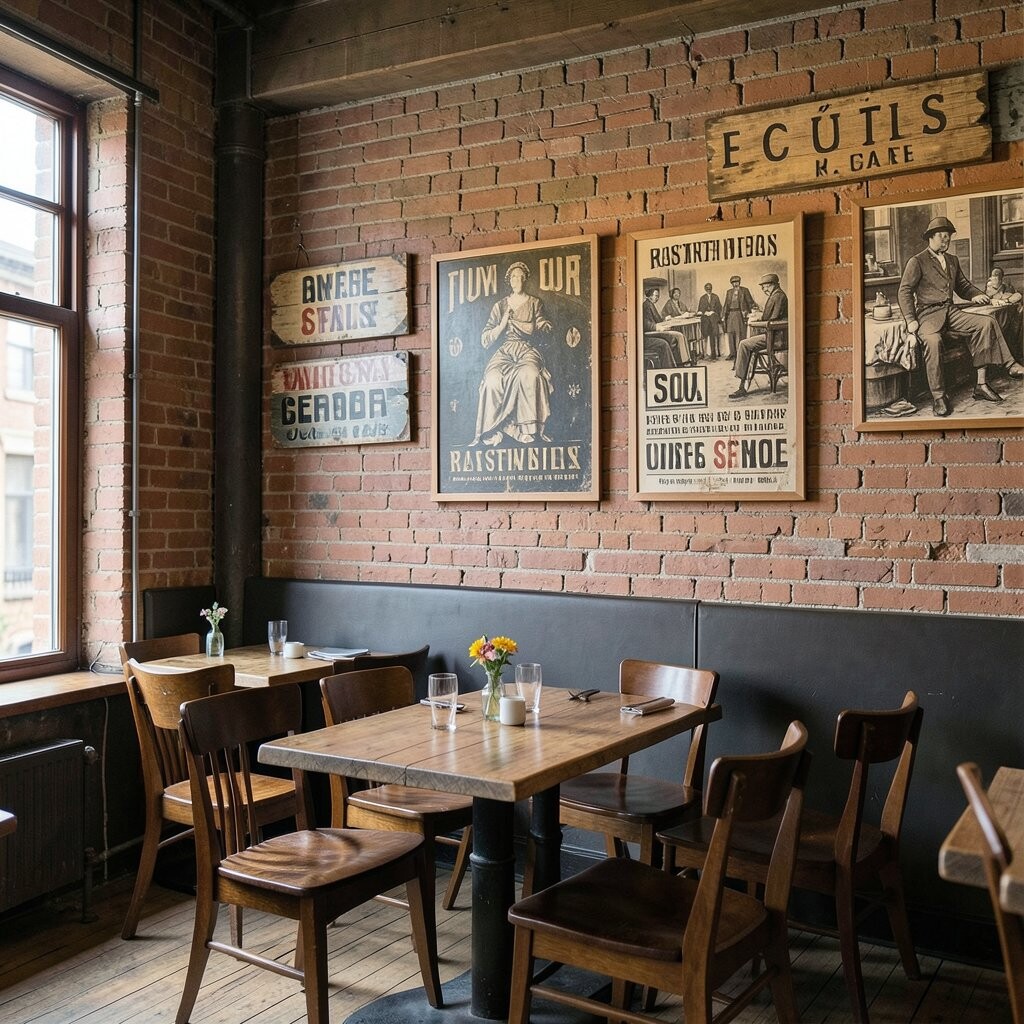
Vintage signs and wall art add character without taking up floor space. Old ads, local maps, and simple metal signs can give the room a true industrial feel.
This is a good way to make the space feel personal and tied to your area. It can also be low cost if you use prints, secondhand finds, or custom pieces made by local artists.
Keep the art simple so the walls do not feel crowded. A few larger pieces often work better than many small ones in an industrial room.
12. Pipe Frame Details
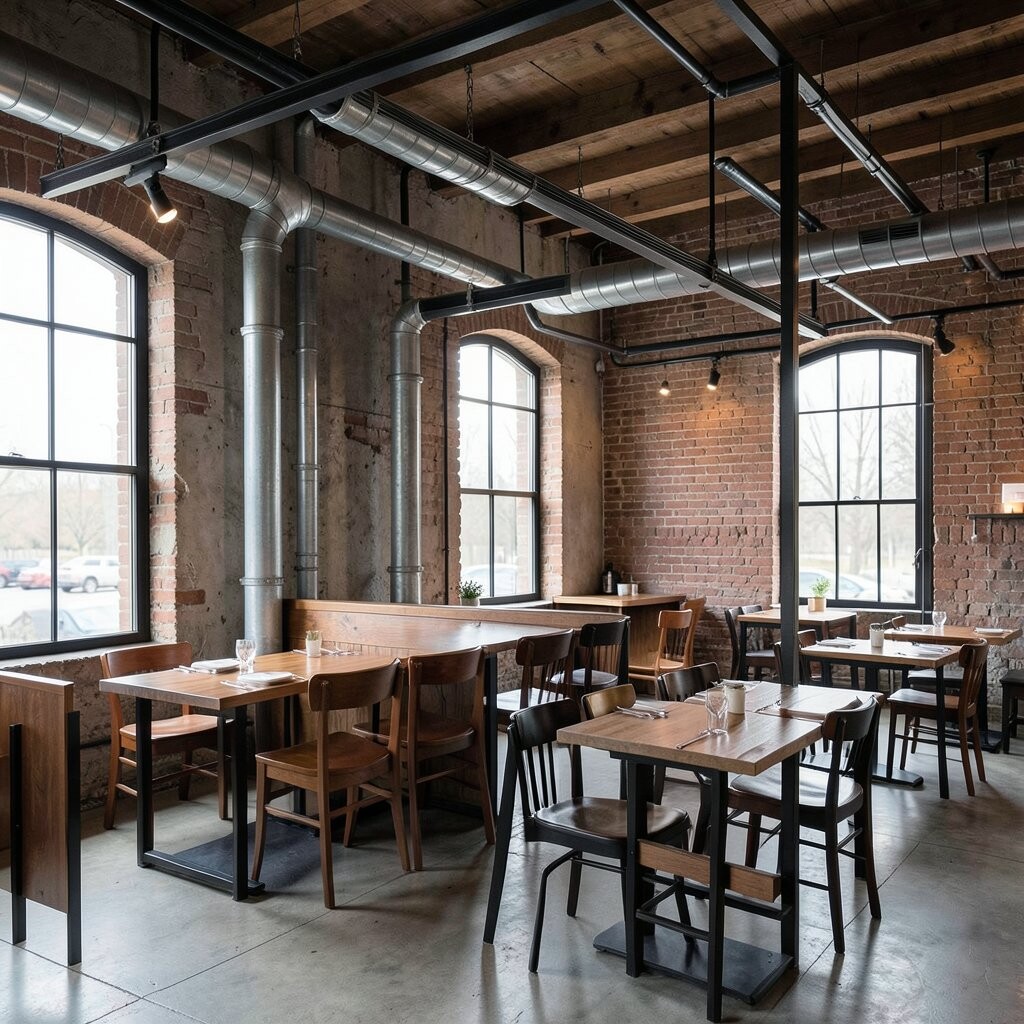
Pipe frames can be used for mirrors, shelves, menus, and table bases. They add a strong, workshop-style look that fits industrial spaces well.
These details are useful because they are sturdy and can be made to fit many needs. They also help the room feel custom even if the rest of the design is simple.
Use black pipe for a clean look or raw steel for a more worn style. Pair pipe frames with wood or glass so the design does not feel too heavy.
13. Green Plants in Simple Pots
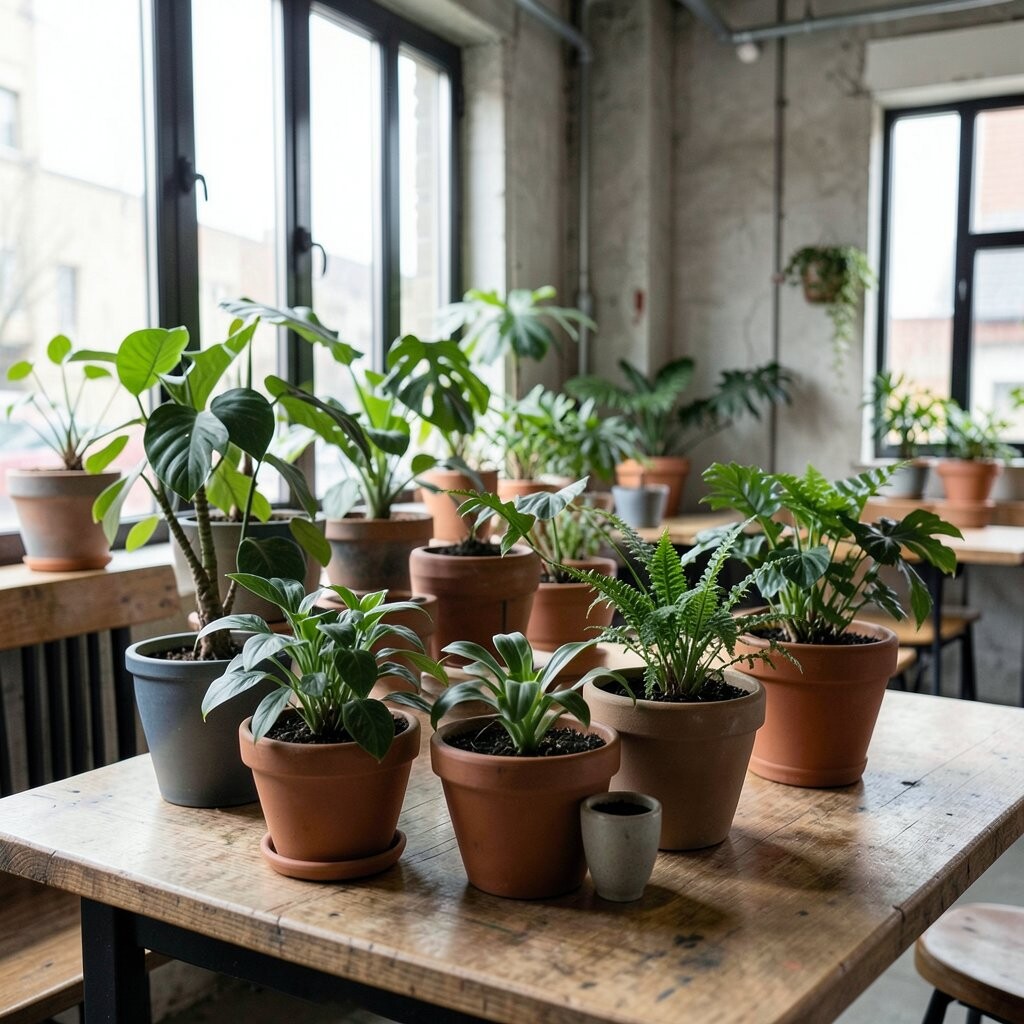
Plants bring life into a room full of metal, brick, and concrete. Even a few green leaves can make the space feel softer and more relaxed.
This is a low-cost way to add color and break up hard surfaces. Simple pots in clay, black, or gray work well and keep the look steady.
Choose plants that can handle indoor light and busy service hours. Place them near windows, shelves, or corners that need a small lift.
14. Flexible Seating Zones
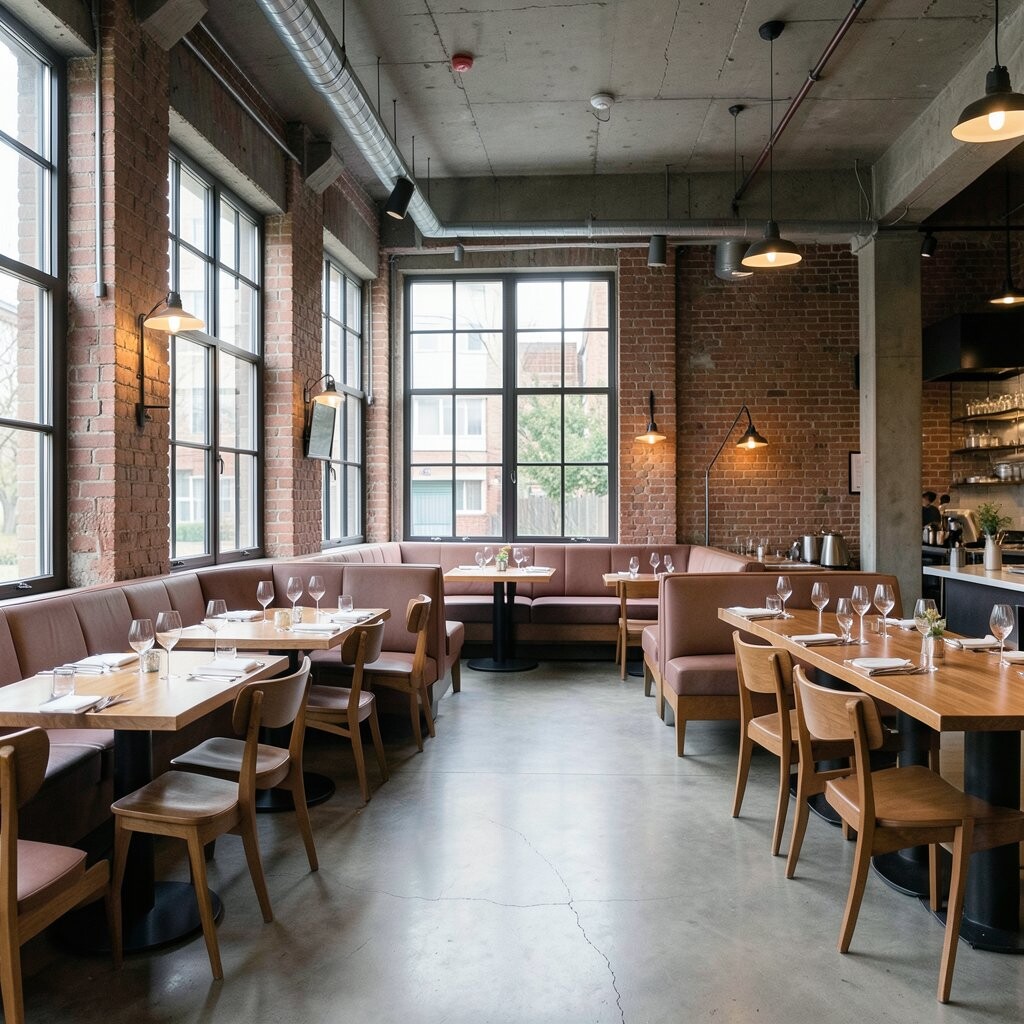
Flexible seating zones help an industrial restaurant work for many kinds of guests. You can set up booths, high tops, bar seats, and small tables in one room.
This kind of layout makes the space more useful and can help you serve groups of different sizes. It also lets you change the room later without a full redesign.
Use rugs, lights, or furniture style to mark each zone in a simple way. A smart layout can save space, improve flow, and still keep the industrial look strong.