Cooking feels easier when your kitchen has smart storage.
Cabinets can make every meal step smoother and faster.
-
1) Pull-Out Pantry Shelves
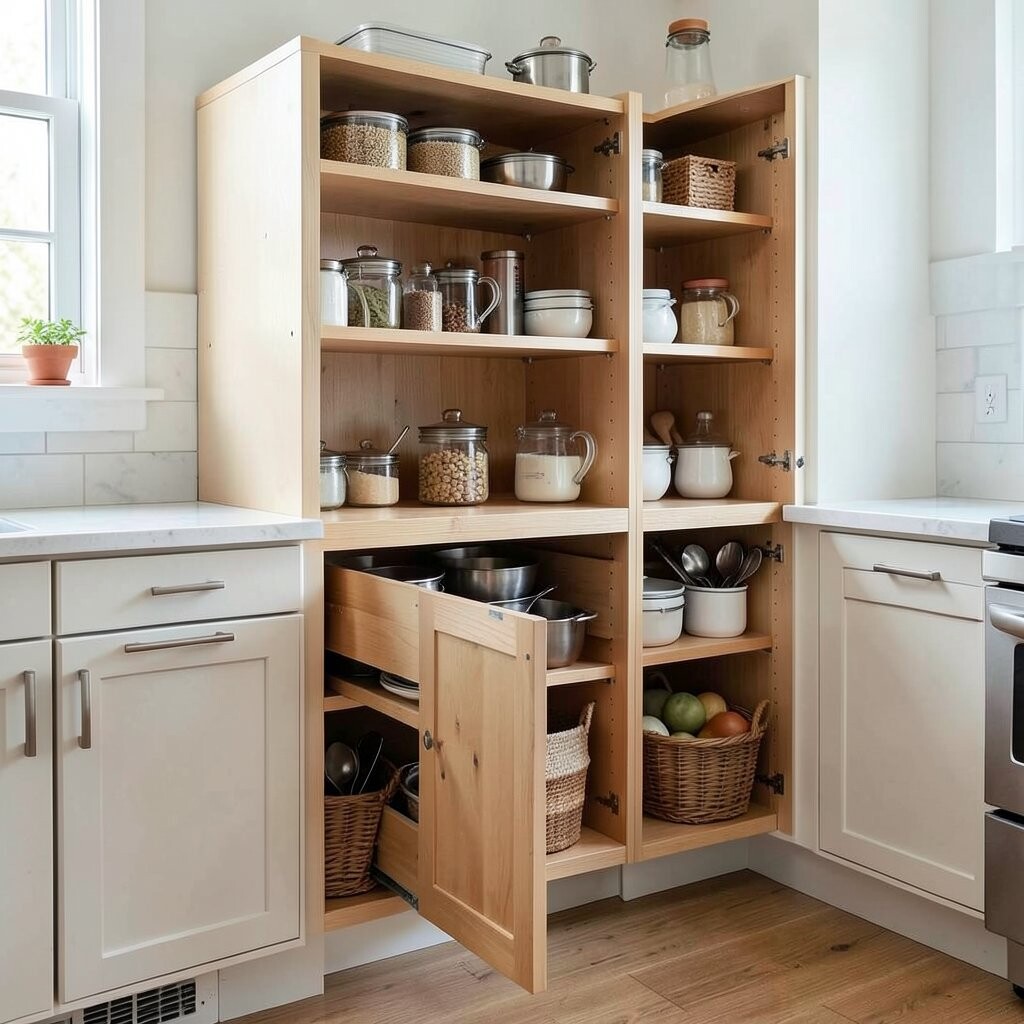
) Pull-Out Pantry Shelves Picture a tall cabinet with shelves that slide out like drawers. Jars and bags become easy to grab, even when they’re pushed to the back.
This setup helps you see what you own, so you waste less and restock smarter. Aim for adjustable shelves so tall cereal boxes or smaller spice jars fit neatly. For personalization, label shelves by meal type like “taco night” or “breakfast basics.”
Think about the cost: pull-out hardware costs more than simple fixed shelves. Still, it often saves money by reducing duplicates and expired food.
-
2) Lazy Susan Corner Cabinet
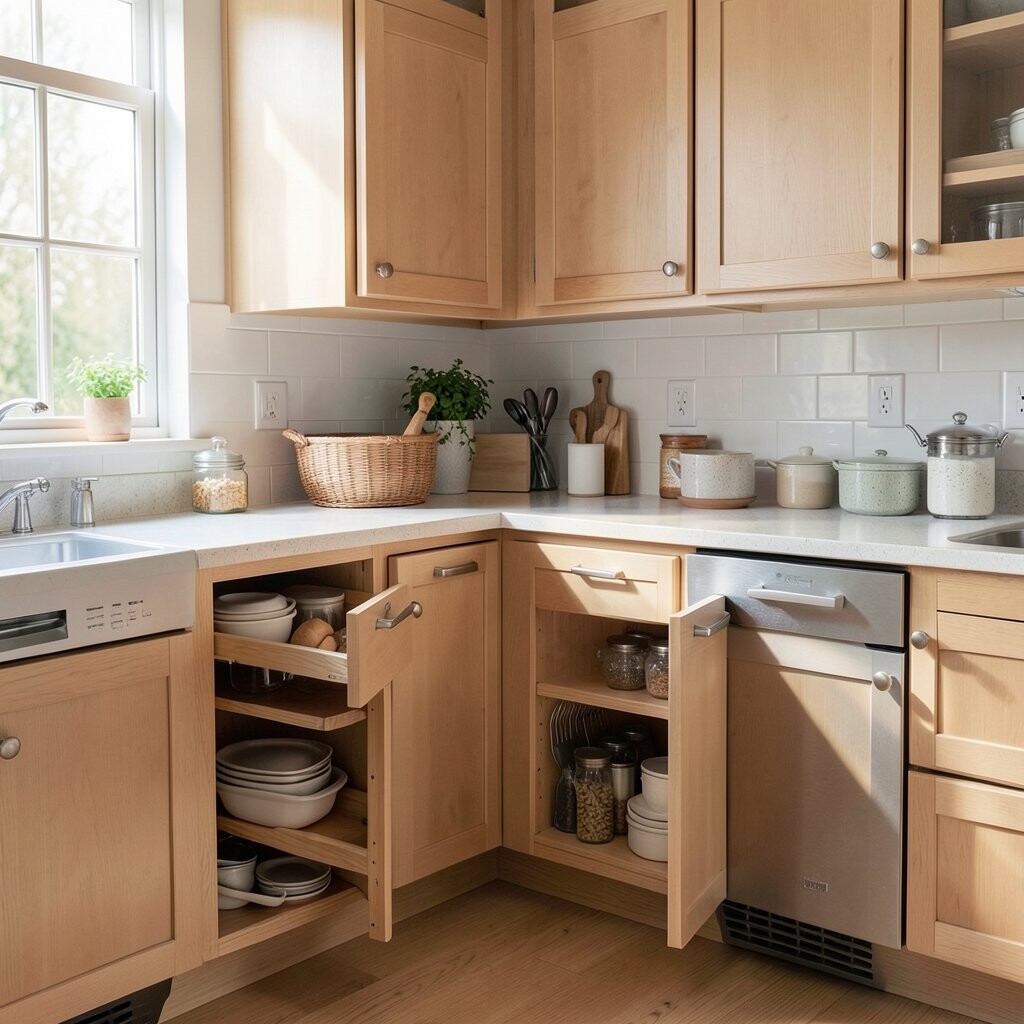
) Lazy Susan Corner Cabinet Your corner cabinet can look like a spinning platform hiding in the shadows. When you open the door, ingredients come into view in a single turn.
This is great for oils, vinegars, and snacks you use often. Choose smooth-rolling hardware for less effort during busy cooking. Keep the top level for everyday items and the lower level for backups.
To personalize, add small bins for themed storage like “baking” and “salad.” A lower-cost option is a basic rotating turntable, while higher-end models handle weight better.
-
3) Drawer Cabinets for Pots and Tools

) Drawer Cabinets for Pots and Tools Imagine wide drawers that pull out and hold your biggest cooking tools. No more fishing around in deep cabinets with your knuckles.
Drawer-style storage makes cooking steps faster because you grab what you need right away. Use dividers to separate lids, baking sheets, and spatulas so everything stays orderly. If you cook regularly, place your most used utensils near eye level.
For a unique touch, store lids vertically in a dedicated divider for a clean look. Cost varies based on drawer rails and drawer size, but it’s a smart upgrade for daily comfort.
Current trend: many kitchens are shifting toward “drawer-first” layouts for better access and easier cleaning.
-
4) Under-Sink Pull-Out Trash and Recycling
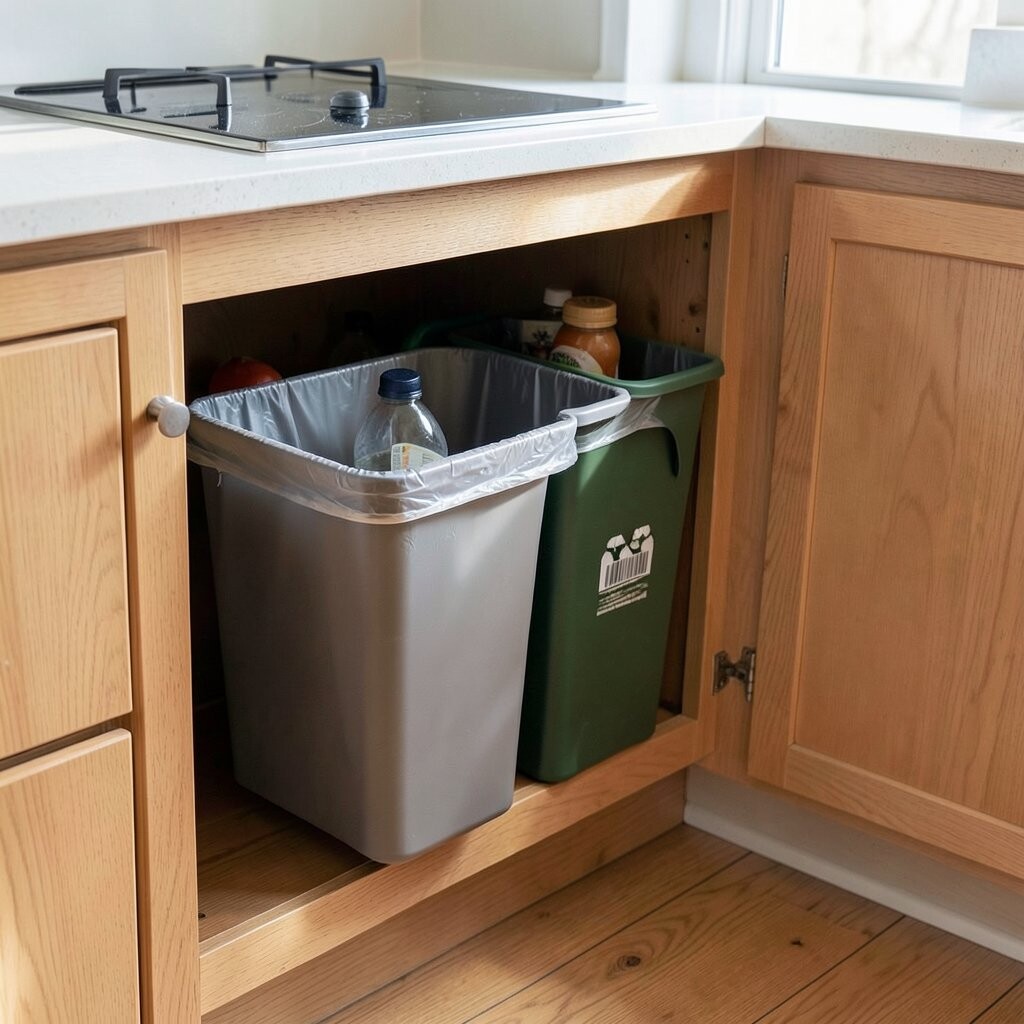
) Under-Sink Pull-Out Trash and Recycling Picture two bins tucked under the sink with a pull-out mechanism. When you open the cabinet, sorting becomes quick and tidy instead of messy.
This keeps smells down and reduces the clutter that can creep around the trash area. Look for a setup with smooth slides and a stable frame to prevent wobbling. For personalization, include a small container for scrub brushes so the sink area stays calm and ready.
Cost considerations are important here: quality bins and strong rails can cost more, but they last longer. A budget-friendly tip is to choose a simple pull-out system and add sturdy liners for protection.
-
5) Spice Pull-Out Tower with Clear Labels
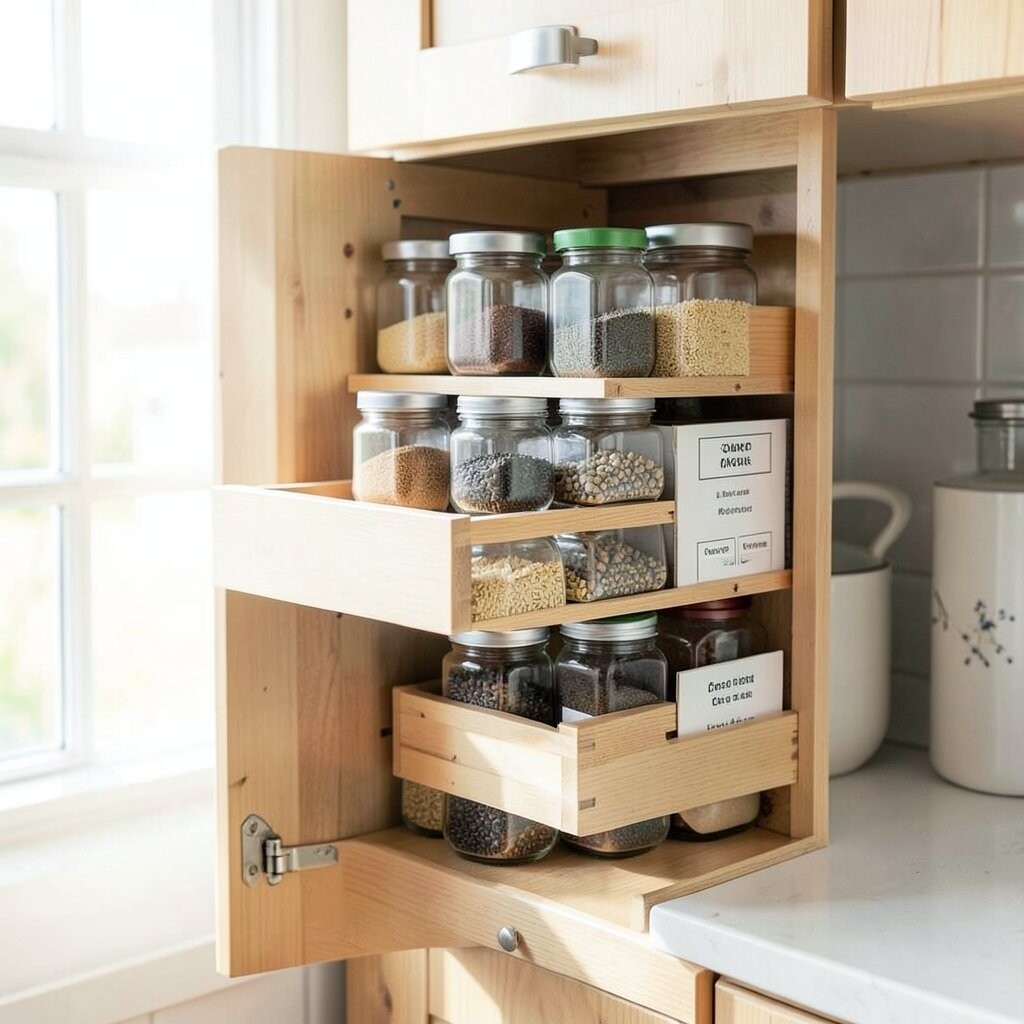
) Spice Pull-Out Tower with Clear Labels Think of a narrow cabinet that opens like a drawer tower for spices. Tiny jars line up neatly, and you can read labels without squinting.
When spices are easy to reach, cooking becomes more confident and less stressful. Use uniform jar sizes if you can, so the tower looks clean and stays consistent. Add a rule: each jar gets one home spot, and one home spot only.
To personalize, color-code labels by cuisine or difficulty level, like “easy everyday” and “special occasion.” Many kitchens are adding clear labeling because it matches the current trend toward visible organization.
-
6) Vertical Sheet Pan and Baking Tray Holder
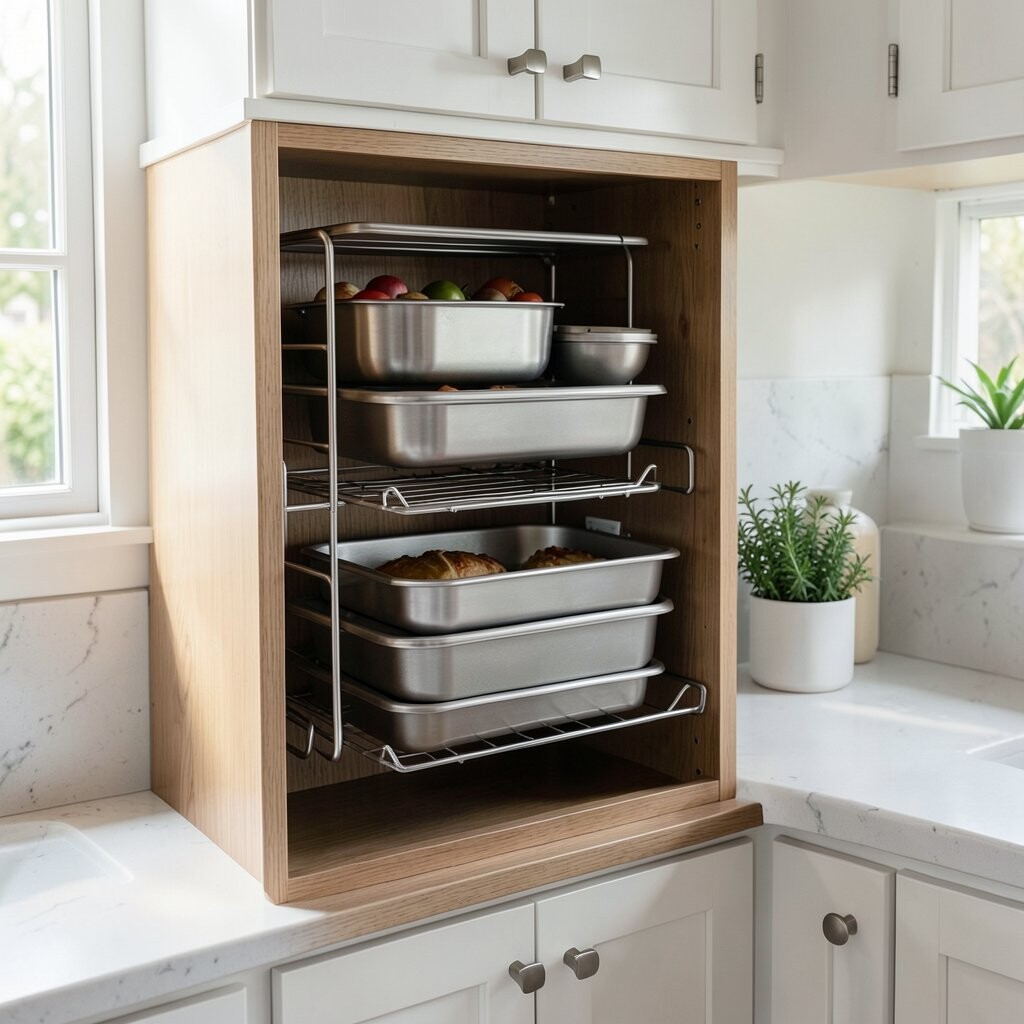
) Vertical Sheet Pan and Baking Tray Holder Visualize your cabinet doors opening to reveal upright slots for baking trays. Instead of stacking and sliding, each sheet stands ready like a set of cards.
This arrangement saves time because you grab the right size quickly. It also helps protect surfaces by keeping trays from scraping each other. Choose adjustable heights so cookie sheets and roasting pans all fit.
For personalization, keep a small tray for rolling baking mats and another for cooling racks. Cost is usually mid-range, but higher-quality rails hold weight better for heavy pans.
A current trend is storing bakeware vertically to reduce space use and keep the cabinet looking neat.
-
7) Corner Drawer with Cutlery Trays
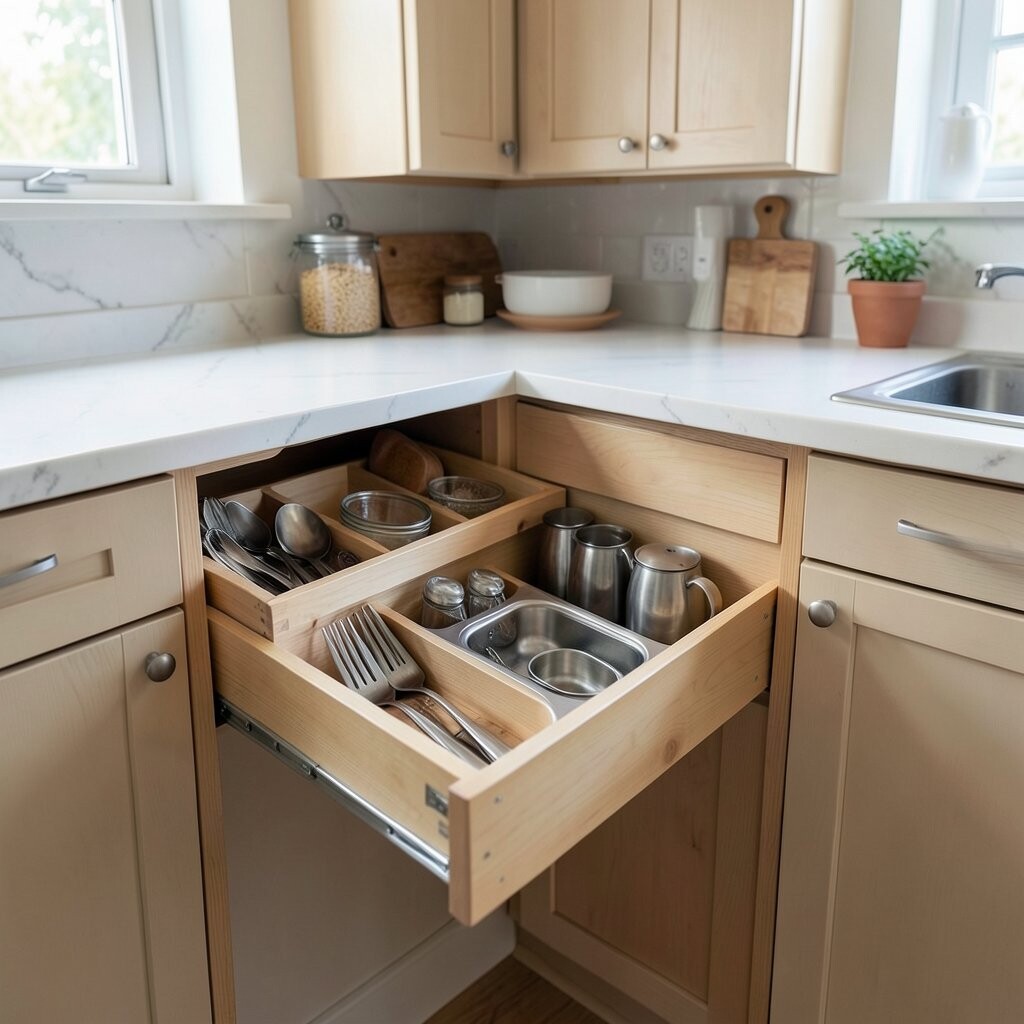
) Corner Drawer with Cutlery Trays Your cutlery can feel scattered when it lives in one big drawer. A corner drawer design turns that space into tidy zones that slide smoothly.
This helps you separate forks, spoons, and tools so every grab feels clean. Install trays that fit your exact utensils, and leave room for occasional additions like serving spoons. For personalization, dedicate one section for “always-ready” items like a garlic press or peeler.
Consider cost by comparing tray-only upgrades versus full drawer systems. If you already have drawers, upgrading with custom-fit dividers is often the best value.
-
8) Tall Cabinet for Baking Ingredients
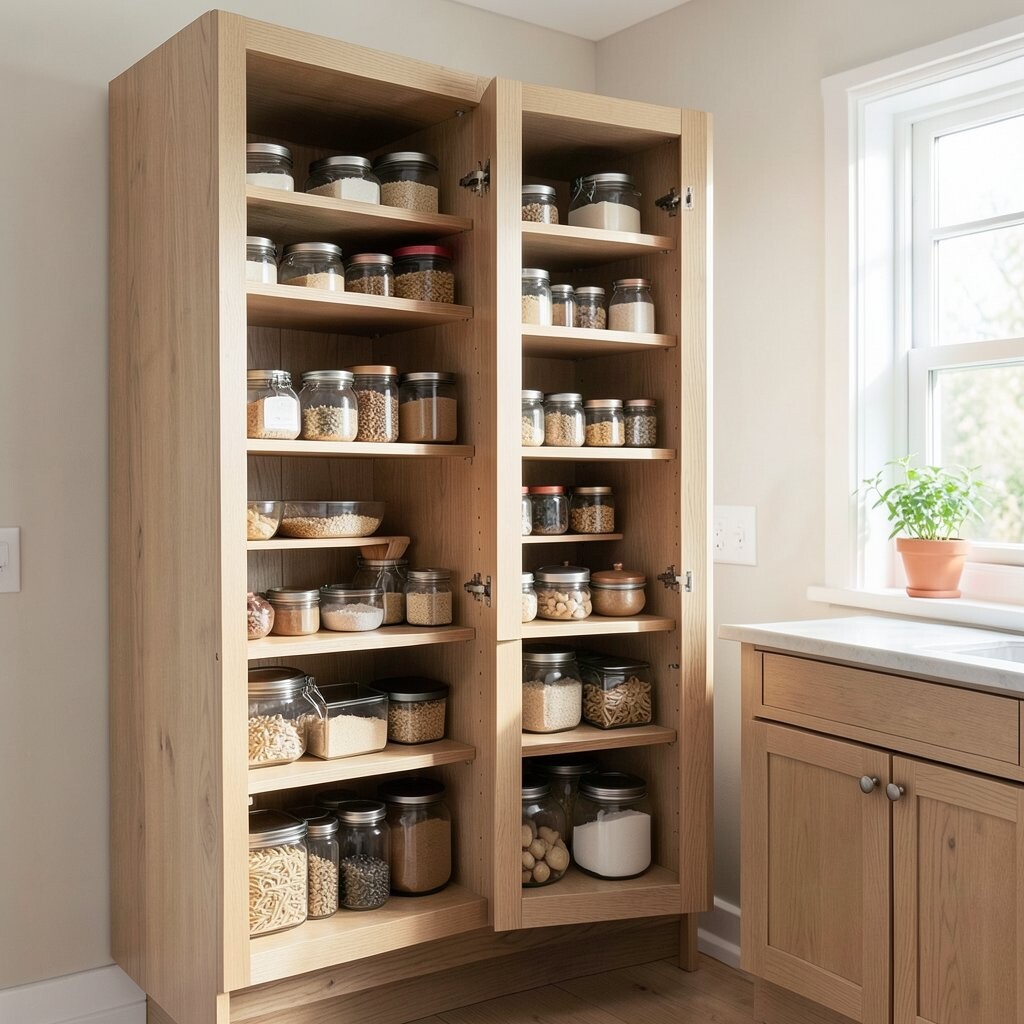
) Tall Cabinet for Baking Ingredients Imagine a cabinet lined with containers for flour, sugar, and baking powder. Everything looks uniform, like a small pantry that you cook from.
This helps you measure faster because ingredients are grouped the way recipes use them. Use clear containers so you can spot low amounts at a glance. Add a little “backup shelf” for extra vanilla or baking soda.
For personalization, keep a recipe card pocket on the inside door. Choose airtight containers to keep cookies tasting fresh longer, even in humid areas.
-
9) Pull-Out Microwave Lift Cabinet
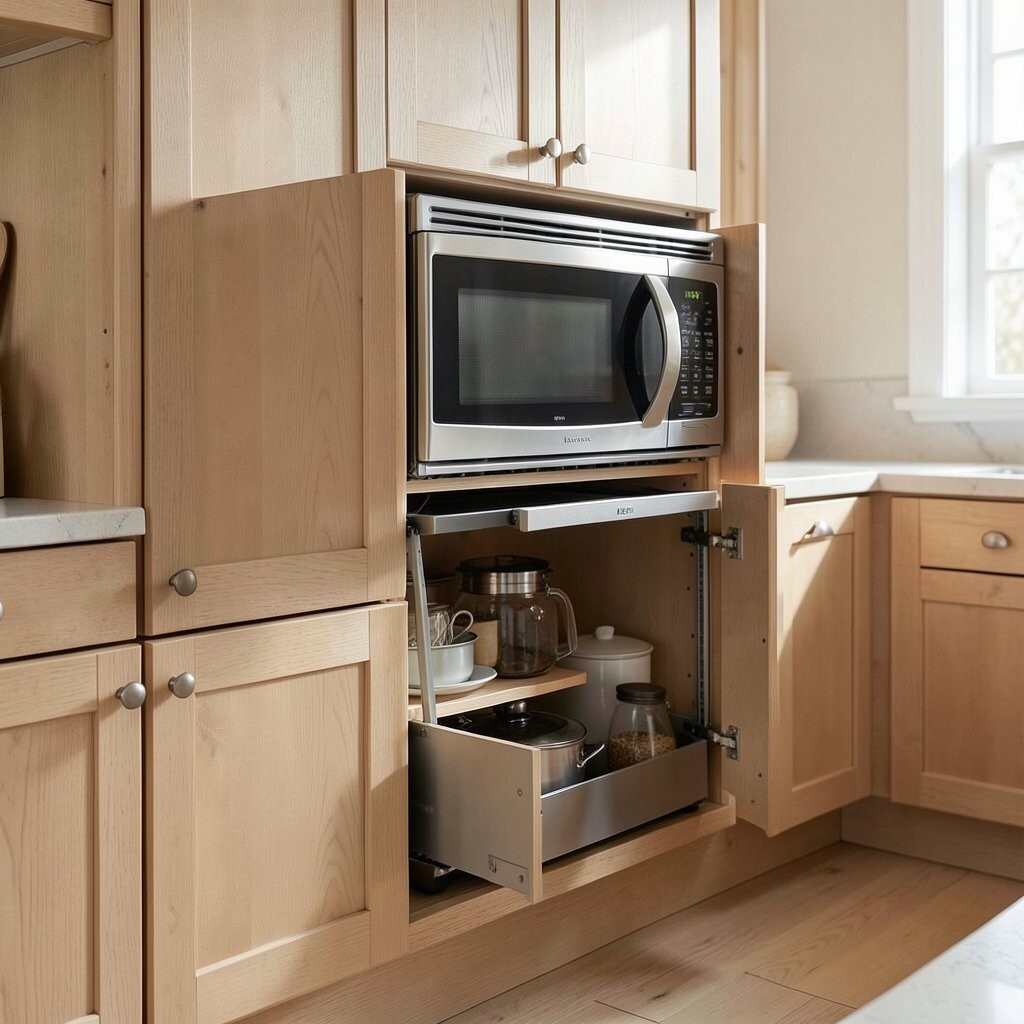
) Pull-Out Microwave Lift Cabinet Picture your microwave tucked neatly in a cabinet with a pull-out platform. When you lift it into place, the counter feels open and clean.
This setup gives you more prep space, which makes cooking feel calmer. Choose a mechanism that stays smooth and safe, especially if you open it often. For personalization, add a small shelf next to it for cookbooks or a timer.
Cost can be higher because the hardware is special. Still, many people feel the value quickly once they gain counter room for cutting and mixing.
-
10) Appliance Garage with Electrical Access
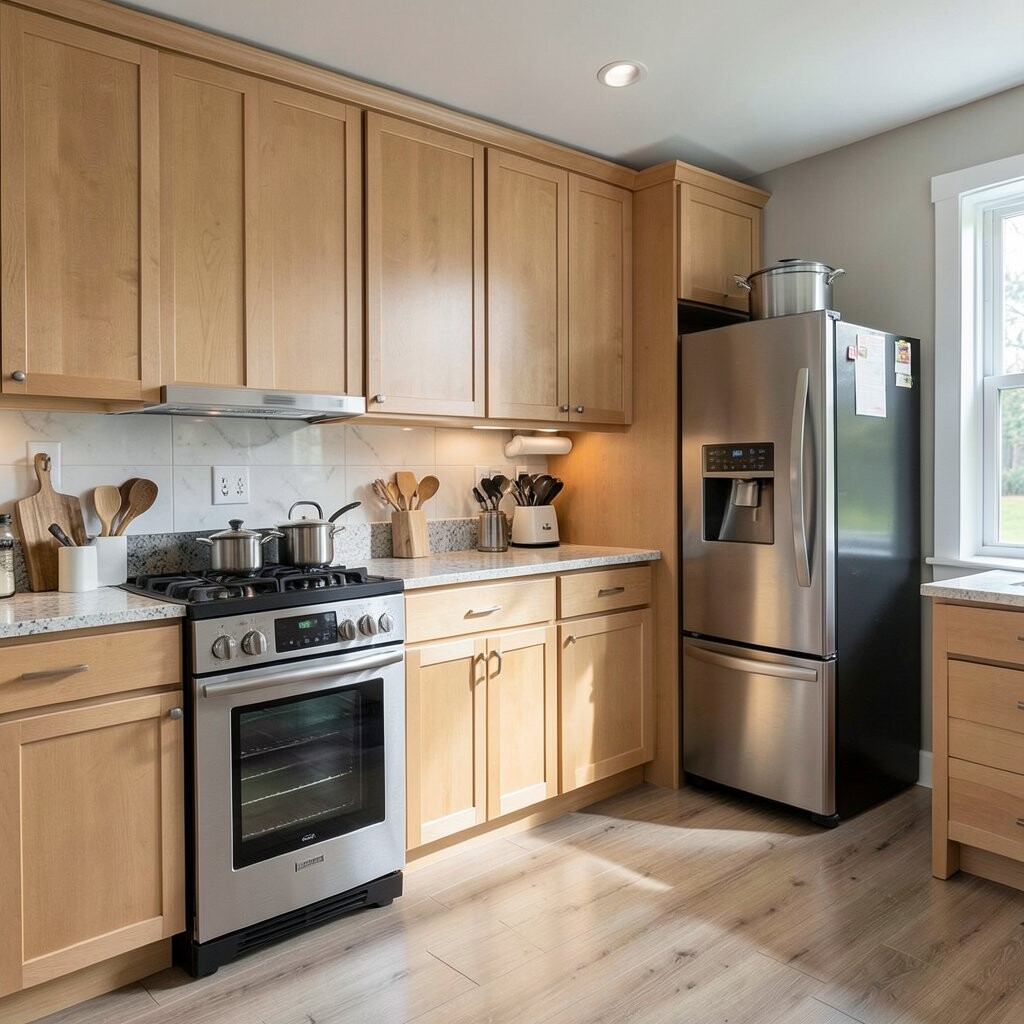
) Appliance Garage with Electrical Access Think of an “appliance garage” cabinet that hides your blender or toaster while keeping it handy. The cabinet top looks tidy, and counter mess stays away.
You’ll cook faster because appliances are close, not stored far. Add a shelf inside for cords and a gentle airflow space to keep things safe. For personalization, store only your daily appliances here and keep rare ones in a different cabinet.
This idea matches a big current trend: kitchens that look clean and minimal, without giving up function. Budget can vary, but simpler doors and basic shelves can keep the price reasonable.
-
11) Built-In Pantry with Adjustable Heights

) Built-In Pantry with Adjustable Heights Picture a wide pantry with shelves that you can change as your needs grow. Tall items and small jars all have room, because the system is flexible.
This makes the pantry “future-proof,” so you don’t feel stuck with one layout forever. Install shelves at different heights and group items by how often you use them. Put grab-and-go snacks at eye level for quick access.
For personalization, add a small bin station for quick meal prep like pasta seasoning packets and sauce mixes. Cost depends on whether you’re building new cabinetry or reorganizing existing space.
-
12) Cabinet Inserts for Cleaning Supplies
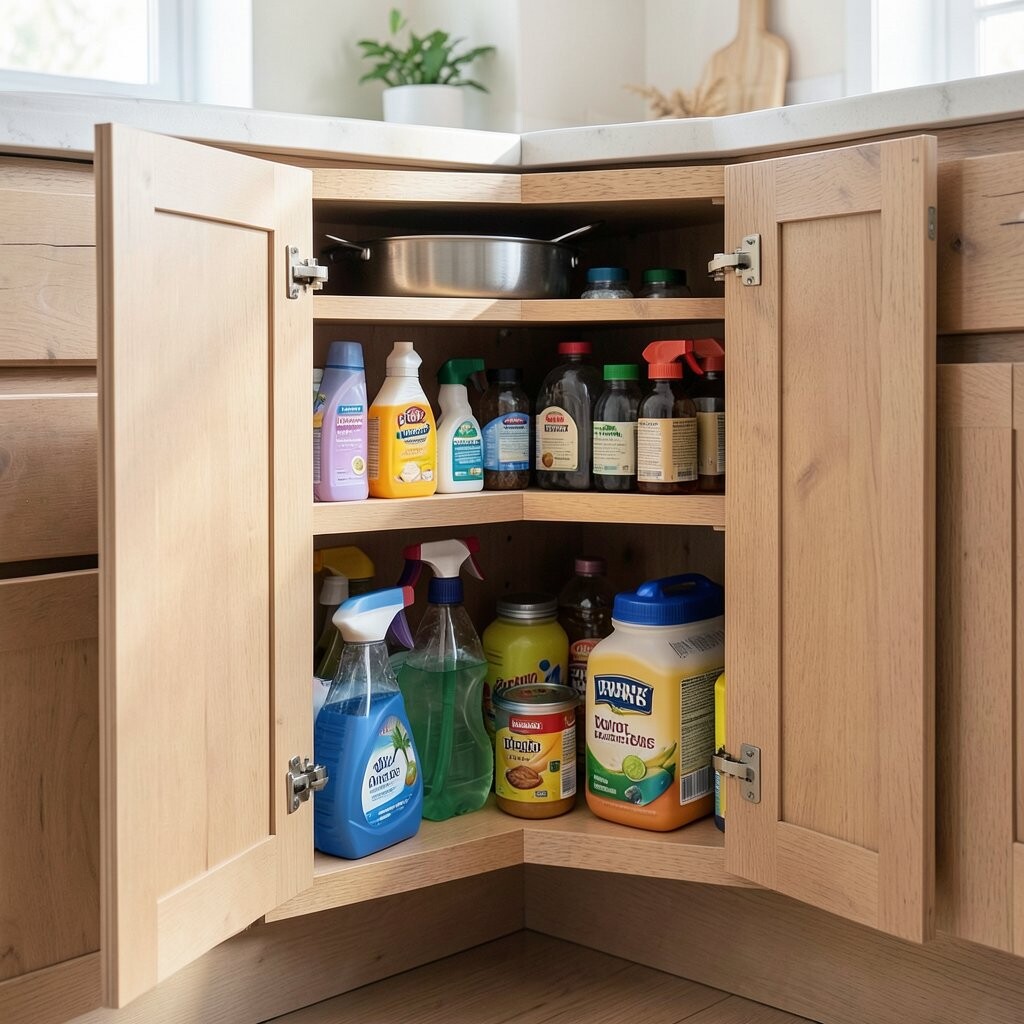
) Cabinet Inserts for Cleaning Supplies Imagine a cabinet that holds sponges, spray bottles, and brushes in separate zones. Everything stays upright and visible, so it’s easy to clean while cooking.
This keeps your cooking area tidy and makes cleanup faster. Choose caddies and pull-out trays so bottles don’t tip or leak around. For personalization, label sections like “sink,” “stovetop,” and “floor.”
Cost considerations are usually low because inserts are often add-on upgrades. A budget tip is to buy sturdy dividers that fit your cabinet dimensions rather than replacing the whole cabinet.
-
13) Glass-Front Cabinets for “Show and Grab” Dishes
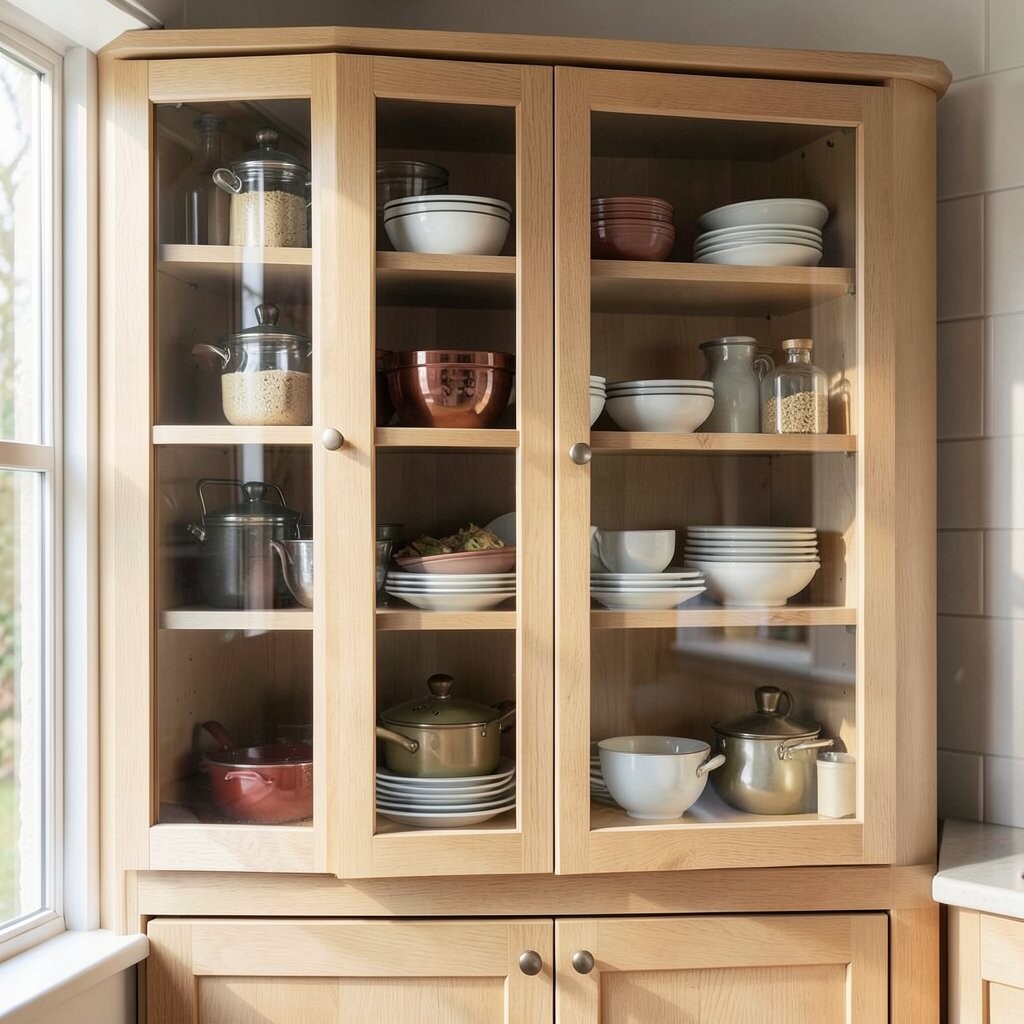
) Glass-Front Cabinets for “Show and Grab” Dishes Picture a cabinet door with glass panels that lets you see bowls, plates, and mugs. It looks charming while also making selection effortless.
This is a fun way to keep frequently used dishes in sight. Use display shelves for daily items and keep special pieces in closed storage. For personalization, arrange colors by theme so the cabinet looks like a curated shelf.
Cost can rise with glass doors and better hinges, but the visual payoff is real. Current trends often favor mixed storage: some open visibility, plus hidden closed cabinets for clutter-free sides.
-
14) Crown Molding Storage for Baskets and Tea Tins
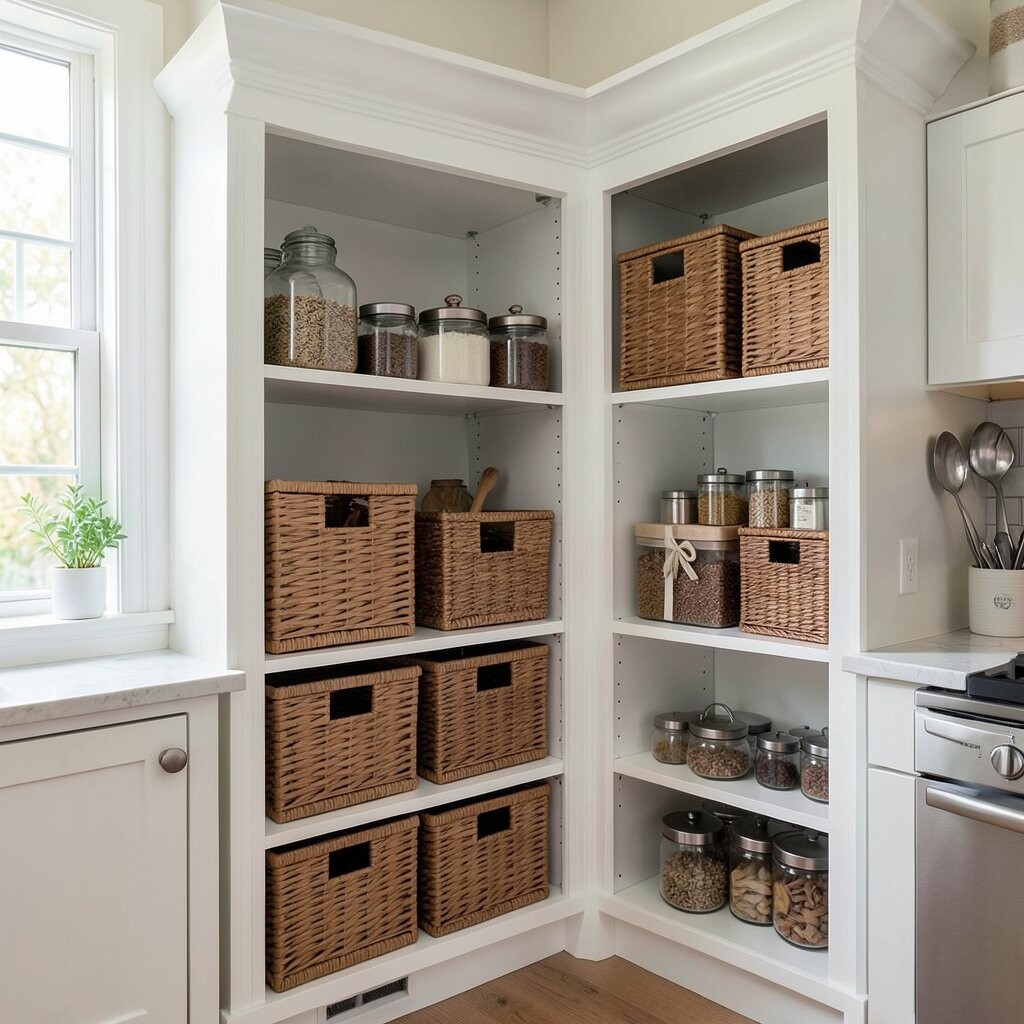
) Crown Molding Storage for Baskets and Tea Tins Think of the top space inside cabinets used for lightweight items. Baskets, tea tins, and extra packets fit neatly in the upper zone.
This helps you free up the lower cabinets for pots and heavier cookware. Use baskets with labels so you can reach items without rummaging. For personalization, store seasonal tea blends by month.
Cost is usually minimal because you’re using space you already have. A tip: keep this area for light, low-spill items so access stays easy.
-
15) Drawer Dividers for Knives and Cutting Accessories
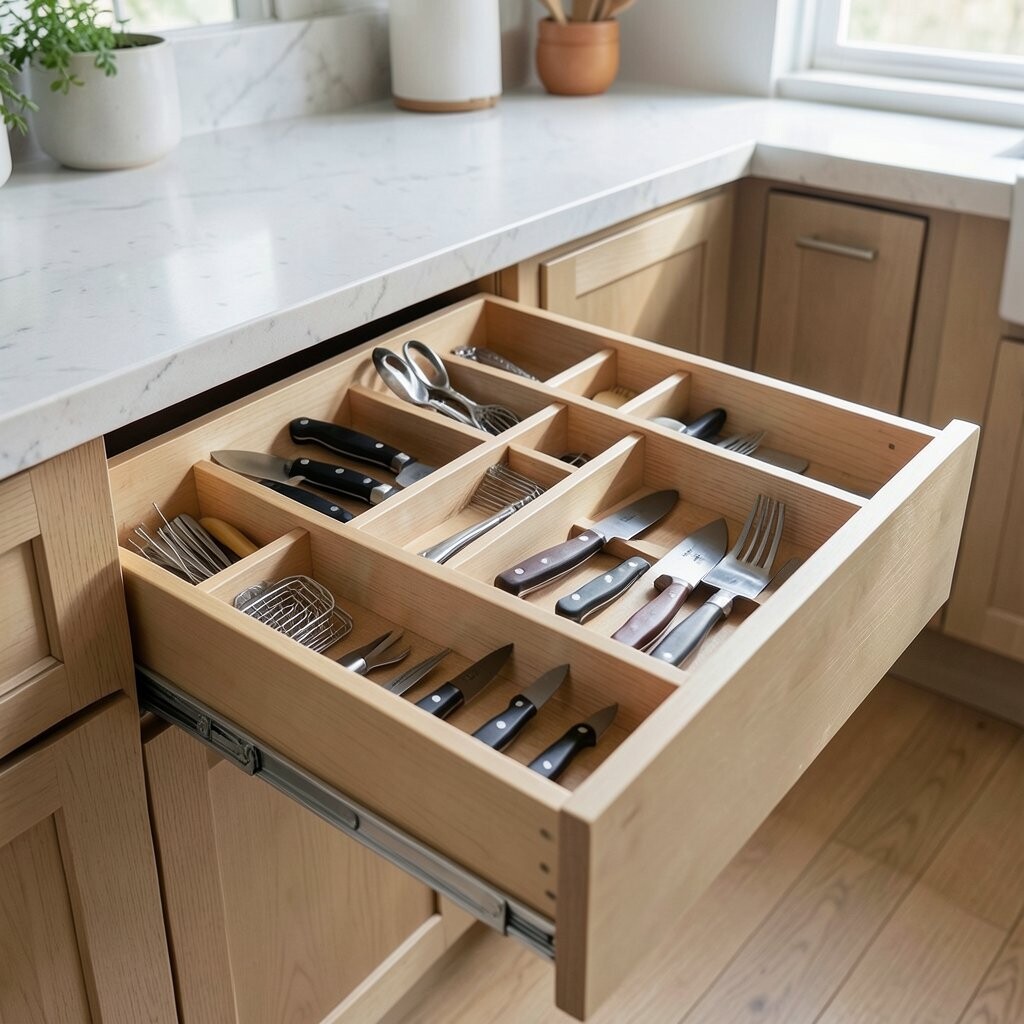
) Drawer Dividers for Knives and Cutting Accessories Picture a drawer fitted with compartments for knives, peelers, and kitchen scissors. Nothing slides around, and every tool has a defined spot.
This boosts safety because blades are kept organized and separated. Dividers also make cooking smoother because you can find tools fast while your hands are busy. Choose a layout that matches your routine, like placing the peeler next to the cutting area.
For personalization, include a small slot for tasting spoons and a separate area for measuring spoons. Cost varies based on divider material, but many drawer divider kits are an affordable upgrade.
-
16) Bottom Cabinet Pull-Out for Heavy Cookware
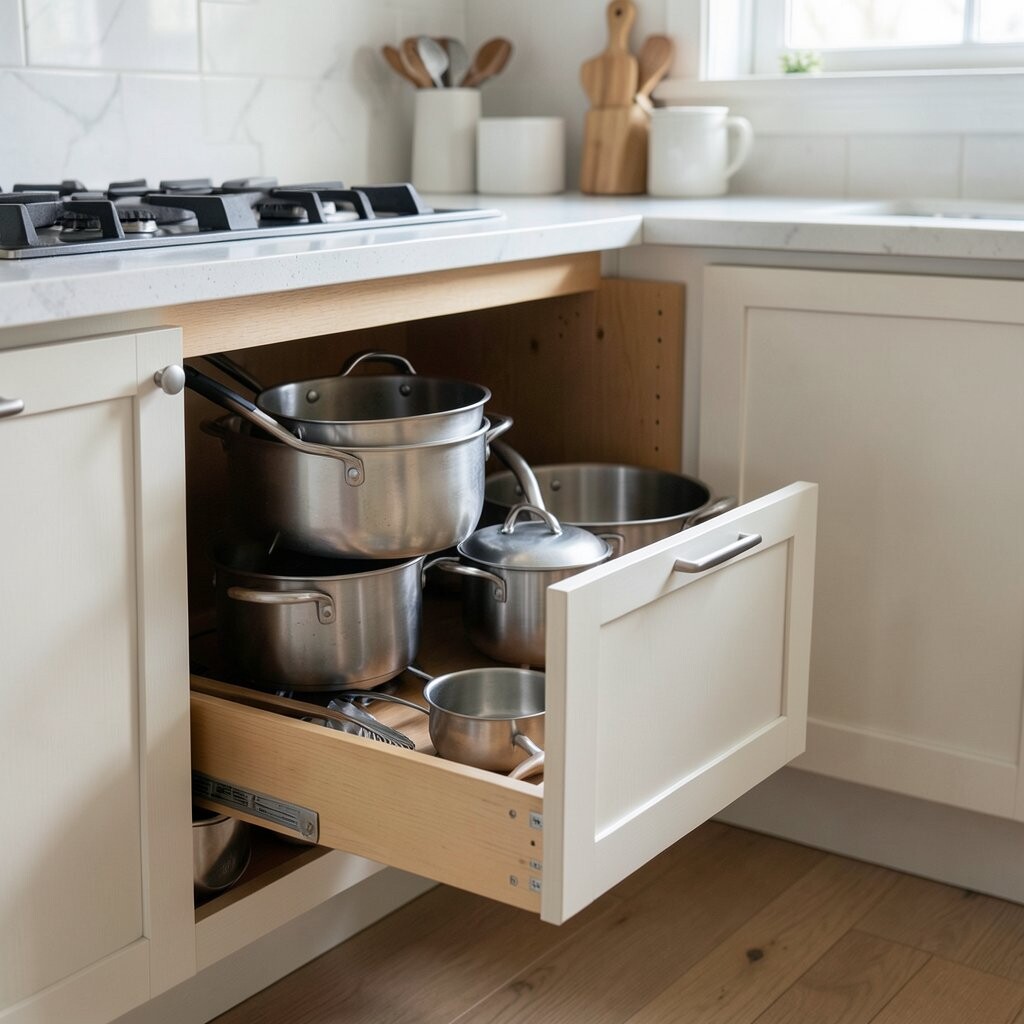
) Bottom Cabinet Pull-Out for Heavy Cookware Imagine heavy pots rolling out on sturdy tracks when you open the bottom cabinet. The motion feels strong and controlled instead of awkward.
Pull-out storage is excellent for weighty cookware because it reduces bending and straining. Choose full-extension slides so you can reach the back without stretching. For personalization, group your “one-pan meals” set together for faster decisions.
Cost is influenced by slide quality and cabinet width. If you’re on a budget, focus on reliable slides first, because they matter every day.
-
17) Vertical Rail Cabinet for Spatulas and Utensils
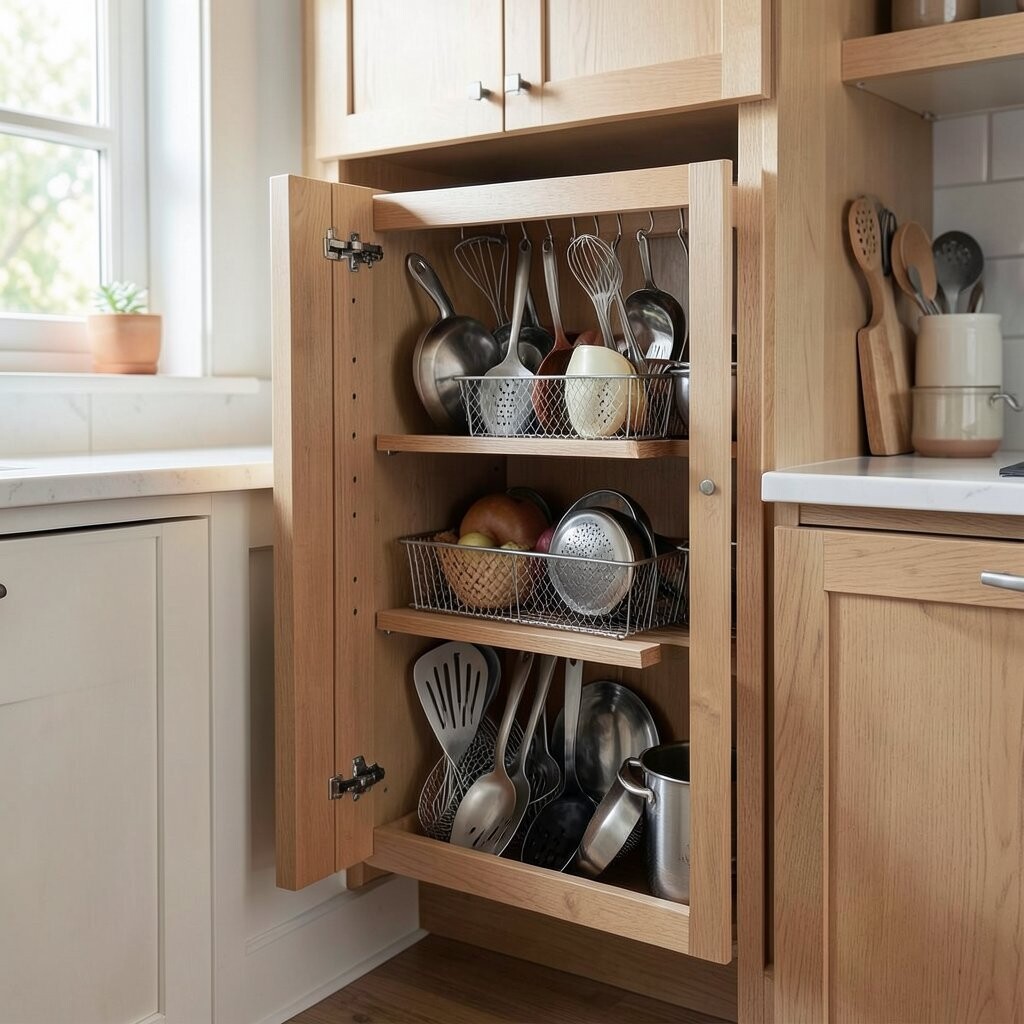
) Vertical Rail Cabinet for Spatulas and Utensils Picture a cabinet with slim vertical rails holding utensils upright. Spatulas stand neatly like they’re ready for their next job.
This makes it easy to grab the right utensil without digging through a tangled holder. Rails also keep handles clean and reduce odor buildup from wet tools. For personalization, reserve one rail for baking tools and another for stove tools.
A helpful tip is to keep utensils dry before placing them back so your cabinet stays fresh. Cost is often mid-range, and many people find it worth it because it prevents clutter.
-
18) Stackable Storage Cabinet for Food Storage Containers
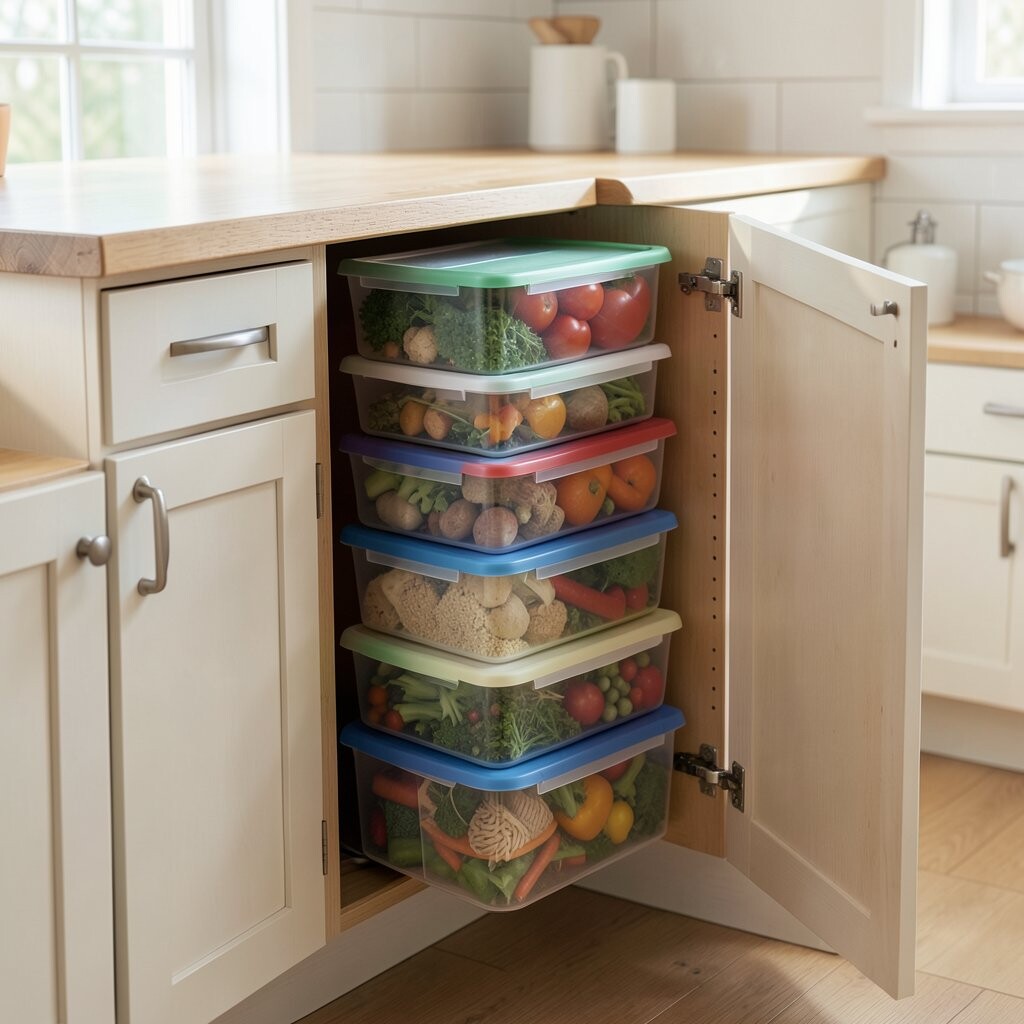
) Stackable Storage Cabinet for Food Storage Containers Picture a cabinet designed for food containers that fit like a neat system. Lids stack in one direction, and containers fit in another for easy pairing.
This reduces the classic “lid hunt” and helps you keep sets together. Use removable dividers so you can adjust for different container sizes over time. For personalization, add a small “mix and match” bin for mismatched lids you plan to replace.
Cost considerations depend on whether you’re buying a specialized insert or organizing with bins. A budget option is to use sturdy organizers and label sizes clearly.
-
19) Pantry Cabinet with Rotating Bin System
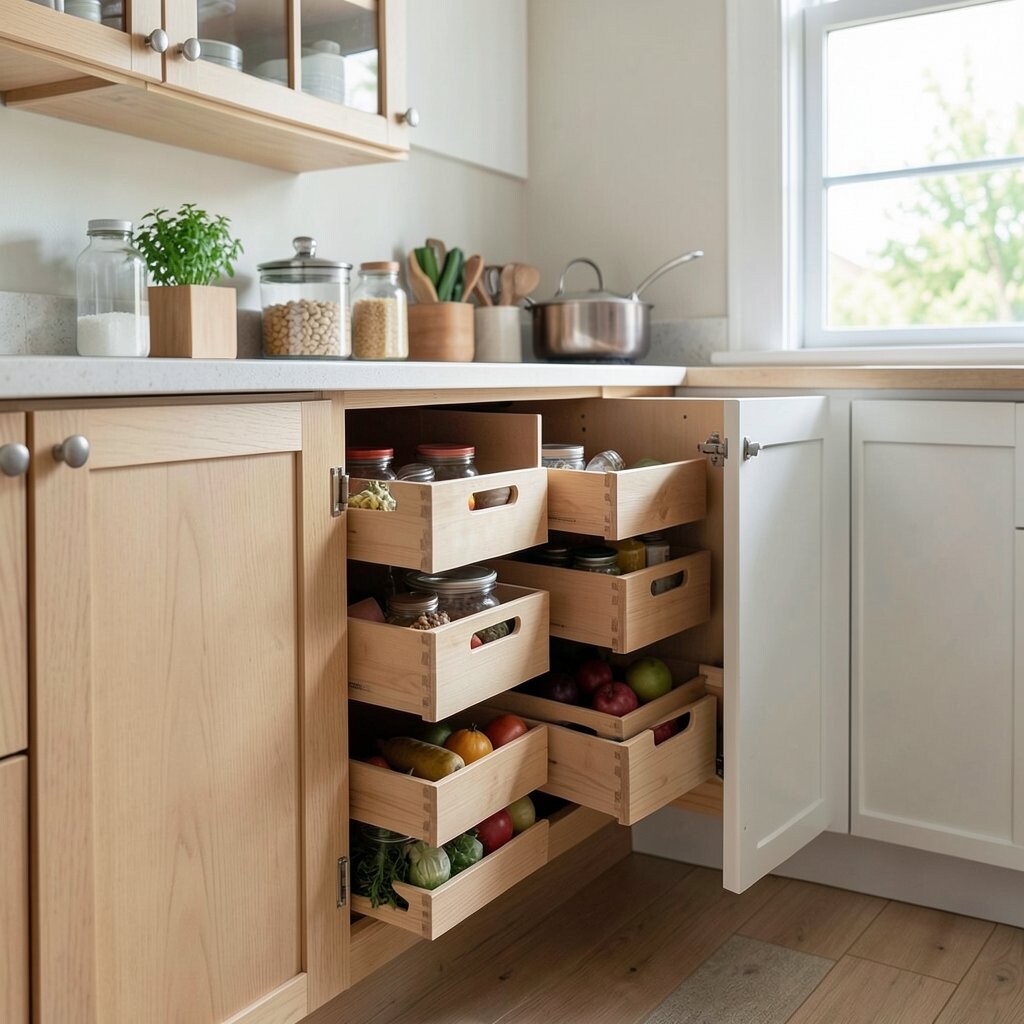
) Pantry Cabinet with Rotating Bin System Imagine a cabinet with a rotating system that brings bins forward. Small snacks, packets, and pantry extras are all visible as soon as you open the door.
This is great for keeping frequently used items in easy reach. Rotating bins reduce clutter because everything has a place and a direction. For personalization, group bins by function like “pasta,” “snacks,” and “baking needs.”
Current trends lean toward smart, modular storage that adapts to changing routines. Cost can be higher than basic shelving, but the time savings while cooking are noticeable.
-
20) Hidden Trash-Can Lift with Soft-Close Doors
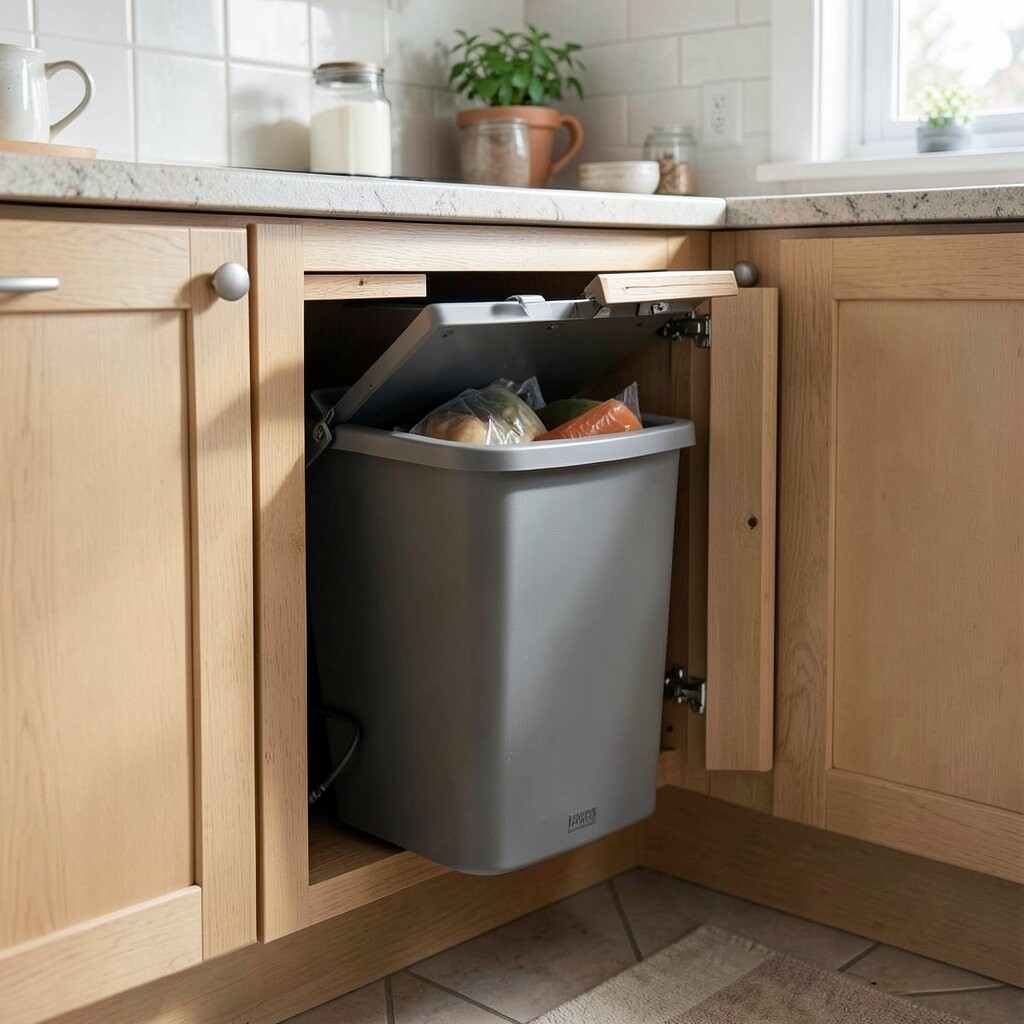
) Hidden Trash-Can Lift with Soft-Close Doors Picture a cabinet door with soft-close hinges and a hidden bin underneath. The kitchen looks clean, and garbage handling feels controlled.
This makes cleanup smoother because you don’t need to pull bins out and place them elsewhere. Choose a system with a stable lift mechanism so doors don’t slam. For personalization, match the cabinet finish to your kitchen style for a seamless look.
Cost varies by brand and cabinet requirements, but soft-close upgrades are popular and add comfort. A money-saving tip is to prioritize the cabinet hardware quality while keeping the bin model simple.
-
21) Countertop-Adjacent Pull-Out Serving Cabinet
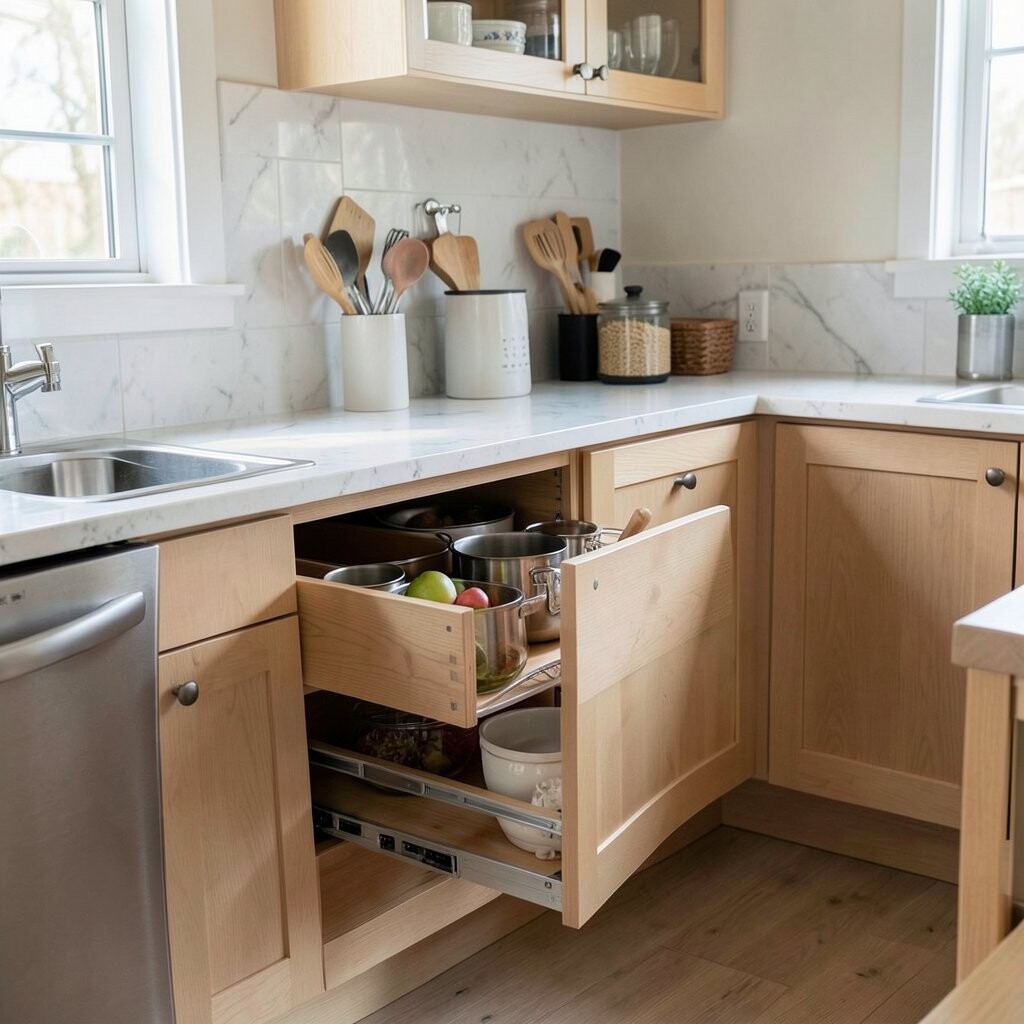
) Countertop-Adjacent Pull-Out Serving Cabinet Think of a side cabinet near your prep area that pulls out like a mini station. It holds serving bowls, napkins, and everyday plates for hosting.
This helps you move through meal prep and serving with fewer trips across the kitchen. Build it for your lifestyle by storing what you use most during gatherings. For personalization, add small bins for utensils used during serving like tongs, ladles, and serving spoons.
Cost considerations are manageable because you can start with inserts and bins before installing new cabinetry. The trend right now is creating “zones” that support how people actually cook and host.