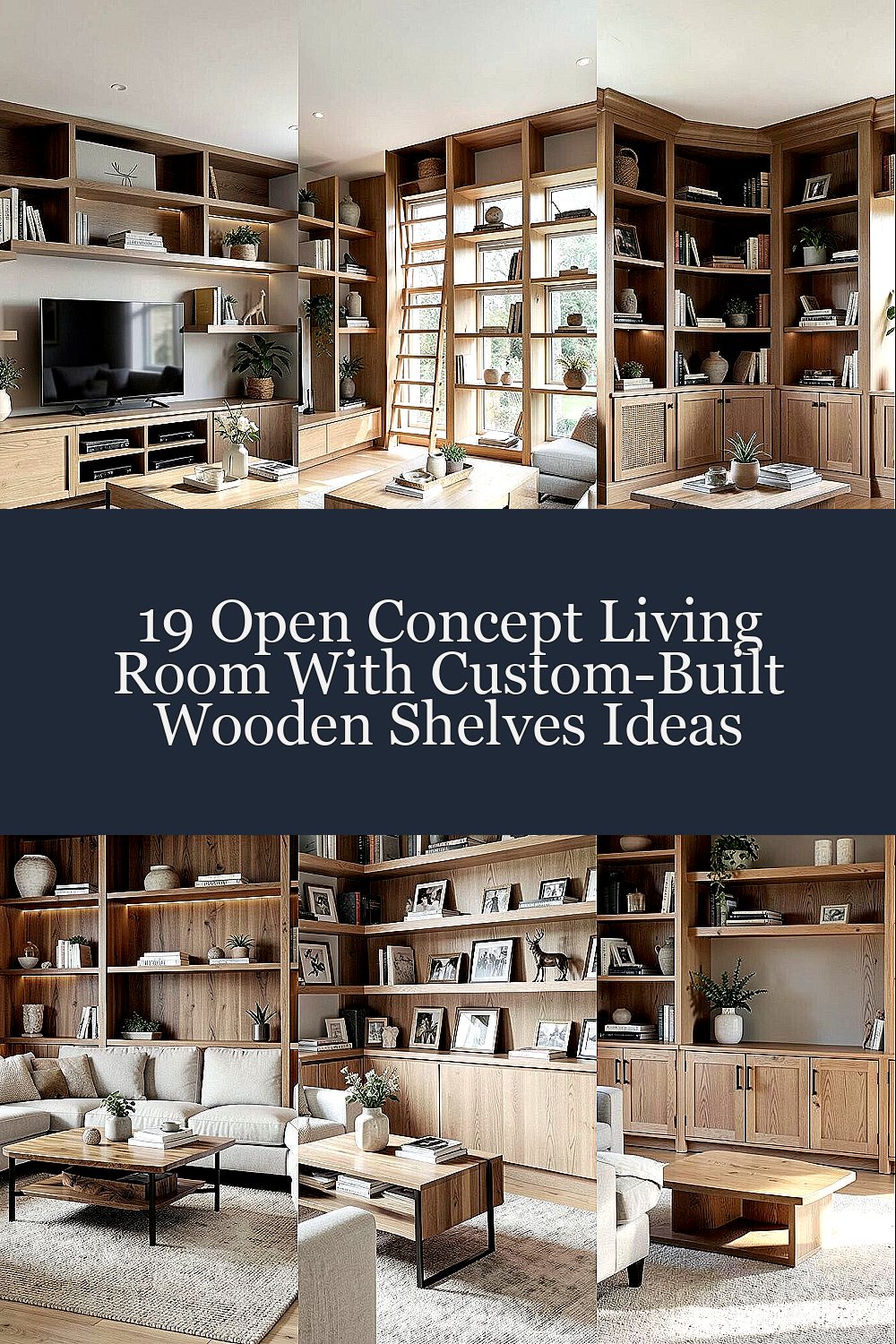
Open layouts feel airy, but they still need a plan. Custom wooden shelves quietly make that plan look beautiful.
You can keep sightlines open while adding storage, display space, and a warm home feeling. The best part is you can tailor the shelves to your style, your budget, and your everyday life.
1. Floating-Shelf Rhythm With Slim Spacings
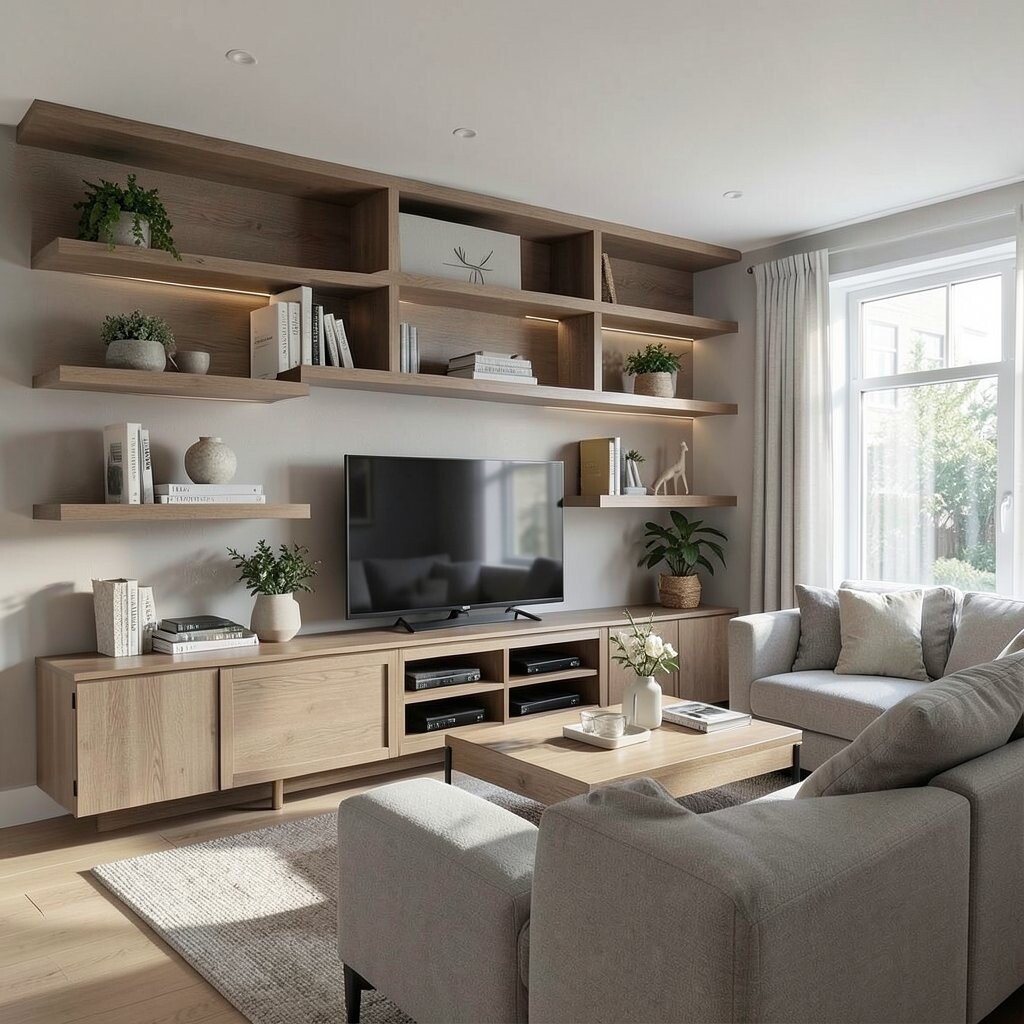
Think of a clean line of shelves that seems to float along one wall. The wood tone feels warm, and the gaps let the room breathe.
Choose slim shelf rails so the shelves don’t feel heavy. This setup helps you sort books, small framed photos, and board games without blocking the open flow. To keep it looking neat, style with a rule like “odd items per section” and use baskets for things you don’t want on display.
For personalization, match shelf height to your most-used items, like coffee-table books or kid-friendly puzzles. If you want a modern trend, pair light wood with matte black brackets. Cost-wise, floating designs can be mid-range, but the price depends on bracket quality and how many runs you need.
2. Floor-to-Ceiling Ladder Shelves for Zones
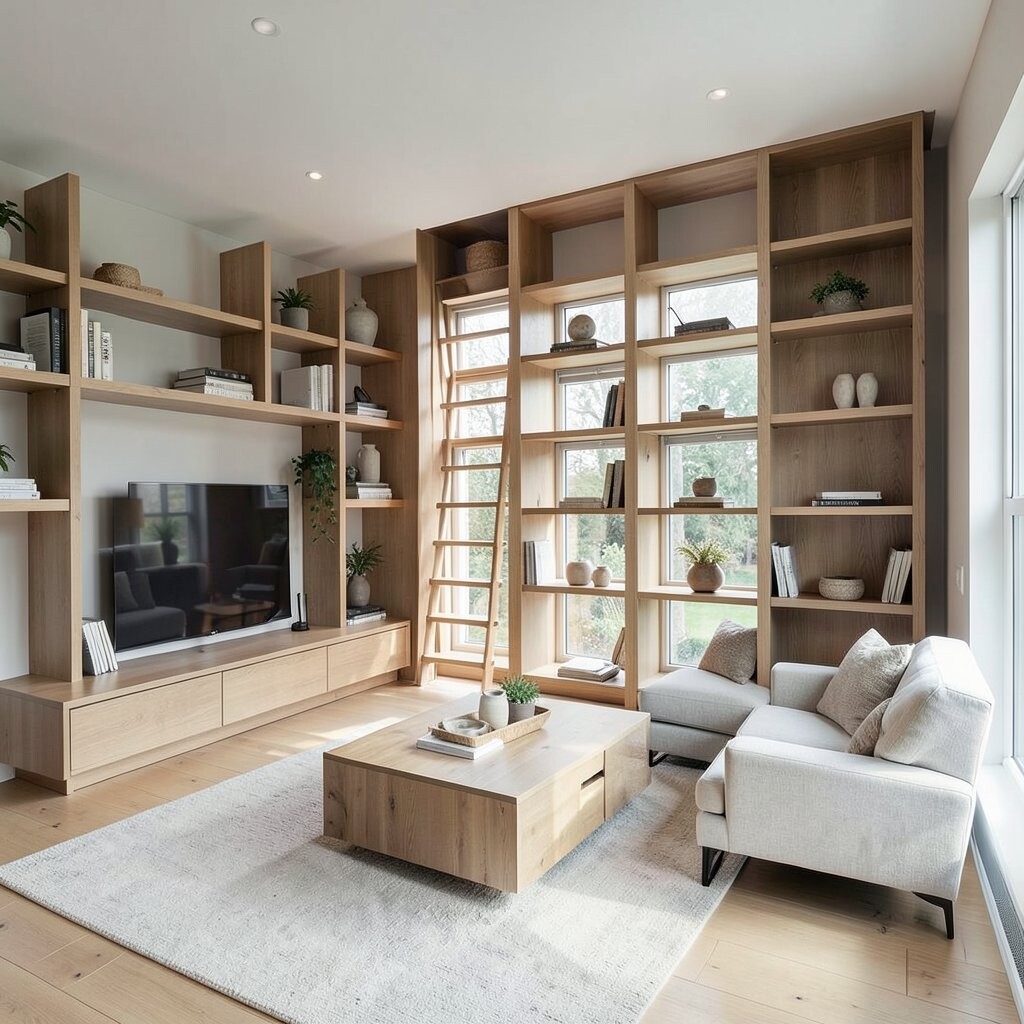
A ladder-style shelf wall can act like a gentle divider in an open concept room. You’ll still see through it, but the space feels organized.
Place it where the living area meets the kitchen or dining zone to help define each area. The visual payoff is big because the shelves create repeating lines, and your items become part of the design. Add a mix of open cubbies for display and deeper sections for storage to stay practical.
For a unique touch, insert a few oversized compartments for tall vases or a plant stand. If you enjoy the current trend of “collected living,” let some shelves look slightly curated instead of perfectly lined. Budget can vary, since custom carpentry and height adjustments cost more for floor-to-ceiling builds.
3. Built-In Window Nook Shelving
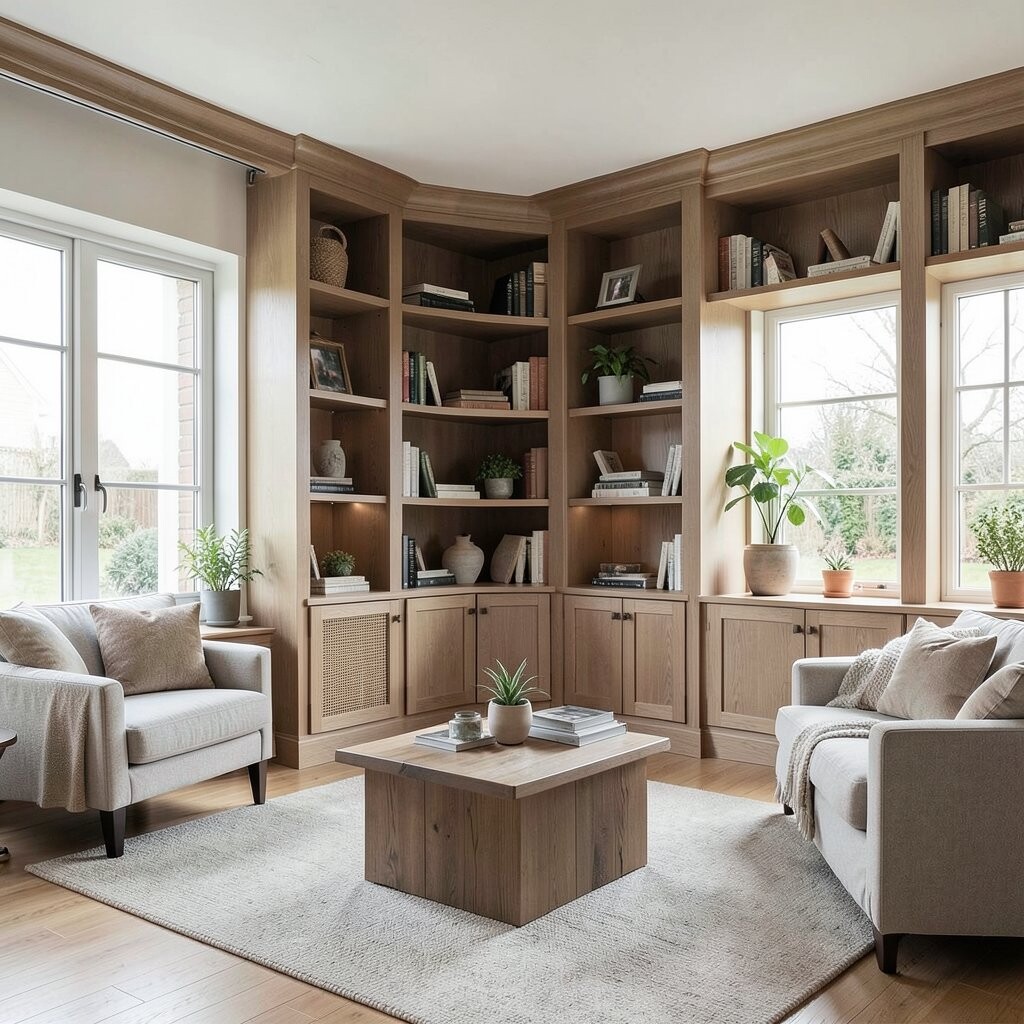
If you have a window near the center of your living room, use it as the star. Custom shelves that flank the view make the whole corner feel cozy.
Visualize sunlight bouncing off light wood while your decor sits neatly on each ledge. This is a great way to add charm without shrinking the room’s open feel. Use deeper shelves below for blankets or board games, and shallower shelves above for plants and art books.
Personalize by keeping a “seasonal shelf,” where you swap small decor every few months. For a trend that feels fresh, include one shelf with subtle back paneling in a warm neutral color. Cost considerations matter here, because fitting around trim and window edges may require more measuring and custom cuts.
Measure carefully for clearance so the shelves don’t interfere with curtains or blinds. You’ll get a cleaner look when the shelves match the window frame lines. When you plan your timeline, budget extra time for installation adjustments.
4. Warm Teak-Like Shelves With Hidden Storage
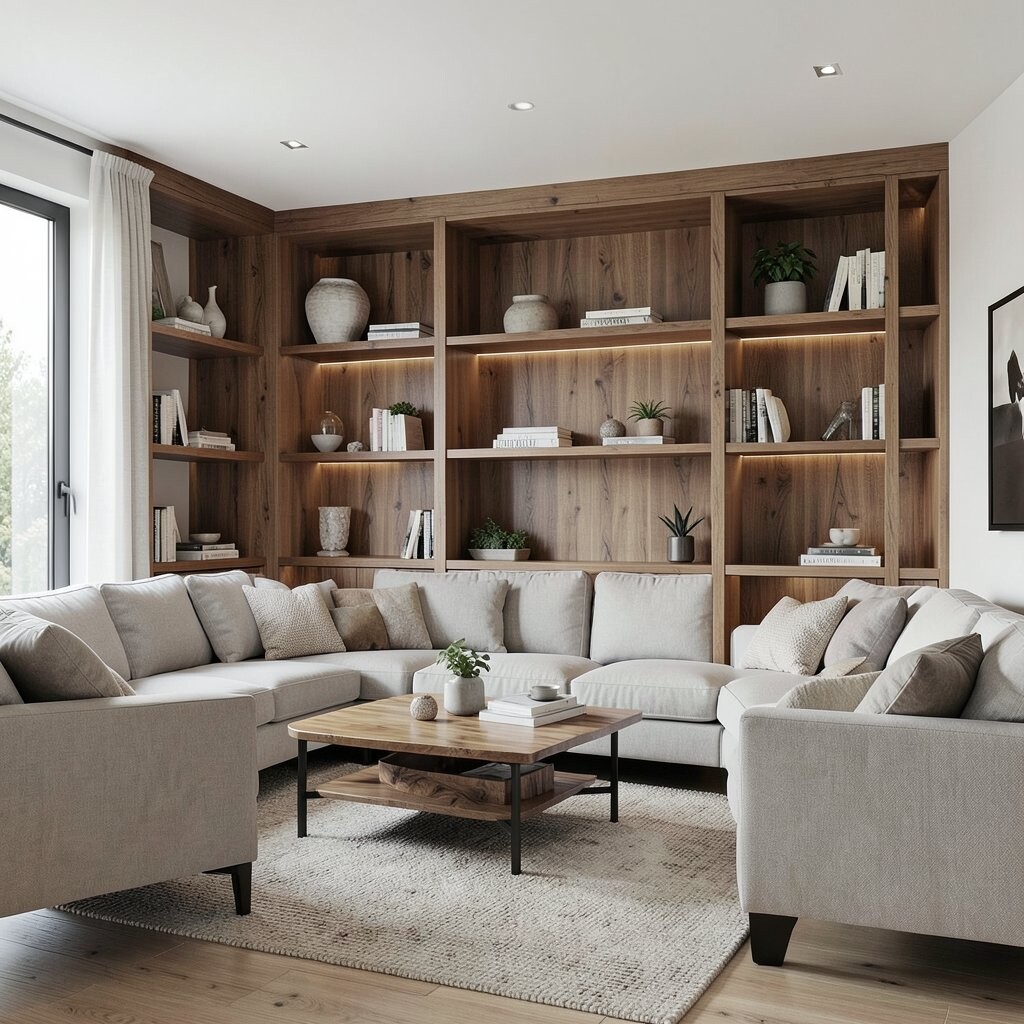
Some shelves look pretty, but you also need them to work hard. Hidden storage behind select doors keeps clutter out of sight while still showing off your style.
For this idea, use solid wood shelves with a few cabinet sections tucked into the same built-in frame. The visual benefit is a smooth, matching system that feels custom, not pieced together. Choose doors with soft-close hinges so daily use feels easy and quiet.
To personalize, pick a finish that matches your existing wood floors or nearby furniture. A deeper, slightly richer tone can feel very “designed,” especially in open concept rooms where you see everything from multiple angles. Cost-wise, adding doors usually raises the budget, but it pays off by reducing clutter every day.
If you want a current look, blend matte wood with simple hardware like slim bar pulls. Make sure the internal layout suits real life, like hooks for keys, drawers for cables, and shelves for folded items.
5. Gallery-Ledge Shelves for Art and Frames
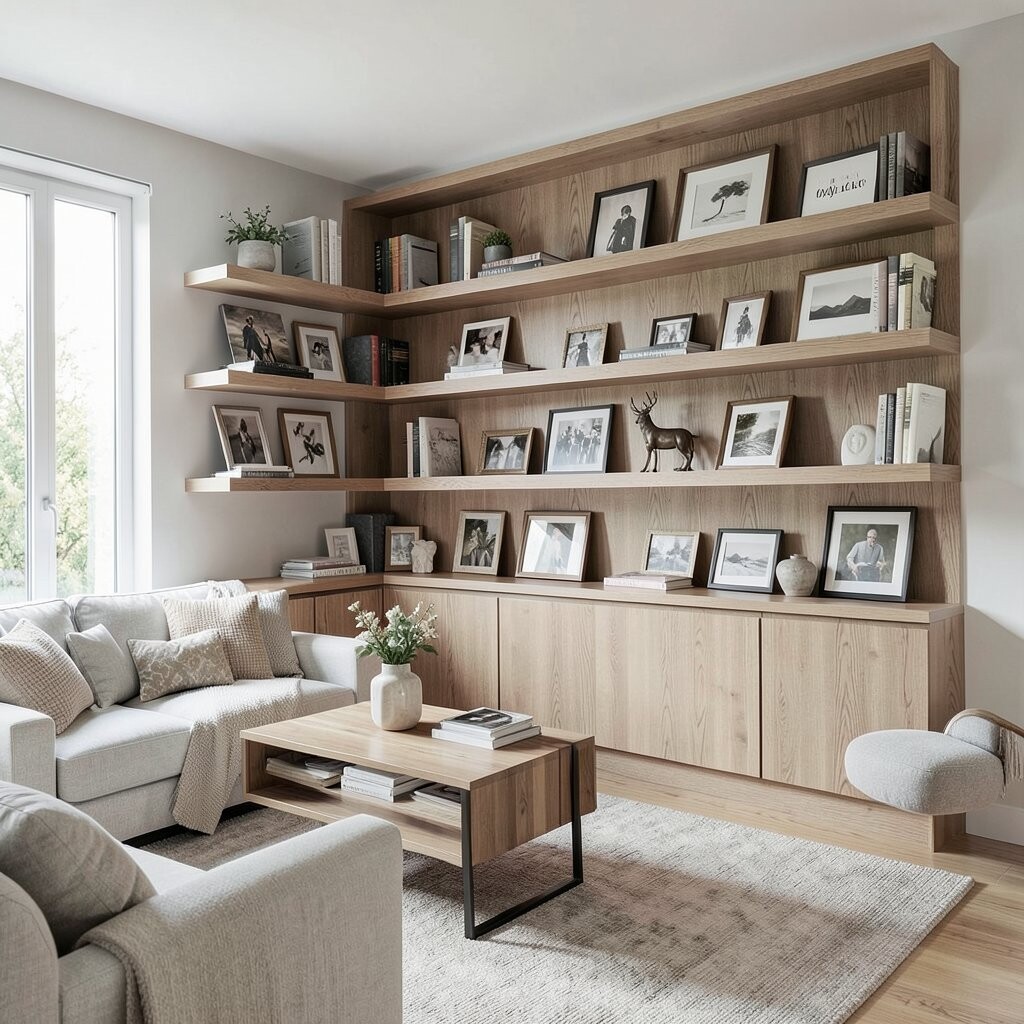
Turn your wall into a mini art gallery, but make it functional. Gallery-ledge shelves give your frames and small sculptures a place to sit perfectly.
In an open concept living room, art shelves add personality without using extra floor space. The benefit is that you can arrange pieces by size, theme, or color, which helps the whole room feel intentional. Leave room between items for breathing space so the wall doesn’t get busy.
Personalize with a color story, like warm creams and greens, or a mixed look with black-and-white photos. If you love trends, try a rotating display where you swap small art often. For cost, gallery-ledge systems can be moderate because they usually need strong mounting and careful spacing.
Use templates when installing so shelf heights stay consistent. This makes the wall look high-end even if you change decor later. Also plan for dust: shallow spaces can collect it, so wipe-down access matters.
6. Sideboard-Top Shelves With Seating-Friendly Height
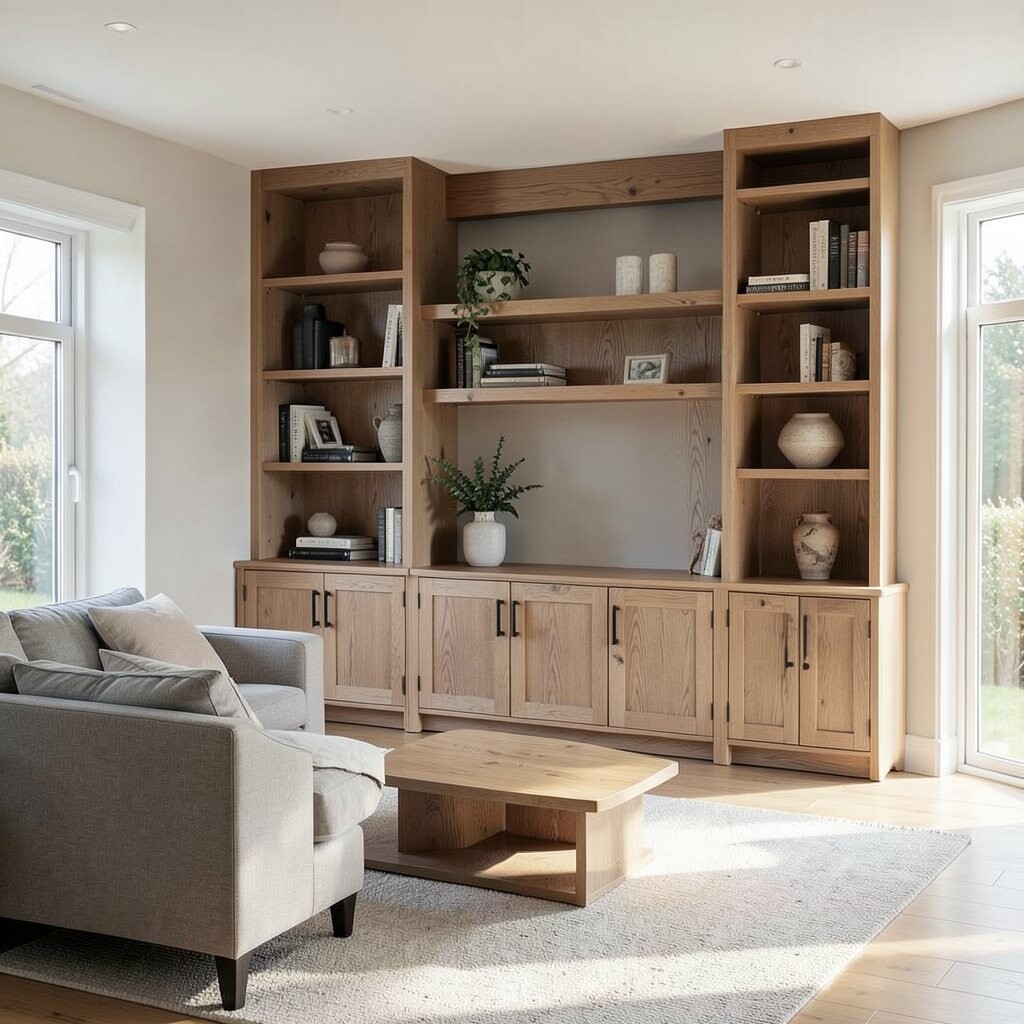
Some living rooms need storage that doesn’t get in the way of comfy seating. Shelves built at a “conversation-friendly” height help keep sightlines open.
Try custom shelves above a low sideboard or console so you can display decor while keeping the center view clear. This works beautifully in open layouts because people can still see across the room. Add lighting under the shelves for a soft glow that makes evenings feel cozy.
For personalization, style the shelves in layers: taller pieces at the ends and shorter pieces in the middle. If you want a trend-forward look, mix in ceramic bowls and simple sculptural objects. Cost considerations are usually manageable, since this design uses a lower footprint and fewer tall units.
7. Curved Corner Shelves for Soft Flow
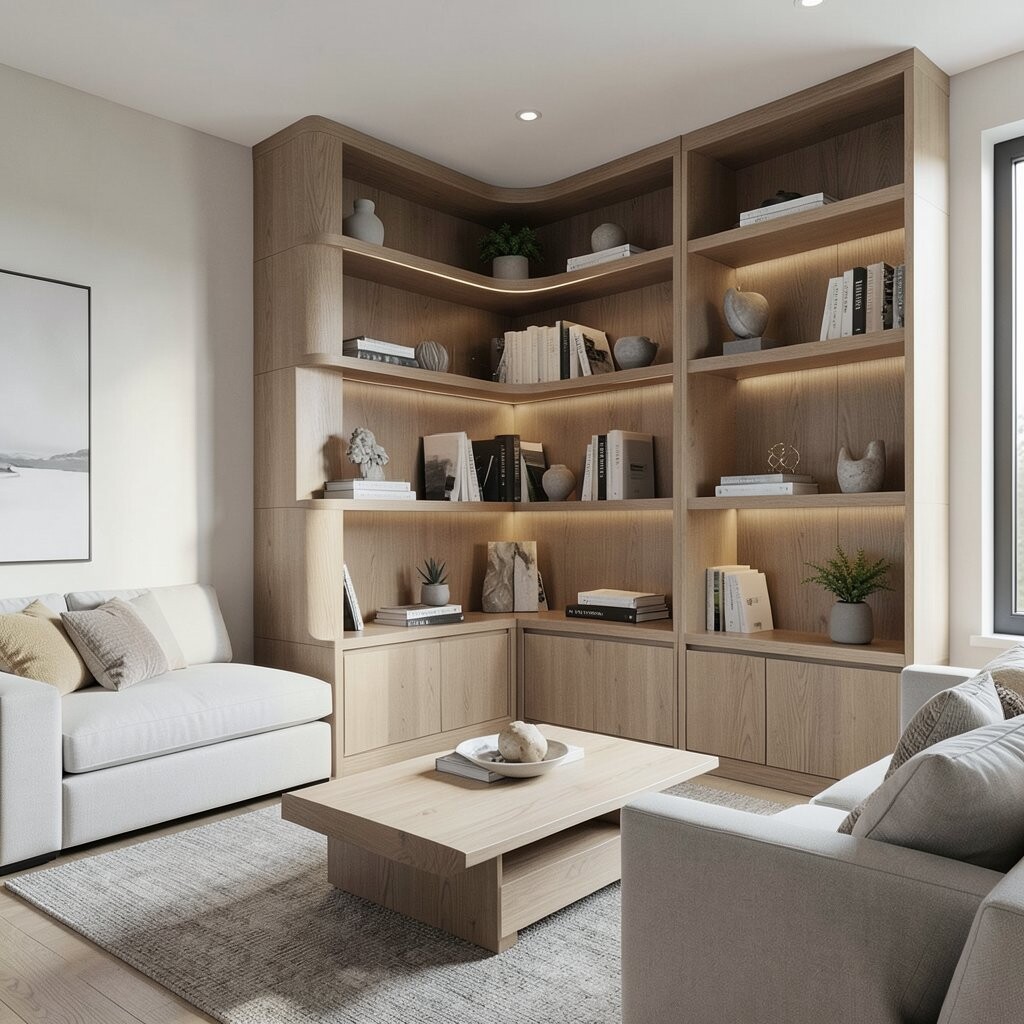
Sharp corners can feel harsh in an open concept plan. Curved or rounded shelves soften the whole room and guide your eye around the space.
Picture a gentle arc of shelves that fits a corner nook near your seating. The visual uniqueness is strong because curved edges feel custom and modern. Use the shelves for compact items like small books, candles, and planters, and add one larger open area for a statement piece.
Personalize by choosing the shelf layout based on what you store most. If you love plants, curve the shelves around light needs by placing sun-friendly items higher and shade-tolerant ones lower. For cost, curved builds can be higher due to custom shaping, but the look is often worth it in a main living space.
To make it practical, ask for a design that includes stable bracing. Curved supports help the wood stay secure over time. This is especially important if you plan to place heavier objects.
8. Oversized Book Shelves With Reading-Lane Vibes
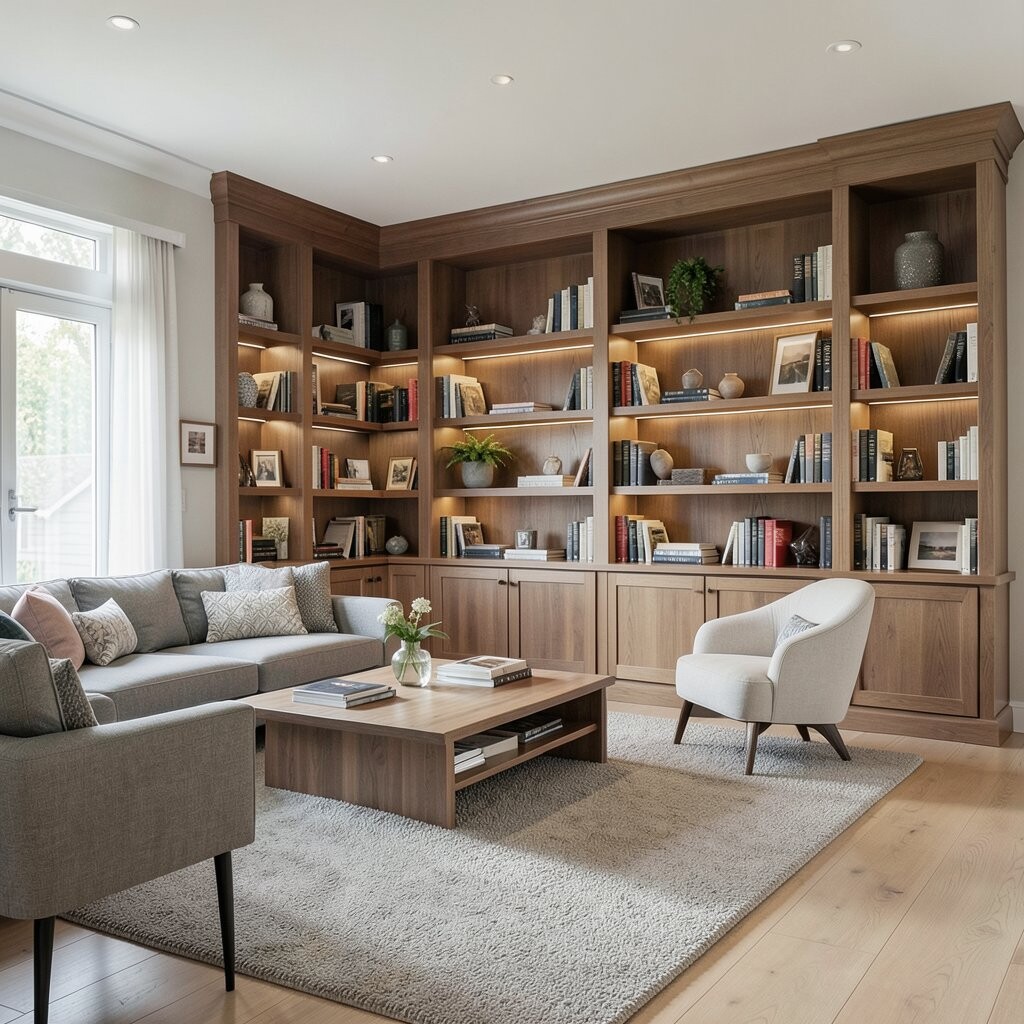
If books are part of your daily life, show them off proudly. Oversized shelves that run long along a wall create a reading-lane vibe even when the room is busy.
Place the tallest shelf spans near seating or a nearby ladder chair zone. The benefit is instant coziness and a strong visual anchor in the open room. Use adjustable shelves so you can shift for different book sizes, from art books to thicker novels.
For personalization, add a small “favorite reads” shelf that sits at eye level. This small choice makes the whole display feel lived-in. A current trend is mixing book spines with vertical trays or small framed prints so the wall feels more design-forward.
Cost considerations depend on shelf depth and the wood grade you choose. Deeper shelves look great but use more material, so plan your spending based on what you actually need stored. If budget is tight, start with fewer sections and expand later.
9. Minimal White-Oak Shelves With Clear Lines
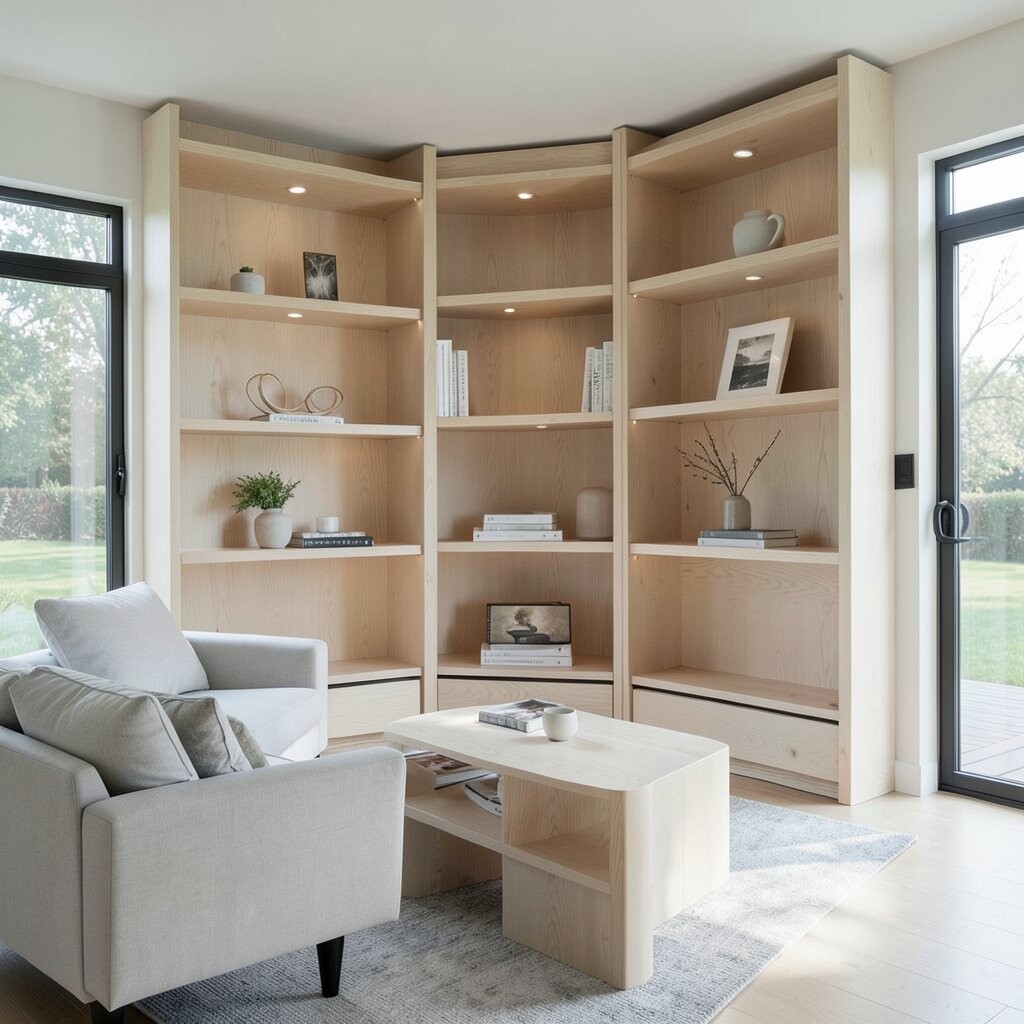
Minimal shelves can look stunning, especially in open concept rooms. Light oak tones with crisp spacing create a calm, clean feel.
Imagine a long run of shelves with simple edges and no extra trim. That clarity makes the room feel airy while still giving you functional storage. Keep items simple: a few plants, a couple of framed photos, and neatly stacked baskets.
Personalize the look with a consistent color palette. For example, pick one or two accent colors like deep green and warm beige. If you love current trends, choose matching wood stain and clean hardware to lean into modern simplicity.
Cost can be reasonable if you keep the design straight and avoid complicated angles. Straight runs mean fewer custom parts and usually lower labor costs. Ask your builder for a few finish samples before deciding, because lighting in your room can change how wood looks.
10. Media-Wall Shelves With Cable-Friendly Planning
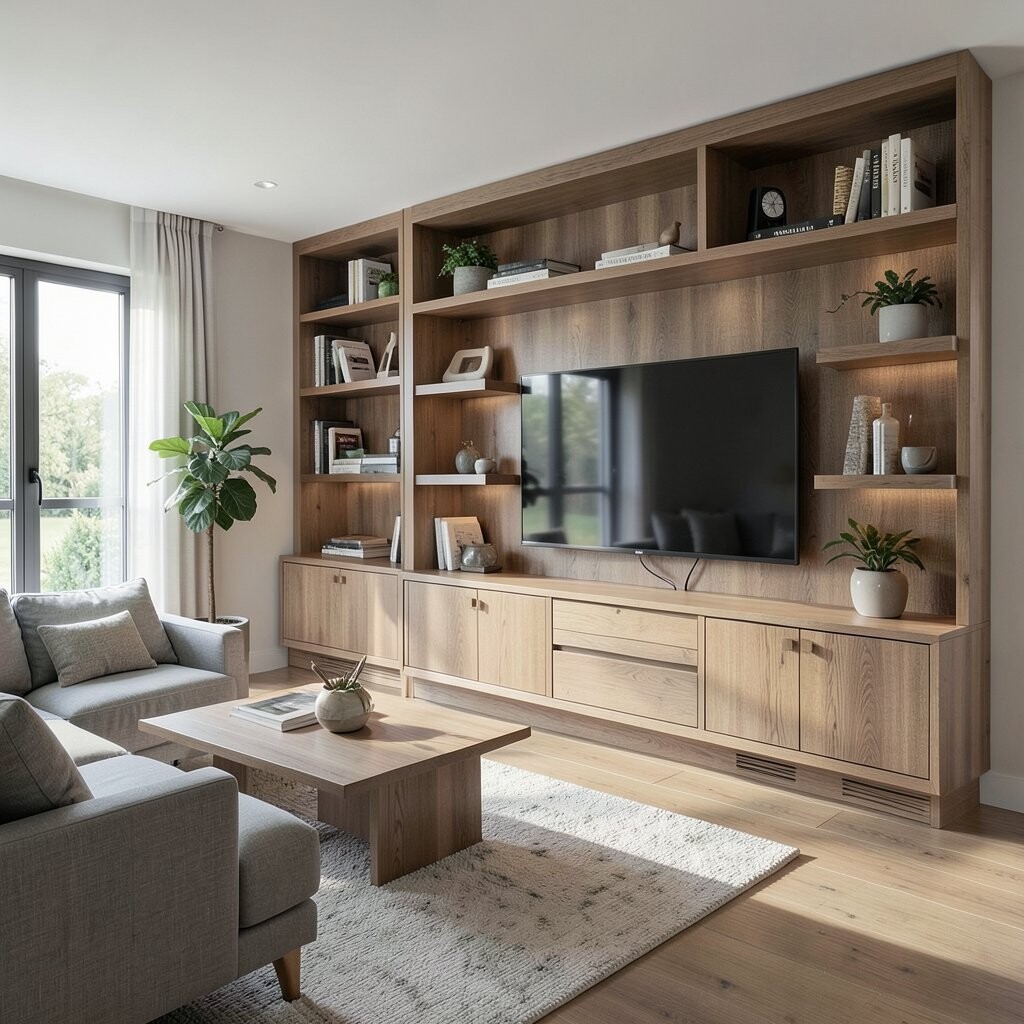
A media wall can be both sleek and smart when you plan for cables from the start. Custom wooden shelves around a TV keep the living room tidy and stylish.
Use open cubbies for consoles and media accessories, and add closed sections for things like gaming controllers and extra remotes. This keeps everything reachable without clutter. The best benefit is that your open concept living room stays organized while still feeling welcoming.
For personalization, choose shelf spacing that matches your devices, like sound bars, game systems, or streaming boxes. A trend right now is mixing wood shelving with subtle lighting so the area looks warm, not harsh. Cost considerations include electrical work, which can add to the budget but makes daily life smoother.
Plan ventilation and cable paths before installation. A tidy setup is not only about looks; it also helps devices stay cool. If you’re budget-conscious, prioritize cable management before adding more decorative items.
11. Open Back Shelves for a Light, Airy Effect
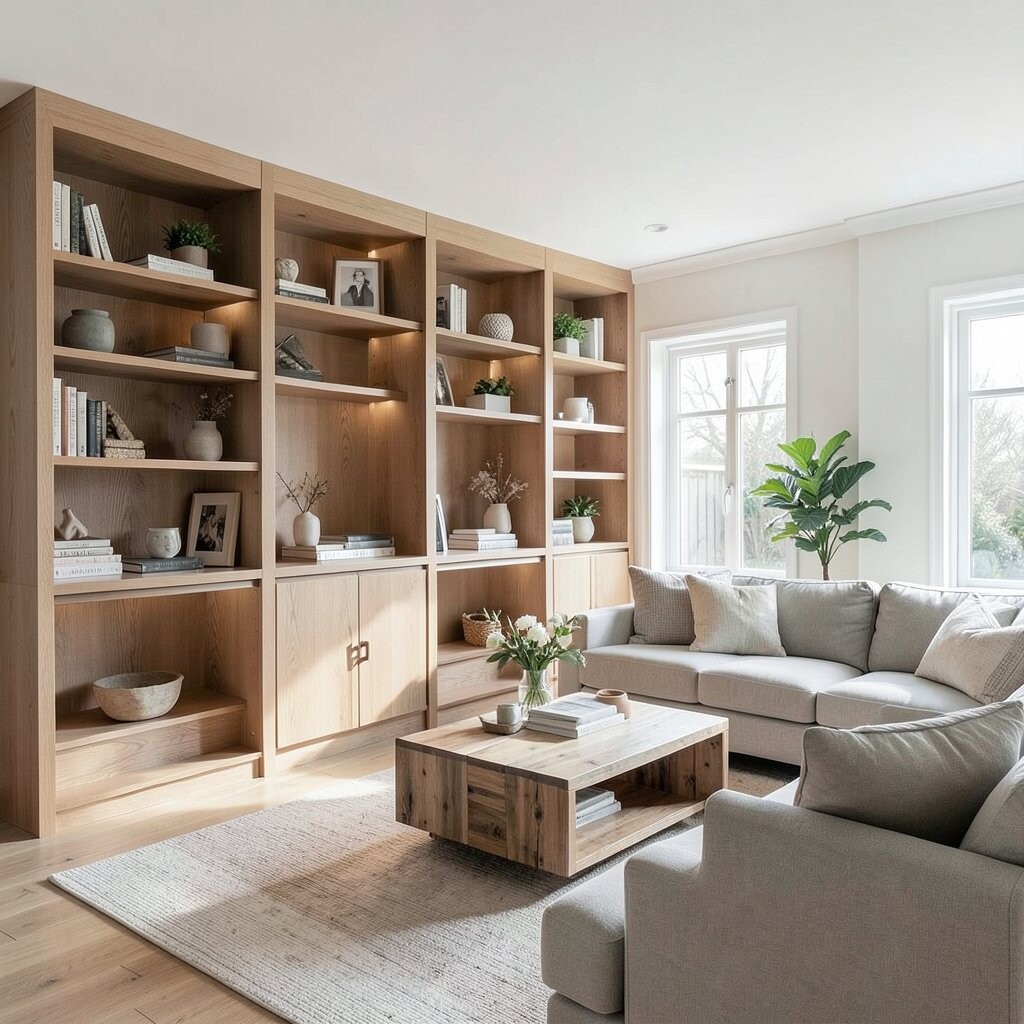
Open back shelves can make a built-in system feel extra airy in an open layout. The structure looks lighter, and you keep the room’s soft depth.
Visualize shelves where the back isn’t fully solid, so the wall behind you still shows. This can be a great choice when you love the background texture of paint, brick, or wallpaper. The benefit is a more relaxed style that doesn’t feel bulky or heavy.
Personalize by placing decor that adds depth, like woven baskets and textured ceramics. If you follow current trends, use natural materials that look great in daylight. Cost can be slightly higher for custom build quality, because open backs still need strong construction and stable mounting.
12. Shelf + Curtain Hybrid for Flexible Display
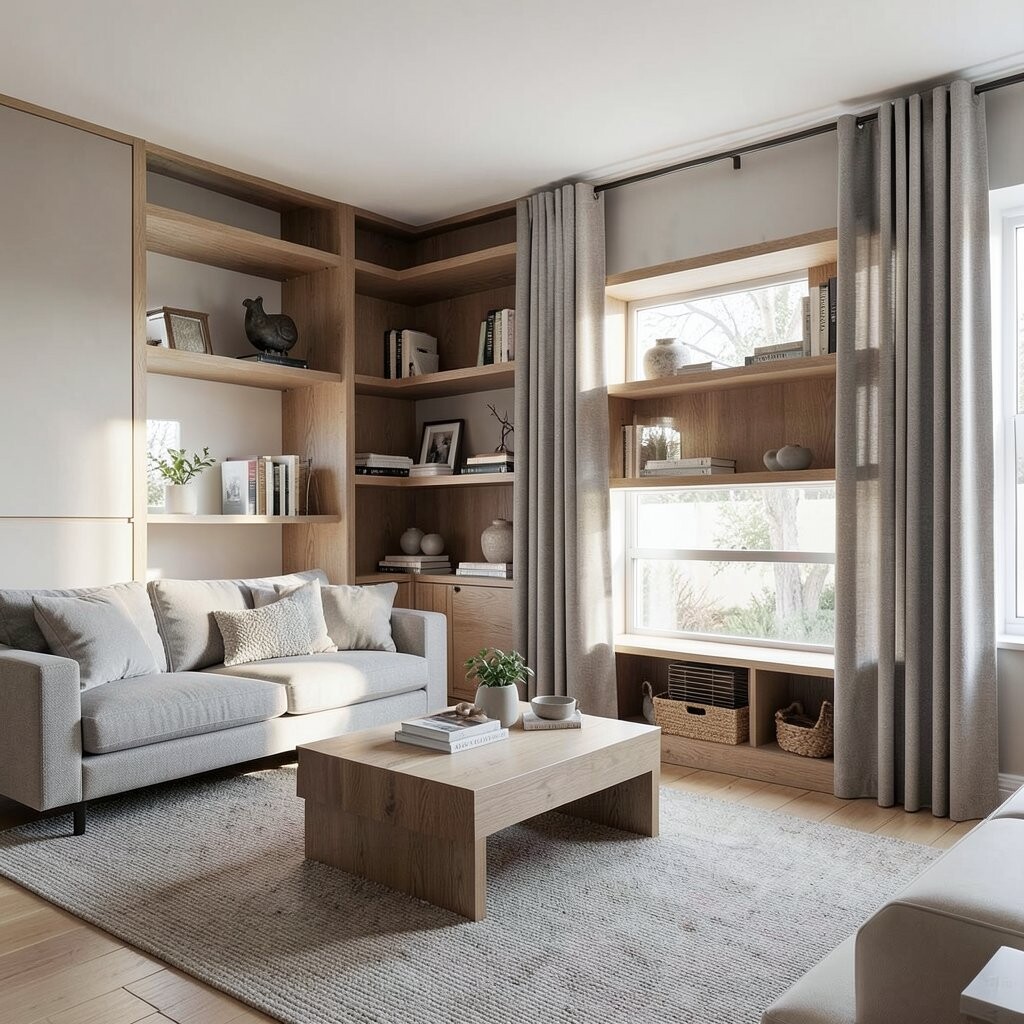
Sometimes you want display space, but you also want flexibility. A shelf system paired with curtains lets you hide items when you want a clean look.
Picture wooden shelves topped with soft fabric panels that can open and close. This is a fun way to change the room’s mood without doing renovations. The benefit is that your living room stays neat for guests while still giving you storage.
For personalization, use a fabric color that matches your couch or rug. This style also fits current trend ideas like “soft modern,” where natural textiles mix with clean wood. Cost considerations are often lower than fully built cabinet doors, but the fabric choice and tracking hardware can still add up.
13. Asymmetrical Staggered Shelves for Bold Character
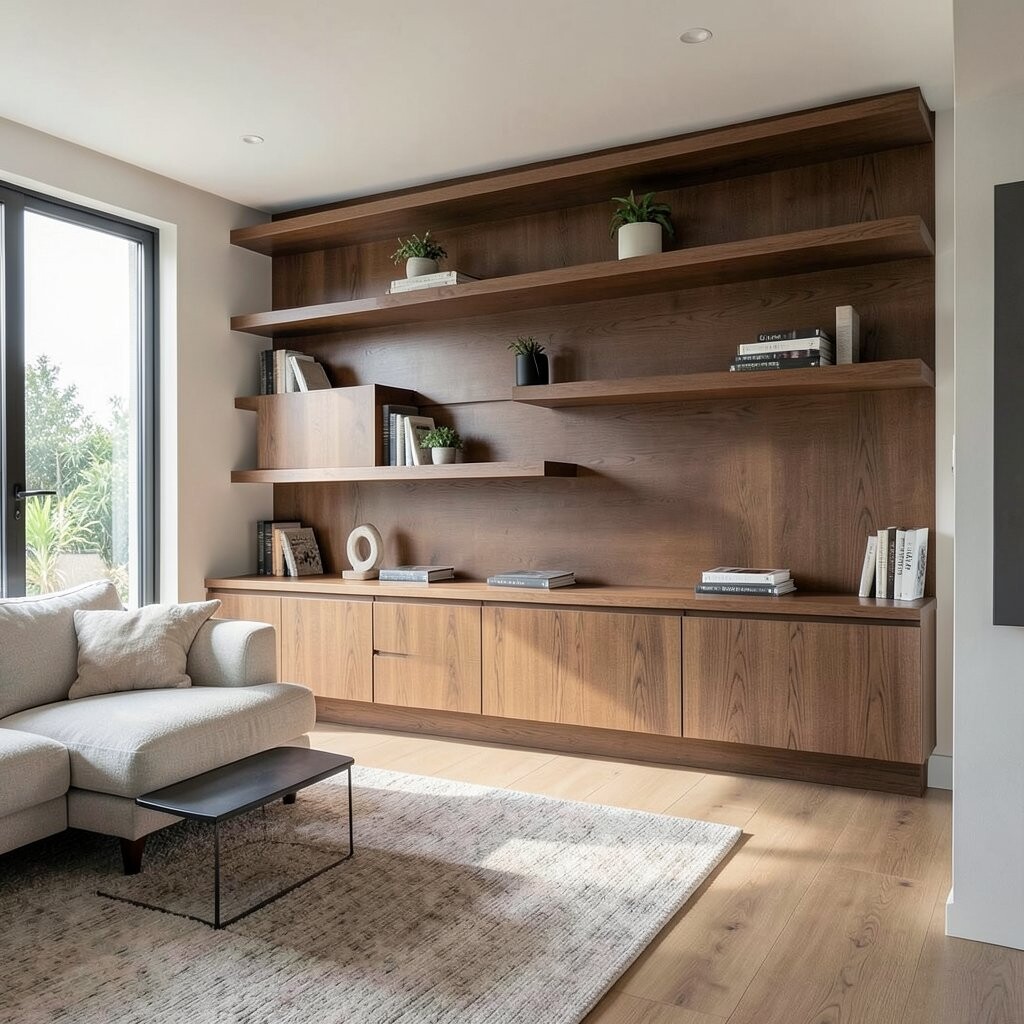
Symmetry is nice, but asymmetry can feel more exciting and personal. Staggered shelves create a playful pattern that looks like it grew naturally over time.
Imagine a wall where shelf heights step up and down, giving each item a different “stage.” The benefit is that your decor looks more dynamic, and the room feels less formal. Use asymmetry to highlight the center point, like a mantel-style area or a statement art piece.
Personalize by choosing a theme, such as travel keepsakes, pottery, or family photo moments. If you want a trend, lean into the “layered styling” look with books, objects, and framed prints together. Cost can rise if you need precise custom cutting, but the payoff is a one-of-a-kind look.
When designing, draw a simple layout first. This helps you avoid placing shelves where you later wish you had more space. A little planning now prevents expensive rearranging later.
14. Backlit Wooden Shelves for Cozy Evenings
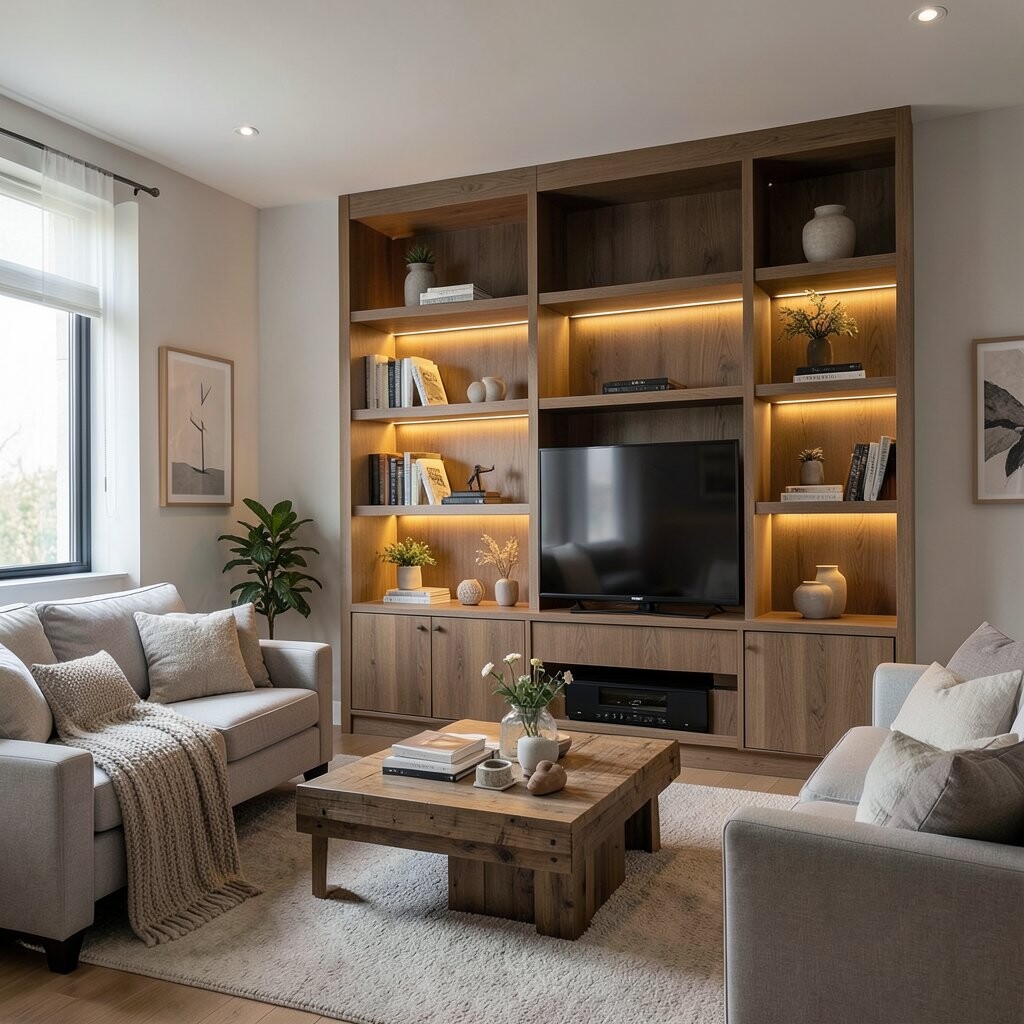
Lighting can make shelves feel like warm furniture, not just storage. Backlit wooden shelves create a soft glow that looks great at night.
Picture a gentle light behind the wood, making the items on the shelves look brighter and more inviting. The benefit is mood lighting without extra lamps taking over the room. Use this especially in open concept spaces where you want a calm atmosphere across zones.
Personalize by choosing color temperature that fits your vibe. Warmer light feels cozy and relaxed, while cooler light feels crisp and modern. This is a current trend for many homeowners because it adds depth and makes displays look “gallery-like.”
Cost considerations include electrical components and installation. If you’re budget-aware, use lighting only in the most important sections rather than lighting every shelf. Also ask about dimmers for extra comfort.
15. Reclaimed-Wood Shelves With Modern Lines
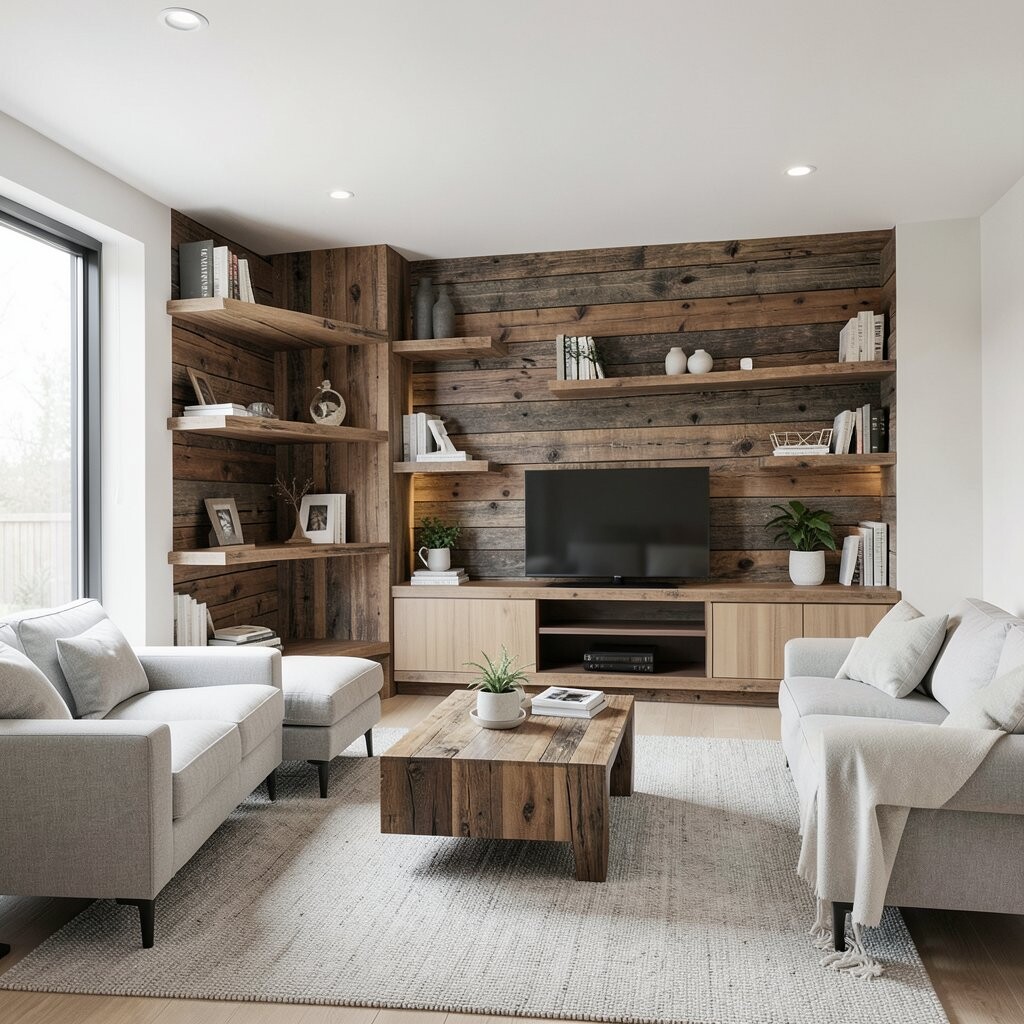
Reclaimed wood can bring history into your home while still looking stylish. When you pair it with modern shelving lines, you get a warm and balanced look.
Think of shelves with visible grain and subtle color variations that make each plank unique. The benefit is that your shelves look one-of-a-kind even without fancy decor. You can use them for plants, books, and family heirlooms, and they will always look interesting.
Personalize the character by choosing a layout that spreads the most beautiful boards across visible spots. If you’re following current trends, mix reclaimed wood with clean metal brackets for a modern contrast. Cost can vary widely because reclaimed wood quality affects price, and custom milling may be needed for consistent thickness.
Before buying, ask how the wood was stabilized and sealed. Proper sealing helps with durability in daily living. This is especially important for open living rooms with strong sunlight.
16. Floating Shelves Over a Sofa for Everyday Ease
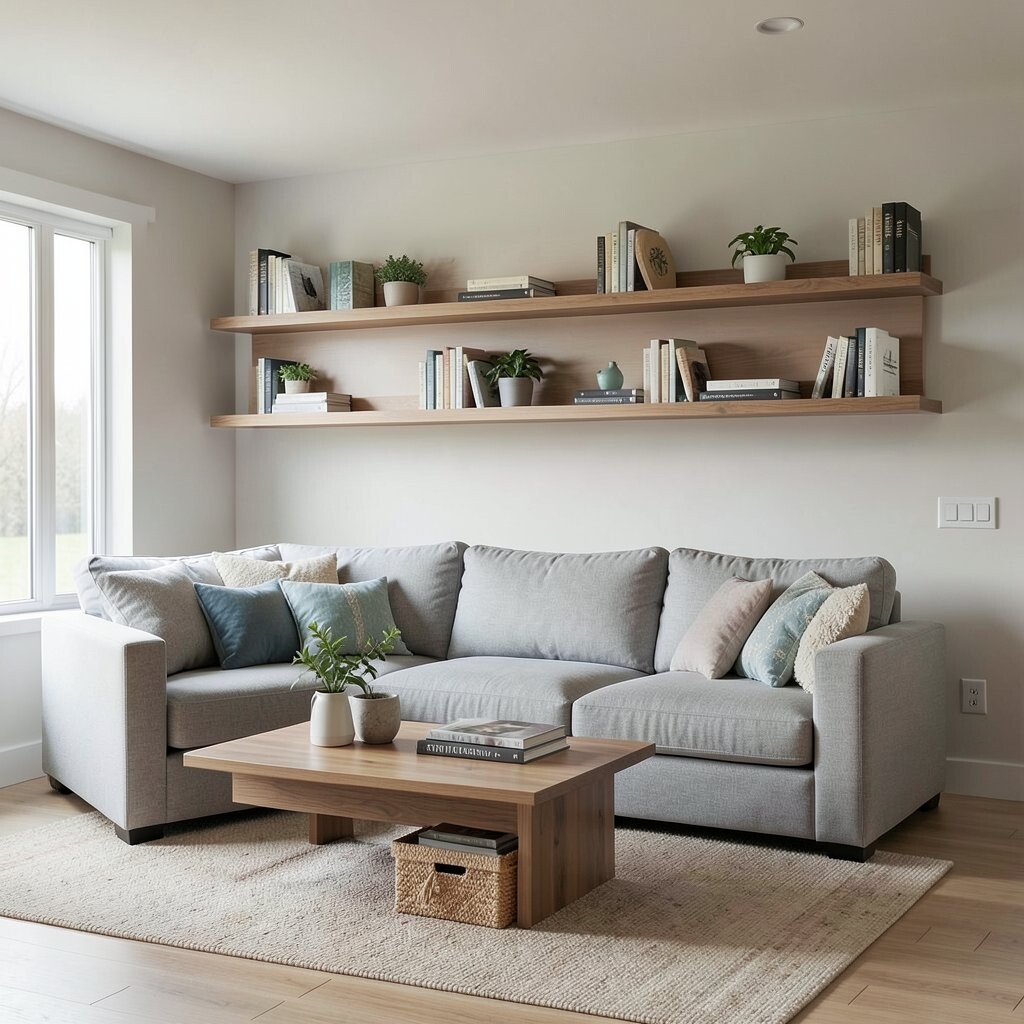
Want shelves that feel useful every single day? Put floating shelves above your sofa so you can reach essentials without standing.
Visualize a neat row of shelves at a comfortable height, perfect for reading glasses, cozy throws, and small decor. The benefit is convenience, and it makes the seating area feel designed. Keep spacing consistent so the wall looks calm and not chaotic.
Personalize by adding a small “tea corner” shelf with mugs and a tray, especially if your open layout connects to a kitchen. For trend ideas, include a few vertical book holders and one sculptural piece to make it feel styled. Cost considerations are usually friendly because floating shelves can be simpler than full built-in walls.
17. Kitchen-to-Living Flow Shelves With Matching Materials
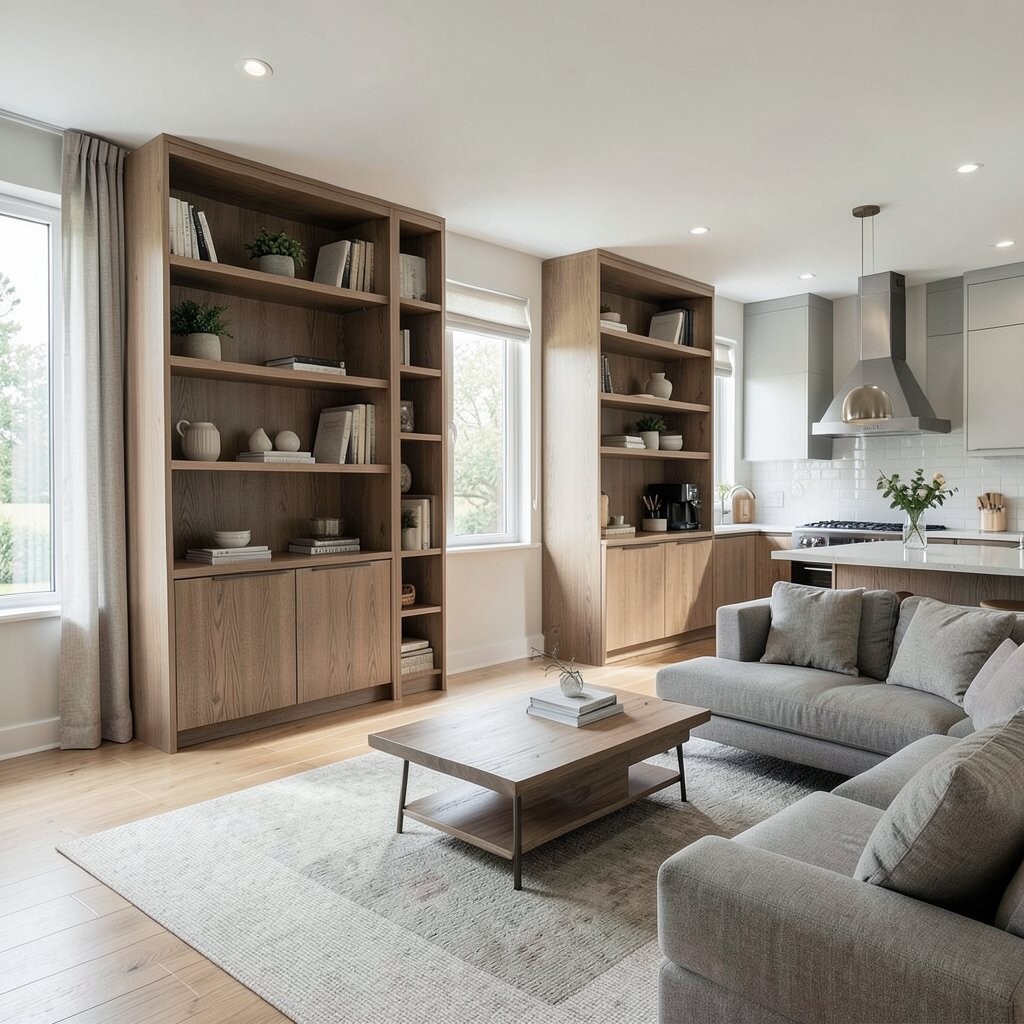
In an open concept plan, the living room and kitchen often blend together. Matching shelves across both spaces creates a smooth, high-end flow.
Consider building shelves that continue the same wood finish used in kitchen cabinetry or island details. The visual benefit is unity, and your room looks designed rather than assembled. Use the shelves to display cookbooks, recipe jars, or coffee accessories so daily items feel intentional.
Personalize by coordinating shelf styling with your kitchen colors. If your kitchen is warm, use wood shelves with warmer tones and matching ceramics. A current trend is using functional display, like open storage for attractive kitchen tools.
Cost considerations can be higher when it requires matching materials and aligning measurements between spaces. However, the cohesive look often makes it feel worth it. If you’re budget-conscious, focus on one main wall connection rather than multiple areas.
18. Small-Cubby Shelves With Plant and Decor Mix
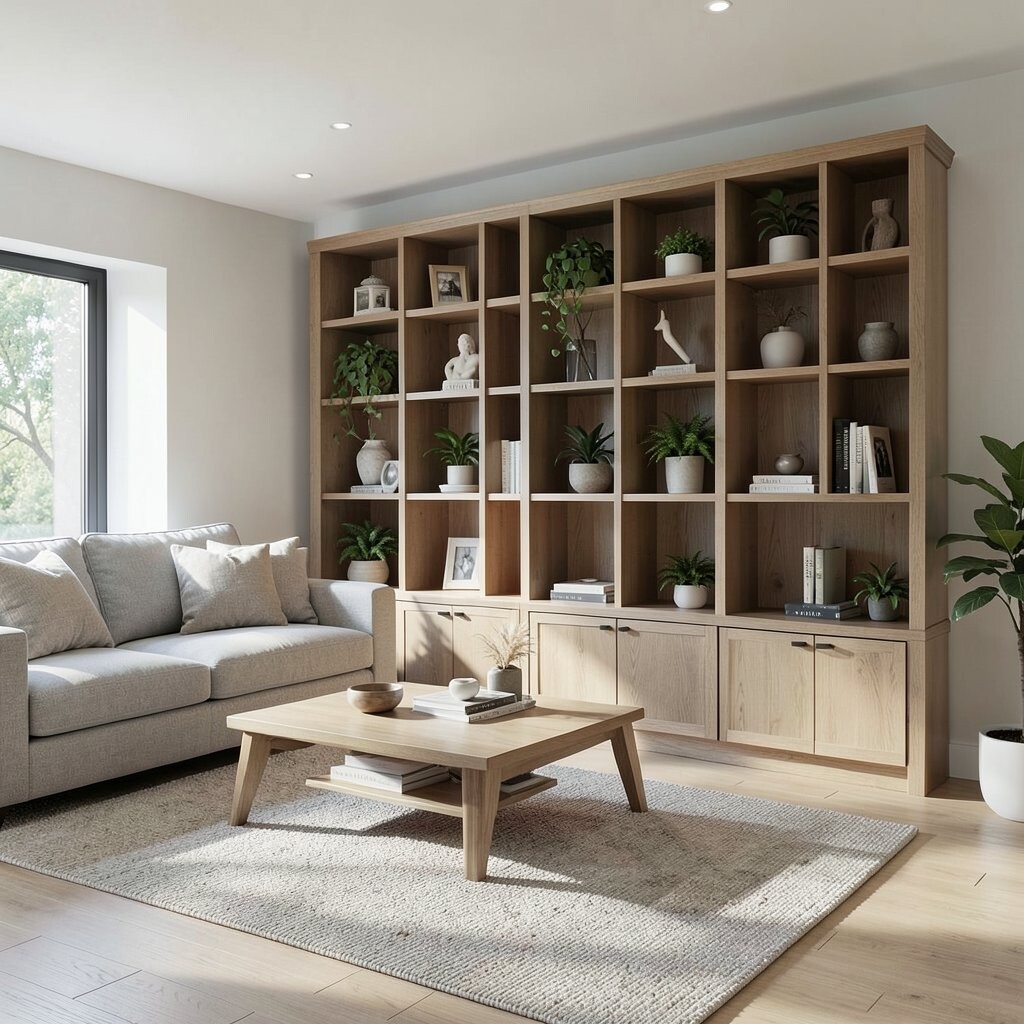
Not every living room needs giant shelves to look great. Small cubby shelving can create an organized, charming display wall.
Picture many compact squares that hold plants, candles, and small photo frames. The benefit is that you can mix styles without clutter, because each item has its own space. This also helps you rotate decor by season without rearranging everything.
Personalize by grouping items in mini collections, like three identical planters or a set of travel mugs turned display pieces. If you enjoy current trends, choose a mix of greenery and soft neutral decor for that “natural modern” vibe. Cost can be moderate because smaller sections often require less material than tall bookcase walls.
Plan for growth if you’re adding plants. Leave extra room in a few cubbies so you can upgrade plant sizes later. Also consider using drip trays or simple liners to protect the wood.
19. Custom Corner Fireplace Shelving With Mantel Storage
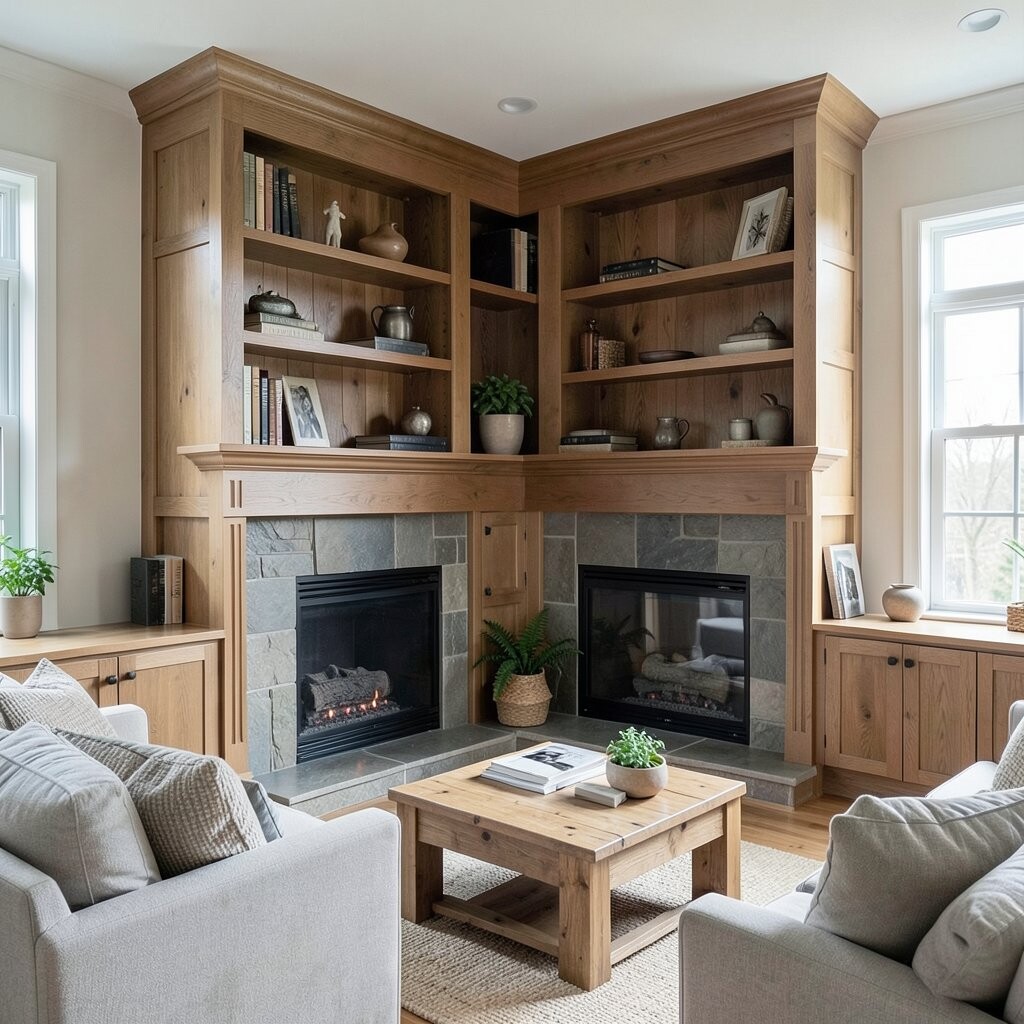
If you have a fireplace, treat it like the focal point of your open concept living room. Custom wooden shelves around the mantel add warmth and extra storage.
Imagine shelves that frame the fireplace, with compartments below for logs, blankets, or board games. The visual uniqueness is strong because the shelves echo the mantel shape while giving the whole room a tailored look. This design helps you keep essentials nearby without crowding the floor.
Personalize by stacking decor that fits the season, like framed family photos in winter and lighter greenery in spring. A current trend is using simple, calm styling near the fire for a gallery feel, not a cluttered look. Cost considerations can be higher because fireplace surroundings need careful measurements and safe clearances.
Work with your installer on heat-safe materials and proper spacing. You’ll protect the wood finish and keep everything safe for everyday use. Once it’s installed, you’ll love how your living room feels both cozy and organized.