
A brown couch is cozy, but it can feel heavy if the room stays the same. Small changes can make it look fresh, bright, and more “you.”
1. Brighten With Warm Cream Accents
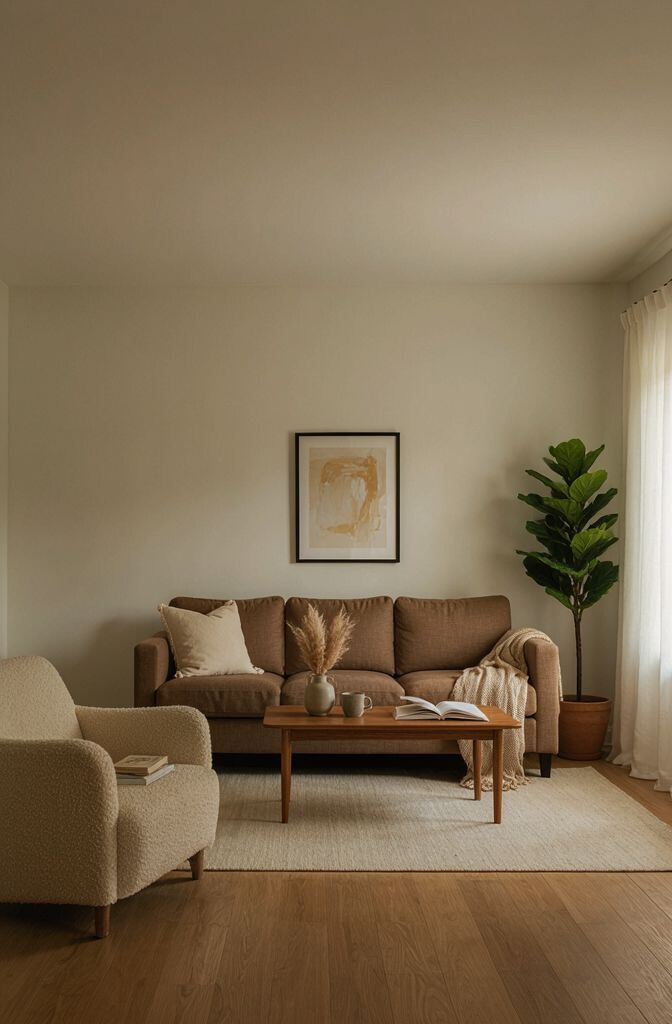
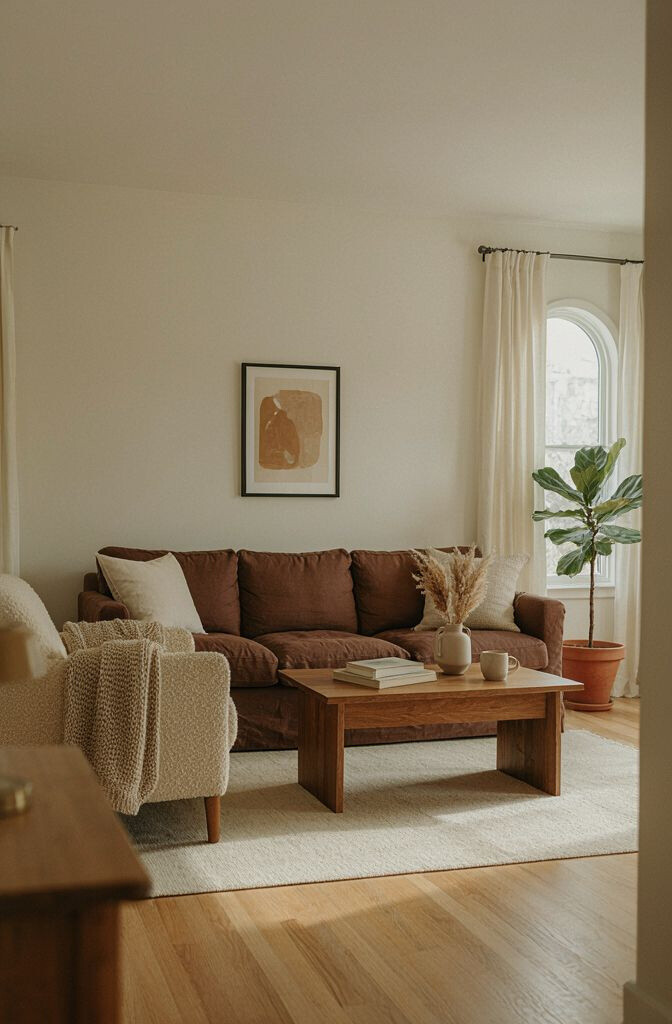
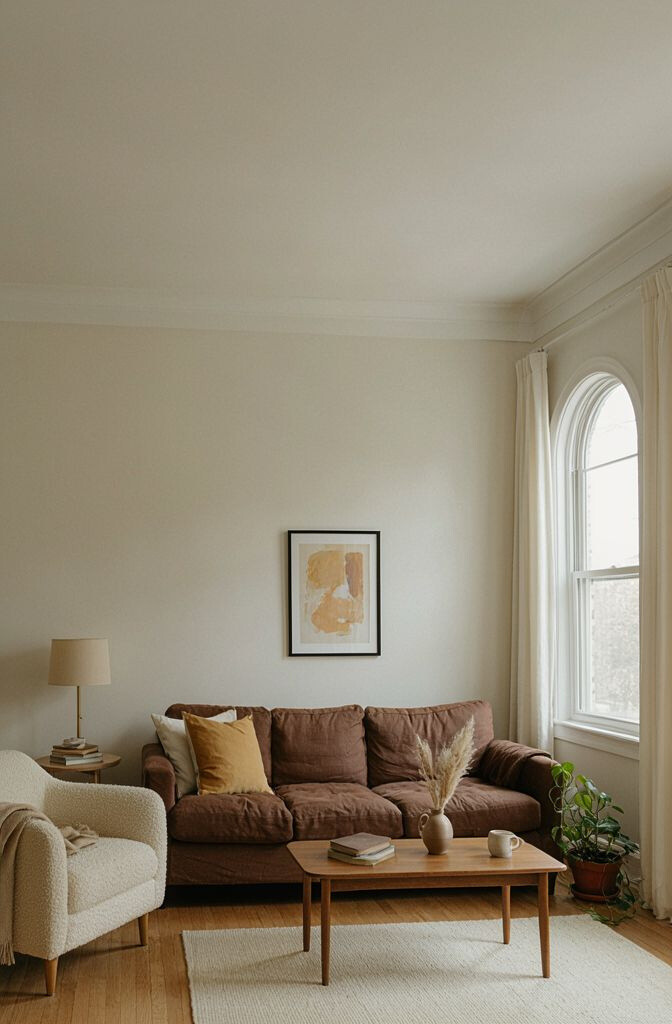
Swap a few darker items for warm cream tones to soften the whole room. Cream also makes brown look intentional instead of dull.
Add a cream throw blanket and a couple of matching pillow covers for an easy refresh. If you already have curtains, try tying them back with cream fabric or a cream rope. Keep the patterns light, like subtle lines or soft texture, so the couch remains the main comfort spot.
2. Layer Textures for a Cozy, Lived-In Look
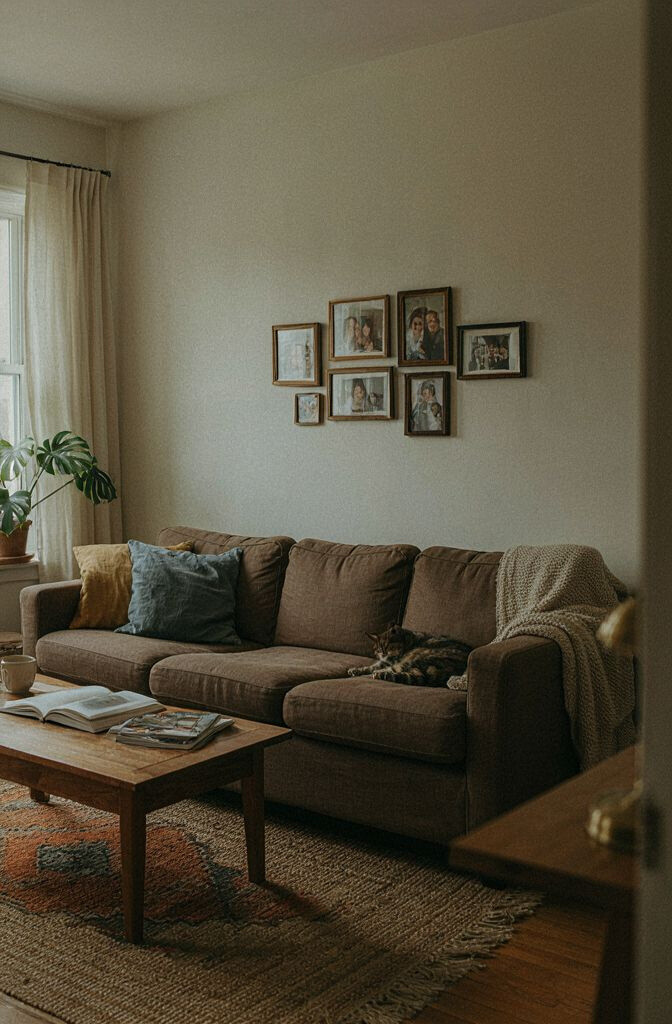
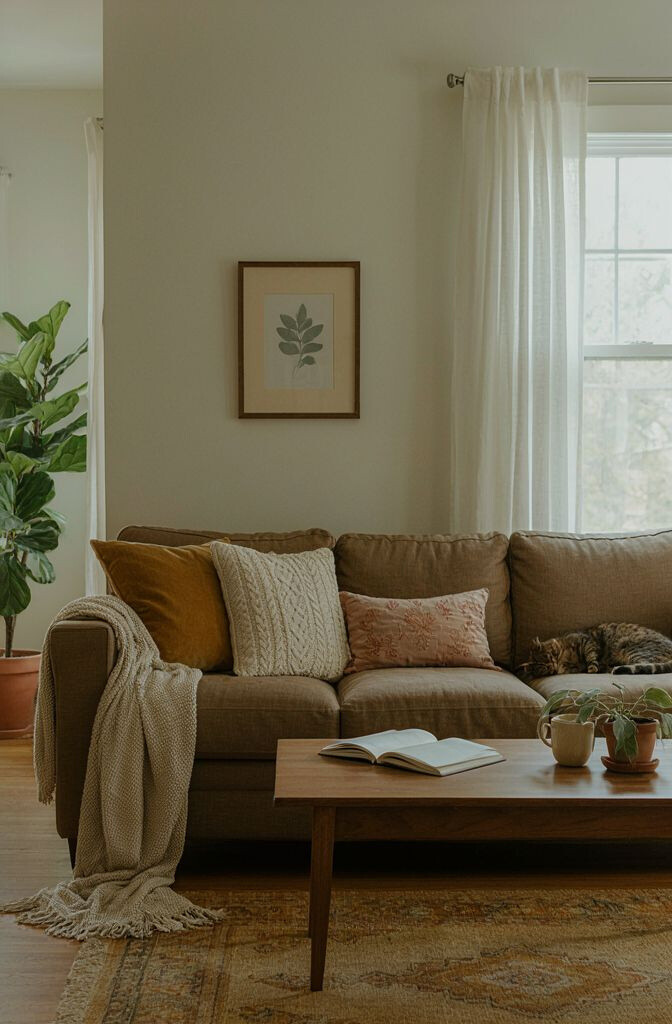
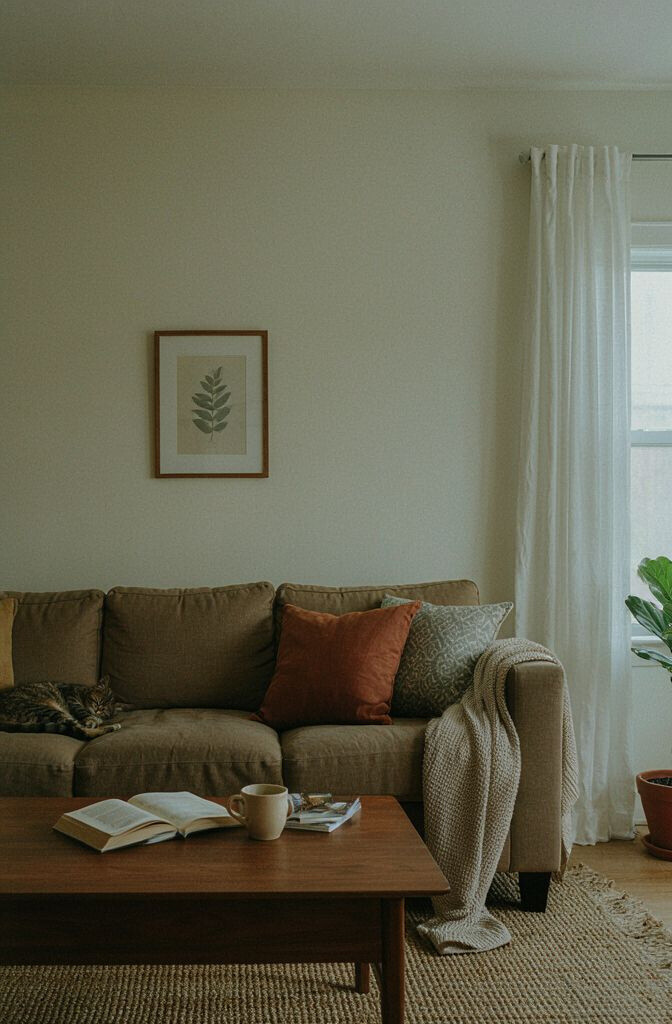
Texture is one of the quickest ways to make a brown couch look styled, not plain. Different fabrics catch light in their own way.
Mix a chunky knit throw, a smooth velvet or faux-silk pillow, and a cotton lumbar cushion. Add a washable rug with a woven pattern to bring in more surface variety. This makes the room feel more layered while staying family-friendly.
If you worry about cost, start with just one new texture piece, like a knit throw. Thrift stores often have interesting blankets and pillow covers for less. Aim for three textures total at first, then add more only if the room still feels flat.
3. Use a Statement Rug to Set the Tone
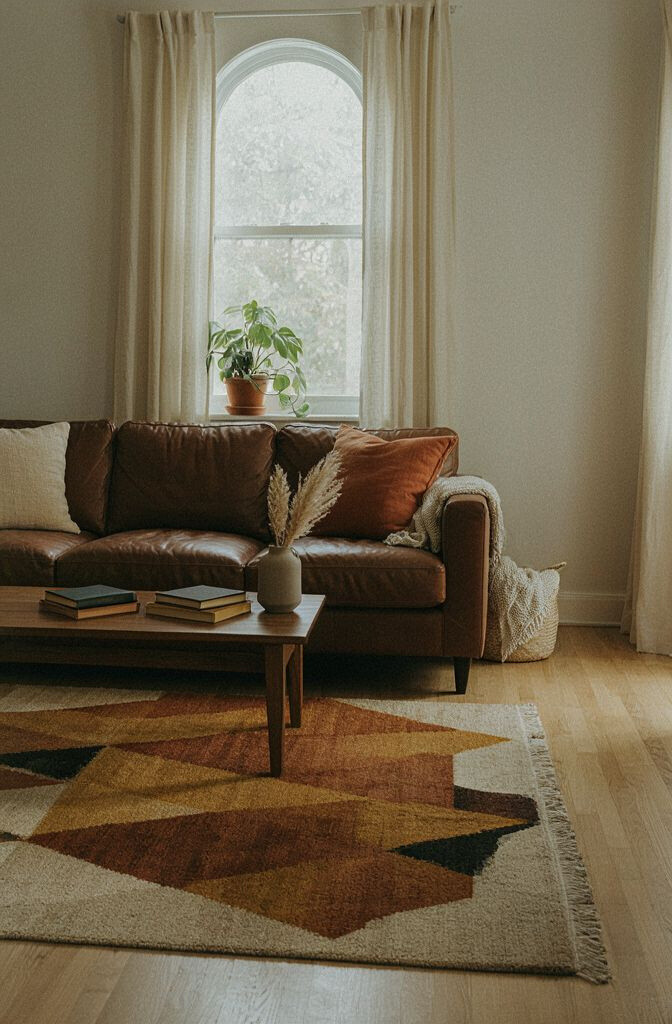
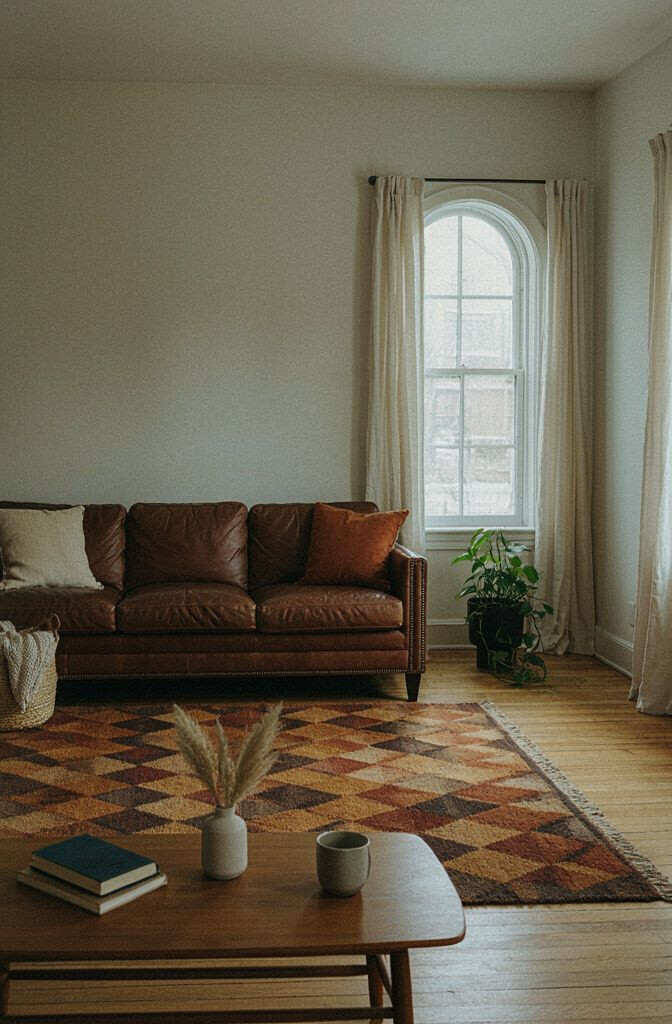
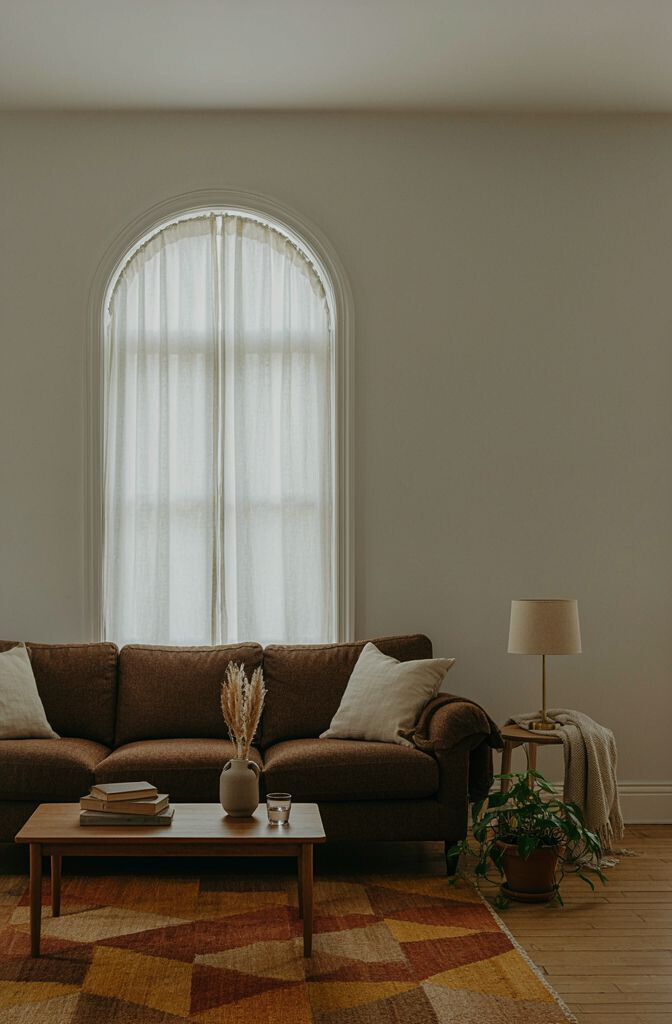
A good rug gives your brown couch a “home base” and pulls the room together. It also helps define seating so the space feels designed.
Choose a rug with a lighter center or a pattern that includes beige, cream, or even a small amount of teal. When the rug looks cohesive, the couch looks less like a single heavy block. Make sure the rug extends far enough under the front legs of the couch so it feels anchored.
Try a medium-height pile for living rooms with pets or kids. Low pile is easier for cleaning, while a slightly thicker rug feels more plush. This one change often makes the biggest visual difference with a manageable budget.
If you’re unsure about color, go for a neutral rug with a gentle pattern and warm undertones. You can add bolder accents in pillows so you can change them later. That way, the rug stays timeless while other decor evolves.
4. Add a Gallery Wall Behind or Beside the Couch
Brown couches look extra stylish when there’s art nearby to balance them. A gallery wall can make the whole wall feel taller and brighter.
Pick frames in black, warm wood, or brushed brass for a clean contrast. Use a mix of prints, photos, and one larger focal piece so it doesn’t look random. Keep the color palette close to your couch tones, like coffee, caramel, and cream, to prevent a clash.
5. Choose Pillows That Create a Color Story
Instead of buying random pillow covers, build a simple color story around your couch. This makes the sofa feel curated, not cluttered.
Start with two neutral pillows, then add one warm accent like rust, one cool accent like sage, and one small patterned pillow. The couch will blend with the whole arrangement, even if the colors are different. Use pillow sizes like 20×20 and 18×18 to create a pleasing mix.
If you want a faster upgrade, replace just the pillow covers and reuse your inserts. Look for zippered covers so you can switch them by season. A small budget can still look high-end when the colors relate to each other.
6. Hang Curtains Higher for Instant Airiness
Mount curtains closer to the ceiling and let them hang longer than you think you need. This trick makes the room feel taller and more open.
Choose fabric in a light cream, warm beige, or a sheer neutral that still offers privacy. Sheers brighten the space while giving the couch a softer backdrop. If you like privacy, use a layered setup with sheer panels and heavier lining.
For practicality, select washable curtains if your living room gets daily sunlight. In the long run, easy-clean fabric saves time and keeps the look fresh. This change costs more than pillows, but it dramatically changes the room’s feel.
7. Bring in Natural Wood for Warm Harmony
Brown upholstery already carries warmth, so natural wood accents help everything feel cohesive. Think about what you love in your kitchen or dining room and repeat that style here.
Add a wooden coffee table, a set of matching end tables, or even a simple wood tray on the couch table. If you already have wood furniture, polish or restain it for a consistent tone. This approach makes the space feel grounded and less “flat.”
Mix the woods lightly, like oak with walnut, but keep the undertones similar. Warm wood pairs beautifully with cream textiles and soft metal details. If you’re on a budget, try a wood tray or frame before replacing larger furniture.
8. Try a Softer Paint Shade on the Nearby Walls
Your couch can look different depending on wall color, even if nothing else changes. Lighter walls tend to make brown feel calmer and more modern.
Consider a warm off-white, soft greige, or a light sandy tone. If your living room feels cool, pick a warmer undertone to avoid a gray cast. Test samples on the wall for a few days so you can see it in morning and evening light.
Keep your trim and ceiling bright so the room stays airy. If painting feels like too much, you can update with a large framed artwork and a couple of neutral accessories instead. Either way, wall color is a powerful background for your sofa.
When you pick a new paint color, coordinate it with your rug or curtains for the smoothest look. A gentle match makes the brown couch feel designed, not accidental. Paint is a bigger project, but it’s one of the most long-lasting refreshes.
9. Add a Table Lamp With the Right Color Temperature
Lighting can make a brown couch look rich and inviting or dull and shadowy. The goal is to add warm, flattering light around the seating area.
Choose a lamp with a warm bulb setting and a shade that diffuses the glow, like linen or a soft white fabric. Place one lamp on a side table or add a floor lamp near an empty corner. That glow helps textures show up better, like knit throws and patterned pillows.
For daily comfort, aim for dimmable lighting so evenings feel cozy. This is also useful if you watch TV or read in the living room. If budget is tight, replacing just the bulb type and shade can still make a big difference.
10. Style a Coffee Table With a Tray and Stacks
A coffee table can either look messy or feel like a styled magazine spread. Use simple items that repeat shape and color to keep it neat.
Try a large tray in wood or black metal, then add one or two decor pieces like a candle, a small vase, and a stack of books. Add a plant or greenery in a simple pot to make it feel alive. Keep clutter out by limiting what you place on top.
11. Pick Throw Colors That Contrast Without Fighting
When you add a throw, it’s an easy way to create contrast while still keeping the room cozy. The trick is choosing contrast that feels friendly, not harsh.
If your couch is medium brown, try a deep green, muted blue, or even a warm terracotta throw. If your couch is dark, a lighter oatmeal or sandy throw will open the space. Use one strong accent color so the whole look doesn’t feel scattered.
For practicality, select a throw that’s machine washable and soft to the touch. You’ll use it more, which keeps the styling consistent. This kind of change is usually affordable and quick to swap out later.
If you love seasonal decor, keep your throw and pillow covers neutral and rotate the accent color each season. That way, you get variety without starting from scratch. Brown couches make this strategy especially effective.
12. Add a Sectional-Friendly Layout With Clear Pathways
A brown couch can look bulky if the layout blocks walking paths. Rearranging to create flow can make the room feel instantly easier to live in.
Pull the couch slightly away from the wall if you can, then place an end table on the side that gets the most use. Make sure there’s space to walk behind chairs or near the coffee table. Clear pathways make the room feel bigger even when nothing new is added.
If you have a sectional, test different configurations by using blankets on the floor first. This helps you “preview” the layout without moving heavy pieces right away. Layout planning is free, and it often improves comfort as much as appearance.
13. Choose a Sunburst or Geometric Wall Clock
Wall clocks add both function and personality, especially near a seating area. A bold clock can act like a mini focal point that balances the couch.
Pick a design with a warm metal finish or a cream background with brown accents. Geometric shapes can look modern, while a sunburst style feels playful. Hanging it at eye level helps it feel intentional and keeps the wall from feeling empty.
To personalize, match the clock color to your lamp base or coffee table frame. Small coordination details create a polished look. This idea doesn’t require furniture upgrades, so it’s often a budget-friendly win.
14. Use Neutral Curtains With a Subtle Pattern
Plain curtains can make a room feel a bit flat, especially with a solid brown couch. A subtle pattern adds movement without overpowering your sofa.
Look for stripes, small motifs, or a gentle texture weave in beige or cream. The pattern should be quiet enough that it won’t compete with pillows and rugs. This approach keeps the room calm while still feeling designed.
If you’re worried about pattern overload, keep your pillow pattern minimal and focus the texture in the curtains. Curtains cover a large area, so even small designs matter. This is a practical way to refresh the space without changing your furniture.
15. Create a Soft Reading Corner With a Cozy Chair
Pairing your couch with a comfortable chair makes the living room feel more complete. It also adds extra seating without making the room look crowded.
Choose a chair in a light neutral fabric or a pattern that repeats colors from your pillows. Add a side lamp and a small side table so the corner is functional. This gives you a dedicated spot for reading, relaxing, or chatting.
For comfort, pick cushions that feel supportive, not just decorative. If you have kids or pets, choose performance fabric so stains are easier to handle. This idea makes the couch feel less like the only star in the room.
16. Add a Statement Plant or Floor Planter
Greenery brings life to a brown couch and softens hard edges in the room. Plants also help the space feel more fresh and inviting.
Place a tall floor plant near the corner by the couch or choose a medium plant that sits beside the end table. If you don’t want a tall look, use a grouped arrangement of smaller plants on a tray or shelf. Choose pots in terracotta, black, or cream to match your color story.
17. Swap in Modern Metal Details for a Clean Update
Metal accents can make brown upholstery look updated and crisp. Think of them like the finishing touches that pull the room together.
Add a brass or black metal tray, picture frames, or a modern lamp base to create a polished contrast. Keep metals consistent so the room looks intentional rather than random. Even small upgrades can feel like a bigger design change when they’re placed in key spots.
If you have budget constraints, start with one or two metal pieces and build from there. It’s easier to add than to remove. This approach also works well if you plan to style the room seasonally over time.
18. Style Shelves With Books, Baskets, and Small Art
If your living room has shelves, they’re a great place to echo your couch colors. Shelving styling can make the entire area feel calmer and more organized.
Use a mix of books, framed photos, and woven baskets to add texture and function. Pick basket colors that match your decor, like natural tan or warm gray. When the shelves look curated, the couch feels like part of a complete design.
19. Choose a Slipcover or Cover That Brightens the Couch
A couch cover can change the vibe faster than almost any other upgrade. If your brown couch feels too dark, a lighter cover can open the room.
Consider a slipcover in oatmeal, light taupe, or warm beige for a fresh look. If you like brown but want contrast, try a cover with a textured weave rather than a flat color. Look for wrinkle-resistant fabric so the couch always looks neat.
Cost varies widely, so set expectations before shopping. Custom covers can be pricey, while stretchy slipcovers can be more budget-friendly. Measure carefully and check return policies so you get a fit that looks smooth.
This is also a great personalization option for families because you can switch covers by season or after spills. A cover keeps your original couch safe and helps you redesign without replacing furniture. It’s both practical and visually impactful.
20. Use Colorful Throw Pillows in a Balanced Way
Colorful pillows bring energy to a brown couch and make the seating area feel welcoming. The key is to balance them so the room still feels cohesive.
Pick one main accent color like mustard, teal, or deep pink, then add smaller hints of it across other decor. Mix patterns carefully by repeating a shape or color between them. For instance, pair a striped pillow with a solid pillow that shares the same accent shade.
21. Create Depth With a Layered Wall Treatment
If the wall behind the couch feels plain, layered decor can create depth and interest. Depth helps brown furniture feel less heavy in the room.
Try hanging a large art piece, then placing a smaller shelf beneath it for plants or a few framed photos. You can also use a fabric panel or textured wall hanging in cream or warm neutral tones. The goal is to add dimension without cluttering every inch of the wall.
For personalization, choose art that matches your lifestyle, like travel prints, family photos, or abstract shapes in your room’s palette. This lets the couch act as a foundation while your personality shows through. If you want a budget-friendly option, swap one large print for a set of smaller frames that you can move around over time.