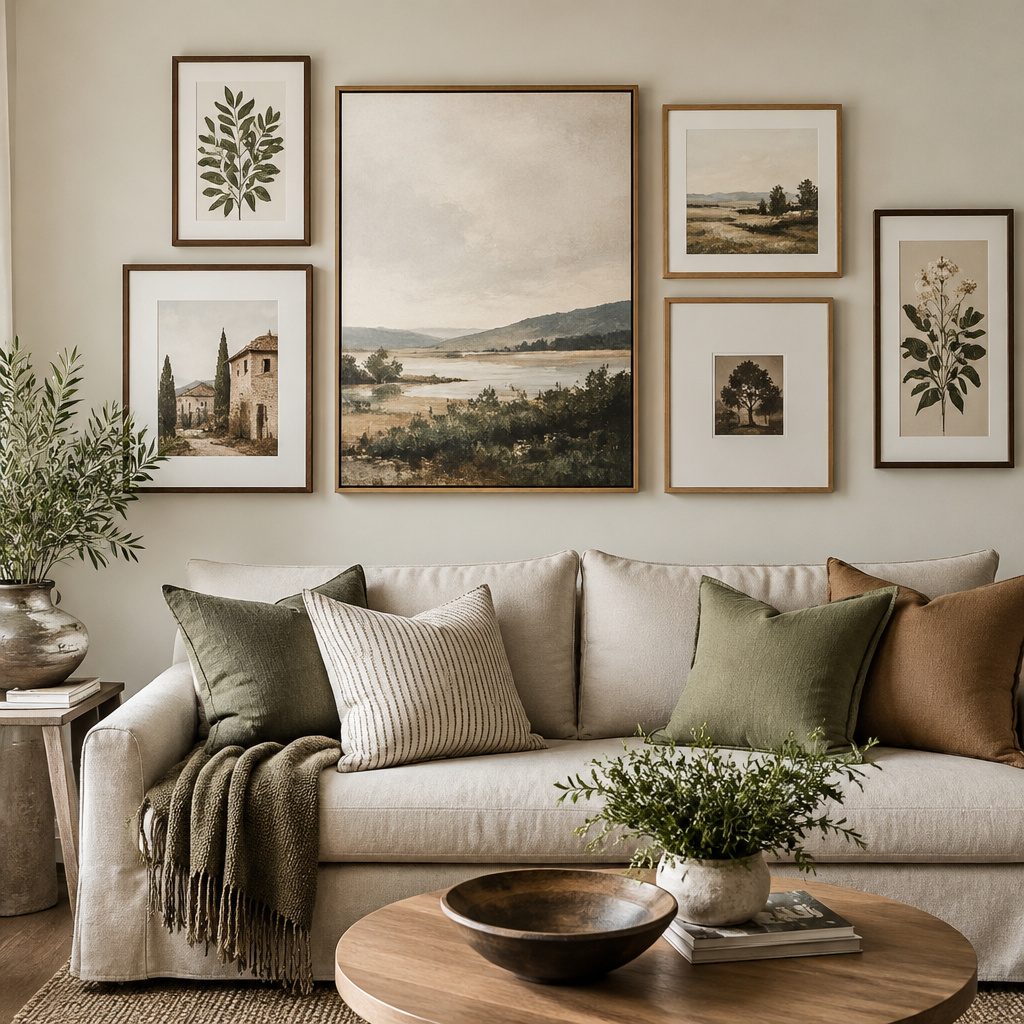
Walls feel brighter when the art fits your life. The good news is you can make it happen in many creative ways.
1. Gallery Wall of Mix-and-Match Frames
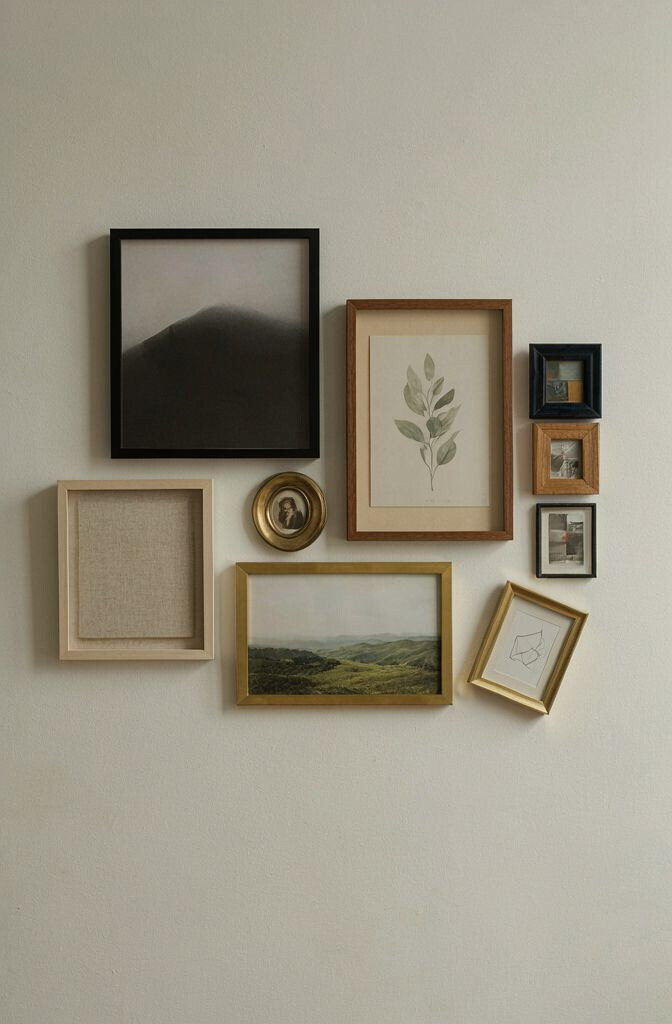
A gallery wall can instantly make a room feel styled, even if you’re starting from scratch. Choose frames that share one common detail, like color or mat color, so everything looks intentional.
It’s unique because you can mix shapes—rectangles, squares, and even one round frame—without the layout looking chaotic. This kind of wall art helps tie together your furniture, bedding, or rugs by repeating color tones in a new way. For practical tips, lay everything out on the floor first, then use painter’s tape on the wall to test spacing before you hang a single nail.
2. Framed Fabric or Textile Art
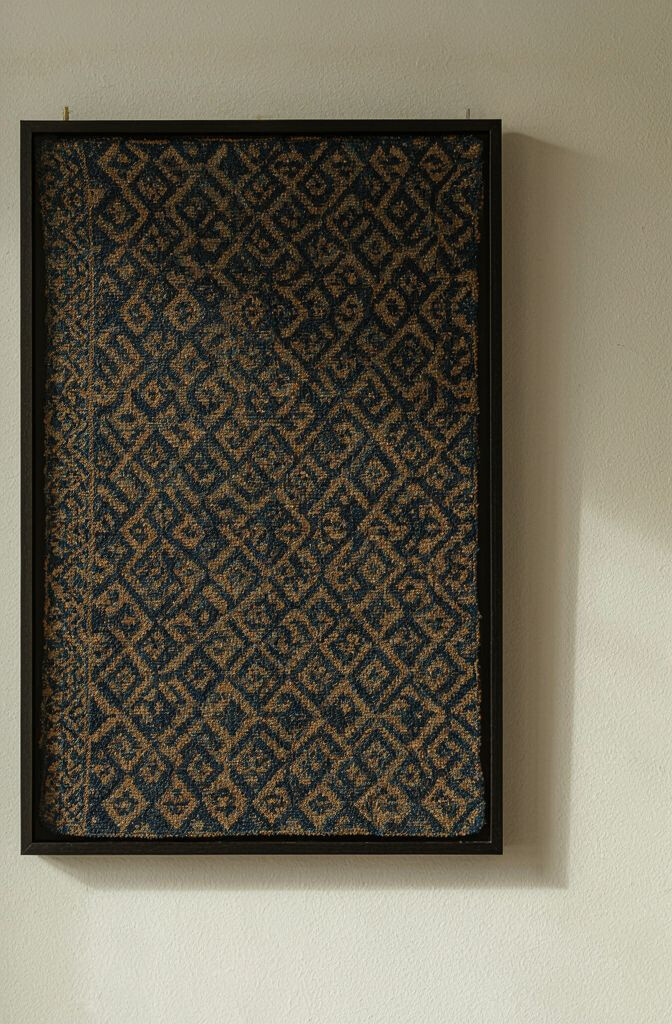
Fabric art adds softness that paint alone can’t. Pick a textile with a pattern you love—think scarves, vintage cloth, or even a bold upholstery sample.
Because fabric naturally has texture, it makes the wall look warm and layered, especially in bedrooms and reading nooks. If you want an easy upgrade, choose lightweight fabric and stretch it over a wooden frame, then finish with a simple backing. It’s also budget-friendly compared to many framed prints.
To personalize, match the fabric colors to your throw pillows or curtains and add a small label for fun, like “Coastal Blue” or “Golden Hour.” This idea fits current trends that lean toward tactile, handmade, and slightly imperfect decor.
3. Oversized Botanical Prints With a Modern Twist
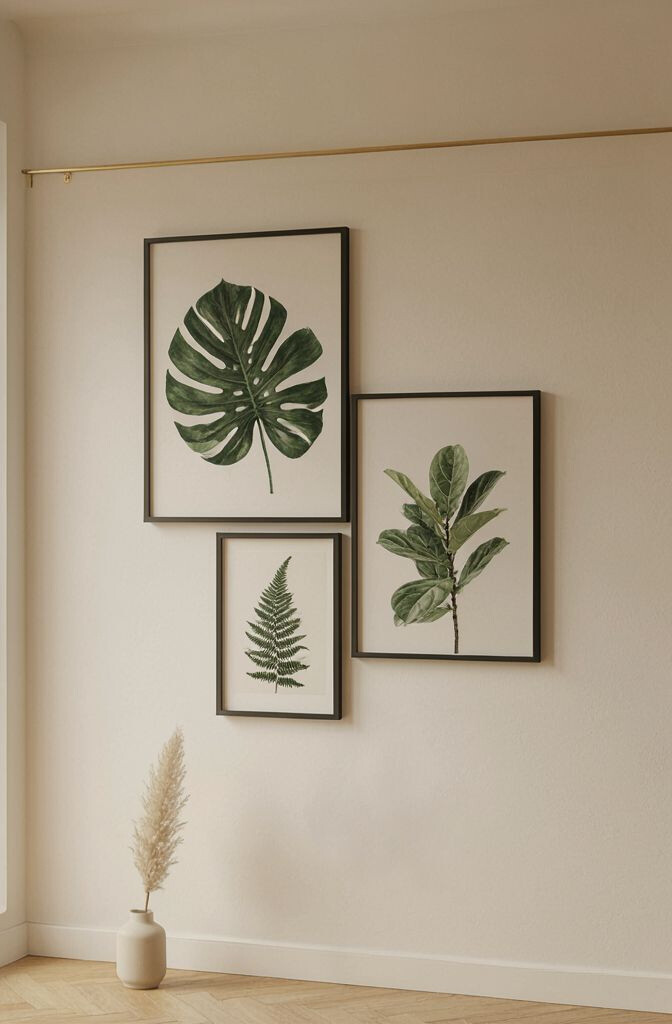
Big botanical prints make a space feel fresh and calm. Look for art with clean lines, minimal backgrounds, and plants that aren’t too busy.
They’re unique because the scale can turn simple greenery into a statement feature, like a living wall that never needs watering. The benefit is that you can calm a hectic room—great for offices, entryways, or kitchens. If you’re cost-conscious, consider downloading a design and printing it at home or through a local print shop.
Try a practical setup by using two or three matching prints and varying the frame heights, which keeps it modern instead of overly symmetrical. For personalization, pick plants that match your style: tropical for bold spaces, eucalyptus for muted looks, or wildflowers for a cozy vibe. Keep the color palette to two main shades so the wall stays cohesive.
This style remains popular because it blends nature with modern design, and it works whether your home is bright, dark, or somewhere in between.
4. A Chalkboard or Whiteboard Accent Wall
A chalkboard or whiteboard wall is functional wall art that changes with your mood. Write daily reminders, sketch doodles, or display a short quote in decorative lettering.
It’s unique because the art keeps updating, so your wall doesn’t feel “finished” the way prints do. For tips, frame the border neatly or mount it flat for a clean look, and test the marker or chalk on the board before committing. You’ll love how it makes kitchens, playrooms, and home offices feel more interactive.
5. Maps and Coordinate Prints for a Personal Story
Map wall art turns a blank wall into a meaningful memory. Choose a vintage-style map, a modern minimalist outline, or a coordinate print that points to a special place.
This idea is unique because it mixes decor with storytelling, like a quiet tribute to where you’ve been or where you hope to go. It benefits your space by adding a clear visual theme—often earthy tones that blend well with wood, leather, and neutral fabrics. For practical tips, frame the map with a simple black or natural wood border so the details stay readable.
To personalize, use coordinates for your first apartment, a honeymoon spot, or even your favorite hiking trail. Consider cost by choosing one larger print over multiple small ones, which can reduce framing expenses while still looking dramatic. Current trends often favor travel-inspired and sentimental decor, so this fits right in.
6. Woven Wall Hangings With Macramé or Fiber Layers
Woven wall hangings bring cozy texture and a slow, calming vibe. Select one large piece or layer two sizes to create a more dimensional look.
They’re unique because fiber art adds depth that flat prints can’t match, and the gentle shadows change throughout the day. A big benefit is that wall hangings can soften hard surfaces like tile, bare drywall, or shiny metal fixtures. For practical tips, mount a sturdy hook and use a level to prevent drooping, especially for heavier weaves.
Personalization is easy: pick colors that echo your palette, like cream with warm browns for a farmhouse feel or black and gray for a modern boho vibe. Cost varies widely, so set a budget first and consider a smaller piece if you want to start. This style stays popular because it fits the trend toward tactile, handcrafted decor.
7. Color-Block Wall Art Using Paint Swatches or Panels
Color-block wall art is like putting on an outfit for your walls. Pick a few paint colors you already love and create bold blocks on canvas, wood panels, or even stiff foam board.
This is unique because it can match your exact color scheme, not just whatever color the print shop offers. The benefit is that it pulls the room together and adds energy without needing a complex theme. For practical tips, use painter’s tape for sharp edges and test your layout by arranging swatches on the wall before painting.
Personalize by adding a thin stripe that matches a lamp base or door trim, which makes everything feel connected. If you want to keep cost low, use leftover paint and simple materials from a craft store. It also fits current trends that favor bold, modern blocks and “accent wall” looks.
8. Vintage Posters and Reproduction Prints With Matting
Vintage-style posters add personality and a hint of nostalgia. Choose themes like old travel ads, classic movie posters, or retro product labels.
What makes this unique is the way matting can make even a simple image feel gallery-level. The benefit is that poster art can bring character to blank walls fast, especially in hallways and near bookshelves. For practical tips, use UV-protective glass if possible, because sunlight can fade prints over time.
Personalization ideas include mixing one bold poster with two smaller prints that share the same color tones. For cost considerations, compare prices for original vintage pieces versus clean reproduction prints, and factor in framing because that’s often the biggest expense. This trend remains steady since retro visuals never fully go out of style.
To keep it cohesive, choose a consistent frame color—like black, wood, or white—and keep margins similar across all pieces.
9. Three-Dimensional Wall Art With Shadow Boxes
Shadow boxes add depth, so your wall art feels alive. Fill a clear-front box with items like pressed leaves, small sculptures, ticket stubs, or tiny fabric scraps.
It’s unique because the art isn’t just on the surface; it sits in layers and creates tiny “scenes” as shadows shift. The benefit is that shadow boxes are great for personal collections, which means your wall tells your story. For practical tips, use neutral background paper inside the box so the objects pop, and measure the wall space before ordering sizes.
To personalize, rotate themes by room—ocean items for the bathroom, warm textures for the living room, and craft supplies for a kid’s space. Cost can stay reasonable if you use lightweight materials and thrifted frames. This idea matches current trends that lean toward curated collections, not just flat images.
Because the box has depth, it also works well when you have busy patterns nearby, like patterned wallpaper or textured rugs.
10. Framed Family Photos With a Light, Airy Layout
Family photo wall art turns everyday life into something you can see and feel. Use a consistent style—like simple frames with white mats—to keep the look clean.
This approach is unique because it feels personal but still polished, especially when you plan your spacing. The benefit is emotional warmth plus visual order, so the wall doesn’t feel random. For practical tips, choose one “hero” photo in a larger frame and surround it with smaller matching ones.
Personalize by sorting photos by theme, like “weekend trips” or “holidays with friends,” rather than mixing everything randomly. If you want to control cost, print just a few favorite images and repeat the frame style instead of buying many different types. Current trends favor curated, minimal photo walls over messy grids, so keep it airy and light.
11. Oversized Typographic Quote Art
Typography on the wall is a simple way to set the mood of a room. Pick a quote that fits your vibe, then choose a font style that looks modern or vintage.
This idea is unique because words become a design element, not just decoration. The benefit is that it adds clarity and personality, which is especially helpful in offices, entryways, and calm bedrooms. For practical tips, keep the text short enough to read from across the room, and use high-contrast colors for better visibility.
To personalize, choose a line that represents your home values, like “Gather Here” or “Create Often,” or even your family name. Costs vary, so compare printing on poster paper versus framed prints; framing can be pricey, so decide what matters most to you. Typography art remains popular because it’s flexible and easy to update later.
When you hang it, place it at eye level and avoid clutter around it so the message stays clear.
12. Ceramic Plate Wall Display
Decorative plates on the wall can look surprisingly chic. Choose a set with matching colors or a coordinated mix of patterns that feel related.
This is unique because plates add circular shape and a hint of vintage dining-room charm. The benefit is that you get variety without needing multiple frames, and it can bring warmth to plain walls. For practical tips, use plate hangers or sawtooth hangers designed for plates, and confirm the plate backs can handle mounting hardware.
Personalize by selecting plates from travel souvenirs, thrift finds, or handmade pieces from local makers. Cost considerations depend on whether you buy a set or build gradually, so starting with two or three plates can be a smart budget plan. This trend is often seen in stylish dining spaces and kitchens, especially with earthy tones and artisan textures.
13. Light-Up Wall Art With LED Neon or String Effects
Lighted wall art brings instant glow and makes evenings feel special. Neon-style signs, LED letters, or soft string lighting can all add a cozy atmosphere.
It’s unique because it adds motion through shifting light and highlights other decor in the room. The benefit is mood control—brighter for parties and softer for winding down. For practical tips, position lights where they won’t glare in your eyes, and use a timer if you want a consistent look without extra effort.
To personalize, choose words, symbols, or colors that match your space, like warm white for calm vibes or a punchy accent color for fun rooms. Cost can range from affordable battery lights to higher-end neon signs, so set a budget and measure the wall area first. Current trends favor warm, ambient lighting, and this idea fits nicely with that.
Use it alongside neutral art so the light becomes the centerpiece rather than fighting with busy patterns.
14. Mirror Gallery for Brightness and Space
Mirrors can make a room feel bigger, and they also count as wall art. Try a single statement mirror or a cluster of smaller mirrors with different shapes.
This is unique because the art reflects your room, so the “design” changes with lighting and movement. The benefit is practical: mirrors can bounce daylight around and help a darker corner look more open. For tips, place mirrors across from a window or near a light source to maximize brightness.
Personalization is easy with frame styles—go for ornate gold for drama, simple black for modern style, or natural wood for a warm feel. Cost considerations range from budget-friendly stick-on decor mirrors to investment-worthy statement mirrors, so choose based on how much impact you want. This trend keeps showing up because it combines function and style in one piece.
15. Kids’ Art as a Rotating Display Wall
Your kids’ drawings deserve a real spot on the wall, not a pile in a drawer. Use frames, clips, or a dedicated display line where new art can rotate in and out.
What makes this unique is that the wall grows with your family, turning your home into a living scrapbook. The benefit is emotional—kids feel proud when their work is shown, and you get frequent fresh decor without buying new art. For practical tips, choose easy-to-change frames like clip frames or frames with removable backs.
Personalize by matching the display to the room style, like using white frames in a minimalist space or colorful frames in a playful area. Cost is usually low because you’re using art you already have, plus a few affordable frames. This trend is popular because it celebrates creativity and makes everyday life look intentional.
16. Architectural Line Art or Blueprint-Style Prints
Blueprint-style art brings a clever, design-forward look to walls. Look for line drawings of buildings, bridges, maps, or vintage technical sketches.
This idea is unique because it adds structure and detail without relying on bright colors. The benefit is that line art pairs well with many decor styles—modern, industrial, Scandinavian, and even classic spaces. For practical tips, choose frames with a slim profile so the lines stay crisp, and use neutral mats to keep the drawing from feeling too busy.
To personalize, pick a print related to your interests, like travel infrastructure, your favorite city skyline, or home renovation inspiration. Cost considerations are often manageable because line art prints can be cheaper than more elaborate artworks. Current trends often lean toward graphic design and archival-style prints, so this fits in perfectly.
Place it near a desk, bookshelf, or hallway to highlight its orderly feel.
17. Hand-Painted Ombre or Gradient Wall Art on Canvas
An ombre or gradient canvas can look both artsy and calming. Choose two or three colors that match your room and blend them smoothly from light to dark.
It’s unique because gradients feel custom, even when the design is simple, and the color transitions add a soft visual flow. The benefit is that gradient art can unify multiple colors in the room without making the wall look messy. For practical tips, use painter’s tape to map out sections, then blend with a foam brush and let each layer dry before adding more depth.
Personalize by adding subtle texture using a dry brush, a stencil, or a thin pattern overlay near the bottom. Cost is usually reasonable because acrylic paint and canvas are accessible, and you can start with one canvas as a statement piece. This idea keeps up with current trends toward “color fields,” minimal abstraction, and cozy, modern art.
If you want a quicker approach, consider using fabric dye on canvas, but test a small area first for the shade you like.