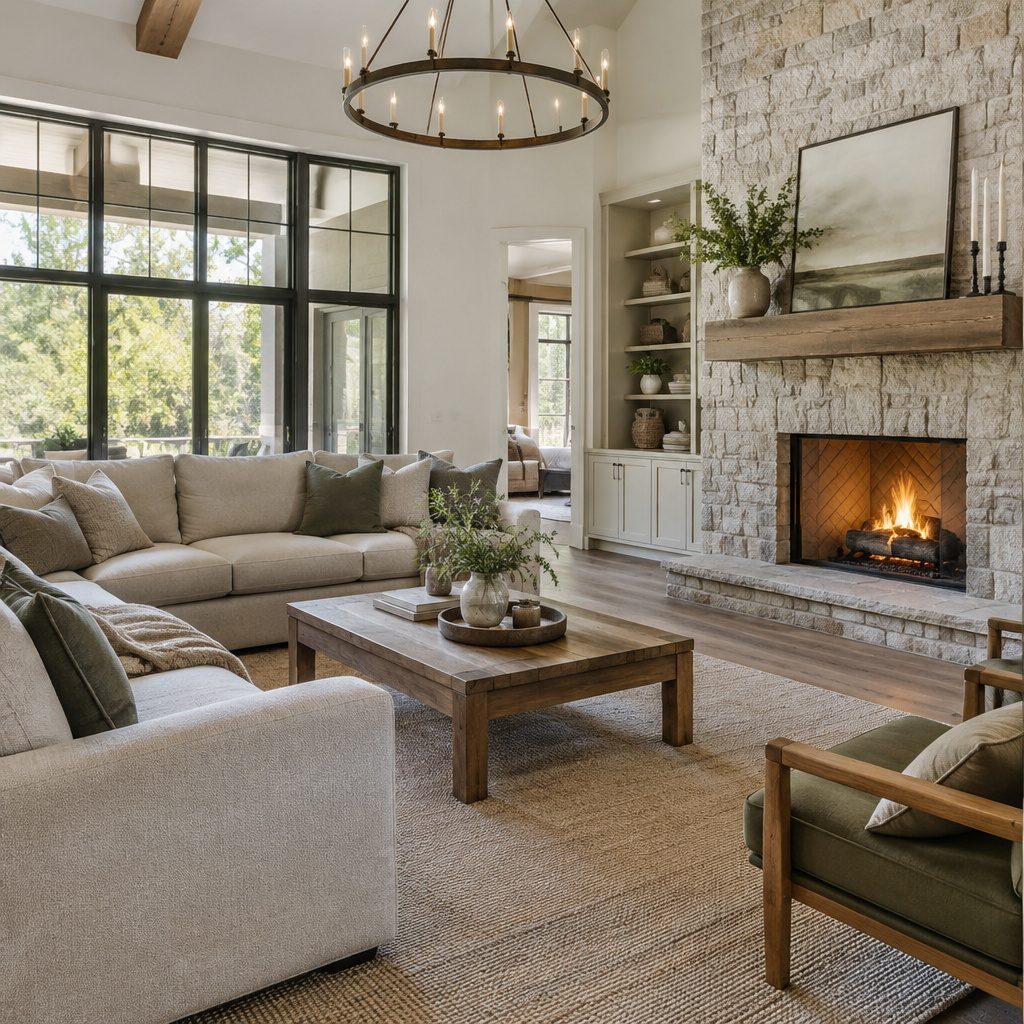
Light can change the whole mood of a room in a hurry. Use these ideas to make your living space feel brighter, warmer, and more inviting.
1. Start With a Lighter Wall Color
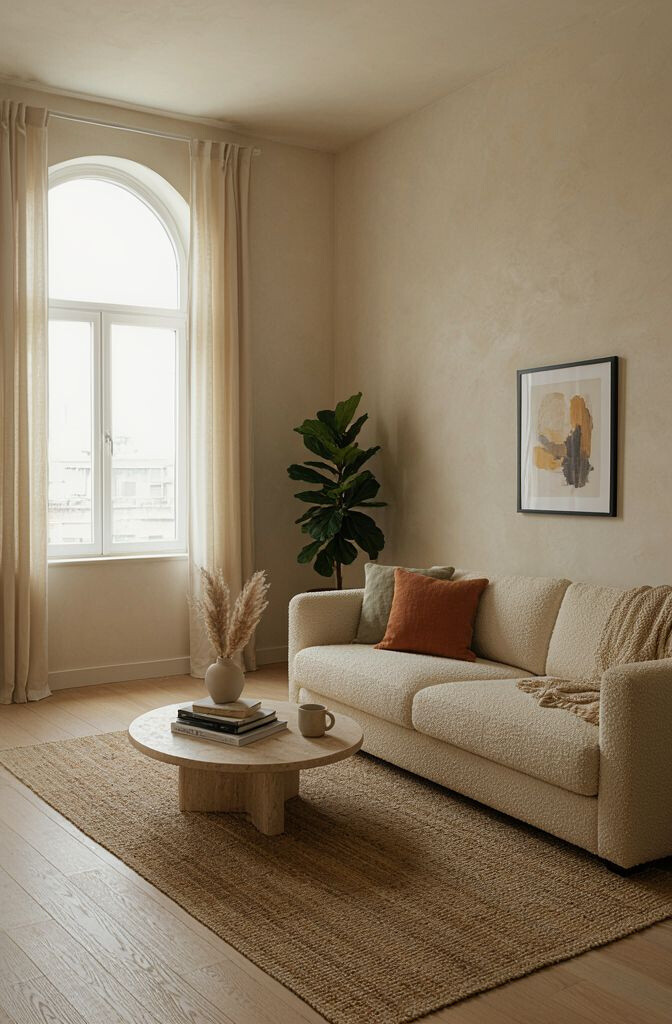
Choosing a lighter paint shade instantly makes the room feel bigger and airier. Soft whites, warm creams, and pale greiges reflect more daylight than dark tones.
To make it practical, test paint samples on your wall and observe them at morning, noon, and evening. If you want a little personality, use the same color family for trim and ceiling so the space looks smooth and cohesive. For cost, paint is usually one of the most budget-friendly upgrades, especially if you can do it yourself.
2. Layer Natural Light With Sheer Curtains
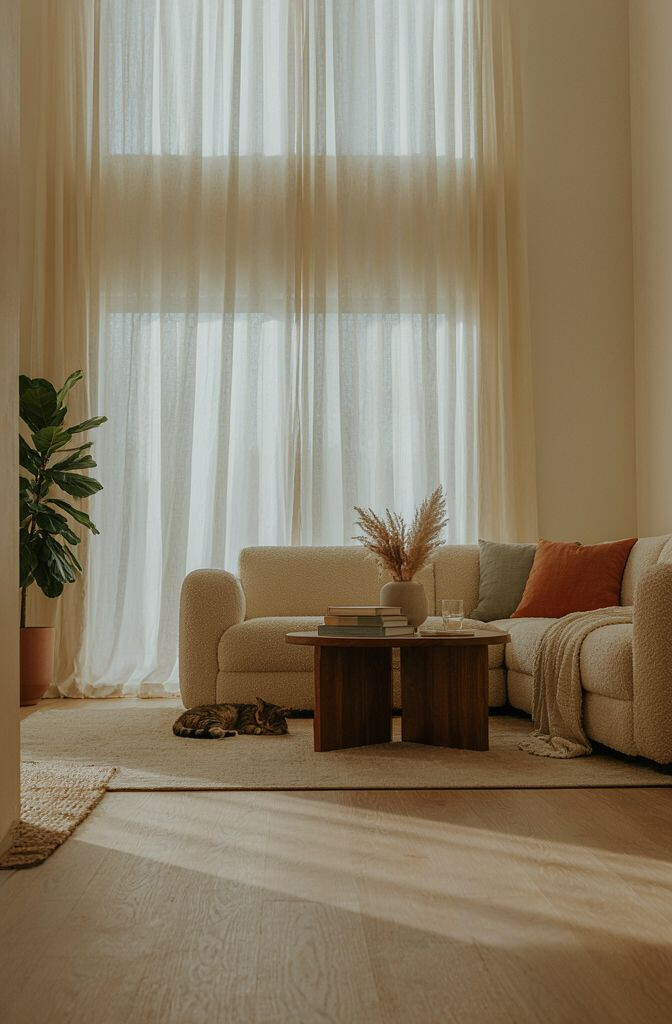
Sheer curtains are an easy way to soften sunlight and reduce harsh glare. They keep the room bright while still offering a hint of privacy.
Choose lightweight fabric in a white or warm ivory tone for a clean, modern look. If your living room faces direct sun, pair sheers with adjustable blinds so you can control brightness throughout the day.
For a unique touch, hang curtains closer to the ceiling and let them pool slightly at the floor for a taller, more elegant feel. This style is popular right now because it looks airy, and it also helps your space feel less heavy. Budget-wise, ready-made sheers are often cheaper than custom drapes, so you can get a big effect without overspending.
3. Add a Statement Mirror to Bounce Light
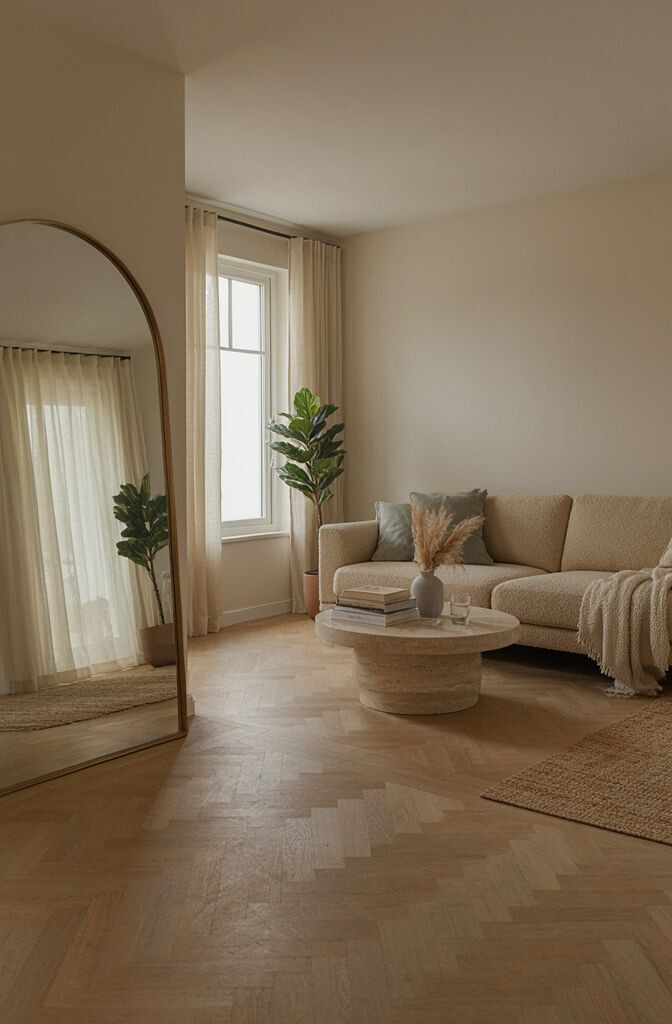
A well-placed mirror can multiply the light your room already has. It bounces sunlight and creates the illusion of extra depth.
Try placing a mirror opposite a window or across from a light source like a lamp. For the best look, choose a frame that matches your style, such as a thin black frame for modern rooms or a carved wood frame for traditional spaces.
To keep it practical, avoid placing the mirror where it will reflect clutter or messy areas. A floor mirror can also add usefulness, doubling as a spot to check your outfit. This idea is currently trending because it makes small living rooms feel open without major construction.
If you want personalization, go bold with a sunburst mirror shape or use a set of smaller round mirrors arranged in a grid pattern.
4. Choose a Bright Rug With Warm Undertones
A lighter rug can anchor the room and brighten the whole scene. Look for colors like oatmeal, light tan, pale blue, or soft beige that complement your walls and furniture.
Pick the right size so it fits comfortably under the front legs of your seating. If you have kids or pets, choose a stain-resistant or low-pile option to keep it looking fresh with less effort.
5. Upgrade Lighting With Multiple Light Sources
Great lighting is about layers, not just one bright bulb. A combination of overhead light, floor lamps, and table lamps makes a room feel more evenly lit.
Use warm-white bulbs for a cozy glow, and consider dimmers so you can adjust brightness for different moods. If your overhead fixture is harsh, add softer lamps to balance the light and reduce shadows.
For uniqueness, try a floor lamp with an interesting shade shape or a sculptural base that adds character. This is a current design focus because people want rooms that feel comfortable, not just bright. Cost varies, but even a single new lamp can create a noticeable upgrade.
6. Use High-Contrast Styling With Light and Dark
Light doesn’t mean everything has to be pale. Pairing light neutrals with a few darker accents creates crisp contrast that makes the room feel more lively.
Think about dark window frames, black picture frames, or a charcoal throw blanket placed on a light sofa. This approach helps your design look intentional instead of flat.
7. Pick Reflective Finishes for a Softer Glow
Reflective finishes can catch and spread light around the room. Materials like glass, polished metal, and glossy ceramics help the space feel brighter.
Try a glass coffee table, a mirrored tray, or metal lamp bases to add sparkle without looking cluttered. Keep the finishes consistent so the room still feels calm and coordinated.
For practical styling, use a mirrored or glass element near a lamp so it reflects light naturally. If you worry about maintenance, choose surfaces that are easy to wipe and avoid overly delicate textures. This design move is popular because it looks elegant while also improving brightness.
8. Style Your Sofa and Chairs With Light Textiles
Textiles play a huge role in how bright a living room feels. Light-colored cushions, throws, and slipcovers soften the look and reflect more ambient light.
Consider using linen, cotton, or textured knits in off-white, sand, or pale gray. These fabrics look fresh in daylight and still feel cozy at night.
To personalize, mix patterns carefully by choosing one main pattern and keeping the rest neutral. If you want a practical approach, swap pillow covers seasonally so you can refresh the room without buying new furniture. Cost can be low if you start with a few new covers and gradually build from there.
9. Add Color Through Artwork That Feels Airy
Wall art can brighten a room even when your walls are neutral. Choose pieces with lighter backgrounds, soft gradients, or colorful scenes that feel open and cheerful.
Try grouping frames in a similar style for a clean look, and leave enough spacing so the arrangement feels balanced. For a unique twist, use a large piece above the sofa to create a strong focal point.
To make this practical, aim for artwork that matches your color palette so you’re not fighting visual noise. Current trends often lean toward botanical prints, abstract art with bright whites, and muted color blocks, which all work well for light-filled rooms. If you’re budget-conscious, consider prints in frames you already own or thrifted frames in matching finishes.
10. Paint or Refresh Wood With a Lighter Finish
If you have dark wood furniture, a refresh can bring new brightness without replacing everything. A lighter stain or a paint makeover can make your living room feel updated quickly.
For a practical idea, refinish a coffee table, media console, or sideboard in a warm light tone. Pair the new finish with light textiles so the whole room feels connected.
11. Keep Clutter Low With Better Storage
Brightness is hard to maintain when surfaces are crowded. Keeping clutter under control helps light reach more areas and makes the room feel calmer.
Use baskets, closed cabinets, or drawers to hide everyday items like remotes and magazines. A tidy living room also helps your lighting look more effective because nothing blocks it.
For personalization, match the storage style to your decor, such as woven baskets for a natural look or sleek boxes for a modern vibe. If you’re working with a smaller budget, start with storage for the most visible areas like the coffee table and the sideboard. This is a smart trend because it supports both beauty and daily comfort.
12. Use a Colorful Accent Wall in the Right Way
An accent wall can brighten the room when you choose the right color. Look for a light, cheerful hue like warm sage, airy blue, or pale terracotta rather than a very dark shade.
Place the accent wall where it catches daylight or where it will be seen from the main seating area. Use the rest of the walls in a matching lighter neutral so the contrast feels balanced.
13. Choose Furniture With Lighter Visual Weight
Furniture design affects how open a room feels. Pieces with slim legs, lighter colors, and simple shapes let light pass through the space more easily.
Try a sofa in a light fabric, or choose seating with tapered legs to create more “breathing room” under the furniture. If you love your darker couch, you can still brighten the look with a lighter rug and cushions.
For practical buying tips, measure doorways and walkways so new furniture fits smoothly. If you’re shopping now, many current styles include airy silhouettes, rounded arms, and performance fabrics that stay bright-looking. Cost can be higher for big pieces, so consider one key swap first, like a chair or side table, before replacing everything.
To personalize, match one detail like a wood tone or metal finish across the room so the lighter pieces don’t feel random.
14. Add Greenery With Bright, Fresh Plant Choices
Plants bring life and a fresh feeling that often makes a room look brighter. Green also pairs well with light neutrals and adds gentle contrast.
Choose plants that do well indoors and fit your light level, such as pothos, snake plants, or bright-leaf varieties if your windows are strong. Use pots in light colors like white, cream, or terracotta for a cohesive look.
15. Create a Cohesive Palette With Repeat Colors
When your colors repeat, the room feels organized and naturally brighter. A cohesive palette helps the eye move smoothly instead of bouncing around.
Pick a main neutral, add one or two accent colors, and repeat them in pillows, art, a vase, or a throw. This is a smart trend because “color rhythm” looks more intentional than random pops.