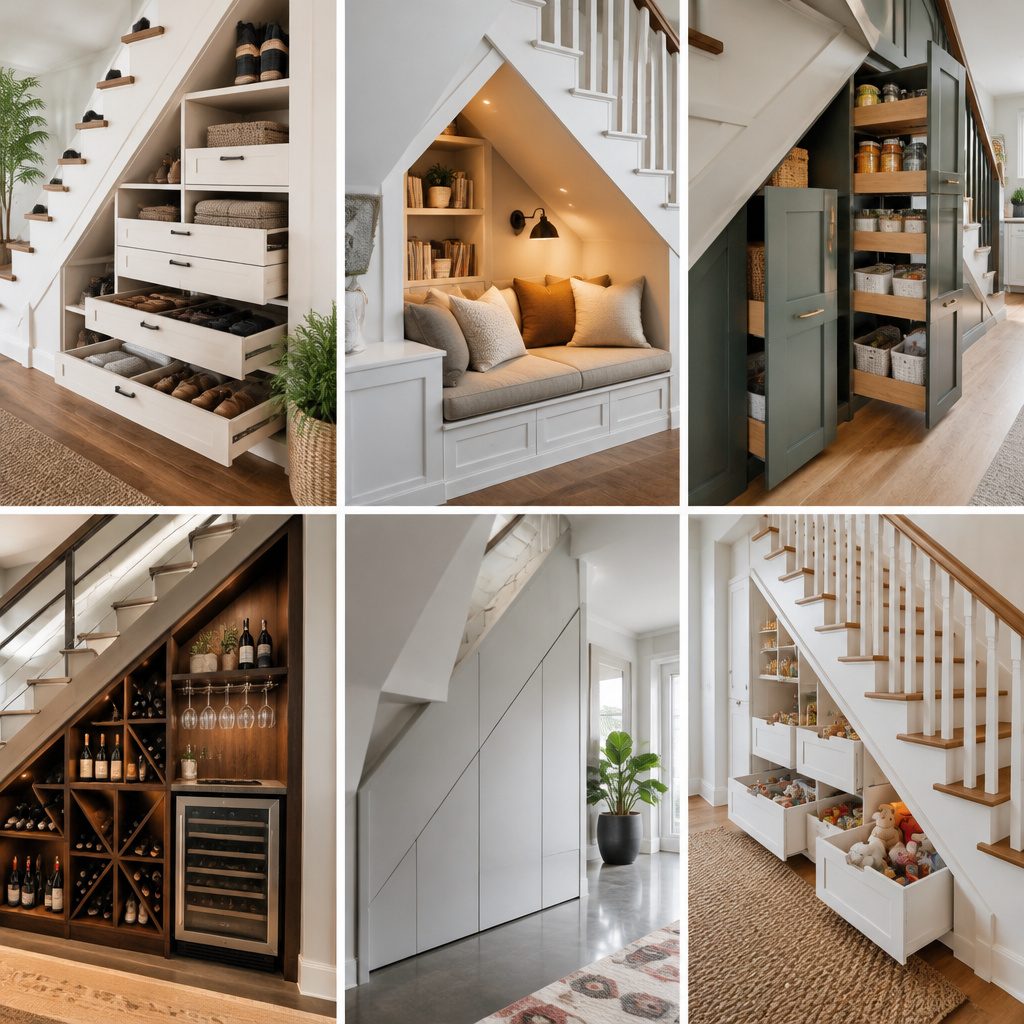
Under-stairs space is often wasted, but it can become a hardworking part of your home. With the right plan, it can look tidy and feel surprisingly useful.
1. Pull-Out Drawer Wall Under the Stairs
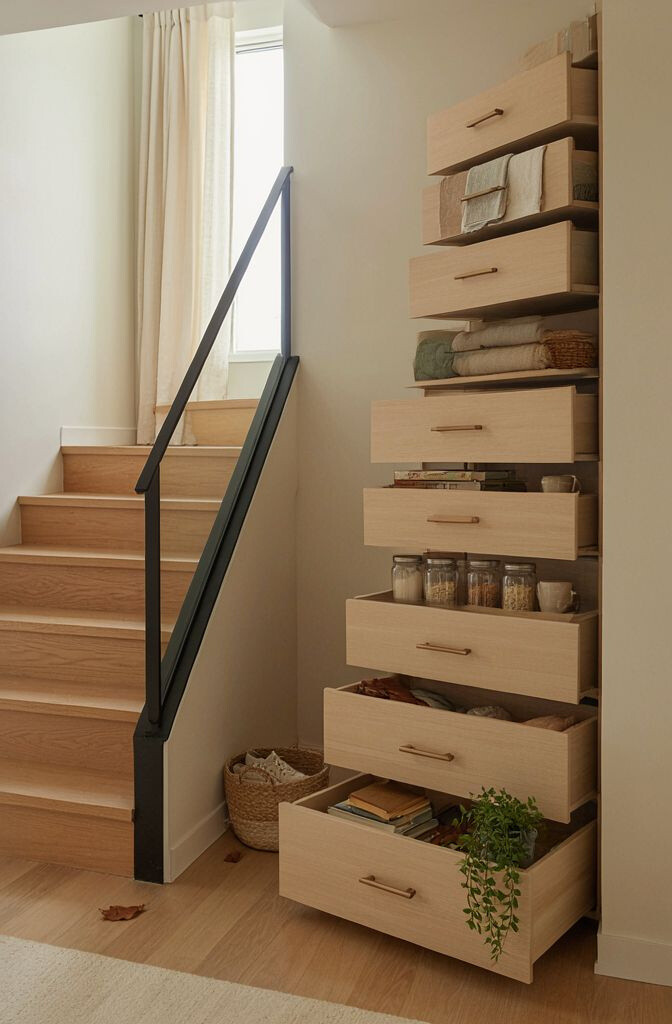
Imagine opening a smooth handle and having everything slide out where you can see it clearly. This turns a dark awkward area into a set of drawers that feels built-in.
Pull-out drawers are great for small items like shoes, gloves, school supplies, or pet gear because nothing gets lost in the back. Use different drawer depths so tall bottles and flat notebooks have their own spots. For a budget-friendly approach, start with a simple set of fitted cabinet slides, then upgrade handles and dividers as you go.
2. Lift-Up Bench With Hidden Compartments
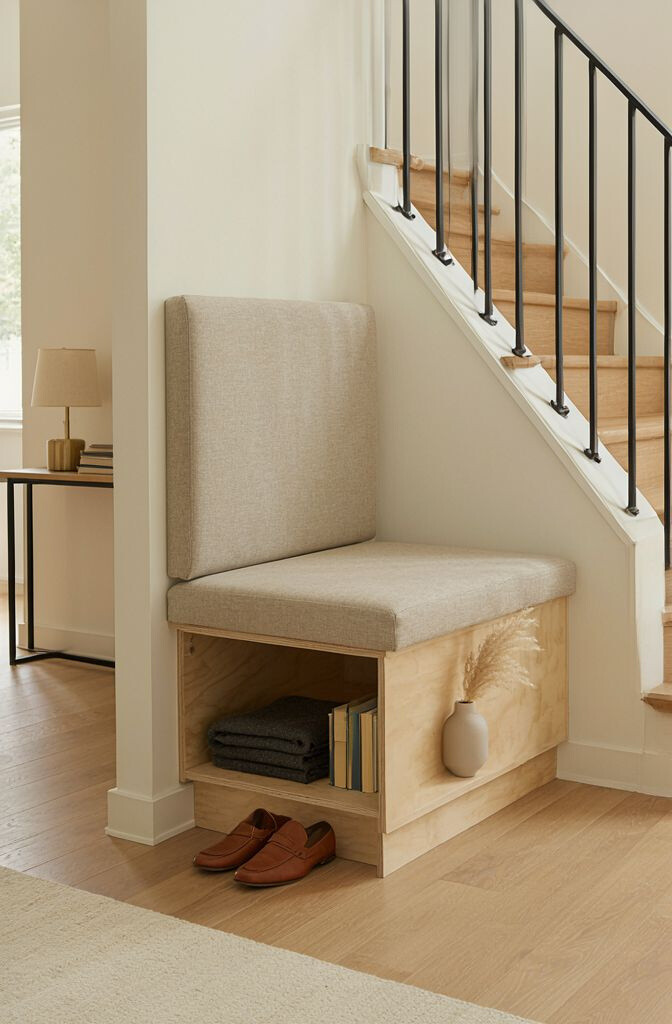
A bench under the stairs can look cozy while quietly storing what you never want on display. You get seating benefits in a small footprint, plus a hidden place for daily clutter.
Choose a lid that lifts safely with hinges and soft-close hardware so it won’t slam. Add compartments inside for bags, seasonal clothing, or extra blankets. To personalize it, match the bench fabric or wood finish to your hallway so it feels intentional, not tacked on.
If you’re thinking costs, a pre-made bench unit plus custom interior panels is often cheaper than building everything from scratch. A popular current trend is adding slim LED strips inside so the compartments glow when the lid opens. Keep a simple mat on top to protect the surface from bags and wet shoes.
3. Under-Stairs Shoe Cubby With Ventilation
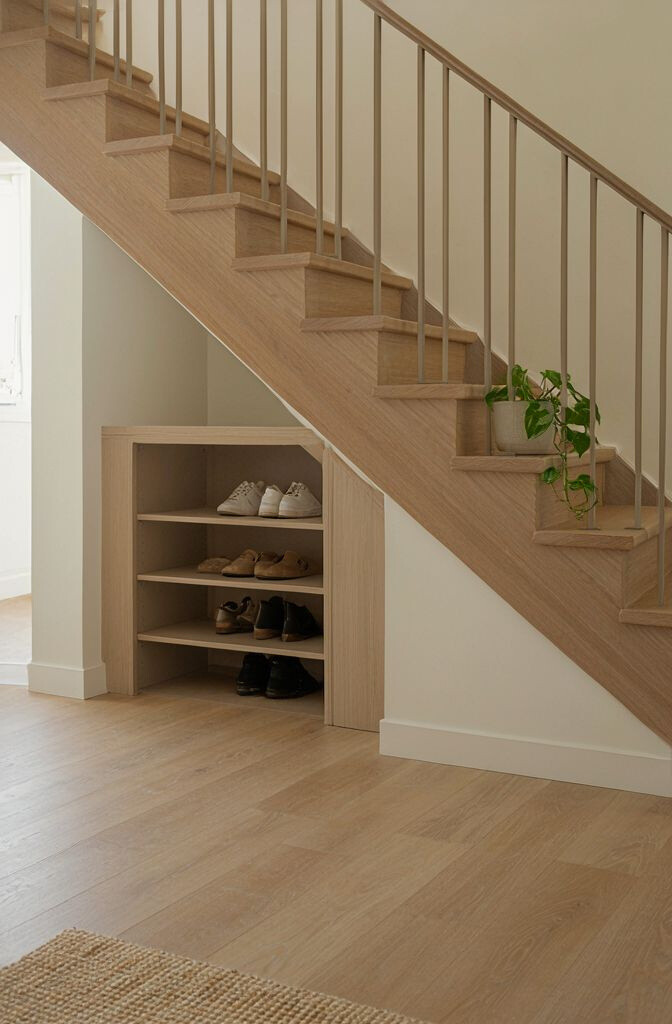
Picture neat rows of shoes tucked away like little shelves, not scattered by the door. A cubby system keeps entryways looking clean while making morning routines faster.
Ventilation is what makes this idea stand out, because shoes can trap moisture and smell. Install small slats or drill discreet holes behind each cubby, and consider using breathable liners. Add adjustable shelves so you can fit boots one month and sneakers the next.
For practicality, label the cubbies with simple numbers or icons so everyone finds their pair quickly. You can also include a lower tray for muddy items so they don’t smear the rest. If you want to save money, buy standard shelf brackets and build the cubbies yourself with plywood panels.
Right now, minimalist entry storage is trending, so keep colors calm and hide clutter with doors or curtains when needed. A soft-close door front can help the whole unit feel premium without extra complexity.
4. Hidden Pantry Drawers for Snacks and Dry Goods
Turn the under-stairs shadow into an organized snack station that stays out of sight. A pantry drawer layout makes it easier to grab what you need without digging through cupboards.
Use slide-out drawers lined with food-safe surfaces so spills are easier to wipe. Add a small basket zone for “grab now” items like granola bars, tea packets, or canned goods you use often. Personalize by printing simple labels and matching them to your kitchen style for a coordinated look.
5. File Cabinet Nook With Easy-Grab Trays
Paper piles love to multiply, especially where you don’t have clear storage. A file cabinet nook under the stairs gives forms a proper home and reduces visual mess.
Build a narrow system with hanging file space on one side and shallow trays on the other. This lets you separate bills, receipts, kids’ paperwork, and things you need to sign soon. Choose durable drawer hardware so the unit stays smooth even with frequent use.
To keep it unique, add a small cork board strip or magnetic strip for reminders, but keep magnets out of the main filing area. For cost control, start with a ready-made cabinet frame and customize the internal layout with dividers. This idea also fits current trends toward “home office in small spaces.”
6. Recessed Bookshelves Built Into the Stair Base
Under-stair bookshelves can look like they were always part of the house. When done right, they create a reading corner feel even in a narrow hallway.
Use recessed compartments so books don’t stick out, and vary the shelf heights for different sizes. A simple back panel with a subtle color adds depth and makes the space feel brighter. Consider using slim cabinet doors for the bottom section and open shelves for the most-used books.
7. Under-Stairs Bar Cart Cabinet With Sliding Door
A compact under-stairs bar setup can turn a forgotten space into a conversation piece. You can store glasses, bottles, and accessories neatly while keeping the rest of your home clutter-free.
Install a sliding door to hide the bar when guests arrive, which also protects items from dust. Inside, add racks for bottles plus a couple of drawers for corkscrews, coasters, and a quick stir tool. For practical organization, include a small tray shelf for the “right now” items you use most.
When planning your budget, decide which pieces truly need upgrades, like sturdy bottle racks and good glass storage, and keep the rest simple. A current trend is warm lighting, so add a small LED strip inside for a cozy bar glow. Personalize with a chalkboard-style label area for house blends or themed nights.
8. Storage Bench With Removable Bins
A bench with removable bins keeps things flexible for busy households. You get a spot to sit while getting ready, and the bins let you reorganize fast.
Choose bins that slide in and out without snagging, then group them by category like hats, scarves, and kid extras. Removable storage is especially helpful if you sometimes need to grab items quickly for outings. Add a cushioned top so the bench feels comfortable, not like a storage box.
To make it unique, use different bin colors or patterns so each family member can recognize their own section. If you’re cost-conscious, you can start with basic bins and upgrade to more attractive ones later. This idea fits the current trend of “modular storage,” because it adapts as your needs change.
For personalization, match the bin fronts to your hallway wall paint or use a consistent wood tone for a calm look. Add a small hook row above the bench for everyday items so the storage area doesn’t get overwhelmed.
9. Pull-Down Pantry Shelf for Small Appliances
If you want to tuck away appliances without wrestling with heavy doors, a pull-down shelf can be a smart choice. It brings the appliance to you instead of forcing you to reach inside.
Use this for blenders, mixers, or a coffee setup that you want accessible but hidden. A pull-down mechanism with a stable support arm keeps the shelf steady and safe. Add a cord management channel so cords don’t tangle and so you can plug in easily.
To make it work well, measure your appliance height and leave clearance for ventilation. Consider adding a small drawer below for accessories like filters, scoops, or replacement parts. Budget-wise, you can keep costs down by using a ready shelf system and customizing the side panels to match your stairs.
Right now, hidden appliance storage is popular because it creates clean counters and reduces clutter. This setup also looks sleek when you paint the interior the same color as nearby cabinetry.
10. Under-Stairs Closet With Hanging Rod and Doors
A compact closet under the stairs can handle coats, bags, and even uniforms. When you add doors, it turns a possibly messy area into a polished feature.
Use a hanging rod at the right height for your longest items, then add shelves above for folded clothes and seasonal accessories. Choose doors that match the hallway style, like panel doors for a classic look or flat doors for a modern feel. For practical tips, include a small hook rail inside for umbrellas and daily bags.
To personalize, add a small mirror on the outside or inside door so the closet doubles as a quick check before heading out. For cost, consider a simple frame and built-in shelves instead of complex molding. This closet style is trending as people look for “entry storage that works like furniture,” not like a temporary solution.
11. Candle and Decor Storage With Adjustable Dividers
If you love seasonal decor, under the stairs can become your secret storage closet. Dividers keep candles, frames, and small décor organized without scratches.
Use adjustable dividers so you can reshape compartments when you switch themes from winter to spring. Add soft padding or felt liners for items that chip easily. For a unique touch, incorporate a clear-front section for the items you want to see quickly, like your best frames or your favorite candles.
Practical tip: store glass on lower shelves so accidental drops do less damage. Label each section with simple categories like “spring,” “tables,” or “holiday.” On cost, you can create custom dividers using plywood strips and finish them with paint or laminate.
This idea also matches the trend of curated home styling, where storage supports your aesthetic rather than fighting it. Keep the unit dry and consider a small moisture absorber if your home runs humid.
12. Ladder-Like Shelf Rungs for Quick Grab Items
Sometimes you don’t want closed storage, and that’s okay. Ladder-style rungs under the stairs can hold items you grab constantly, like baskets, towels, or kids’ art supplies.
Space the rungs so baskets slide in neatly and don’t wobble. Add a base shelf to catch small items so nothing falls through. This storage looks light and modern compared with bulky cabinets.
Personalize by mixing materials, such as wood rungs with metal brackets for a modern farmhouse feel. If you want it to look cleaner, add fabric bins for the rungs that don’t fit perfectly. Cost can stay reasonable because rungs use fewer panels than full cabinetry, but choose strong hardware so the shelves last.
13. Under-Stairs Laundry Hamper With Sort Compartments
Laundry is easier when you sort as you go, and under-stair storage can help a lot. A hamper with compartments keeps lights, darks, and towels separated without extra trips.
Use pull-out bins or tilt-out hamper drawers so you can remove laundry smoothly. Add labels and color-coded panels to make sorting automatic. If you have kids, this becomes a simple routine that teaches them where everything goes.
For uniqueness, include a small shelf for detergent bottles and a hook area for a laundry bag. Ventilation matters here too, so consider perforated sides or breathable liners. Cost considerations are manageable because hamper systems can be modular, letting you buy bins first and build the frame later.
A current trend is “hidden laundry,” meaning the hamper is tucked behind doors to keep laundry out of sight. Even if you skip the doors, tidy bins help the space look intentional and calm.
14. Mini Workshop Storage With Tool Pegboard Back
Under the stairs can become a tiny workshop that keeps tools organized and ready. A pegboard back makes it easy to see your tools instead of searching for them.
Mount a pegboard where the back panel would be, then add hooks, small shelves, and a tool rail for frequently used items. Combine open storage with a couple of closed drawers for things like screws and batteries. Personalize by painting the pegboard area a bold color or using a neutral tone for a cleaner look.
15. Kids’ Activity Station With Fold-Down Table
When space is tight, a fold-down table under the stairs can be a game changer. It gives kids a place to color, build, and tidy up quickly.
Build a small work surface that folds down from a cabinet front, then add bins for crayons, paper, and craft supplies. Add a ledge to hold markers upright so they don’t roll away. For practical tips, use wipeable surfaces and choose child-safe finishes that are easy to clean.
Personalization is easy: decorate the inside with gentle colors, or print labels with pictures instead of words. Cost can be lower if you use a pre-made fold-down table kit and then customize storage bins to fit. This idea aligns with the trend of creating “micro-zones” for kids at home that encourage independence.
16. Pet Storage With Treat Drawers and Leash Hooks
Pet supplies multiply quickly, but under-stair storage can keep them in one neat spot. You can store treats, grooming tools, and leashes without cluttering the living room.
Install small drawers for treats and supplements, plus a covered compartment for grooming supplies to contain mess. Add hooks at a comfortable height for leashes and harnesses, and include a small shelf for poop bags. To personalize, match the storage colors to your pet area or choose a calming neutral to keep it visually quiet.
For cost, start with drawers and hooks, then upgrade with better dividers once you learn what your pet actually uses. A practical trend is odor-aware storage, so consider adding a removable tray or using lined bins that are easy to wash. Keep a simple rule: store pet food in sealed containers inside the drawers.
17. Under-Stairs Camera/Router Niche With Cable Management
Tech gear can look messy, even if it’s working perfectly. A niche under the stairs can hide your router, modem, and small smart home devices neatly.
Use a cabinet with a removable back panel for airflow and easy access. Add cable channels along the side so cords run straight and don’t tangle behind shelves. This unique approach keeps your home tech centralized and reduces the “clutter corners” effect.
Practical tip: leave a small gap for ventilation so devices don’t overheat. Add a small shelf for a phone charging station and keep a wipeable surface for fingerprints. For cost, you can use a basic cabinet frame and add cable routing accessories, which are usually inexpensive.
This setup also matches today’s trend of tidy smart homes, where tech is integrated but not visually loud. Consider adding a small label system so you know which cable connects to what without guesswork.
18. Seasonal Blanket and Linens Cabinet With Soft-Close Doors
Extra blankets and linens can steal storage space in closets if you don’t control them. A dedicated cabinet under the stairs helps you store them safely and quickly.
Use stacked shelves or drawer storage with soft-close doors so the unit feels smooth and quiet. Add a liner that helps reduce dust, and keep the cabinet sealed when possible to protect items. To personalize, choose a finish that matches your existing cabinetry so it looks like part of the home.
Budget-wise, soft-close hardware may cost a bit more, but it’s worth it because you’ll use the doors often. Current trends favor calm, hotel-like interiors, and crisp linen storage supports that vibe. Keep blankets folded in uniform sizes so the shelves stay neat.
For practical organization, label shelf zones like “winter throws” or “extra sheets.” This makes it easy to switch seasons without rummaging through everything.
19. Under-Stairs Pantry for Pet-Approved Treats and Supplies
If you have pets, you probably have a separate set of supplies you don’t want mixed with general storage. A dedicated under-stairs pantry solves that and keeps treats accessible but contained.
Use glass-front or vented doors if you want visibility, or choose solid doors if you prefer a fully hidden look. Add baskets inside for chew toys, leashes, and grooming accessories so each category stays together. This makes the system unique because it’s designed around animal routines, not generic storage.
Consider cost by starting with a simple shelving layout, then adding specialized bins once you figure out your pet’s inventory. A current trend is “organized by lifestyle,” and this fits that idea perfectly because the storage supports daily habits. Personalize with a small photo of your pet on the inside door or a cute label system for treat types.
20. Reversible Storage Panels for Different Use Cases
What if the same space could work for multiple needs as your home changes? Reversible panels under the stairs let you adjust from coats and shoes to supplies and décor.
Create a cabinet system with swap-out inserts, such as drawer faces on one side and open shelves on the other. Use standardized measurements so you can reconfigure without starting over. This uniqueness comes from flexibility, which is great for renters or growing families.
Practical tips include using durable hinges and locks that hold steady, plus leaving room for airflow if you store shoes. For cost considerations, plan for modular components you can replace later, which often costs less over time. The trend right now is modular home improvement, and reversible systems are a practical version of that idea.
21. Under-Stairs Storage With Decorative Curtains
Storage doesn’t always need rigid doors to look attractive. Curtains under the stairs can soften the space and make it feel cozy instead of boxy.
Use a track system or tension rod and measure carefully so the curtains cover the opening fully. Inside, keep baskets or bins so the curtain hides clutter while still supporting organization. Personalize by choosing patterns that match your hallway theme, such as subtle stripes or a calm solid color.
If you want to keep things practical, add a waterproof liner to the bottom if you store shoes or muddy items. Cost is often lower than cabinetry, and it’s easier to update the look later. This style also matches current trends toward soft, fabric-based storage that feels welcoming.
22. Under-Stairs Vacuum and Cleaning Supply Caddy
A cleaning caddy under the stairs keeps tools ready when you need them, not hidden under sinks. With the right setup, your vacuum, broom, and supplies become easy to grab and easy to return.
Mount hooks for handles, add a vertical slot for a mop, and include a drawer for small extras like microfiber cloths and spray nozzles. For uniqueness, include a small retractable shelf for a cleaning bucket so it stays stable. Personalize by matching the caddy color to your utility area or using a neutral finish that blends into the hallway.