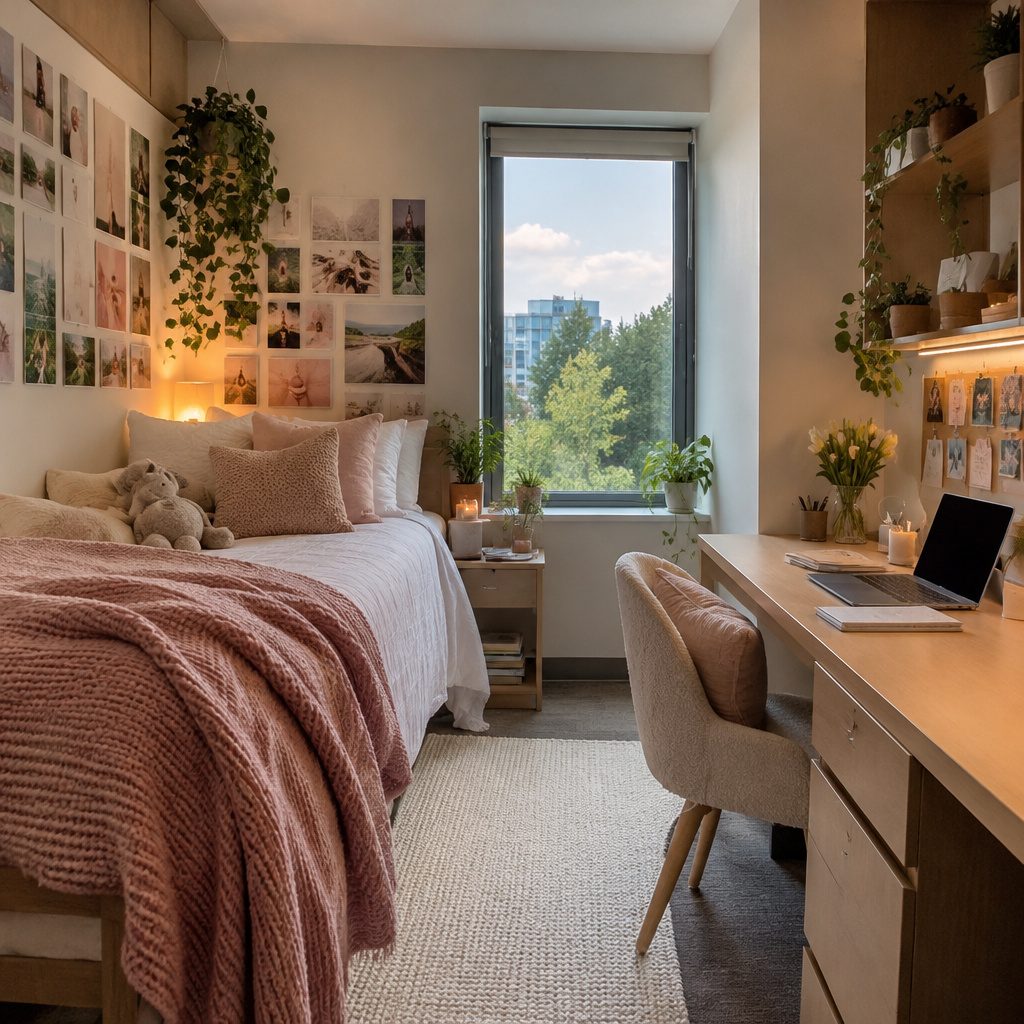
Your room can feel like a mini home the moment you move in. Small choices can make it look stylish and work better for studying.
1. Cloud-Soft Reading Nook
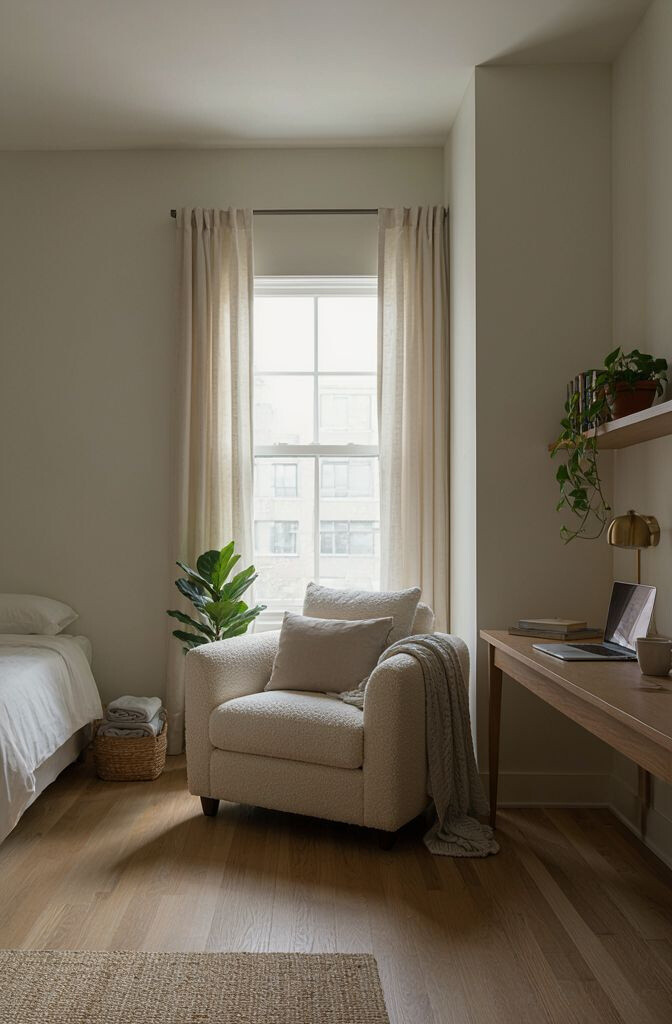
Make a corner feel gentle and inviting with a comfy chair, a small lamp, and a layered throw. Add a slim floor rug to soften echoes and turn the space into your go-to reading spot.
Choose a book-style lamp with warm light so your eyes feel relaxed after long study sessions. Use a side table or crate as a surface for water, notes, and a bookmark jar. If you’re on a budget, swap the chair for a floor cushion plus a lap desk, and still keep the cozy vibe.
2. Gallery Wall Without Damage
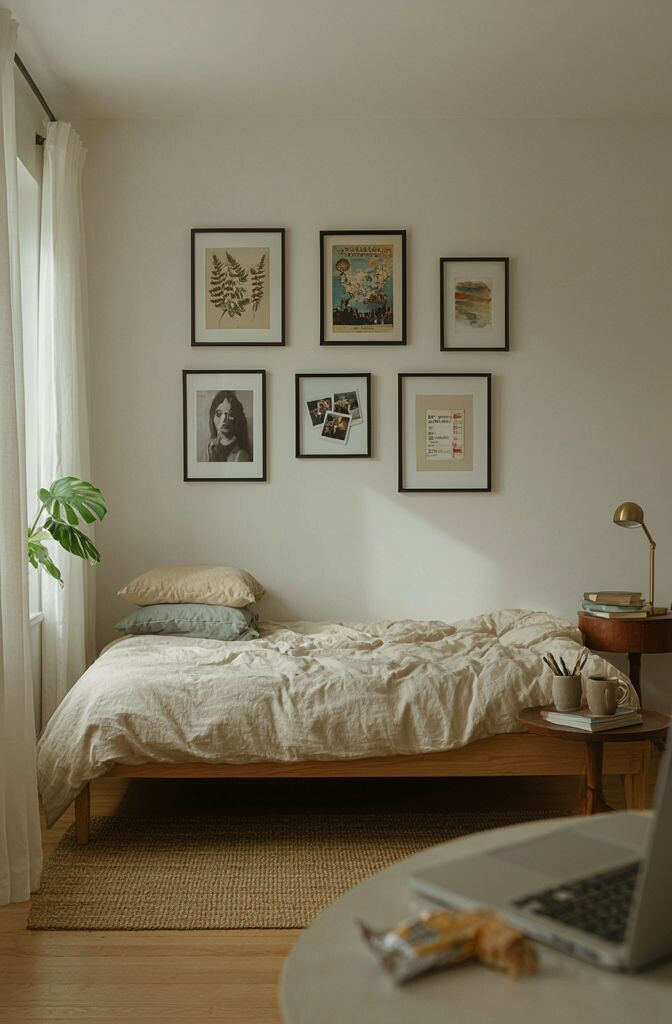
Turn blank walls into a personality-filled backdrop using removable picture frames. You get the “wow” look without worrying about marks or heavy hanging methods.
Print a mix of photos, movie ticket-style art, and student-friendly motivational quotes. Arrange frames by testing layouts on the floor first, then use removable hooks or adhesive strips made for your wall type. Keep the palette consistent so the wall looks intentional, not crowded.
For cost control, hunt for free university events posters and print them at home. Use one bigger “hero” frame to anchor the layout, then balance it with smaller pieces. If you love seasonal change, rotate prints every term so your room never feels stuck.
3. Under-Bed Storage That Looks Clean
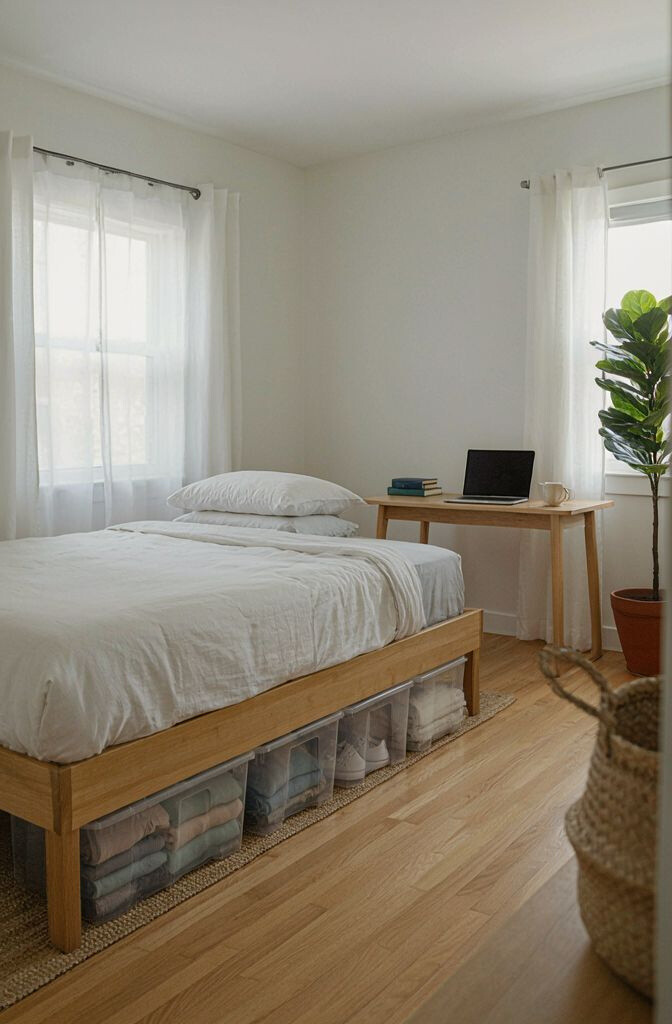
Use the space you usually ignore by creating a tidy under-bed setup. Sliding drawers or low bins can hide clutter while keeping items easy to grab.
Start by sorting your stuff into categories like clothes, chargers, and spare bedding. Choose clear-lid containers if you want quick visibility, or fabric bins if you prefer a calmer visual. Label everything with simple tags so future-you doesn’t play guessing games.
A neat under-bed system also makes cleaning faster because you can pull items out in minutes. Keep bulky items near the head of the bed for better access and store seasonal extras at the far end. If your budget allows, invest in smooth-rolling bins for less effort every time you move them.
To match the style, pick bins in neutral tones like black, beige, or soft gray. Add a thin storage mat so items stay stable, especially in rooms with slanted floors or uneven surfaces. This idea stays “cool” because your room looks breathable, not stuffed.
4. Statement Curtain Magic
Swap basic window coverings for curtains that make your room feel designed. Even if your bed and desk stay the same, better curtains change the whole mood.
Choose a fabric that hangs with weight, like cotton-linen blends, and pick a color that matches your bedding. Use a tension rod or existing rails carefully, so you can keep it rental-friendly. For extra style, go for a slightly longer length that pools just a little at the floor.
5. Desk Setup With a “Productivity Glow”
Your desk can look sleek and help you focus when you design it like a small workstation. Even a compact study area can feel premium with the right lighting and layout.
Try a warm desk lamp plus a small organizer tray for pens, sticky notes, and earbuds. Position your monitor or laptop so the light hits your workspace from the side, not directly in your eyes. If you have limited space, use a vertical stand or wall shelf to free up surface area.
For personalization, color-code folders or choose a desk mat that matches your room vibe. Keep a “focus timer” card or a tiny chalkboard note as a visual reminder for tasks. When you budget, spend first on comfort and lighting, since they make studying easier every day.
6. Build a Mini Snack Bar Corner
Create a small shelf or cart area where you can store snacks, tea, and everyday essentials. It feels fun and practical, especially during late-night assignments.
Use a compact tray system so everything stays neat and easy to grab. Add a mug rack hook, a canister for biscuits, and a tiny basket for instant noodles or ramen. If your room shares a kitchen, check what’s allowed for storage and choose sealed containers to prevent mess.
Keep costs low by reusing jars and containers you already have. Label items with simple stickers so you can see what’s running out. This trend is growing because people want “small comforts” at home, not just a place to sleep.
Personalize with one theme, like a coffee corner, a hot chocolate moment, or a “self-care tea” station. Add a string of battery fairy lights above the shelf for a soft glow. When guests visit, it also becomes a conversation-friendly detail that makes your room feel lived-in.
7. Layered Lighting Like a Pro
Good lighting turns a plain room into a cozy, cinematic space. Mix light sources instead of relying on only the overhead bulb.
Use a floor or table lamp for warm ambience, then add a focused task light for reading or studying. Consider LED strip lights behind your desk shelf for a gentle accent that looks modern. Choose warm tones around 2700K if you can, since they feel calmer than harsh white light.
To make it rental-friendly, use adhesive clips for cables and keep power cords tucked along edges. If you want a “cool” look, try a dimmer bulb or a plug-in smart lamp so you can set the mood. Budget tip: start with one lamp you love, then add smaller lights later.
Trends right now show people using subtle light bands around mirrors, shelves, and headboards. Even without fancy upgrades, you can mimic that style with a simple LED strip and good cable management. The result is a room that feels warm during breaks and focused during work.
8. Curated Closet Color System
Make your closet feel organized and calm by sorting items by color and type. When you can see what you own, mornings get easier and your room looks cleaner.
Try grouping similar colors together, then arrange within each group by length or outfit style. Use matching hangers for a tidy look, and add slim hooks for bags, scarves, or lanyards. For renters, choose hangers and fabric organizers that don’t require drilling.
Personalize the system by using one “signature” color for accessories, like a bright bag that pops against neutral clothing. Consider rolling smaller items like socks and underwear so drawers stay neat. If you’re worried about cost, focus on hangers and one organizer first, then upgrade gradually.
9. Wall Shelf Floating Feel
Add shelves to create more usable space without making the room look crowded. A small floating display can also turn storage into decor.
Style shelves with books stacked upright, small plants, and framed prints that match your room palette. Keep the number of items balanced so it looks intentional rather than messy. If shelves are limited, use a narrow ledge shelf above your desk for study essentials.
For practical use, store frequently grabbed items like headphones, a mini stationery kit, or chargers in a small basket on the shelf. Check your accommodation rules about drilling, and consider no-drill alternatives if you need them. Cost-wise, start with one shelf that solves a real problem, like where your current clutter is living.
Current trends lean toward “soft minimalism,” where every display item has a purpose or a story. Add a plant or two to keep the shelf from feeling too stiff, and rotate small items when you change your theme. This idea makes your space feel custom, not temporary.
10. Comfort-First Bed Upgrade
Your bed is the biggest visual in the room, so focusing on comfort gives instant style. A better mattress topper, crisp bedding, and a supportive pillow setup can make study time and sleep feel easier.
Choose bedding colors that calm you, like muted blues, warm neutrals, or soft greens. Layer with a duvet cover and one decorative throw to add texture without extra fuss. If cost matters, prioritize the topper and pillows first, then refresh the look with a sale bedding set.
11. Desk-Side Personal Mood Board
Make a mood board area that keeps your goals visible and your room inspiring. It can be a cork panel, a fabric notice board, or even a clean wall section with removable clips.
Pin up a timetable, course goals, and small personal reminders like photos or postcards. Use a mix of practical notes and fun visuals so it supports both work and downtime. Keep it organized by grouping items in sections, like “assignments” and “inspiration,” using different colored pushpins.
Personalization is easy because you can update it weekly during exam season or term time. When you budget, borrow paper and print from friends, or use magazine cutouts to create a unique look. This trend fits well with modern study culture, where people want motivation to be visible, not buried in apps.
12. Foldaway Seating for Tiny Rooms
If your room is small, flexible seating keeps it useful all day. A lightweight chair, floor stool, or foldaway stool can turn your space from sleep zone to hangout zone quickly.
Place it near the desk for study breaks, or position it beside the bed for casual reading and charging. Choose a neutral cushion cover or a pattern that matches your bedding so it blends nicely. When storage is tight, look for a stool that nests or stacks easily, and keep a simple basket for remotes and small items.