Raw wood can make a gallery feel calm and easy to walk through. It also gives art a warm frame that feels simple and real.
1. Open Beam Walls With Soft White Art Panels
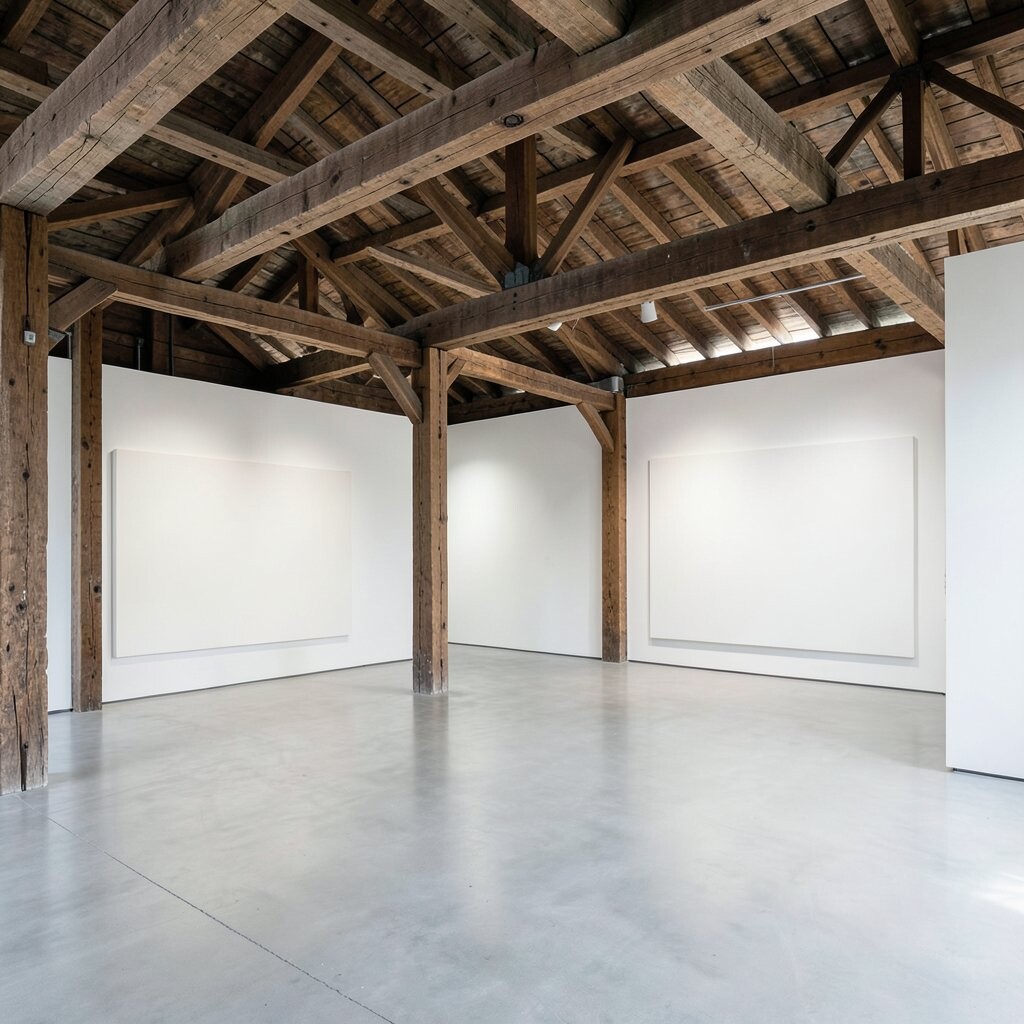
Open beam walls can give a gallery a clean, honest look. The raw wood shows its grain and marks, while soft white panels help the art stand out. This mix works well for paintings, photos, and small mixed media pieces.
The look is useful because it keeps the room bright without feeling cold. It also helps visitors focus on the art instead of the wall finish. If you want a low-cost idea, use plain paint on most walls and keep the wood beams exposed.
This style fits well with current gallery trends that value simple forms and natural materials. You can make it more personal by leaving some knots, rough edges, or old nail marks in place. That small touch can make the space feel more grounded and less staged.
2. Long Timber Frames Around Large Feature Walls
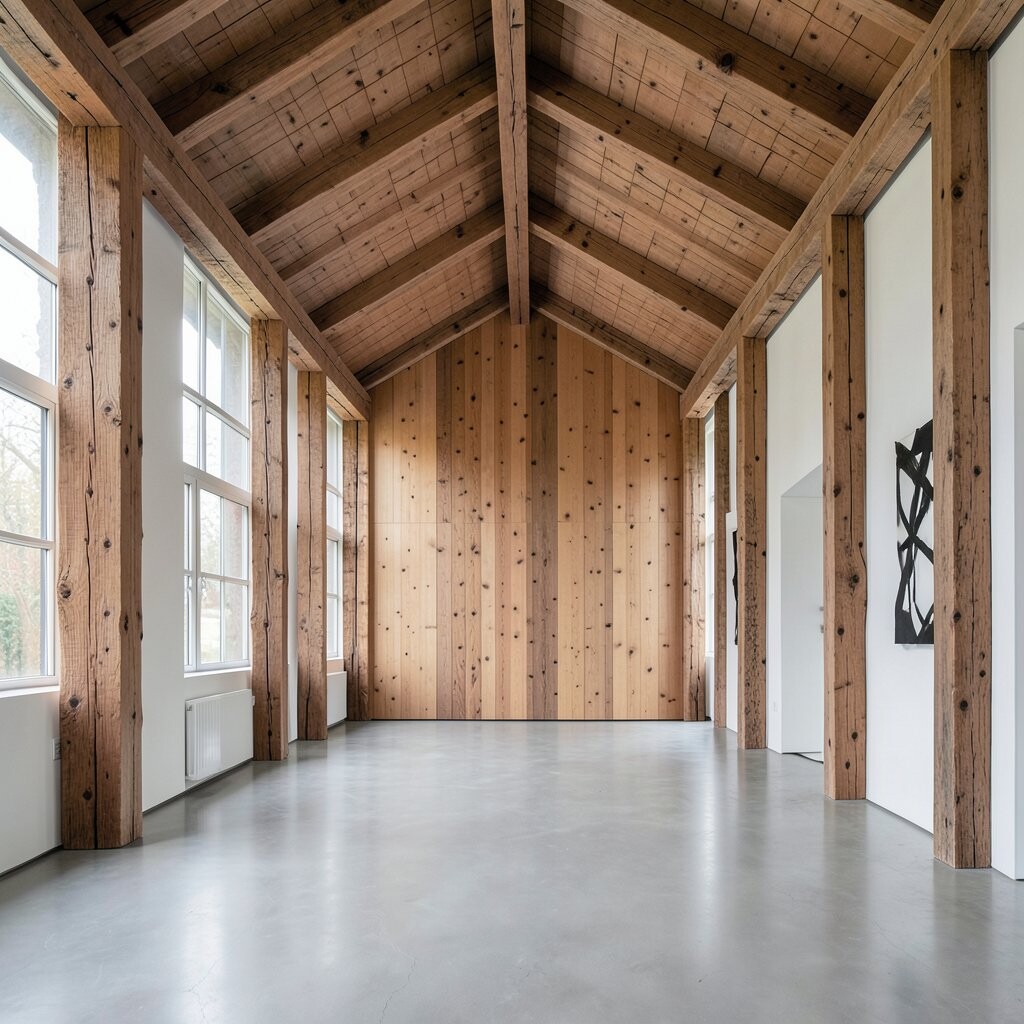
Long timber frames can give a gallery a strong shape without much extra detail. They work well around a main wall where one large piece or a group of works needs attention. The raw wood adds a clear edge that feels neat but not too polished.
This idea is helpful in open rooms because it creates a clear stop for the eye. It can also make a plain room feel more planned, which is useful for small galleries on a budget. You can keep the wood in its natural tone or stain it lightly to match the art.
Many modern spaces now use this kind of frame to make the room feel warm and simple. If you want a more personal look, you can use wood from local sources or old beams from another building. That can add a bit of history without making the room feel heavy.
3. Raw Wood Slat Ceilings With Simple Track Lighting
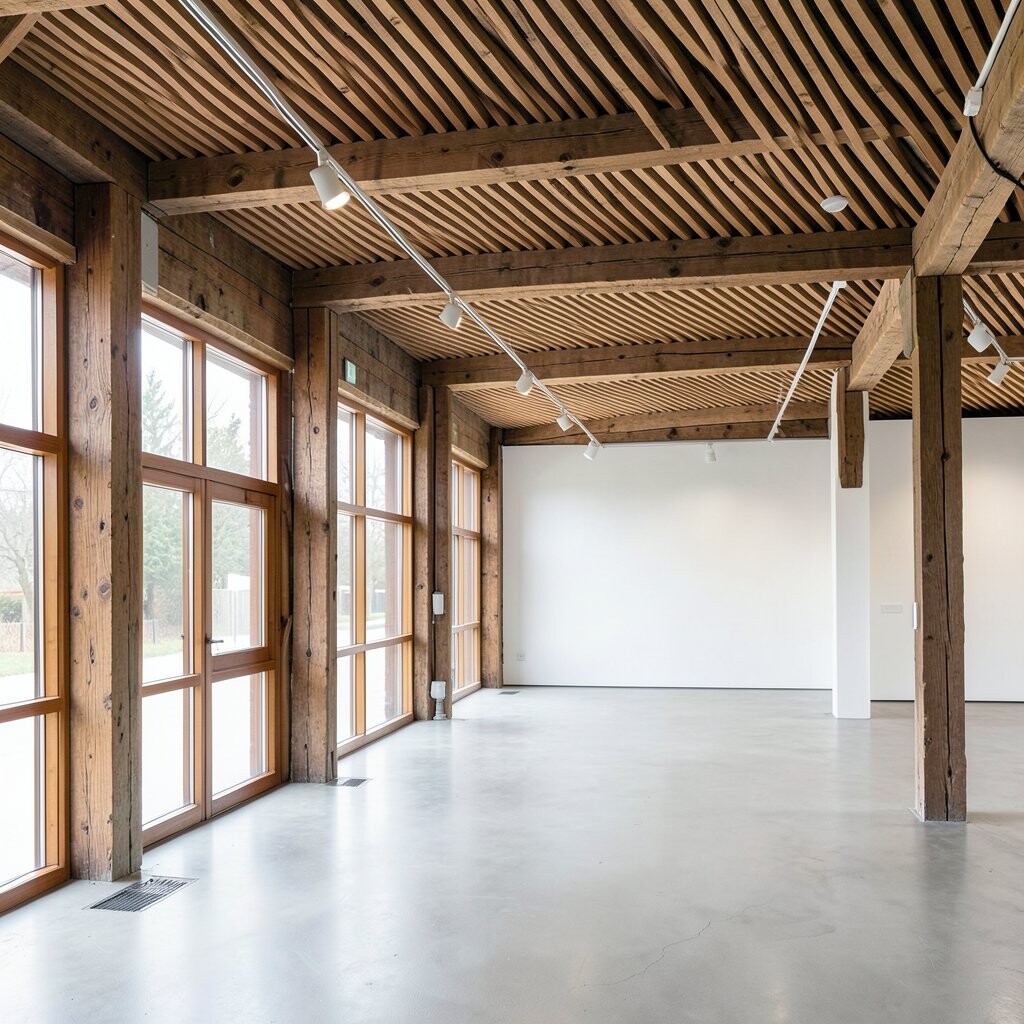
Raw wood slat ceilings can bring a soft pattern above the art. The lines make the room feel neat, while the wood keeps it from looking too plain. With simple track lighting, the art stays clear and easy to see.
This setup works well because it gives both style and good light control. It can help a gallery feel more open, and it may also hide small wiring or vents in a clean way. If cost is a concern, use slats only in key areas instead of the whole ceiling.
This is a strong trend in many new galleries and shop-like art spaces. You can make it your own by changing the slat width or leaving some gaps for a lighter feel. That gives the room a custom look without a big build.
4. Rough Timber Display Tables For Sculptures
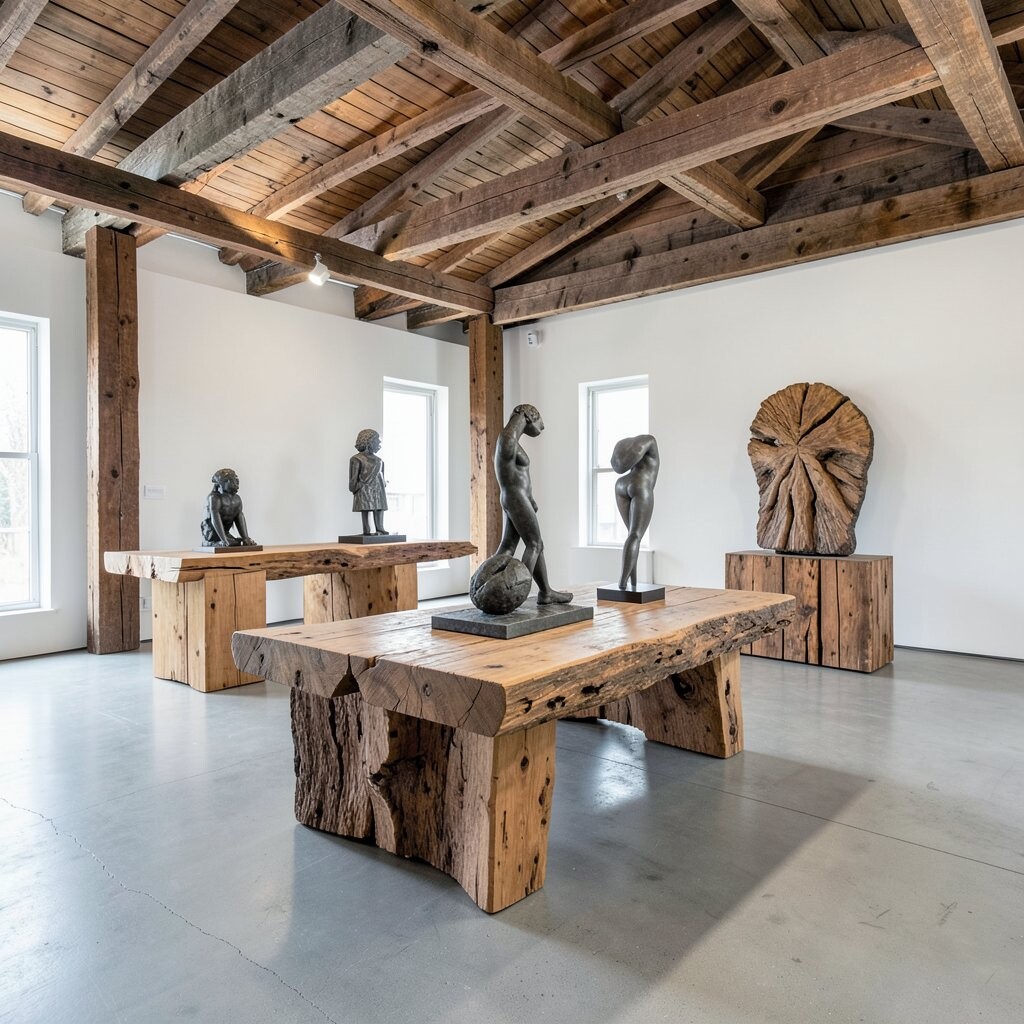
Rough timber display tables can make small sculptures feel more special. The wood gives a steady base and adds texture that works well with stone, clay, glass, or metal pieces. A simple table can also help visitors move around the work with ease.
This idea is good for galleries that want a flexible setup. You can move the tables when a show changes, and you do not need much extra decor. It is also a smart cost choice if you build the tables from basic boards and keep the finish light.
Many curators like this look because it feels honest and calm. You can personalize it by using different wood tones for different show areas. That small change can help guide the eye and make each display feel distinct.
5. Exposed Wood Columns In A Clean White Room
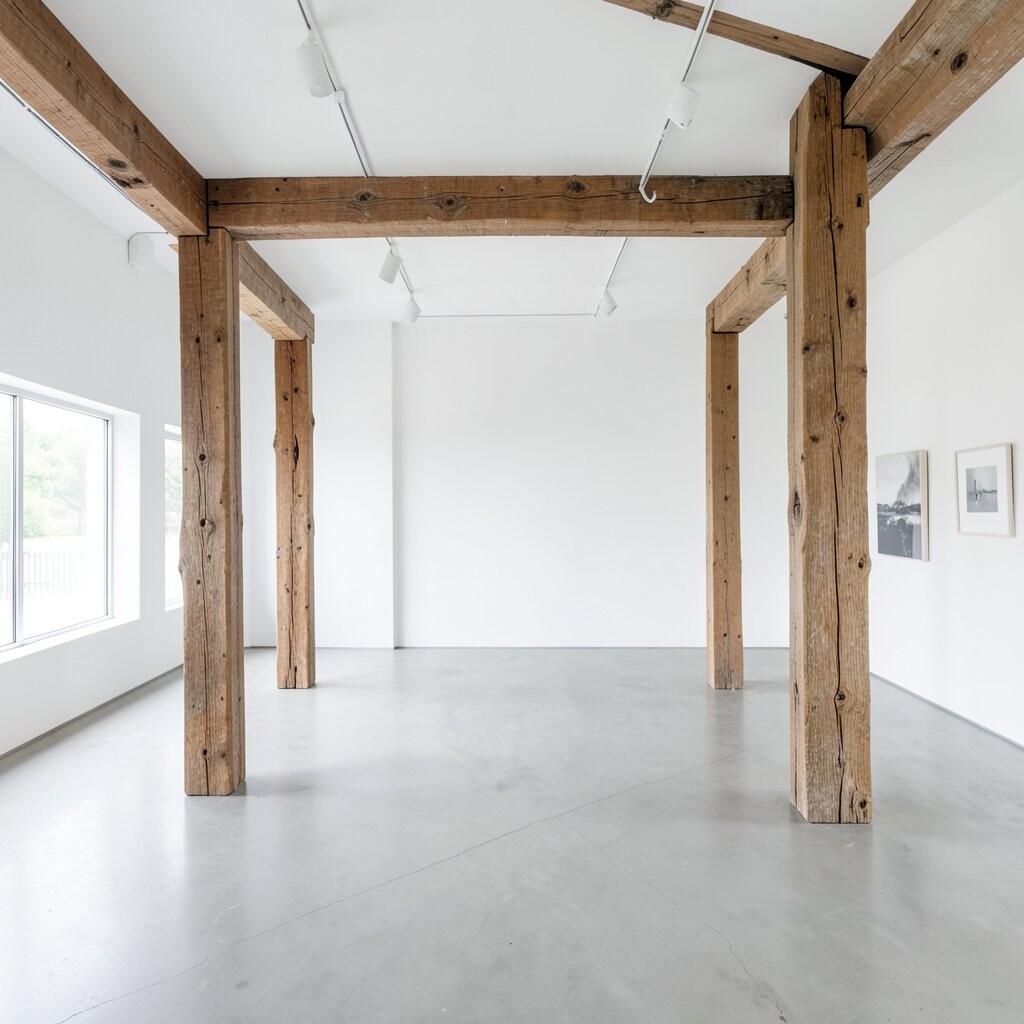
Exposed wood columns can give a plain room more shape and warmth. They break up the space in a natural way and make the gallery feel less flat. When the rest of the room stays white, the wood stands out in a quiet and simple way.
This layout is useful for both small and large galleries. The columns can help define walking paths and make the room easier to read. It can also keep costs down if you use the building’s own structure instead of adding new walls.
This kind of look fits well with current tastes for raw and simple spaces. You can make it more personal by keeping the wood unfinished or by sanding only the parts people touch. That helps the space feel real while still staying neat.
6. Wooden Grid Shelves For Smaller Art Pieces
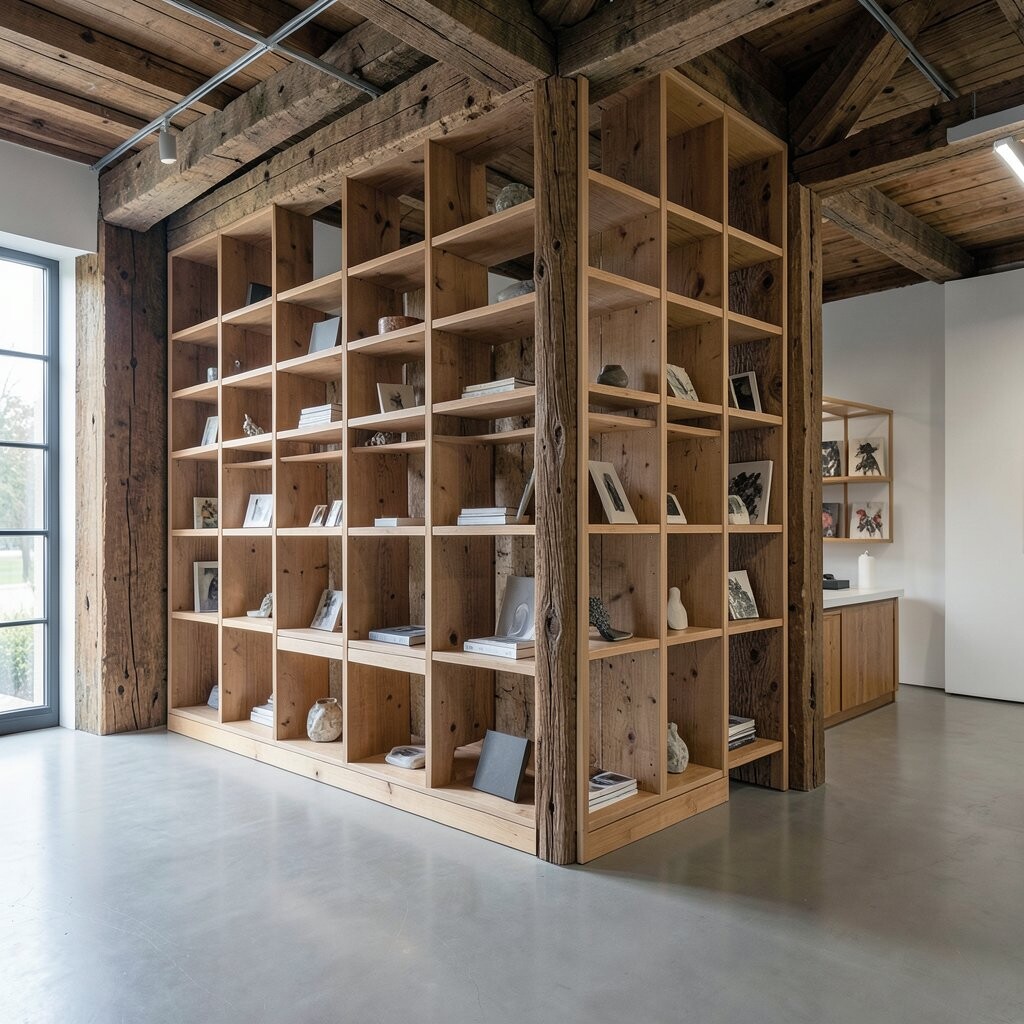
Wooden grid shelves can give a gallery a tidy, modern feel. They work well for small works, books, ceramics, and light objects that need a clear place to sit. The raw wood adds warmth and helps the shelves feel less stiff.
This setup is useful because it makes a wall do more than one job. It can hold art, guide the eye, and add storage at the same time. If you need a lower-cost option, use simple square frames and keep the finish plain.
Many galleries now use open shelving to make the space feel more relaxed and easy to use. You can personalize the grid by mixing shelf sizes or leaving some spaces empty for balance. That makes the wall feel calm instead of crowded.
7. Rustic Wood Floors With Smooth Display Paths
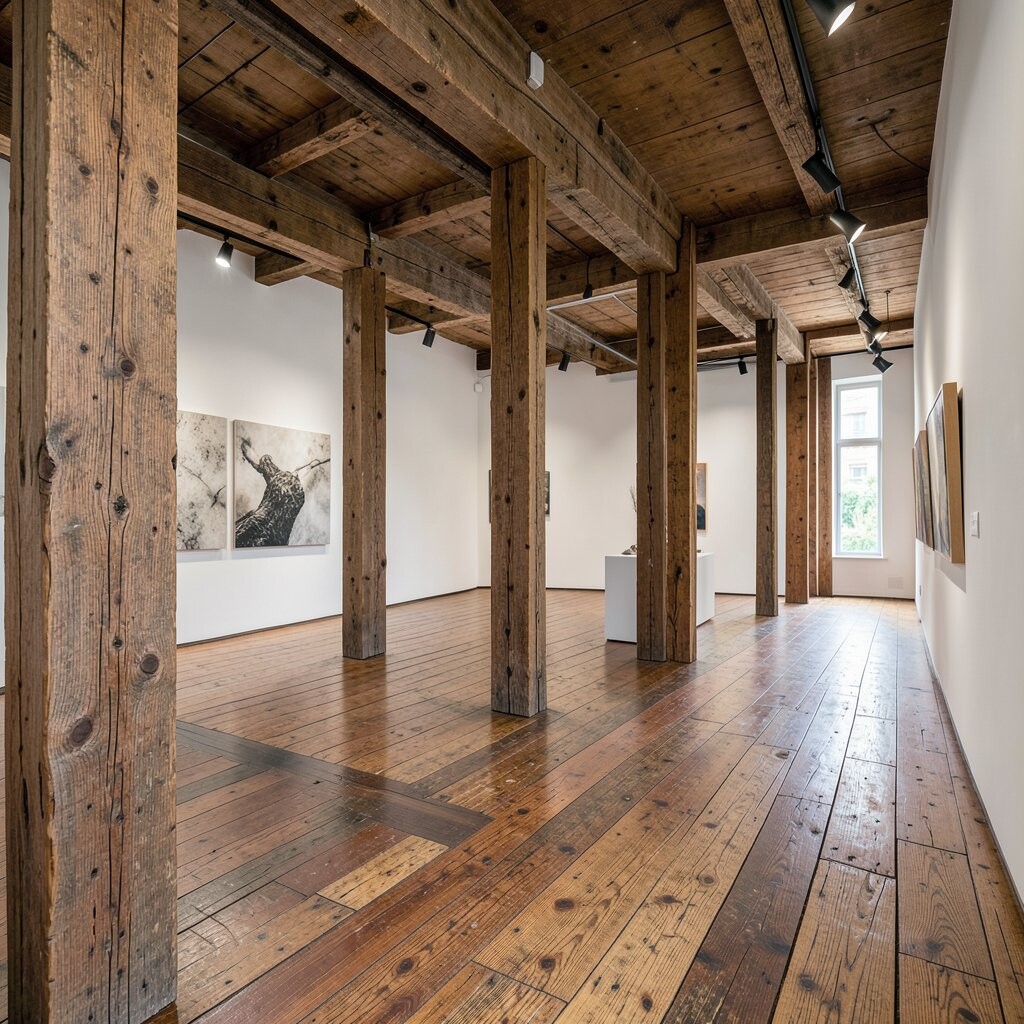
Rustic wood floors can set a warm base for the whole gallery. The grain, knots, and small signs of wear can make the room feel lived in and real. Smooth display paths on top of that floor help visitors move through the space without confusion.
This idea is practical because wood floors can last a long time if cared for well. They also work with many art styles, from bright modern pieces to quiet black-and-white photos. If the budget is tight, you can use engineered wood or reclaimed boards in key areas.
This look is still very current because many people want spaces that feel natural and simple. You can make it more personal by choosing boards with a mix of tones rather than one flat color. That small choice can add depth without making the room busy.
8. Raw Wood Archways Between Gallery Zones
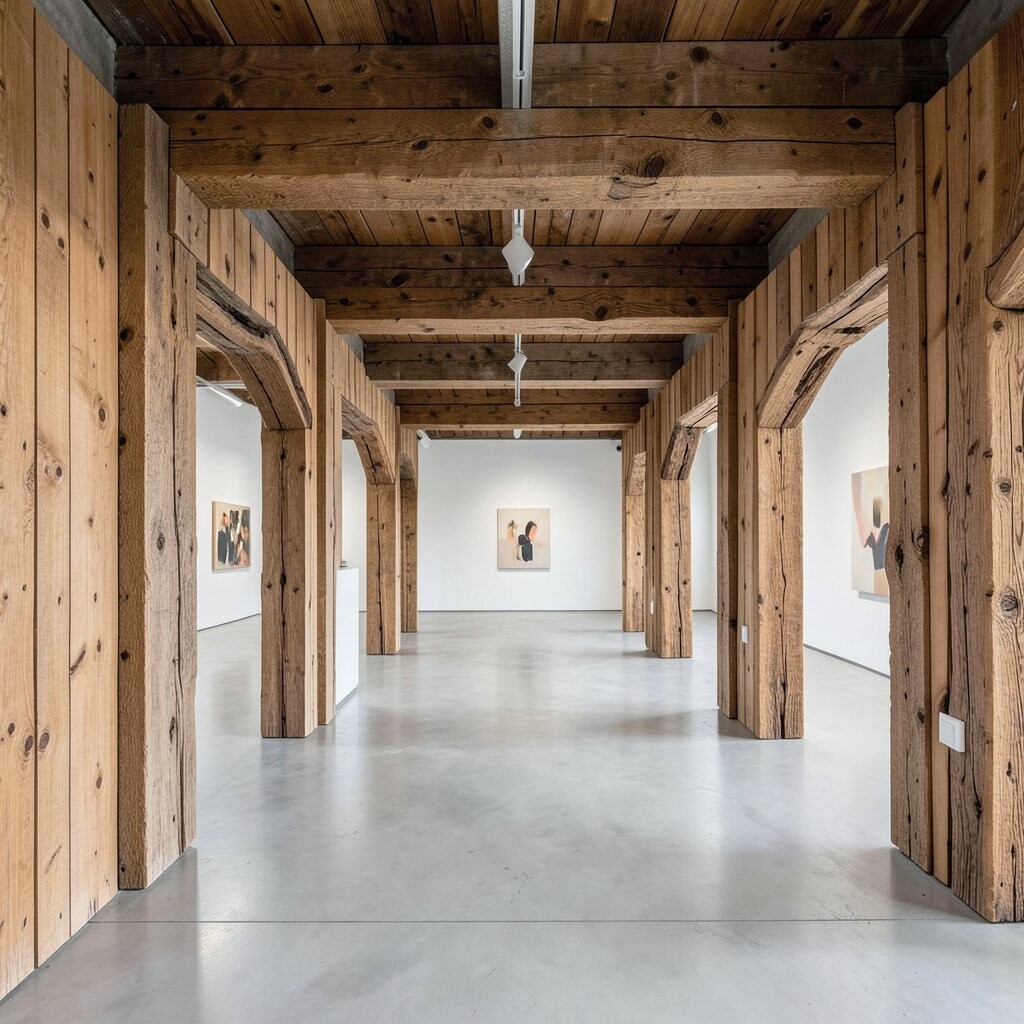
Raw wood archways can help separate one part of a gallery from another. They make the room feel soft and open while still giving each area its own place. The curved shape can also make the walk through the space feel easy and calm.
This is a good choice when you want to show different art styles in one building. The archway can guide visitors without the need for hard walls or too many signs. It may cost less than a full room build if you use simple framing and keep the finish plain.
Archways are popular in spaces that mix old and new design ideas. You can personalize them by changing the curve size or leaving the wood more rough at the edges. That gives the gallery a look that feels made for the space.
9. Wood Plank Feature Wall Behind Bold Artwork
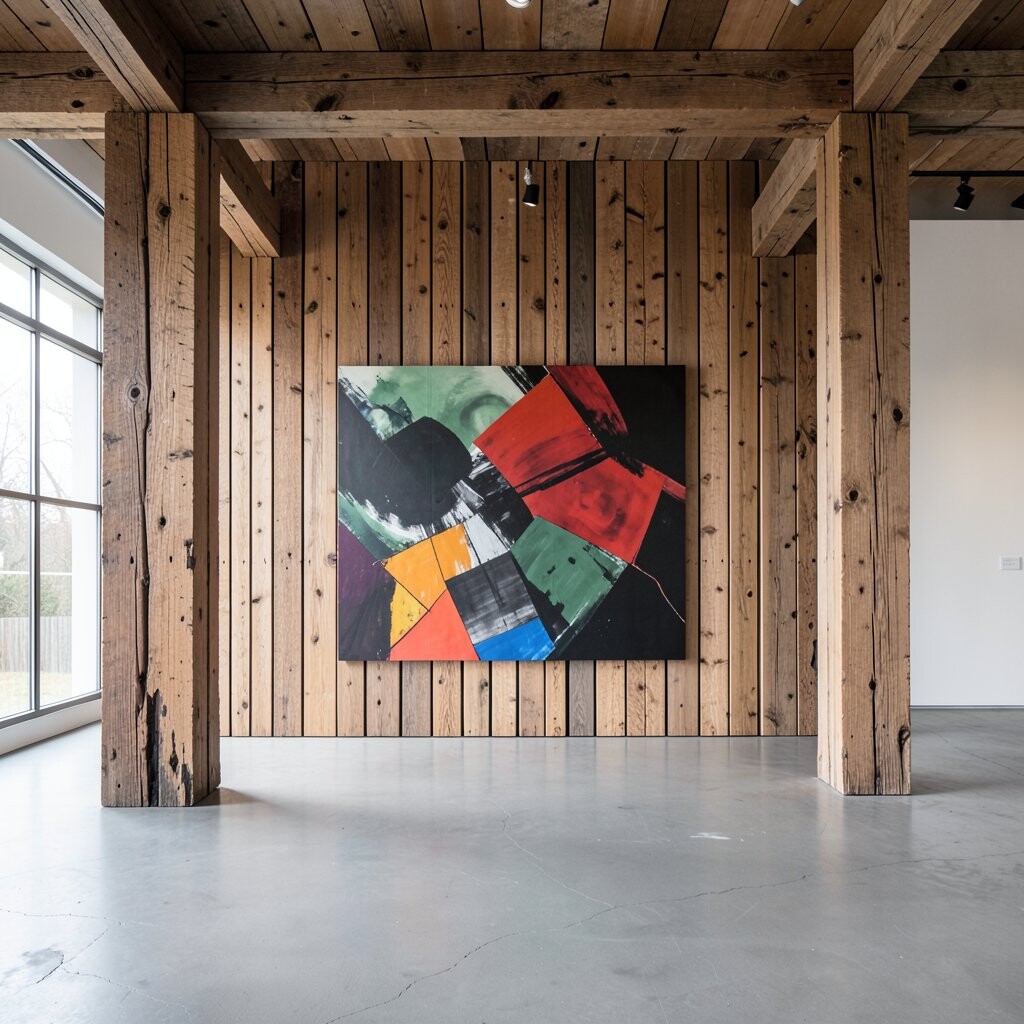
A wood plank feature wall can make bold artwork feel even stronger. The lines in the wood add texture, but they do not take over the room. This works well when you want one wall to act as a clear backdrop for a main piece.
This idea is useful because it brings warmth without needing a lot of decor. It can also be a smart cost choice if you use common planks and simple stain. The wall can work in many gallery sizes, from small showrooms to larger art spaces.
Current trends often favor one strong wall instead of many busy details. You can make it more personal by placing the planks in a vertical, horizontal, or mixed pattern. That small change can shift the whole mood of the room.
10. Timber Bench Seating Along Natural Wood Walls
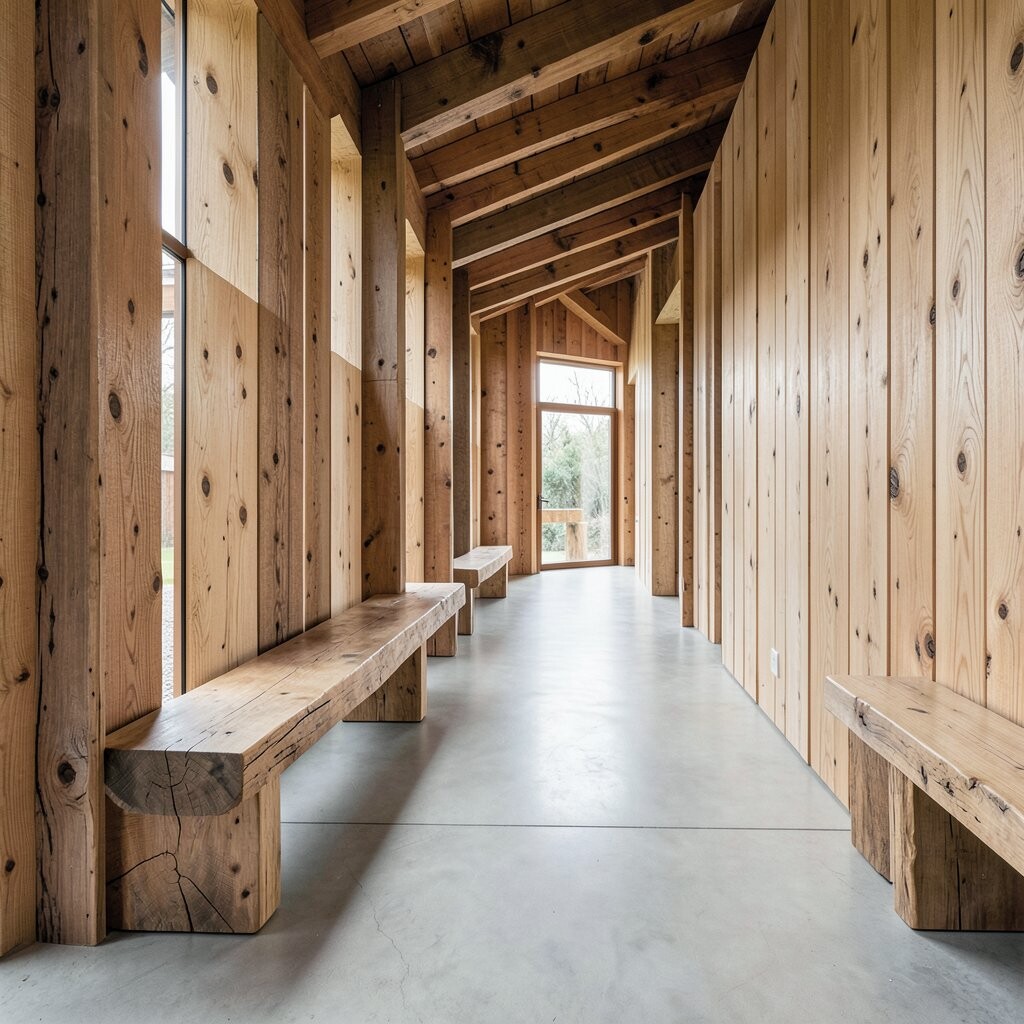
Timber bench seating can make a gallery feel more open and easy to use. People can sit, rest, and look at the art without needing large chairs. When the bench sits near a natural wood wall, the whole area feels connected and simple.
This idea is helpful for longer visits and for spaces that host talks or small events. It also saves room, which matters in galleries with limited square footage. A basic bench can be low cost if it is made from sturdy boards and kept free of extra detail.
You can personalize the seating by changing the length, height, or wood tone. Some galleries add cushions in muted colors for comfort without losing the raw look. That keeps the space friendly and easy to maintain.
11. Reclaimed Wood Ceiling Beams With Spotlit Art
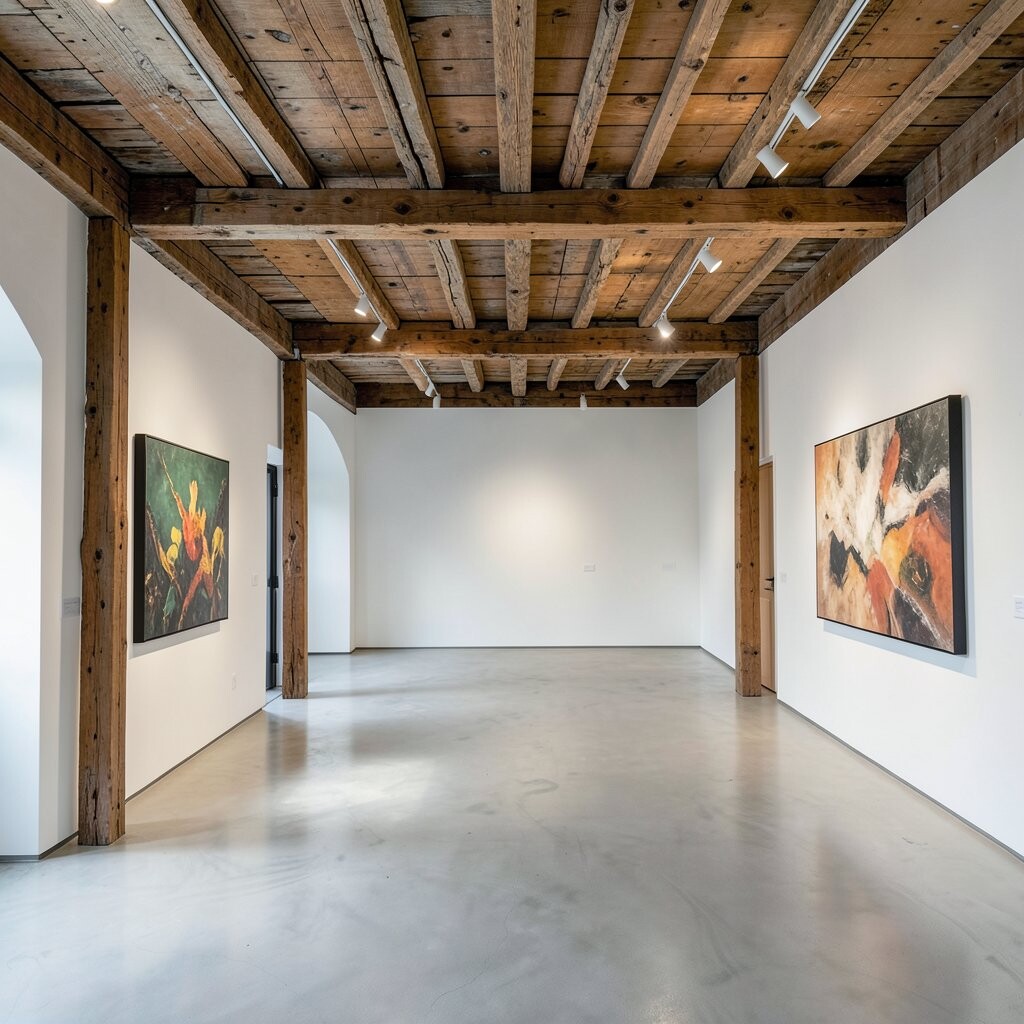
Reclaimed wood ceiling beams can bring a strong sense of character to a gallery. The old marks and uneven tones tell a quiet story without using any text or signs. Spotlights below them can keep the art clear and help the room feel balanced.
This design is useful because it adds interest overhead while keeping the walls open. It can also help make a plain white room feel warmer and more complete. Reclaimed wood may cost less than new custom work, especially if you can source it locally.
This look fits well with the trend toward reuse and simple natural materials. You can make it your own by keeping some beams darker than others or by leaving old paint marks in place. That can give the gallery a more honest and lived-in feel.
12. Minimal Wood Display Cubes For Changing Shows
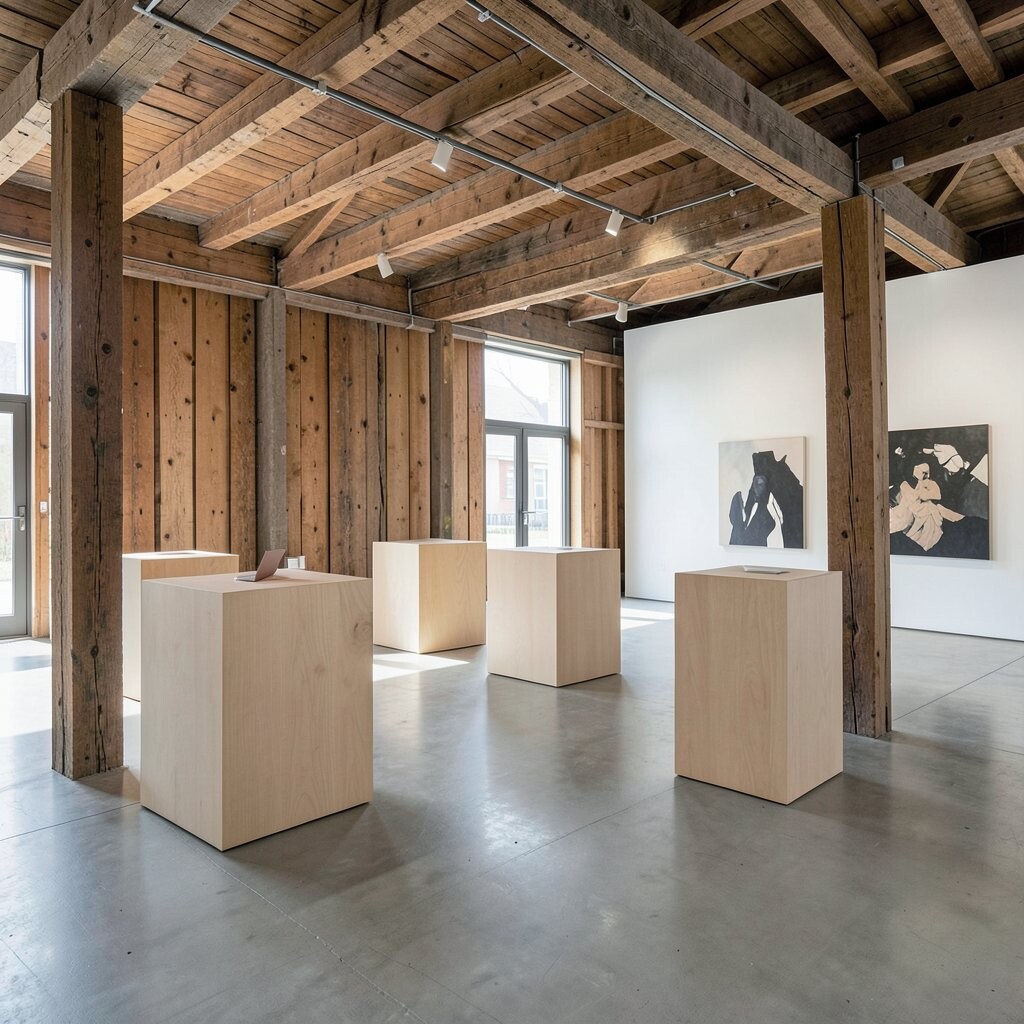
Minimal wood display cubes can work in many kinds of galleries. They are easy to move, stack, and place in new ways as shows change. Their raw wood surfaces give a soft, plain base that lets the art stay in focus.
This is a smart choice for galleries that need flexible layouts. The cubes can hold objects, support framed work, or act as low seats when needed. They are also a good cost option because one simple shape can serve many uses.
Many current gallery spaces use modular pieces like this because they save time and space. You can personalize the cubes with different heights or wood tones. That gives the room more rhythm without making it feel crowded.
13. Mixed Raw Wood And Glass Front Gallery Entry
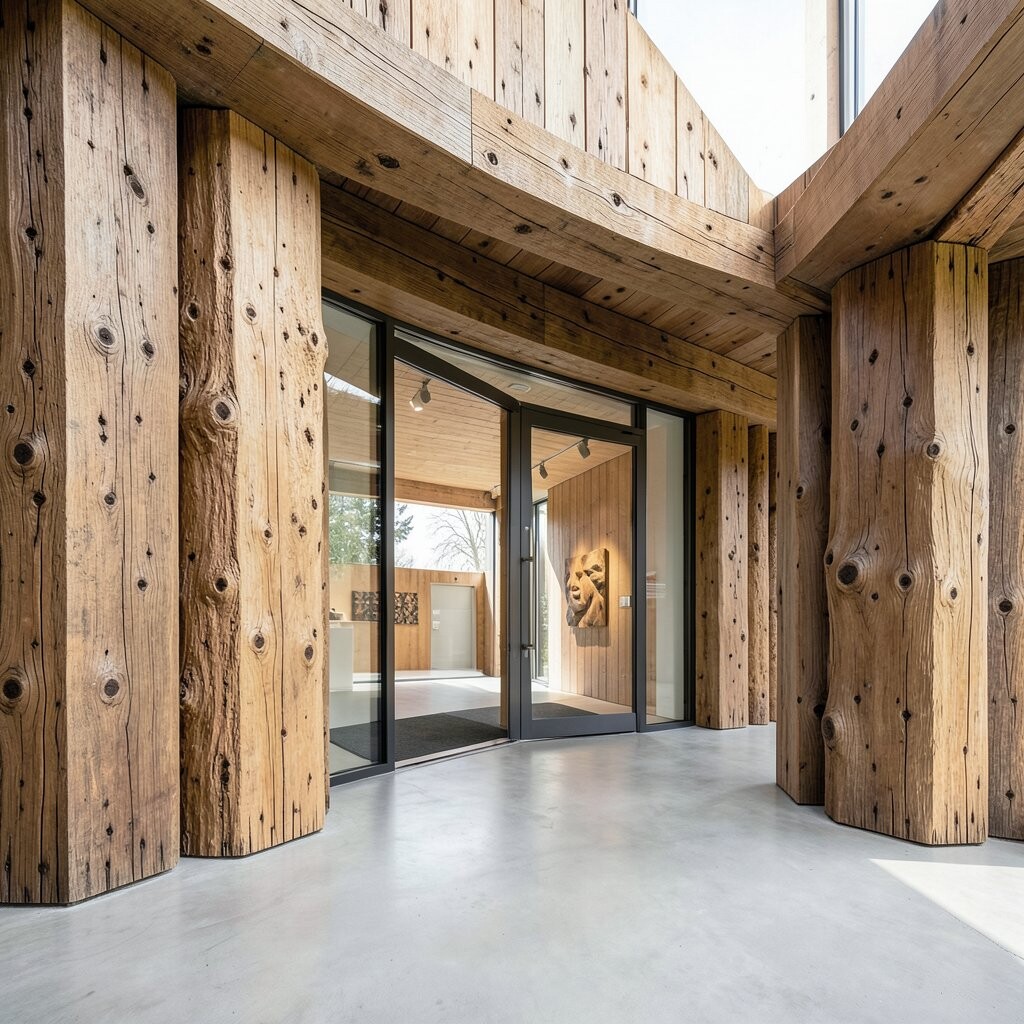
A mixed raw wood and glass front can make a gallery feel open from the start. The wood gives the entry a warm frame, while glass lets people see inside and feel welcome. This can help the space feel calm and clear before anyone even steps in.
This idea is useful for drawing attention to the art without using loud signs or heavy decor. It can also help with natural light, which may lower energy use during the day. If you want to keep costs in check, use a simple wood frame with plain glass panels and limit extra trim.
This entry style fits well with today’s simple and open design trends. You can make it personal by choosing rougher wood for a more casual feel or smoother cuts for a cleaner look. Either way, the mix of materials can set the tone for the rest of the gallery.