A small closet can feel tight, but it doesn’t have to be. With the right changes, it can look neat, feel roomy, and work better every day.
Think of your closet like a tiny stage where your clothes get the spotlight. These ideas help you squeeze in more storage without the clutter taking over.
-
1. Start with a “keep, donate, store” reset
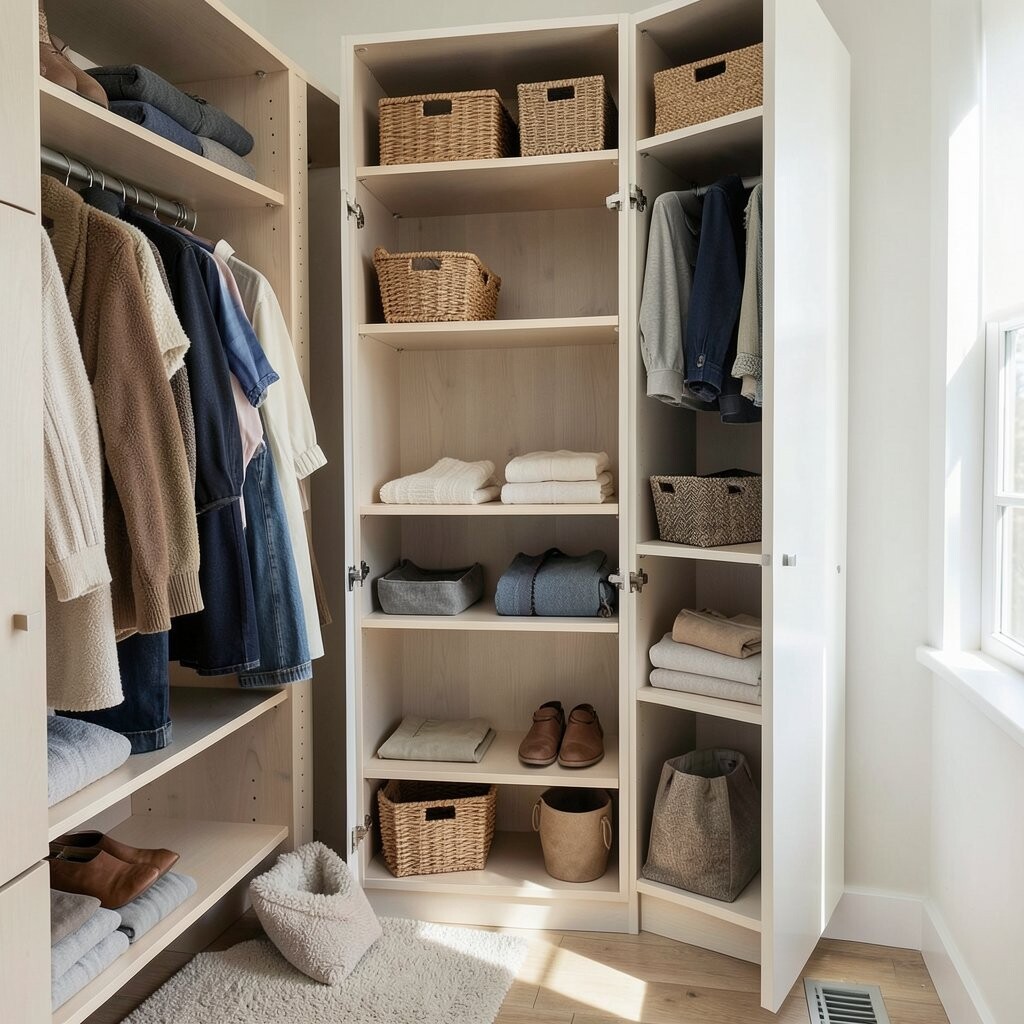
Start with a “keep, donate, store” reset Empty the closet and sort your items into clear piles. This quick reset shows what you truly need and what just takes up space.
When you keep only the clothes you wear, everything else becomes easier to organize. Donate gently used pieces and store seasonal items in labeled bins so they don’t block daily outfits.
To personalize, match the bins to your life: one bin for “work,” one for “weekend,” and one for “special events.” Cost-wise, this can be almost free if you use existing boxes, but it works best when you add a few labels for quick finding.
-
2. Switch to slim velvet or wooden hangers
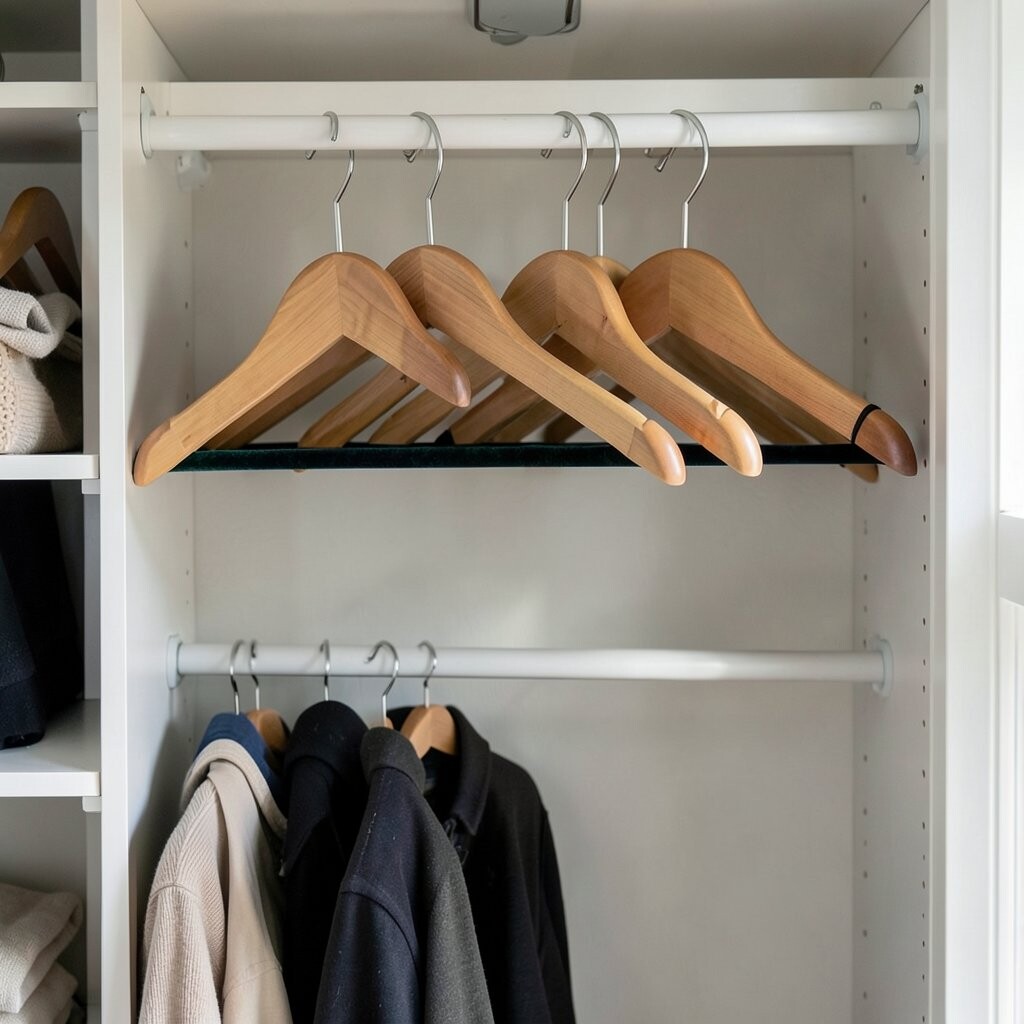
Switch to slim velvet or wooden hangers Bulky hangers steal inches, even when they look harmless. Slim hangers make the closet feel instantly calmer and more open.
You’ll fit more clothing on the same rod, and your closet will look nicer. Velvet or smooth wooden styles also help items like blouses stay put without slipping.
For tips, group hangers by closet zone: shirts on one side, dresses on the other, and jackets on the end. If cost is a concern, upgrade in batches—start with your most-used section first, then keep swapping over time.
-
3. Add a second rod for vertical layering
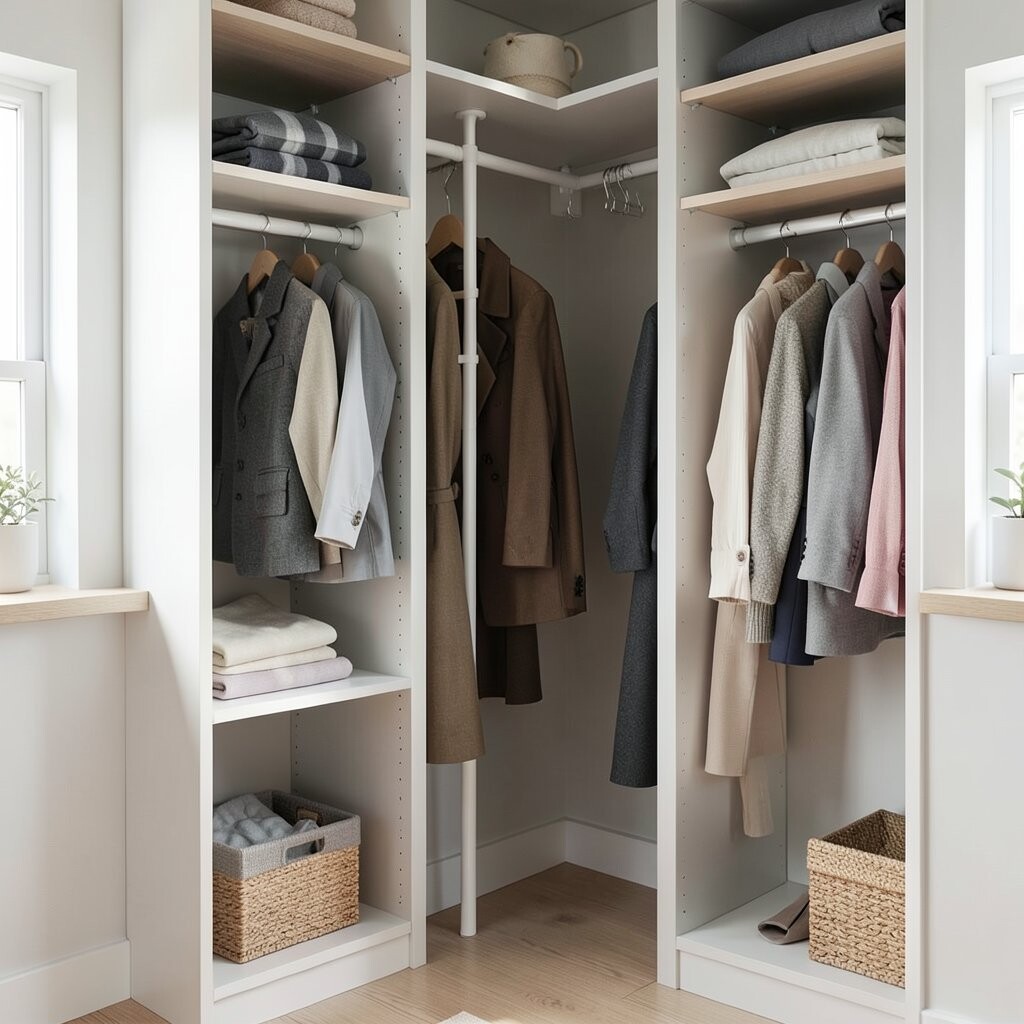
Add a second rod for vertical layering Use the height you already have by installing a second clothing rod. This turns dead space above into a real storage area.
You can hang shorter items on the top rod and keep longer pieces below. The benefit is huge: more hangable clothes with less floor mess.
For personalization, label a “top rod” zone with a sticky note like “sweaters” or “activewear.” If you want a low-cost option, use a tension rod at first, then upgrade to a sturdy kit when you know it will work.
Current trend: many people are choosing adjustable or modular organizers because they grow with their wardrobe.
-
4. Use clear bins for shelves and “see-through” calm
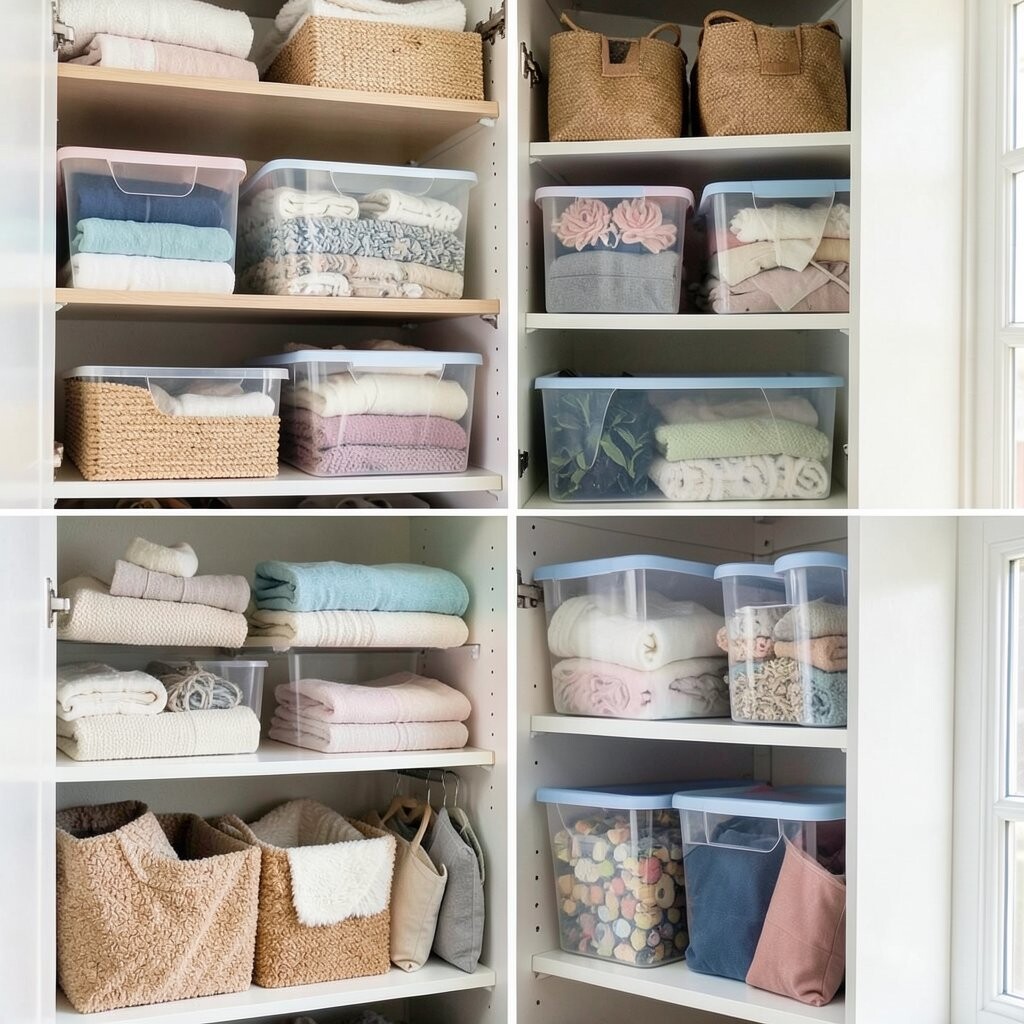
Use clear bins for shelves and “see-through” calm Clear bins let you spot items fast without digging. A small closet gets less chaotic when you can see what’s inside.
Label the front with a simple category, like “leggings” or “holiday.” When you personalize labels by color or handwriting style, the closet feels like it belongs to you.
For cost, start with a few bins for the top shelves where clutter usually hides. This is also a great trend-friendly method because clear storage looks clean in photos and in real life.
-
5. Install door organizers for hidden storage
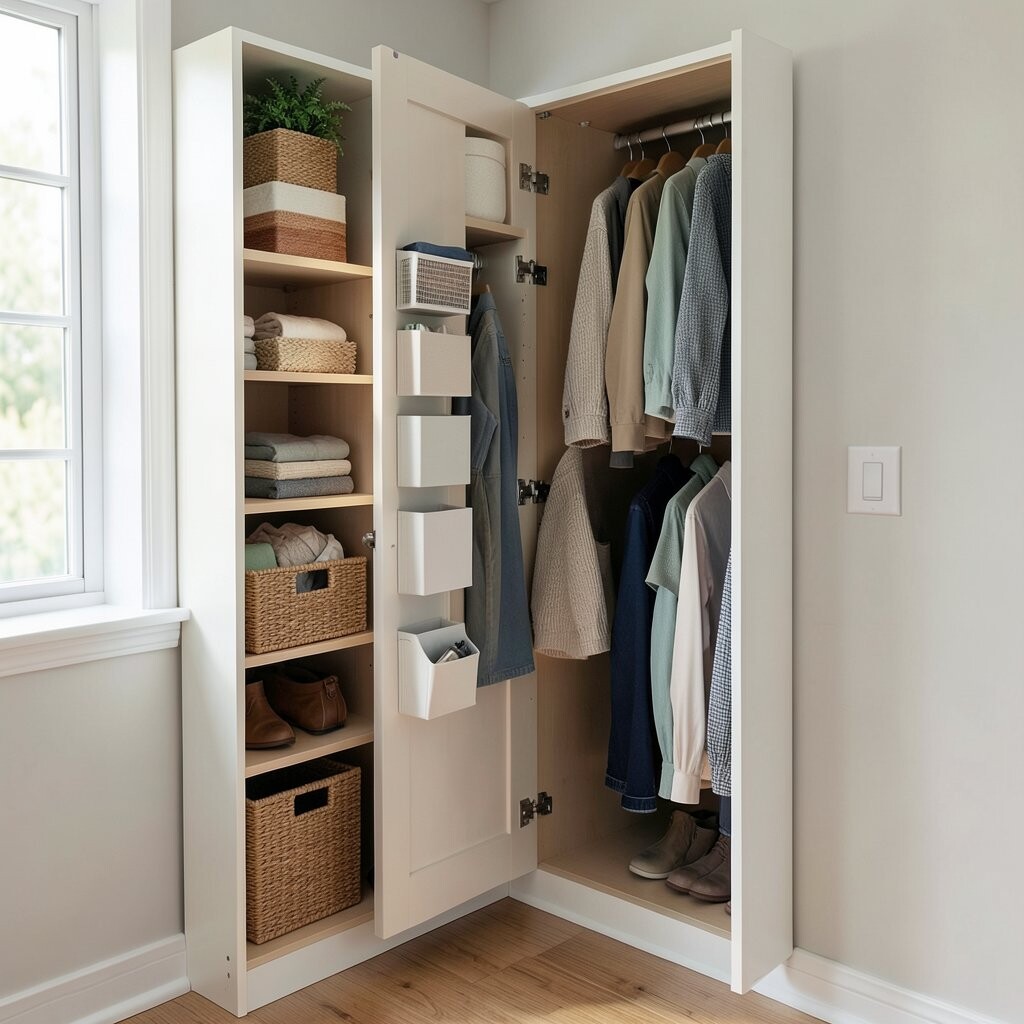
Install door organizers for hidden storage The back of your closet door is prime real estate. Add an organizer to store belts, scarves, or small bags.
This helps you keep daily items near you while freeing shelf space. It also reduces the “where did it go?” feeling.
Try a pocket organizer for lighter items, and a hanging rack for sturdier accessories. Personalize the pockets with a checklist of what belongs where, and use one pocket for “always grab” items like a tie or a hair clip.
-
6. Create a shoe zone with a slim rack
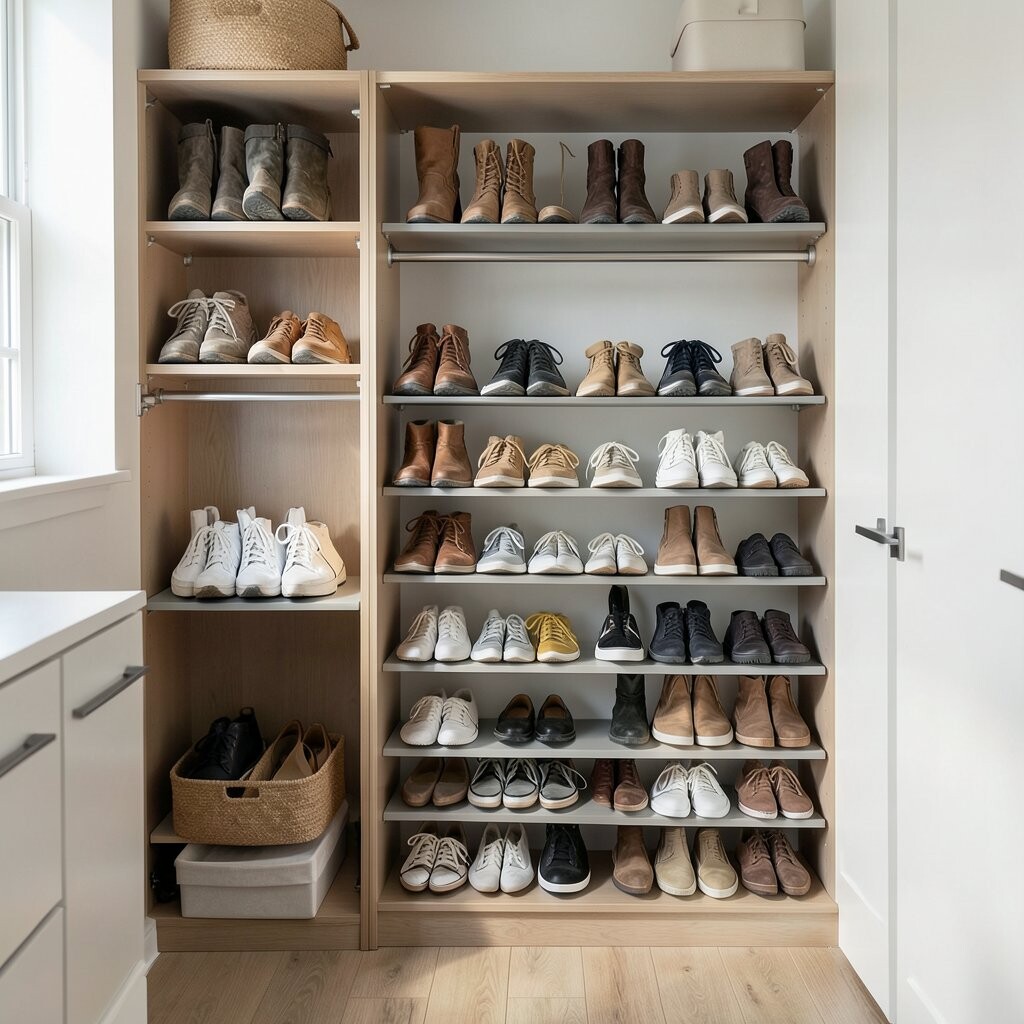
Create a shoe zone with a slim rack Shoes multiply fast, and they love to spill onto the floor. A slim shoe rack keeps pairs contained and makes your entry look tidy.
Choose a rack that fits your space, like a vertical stack or a narrow over-the-door option. This makes mornings easier because you can grab the right pair quickly.
For tips, store shoes by season and by frequency, with your most-worn pair at eye level. To personalize, add a small mat or tray for shoe polish and laces, so every fix is in one place.
If you’re watching cost, consider reorganizing first with what you have, then upgrade to one rack that solves the biggest mess.
-
7. Add an interior curtain or sliding panel
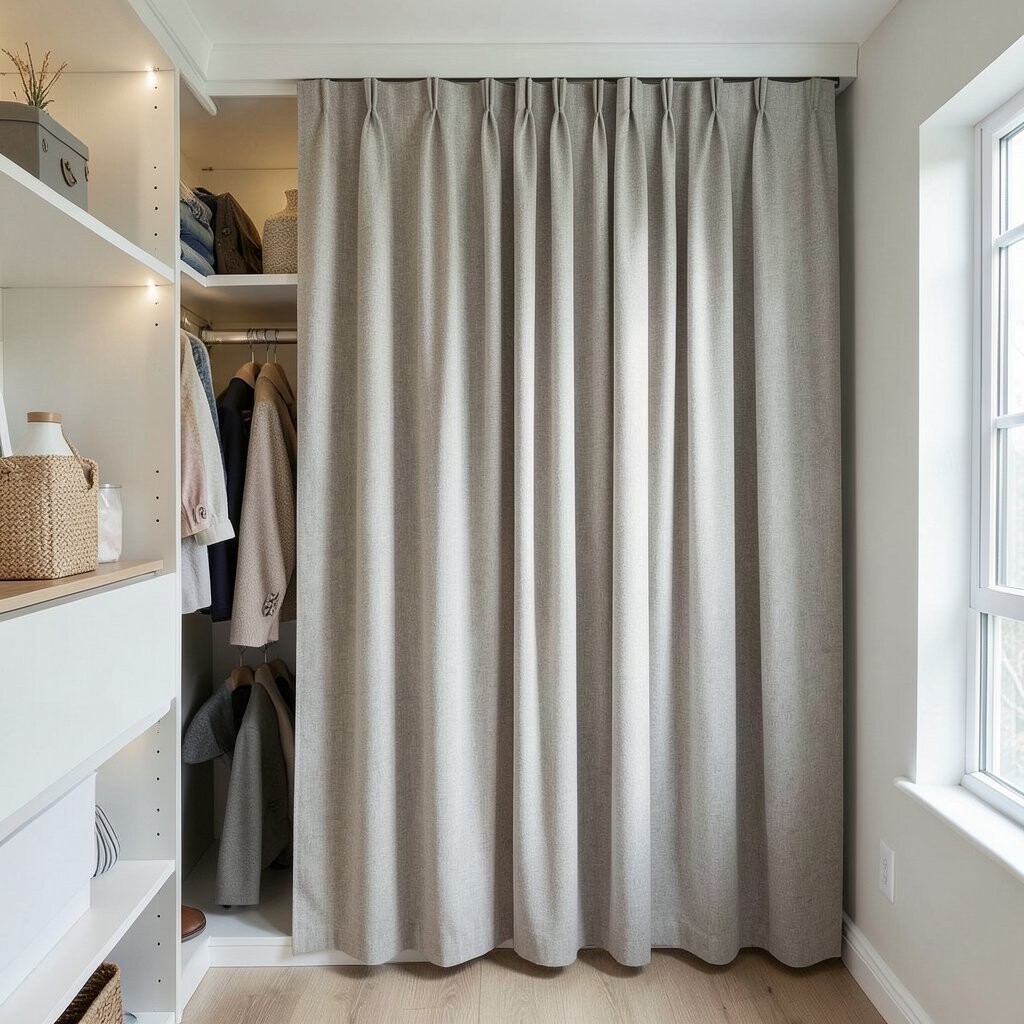
Add an interior curtain or sliding panel If your closet feels like a “visual storm,” try a curtain. A simple curtain softens the look and hides clutter you can’t avoid right away.
You can use fabric for a cozy vibe or a clear panel for a modern feel. The benefit is that it makes the closet feel more styled, even when you’re busy.
Personalize it with a color that matches your room, or choose a pattern like small dots for a playful touch. Cost can stay low if you reuse a curtain you already own, and you can mount a rod using simple hardware.
-
8. Put bulky sweaters in drawer space or bins
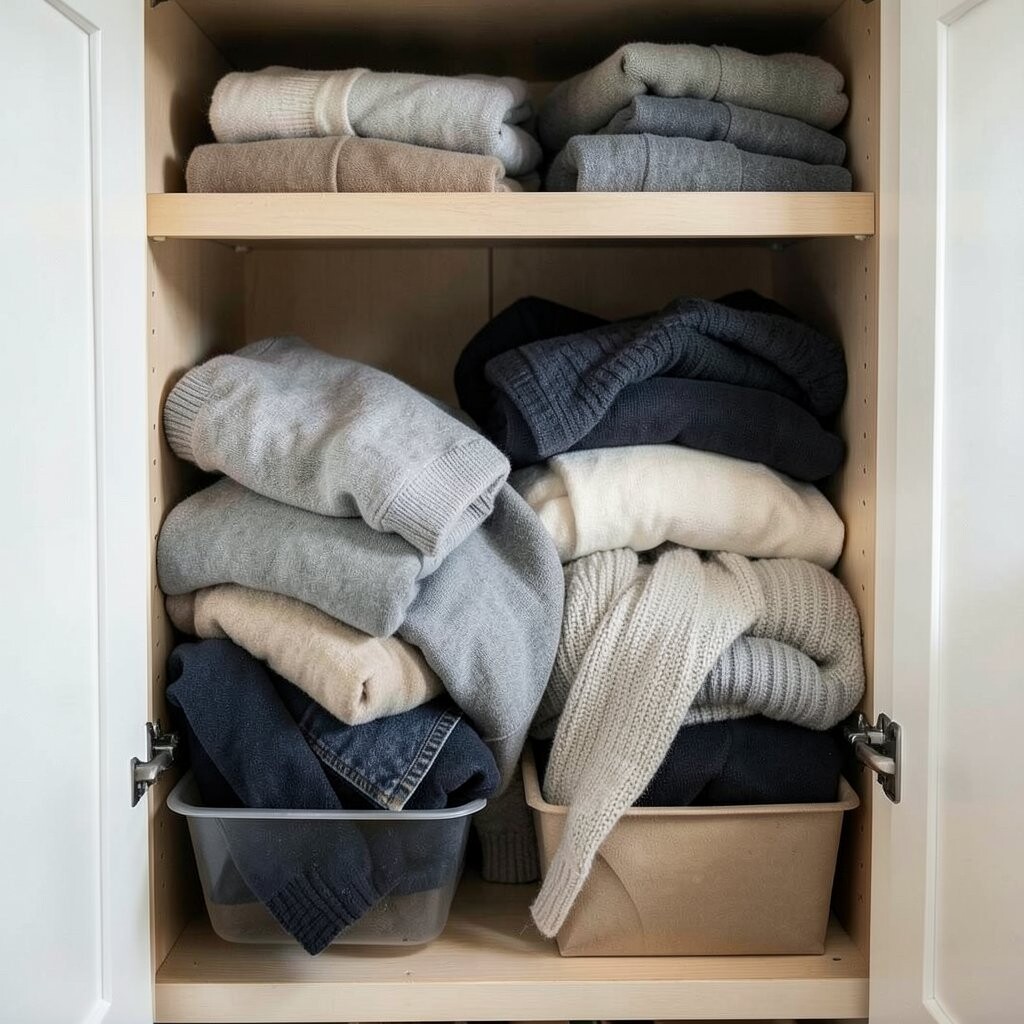
Put bulky sweaters in drawer space or bins Hanging bulky sweaters can take over the whole rod. Folding and storing them in drawers or stacked bins saves major space.
You’ll also keep knits from stretching out. That benefit matters if you want your favorites to look fresh all season.
For tips, use a simple folding method like a tidy roll, then keep similar colors together. Personalize by creating a “capsule set” bin—items that mix and match easily—so choosing outfits feels quick and fun.
If cost is tight, start with one drawer insert or even a labeled laundry basket. Current trend: many people are using drawer dividers and “capsule” clothing groupings for fast outfit planning.
-
9. Use slim stacking organizers for folded clothes
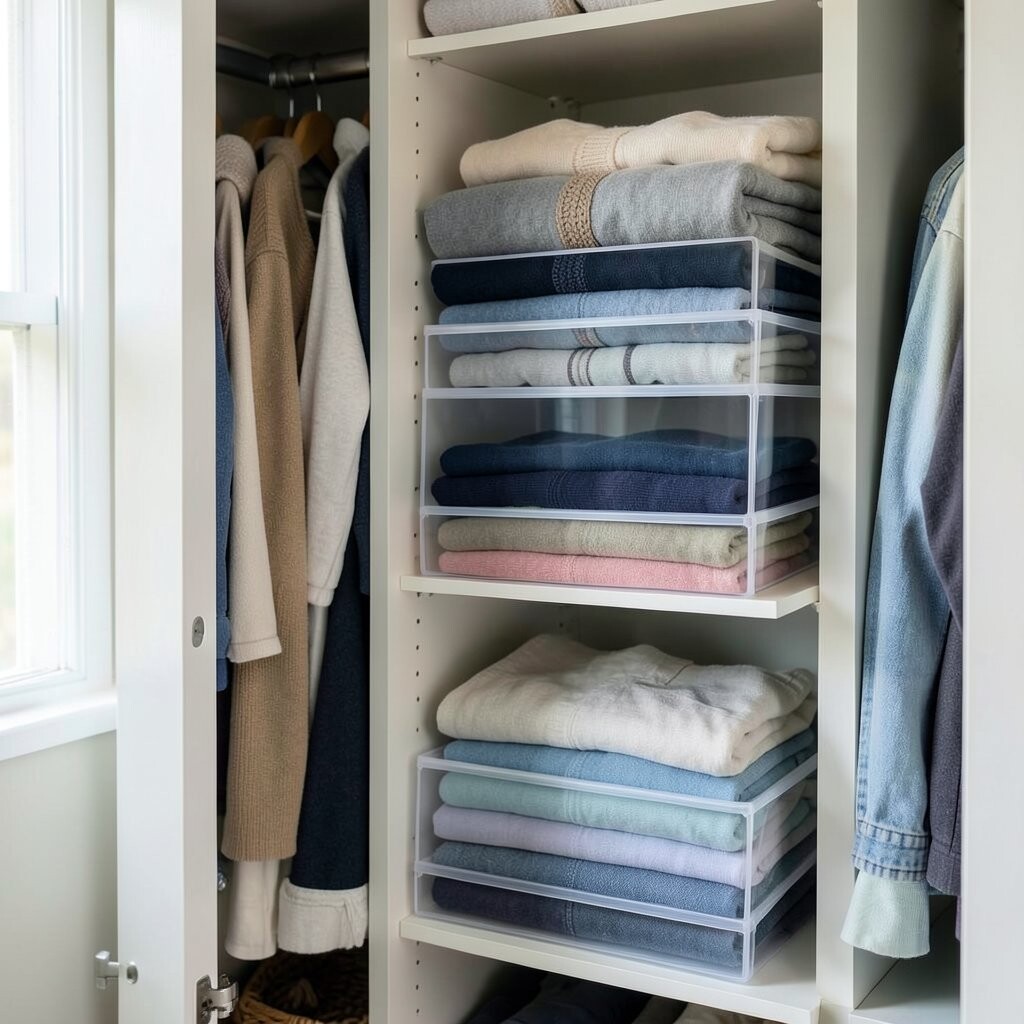
Use slim stacking organizers for folded clothes Stackable organizers turn folded clothes into neat sections. Instead of a pile, your closet becomes easy to scan.
This makes it faster to put clothes away, which means you’ll keep the system working. It also helps prevent wrinkled chaos.
Try using different heights: taller stacks for jeans and shorter stacks for tees. Personalize the look by choosing organizers in colors that match your room or by adding small labels with your handwriting style.
-
10. Add hooks for bags, lanyards, and everyday items
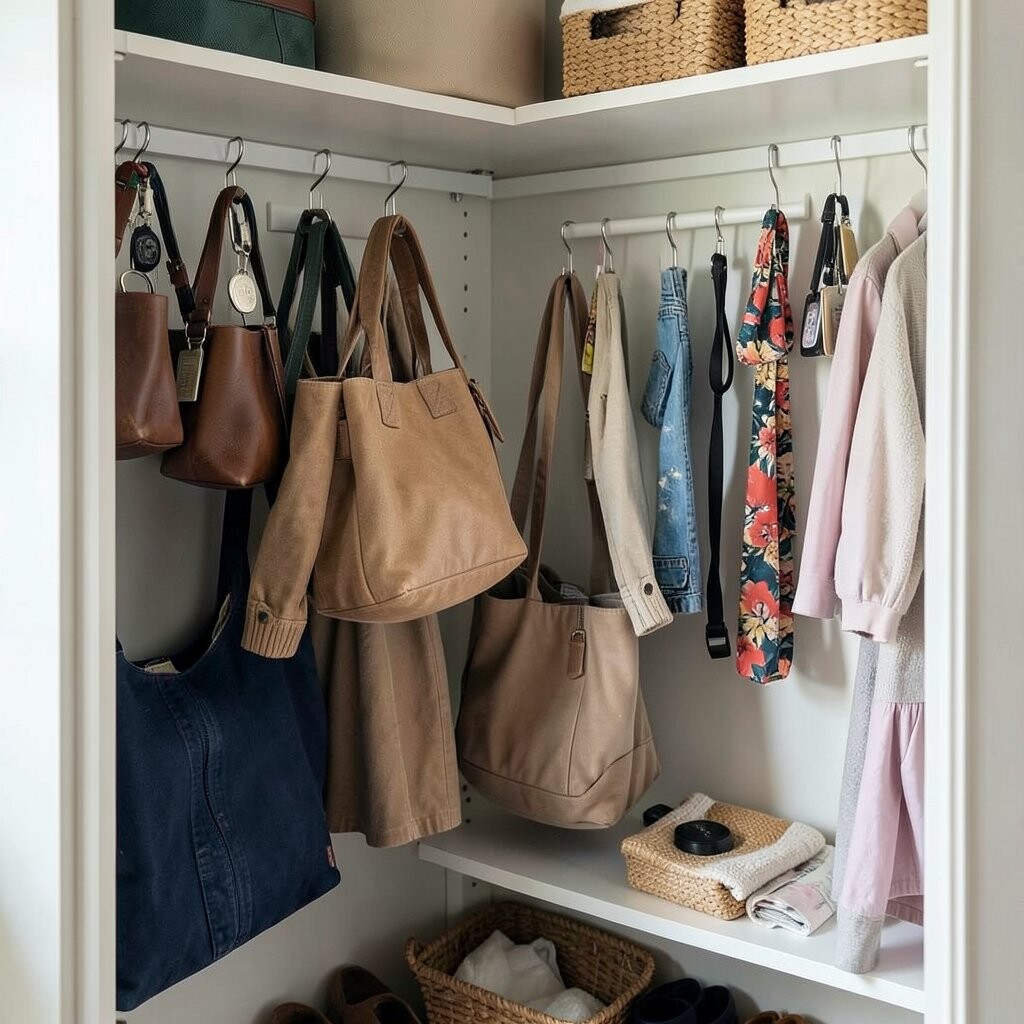
Add hooks for bags, lanyards, and everyday items Hooks are small tools that create big order. Put them on the side wall or inside the closet door so items hang where you need them.
When bags, scarves, or lanyards always have a home, you stop hunting. This frees up shelves and keeps your floor clear.
For tips, group hooks by use: “grab in the morning” hooks near the door, and “special” hooks farther back. Personalize by adding hook labels like “work bag” or “gym,” and choose hooks that match your hardware for a finished look.
Cost can be low because hooks are usually affordable, and you can start with just a few where clutter starts first.
-
11. Use a hanging organizer for belts and ties
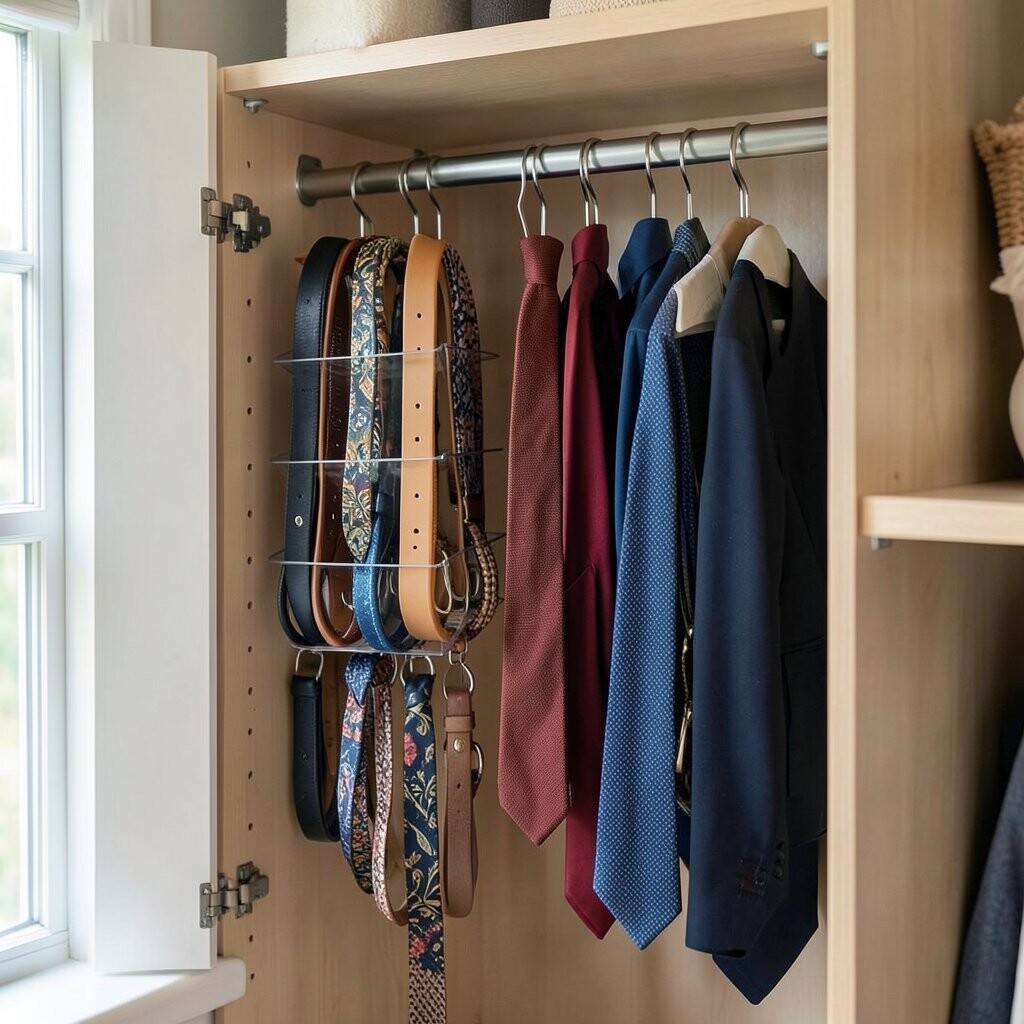
Use a hanging organizer for belts and ties Belts and ties can tangle and waste space fast. A dedicated hanging organizer keeps them straight and easy to grab.
You’ll also avoid the “pull everything out” method that creates mess. The benefit is a more organized routine with less time spent fixing knots.
Try a grid with loops for belts, or a bar-style holder for ties. Personalize by arranging by color or by outfit type, like casual or dressy.
-
12. Add shelf dividers for better organization
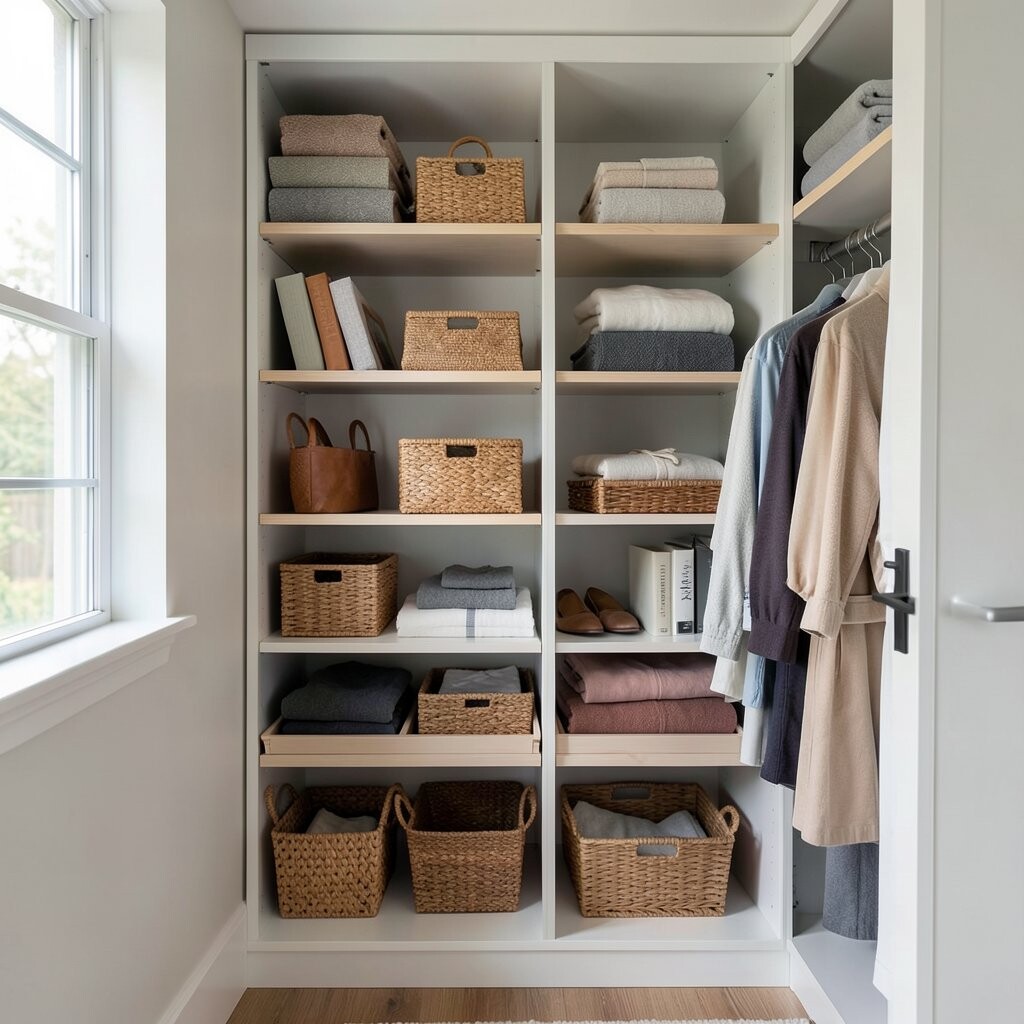
Add shelf dividers for better organization Shelves look simple, but they can turn into a messy slide. Dividers keep stacks from leaning and mixing together.
When everything stays separated, you can find what you need without digging. This is especially helpful for small closets where space is limited.
For tips, use dividers for folded shirts, accessories, or even shoes stored in bins. Personalize by using dividers that match your closet style—white for clean, wood-tone for warm, and clear for a light feel.
Cost consideration: you can use adjustable dividers or cut-to-fit options, and you can start with the shelves that get messy first.
-
13. Mount a full-length mirror to make the closet feel bigger
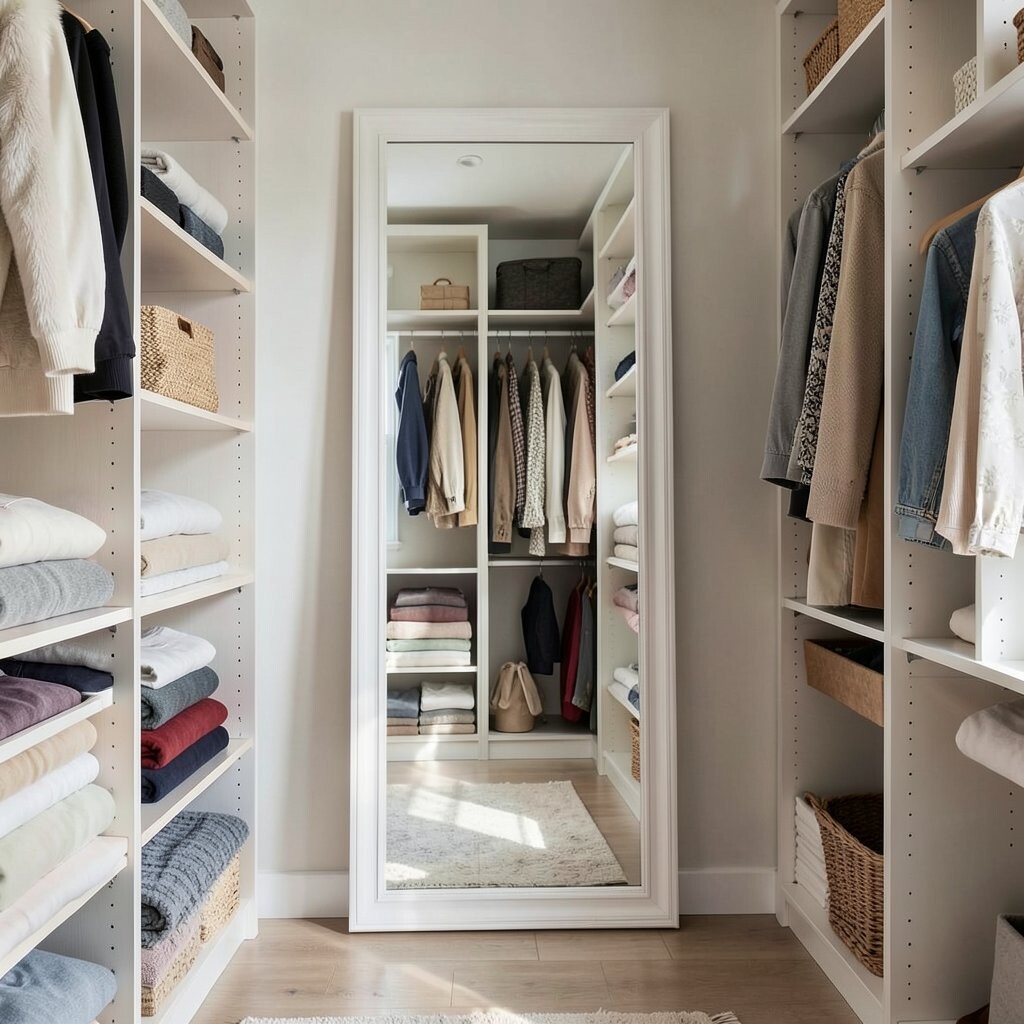
Mount a full-length mirror to make the closet feel bigger A mirror adds light and makes a small space feel larger. In a closet, it also helps you check outfits without leaving the room.
The visual trick is real: reflections make your storage zone look more open. This benefit is both practical and aesthetic.
Personalize by choosing a mirror frame color that matches your room decor. For safety and cost, use a lightweight framed mirror and mount it securely, and you may already own one.
-
14. Try “one in, one out” for constant control
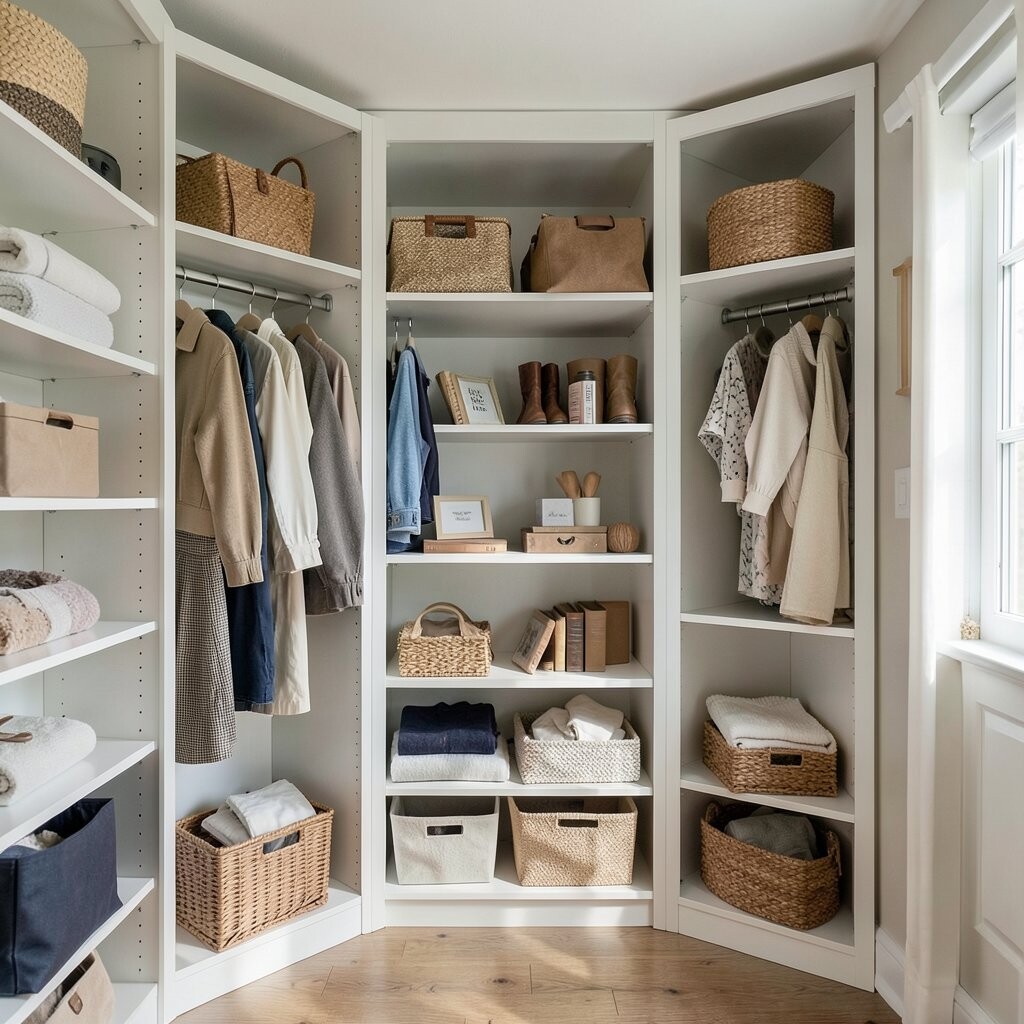
Try “one in, one out” for constant control Small closets need rules, not just storage bins. “One in, one out” keeps the closet from filling up again.
When you add something new, you remove something old, so your space stays balanced. This helps you avoid the cycle of overstuffing.
For tips, keep a donation bag in a closet corner. Personalize it by decorating the bag label with a theme, like “swap day” or “outfit refresh.”
Cost is usually near zero, and the payoff is huge because you protect your system over time.
-
15. Use vertical fabric bags for seasonal items
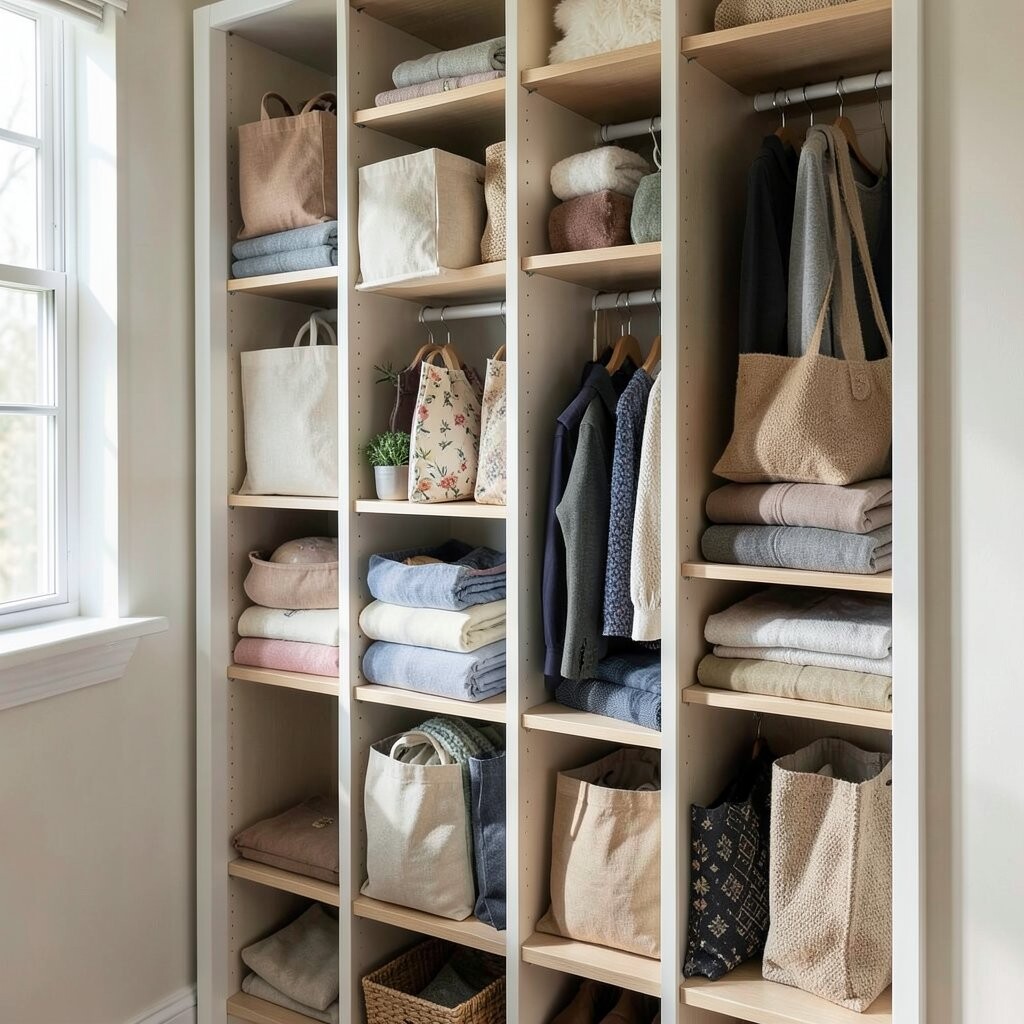
Use vertical fabric bags for seasonal items Seasonal storage can take over if it’s not planned. Use vertical fabric bags or hanging organizers for items like winter hats, scarves, or bulky gloves.
This method uses height instead of floor space, which is a smart move for small closets. It also keeps seasonal items protected while staying easy to reach.
Personalize by tagging each bag by season and adding a quick list, like “holiday sweaters” or “spring scarves.” If cost matters, reuse storage bags you already have and focus on labeling and stacking neatly.
-
16. Fold clothes with the “same direction” method
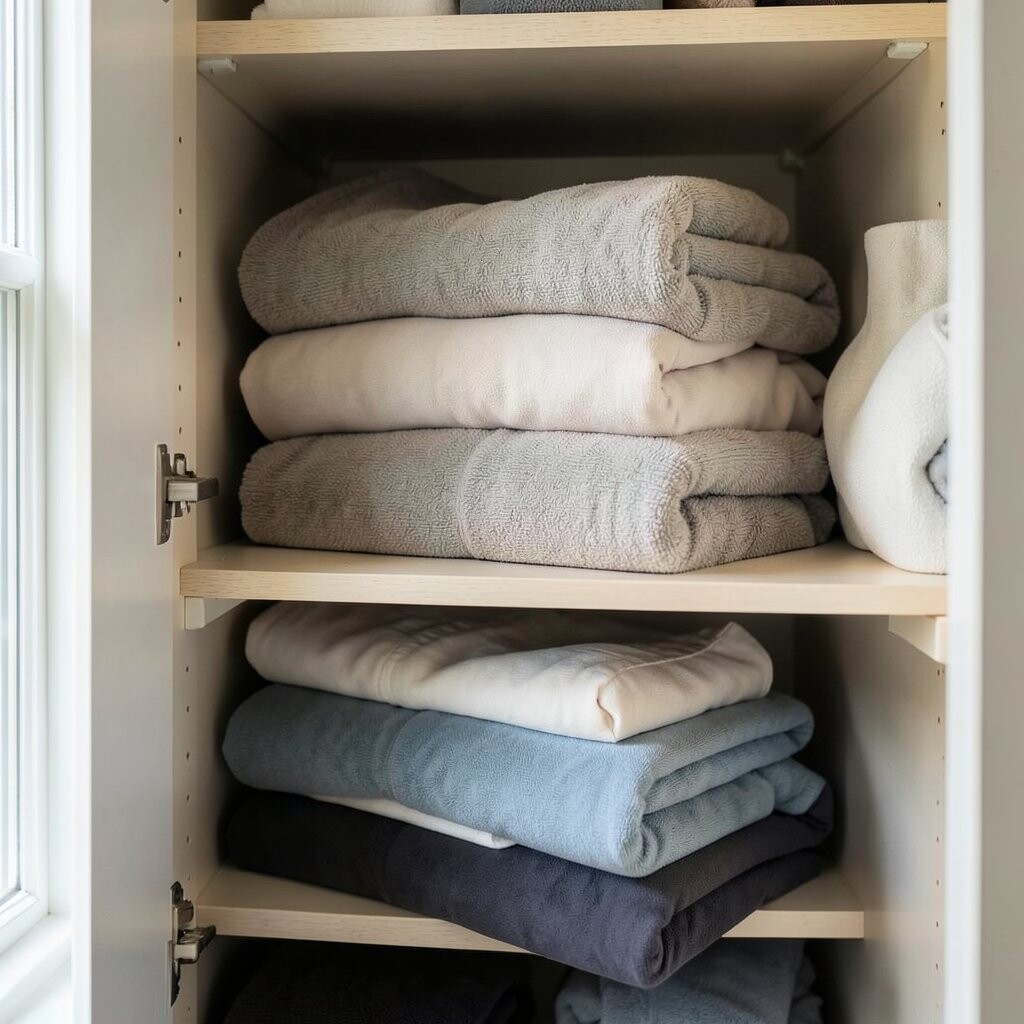
Fold clothes with the “same direction” method When clothes are folded the same way, your closet looks tidy and feels calmer. It also makes choosing an outfit faster.
The benefit is that you can see everything at a glance. You spend less time digging through piles and more time getting ready.
Try folding sleeves outward or keeping shirt hems aligned, then stand items upright in drawers. Personalize by arranging by color gradient or by outfit type, like work-ready stacks and casual stacks.
-
17. Add a pull-out hamper or laundry drawer
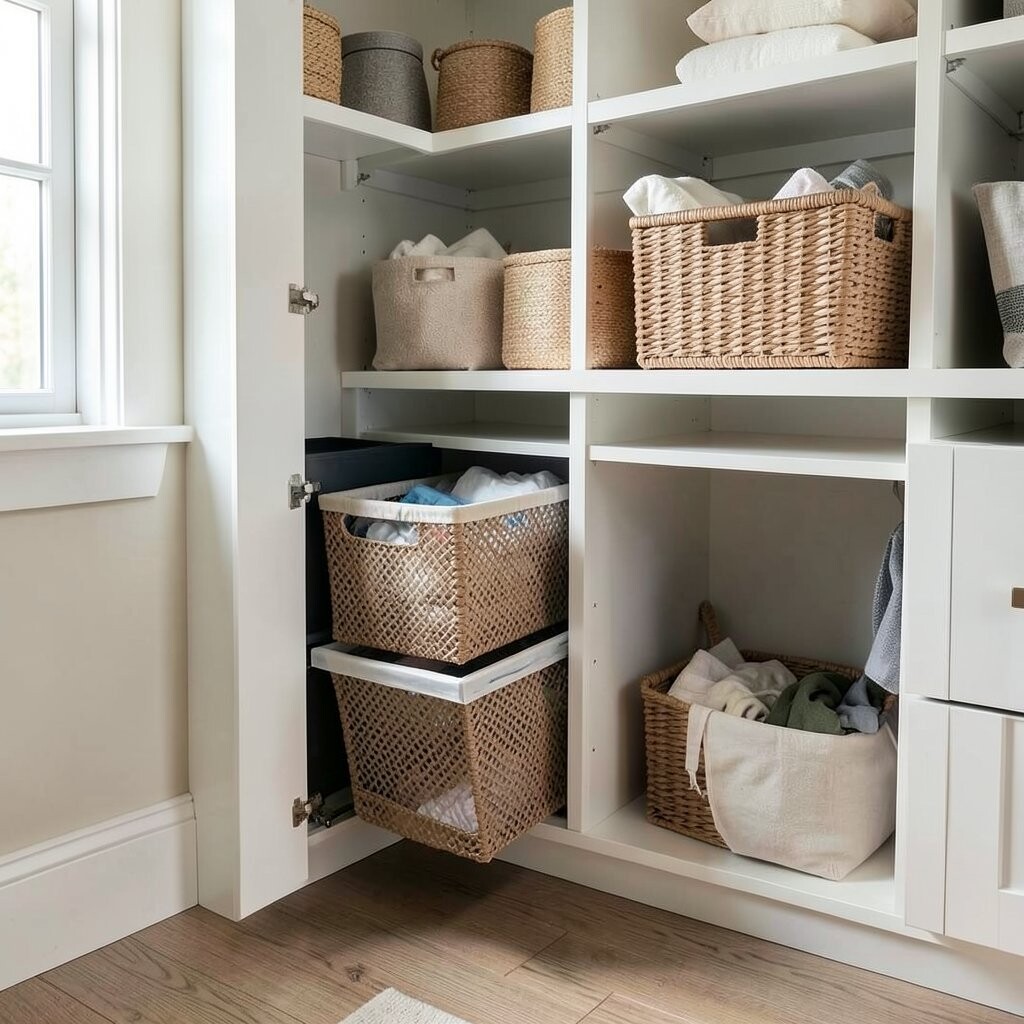
Add a pull-out hamper or laundry drawer If laundry sits in a corner, it can shrink your effective closet space. A pull-out hamper or small drawer keeps dirty clothes contained and easy to empty.
You’ll also keep the closet area looking fresh, even during busy weeks. This helps your storage system stay clean and ready.
For tips, place it near the closet entrance so you don’t carry laundry across the room. Personalize by matching the hamper color to your closet hardware and using a liner you like.
Cost can vary, so you can start with a slim basket inside a closet shelf, then upgrade to a pull-out system later.
-
18. Upgrade lighting with a small LED strip or puck light
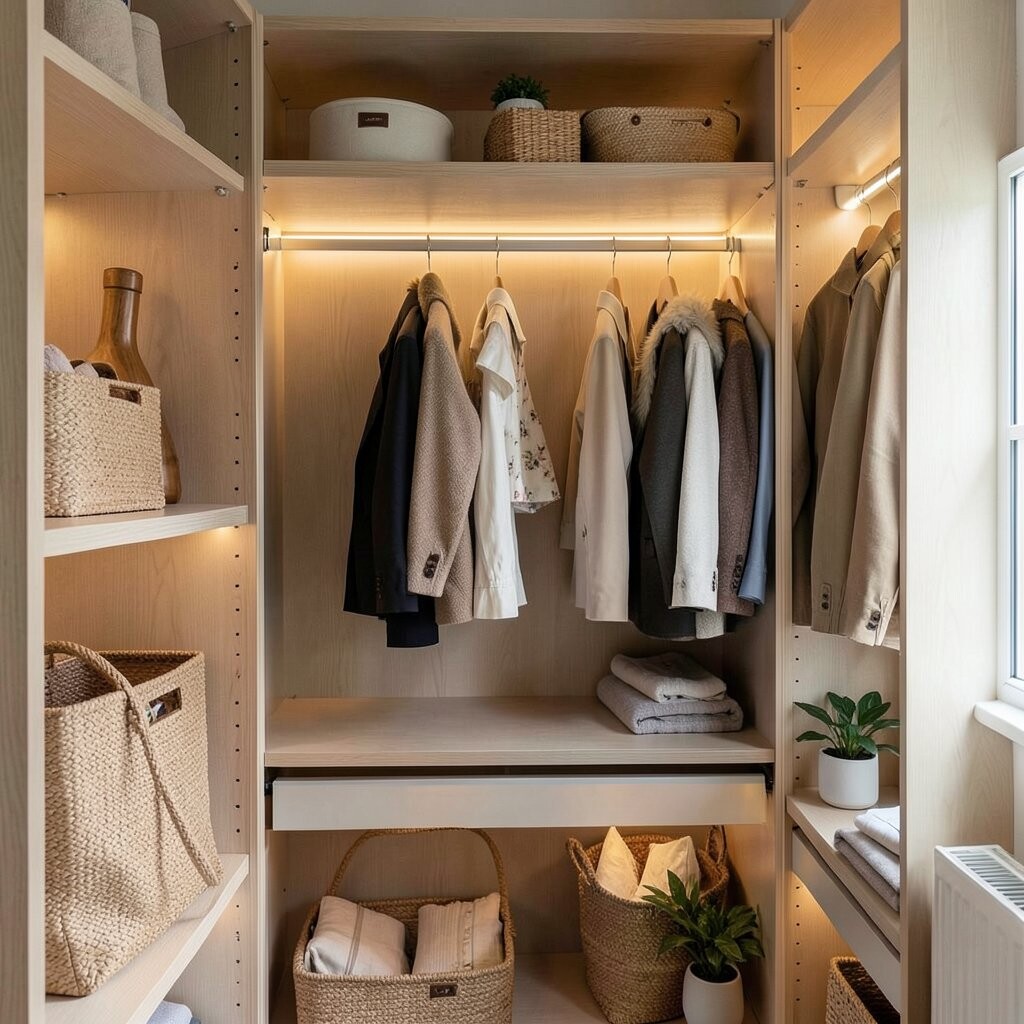
Upgrade lighting with a small LED strip or puck light Bad lighting makes closets feel smaller and harder to use. Add a small LED strip or puck light so every shelf is easier to see.
Good lighting improves the benefit of organization because you can actually locate items. It also makes your closet feel more like a neat dressing area.
Try placing lights under shelves or along the inside back wall for a bright, even glow. Personalize the mood by choosing warm light for a cozy feel or cool light for a crisp look.
Cost consideration: many LED options are affordable, and you may be able to plug them in instead of doing hard wiring.
-
19. Use matching labels and a color-coded system
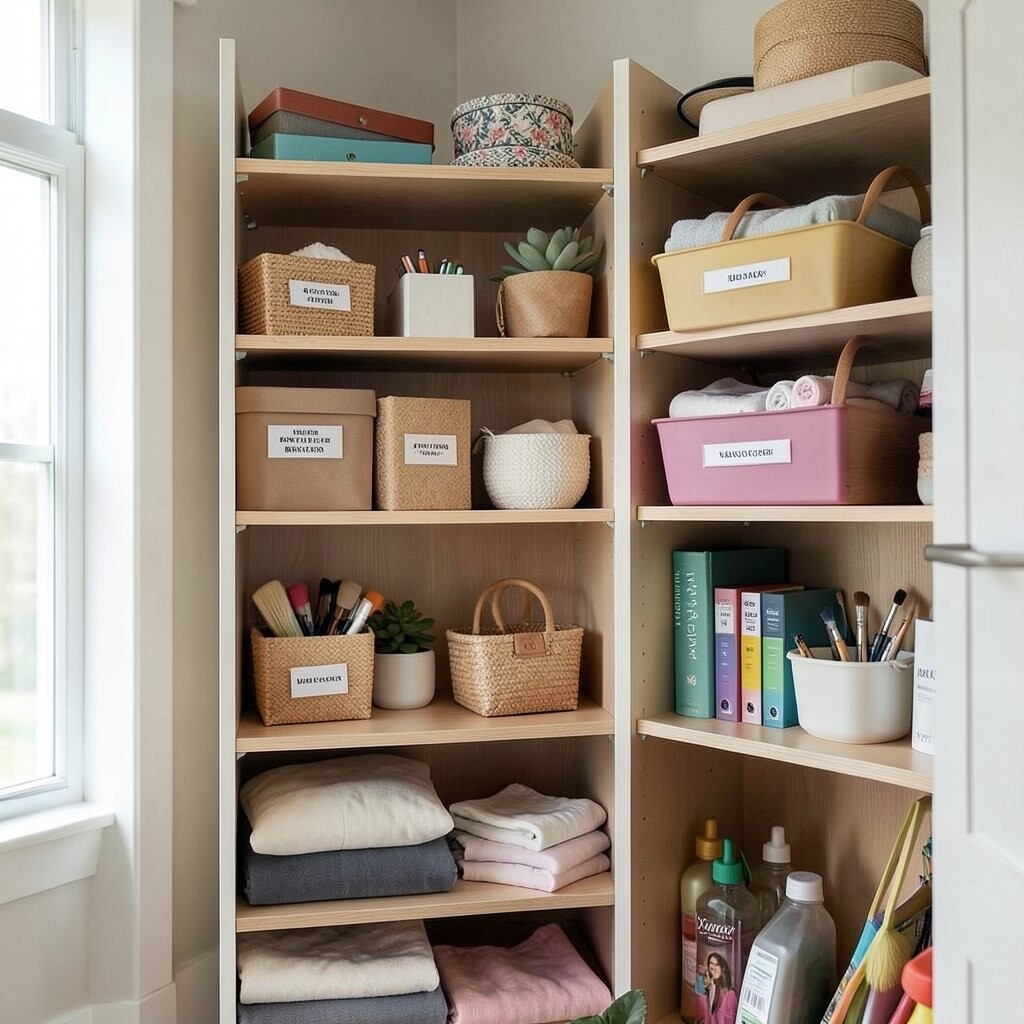
Use matching labels and a color-coded system A closet makeover becomes stronger when it has a clear routine. Matching labels and color coding help you put items back in the right place every time.
When you know where things go, you stop creating new mess by accident. This benefit is especially useful for small spaces where tiny mistakes add up quickly.
Personalize by using color for seasons, categories, or people in the household. For cost, start with label stickers and simple paper tags, then upgrade later with better label makers if you want a clean, professional style.
Current trend: many organizers are using simple “category-first” labeling because it keeps closets flexible as your wardrobe changes.