Empty plate storage can feel like a daily puzzle. The right rack makes your kitchen look neat and work fast.
Ready to see smart, stylish options that fit your space? Pick ideas that match your plates, your habits, and your budget.
-
1) Wall-Mounted Floating Shelf with Plate Rails
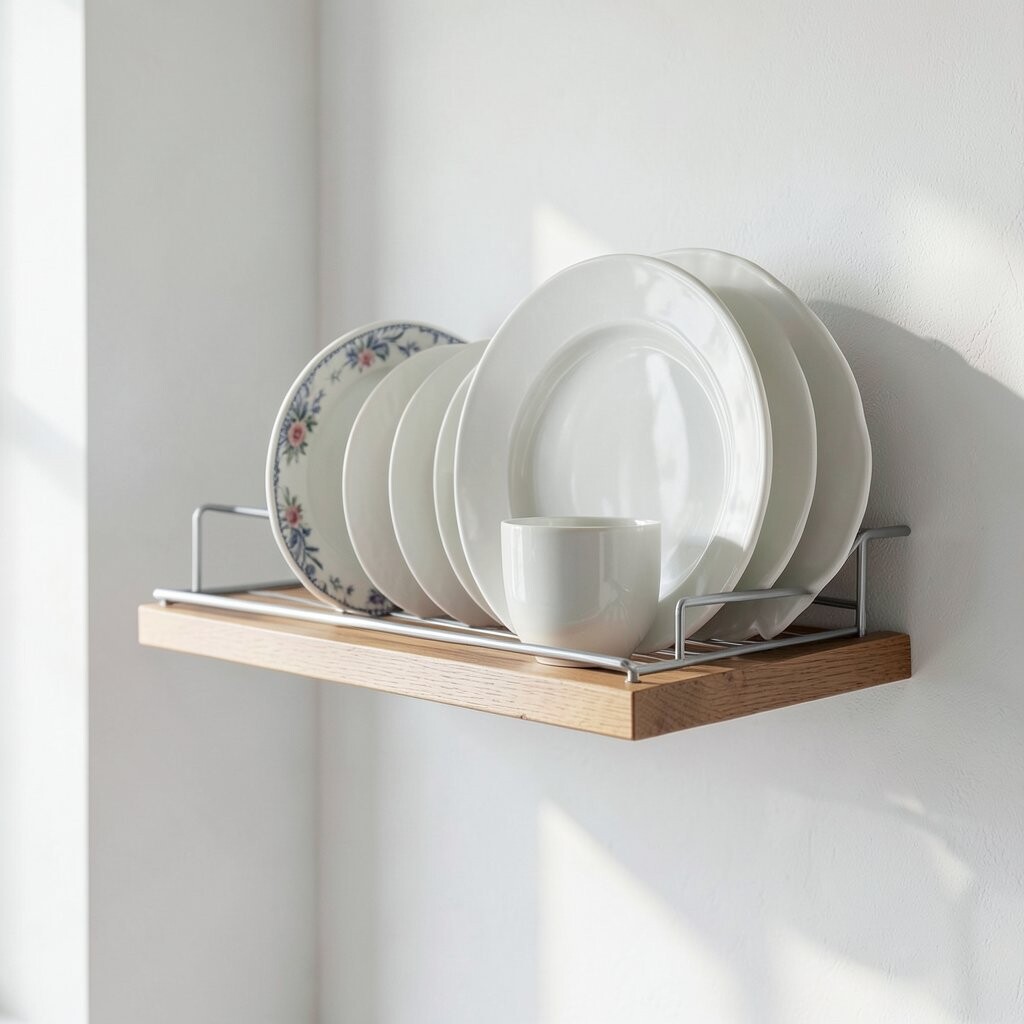
) Wall-Mounted Floating Shelf with Plate Rails Picture a clean wooden shelf fixed to the wall, with small rails that stop plates from sliding. When you open your cabinets less, your plates look easy to grab and easy to put back.
This setup keeps dishes visible, so you remember what you own. It also saves cabinet space for bowls, glassware, or extra food storage. For tips, place the shelf near your dishwashing area and use soft corner pads on the rails if your plates are light and delicate.
If you want personalization, mix two finishes: a warm wood shelf with darker rails. Choose narrow spacing for small plates and wider spacing for dinner plates. Cost usually depends on wood type and rail size, but you can keep it lower by using a basic shelf and add rail inserts yourself. A current trend is showing daily-use dishes as part of the kitchen design, almost like an art display.
-
2) Vertical Plate Rack Organizer for Narrow Spaces
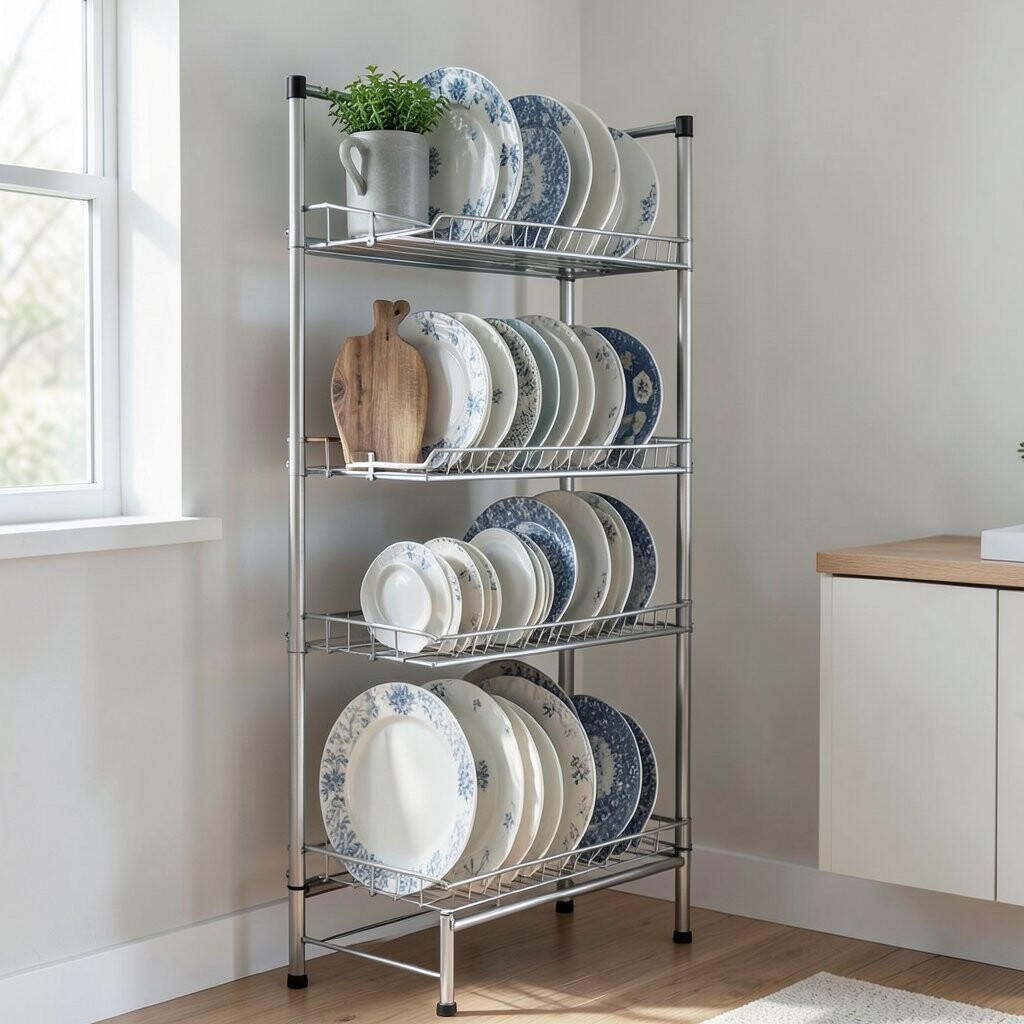
) Vertical Plate Rack Organizer for Narrow Spaces Imagine a tall, slim rack that stands like a bookcase, holding plates from top to bottom. It is perfect when your kitchen has tight walkways or small dining corners.
This type of rack benefits you by using vertical space instead of floor space. You also avoid stacking too high, which can lead to chips. For tips, measure your tallest plate first and leave a little extra clearance for safe handling.
To personalize, match the rack color to your cabinet hardware for a pulled-together look. Some people add labels on the base shelf for “everyday” and “special occasion.” Cost considerations are simple: metal racks often cost less upfront, while solid wood can cost more but feel sturdier. A trend right now is “small-space organizing,” where every item has a job and a place.
-
3) Pegboard Plate Display with Hooks and Spacers
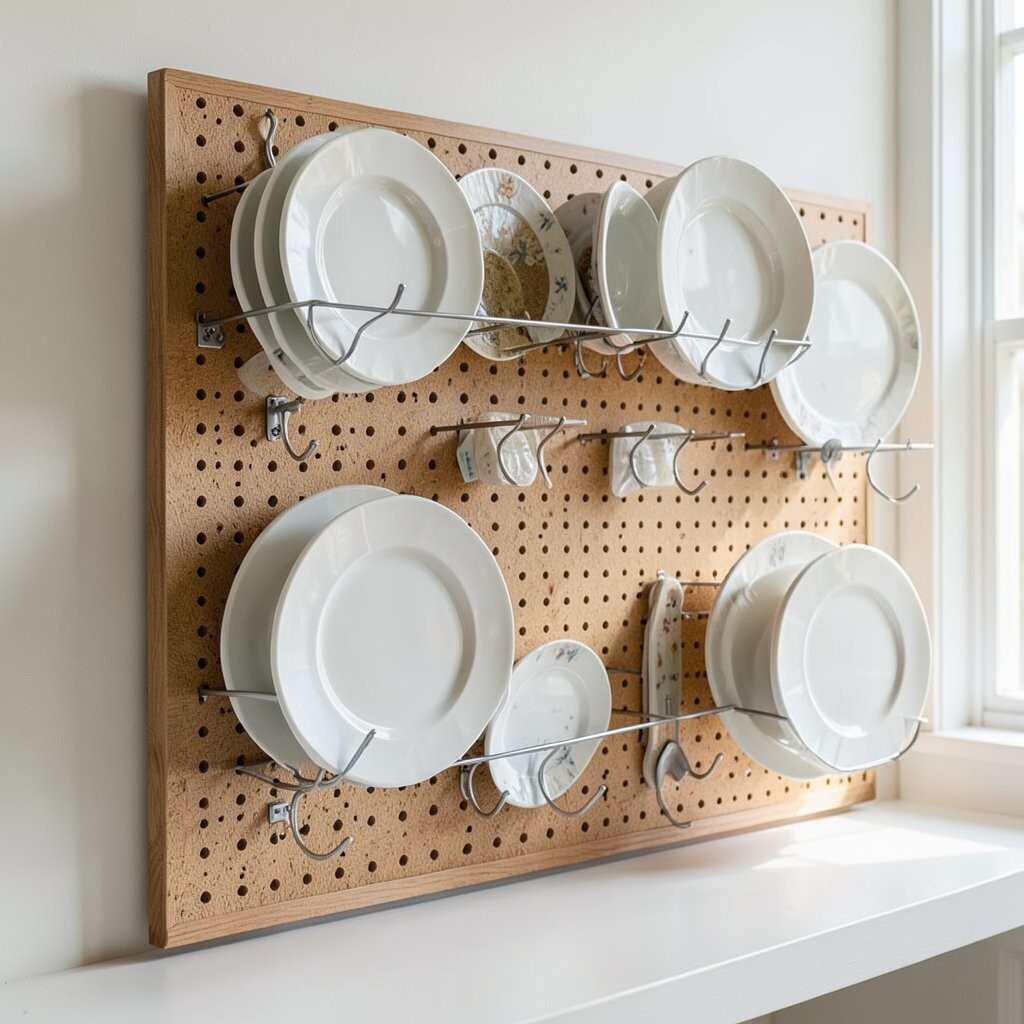
) Pegboard Plate Display with Hooks and Spacers Visualize pegboard panels covered with hooks, where plates hang with even spacing. Your kitchen wall turns into a playful grid that makes everything look tidy.
This idea is unique because it is flexible: you can move hooks as your plate collection changes. It helps you find plates fast, and it keeps them off crowded shelves. For tips, use plate spacers or padded hooks so plates do not scrape or chip.
Personalize by painting the pegboard a fun color like sage green or soft cream. Add small baskets for serving utensils that match your plate colors. Cost is usually moderate because pegboard is affordable, and you can buy only the hook sizes you need. A relevant current trend is customizing walls instead of hiding everything behind doors.
To keep plates safe, hang heavier plates closer to the strongest part of the panel. If you have glossy decorative plates, use felt-backed spacers to reduce noise when you remove them.
-
4) Corner Plate Rack Built for Wasted Space
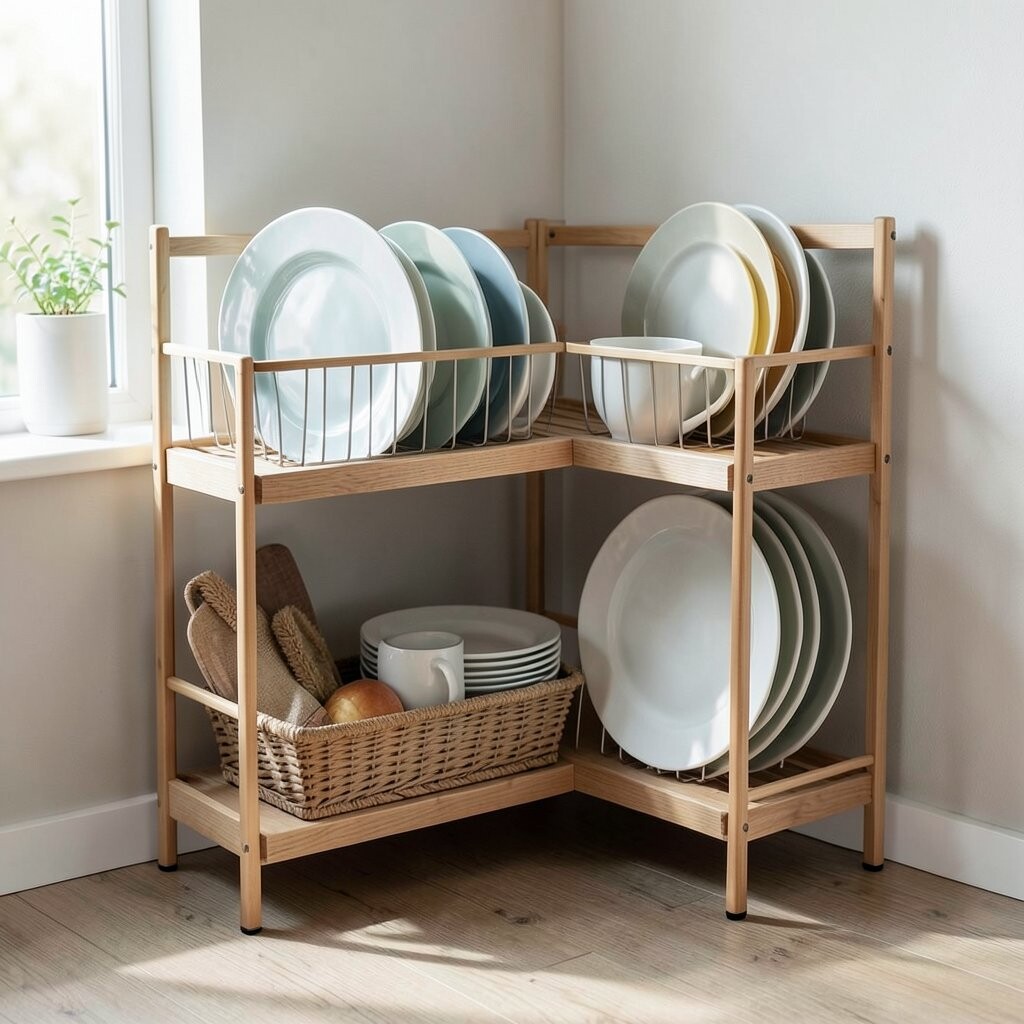
) Corner Plate Rack Built for Wasted Space Picture a rack tucked into your kitchen corner, like a graceful tower that turns dead space into storage. Corners often collect clutter, but a corner plate rack brings order.
This setup benefits you by fitting where nothing else seems to fit. It also keeps plates stable, especially when the rack has rounded edges and strong supports. For tips, choose a rack with multiple tiers so you can store different sizes without crowding.
Personalize with a finish that matches your cabinets or your flooring, so the rack feels like part of the room. If you host dinners, reserve the top tier for large platters and the lower tier for regular plates. Cost can vary, but you can control it by choosing a ready-to-assemble model. Today’s trend is using every inch with corner solutions that look intentional, not leftover.
Before installing, check the wall material and use the right anchors. Then test one plate weight in place before adding the rest.
-
5) Cabinet Door Plate Rack Inserts
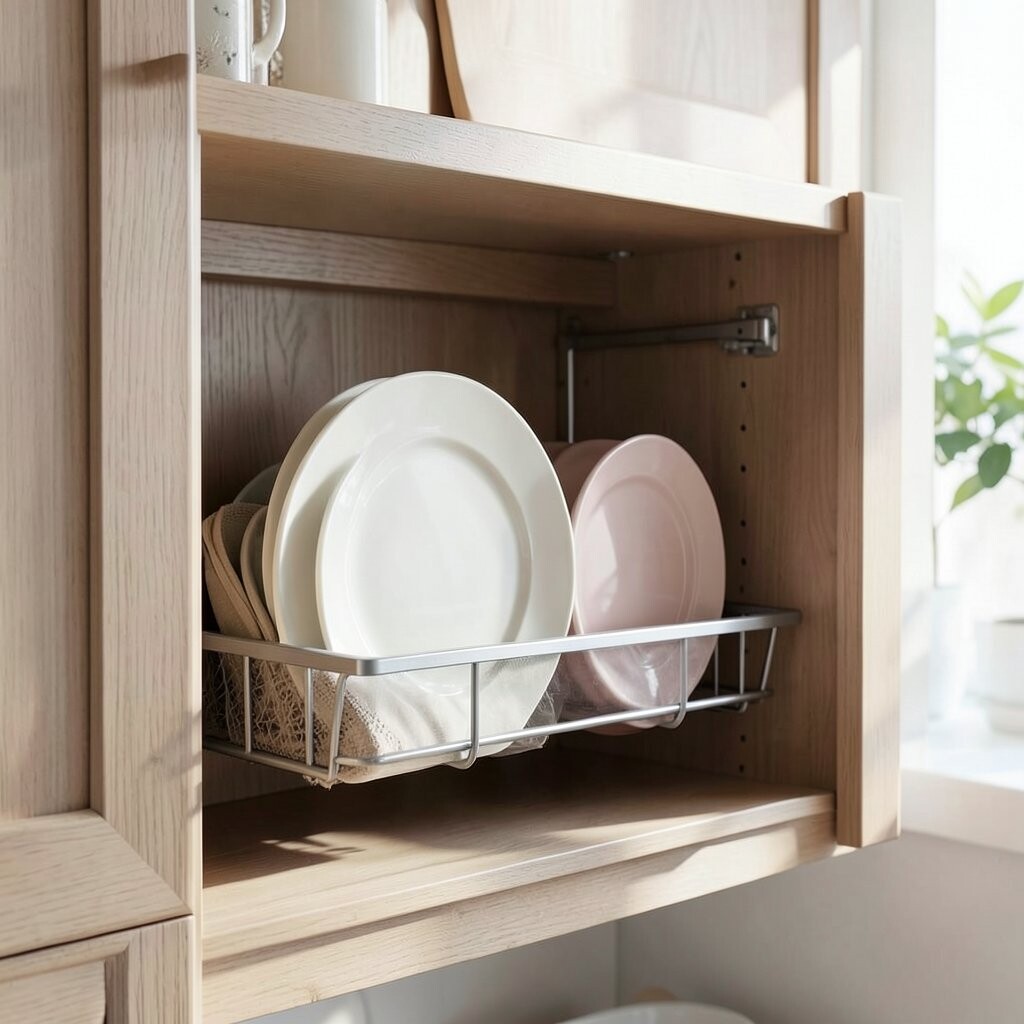
) Cabinet Door Plate Rack Inserts Imagine opening a cabinet door and seeing plates standing upright on built-in inserts. This keeps your plates hidden but still easy to access.
The benefits are big: your kitchen looks clean, and your plates stay protected from dust. It also helps you stop stacking plates on top of other things. For tips, measure the inside cabinet depth so plates do not bump into shelves or hinges.
Personalize by organizing by size: small plates on one side and dinner plates on the other. You can also keep serving plates near the cookware section for faster dinner prep. Cost considerations depend on whether you buy inserts or install custom wood. A current trend is “hidden storage,” where the best-looking kitchens hide the clutter behind smart doors.
-
6) Rolling Plate Rack on a Cart for Flexible Kitchens
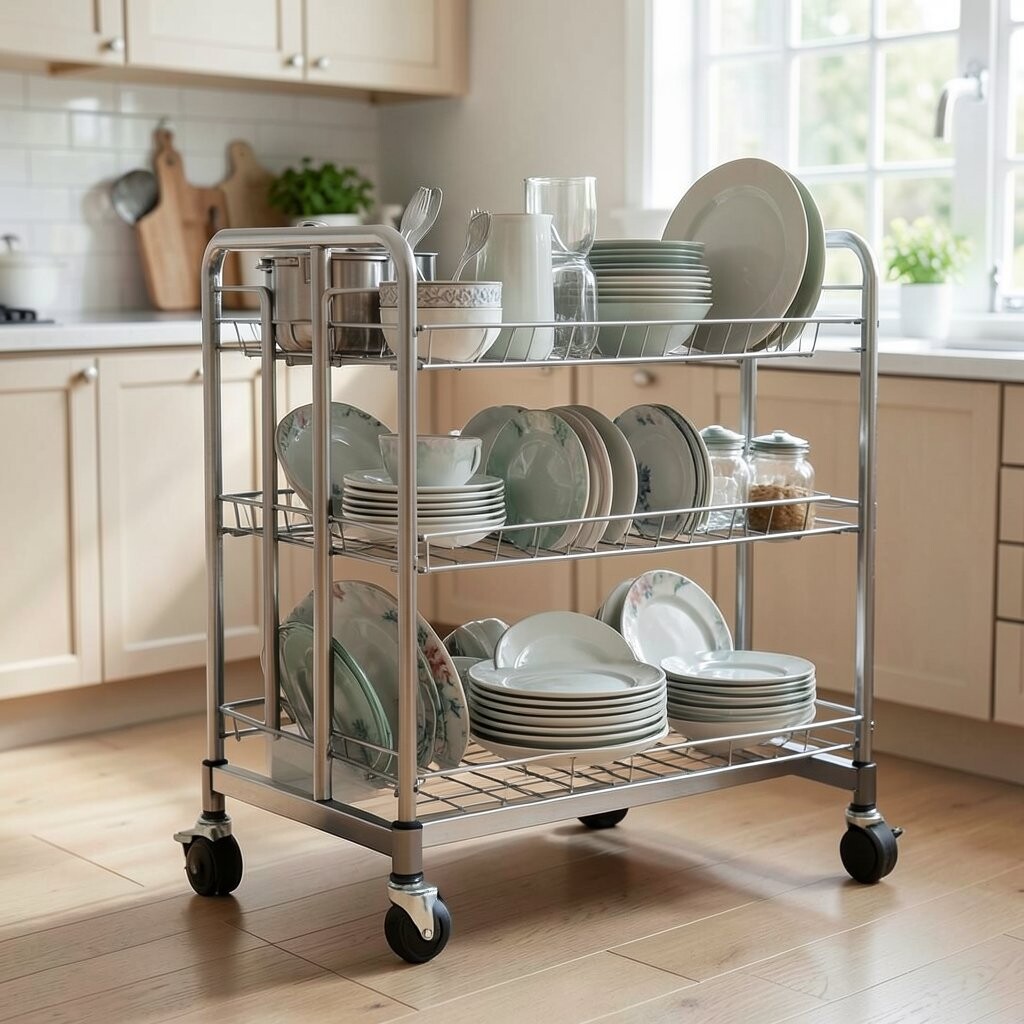
) Rolling Plate Rack on a Cart for Flexible Kitchens Picture a sturdy cart with a rack frame, so your plates can move when you clean. It feels like having a mini storage station right where you need it.
This idea is unique because it works with your daily routine. You can roll it closer when hosting guests, then wheel it away for normal days. For tips, choose casters with locks and add a small lip so plates stay secure while the cart moves.
Personalize by adding a chalk label or a small tray on top for ordering, serving, or recipe cards. Cost can be higher than a wall shelf because you are buying a full cart, but you may save money on storage containers. A trend right now is mobile kitchen helpers, especially in homes where cooking and cleanup happen in different spots.
-
7) Under-Shelf Plate Rack for Efficient Cupboard Use
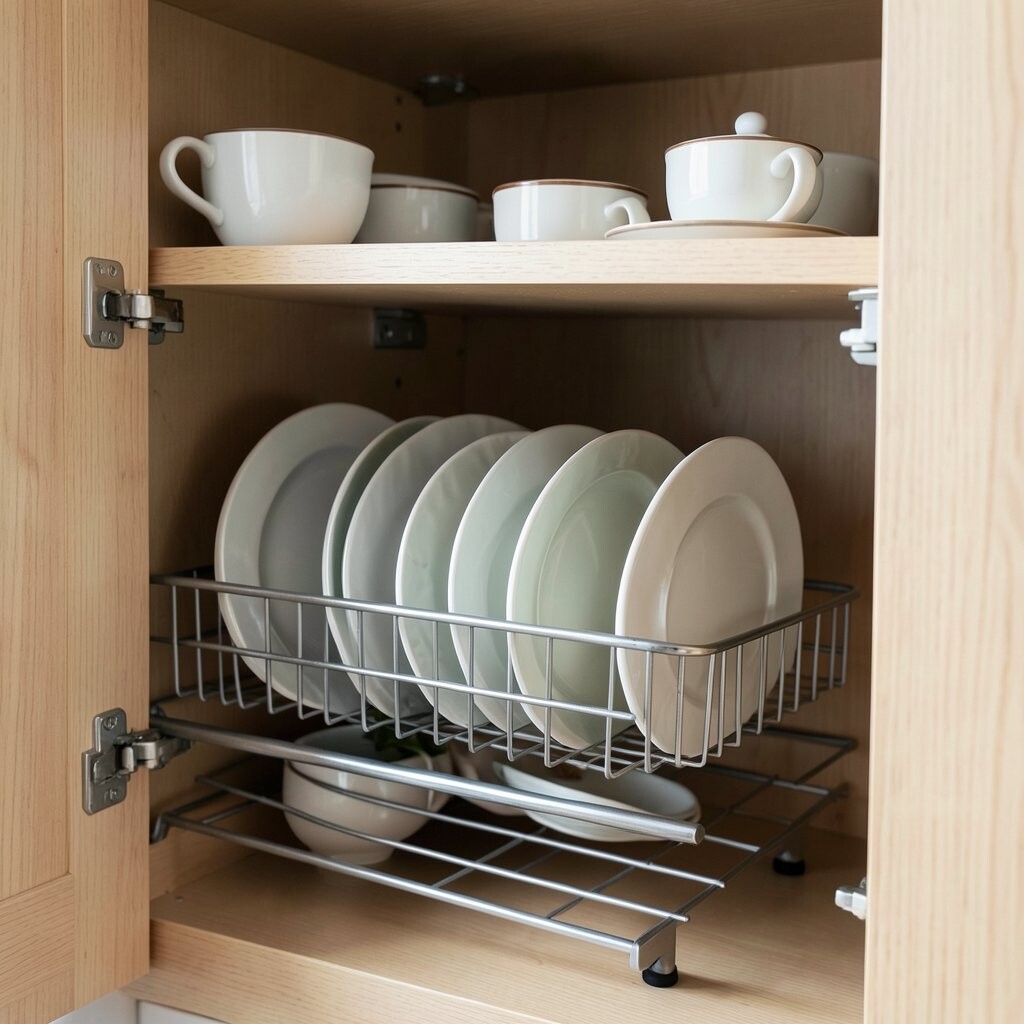
) Under-Shelf Plate Rack for Efficient Cupboard Use Imagine a plate rack that sits under a cabinet shelf, holding dishes neatly above your counter area. It turns space you already have into useful storage.
This setup benefits you by freeing cabinet shelves for other items. It also keeps plates at a handy height if you do not want to bend down. For tips, install it where you can open doors easily and keep clearance for taller plates.
To personalize, use a finish that matches your cabinet trim so it looks built-in. You can also store bowls or platters in the same system if the rack supports different shapes. Cost is usually moderate, since many racks are simple metal or wire. Current trends show more “smart under-storage” ideas because people want quick access without messy countertops.
-
8) Ladder-Style Plate Rack for a Cozy, Rustic Look
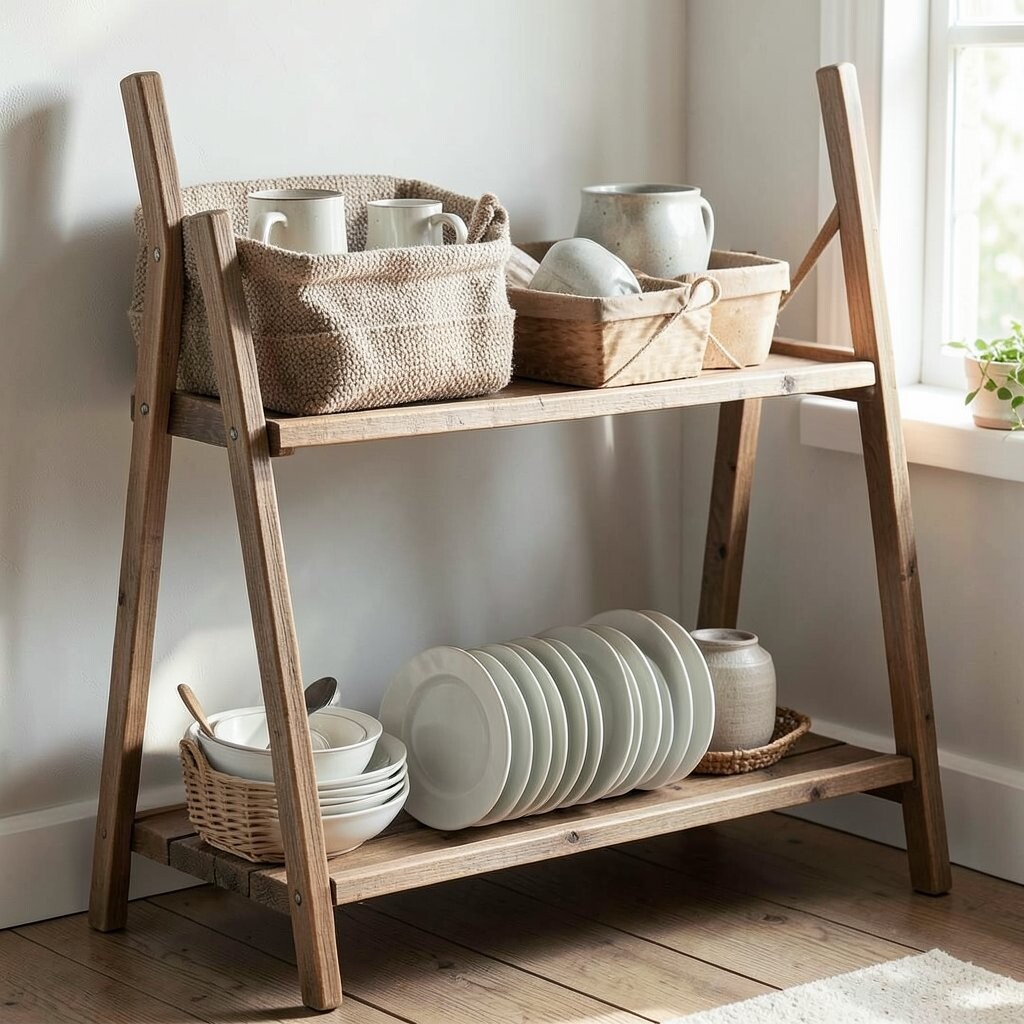
) Ladder-Style Plate Rack for a Cozy, Rustic Look Picture a small wooden ladder repurposed to hold plates on short ledges. It looks warm, like a farmhouse scene, and it makes plates feel like decor.
This rack is unique because it mixes storage with charm. You benefit from easy browsing because the plates are in sight. For tips, use plate holders or padded pegs on each rung so dishes do not slide.
Personalize by mixing plate patterns: one solid color set for everyday and one colorful set for special days. Cost can be low if you use an inexpensive ladder and add a few holders. A trend today is “storing while styling,” where storage items match your decor theme instead of hiding everything.
Always place the heaviest plates on the lower rungs. That way, the rack stays balanced and safer to use.
-
9) Tiered Countertop Plate Rack for Everyday Dishes
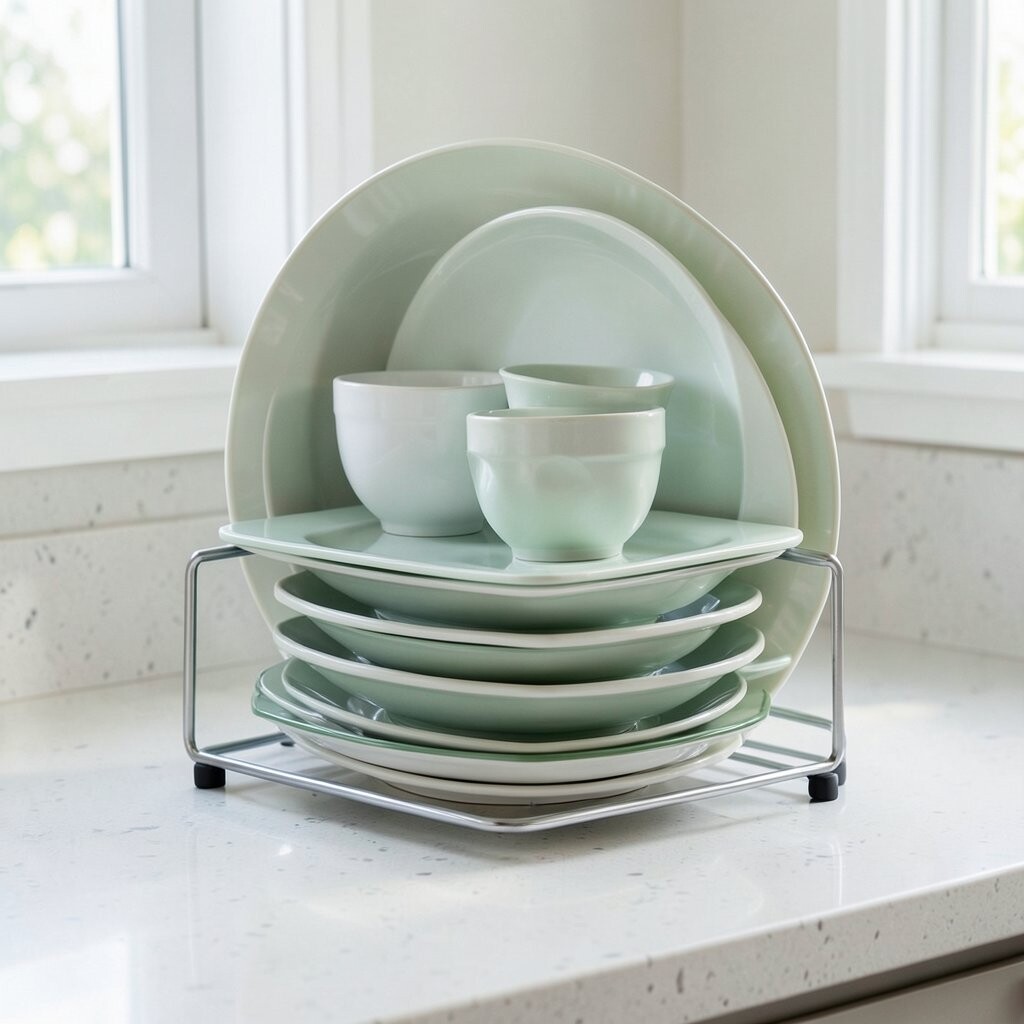
) Tiered Countertop Plate Rack for Everyday Dishes Imagine a compact rack sitting on a counter, with stacked tiers that show plates clearly. Your everyday dishes can be grabbed in seconds without hunting through cabinets.
This setup benefits you by making meal prep smoother. It also helps you keep plates off the sink area during busy cooking days. For tips, choose a rack that fits your counter footprint and look for rubber feet to prevent sliding.
Personalize by color-coordinating: set neutral plates on the lower tier and colorful plates on top for a pop of personality. Add a small matching utensil holder on the side so your whole station looks planned. Cost considerations are usually friendly because countertop racks are smaller purchases. A current trend is “meal-ready zones,” where you create a small area dedicated to daily items.
-
10) Ceramic Tile Plate Rack with Matching Inserts
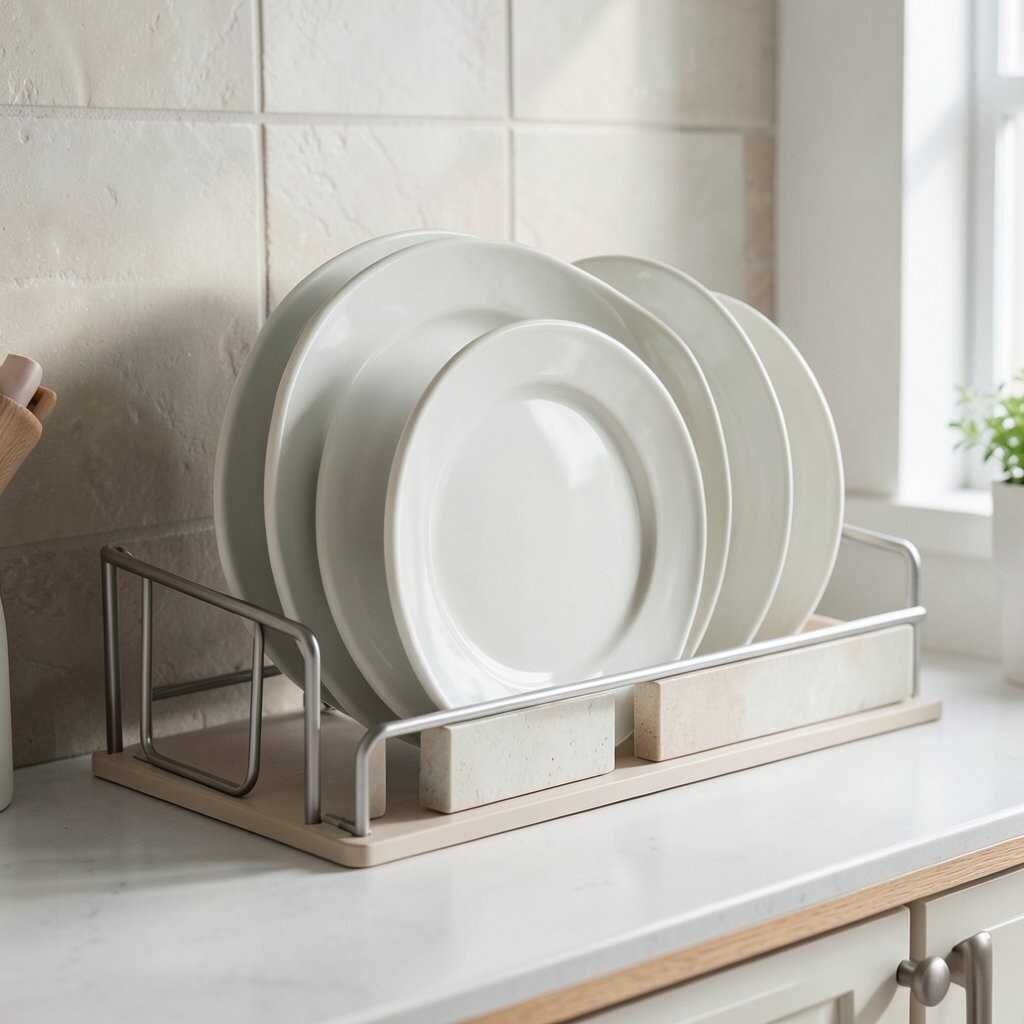
) Ceramic Tile Plate Rack with Matching Inserts Visualize a rack that includes small tile panels or tile-like backing behind the plates. The result feels artsy, like your wall has a custom kitchen mural.
This idea is unique because it adds texture and pattern, not just storage. You get benefits like better visibility and a stronger “display” feel for decorative dishes. For tips, use plate holders that grip edges lightly so tiles and glaze stay protected.
Personalize by using tile colors from your kitchen backsplash or countertop. If you love a certain blue or earthy tone, repeat it across the rack. Cost can be higher because tile adds materials and time, but you can keep it lower by using a simple base board with a tile-look backing. A relevant trend is handcrafted design, where organization looks like intentional style.
-
11) Magnetic Plate Rack for Steel-Backed Organization
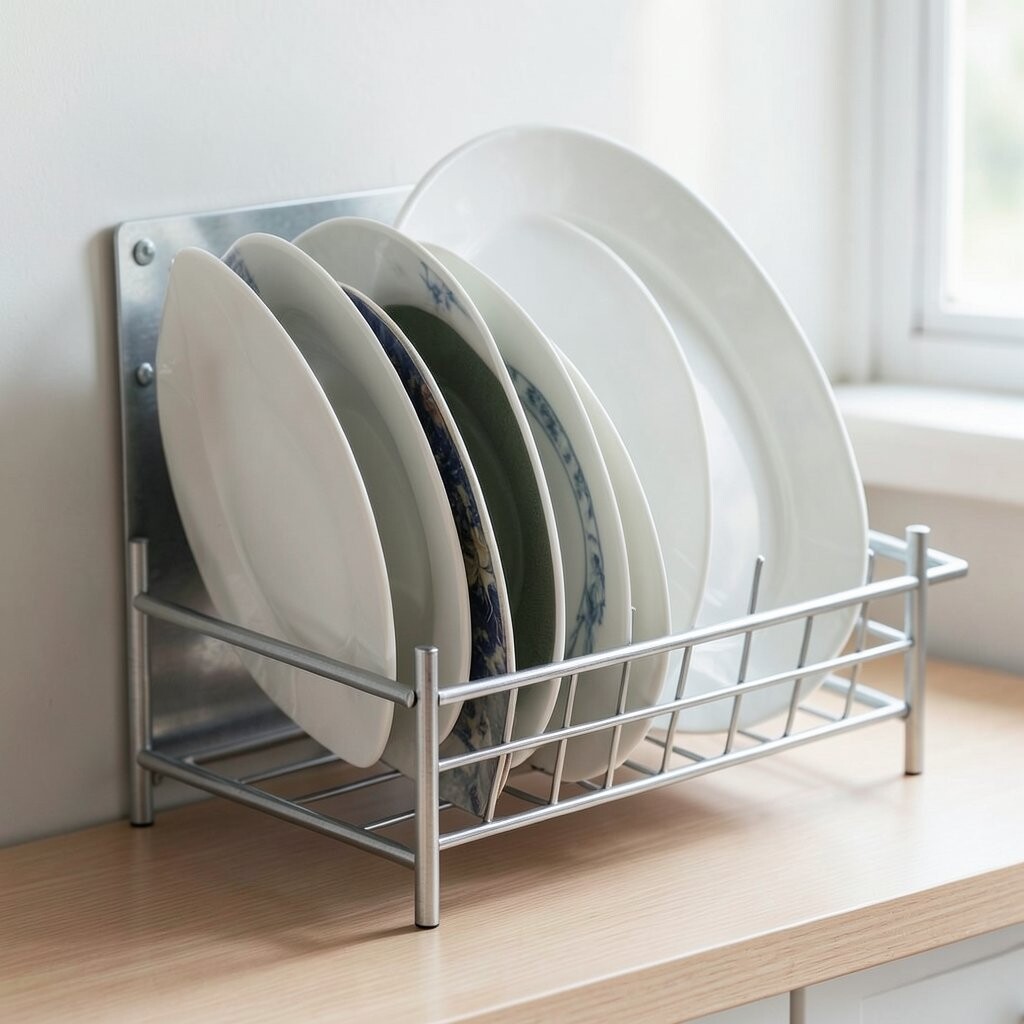
) Magnetic Plate Rack for Steel-Backed Organization Imagine plates or plate rings that attach to a magnetic surface panel. It is a sleek system that looks futuristic and keeps dishes neatly aligned.
This approach is beneficial when you want quick, smooth access without bulky hardware. It also reduces the chance of chipped edges caused by metal clips if the magnetic plate adapters include padding. For tips, check that your plates or adapters are compatible with magnet strength before committing.
Personalize with a slim stainless panel that matches appliances, or choose a matte panel for a softer look. You can also add a small magnet strip for utensils near the plates. Cost considerations depend on whether you buy a ready system or make a custom adapter set. A trend you may see more of is magnetic storage because it feels clean and modern in today’s kitchens.
For safety, make sure the panel is securely mounted and supports the weight of your plates.
-
12) Bakeware-Style Plate Rack Using Wire Crates
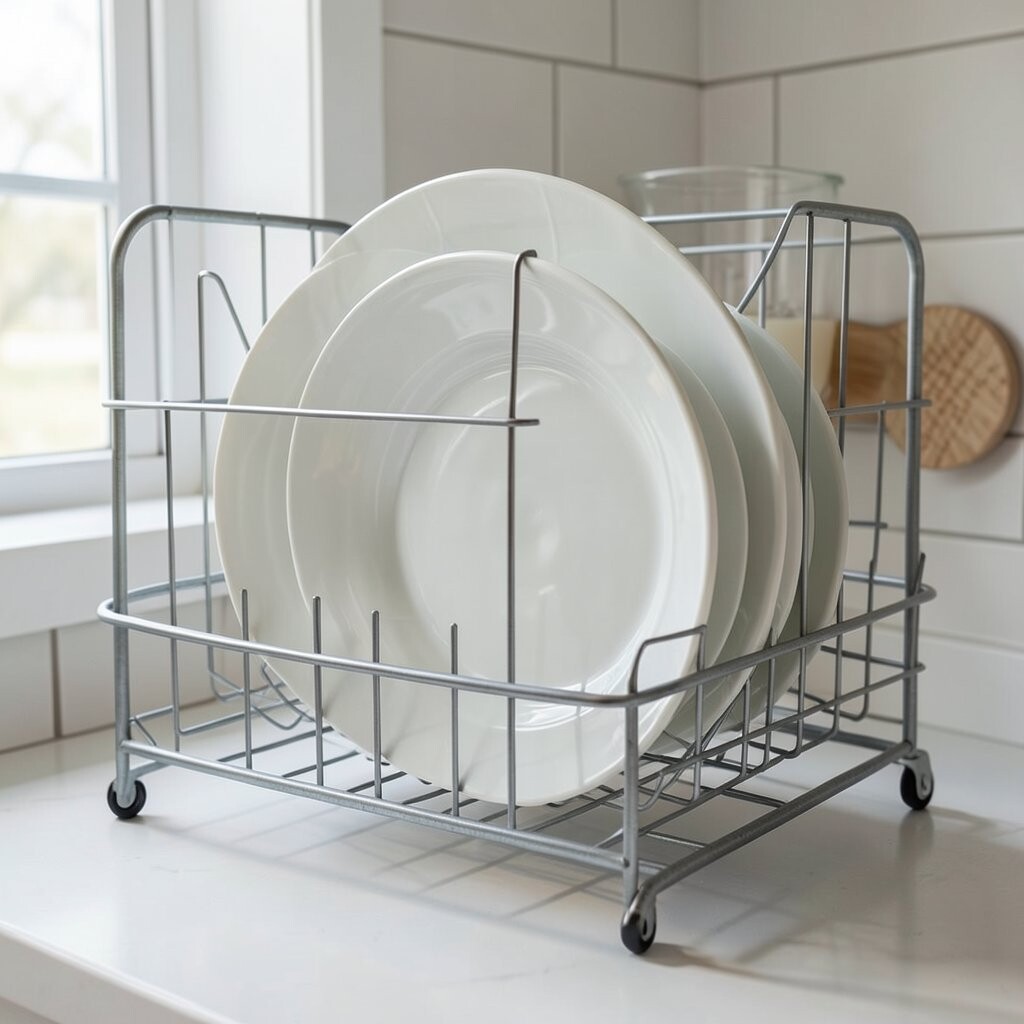
) Bakeware-Style Plate Rack Using Wire Crates Picture a wire crate style rack with compartments that cradle plates in separate lanes. It looks industrial, but it can still feel cozy with the right color.
This setup is unique because wire crates often come in different sizes and can be arranged in a grid. You benefit from clear separation, which helps prevent plates from rubbing together. For tips, line the compartments with thin non-slip shelf liner so plates stay put.
To personalize, paint the crates or add a stain to match your kitchen palette. You can label each crate lane using small tags, like “starter plates” or “dessert plates.” Cost is often reasonable because crates are widely available, and you can build a set piece by piece. A current trend is using open storage with smart organizers, so the system looks intentional and not messy.
-
13) Bookshelf Plate Rack with Adjustable Shelves
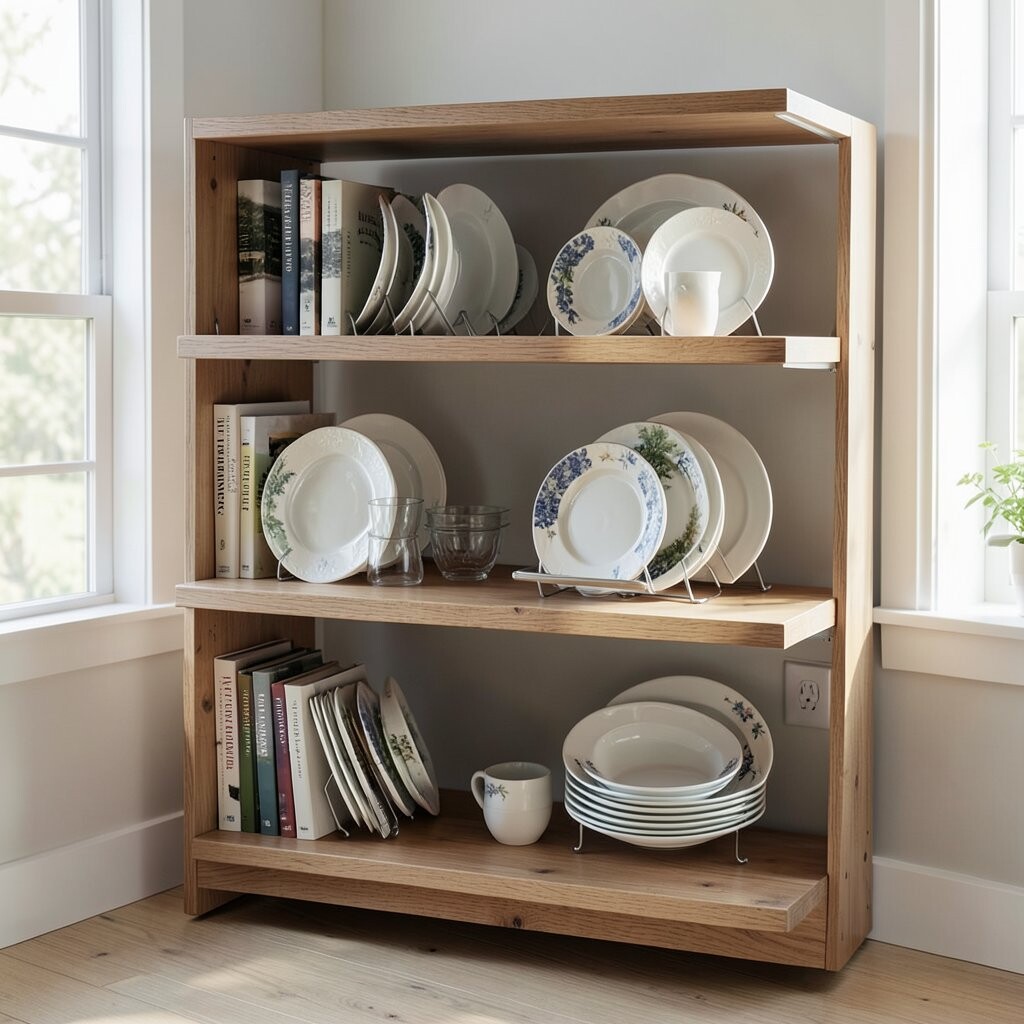
) Bookshelf Plate Rack with Adjustable Shelves Imagine a bookshelf unit where each shelf has adjustable pegs or positions made for plates. It gives you a classic “library look” while keeping dish storage neat.
This rack is beneficial because you can change the spacing as plate sizes change. It also makes it easy to store stacks without compressing fragile dinnerware. For tips, use shelf bumpers or edge guards so plates do not scrape the wood.
Personalize by using decorative baskets for platters and turning some shelves into a display for pretty serving pieces. Keep your everyday set together and move backup sets to a higher shelf. Cost considerations vary, but you can choose a basic shelf unit and add custom shelf guides. A trend today is “open shelving planning” that uses matching furniture pieces instead of random shelves.
When organizing, store bowls on the top shelf if you want less bending when you cook.
-
14) Farmhouse Peg Rail with Decorative Plate Backers
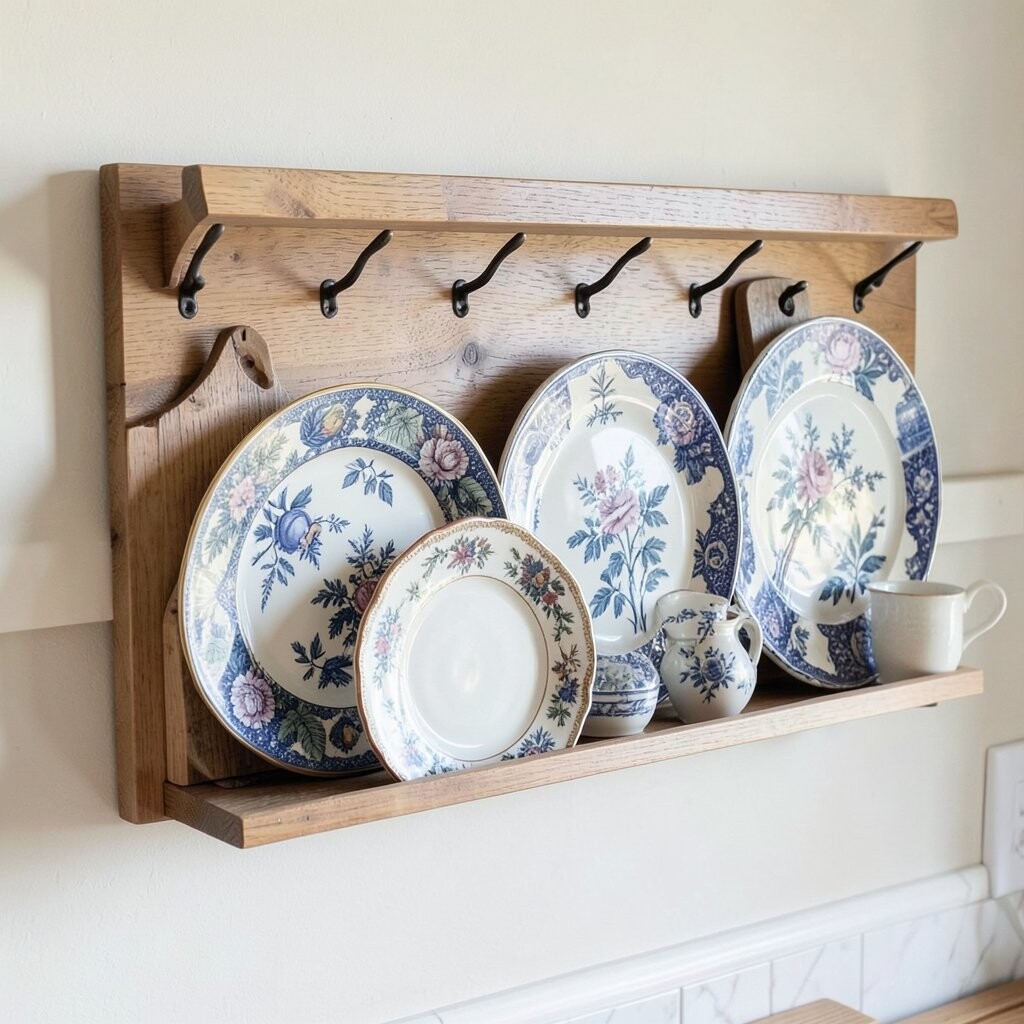
) Farmhouse Peg Rail with Decorative Plate Backers Picture a long rail on the wall with pegs that hold plate edges while a backer panel supports the centers. It has that farmhouse charm, and it keeps plates from dangling.
This setup is unique because it combines peg organization with a gentle back support that helps protect plate surfaces. You benefit from stability and a tidy look that still shows your favorite patterns. For tips, use removable backers so you can clean behind plates easily.
To personalize, add a small strip of decor such as linen tags or a tiny basket for coasters on the side. You can also store seasonal plates by switching out the ones placed on the most visible rails. Cost can stay low if you use a standard rail and buy simple peg attachments. Current trends include mixing practical storage with “visible collections,” especially for kitchens that feel like a home gathering place.
-
15) Recessed Plate Rack with Soft-Lining for Extra Protection
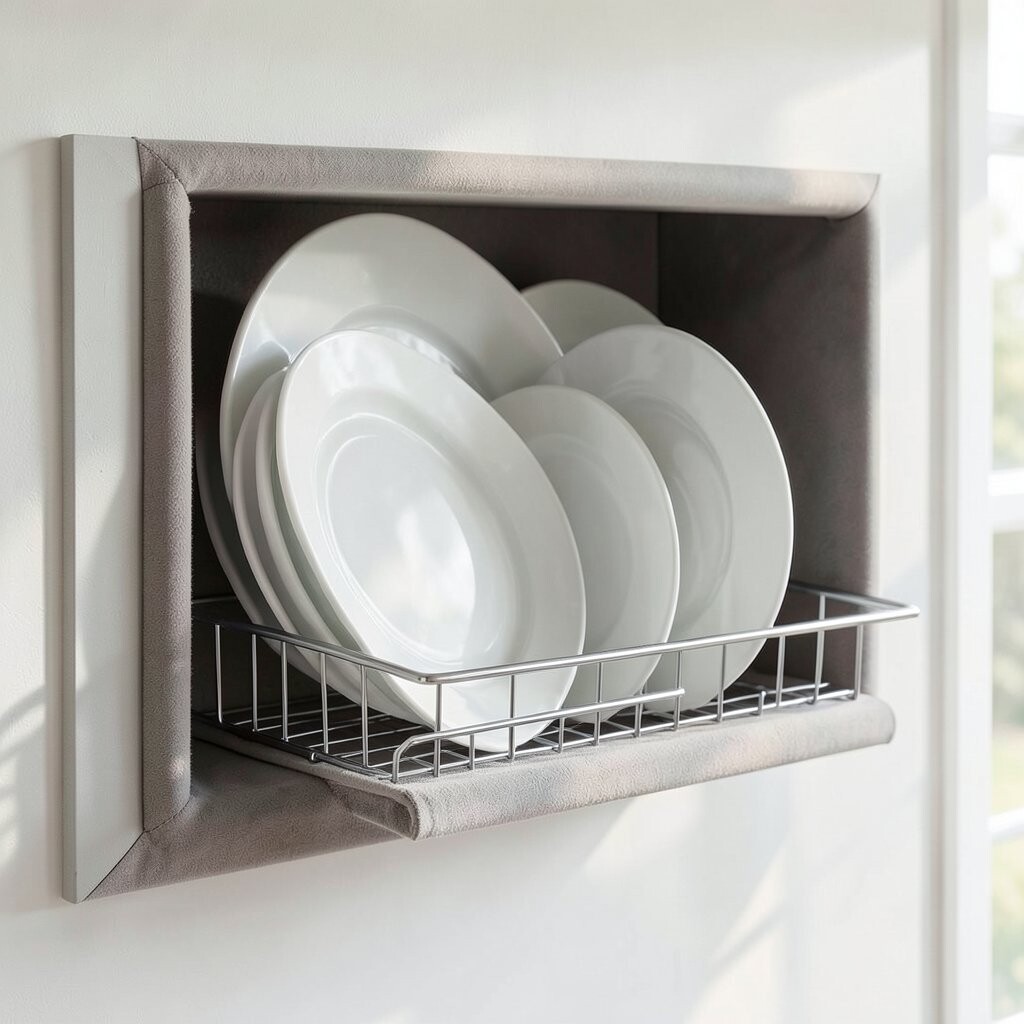
) Recessed Plate Rack with Soft-Lining for Extra Protection Imagine a built-in niche in your wall or pantry area, with soft lining that cushions each plate. Plates feel safe, like they are resting in a protective cradle.
This idea is beneficial for people with delicate dishes or expensive sets. It helps prevent scratches and reduces accidental chips when you reach in. For tips, choose a lining material that is easy to wipe and not too slippery, so plates stay in place.
Personalize by painting the niche interior with a color you love, like warm white or muted blue. Add a small label strip for storage categories, such as “holiday” and “everyday.” Cost considerations are highest here because recessed builds can require carpentry, but you can lower costs by using a cabinet cutout or a pre-made insert. A trend you might notice is “custom-like” storage using pre-built components that mimic built-ins.
-
16) Stackable Plate Rack System with Labeled Zones
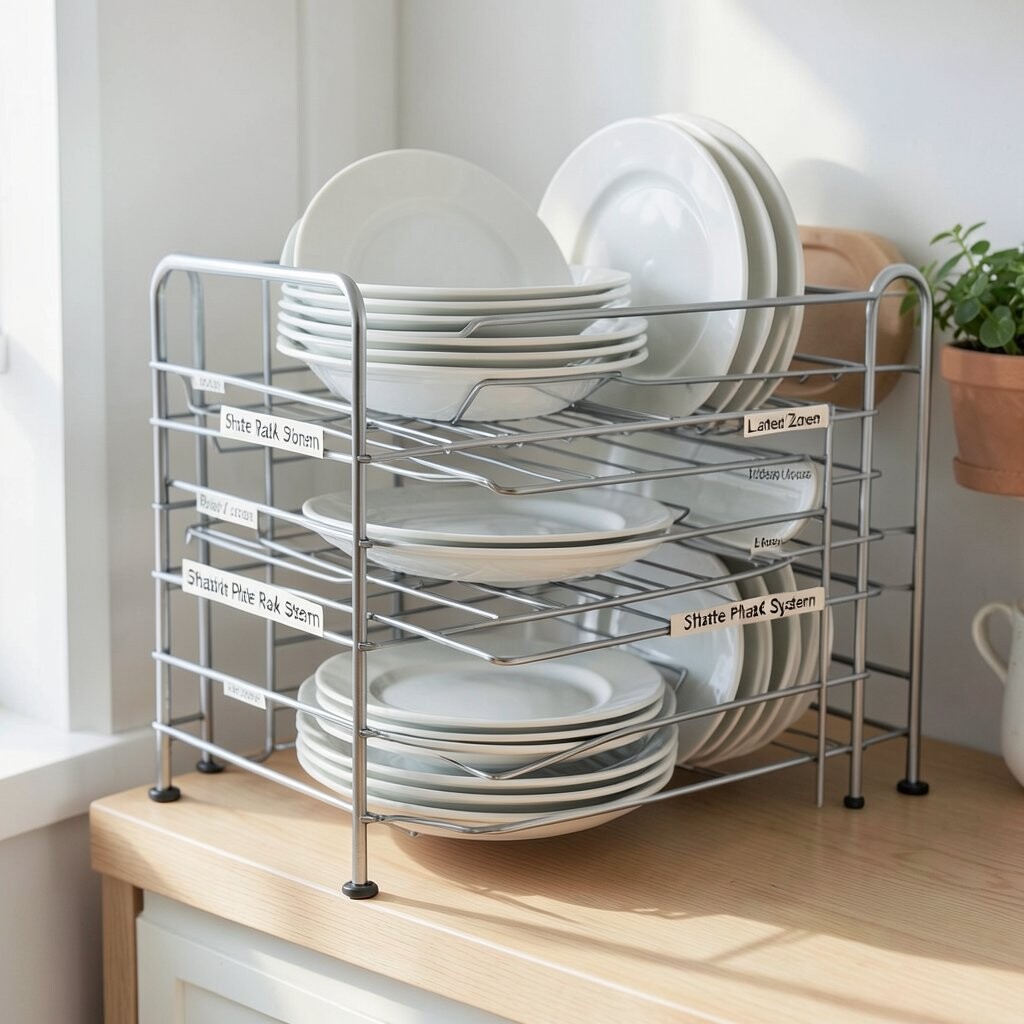
) Stackable Plate Rack System with Labeled Zones Visualize a modular system with stackable parts that let you build your rack as your collection grows. It looks orderly because every section is planned, not accidental.
This idea is unique because it uses zones, meaning each plate type has a dedicated place. You benefit from faster cleanup, less plate shifting, and fewer clinks that happen when storage is crowded. For tips, start with the plates you use most, then expand with additional modules only when you need them.
Personalize by adding labels, color stickers, or small divider cards so everyone in the home can put plates back correctly. Cost considerations depend on how many modules you buy at once, but modular systems often let you spend in smaller steps. A current trend is “system organizing,” where storage products work together like a set. If you want a professional look, keep module colors consistent and align the dividers.