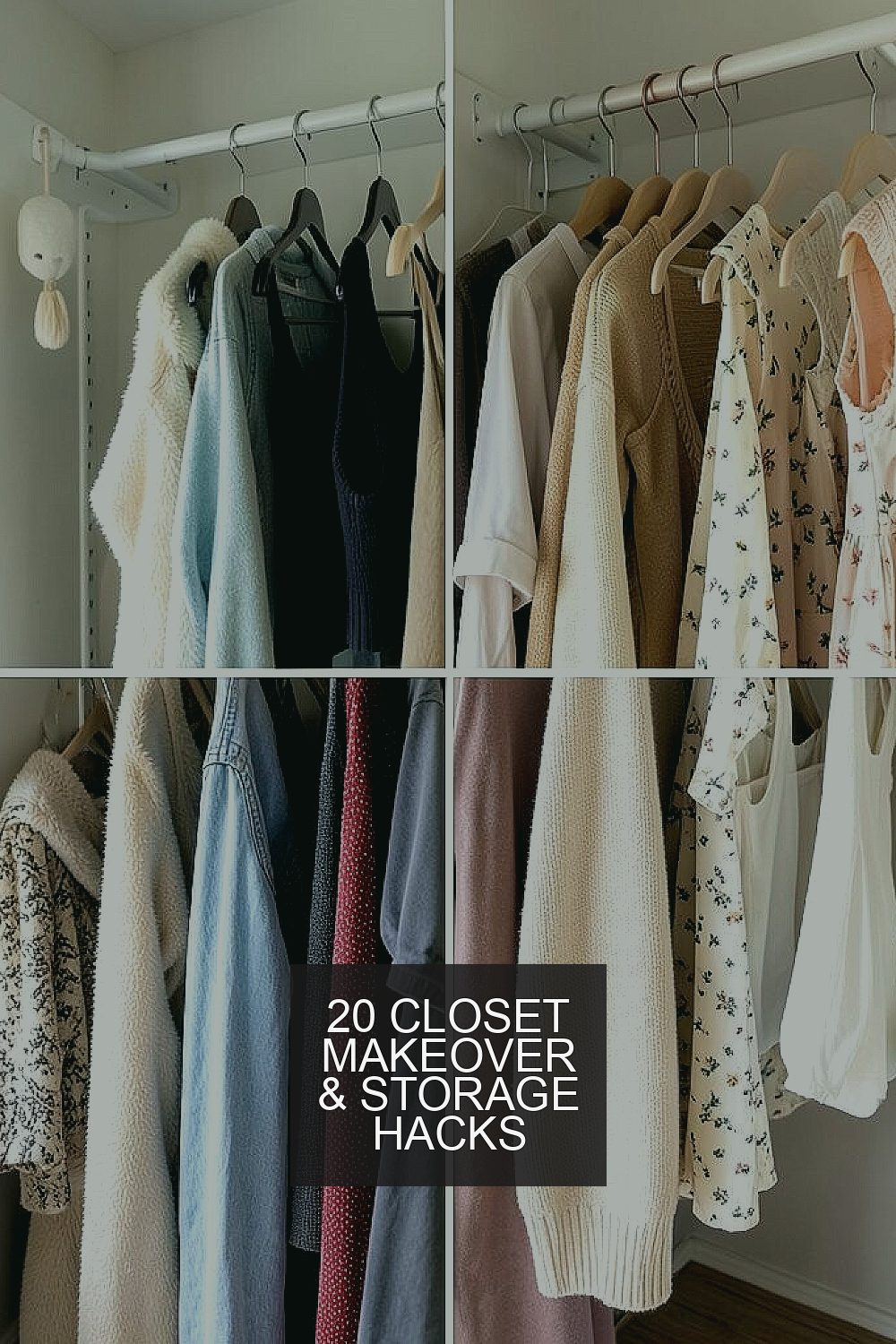
Closet clutter can feel loud, even when everything is tucked away. With the right plan, your space can look neat and still feel like you.
Mixing a few smart storage hacks with makeover upgrades helps you get the look you want and keep it working day after day.
-
1) Color-Coordinated Hanging System

) Color-Coordinated Hanging System Picture the inside of your closet as a calm rainbow instead of a jumble of hangers. When clothes share a color theme, getting ready feels quicker and more fun.
Choose a simple order, like light to dark, or group by outfit type. This makes your closet look styled and also helps you spot what you need without digging. Use matching hangers for a clean, uniform vibe.
If you want it to feel extra personal, add a small label card on the shelf edge that matches the color group. Start with your most-worn categories first so the system actually gets used. For cost, you can begin with affordable hangers and colored sticky labels.
Current trend: “quiet organized closets,” where the goal is soft, matching visuals. It also pairs nicely with minimalist style rooms. Try using a light neutral theme if your closet area gets bright sunlight.
-
2) Ceiling-to-Floor Shelf Cladding

) Ceiling-to-Floor Shelf Cladding Imagine stepping into your closet and seeing every shelf line look built-in. Shelf cladding adds a neat backdrop that makes items look intentional.
Measure your shelves, then add panels or contact paper for a smooth visual finish. This boosts the look instantly, and it also reduces the messy “everything shows” feeling. You can keep your items upright and grouped because the background makes categories easier to read.
To personalize, pick a pattern that matches your room style, like subtle lines or small dots. Use bins in the same color family so the cladding and storage feel like one set. If you are working on a budget, removable wallpaper and shelf liners are usually cheaper than custom boards.
Make it practical by adding a “season shelf” near the top. Keep winter items together and switch them as weather changes. This gives you a closet that stays tidy all year.
Cost note: stick-on materials cost less, while real wood or MDF looks more durable. Choose what fits your timeline and comfort level.
-
3) The Under-Shelf Bin Drop Zone

) The Under-Shelf Bin Drop Zone Visualize how much space is hiding just under your shelves. When you add a dedicated drop zone, small things stop wandering around.
Install slim bins under shelving to hold ties, socks, accessories, or workout gear. This keeps daily items easy to grab and keeps counters and closet floors calmer. It also helps you avoid the classic pile-on-the-floor problem.
For uniqueness, use clear bins for “see and grab” items, and cloth bins for softer items. Add a tiny label strip so you can find things fast even when you are tired. If you share a closet, separate bins by person with fun color tabs.
Tip: keep the most-used bins at about waist to chest height. If you hate bending, you will love how this layout removes extra steps. Cost can stay low with magnetic bin systems or simple shelf brackets plus inexpensive bins.
Current trend: “micro zones,” where even small sections have a job. It makes the whole closet feel organized without a full renovation.
-
4) Adjustable Closet Rod With Multiple Heights

) Adjustable Closet Rod With Multiple Heights Picture your closet rod acting like a smart tool, not a one-size shelf for everything. When you use multiple heights, each clothing type gets the right space.
Install an adjustable rod or add a second rod for short items like shirts and hanging storage pockets for accessories. This gives you better vertical organization and reduces the problem of cramped garments. You will also notice fewer wrinkles because clothes hang with room to breathe.
Personalize the setup by placing long coats on the highest rod and light tops on the lower one. Add a small height guide label so you remember the ideal spots. For cost, a second rod kit or adjustable hardware is often less expensive than replacing closet parts.
Trick: if your closet has deep space, use the far back for off-season items and the front for daily outfits. That way, you never have to reach and tug through clutter.
-
5) Shoe Wall With Flip-Down Labels

) Shoe Wall With Flip-Down Labels Imagine shoes lined up like a display, with each pair easy to pick without opening ten doors. A shoe wall with flip-down labels makes your lineup feel neat and playful.
Use a row of shelves or cubbies, then add small label cards that fold down. When you flip the card, you see the shoe category, like “work,” “weekend,” or “special.” This is great for keeping your rotation tidy and cutting down the time you spend hunting.
For uniqueness, choose label colors that match your shoe style, such as black for sleek looks and bright colors for casual sneakers. Add a small tray at the bottom for shoe care supplies so those tools stay put. Cost can fit many budgets, because basic cubbies plus paper labels are cheaper than fancy cabinetry.
-
6) Fabric Drawer Insert for Small Items

) Fabric Drawer Insert for Small Items Picture a drawer that looks soft and calm, where every tiny item has a home. Fabric inserts make it easier to sort things like scarves, chargers, and hair accessories.
Slide in drawer dividers with pockets, or place fabric organizers inside a shallow drawer. This helps prevent tangled cables and scattered accessories. You will also find items faster because you can see the shape and color.
To personalize, pick insert patterns that match your room. If your closet is neutral, choose a bold pattern for a fun pop. For cost, fabric organizers often work on a low budget and still look great.
Tip: label only the categories you truly use daily. Too many labels can feel confusing, so keep it simple and meaningful. Current trend: “touchable organization,” where soft textures make closets feel less harsh.
-
7) Mirrored Door or Back Panel Lighting Trick

) Mirrored Door or Back Panel Lighting Trick Imagine your closet glowing a little, like it has its own stage light. Adding a mirrored panel or a bright back surface can make the space feel bigger and cleaner.
Place a mirror on a door or attach a reflective panel behind hanging clothes. Then add a small LED strip or puck lights if you can. This benefits both style and function, because you can see outfits clearly and spot missing items faster.
For uniqueness, choose a frameless mirror for a modern look or a decorative frame for a cozy feel. Add a warm light bulb color for a flattering glow. Cost varies: mirrors range from affordable to higher-end, while LED lighting is often a mid-range upgrade.
Personalization idea: put a small hook near the mirror for a belt or jewelry tray. It makes getting ready feel like a routine, not a scramble. Current trend: “closet moments,” where people treat their closet area like a mini dressing space.
Safety tip: make sure lighting installation follows basic electrical guidelines. If you are unsure, choose plug-in options.
-
8) Rolling Clothing Organizer for Off-Season

) Rolling Clothing Organizer for Off-Season Picture your off-season clothes tucked away but still easy to reach. Rolling organizers let you move items without dragging bins across the floor.
Use under-closet carts or rolling fabric drawers for bulky items like sweaters, scarves, and seasonal sleepwear. This keeps the main hanging area clean and usable. When you need a season swap, you can roll the organizer out like a friendly cart.
To make it personal, choose wheel colors or drawer colors that match your closet theme. Add a simple tag like “Fall” or “Holiday” to each unit. Cost considerations: rolling organizers can range from budget-friendly fabric to more expensive wood or metal systems.
Tip: store vacuum-sealed items on the upper shelf if you have space, and keep the rolling cart for things you might check often. This mix keeps you from overstuffing and helps your closet breathe.
-
9) Vertical Tie and Belt Organizer

) Vertical Tie and Belt Organizer Imagine your ties and belts hanging in a tidy column instead of knotted in a drawer. Vertical organizers save space and also protect delicate fabric.
Try a hanging tie rack or a belt organizer with multiple hooks. This makes it easy to pick the right accessory without pulling everything out. The benefit is clear visibility, which reduces “last-minute outfit stress.”
Personalization idea: color-code by outfit style, like neutral for work and brighter tones for weekend looks. Add a small cover pocket for belt ends so they do not slip. For cost, a hanging organizer is usually cheaper than building custom furniture.
Current trend: “accessory-first closets,” where small items get better storage so outfits look more complete. People are noticing how accessories make basic clothes feel special.
-
10) Clear-Lid Storage for Pantry-Style Closet Supplies

) Clear-Lid Storage for Pantry-Style Closet Supplies Picture your closet stocked like a mini pantry, with clear-lid containers showing what is inside. This is one of the easiest ways to keep cleaning tools, extra hangers, and small supplies under control.
Use clear bins or jars for items like lint rollers, garment bags, shoe spray, and seasonal repair kits. The transparent look helps you restock quickly without guessing. It also prevents you from buying duplicates.
To personalize, print small category labels and choose a label style that matches your home. Add a tiny “last restock” note if you love tracking. Cost considerations: clear containers can be mid-range, but you can start with a few bins and expand later.
Tip: group bins by use, like “clothing care,” “shoe care,” and “laundry help.” This helps your brain instantly. Current trend: using the same style of containers across rooms for a calm, uniform feel.
Make it even better by placing the most-used bin at eye level. Less reaching means more consistent maintenance.
-
11) Shirt Folding Board With Matching Shelf Layout

) Shirt Folding Board With Matching Shelf Layout Imagine your folded shirts lined up like tidy books with crisp edges. A folding board helps you keep the same size fold every time.
Use a folding board or a simple cardboard template, then place folded shirts in a consistent shelf layout. This creates a clean visual rhythm and saves space. The benefit is easy stacking, which also makes it simple to rotate items.
For uniqueness, mix fold styles for different categories, like half-folds for tees and full folds for button shirts. Add a small fabric divider to separate workwear from casual. Cost is usually low because boards and dividers are affordable.
Personalization idea: choose a board color that matches your closet interior or your favorite accent color. Current trend: “capsule clarity,” where closets feel like collections instead of piles.
-
12) Pegboard Wall for Ready-to-Wear Accessories

) Pegboard Wall for Ready-to-Wear Accessories Picture a pegboard wall inside the closet, with hooks and small shelves holding your everyday items. Pegboard turns simple storage into a visual system.
Install hooks for scarves, small bags, and belts, and add tiny shelves for jewelry trays. This keeps your go-to accessories within reach. The benefit is fast outfit building because everything you grab often is in the same spot.
To personalize, paint the pegboard the same color as your closet walls or choose a playful color for contrast. Add a small corner for a “daily essentials” tray, like keys and earbuds. Cost considerations: pegboard can be budget-friendly, and you can start small with a section.
Tip: place the pegboard at a comfortable height so you do not have to stretch. Current trend: functional art panels, where storage looks like design.
-
13) Drawer System With Adjustable Inserts

) Drawer System With Adjustable Inserts Imagine opening your drawer and seeing neat compartments that match what you own. Adjustable inserts make this possible because you can re-size the sections.
Use expandable dividers in drawers for makeup, toiletries, socks, and small electronics. This keeps items from sliding around and reduces the “drawer dump” mess. It also makes it easier to keep the closet tidy when life gets busy.
Personalize by creating a “starter kit” setup, like a section for travel-sized items and a section for daily use. Add color dots on the divider tabs so you can spot sections quickly. Cost considerations: start with one drawer and one insert size, then add more as needed.
Quick tip: if you change your items often, choose inserts that move easily without tools. That way, you will actually adjust the organizer rather than avoiding it.
-
14) Hanging Garment Bags With Clear Front Panels

) Hanging Garment Bags With Clear Front Panels Picture your formal wear tucked neatly away, protected from dust, and still easy to find. Clear-front garment bags keep garments covered without hiding them completely.
Use breathable garment bags for suits, dresses, and coats you rarely wear. Add a clear window panel or use semi-transparent fabric so you can identify each piece fast. The benefits include less dust buildup and fewer wrinkles from storage chaos.
To personalize, hang garment bags by event type, like “weddings,” “work formal,” or “seasonal celebrations.” Add small notes on tags so you remember dry-clean dates. Cost considerations: garment bags are often affordable, and you can start with a few high-value items first.
Current trend: “protective styling,” where people store special clothing with the same care they use to wear it. It also helps maintain fabric quality longer.
-
15) Stackable Crate Storage for Towels and Linens

) Stackable Crate Storage for Towels and Linens Imagine your linens stored like mini building blocks, stable and easy to stack. Stackable crates add structure to closets that otherwise feel soft and messy.
Use stackable crates or sturdy bins to hold towels, extra bedding, and blankets. This keeps items contained and makes it simpler to grab what you need. The benefit is cleaner floor space and less shifting when you reach in.
For uniqueness, choose crates with a natural wood look or paint them to match your room. Add fabric liners for a warmer look. Cost note: sturdy stackable systems can be mid-range, but they are durable and last longer than flimsy bins.
Tip: stack the heaviest items on the bottom for safety. Current trend: mixing “farmhouse” textures with modern labels for a cozy-but-neat style.
-
16) Closet Floor Tray for Bags and Scarves

) Closet Floor Tray for Bags and Scarves Picture a simple tray at the closet floor level that catches bags before they pile up. A dedicated entry-style tray keeps your closet from becoming an overflow zone.
Place a shallow tray or low bin near the door area for small bags, scarves, and travel items. This helps you keep the closet floor clear and makes grab-and-go easier. It also protects flooring from scuffs and keeps clutter from spreading.
Personalize by choosing a tray color that matches your closet hardware or wall tone. Add a removable mat for texture and comfort. For cost, trays and low bins are often one of the cheapest upgrades.
Suggestion: add a small hook nearby for a reusable tote. This creates a mini routine and helps you maintain order without extra effort.
-
17) Peel-and-Stick Hooks for Daily Rotation

) Peel-and-Stick Hooks for Daily Rotation Imagine having a few hooks ready for the things you touch every day. Peel-and-stick hooks are a fast way to give your closet a “ready spot.”
Use hooks for lanyards, everyday jackets, tote straps, and hats. The benefit is fewer items on the floor and quicker outfit assembly. Because it is removable, you can change the layout as your needs grow.
For uniqueness, place hooks in a small design pattern like a curve or grid. Add small tags, like “tomorrow,” “today,” and “backup” if you like a playful system. Cost considerations are usually low, which makes it great for renters.
Tip: clean the surface well before applying hooks so they stay strong. Current trend: flexible organization for people who move often or like to refresh their space.
To personalize, match hook color to your room’s metal finish. It looks more intentional and less temporary.
-
18) Long-Handle Baskets for Cleaning Supplies

) Long-Handle Baskets for Cleaning Supplies Picture your cleaning supplies tucked behind the hanging zone, but still easy to pull out. Long-handle baskets keep heavy items manageable and neat.
Use baskets with handles to store brooms, lint tools, spare hangers, and stain removers. Put them on a lower shelf or a pull-out spot so you do not have to dig. The benefits include safer lifting, less clutter, and faster cleaning days.
Personalization idea: label each basket by job, like “spot clean,” “laundry,” or “shoe care.” Add a small “refill reminder” note if you hate running out. Cost can be budget-friendly because baskets are often cheaper than built-in cabinets.
Tip: keep sharp or messy items toward the back and use a separate smaller basket for tools you use daily. Current trend: hiding utilities in attractive containers so the closet looks designed, not just functional.
-
19) Pull-Out Hamper With Divider Inserts

) Pull-Out Hamper With Divider Inserts Imagine laundry day getting easier because dirty clothes immediately go to the right place. A pull-out hamper with dividers helps you sort without extra steps.
Choose hampers that slide out and have sections for colors, delicates, or towels. This reduces the mess that often spills from laundry baskets. The benefit is less sorting later, which saves time and keeps the closet area calmer.
To personalize, use washable liner bags that match your closet color scheme. Add a small label on each divider so everyone in the home knows the rules. Cost considerations: hampering systems can be mid-range, but you can start with a two-compartment pull-out option.
Suggestion: place the hamper close to where you typically unload laundry, like near a laundry room connection or closet corner. Current trend: “laundry zoning,” where sorting starts the moment clothes come off.
-
20) Mirror-Look Shelf Face for Cabinet-Style Storage

) Mirror-Look Shelf Face for Cabinet-Style Storage Picture your closet shelves wearing a glossy, mirror-like face that brightens the whole area. This kind of upgrade makes even simple storage look polished.
Add a reflective shelf liner or glossy contact paper to the front edge of storage. It makes bins and shelves feel like part of a cabinet system, not random stacking. The benefit is visual brightness, which makes closets feel more open.
For uniqueness, pick a soft metallic tone like champagne or light silver. Add a small decorative tray on top for jewelry or perfume bottles. Cost considerations: reflective liners are usually cheaper than new doors, and they give a “wow” effect with minimal work.
Tip: avoid placing reflective surfaces directly where they glare during the day. Use warm light and angle the placement so it looks flattering, not harsh. Current trend: high-shine accents mixed with soft fabrics for a balanced look.
Personalization idea: match the metallic tone to your closet handles and door knobs. That tiny detail makes the whole system look intentional.