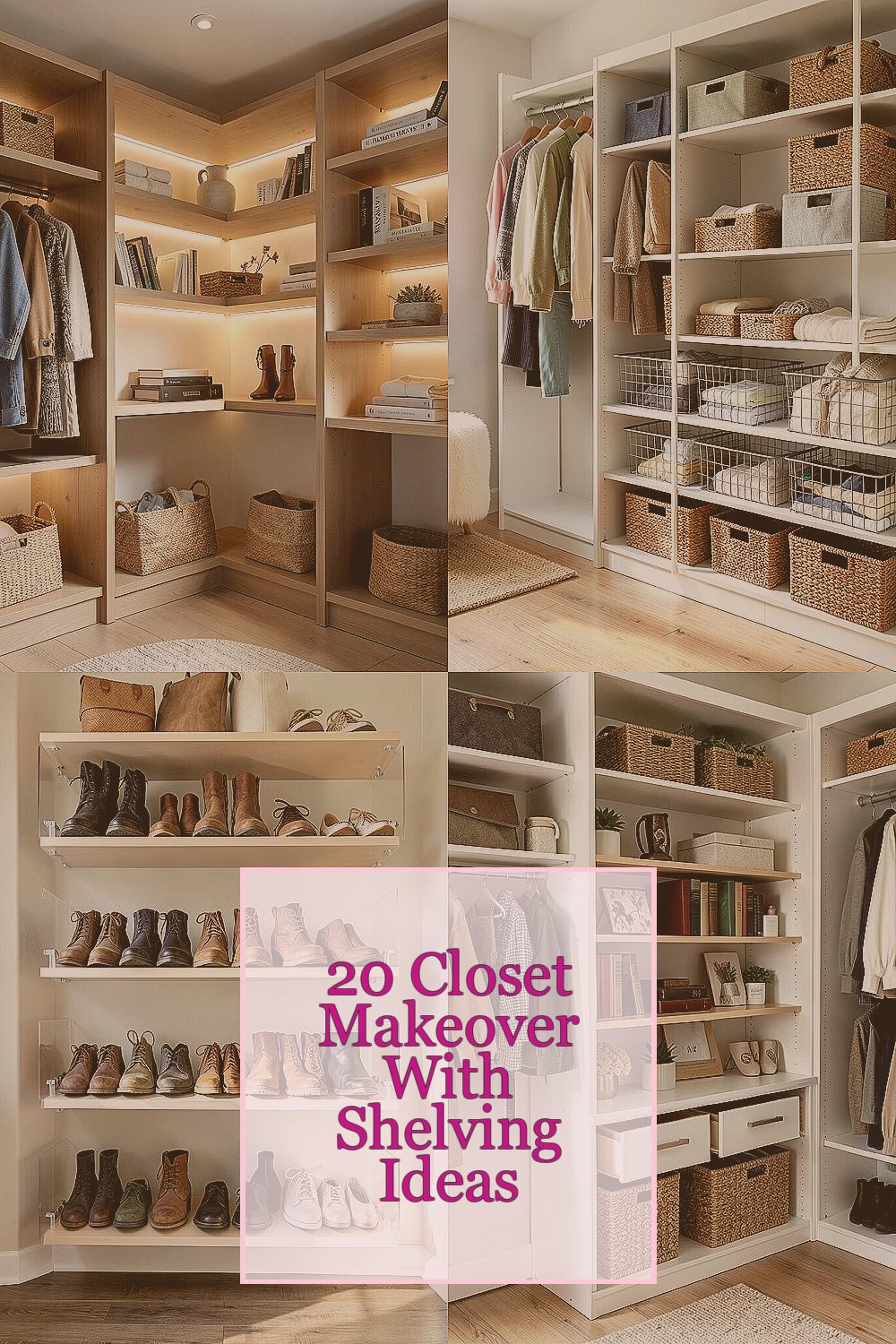
Your closet can look tidy and feel calmer in just a few changes. The right shelving plan turns “stuff everywhere” into a home you can actually enjoy.
From simple boards to smart storage zones, you’ll find options that fit your space and your style.
-
1. Floating Shelves With Soft Lighting

Floating Shelves With Soft Lighting Picture slim floating shelves hovering like little platforms for your favorite items. Warm LED light tucked along the underside makes everything look neat and bright.
This setup helps you see what you have, so you waste less time searching. It also makes smaller closets feel bigger because nothing looks bulky. If you want a quick win, choose a light color for the shelves to reflect more light.
For personalization, add slim labels or small display trays on the top shelf. Keep heavier items on the lower shelves and use the top for lighter things like folded shirts or seasonal decor. Budget-wise, floating shelves can be affordable, especially if you start with just one wall and add more later.
One current trend is combining simple shelving with “glow details,” like warm strips rather than harsh overhead bulbs. It’s cozy, and it makes your closet feel more like a styled room.
-
2. Adjustable Closet Shelving With Grid Bins
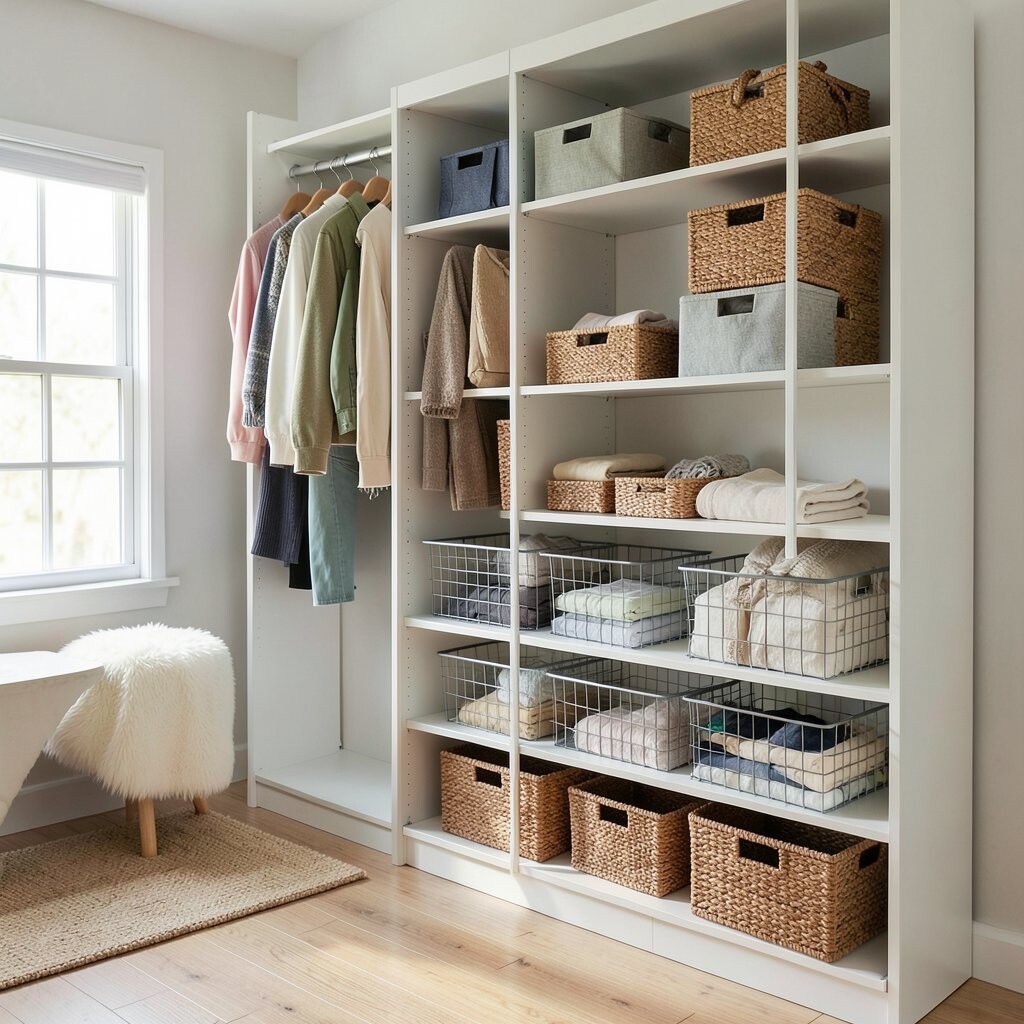
Adjustable Closet Shelving With Grid Bins Imagine shelves that can move up or down as your needs change. You’ll also get matching bin cubbies that keep small items from hiding.
This is great for families, shifting seasons, or anyone who likes to rearrange. Adjustable systems help you store tall items one month and fold stacks the next. Plus, bins reduce visual clutter because the view stays clean.
Choose a neutral wood or matte white finish so the bins blend in. Add a simple color rule, like blue bins for accessories and gray bins for everyday basics. For cost control, buy one section first and expand as your budget allows.
-
3. A Shoe Shelf Wall With Clear Pop-Up Sides

A Shoe Shelf Wall With Clear Pop-Up Sides Think of a tall shoe shelf with tidy rows that show your pair options at a glance. Clear side panels give you an orderly look while still protecting shoes from dust.
This style makes mornings faster because you can spot the right shoes quickly. It also protects your shoes since pairs are supported instead of crushed on the floor. When you stack correctly, you get better airflow, which helps keep smells calmer.
For tips, place daily shoes at eye level and store out-of-season pairs higher up. Use drawer-style inserts or fabric shoe organizers if you want a softer look. Personalize with a small row for “grab and go” sandals or slip-ons.
If you’re watching costs, try a single shoe zone first. You can use budget-friendly boards and add clear shelf dividers later for a custom touch.
-
4. Closet Island Shelving: The Mini Display Nook

Closet Island Shelving: The Mini Display Nook Picture a small central shelving island, like a mini table that lives inside your closet. It creates a place for styling, folded stacks, and even a few pretty organizers.
This helps you separate “wear now” items from “save for later” items. You’ll also enjoy a visual break, so the closet feels less like a storage box. Add a top tray for bags, and you’ll always know where your essentials are.
For personalization, paint the shelving back panel a fun color, like soft sage or warm cream. If you’re worried about space, choose a narrow island width and keep walkways clear. Costs can range widely, but you can lower the price by using ready-to-assemble shelves and adding finishing trim.
Right now, “purposeful display” is trending, where closets include little styling areas instead of hiding everything away. This idea gives you that look without needing a full renovation.
-
5. Ladder-Style Shelves for Hanging + Stacks

Ladder-Style Shelves for Hanging + Stacks Imagine a ladder shelf that leans into your closet like a stylish staircase. It holds baskets on rungs and also supports stacked items with clean lines.
This hybrid design gives you both display and function at the same time. You can hang scarves, belts, or even small bags from hooks near the ladder. The result feels unique and adds personality without taking over the whole closet.
For tips, keep the heaviest stacks closer to the base and lighter decor near the top. Add a small bin for odds and ends, like sunglasses or travel chargers. Personalize by mixing basket colors or adding a small sign with your closet categories.
-
6. Corner Shelves With Angled Ledges

Corner Shelves With Angled Ledges Picture your closet corners turned into useful storage with angled shelves. These ledges fit snugly where straight shelves would leave wasted gaps.
This benefits you because corners usually collect clutter. Angled shelves give you a natural spot for folded knits, lotion bottles, or small boxes. They also help items stay in place, so you won’t feel like you’re constantly fixing the mess.
For personalization, match the shelf finish to your closet door or trim for a polished look. If you store jewelry, use shallow trays on the angled surface so pieces don’t roll. Cost considerations are friendly here because you can build corner shelving with fewer materials than a full wall system.
-
7. Linen-Style Shelving With Rolled Drawer Inserts

Linen-Style Shelving With Rolled Drawer Inserts Think of shelves that look like a boutique linen closet. Instead of open piles, you use soft drawer-style inserts that slide in and keep things neat.
This makes your closet feel calm and “ready,” because items look organized even when you’re busy. Drawer inserts protect folded clothing from dust. They also make restocking easier since you can pull one section at a time.
Try a mix of inserts for personalization: one for socks, one for bras, and one for seasonal layers. Use simple labels with icons, like a shirt for tops or a shoe for footwear. If you’re budgeting, start with the sections you use most daily and upgrade later.
One trend is “hidden organization,” where shelves still show clean lines, but storage stays concealed. This is perfect if you want a fresh look without constant visual clutter.
-
8. Open Shelves With Color-Coded Height Zones

Open Shelves With Color-Coded Height Zones Imagine shelves divided into zones, each with a different color element. Maybe the top shelf uses warm wood tones, and the lower shelves use a matching color rail.
This helps you sort quickly, because your eyes learn the system fast. You’ll also save time when putting items away, since each height zone becomes a “home.” The look is also visually fun, especially with small accents like paint strips or color label bands.
For tips, keep everyday items in the easiest height zone and store less-used items higher or lower. Use the same method across the closet so it feels consistent. Personalize with colors that match your room decor, like blush, navy, or muted green.
Costs are usually manageable because you can keep shelves the same and only add rails, paint, or label accessories. This is an easy way to get a big style upgrade without big spending.
-
9. Built-In Shelves With Removable Hampers
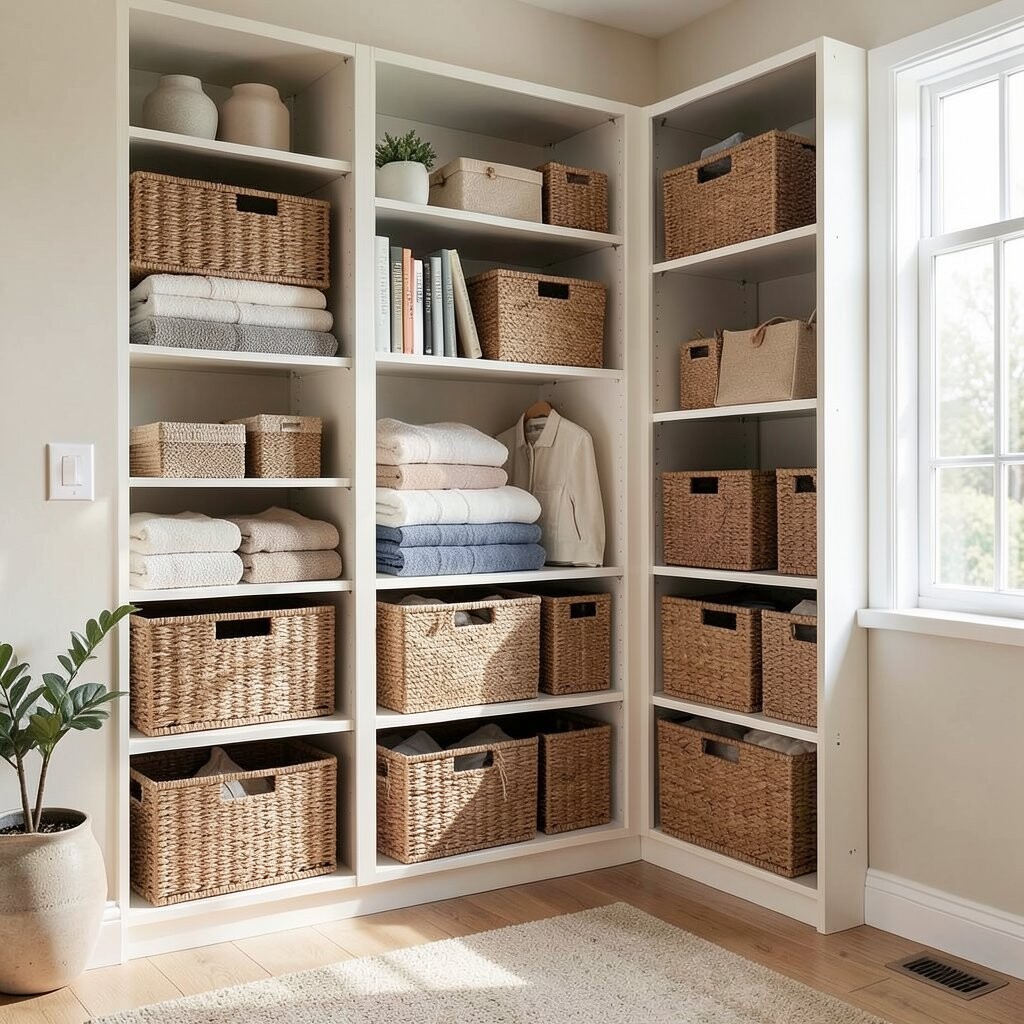
Built-In Shelves With Removable Hampers Picture built-in shelving with a row of removable hampers tucked into the lower section. The hampers slide out like bins from a drawer, which feels super smooth.
This idea keeps laundry and clothing organization in one place. You’ll enjoy a cleaner floor, because folded items and “to wash” items don’t mingle. Plus, removing hampers makes chores easier since you can carry the bin right to the laundry area.
For tips, pick hamper bins in a fabric that looks good even when open. Add a small shelf above each hamper for socks or accessories. Personalize by choosing hamper colors that match your closet style.
Cost considerations: built-ins may cost more if you hire help, but you can mimic the effect with modular shelves and store-bought hampers. A DIY-friendly route can give you the built-in look at a friendlier price.
-
10. Pegboard Backing Behind Shelves

Pegboard Backing Behind Shelves Imagine your shelves backed by a pegboard wall, full of neat hooks and small pegs. It makes the entire system look more like a workshop and less like a storage cave.
This gives you extra flexibility because you can move hooks when your storage needs change. It’s great for belts, scarves, hats, and even small bags. Also, the pegboard adds texture, which makes the closet look custom and intentional.
For tips, keep heavy hooks and items near the bottom for safety. Add small shelf trays for items that tend to slip, like hair ties or travel-sized containers. Personalize with paint on the pegboard, such as matte black or soft white for a clean modern vibe.
-
11. Store-Fold-Then-Display Shelves With Book-Like Stacking

Store-Fold-Then-Display Shelves With Book-Like Stacking Picture folded clothes stacked upright, like books on a shelf. This “see-through organizing” makes it easy to pick your outfit fast.
This benefits your mornings because you can spot colors and styles without digging. It also reduces wrinkles when items stay flat and supported. Plus, the shelf looks stylish, almost like a boutique display.
For tips, fold using a consistent method so everything sits evenly. Use slim shelf dividers to keep stacks from leaning. Personalize by sorting by outfit type, like workwear, weekend wear, or special event pieces.
Cost considerations are low if you already have shelves and want to add simple dividers or gentle shelf liners. Current trends favor vertical folding and “outfit visibility,” and this is one of the easiest ways to copy that idea.
-
12. Shelf + Curtain Combo for Hidden Storage

Shelf + Curtain Combo for Hidden Storage Imagine sturdy shelves with a soft curtain pulled across the front. When you want a calm look, you close the curtain, and when you want access, you tie it back.
This combo helps you store bulk items without seeing them all at once. It’s a great choice for closets that face a hallway, where you want everything to look neat. The curtain also adds softness, which makes the closet feel more welcoming.
For personalization, choose a fabric pattern that matches your home, like subtle stripes or small dots. Use hooks on the side so you can open the curtain quickly. Cost-wise, it’s often cheaper than buying more boxes, since fabric and curtain rods are usually budget-friendly.
-
13. Deep Shelving With Pull-Out Ledges for Bulky Items

Deep Shelving With Pull-Out Ledges for Bulky Items Think of deep shelves that include pull-out ledges, like small platforms you can slide forward. Bulky items sit behind the ledge, while the front stays clear.
This benefits you by reducing heavy lifting and messy reaching. It also keeps bulky items protected from dust because they’re not sitting wide open. When the ledge pulls out, it feels like you’re opening a drawer, which is super satisfying.
For tips, use pull-outs for sweaters, extra blankets, or even shoe boxes. Add a stop so the ledge doesn’t slide all the way out. Personalize with a matching liner color so the inside feels intentional.
Cost considerations: hardware can add up, but you can start with just one deep shelf section. A single pull-out can make a huge difference without draining your budget.
-
14. Color-Blocked Shelf Panels With Labels

Color-Blocked Shelf Panels With Labels Picture shelf panels painted in two or three coordinated colors. Each color block connects to a label that tells you exactly what goes where.
This helps you keep the closet organized without constant reminders. When the system is clear, you put things back more often. It also makes your closet feel playful, not strict.
For tips, use labels that are easy to read and swap later if you change storage categories. Keep colors subtle so the closet still feels calm. Personalize by using shades you love, like warm beige with terracotta, or white with soft blue.
Cost considerations are typically friendly because paint and label accessories are inexpensive. You can also use contact paper for a quick color block without painting.
-
15. Narrow Shelves for Accessories, Bags, and Small Finds

Narrow Shelves for Accessories, Bags, and Small Finds Imagine narrow shelves stacked like steps, each made for small items. You get a home for hats, makeup bags, ties, and purses without taking over the closet.
This benefits you by making every accessory easy to find. It also keeps small items from getting tangled in drawers. When everything has a small place, your closet stays tidy longer.
For personalization, add mini bins on the shelves and mix shapes, like round tins and rectangular boxes. Use an open shelf for decorative items and a closed bin for things you hide. Cost-wise, narrow shelves can be very affordable because they use less material.
-
16. Shelf Liners With Non-Slip Texture and Easy Wipes

Shelf Liners With Non-Slip Texture and Easy Wipes Picture clean shelves lined with textured, wipeable material. Items look more secure, and the whole closet looks fresh even before you add more organizers.
This benefits you because slippery stacks won’t shift as you open doors and grab items. Liners also protect shelves from scuffs and stains, which helps your closet last longer. Plus, it’s an easy upgrade that takes little time.
For tips, choose liners with a subtle pattern that hides tiny dust marks. Add matching liners on drawers so the whole closet feels coordinated. Personalize by using a color that matches your closet vibe, like sage green, soft gray, or warm sand.
Cost considerations are great because liners are often cheaper than new shelving. This is a low-cost way to get a “new closet” feel.
-
17. Hanging Shelf Rail With Basket Inserts

Hanging Shelf Rail With Basket Inserts Imagine a rail that holds shelves above a hanging rod. Under the shelves, you use baskets that catch items you often grab.
This helps you use vertical space, so your closet stores more without feeling crowded. Basket inserts are perfect for gloves, scarves, socks, and small bags. The hanging rail also makes your closet look modern and well-planned.
For tips, keep baskets for daily use on the easiest reach side. Use smaller baskets for tiny accessories so they don’t fall through. Personalize by choosing baskets that match your color theme, like white wicker or black wire.
Cost considerations: if you can’t install new shelving, you can often buy a hanging rail system as a budget-friendly solution. It’s also a good option for renters who want change without major work.
-
18. Museum-Style Shelving With Display Trays

Museum-Style Shelving With Display Trays Picture your closet shelves styled like a small museum. You set items on matching display trays, which makes the whole space feel curated.
This benefits you by turning “storage” into “display,” so you enjoy opening the closet instead of rushing past it. Display trays also help items stay in neat positions, reducing the messy look. When you group items in small sets, it becomes easier to keep the closet tidy.
For tips, pick a theme like “travel gear” or “special occasion.” Use trays for watches, jewelry, sunglasses, and hair tools. Personalize with tray materials like clear acrylic, light wood, or soft fabric inserts.
-
19. Slim Shelf Rails for Fold-and-Stack Sweaters

Slim Shelf Rails for Fold-and-Stack Sweaters Imagine slim rails that guide your sweaters into neat stacks. The shelves feel light, but the rails help everything stay lined up.
This benefits you because sweaters tend to take over shelves quickly when they slide or fold oddly. With rails, you can keep stacks tidy and easy to grab. It also reduces “tangle time,” which is a real daily win.
For tips, place the thickest sweaters on the strongest shelf section and keep thinner knits on top. Add a breathable divider for each category, like hoodies, cardigans, and thermal layers. Personalize by choosing shelf colors that match your sweater palette.
Cost considerations are often moderate, since rails and dividers are usually cheaper than full shelving rebuilds. Current trends favor light, tidy systems that focus on quick visual order, and this fits right in.
-
20. The “Before and After” Planning Wall With a Shelving Map

The “Before and After” Planning Wall With a Shelving Map Imagine making a shelving map first, then building shelves exactly where each category fits. You can even use paper or a simple board to plan out zones like tops, bottoms, shoes, and accessories.
This benefits you because it stops random buying and helps you use space wisely. When you plan the layout, you can pick shelf heights that match your items instead of forcing everything to fit. It also keeps the project smooth, because every step has a purpose.
For tips, measure your closet and write down the items you store most. Personalize your map by adding symbols for your routine, like a star for everyday clothes or a clock for work gear. Cost considerations improve too, because you avoid overbuying shelves you don’t actually need.