Something small can make a room feel brand new. Floating shelves add warmth without making the space feel crowded.
Ready for a weekend project that looks polished and personal? Here are DIY ideas that brighten your home and keep your things easy to reach.
-
1. Minimalist Pine Ledge With Hidden Brackets
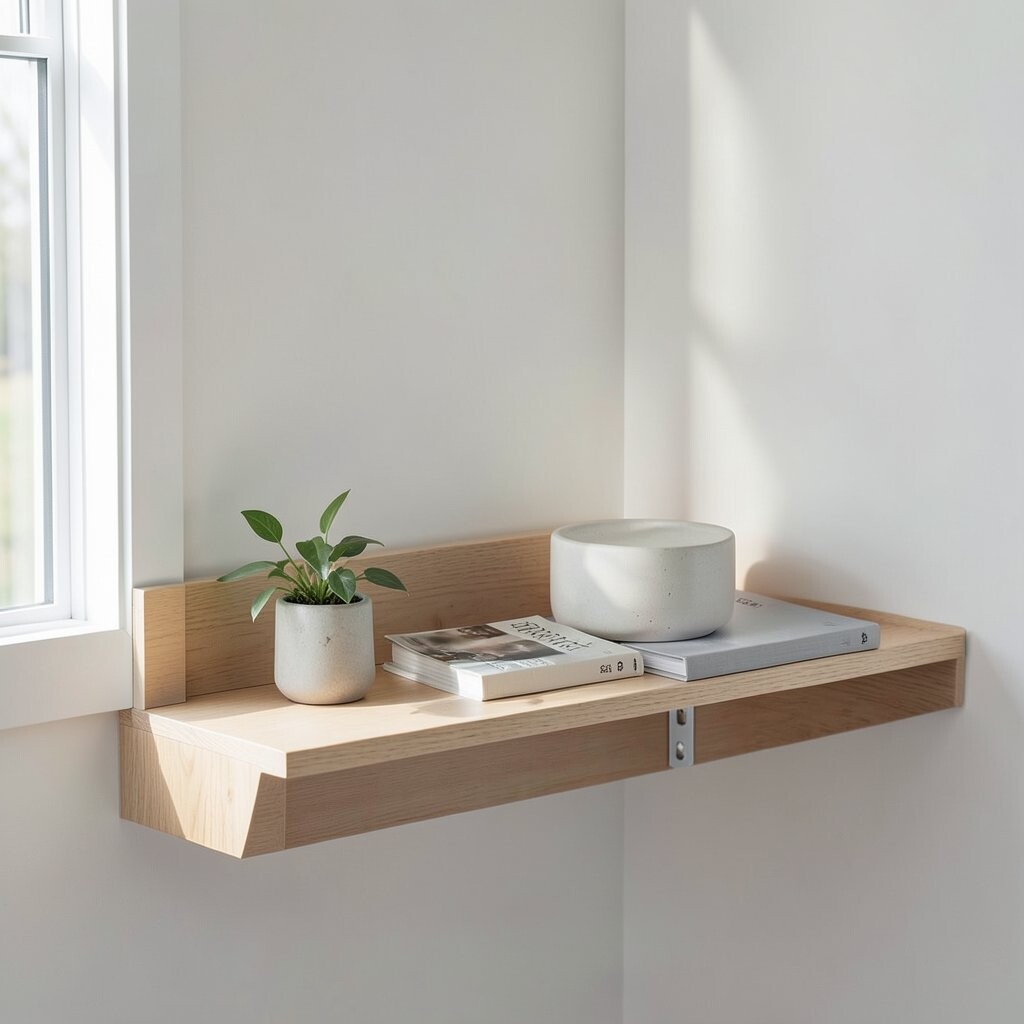
Minimalist Pine Ledge With Hidden Brackets Picture a clean strip of warm pine mounted as if it’s just floating. A smooth light finish keeps the eye moving and makes the wall feel airy.
Hidden brackets give a tidy look, so your shelves look calm instead of bulky. Measure carefully, then pre-drill so the wood doesn’t split. Finish with a clear matte topcoat to keep the grain looking fresh and modern.
-
2. Two-Tier Floating Shelf for Quick Morning Access
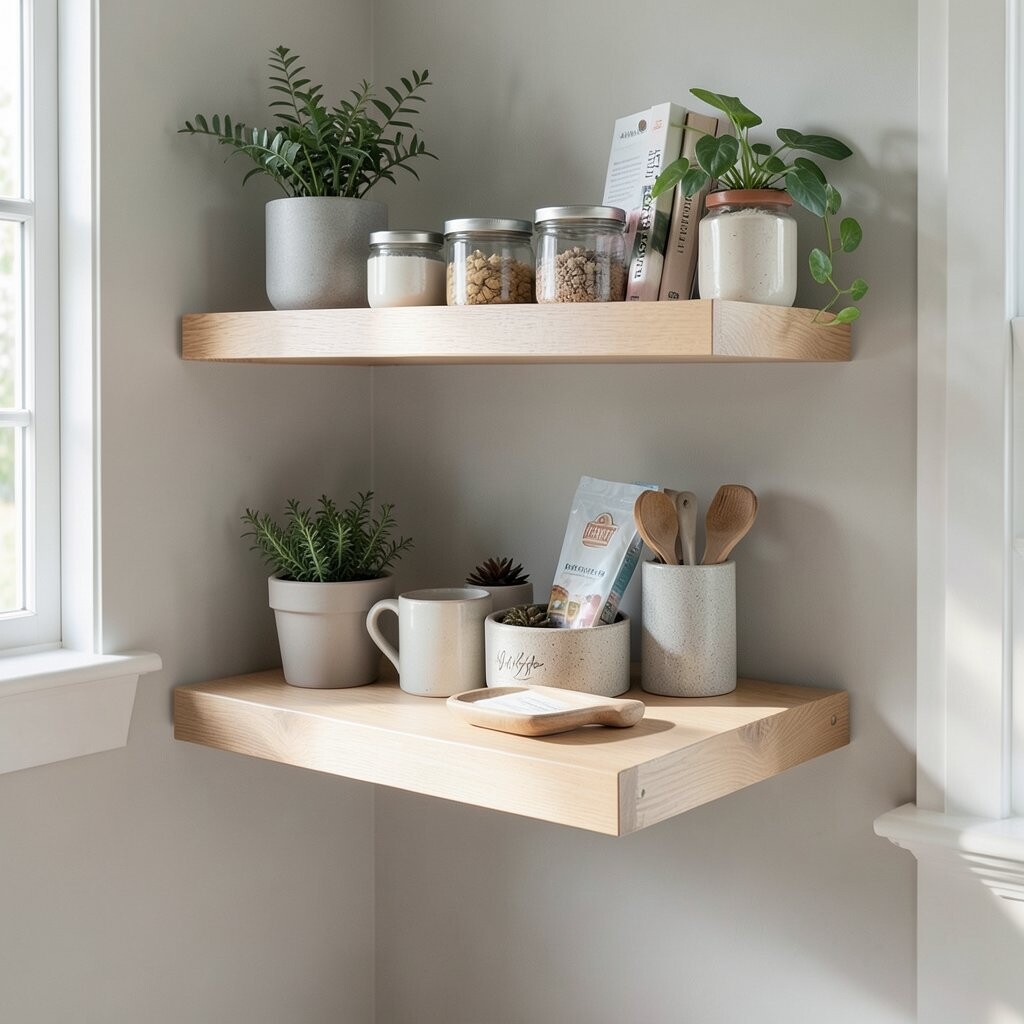
Two-Tier Floating Shelf for Quick Morning Access Imagine two slim shelves stacked like a gentle ladder above your coffee corner. Books, mugs, and a small tray look organized without taking up floor space.
This setup is great because it gives you a “grab zone” for daily items. Use a level and mark your stud locations, then anchor well. If you want to save money, choose one board width and cut all pieces from the same sheet.
For personalization, paint the back edge in a soft color that matches your kitchen or dining accents. Current trends lean toward earthy neutrals and simple styling, so keep decor light and intentional.
-
3. Reclaimed Wood Shelf With Steel Side Supports

Reclaimed Wood Shelf With Steel Side Supports Think of weathered wood paired with dark metal lines. The mix feels bold and cozy at the same time, like an old workshop meets a modern home.
Reclaimed pieces add character, and you get uniqueness you can’t buy in a store. Sand the surface gently so it feels smooth to the touch, then apply a protective finish. If the wood is uneven, embrace it—just make sure the brackets are level.
Budget tip: ask local salvage stores for offcuts or small planks. For today’s style, lean into industrial warmth by adding a single plant or a metal candle holder on the shelf.
-
4. Chalk-Painted Floating Shelf for a Fun “To-Do” Wall

Chalk-Painted Floating Shelf for a Fun “To-Do” Wall Picture a floating shelf painted in a soft chalky color, like dusty blue or warm sage. You can set up a little space for notes, reminders, and tiny daily rituals.
Chalk paint helps you change ideas often, and it’s great for families. Seal it with a matte topcoat so the surface stays durable. To personalize, stencil simple icons like a sun, heart, or star along the front edge.
This idea also looks trendy because people love creative function now. Keep the top free for easy movement, and use small containers below for your writing tools. You’ll spend a little on paint and sealant, but it’s still usually cheaper than ready-made units.
-
5. Cord-Friendly Shelf With a Built-In Charging Spot
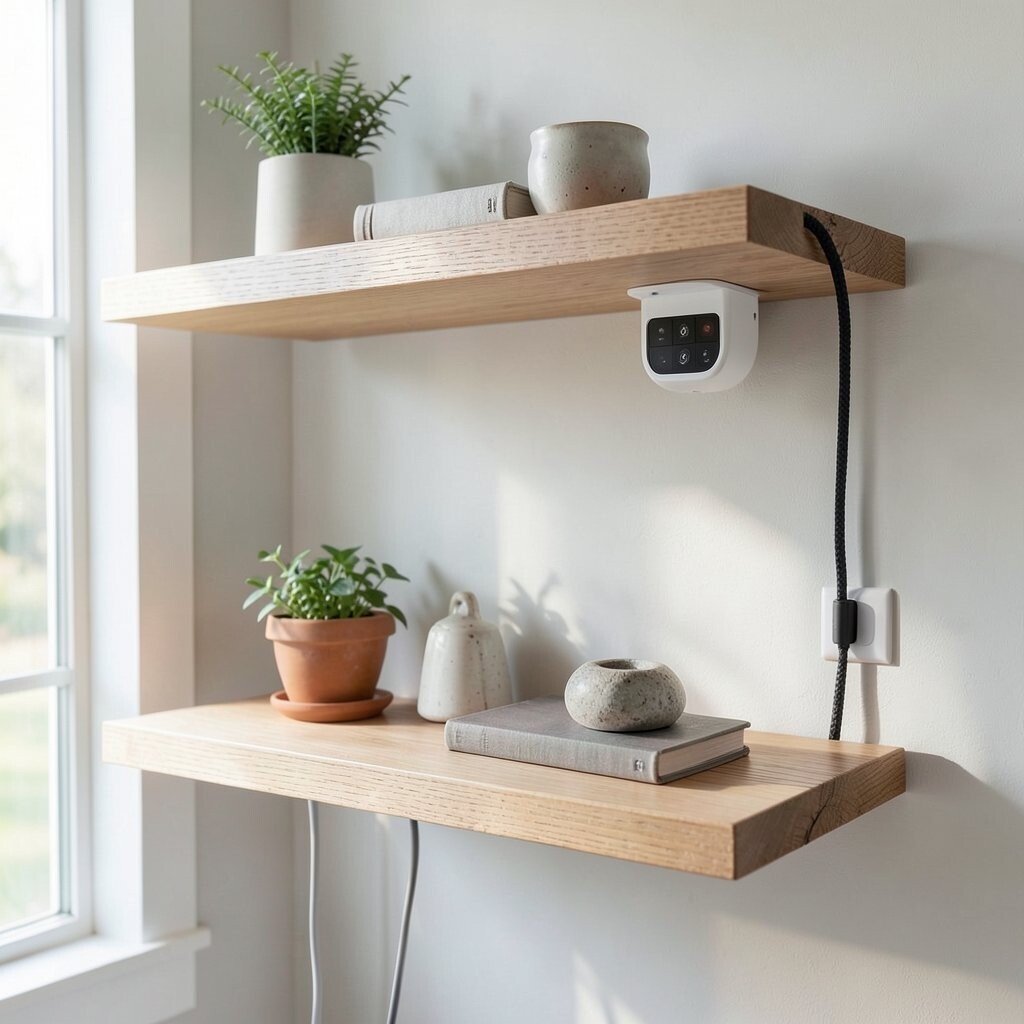
Cord-Friendly Shelf With a Built-In Charging Spot Imagine a floating shelf with a neat notch for charging cords. A phone, tablet, and small speaker look tidy instead of tangled.
This is a big benefit for busy households because everything charges and stays in sight. Plan the shelf depth so plugs fit comfortably, and use a grommet to protect the wood edges. Sand the area and add a clear coat so it resists daily bumps.
For personalization, place a small tray or valet hook under the shelf for keys and earbuds. This matches current living-room trends—clean surfaces and smart organization without visible clutter. Cost stays reasonable since the main extras are a grommet, a notch tool, and a charging dock if you want one.
-
6. Floating Shelf With a Fabric Liner Backdrop

Floating Shelf With a Fabric Liner Backdrop Picture a floating shelf that pops because the wall behind it has soft fabric texture. The shelf looks like a display stage, especially with warm lighting.
Fabric liners can hide small wall marks and make the area feel cozy. Use removable adhesive fabric strips or a clean fabric panel taped neatly behind the shelf line. Press the edges flat so it doesn’t wrinkle, and choose a color that complements your room.
Personalize by picking patterns that match the season—think simple stripes, tiny florals, or solid linen shades. It’s unique because it adds softness, which feels very “in” right now. For cost, fabric is usually cheaper than wallpaper and easy to swap later.
-
7. Corner Floating Shelf for Awkward Wall Space

Corner Floating Shelf for Awkward Wall Space Imagine shelves tucked into a corner where nothing else fits well. Small framed photos, spices, or mini plants can finally get the spotlight.
Corner placement is helpful because it uses space that often goes unused. Use triangular corner brackets or angled supports, and double-check the angles before you drill. Finish the wood with a durable coat since corners can collect dust.
To personalize, vary the heights slightly so the corner feels like a curated gallery. This idea feels modern because corner nooks are trending for styling. Budget-friendly tip: use shorter boards and cut them into matching lengths to avoid waste.
-
8. Floating Shelf With Light-Up LED Strip Edge
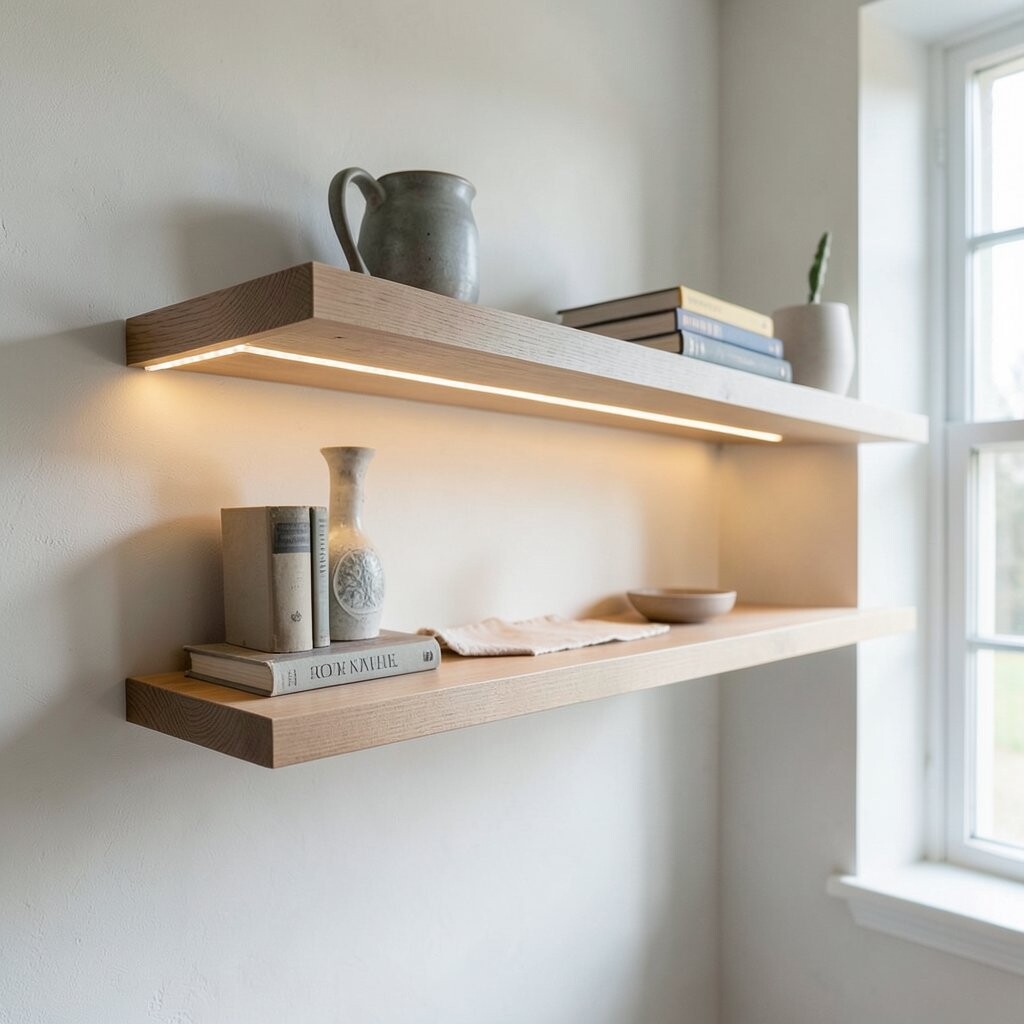
Floating Shelf With Light-Up LED Strip Edge Picture a shelf glowing from underneath, making the wall look like it’s gently lit. Even a few small items look dramatic when they sit in the warm light.
LED lighting is a huge benefit at night because it adds ambiance without overhead glare. Choose a low-profile strip, plan the cord route, and hide the driver in a clean spot. Keep the light consistent by spacing evenly along the underside.
For personalization, use a warm white or adjustable color option if you like switching moods. This fits current trends because people love “soft glow” home styling. Cost is moderate, but you can start with one shelf and still get a big impact.
-
9. Book-Like Floating Shelves With Built-In Book Spacers

Book-Like Floating Shelves With Built-In Book Spacers Imagine shelves designed for books, with small dividers that keep covers facing out. Your reading area looks like a mini library wall.
This idea helps because books stay neat and don’t slide forward. Add simple spacers using thin strips of wood or acrylic, then seal everything for smooth handling. Keep the shelf front consistent so it looks intentional, not improvised.
To personalize, paint the dividers a contrasting color or stain them darker. Current trends include “organized display” shelving, where things look styled, not stuffed. Cost stays manageable since you mostly need basic lumber, wood glue, and a few screws.
-
10. Vertical Floating Shelf Ladder for Small Spaces

Vertical Floating Shelf Ladder for Small Spaces Picture a slim vertical shelf ladder that climbs the wall like a gentle staircase. It’s great for apartments where floor space matters most.
This layout is useful because you can place small decor, art trays, or plants at different heights. Use sturdy supports and confirm wall strength so the top shelves stay secure. If you’re nervous about drilling, use a stud-finder and anchor into studs.
-
11. Painting the Shelf Back in a Bold Accent Color
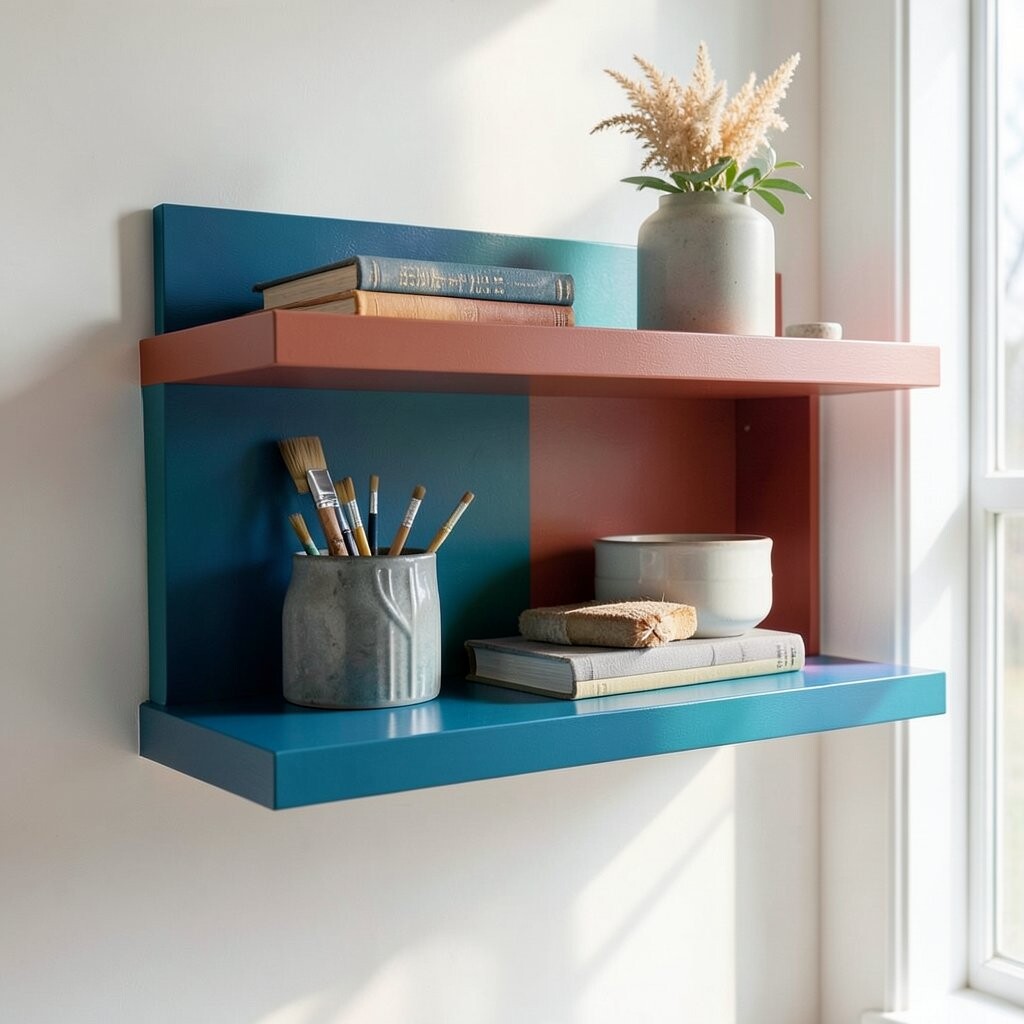
Painting the Shelf Back in a Bold Accent Color Imagine floating shelves where only the back area is painted a bright color. The items on the shelf look richer because they stand out against the vivid background.
This benefit is visual: the shelf becomes a mini backdrop that makes your decor look curated. Use painter’s tape to create crisp edges and let the paint cure fully before adding items. A semi-gloss finish can be easier to wipe if dust collects.
For personalization, match the accent to a rug, curtain, or pillow shade you already love. Right now, homeowners often choose one bold color and keep the rest calm, so this is an easy way to follow that trend. Budget-wise, you can use a small can of paint and primer if needed.
-
12. Stone-Finish Floating Shelf Using Cement-Style Paint
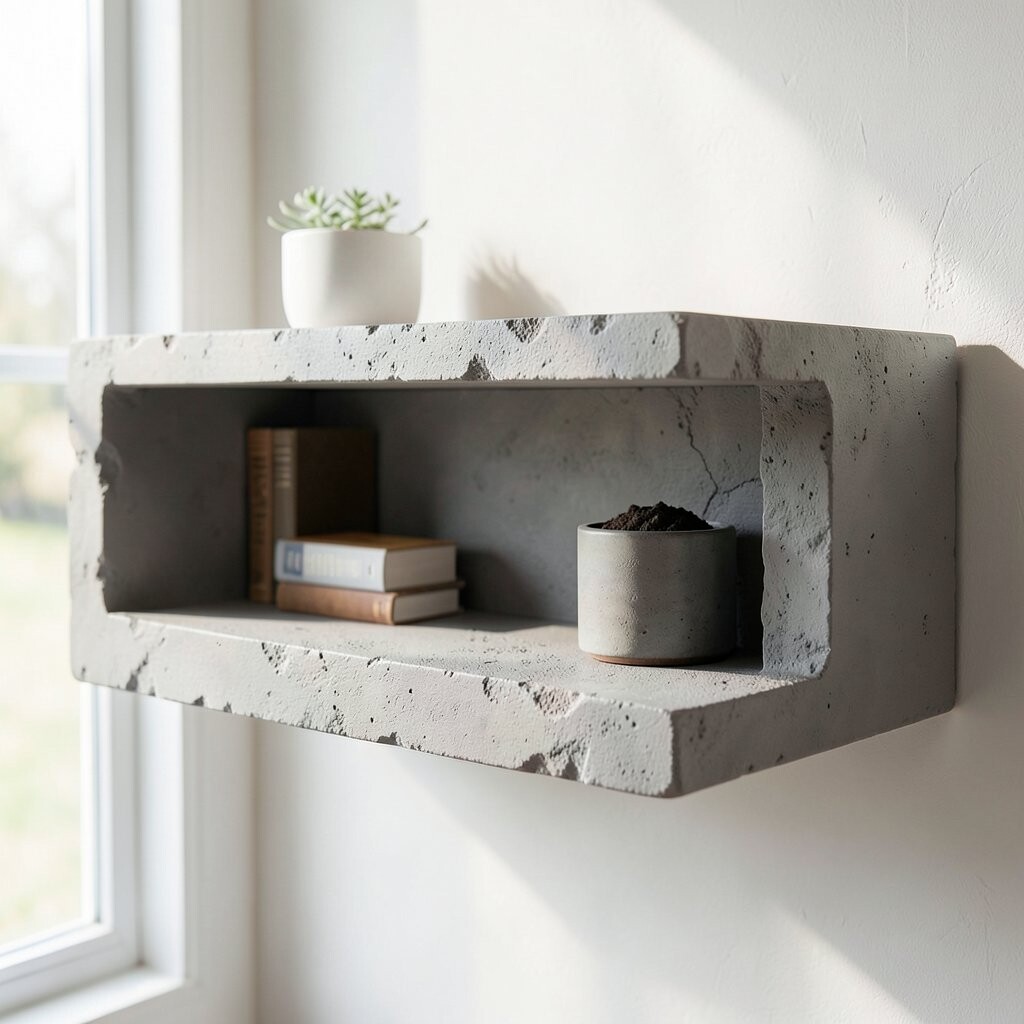
Stone-Finish Floating Shelf Using Cement-Style Paint Picture a floating shelf with a calm concrete look and speckled texture. It makes modern rooms feel grounded and stylish.
This is a unique option because it adds texture without needing real stone. Seal cement-style paint with a clear protective coat so daily cleaning is simple. Sand the surface lightly between coats if the product instructions say to.
To personalize, add a small metal tray and a plant for a balanced mix of rough and soft. Current trends include textured finishes like concrete and plaster looks. Cost can be fairly low because specialty paint often works on simple wood shelves.
-
13. Round-Topped Floating Shelf for a Softer Look

Round-Topped Floating Shelf for a Softer Look Imagine a floating shelf with a rounded front edge that feels gentle and friendly. It looks great in hallways or near cozy seating.
The rounded shape benefits your space by softening sharp corners. Use a template to trace a curve, then sand slowly for smooth edges. Apply stain or paint, but test a small spot first so you get the exact look you want.
For personalization, add a small cluster of framed art prints on one shelf and switch to a single vase on another. This idea feels unique because it’s not the typical flat plank style. Budget considerations are simple: you just need basic tools, sandpaper, and a finishing product.
-
14. Floating Shelf With a Built-In Spice Rack Front

Floating Shelf With a Built-In Spice Rack Front Picture floating shelves over the stove area, where spice jars line up like a neat display. The labels become easy to read, and you spend less time searching.
This benefit is practical: cooking gets faster when everything is close and organized. Use a narrow lip or small front stops to prevent jars from sliding. Plan spacing based on your jar sizes, and use a level so the line looks straight.
To personalize, choose jars with matching lids and use a label maker for a clean, modern feel. Current trends favor minimal kitchen counters, so this helps keep the surface uncluttered. Cost can stay low because you’re building the shelf front yourself and using jars you already have or can buy affordably.
-
15. Layered Floating Shelves for a “Gallery” Moment

Layered Floating Shelves for a “Gallery” Moment Imagine multiple small shelves staggered like a gallery wall. Your photos, small paintings, and travel souvenirs look like they belong in a curated show.
This setup is beneficial because you can style in layers: a tall item, a medium item, and a small finishing piece. Use consistent spacing so the stagger looks intentional instead of accidental. For security, anchor every shelf and use hardware rated for the weight.
Personalize by mixing textures—wood frames, ceramic pieces, and a single plant for life. This matches current trends where people showcase personal stories rather than just hiding items in cabinets. Cost tip: small shelves can be made from leftover boards, which helps you stay within budget.
-
16. Floating Shelf Over the Desk With a Tool-Free Wall Hook Zone

Floating Shelf Over the Desk With a Tool-Free Wall Hook Zone Picture a desk wall where floating shelves hold supplies while hooks below catch bags and headphones. Everything feels close, organized, and ready for work or study.
This is a smart benefit because you reduce clutter and keep daily items from piling up. Install the shelf first, then attach hooks under the shelf line so cords and bags don’t crowd the desk. Use a stud-finder and consider heavy-duty anchors if studs aren’t available.
To personalize, add a small tray on top for pens and sticky notes, and use color-coded labels. Current trends include creating “work zones” at home that look calm and focused. Cost can be kept under control by using simple wood, minimal paint, and only buying hooks if you don’t have them.
If you want extra function, add a small pegboard strip behind the hooks, so you can swap accessories easily as your needs change.
-
17. Floating Shelf With a Window-Frame Style Border
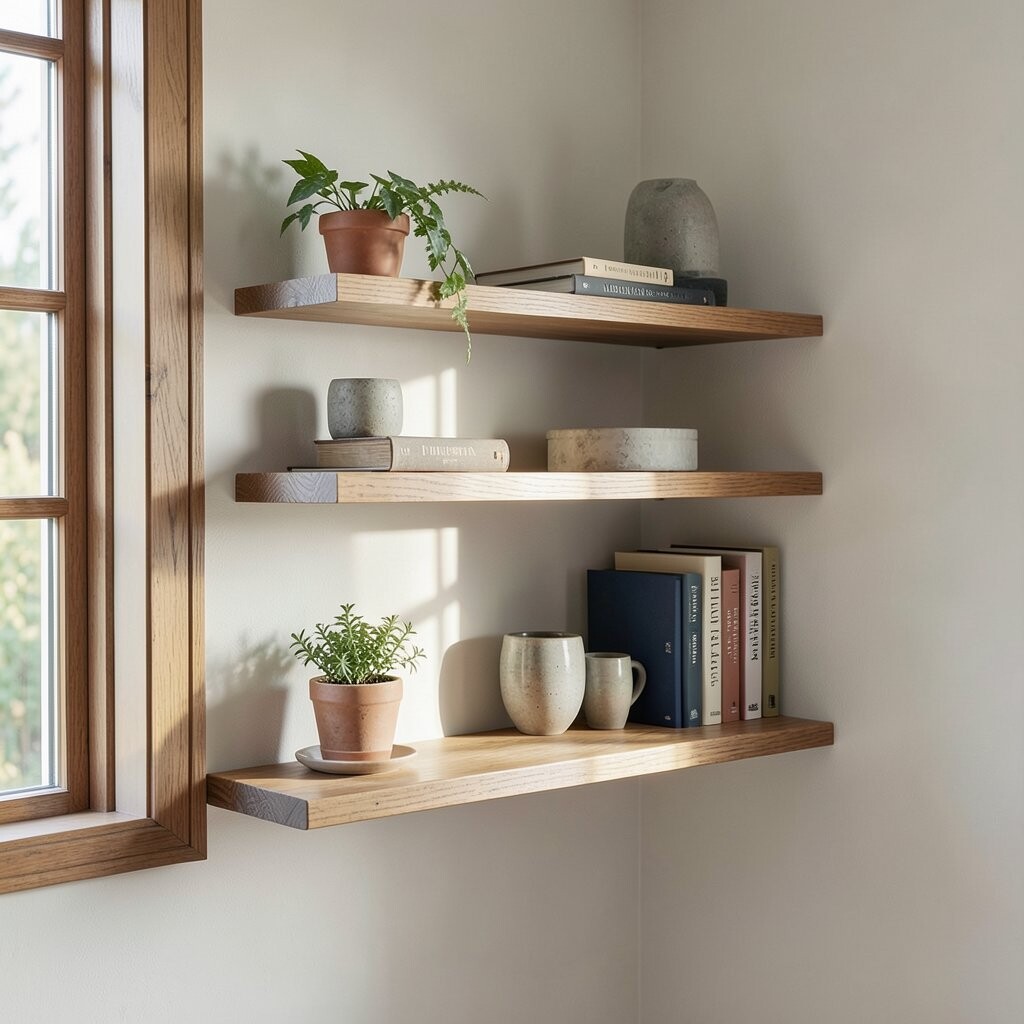
Floating Shelf With a Window-Frame Style Border Imagine shelves framed like tiny windows, with trim around the edges. The border makes the shelf feel decorative, not just practical.
This idea is uniquely charming because the trim adds detail and makes the wall feel finished. Use thin molding strips, miter the corners for a clean look, and attach them carefully around the shelf face. Paint or stain the frame to match your room style for a pulled-together effect.
For personalization, swap the border color seasonally—warm tones for fall, bright tones for spring, or a classic neutral always. Current trends favor crafted details like trim work and “architectural” styling. Cost consideration: molding can add up, but you can buy small trim pieces and use leftover board for the shelf, which keeps the project friendly on your wallet.
Tip: keep the shelf display simple—one plant, one book stack, and one meaningful object—so the frame stays the star.