Floating shelves can make a room feel brighter in seconds. The trick is making them look calm and on purpose.
When you organize them the right way, you get both style and useful storage. And you can do it without spending a lot.
-
1. Start with a “purpose map” for each shelf
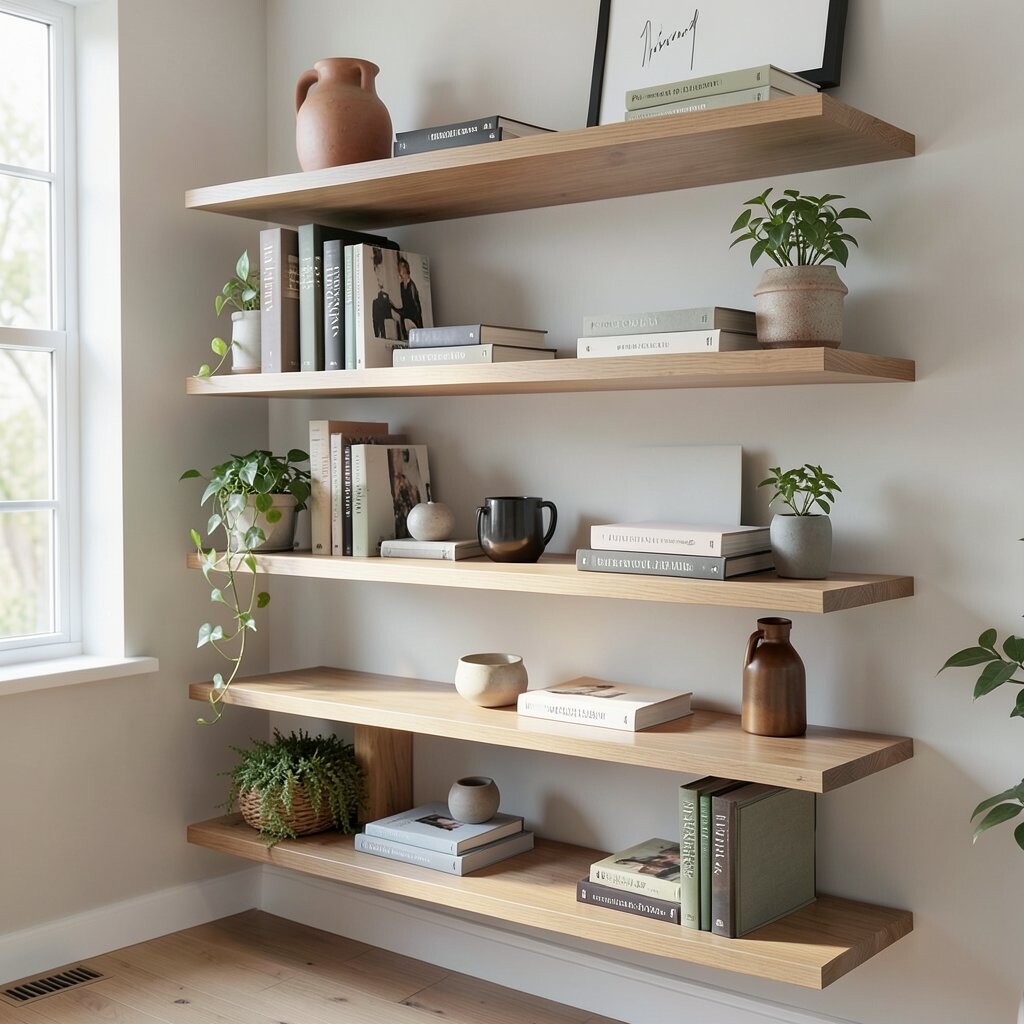
Start with a “purpose map” for each shelf Before you place anything, pause and picture what each shelf should do. One shelf can hold everyday items, while another can show special decor.
Think about how you move through the room. Place items where your eyes naturally land, like near a chair, desk, or entryway. This saves time because you won’t be hunting for things all day.
Try using sticky notes to label the job of each shelf. You can write “books,” “mugs,” “plants,” or “seasonal.” That small step helps you avoid the common mess of random clutter.
-
2. Measure the shelf width and plan spacing

Measure the shelf width and plan spacing Grab a tape measure and check the real width of your shelves. Then decide how many objects fit comfortably without squeezing them together.
Spacing matters because your shelves should look airy, not crowded. Leave a little breathing room between larger items, like vases or bins. This makes the whole setup feel tidy and intentional.
As you plan, picture the view from standing height. If the shelf is eye-level, keep the most important items centered. If it’s higher up, use fewer pieces so the top area stays easy to read.
For personalization, mix object sizes on purpose. Pair a tall candle with a short photo frame. Add a small tray to catch tiny items like keys or jewelry.
-
3. Use a simple color theme to reduce visual noise
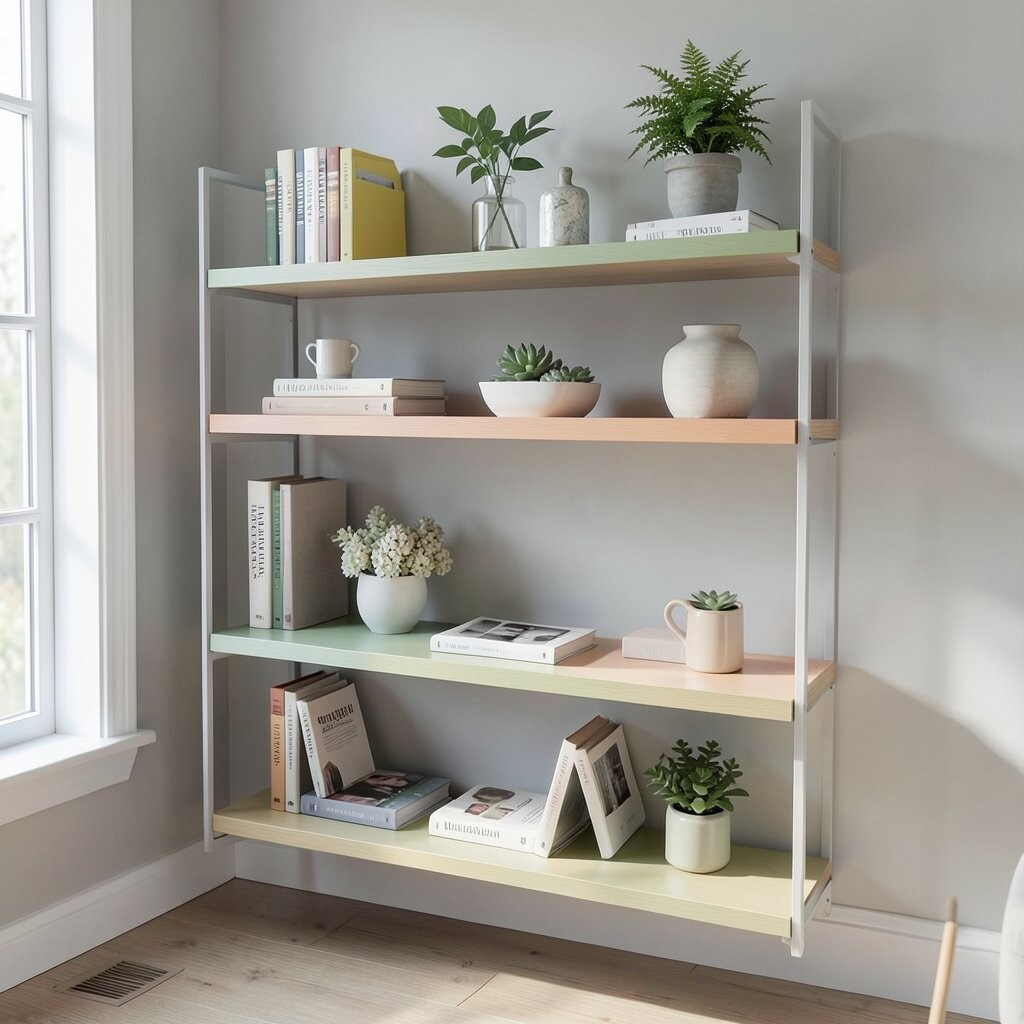
Use a simple color theme to reduce visual noise Pick a color vibe that matches the room, like warm wood with cream tones or clean whites with black accents. A theme helps your shelves look calm even when you add different things.
Try grouping items by color family instead of by type only. For example, display all your natural browns together and keep bright colors to one small section. This keeps the eye from bouncing around.
It also helps you feel less overwhelmed when you want to change things later. You can swap one set of items without rebuilding the whole look.
For trend ideas, look for “neutral with one pop” styling. Many people are mixing soft earth colors with a single bold accent, like deep green or terracotta. It feels modern and still cozy.
-
4. Create “zones” with trays, baskets, and bookends
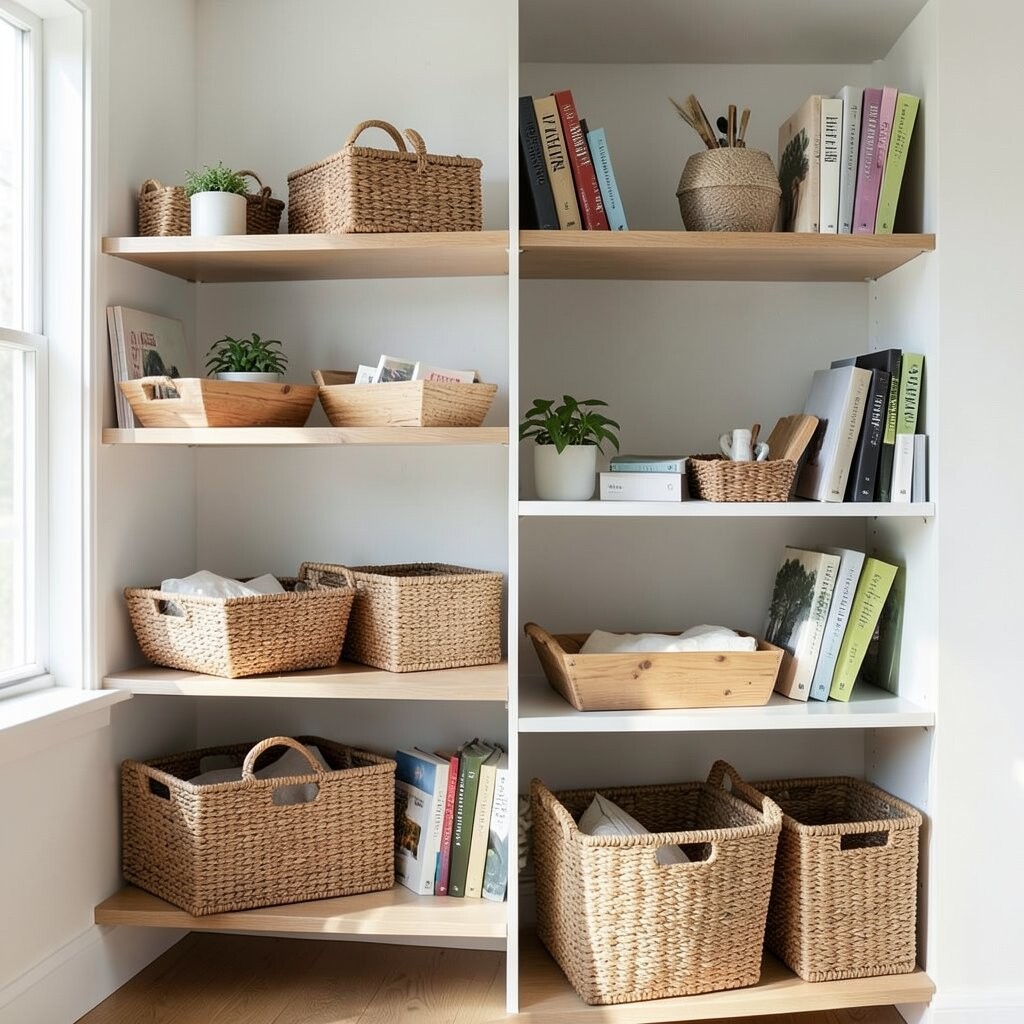
Create “zones” with trays, baskets, and bookends Small organizing helpers do a big job on floating shelves. A tray can hold remote controls, coasters, or small candles so everything stays in place.
Use bookends to stand items neatly and prevent leaning chaos. Add baskets for things that should be hidden, like chargers or spare batteries. This gives your shelves a layered, grown-up look.
Try making zones for “display” and “storage.” One side can show decor, and the other side can hold practical tools. You’ll love how easy it is to put things back after use.
If you’re watching cost, focus on one good tray first. Even a simple wooden or ceramic tray can make the whole shelf look more curated. Then add cheap accents like mini baskets from storage aisles.
-
5. Follow the “largest-to-smallest” styling rule

Follow the “largest-to-smallest” styling rule Start with the biggest item first so the shelf has a strong foundation. That could be a framed photo, a tall plant, or a stack of books.
Next, layer medium items in the middle, like a vase or a small lantern. Finish with smaller pieces like candles, mini sculptures, or a key dish.
This order helps your eyes feel guided and calm. It also makes your shelves look professional even if you decorated them quickly.
For personalization, place one “signature” item that feels like you. Maybe it’s a travel postcard holder or a handmade ceramic. A single unique piece makes the shelf memorable.
-
6. Keep daily items within easy reach

Keep daily items within easy reach Floating shelves can look gorgeous, but they should also work for your life. Put the things you touch often on the shelf that feels easiest to reach.
For instance, a shelf near the kitchen can hold spice jars you use weekly or a small collection of mugs. A shelf near the bathroom can hold neatly folded towels or skincare that you grab daily.
When items are too high, they become annoying. You might stop using them, and clutter can build up around the shelf instead. Ease of use makes organization last.
To keep things personal, use your favorite containers. Clear jars show what’s inside, while matching ceramic can look more stylish. Choose what you enjoy looking at.
-
7. Mix height with book stacks and vertical decor
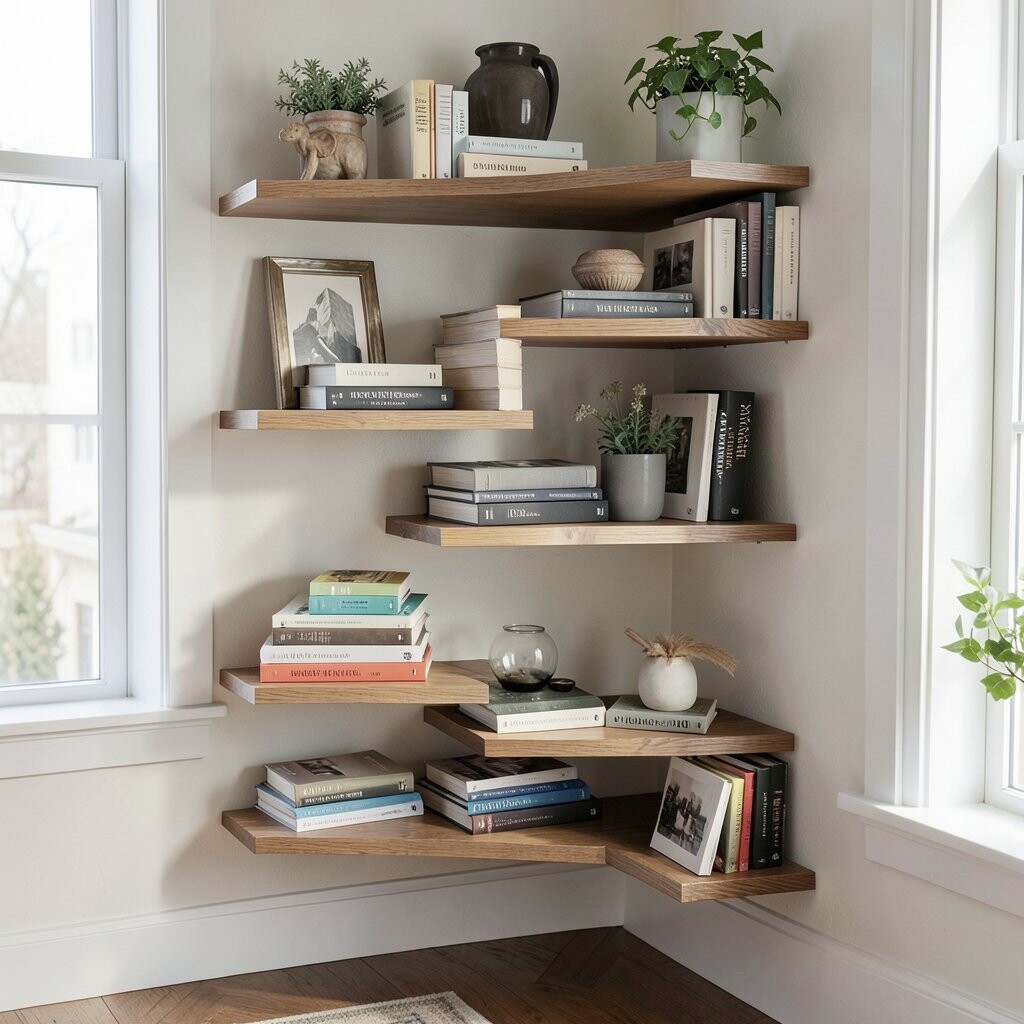
Mix height with book stacks and vertical decor One of the prettiest shelf looks uses height variety. Combine tall plants or vases with shorter items so the shelf doesn’t feel flat.
Book stacks are a friendly trick for making height without buying new decor. Place books under a small tray, or stand them beside a frame for a confident look. It’s a low-cost way to add style.
Try vertical decor like slim picture frames, narrow bottles, or candle holders. Keep them spaced so they don’t crowd each other. This creates a rhythm that looks designed.
-
8. Use “negative space” so the shelf can breathe
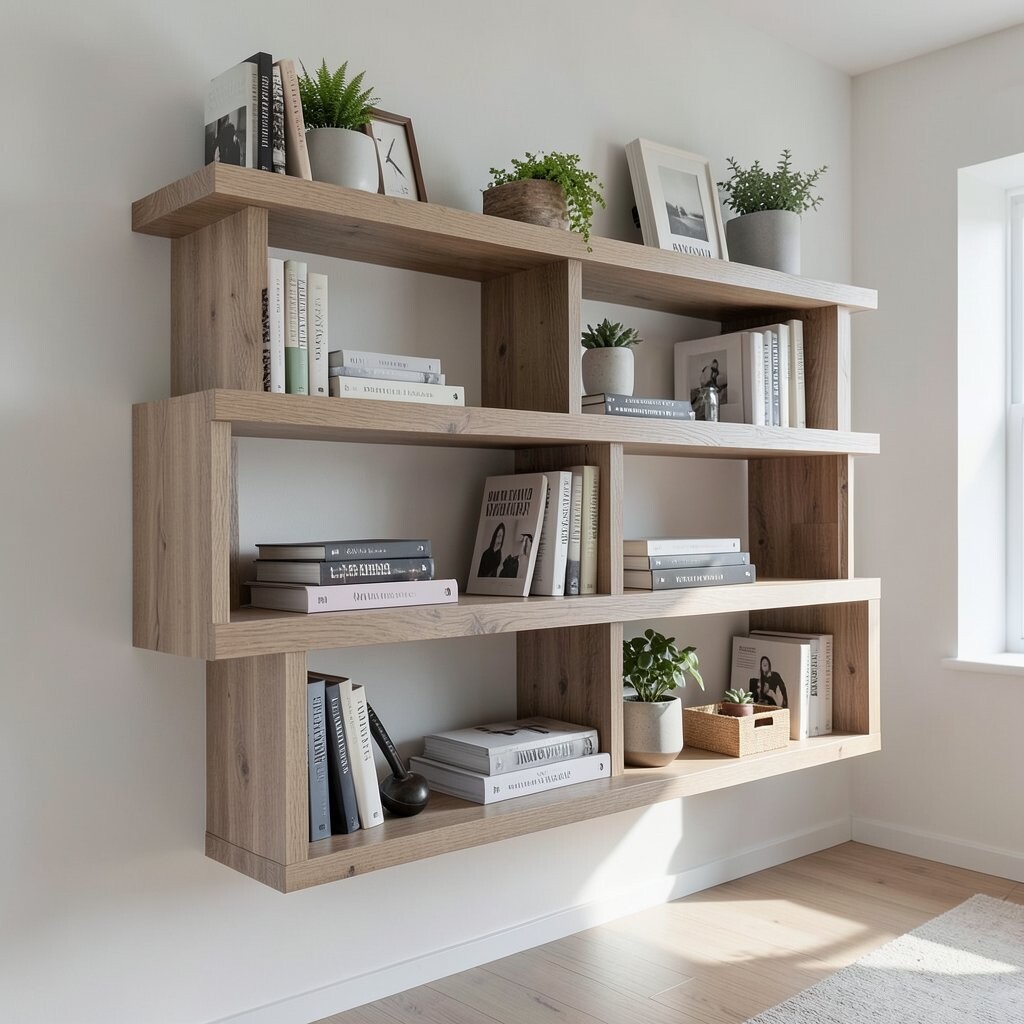
Use “negative space” so the shelf can breathe Even the most beautiful shelf looks better with some empty space. Negative space means leaving gaps so the items stand out.
When every inch is filled, the shelf can feel noisy. Instead, aim for balance: one or two focal items, then smaller pieces around them.
Try stepping back and looking at the shelf from across the room. If your eyes struggle to rest, remove one or two items. A little editing makes a huge difference.
For personalization, let one item be the star. A unique ceramic bowl or a framed quote can be enough. The shelf will feel calmer and more inviting.
-
9. Group items by type, then add one surprise

Group items by type, then add one surprise Grouping helps your shelves look tidy fast. Put similar items together, like books in one set or candles in one mini lineup.
After grouping, add one surprise piece that breaks the pattern. It could be a small vintage find, a bright sculpture, or a photo you love.
This blend of organized and unexpected makes shelves feel real and personal. It also keeps your display from looking like a store shelf.
For current trends, many homes are using “collected” styling. That means mixing modern pieces with a few handmade or nostalgic items. If you love thrift stores, this is your moment.
-
10. Choose labels for storage to keep it neat

Choose labels for storage to keep it neat If you use baskets or hidden storage, labels make everything easier. You can write simple words like “chargers,” “tape,” or “snacks.”
Labels prevent the “mystery bin” problem, where you forget what’s inside. When you can find things quickly, you’ll put them back sooner, and the shelf stays organized.
Try using chalk labels, small sticker tags, or even neat handwriting on paper. It doesn’t have to be fancy to look good. Clear labeling also helps guests find what they need without asking.
For cost, reuse things you already have, like old jars or clean containers. Then add labels with a simple marker. You’ll save money and keep the look tidy.
-
11. Add lighting tricks to highlight shelf decor

Add lighting tricks to highlight shelf decor Light changes everything, and shelves are no exception. If you can, consider a small LED strip behind or near the shelf line.
Even a battery tea light in a jar can make objects look warm and welcoming. Soft lighting helps wood, plants, and ceramics look richer.
Highlighting makes it easier to arrange items. When light hits the shelf, you can see what looks balanced and what needs adjusting.
For personalization, match the light mood to your room. In a reading corner, use warmer light for cozy vibes. In a bright kitchen, choose cleaner white light so items look crisp.
-
12. Keep surfaces safe and stable with anti-slip pads

Keep surfaces safe and stable with anti-slip pads Floating shelves can vibrate a little, especially if they’re near doors or traffic. Anti-slip pads help items stay put without damaging surfaces.
Use small rubber or felt pads under trays, plant pots, or glass items. This prevents sliding and reduces the risk of spills. It also keeps the shelf looking neat between cleanups.
Stability is a hidden benefit of good organizing. When items don’t move, you don’t feel like you must constantly fix the arrangement. That makes your shelf feel “done” for longer.
-
13. Rotate seasonal decor to keep the shelf fresh
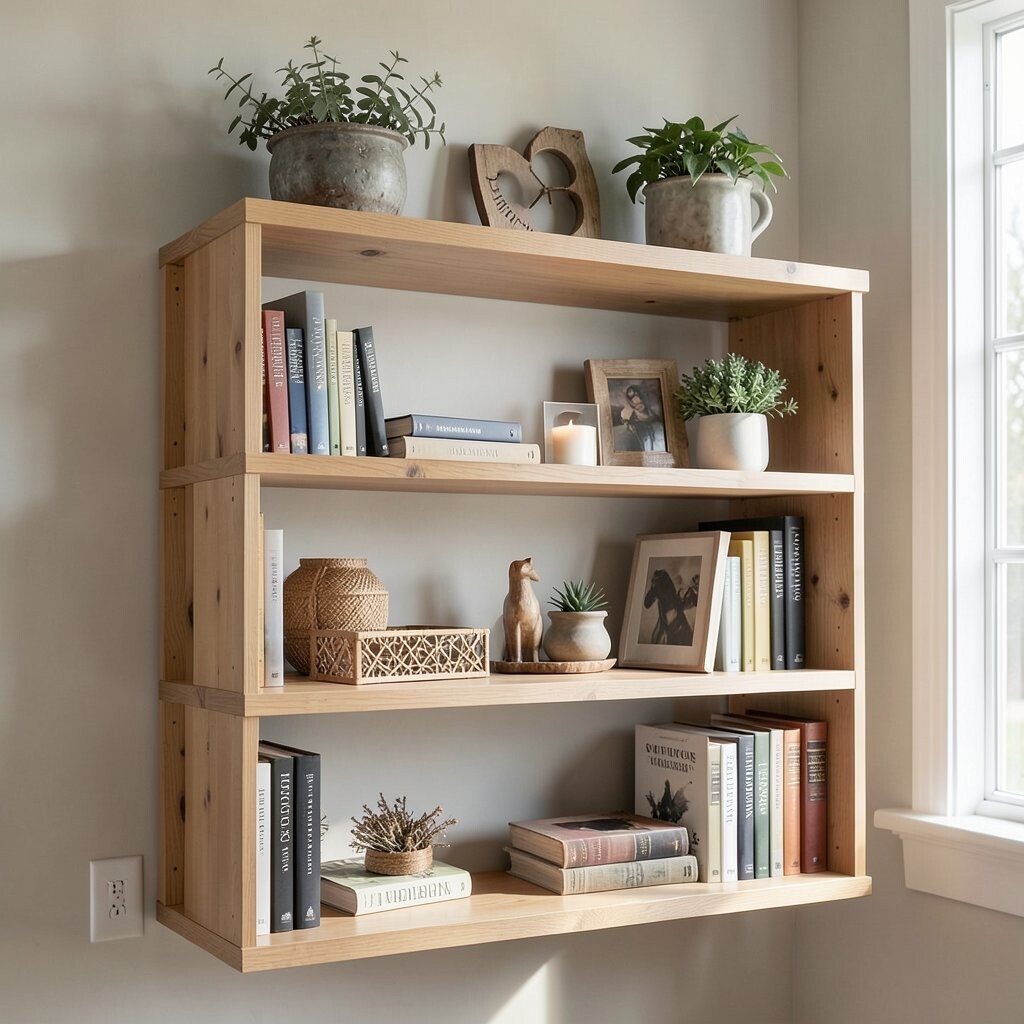
Rotate seasonal decor to keep the shelf fresh One of the best shelf secrets is changing things with the seasons. Swap out a few items instead of starting over from scratch.
For example, use a small set of pine-like decor in winter and lighter greens in spring. Summer can bring shells or bright ceramics, while fall can add warm tones like terracotta and amber.
Rotation keeps your shelves exciting and helps prevent dust buildup on unused items. You’ll also enjoy your decor more because it fits the time of year.
For cost considerations, store extras in clear bins so you can grab them fast. If you already own decor, you can reuse it by styling it differently. A small change like a new tray or a fresh book stack can update the whole look.
-
14. Make a checklist for quick weekly shelf upkeep

Make a checklist for quick weekly shelf upkeep A great shelf setup deserves a small routine. A weekly check takes only a few minutes and keeps everything looking sharp.
Use a checklist in your head: wipe dust, straighten one or two items, and remove anything that doesn’t belong. If something feels out of place, move it back into its zone or storage container.
This habit also helps you spot growth in clutter early. When you catch mess quickly, it stays small and easy to fix. Your shelves stay beautiful instead of becoming a catch-all.
To personalize your upkeep, set a favorite “shelf playlist” and tidy while it plays. It turns chores into something you can enjoy. That small joy makes it easier to stay consistent.