-
1. The Book-Launch Floating Ladder
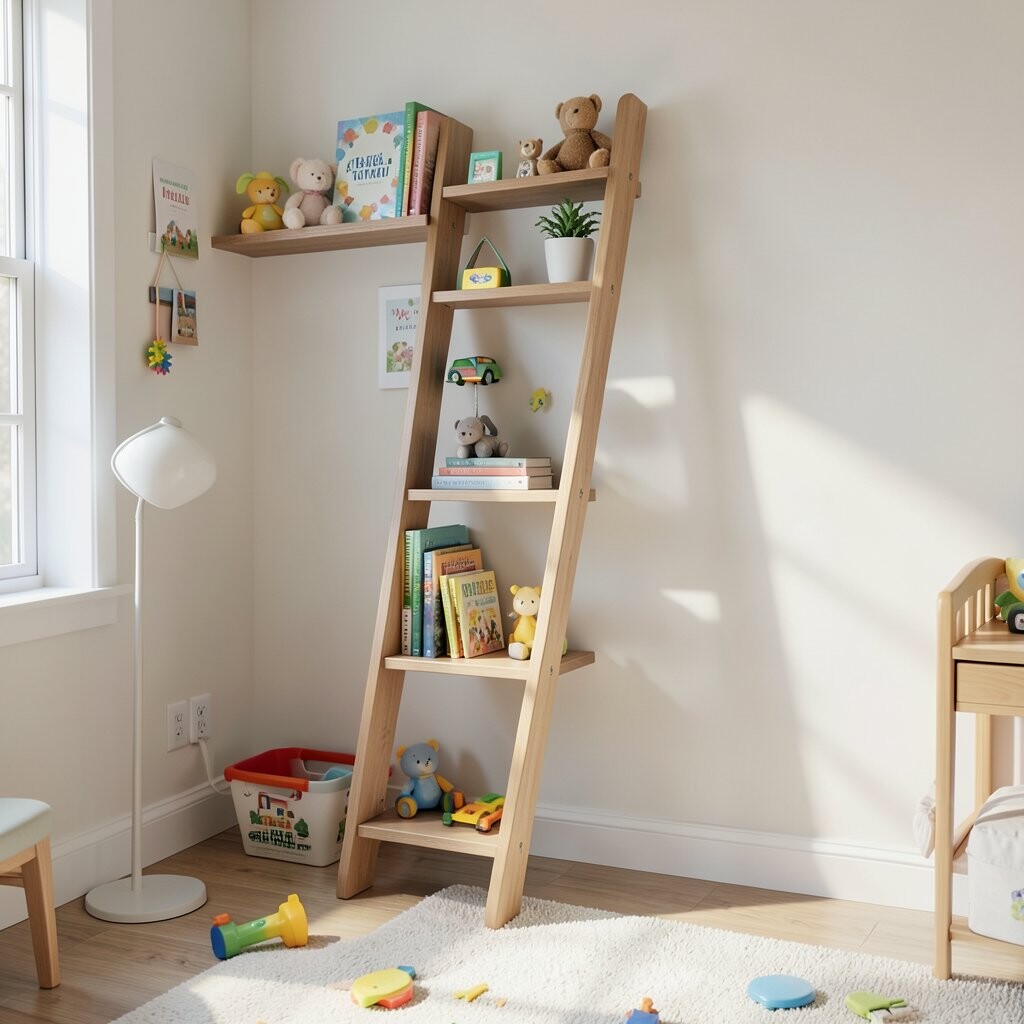
The Book-Launch Floating Ladder Picture a slim ladder of floating shelves with open space between each rung. Your child’s books look like they’re stacked in midair, ready to “launch” into story time. Choose smooth, rounded edges so little hands feel safe when grabbing favorites.
Place the bottom shelf low enough for easy reach and add labels with simple icons. This style encourages reading because books stay visible and within arm’s length. For a personalization twist, paint only the shelf supports in a color that matches your kid’s theme.
If you’re working with a tight budget, buy one plank and experiment with lengths before adding more. Look for hardware kits made for floating shelves so installation stays straightforward. A popular trend right now is warm wood tones paired with minimal metal brackets for a clean, modern look.
-
2. Color-Block Cube Shelves in a Row
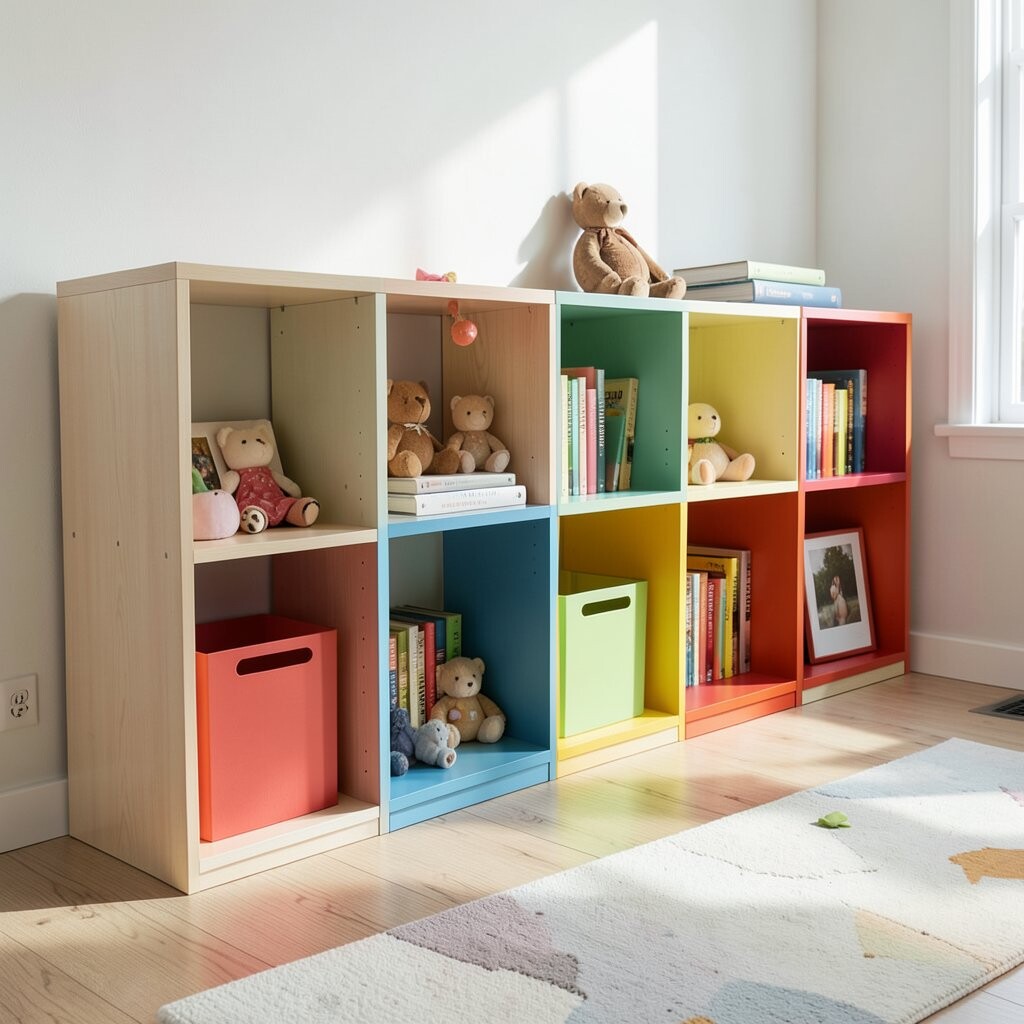
Color-Block Cube Shelves in a Row Imagine several floating shelves lined up like colorful stepping stones across a wall. Each shelf holds a neat group of objects, and the wall looks more playful than a plain picture frame. Use two or three coordinating paint colors instead of ten so the room stays calm.
This setup helps kids sort toys by type, not just by “whatever fits.” Visual order reduces the time you spend searching for that one missing item. Add small hooks or name tags under each shelf to make it feel like their own mini station.
For cost control, use uniform shelf depth and focus your budget on paint and sturdy brackets. If you rent or want flexibility, choose removable shelving hardware when possible. The uniqueness comes from mixing short “display” shelves with one slightly deeper “storage” shelf for bigger items.
-
3. The Rotating “Gallery” Shelf System
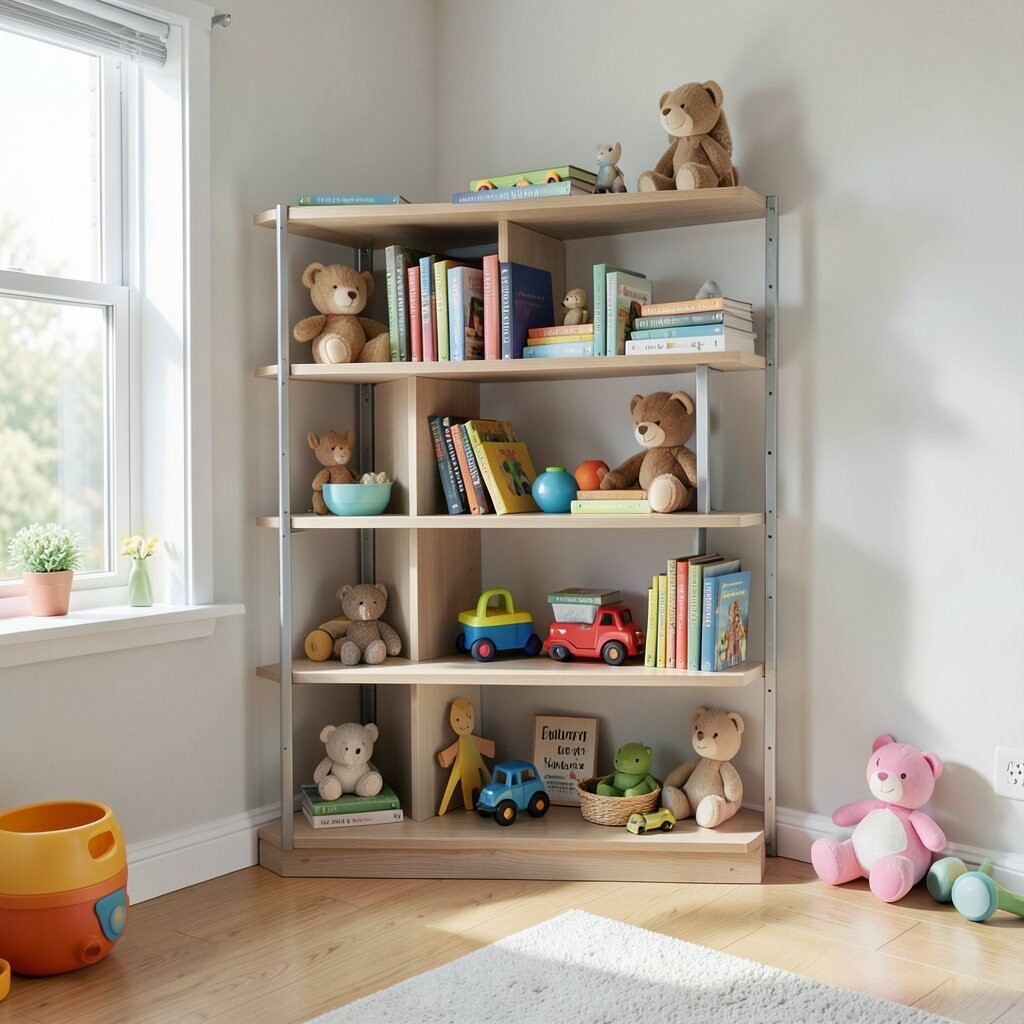
The Rotating “Gallery” Shelf System Think of a set of floating shelves where each one holds a single framed item like a rotating art exhibit. You’ll see crayons, small sketches, or photos floating above the floor in a clean line. Keep the frames lightweight so swapping art is quick and fun.
Kids get instant pride when their work is displayed in a special place. This encourages creativity because they want to make new things just to see them up on the wall. Add a “change day” routine so everyone knows when it’s time to switch pieces.
To personalize, mount shelves at different heights so some art looks “close” and some looks “farther away.” If you want a trendier feel, pair the shelves with simple neutral frames and let the child’s art provide the color. For budget, thrift frames or use clip-on frames that require fewer materials.
Safety matters too: choose shelves with secure mounting and avoid sharp corners. And if your child is younger, consider a soft barrier like a small lip or shelf edge guard. This makes the gallery look crisp while still being kid-friendly.
-
4. Soft-Touch Shelf Edges for Little Movers
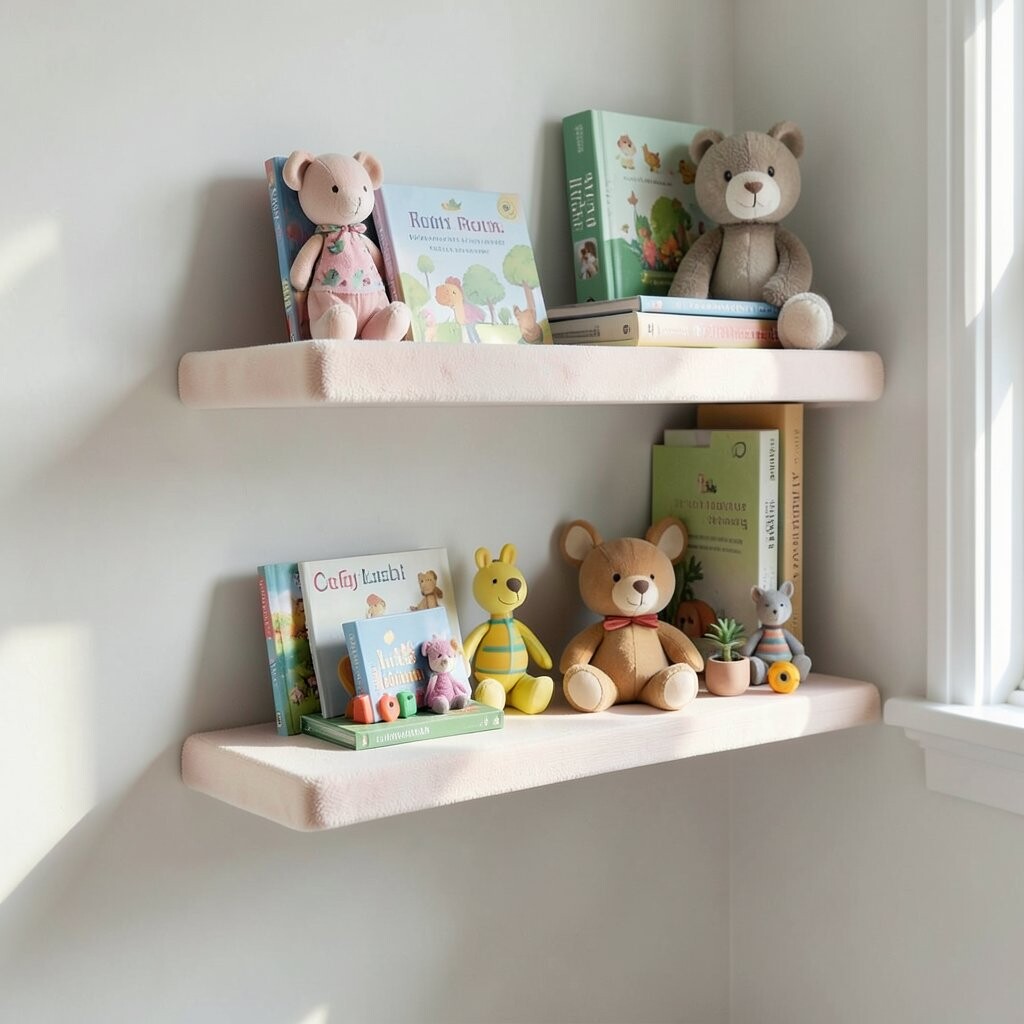
Soft-Touch Shelf Edges for Little Movers Picture floating shelves made extra friendly with rounded edges and a gentle lip along the front. The wall looks tidy, and the shelves look safe for active kids who reach fast. You can create this look by using shelf materials that allow smooth finishing, or by adding edge guards that match the color.
This idea makes daily messes feel less stressful because toys don’t slide off as easily. Kids can practice putting things back without worry, which builds confidence. If your child is prone to grabbing from the wrong angle, the edge helps everything stay put.
For a cost-friendly approach, focus on one or two key shelves rather than installing many at once. Install them near the toy zone so they serve a real purpose. Current trend: parents are choosing “safer design” details like rounded fronts and anti-slip finishes, not just pretty colors.
-
5. The Starry Night Shelf for Sleepytime Favorites
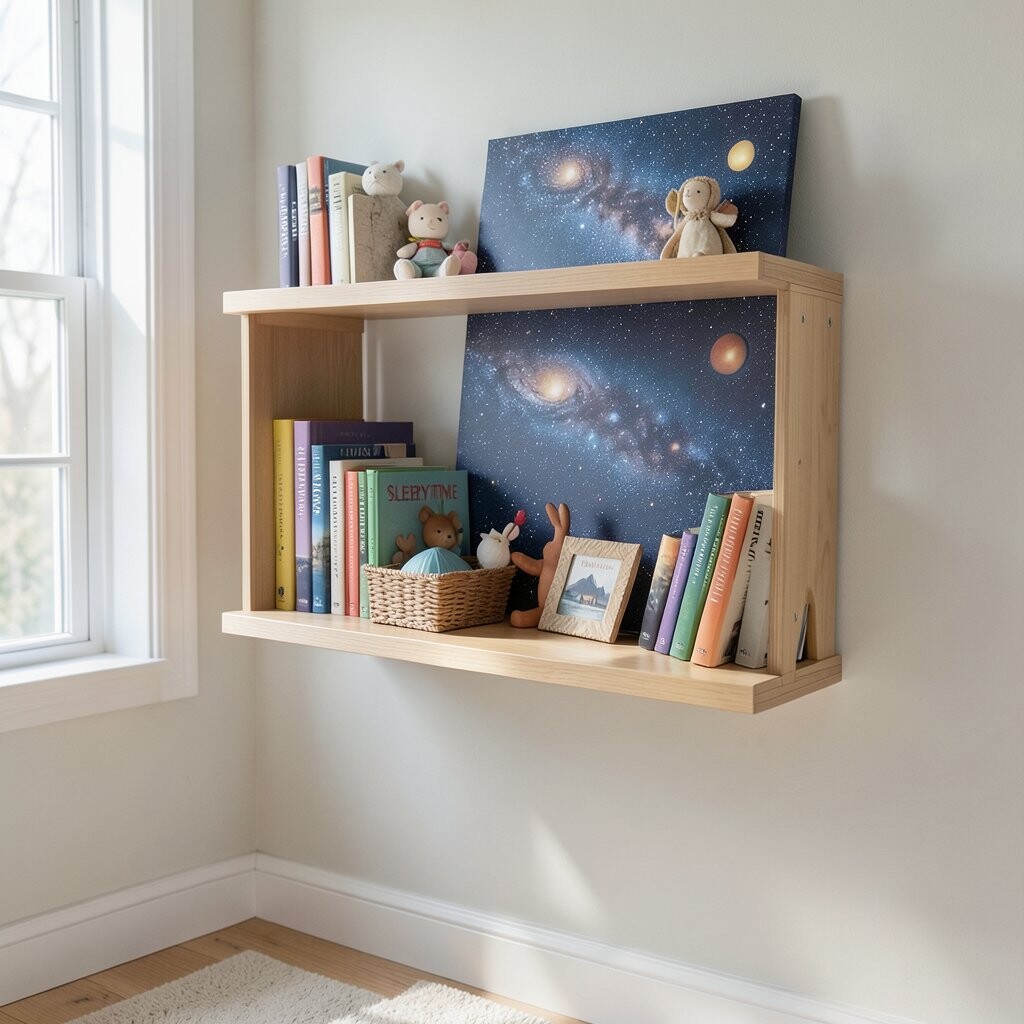
The Starry Night Shelf for Sleepytime Favorites Imagine floating shelves holding bedtime books, a night-light controller, and a few comforting items. The wall becomes a calm “sleep station,” and your child sees the bedtime routine at a glance. Use dark blue or black accents with light wood shelves for a dreamy contrast.
This setup improves bedtime habits because everything kids need is easy to reach without searching. It also helps create a soothing vibe, so the room feels ready for rest. Add a tiny basket below one shelf for pajamas or extra blankets, keeping the whole area tidy.
Personalize by letting your child pick a theme: stars, moons, ocean waves, or space planets. If you want to stay within budget, paint just the shelf backings or add removable decals behind the shelves. A useful tip: keep the top shelf for lightweight items only, and store heavier books closer to the wall.
-
6. Toy-Track Shelves That Show Cars and Trains
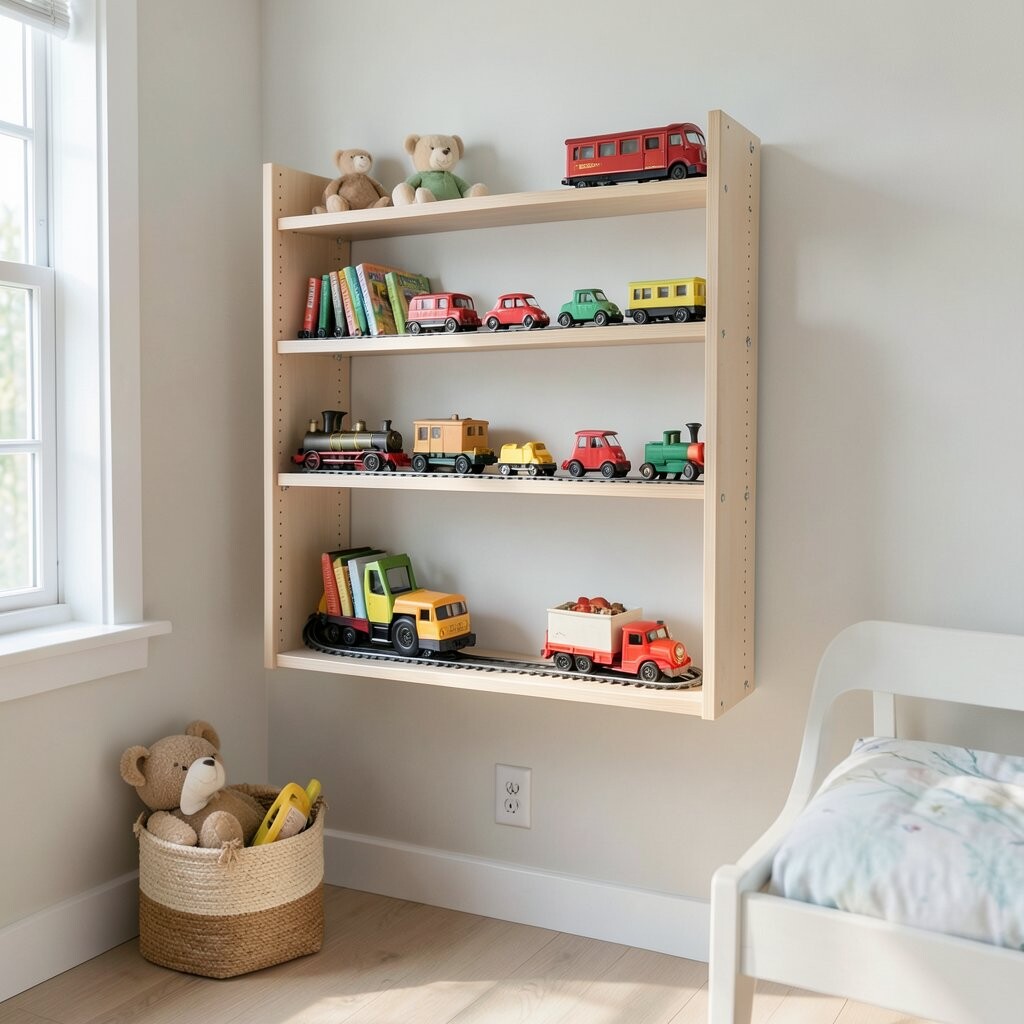
Toy-Track Shelves That Show Cars and Trains Visualize a line of floating shelves shaped like mini stops for toy vehicles. On each shelf, cars rest in a neat row, and trains look like they’re waiting for the next ride. Choose a slightly deeper shelf so wheels don’t wobble.
This idea makes play more organized because kids can pick from a clear selection instead of a messy bin. It also reduces “where did it go?” moments, since every vehicle has a visible home. Add small stripes or printed road lines on the shelf surface so the theme feels extra real.
-
7. The Stack-and-Store “Surprise Shelf” Display
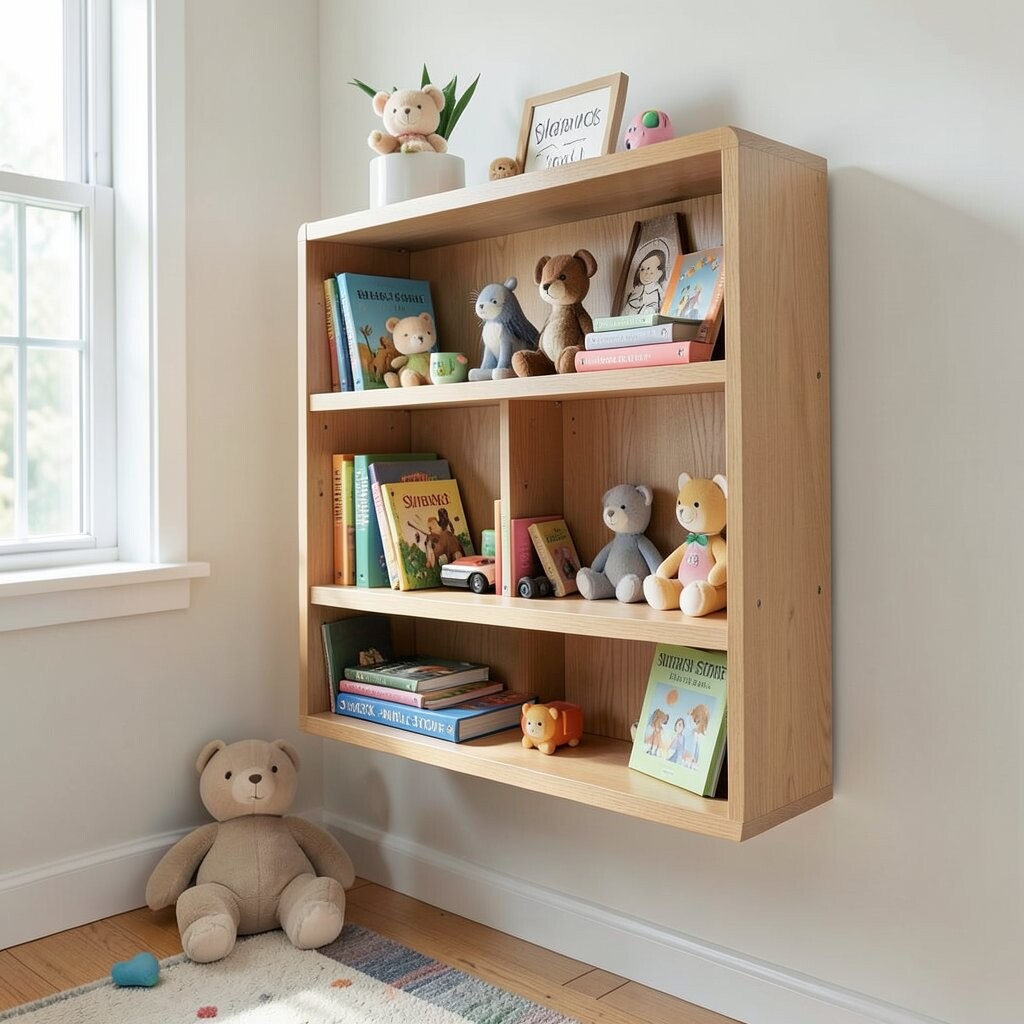
The Stack-and-Store “Surprise Shelf” Display Picture two floating shelves where the front one displays favorites and the back one hides extras. The hidden area makes the room feel fresh, while the visible shelf keeps fun items easy to grab. Use small, matching bins on the back shelf for quick cleanup.
This design is great for kids who love variety but hate chores. They can swap what’s on top, and you still keep the rest tucked away. Add a “surprise bin” rule so only one category gets displayed at a time.
Uniqueness comes from creating a gentle reveal effect: the room looks minimal until kids open the bin. For cost, use affordable fabric bins and invest in solid shelf hardware. A helpful tip is to keep bins the same color so the shelves look orderly even when toys change.
Personalize by letting your child choose the bin theme—sports, dinosaurs, unicorns, or superheroes. Current trend: many families are using open display with hidden storage to keep rooms both fun and calm. That balance makes floating shelves feel modern instead of cluttered.
-
8. The DIY “Shadow Box” Shelves for Small Collections
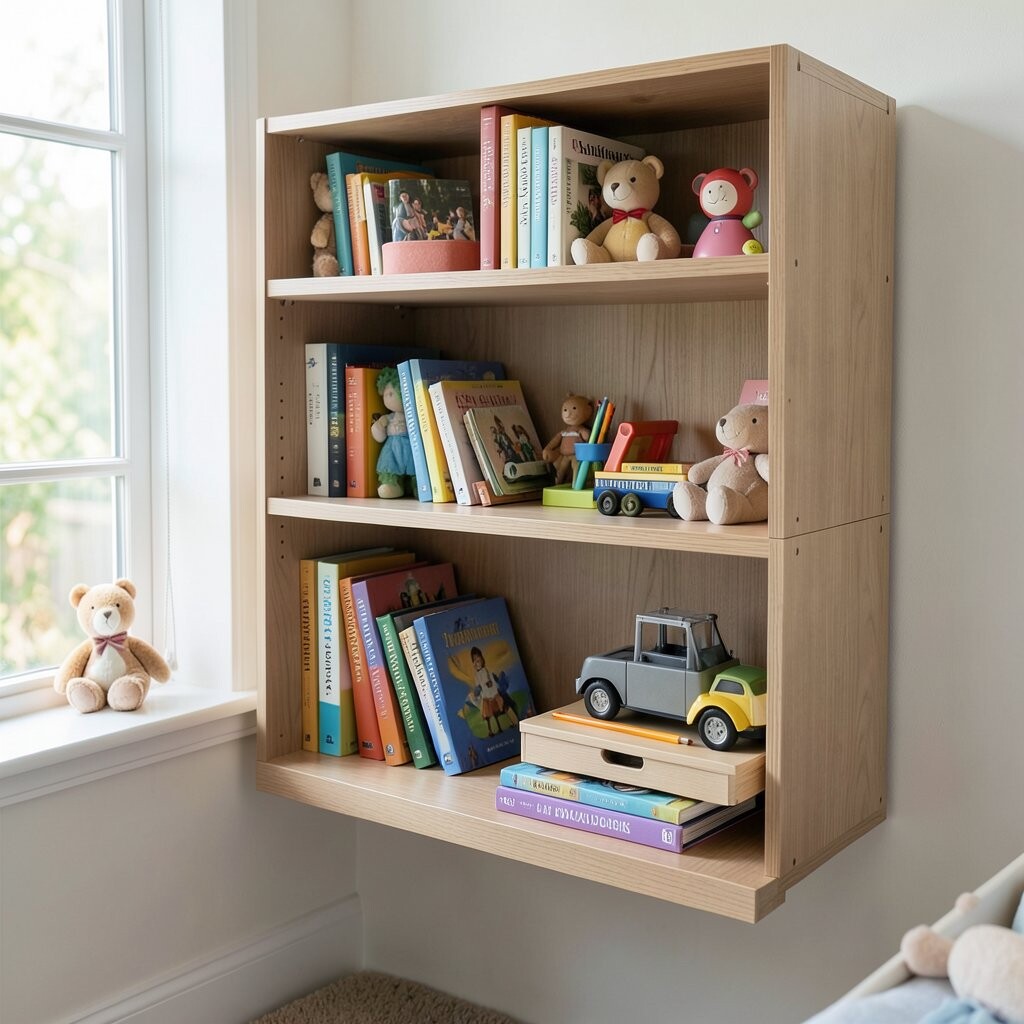
The DIY “Shadow Box” Shelves for Small Collections Imagine floating shelves with thin clear panels so tiny collectibles look like they’re in a museum. Your child can show action figures, shells, or mini figures without them falling over. The visual is clean, and the collection looks more special than a plain open shelf.
This style protects small pieces while still making them easy to see. Kids feel proud when their collection gets attention, and you feel calmer because items stay contained. Add labels with big letters so kids remember what each piece is called.
To keep it practical, use lightweight clear panels and ensure the shelf is securely anchored. For cost considerations, you can start with just one “shadow box” shelf and expand later. Personalization idea: attach a tiny background color strip behind each panel to match your child’s favorite scene.
Current trend: parents are leaning toward display-and-protect setups, especially for Lego-like mini builds. It’s a great choice when you want floating shelves to look neat even during busy play days.
-
9. Floating Shelves in an “Activity Corner” Layout
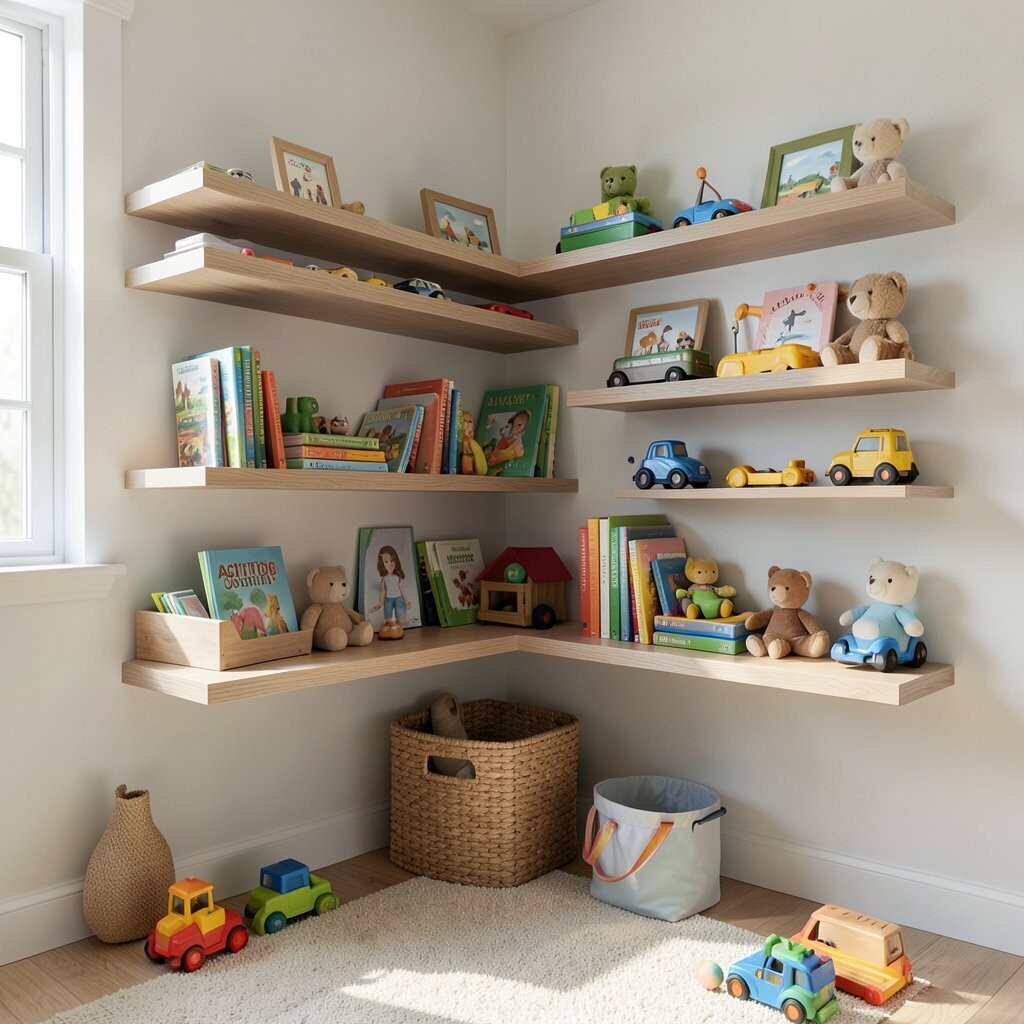
Floating Shelves in an “Activity Corner” Layout Picture shelves arranged around a small desk space so art supplies and books live nearby. The wall becomes an organized command center, with markers on one shelf and reading books on another. Choose a layout that forms a gentle “L” so kids understand how the area works.
This improves focus because kids can reach what they need without walking across the room. It also helps you set up routines for homework, drawing, and building. Add a small ledge below one shelf for a water cup or wipe-clean tray.
If you want to keep costs down, use fewer shelves with deeper storage for larger art items. Personalize by adding clip-on holders for scissors and glue sticks. A helpful tip: keep sharp tools in closed containers so the open shelves stay safe for everyday access.
Uniqueness comes from using shelves as a navigation system for the room. When kids learn the “where,” cleanup becomes faster and less emotional. This is especially great for kids who love routines and visual schedules.
-
10. The Hammock-Look Fabric Baskets Under Floating Shelves
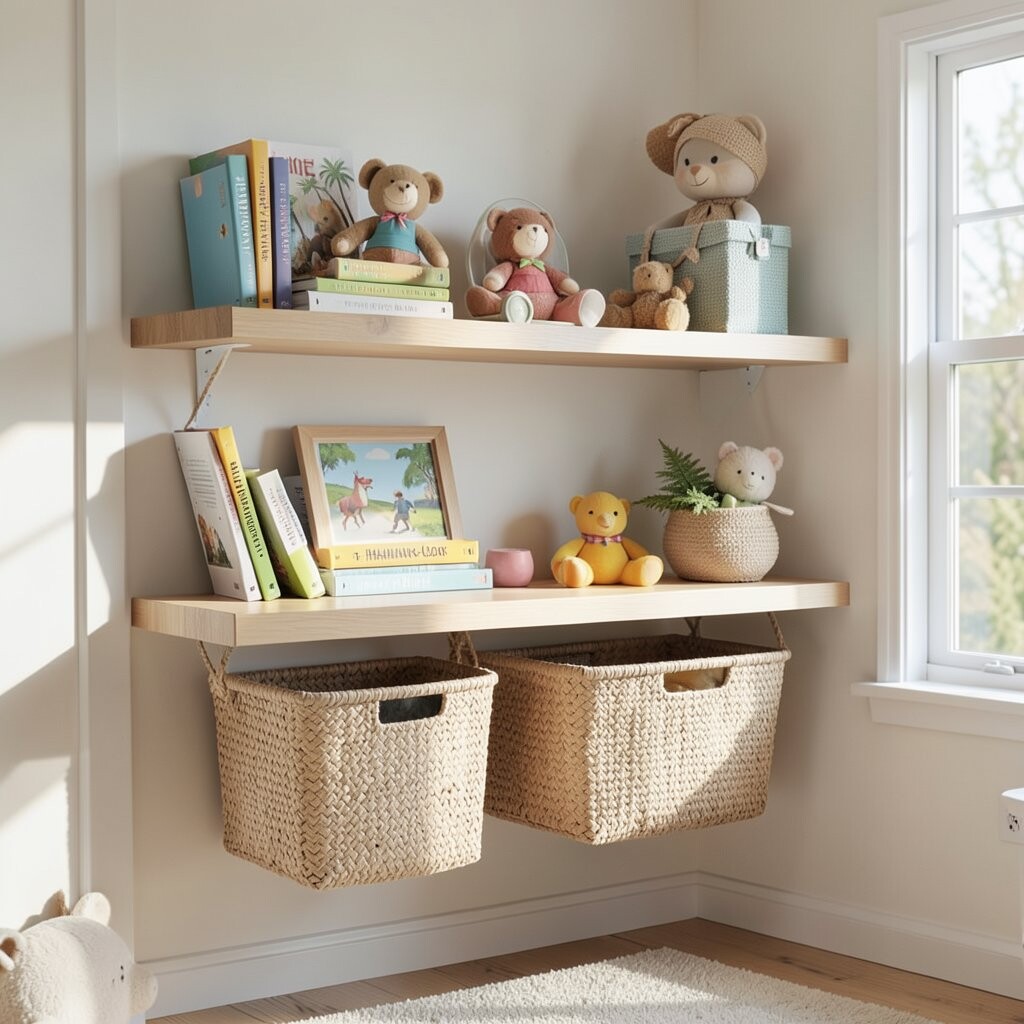
The Hammock-Look Fabric Baskets Under Floating Shelves Imagine floating shelves above soft, hanging baskets that look like little pockets of fun. The wall still looks airy, but the storage is friendly and flexible. Choose fabric baskets in bright patterns so the lower space adds warmth.
This combination helps kids separate “display” items from “daily mess” items. It also makes cleanup feel like tossing things into a game. Add a picture label on each basket so kids can match toys quickly.
-
11. Patterned Shelf Backs With Removable Wallpaper
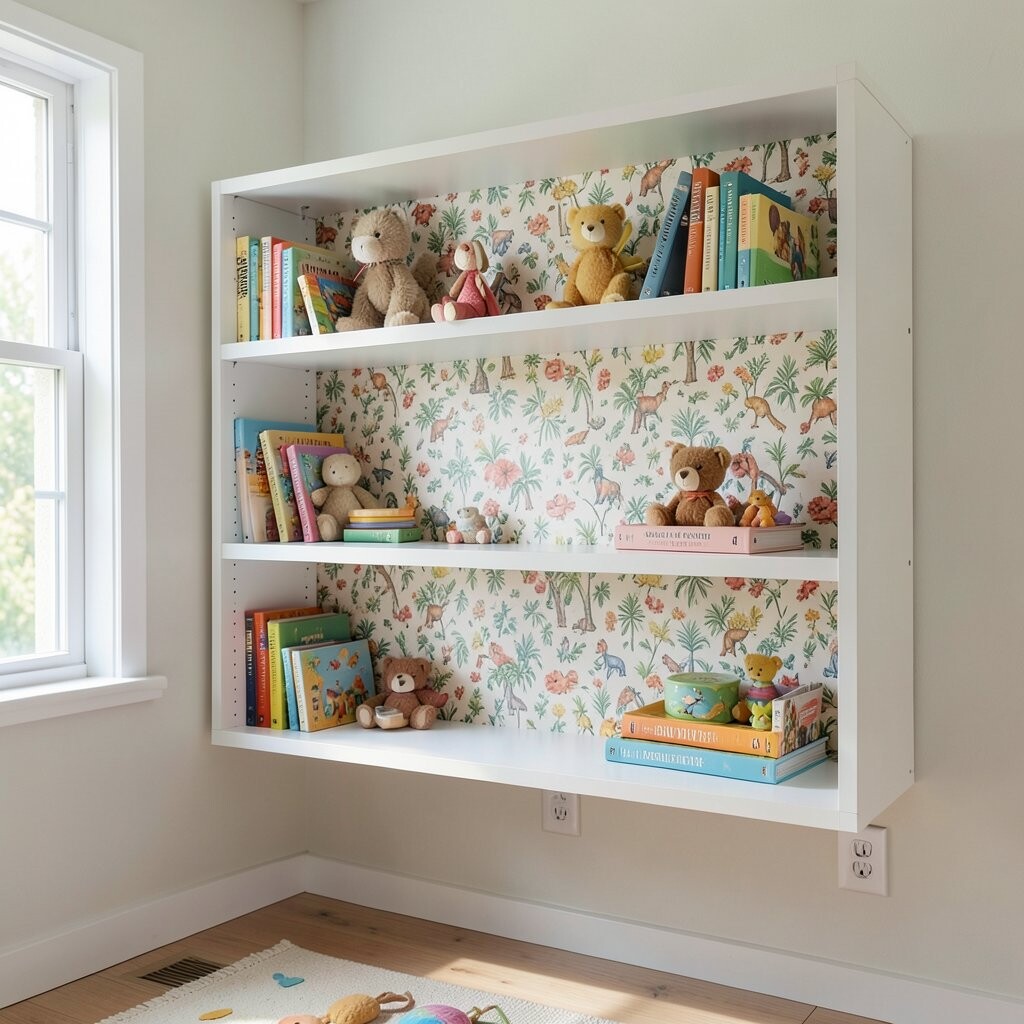
Patterned Shelf Backs With Removable Wallpaper Picture a floating shelf wall with removable wallpaper behind the shelves, adding a bright background without heavy painting. When kids place objects on the shelves, the colors pop and the room feels designed. Choose simple patterns like polka dots, stripes, or gentle clouds to keep it kid-friendly.
This idea makes the shelves look high-end because the background adds depth. It also helps personalize instantly, since kids can change the look when their tastes grow. A helpful tip is to cut wallpaper carefully so it fits behind each shelf without gaps.
For cost considerations, removable wallpaper is often cheaper than repainting and safer for rental homes. Use shelves with a solid backing or install wallpaper only where shelves won’t scratch it. Current trend: peel-and-stick designs are everywhere because they give a “new room” feeling fast.
-
12. Corner Floating Shelves With a “Climb and Create” Theme
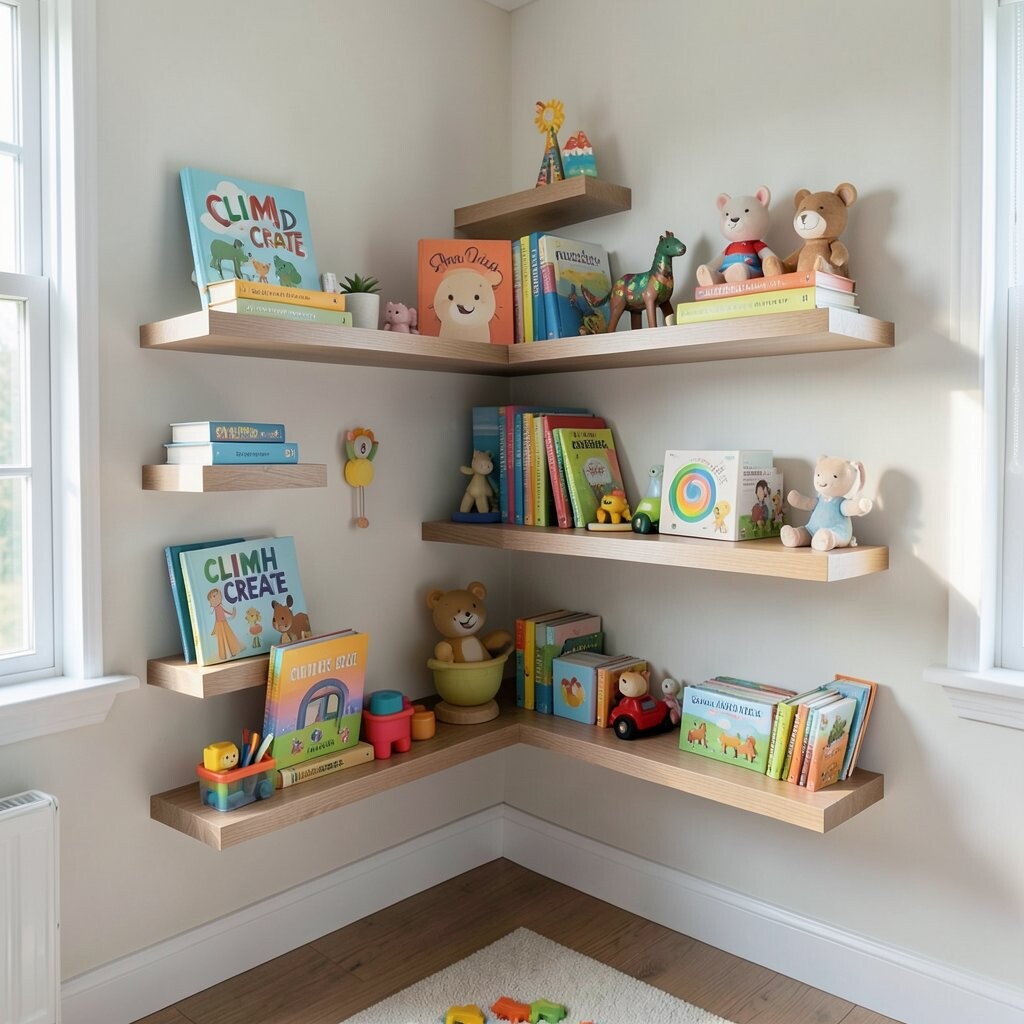
Corner Floating Shelves With a “Climb and Create” Theme Imagine floating shelves wrapping into a corner like a small staircase for imagination. One shelf holds art books, the next holds building blocks, and the top shelf holds a cool “creator kit.” The corner becomes the most interesting part of the room without taking up floor space.
This layout makes use of a forgotten area, which is great in smaller rooms. It also gives kids a sense of adventure because the shelves feel like a path. Add a small step stool only if the design is safe and your child can use it with supervision.
Uniqueness comes from turning a corner into a role-play zone. Personalize by painting the corner wall behind shelves with a theme that matches your child’s interests. For budget, start with two shelves in the corner and add more later as the collection grows.
One more tip: measure the corner carefully so shelves align and look tidy. Use sturdy brackets and check the wall type so the installation stays secure. When done right, corner floating shelves look bold and keep the room feeling open.