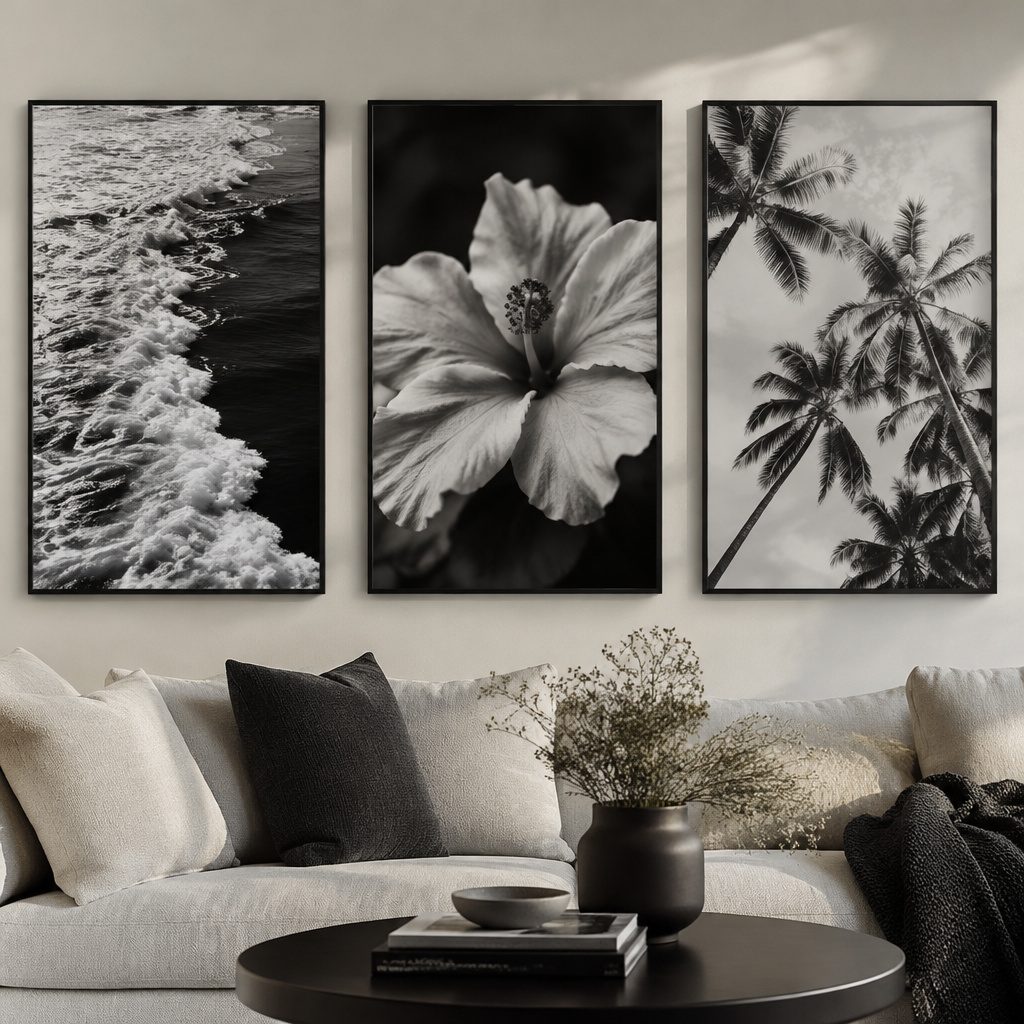
Black and white wall art can make a room feel instantly more intentional. With the right piece, even a plain wall starts telling a story.
1. Classic Framed Photo Collage
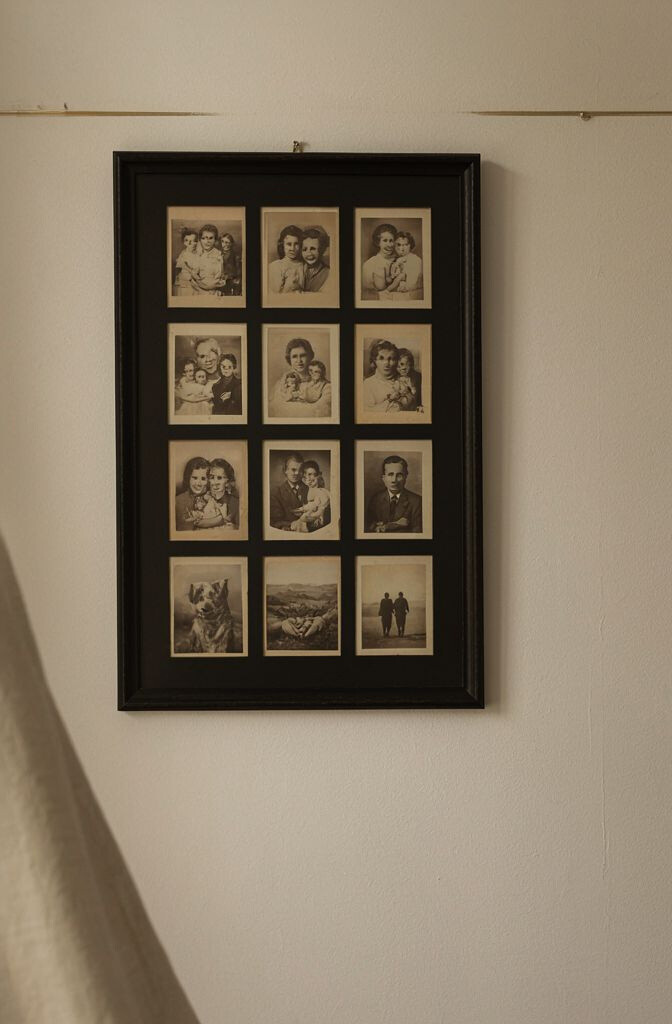
Choose a set of black and white photos that share a common vibe. Arrange them in a clean grid so your eye knows where to land.
Collages add personality without needing bright colors to stand out. They work great in hallways, bedrooms, and entryways because they look good from a distance. For practical placement, measure the wall width first, then leave about 2 to 4 inches between frames for a calm, modern spacing.
2. Oversized Film-Style Poster Print
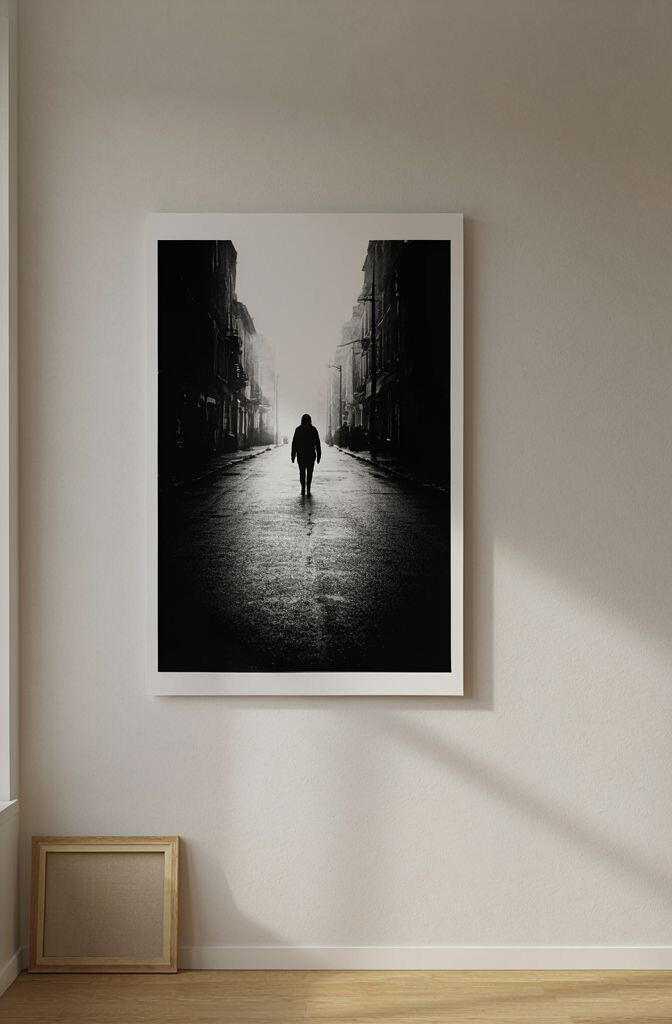
An oversized poster creates drama even when the room is simple. Look for film stills, old movie titles, or dramatic portrait photography in black and white.
This style makes a focal point and can make ceilings feel taller when placed higher. Use a simple black or wood frame if you want a finished look without extra complexity.
To keep it trendy, match the poster to your existing furniture tones, like black metal, light oak, or gray upholstery. If you want a budget-friendly option, print the design at home using thicker paper and a matte finish, then swap frames later.
3. High-Contrast Typography Wall Art
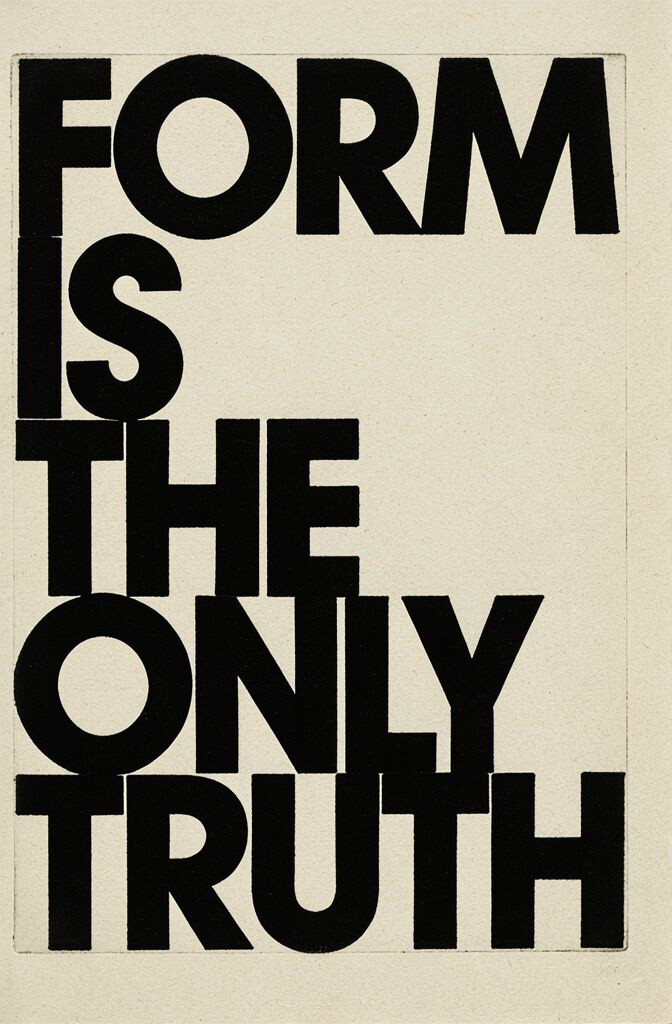
Typography art is ideal when you want the wall to feel confident and modern. Pick a quote, a single word, or a minimalist phrase in bold black shapes.
Because text is simple, it won’t compete with your decor, and it can guide the room’s mood. Place it in a spot where you can read it comfortably, usually at eye level around 57 to 60 inches from the floor.
Make it unique by choosing a font that matches your style, like vintage type for a classic home or clean sans-serif for a modern look. For cost, consider DIY vinyl lettering or print-on-demand styles, and use a protective matte layer if you’re hanging it near daylight.
Current trends lean toward mixed-scale typography, so try one large piece plus smaller supporting words in the same monochrome palette.
4. Gallery Wall With Mixed Frame Finishes
A gallery wall feels curated and personal, especially when every piece is black and white. Mix photos, art prints, and even a few sketch-style pieces for variety.
The best part is how flexible it is; you can build it over time as your taste evolves. Start with a large centerpiece, then work outward, keeping frame gaps consistent so the whole wall looks intentional. Use spacers or painter’s tape to plan the layout before you commit to nails.
5. Abstract Geometric Line Art
Geometric line art brings energy without using bright colors. Think of thin black lines, circles, grids, and sharp angles that create movement on a flat wall.
It’s especially helpful in rooms with lots of straight furniture lines, because it visually echoes the structure. This kind of art also makes a space feel organized, which is a big benefit when the rest of the room is busy.
To personalize, choose a pattern that matches your layout, like repeating lines for a long hallway or a balanced cluster for a living room. For practical buying, look for prints on matte paper and choose a frame depth that prevents glare from overhead lights.
6. Black And White Botanical Illustrations
Botanical prints add softness while still staying crisp and modern in black and white. Choose leaves, flowers, or vintage plant diagrams that feel airy rather than heavy.
This is a great option if you want warmth without adding color. Botanical art also looks thoughtful in kitchens and bathrooms, where natural elements feel at home.
Make it unique by pairing one larger botanical piece with smaller supporting prints, so the wall feels layered. If you’re cost-conscious, hunt for vintage-style downloads, then print them onto archival-style paper and frame them with simple black mats.
Right now, botanical line drawings are popular in minimalist spaces, so keep the layout clean and the frames simple for the most current look.
7. Architectural Blueprint Style Prints
Blueprint-style wall art looks clever and modern, even in a small room. The black lines on light backgrounds mimic technical drawings and industrial design.
This style benefits workspaces and living rooms because it adds structure and visual rhythm. It also pairs well with metal accents, concrete textures, and monochrome furniture.
For practical placement, use a horizontal layout above a sideboard or console, and a vertical layout beside a tall bookcase. If you want personalization, pick themes like “studio layout,” “city maps,” or “architect notes” and keep the font style consistent across pieces.
8. Oversized Portrait Silhouettes
Silhouette portraits create instant drama with just black shapes. Choose faces, profiles, or figure outlines that feel bold and graphic.
These pieces offer high contrast, which helps them stand out even in rooms with neutral walls. They also make your space feel curated, because silhouettes often read like art, not decoration.
Make it unique by selecting silhouettes with different expressions or crop styles, such as close-up eyes or partial torsos. If you’re working on a budget, look for removable wall decals or large wall stickers, then upgrade to framed prints later.
To keep the look balanced, avoid crowding the wall; silhouette art often looks best with one strong centerpiece plus a few smaller elements nearby.
9. Vintage Map Prints In Monochrome
Monochrome maps feel smart and meaningful, especially if you choose a place tied to your life. Try a city you love, a childhood region, or a favorite travel route.
This type of wall art adds history and depth, which is a real benefit in rooms that feel too plain. It also works well in offices because the content gives a sense of direction and purpose.
To personalize, select maps with a matching scale or design style and frame them using the same mat color. For practical cost control, use posters with thicker paper, or print a map from a reputable source and frame it with a budget-friendly black frame.
Current trends often include “global” and “storytelling” decor, and maps are an easy way to create that vibe in black and white.
When hanging, center the map to align with furniture edges for a polished look.
10. Minimalist Still Life Photography
Minimal still life photos look calm, clean, and quietly stylish. Think black and white images of cups, vases, fruit, or everyday objects arranged with intention.
This art benefits small spaces because it doesn’t overwhelm the room with heavy visuals. It also adds texture and depth, especially when paired with soft fabrics like linen curtains or a cozy throw.
Personalize by choosing subjects that match your habits, like coffee art for a kitchen nook or ceramic objects for a dining room. If you’re buying, check for print quality and choose matte finishes to avoid glare.