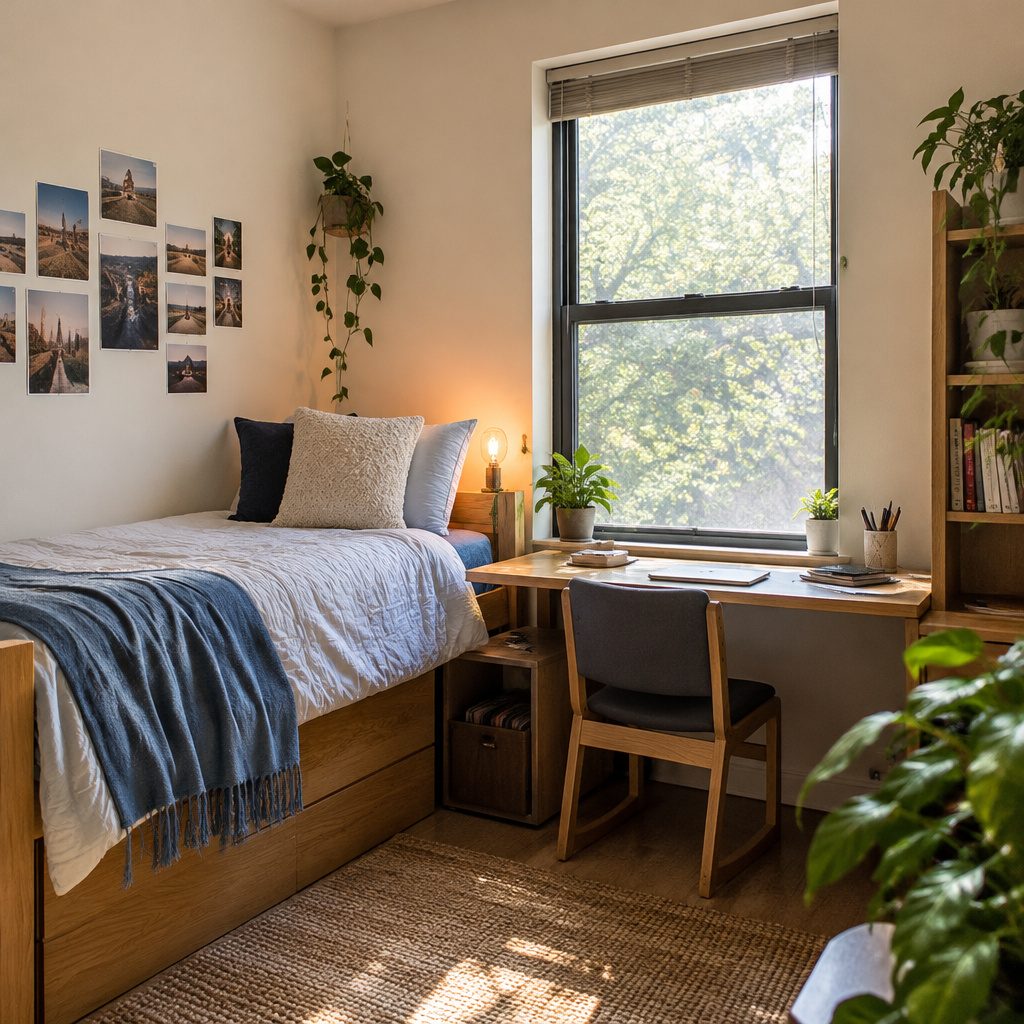
Your room can feel like home, even if the walls are simple. Small changes can make everything look and work better.
1. Rethink Your Lighting Setup
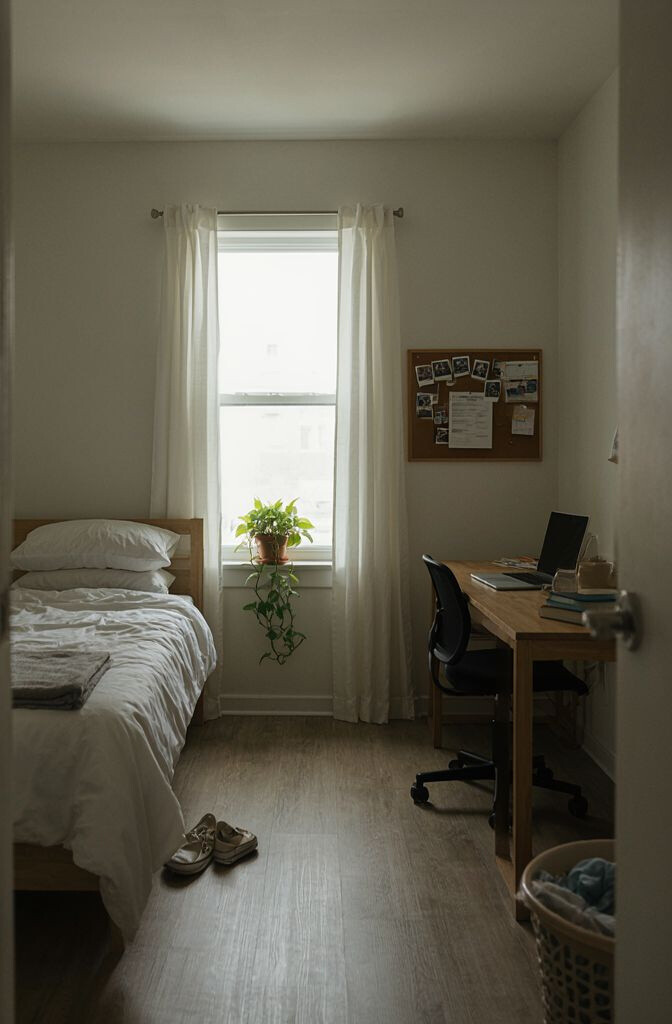
Swap the harsh overhead light for softer options. Use a mix of lamps and LED strips to avoid shadowy corners.
Look for warm bulbs around 2700K to 3000K so the room feels cozy at night. Place a small lamp near your desk for homework, and another by your bed for winding down. If you like a fun vibe, add an LED strip behind the monitor or along the top edge of a shelf.
2. Build a Study Zone That Feels Like a Command Center
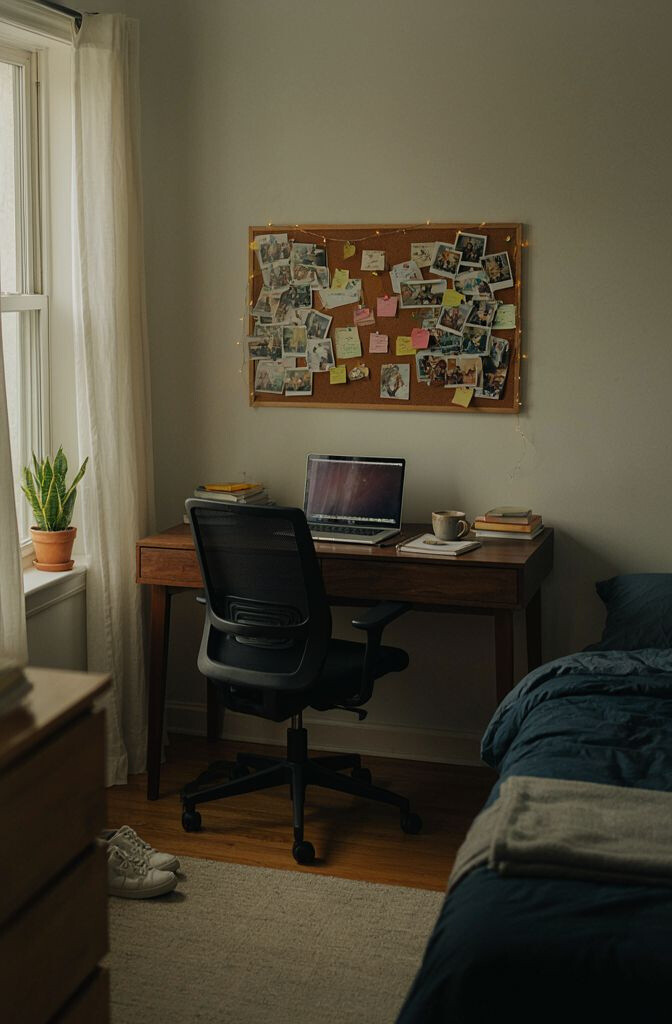
Create a dedicated spot for studying so your brain knows when it’s time to focus. Even in a tight dorm, you can define the area with a desk mat and a tidy setup.
Keep your most-used supplies in one tray, like pens, sticky notes, and a calculator. Add a small timer and a cable organizer so distractions stay out of sight. When your materials are where you expect them, you’ll start faster and stress less.
Choose a simple desk chair cushion if your seat feels uncomfortable. Pair a monitor stand with a lamp to lift your setup to a better viewing height. If space is limited, try a wall-mounted organizer next to your desk for papers and reference notes.
3. Use a Statement Rug to Anchor the Room
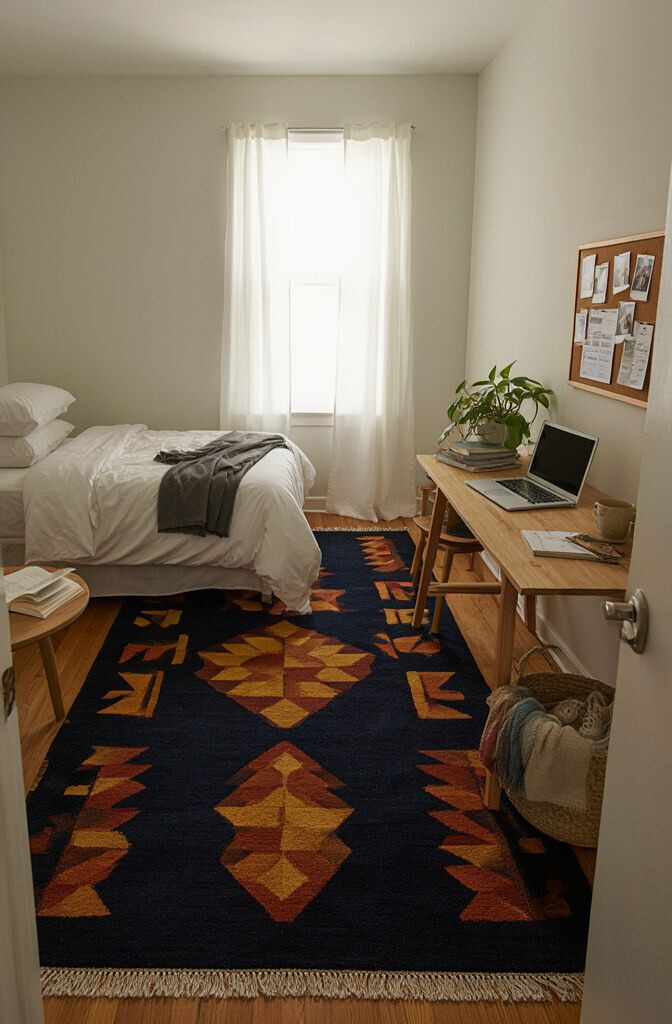
A rug can make even a plain floor feel warm and designed. Choose one that fits your space so it looks intentional, not tossed on.
In a dorm, a washable rug helps with spills and quick cleanups. Place it so the front legs of your bed or chair sit on the rug, which visually ties everything together. Pick a pattern you like, because it will quietly show up every time you walk in.
For budget-friendly style, look at sale sections or discounted sizes. You can also layer a thin rug over a cheaper mat for extra softness. Make sure the rug stays flat so it doesn’t bunch under your feet.
Try a color that matches your wall art or bedding for an easy “set” look. If you want a calm feel, choose muted tones and soft textures. If you want energy, use a bold geometric pattern that stands out.
4. Hang Curtains to Upgrade Privacy and Style
Even simple curtains can change the feel of a room fast. They add softness, hide clutter, and make windows look more finished.
Try tension rods if you can’t drill holes, and choose a fabric that blocks some light. If your window glare bothers you, use lined or thicker panels during the day. Coordinate curtain color with your bedding so the whole setup looks planned.
5. Create a “Drop Zone” for Everyday Stuff
When you give your items a home, your room stays calm instead of chaotic. A drop zone is where you put your bag, keys, and daily essentials the moment you walk in.
Use a wall hook, a small shelf, or a slim organizer on the back of your door. Add a tray for keys and coins so they don’t roll away. If you carry a backpack, place it so it won’t block doorways or paths.
Label a small container for chargers, headphones, and pens so you can grab them quickly. A little basket for mail or receipts keeps papers from spreading. This setup is especially helpful when you’re rushing between classes and errands.
6. Choose Bedding That Shows Off Your Personality
Your bed is the biggest thing in the room, so it should look like you. Pick sheets and a comforter that match your vibe, whether that’s cozy, clean, or bold.
Start with a base color you like, then add patterns through pillowcases and a throw blanket. If you want a “designer” look, mix two or three tones that work together. Keep materials comfortable because you’ll feel the difference every night.
Consider a duvet cover because it’s easy to switch when you get tired of a color. Add a fitted sheet alarm plan by keeping an extra set in your closet. Try a storage under-bed container to hold extra blankets so your room stays neat.
7. Make Your Walls Personal Without Overdoing It
Wall decor is where your room starts telling your story. You can go subtle or bold, but aim for a consistent style.
Try a photo collage with matching frames so it looks like one artwork set. Mix in posters, but keep the colors balanced so the room doesn’t feel messy. If you have limited wall space, use a hanging tapestry or a lightweight fabric banner.
Use removable hooks so you don’t damage paint. Leave a little breathing room between items so your walls look polished. If you like change, rotate a few pieces each month so the space feels fresh.
8. Organize Cables So They Don’t Take Over
Cables can make any room look unplanned, even when everything else is great. A tidy cable system instantly makes your desk and nightstand look cleaner.
Use Velcro ties or cable clips to bundle cords under desks or behind devices. Add a power strip with a cord cover to keep things neat and safer. Label charging bricks with tape so you grab the right one quickly.
If you’re using a laptop, raise it with a stand so you can route cables underneath. Consider a small drawer or organizer tray for chargers you don’t need daily. Keeping chargers together prevents the “where is it?” spiral.
For a budget option, reuse small baskets and binder clips to guide cords along edges. If you want a clean look, pick a black or white system that blends into your desk. Your future self will thank you when you set up for study.
9. Add a Cozy Reading Corner
A corner for reading turns your room into a mini retreat. It’s the place you can unwind, even if your day was busy.
Use a small chair, a floor cushion, or even a bean bag if your space allows it. Add a small side table or a stack of books for a lamp and water bottle. Choose a soft throw and a warm light so the area feels inviting.
Make it easy by keeping bookmarks, pens, and a notepad nearby. If you love audiobooks, set up a headphone stand so you don’t leave gear scattered. Even one comfortable nook can change how often you rest.
Pick one book theme to start, like fantasy, science, or self-improvement. When you’re done, rotate to something new to keep your room feeling alive. This is a low-cost way to make downtime feel special.
10. Upgrade Your Desk Chair Comfort
Comfort matters because studying can take hours. If your chair is uncomfortable, small changes can make a big difference.
Try a seat cushion with good support, especially if your dorm chair feels too firm. Add a small lumbar pillow for your lower back so you can sit longer with less strain. Adjust your desk height if possible to reduce shoulder and neck tension.
Keep a simple footrest if your legs don’t rest flat. Wearing a supportive shoe around campus can also help your posture during long study sessions. When your body feels better, your focus often improves too.
11. Personalize with a Color Theme
A color theme makes your room look like it belongs together. It’s an easy trick that makes your space feel intentional.
Pick one main color, one accent color, and one neutral tone. For example, try navy as the main, gold as the accent, and white as the neutral. Then repeat those colors in bedding, wall art, and small items like pencil cups.
If you’re unsure, look at your favorite piece first, like a poster or blanket. Match the rest to it so you don’t end up buying random shades. This approach keeps everything cohesive without needing expensive upgrades.
12. Try Open Shelving for “Pretty Storage”
Open shelves can make your room look styled while still practical. It’s a great option for books, decor, and daily items.
Use baskets and matching containers so your shelves don’t look cluttered. Keep a few decorative objects visible, like a plant, candle, or photo frame, and store extras behind containers. This way, everything looks neat without hiding your style.
13. Use a Wall Calendar or Planner Display
A visible schedule helps you stay on track without mental juggling. When deadlines are right in front of you, it’s easier to manage your time.
Choose a wall calendar, whiteboard, or cork board and place it near your desk. Add a few colored markers for classes, work shifts, and personal plans. Keep it simple so you actually check it daily.
Print a weekly template you like and update it every Sunday. Add a small checklist for chores or gym goals if that motivates you. This can feel motivating and also reduces last-minute stress.
If your roommates share space, coordinate color coding so everyone understands the layout. Use removable tape or reusable mounting strips for easy changes. Even one organized week can set the tone for the next.
14. Add Plants for Fresh Vibes
Plants bring life and a calming feel to your room. They also make the space look more “grown-up” and cozy.
Choose low-maintenance options like pothos, snake plant, or succulents if you forget to water. Place them where you get some light, like near a window or under a lamp. Use small pots that fit your style, even if you start with one plant.
15. Create a “Nightstand That Works”
Your nightstand should make bedtime smoother, not harder. Think about what you use in the last five minutes before sleep and set that within reach.
Use a small tray for items like a glass of water, lip balm, and your phone charger. Add a book or journal space so you’re not hunting for things in the dark. Keep clutter out of sight so your room feels restful.
If you’re tight on space, choose a narrow cart or a wall-mounted shelf. Add a small lamp so you can read without turning on harsh lights. This setup also helps in the morning when you’re rushing to class.
16. Use Mirrors to Make the Room Feel Bigger
A mirror can visually open up a small room. It bounces light around, which makes the space feel brighter and more spacious.
Place it across from a window if possible so it reflects natural light. Choose a mirror shape that fits your vibe, like a round one for softness or a tall one for a sleek look. Make sure it’s secure and stable for safety.
If you can’t mount it, look for a leaning mirror with a sturdy base. You can also place a small mirror near your closet area to help you get ready faster. This is one of those upgrades that looks good right away.
17. Style Your Closets with Simple Systems
Closet organization is room organization, even when the door is closed. When clothes and bags are easy to find, your space feels easier to live in.
Use slim hangers to save space and keep your closet looking tidy. Add hanging shelves or organizers for shoes, scarves, and bags. Fold items the same way each time, so your closet doesn’t turn into a jumble.
Try a labeled bin for socks and accessories, especially if you share storage. Keep a seasonal section so you can swap items without chaos. If you’re on a budget, start with the basics and upgrade one area at a time.
18. Make a Gallery Wall with a Clear Plan
A gallery wall can look amazing when you plan the layout first. It turns your empty wall into a focal point.
Pick a frame style you like, such as black metal or simple wood. Arrange your pieces on the floor first to test spacing and balance. Then transfer the layout to the wall using painter’s tape for placement marks.
Mix sizes, but keep the theme consistent by using similar colors or subject matter. Include one larger piece to anchor the middle. This keeps the wall looking curated instead of random.
If you’re renting, use removable adhesive hooks designed for posters and frames. Update the wall each semester by swapping one or two pieces. That small change can make your room feel brand new without big purchases.
19. Use a Curtain or Bed Canopy for Instant Coziness
A bed canopy creates a tiny “nest” feeling that’s hard to beat. It makes your sleeping area feel special and private.
Choose lightweight fabric in a color you love, like white for airy vibes or a richer shade for drama. Hang it with a simple rod or ceiling clips if allowed. Keep it loose enough to look dreamy but stable enough not to tangle.
20. Upgrade Your Storage with Under-Bed Containers
Under-bed storage is a secret weapon for small rooms. It clears floor space and keeps essentials out of sight.
Use rolling bins or flat containers so you can access them without moving everything. Label lids or sides so you know what’s inside. Great items to store include extra linens, seasonal clothes, and study supplies you don’t use daily.
For a more organized look, keep items grouped by category. Put chargers and cables together, toiletries together, and notebooks together. When storage is labeled, you waste less time searching and more time focusing.
21. Personalize with Desk Accessories and Small Routines
Small desk accessories can make studying feel smoother and more enjoyable. When your routine has cues, your focus kicks in faster.
Use a pen holder that matches your color theme and a desk mat that protects surfaces. Add a small motivational card or a quote you actually like. Keep a sticky note pad where you can grab it without thinking.
Create a “start studying” ritual, like lighting a lamp or putting on a certain playlist. Pair it with a simple checklist so you know what you’ll do first. Over time, those cues help your brain settle into work mode.
22. Try a Fun Theme for Each Semester
The best way to keep a room feeling new is to change your theme over time. You can keep the base structure and swap the details.
Pick a theme like “cozy autumn,” “clean minimal,” or “bright and playful,” then adjust bedding, pillow colors, and wall decor to match. Use one or two theme pieces as your anchor so the rest of the room follows naturally. Budget-friendly swaps like changing pillow covers and print posters make this easy.