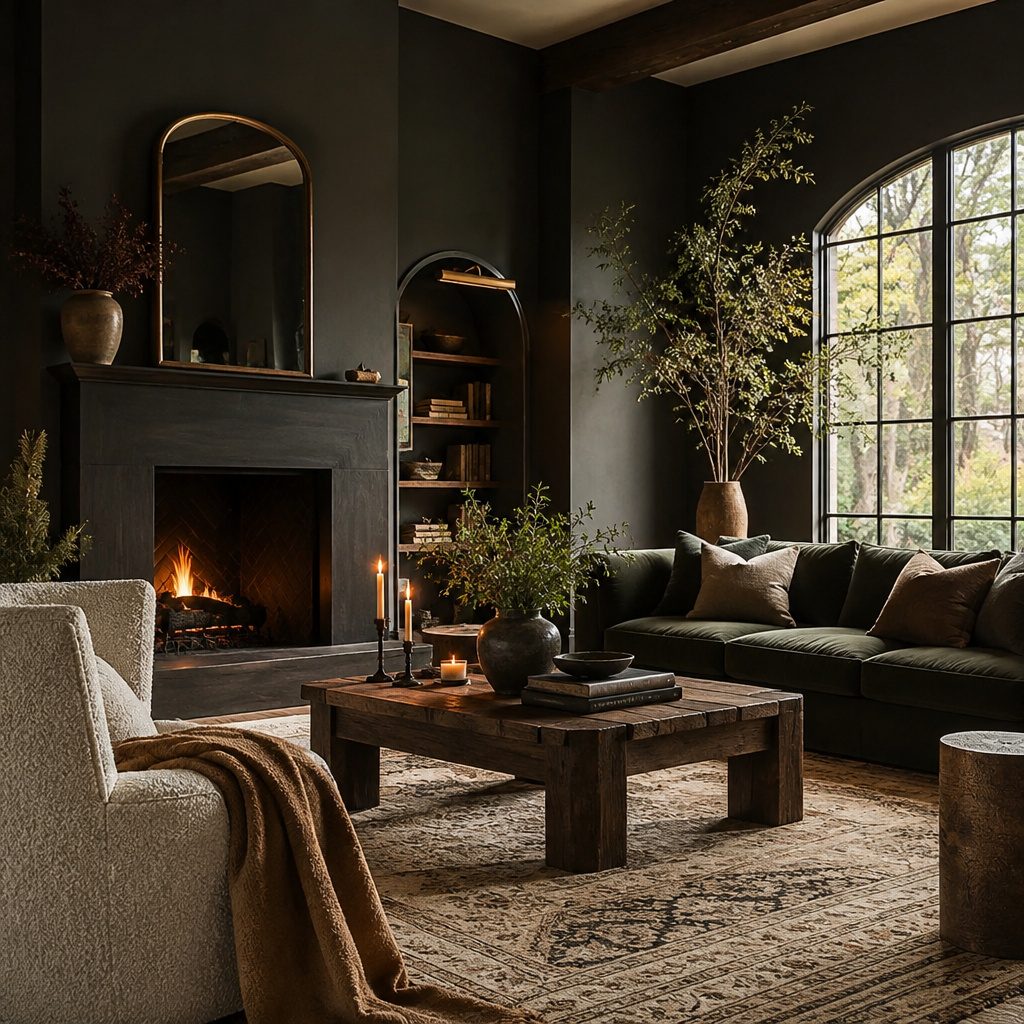
Deep color can make a living room feel like an evening you never want to end. Small style choices work together to create that warm, moody calm.
1. Velvet Seating in Dark Jewel Tones
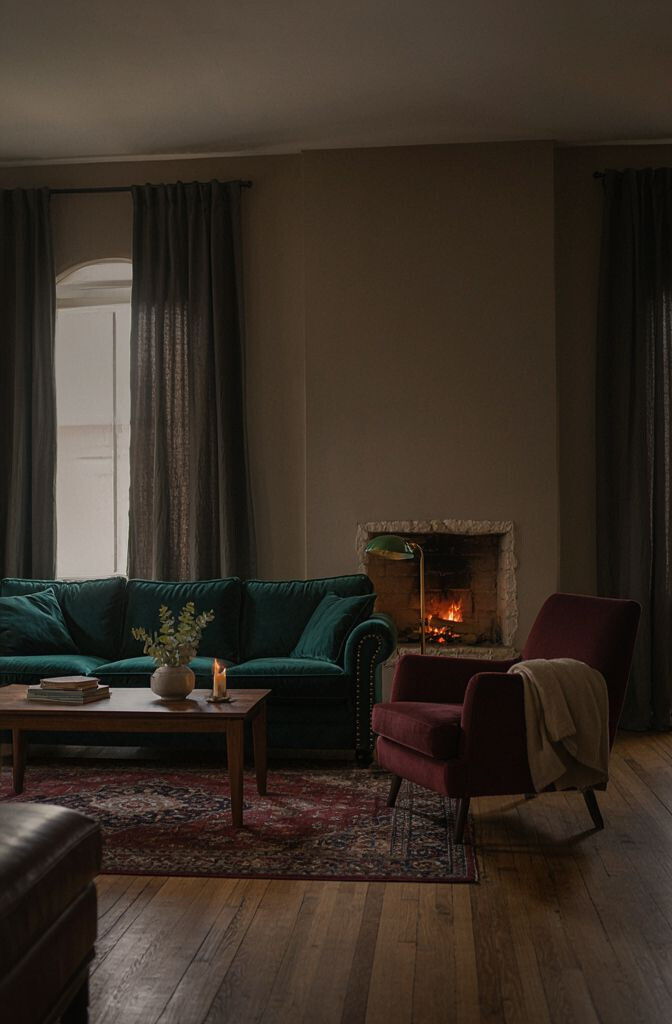
Velvet instantly adds a soft, dramatic mood. When it catches light, it feels rich instead of heavy.
Pick a jewel tone like emerald, deep wine, or midnight navy to make the room feel grounded. Choose either a loveseat, a single accent chair, or a set of throw pillows to keep the look flexible. For practicality, blot-clean velvet or use covers for high-traffic seating so the color stays beautiful longer.
2. Warm Black Walls with Soft Sheen
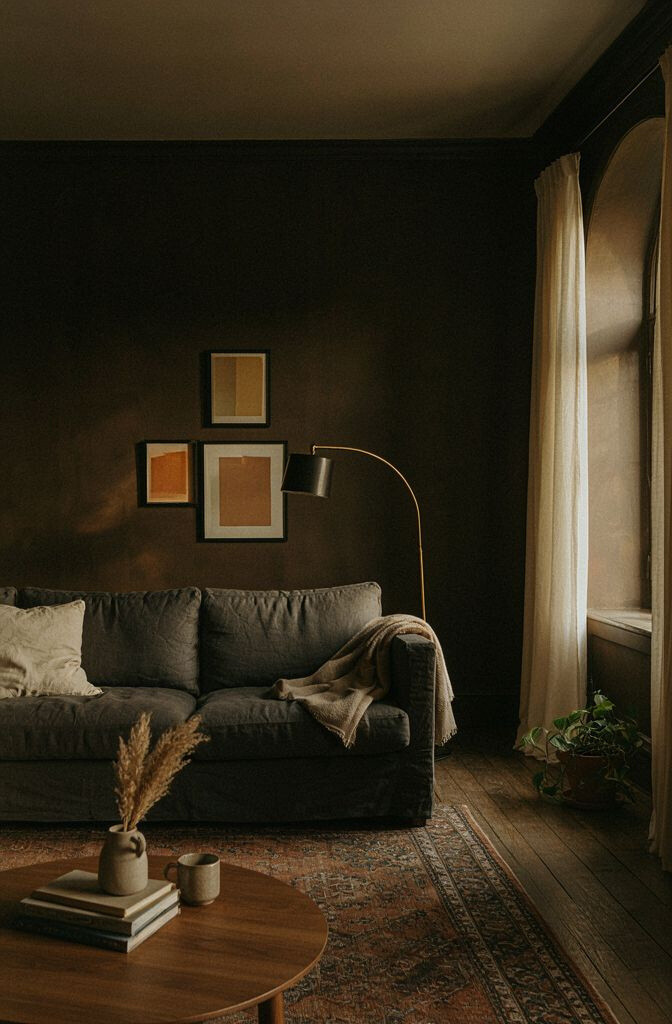
Black walls sound bold, but they can feel cozy with the right finish. A soft sheen helps light bounce around without looking flat.
Try a warm black instead of a stark gray-black, like charcoal with brown undertones. Pair it with off-white trim, brass accents, and warm wood to prevent the room from feeling cold. If you’re worried about commitment, test a small section first or paint just the wall behind a sofa.
To keep the mood flattering, use layered lighting so the room never feels dim all at once. Consider current trends like “warm dark neutrals,” which are showing up in modern interiors alongside natural textures. Budget-wise, paint is often one of the most cost-friendly ways to get a big visual change, especially compared with replacing furniture.
3. Layered Lighting with Amber Glow
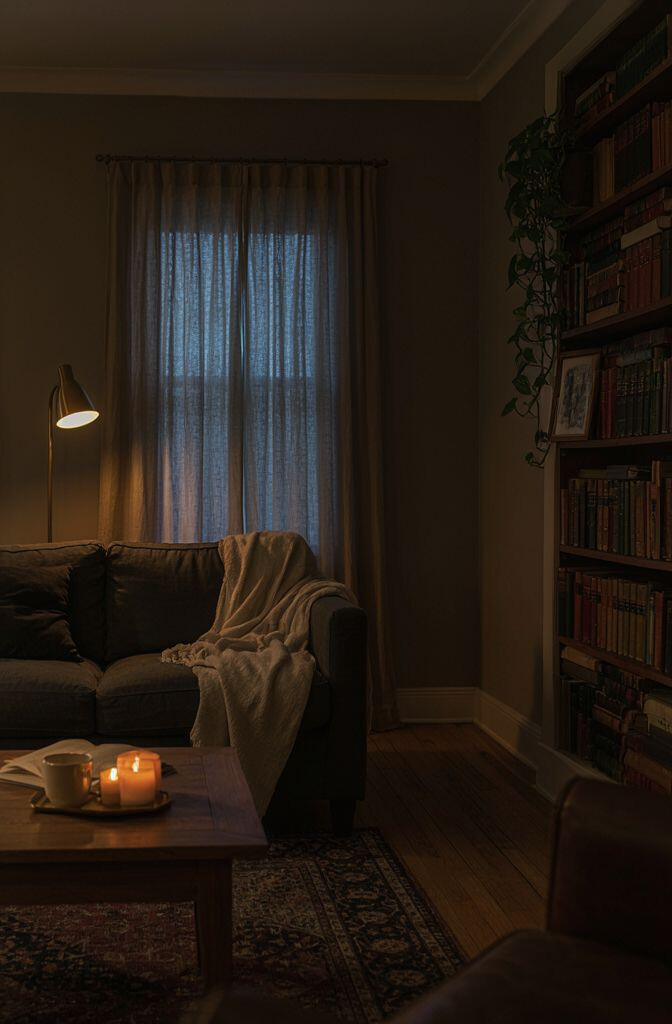
Lighting is the secret ingredient in a moody living room. The goal is not brightness, it’s flattering warmth.
Use three layers: a floor lamp, a table lamp, and small ambient lights like candles or a dimmable wall sconce. Choose amber or warm bulbs around the 2700K range for a golden effect. Keep fixtures in metals like matte black, antique brass, or oil-rubbed bronze to match the mood.
In terms of benefits, layered lighting creates depth and helps colors look more dimensional, especially dark fabrics. Add a dimmer switch if you can, since control is what turns “nice” into “wow.” For personalization, set a “night scene” with the brightest lamp on low and the rest dimmed.
If you’re updating on a smaller budget, swap bulbs and add one new lamp before buying anything bigger. This approach also matches what’s popular right now: cozy, cinematic lighting instead of harsh overhead fixtures.
4. Textured Rugs in Mocha, Charcoal, or Oat
A textured rug can make a dark room feel soft, not severe. Look for boucle, wool blends, or shag with subtle variation so it doesn’t look flat.
Choose a base color like mocha, charcoal, or warm oat, then add contrast through pattern or fringe. A practical tip: place a rug pad underneath to reduce slipping and protect the floor. If you have pets or kids, consider a low-pile option that’s easier to vacuum and spot-clean.
5. Gallery Wall with Black Frames and Art Prints
Art can give a moody living room personality without adding clutter. Black frames feel sleek against dark paint or rich neutrals.
Mix scales by hanging one larger piece and surrounding it with smaller prints, photos, or maps. Stick to a color family—think sepia tones, muted greens, or deep blues—to keep everything cohesive. For practicality, use a level and masking tape templates so spacing looks intentional.
If you like personalization, include one piece you love from a trip or a family photo that matches the room’s palette. This trend of “collected over time” art is growing because it feels lived-in rather than staged. Budget-wise, affordable prints and frame sets can still look high-end when the frames match.
6. Dark Wood and Matte Finishes
Matte wood brings warmth to moody spaces. It also hides wear better than glossy surfaces.
Consider a dark coffee table, sideboard, or shelves in stained oak, walnut, or espresso tones. Pair these finishes with matte ceramics and soft textiles so the room doesn’t feel too shiny. For practical styling, keep surfaces slightly clear and let the texture do the work.
To make it unique, mix one piece with a different grain direction, like a table with clean lines next to a shelf with more character. Cost can vary, so if furniture shopping is out of reach, try swapping cabinet hardware, adding a new tray, or using stain-safe faux finishes for shelves. Current design direction favors tactile materials and “quiet luxury,” which dark matte wood supports beautifully.
7. Curved Shapes and Soft Lines
Curves calm the room and make the mood feel inviting. Straight edges can look sharp, while soft lines feel more relaxed.
Look for an armless curved sofa, an ottoman with rounded corners, or a chair with a gently sloped back. Add a rounded mirror or a circular wall clock to echo the softness. This is especially helpful in smaller living rooms because curves can make the space feel more fluid.
Personalization is easy here: choose one curved focal piece and repeat the shape in decor like trays or plant stands. For budget control, swap one hard-edged item for a soft one, then upgrade lighting and textiles to finish the look. The current trend of “soft modern” design often pairs well with moody colors, so you’ll be right on track.
8. Sheer Layer Curtains in Deep Neutrals
Sheer curtains make a dark room feel airy during the day. At night, they help light glow without looking harsh.
Choose sheer panels in warm white, oatmeal, or light gray, then layer heavier drapes in charcoal or deep brown. Make sure the curtains touch the floor or hover just slightly above it for a tailored look. A practical tip is to hang them high and wide so the windows visually grow.
To keep things easy, use washable curtain fabric or buy blends labeled for machine washing. This style feels unique when you add subtle details like linen texture or a simple tieback. Cost considerations are manageable because curtains can be updated gradually, and they often give a bigger impact than small decor swaps.
9. Statement Fireplace Styling with Candles and Mirrors
A fireplace mantel is a natural stage for moody decor. Styling it well makes the whole room feel intentional.
Start with a dark-framed mirror or a slim metal screen behind it, then layer candlesticks, books, and a small tray. Choose candle colors like cream, smoky gray, or deep green to echo the room palette. For practical safety, keep candles away from heat sources and use flameless candles if needed.
Make it unique by adding one personal element, like a vintage frame from a market or a sculptural object you love. This idea also follows a current trend toward “vertical layering,” where mirrors and taller items draw the eye upward. If you’re on a budget, you can thrift frames and candlesticks and still get that curated look.
For personalization, adjust the arrangement seasonally—swap greenery in winter and use warm-toned stems in fall. Even small changes help the mood feel fresh without starting over.
10. Monochrome Textiles with One Accent Color
A monochrome approach makes moody rooms look sleek and calm. When everything shares a similar tone, the space feels designed.
Use dark grays, charcoal, and deep browns across cushions, throws, and drapes. Then choose one accent color—like burnt orange, muted teal, or burgundy—and repeat it in a couple of places to create interest. For practical results, aim for a mix of textures, such as knit, leather, and woven fabric.
11. Moody Greenery in Dark Containers
Plants add life to dark rooms without breaking the moody mood. Deep containers make greenery look more dramatic.
Try a tall fiddle-leaf fig, snake plant, or a trailing pothos in a matte black or deep ceramic pot. Add smaller plants on side tables to fill corners and soften hard surfaces. If you want low effort, choose hardy varieties and match them with a watering schedule you can keep.
Personalize by using planters with different shapes—one tall, one round, and one wide—so the grouping feels collected. For cost, thriftable planters and propagation cuttings can be very budget-friendly. This fits a growing trend of “dark naturalism,” where greenery and moody palettes are paired for a richer, calmer vibe.
12. Vintage-Inspired Details and Antique Touches
Vintage details bring warmth and story into a moody living room. The room looks more lived-in, even when everything is newly styled.
Look for antique-style brass lamps, aged picture frames, or a distressed leather ottoman. Add a vintage rug runner if you can, or use a secondhand throw that has a lived texture. To keep it practical, choose pieces that are easy to clean and avoid items that snag easily if you have pets.
For personalization, mix two eras gently, like modern lighting with a vintage side table. Cost-wise, you can shop smarter by focusing your budget on one or two “hero” vintage pieces and using inexpensive decor around them. This is also a strong current trend, because curated antiques feel more personal than fully new sets.