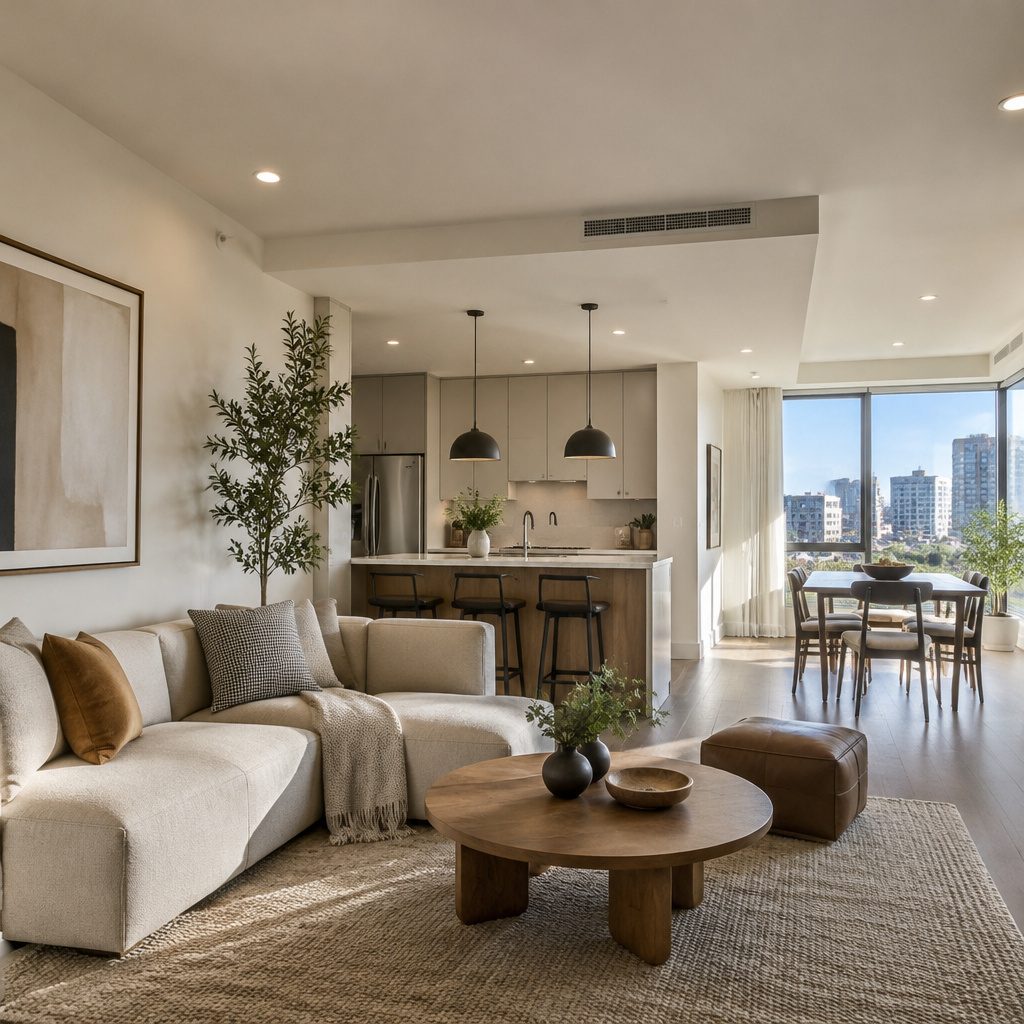
Even small rooms can feel sunny with the right choices. Bad aesthetic habits are often fixable with simple upgrades.
1. Swap Dark Bulbs for Warm, Bright Light
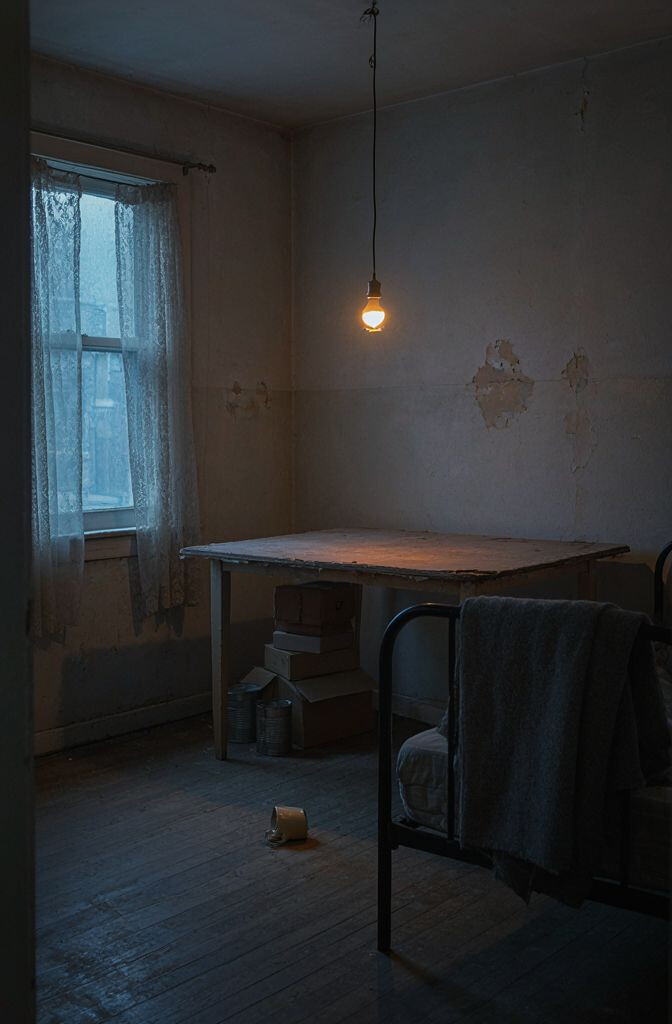
Start with the light source because it changes everything you see. A dull bulb can make walls look grayer, even when you painted them.
Choose bulbs labeled “bright” and check the lumens for a noticeable boost. Go for warm white in living areas so the space feels cozy, not harsh. If you like a trendier look, try layered lighting with a floor lamp plus one overhead fixture.
2. Hang Curtains That Actually Reach the Floor
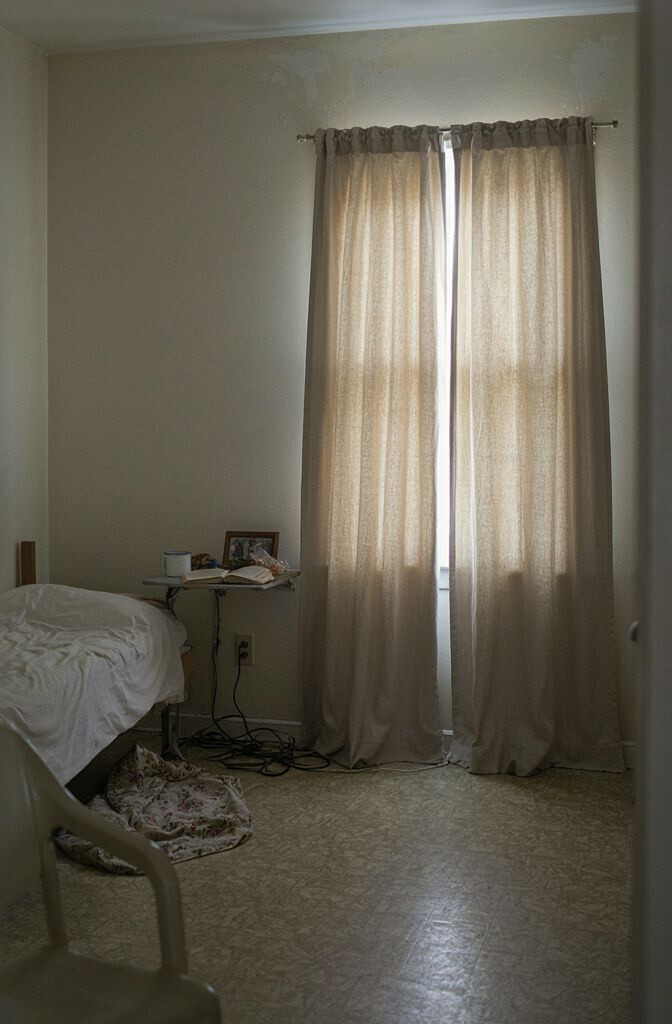
Your windows can look smaller when curtains stop halfway. Floor-length panels add height and make the room feel taller.
Pick lightweight fabric for daytime glow, like sheer or linen blends, and use a simple rod that sits near the ceiling. For extra brightness, choose lighter colors or subtle patterns that reflect light. If you can’t replace everything, at least shorten less and use a tension rod inside the window area for a quick upgrade.
Shop with cost in mind by checking end-of-season sales or choosing a single panel type you can mix later. This idea fits the current trend of “soft framing,” where windows look like part of the décor, not an afterthought.
3. Replace One Dull Mirror with a Statement Mirror
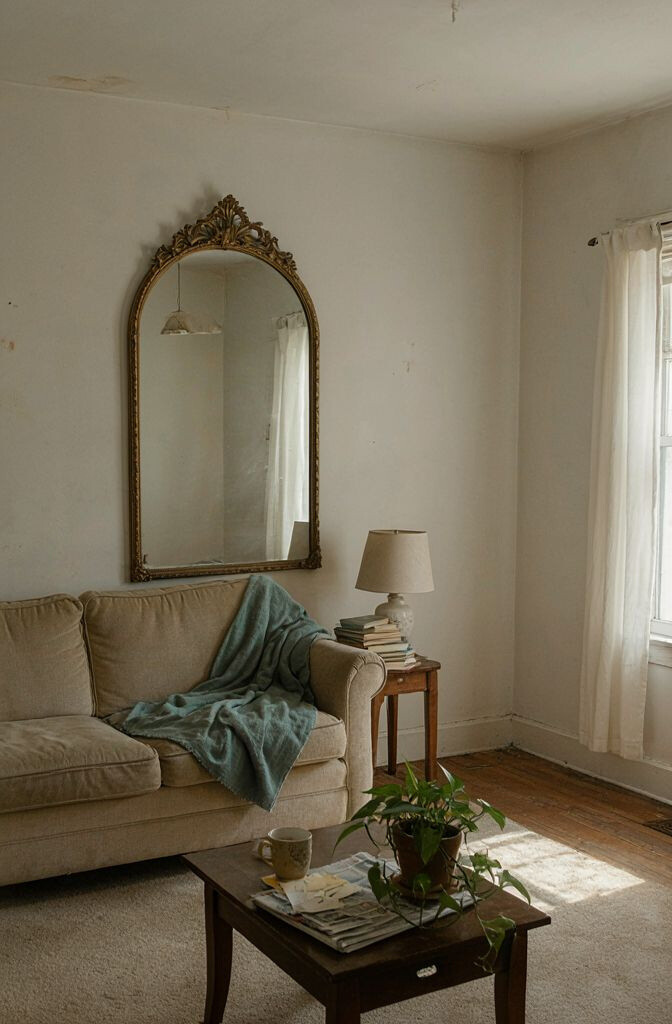
A mirror can bounce light around, like a quiet helper. But a tiny mirror in the wrong spot might barely do anything.
Pick a larger shape—round, arched, or an elegant rectangle—and place it across from a window or near a lamp. The uniqueness comes from how it acts like wall art while also improving brightness. Keep it at eye level for the best visual effect and easier styling.
Try a thrifted mirror with a fresh frame paint for a creative twist. If you’re renting, use removable adhesive hooks or a professional-style hanging command strip system. You can also pair it with a small tray on the console so the mirror doesn’t feel lonely.
This is a low-cost option compared to bigger furniture changes, and it still feels modern. Many people are leaning into “reflective accents” right now because they make small spaces feel more open without a renovation.
4. Use One Bright Accent Color on Purpose
If everything is beige, the room can look flat and tired. One intentional accent helps your space feel styled instead of accidental.
Pick a color you enjoy—citrus yellow, teal, or a punchy coral—and use it in a few places like throw pillows, a blanket, or a small vase. Keep it consistent across the room so it looks planned, not random. A good rule is to choose items that repeat the color more than once.
5. Declutter the Coffee Table Like You’re Styling a Showroom
When surfaces are crowded, your brain treats the room as “busy,” even if it’s clean. A calmer table instantly makes the apartment feel brighter.
Keep only a few items: one tray, one small plant or candle, and one functional piece like a remote holder. Clear negative space so the eyes can rest. If you love books, stack them neatly and remove anything that doesn’t belong in the daily routine.
Personalize the look with a seasonal touch, like a linen runner in warm months or a patterned tray in cooler seasons. For cost, start with what you already have and use felt pads or small storage boxes to hide clutter. This approach matches the current trend of “intentional minimalism,” where fewer things create more impact.
6. Add a Light Rug with Enough Coverage
The wrong rug can make a room feel smaller. A dark, thin rug often visually “cuts” the floor into pieces.
Choose a rug that’s lighter in color and large enough so furniture legs sit on it. If your budget is tight, look for washable rugs or affordable synthetic blends that still give a clean look. To make it unique, consider a subtle texture like boucle or flat weave instead of only solid colors.
For practical placement, leave a little border around the rug edges so it looks deliberate. If you rent, use rug pads to prevent slipping and reduce wear on flooring. Light rugs are popular right now because they make apartments feel airy and help reflect natural daylight.
When in doubt, test the rug against the wall color before buying so the tone works together.
7. Paint Only One Wall a Sunny, Soft Color
A whole-room repaint can be expensive and stressful. But one wall can give you a dramatic upgrade without the huge commitment.
Pick a wall that gets good light, then choose a soft color like pale peach, light sage, or buttercream. The uniqueness here is that the wall becomes a focal point, which makes the rest of the room feel brighter by contrast. Use paint samples first and tape out the section to see it at different times of day.
If you’re renting, consider temporary peel-and-stick wallpaper in a similar shade, or use removable paint products made for renters if available. Keep other walls lighter so the accent wall stands out smoothly. This idea fits the current “warm neutrals” trend, which is big for small spaces.
You can also tie the wall color into décor with matching textiles, like curtains or pillow covers, to look cohesive.
8. Choose Furniture with Legs Instead of Chunky Bases
Heavy furniture can block sight lines and make your floor space disappear. Pieces with visible legs let light travel and keep the room feeling open.
Look for sofas, chairs, or coffee tables with raised frames, and keep the scale right for your room. The benefit is visual brightness plus easier cleaning, since you can reach under furniture. If you can’t buy new, try adding small riser pads or using existing furniture only where you have the most open space.
This choice feels unique because it changes how the room breathes, not just how it looks. Current trends favor airy silhouettes for small homes, and this is one of the simplest ways to follow that style without a renovation.
9. Layer Textures: Knit, Linen, and a Cozy Throw
Flat décor can look dull because it doesn’t catch light or invite touch. Texture adds depth, and depth often reads as brightness.
Add a knit throw, linen curtains, or a woven basket to break up smooth surfaces. The unique part is that each texture reflects light differently, creating a lively look even in shade. Start with one comfortable change, like switching to a textured cushion cover.
Use a simple color palette, then vary the material. If you want practical tips, choose machine-washable covers and fabrics that won’t shed lint onto everything. For personalization, match textures to your lifestyle—soft and cozy for lounging, more structured fabrics for a clean visual style.
Cost considerations are friendly here because you can buy one throw or cover at a time. Texture layering is still trending because it makes rooms feel “designed” without relying on expensive pieces.
10. Put Plants in the Brightest Spot You Can Find
Nothing warms a room like green, and sunlight helps plants thrive. A living element also makes your apartment feel cared for.
Place a plant near a window, and rotate it weekly so it grows evenly and looks balanced. Choose low-maintenance varieties like pothos, snake plants, or ZZ plants if you’re new to plant care. For uniqueness, use plant stands or colorful planters so the plant also becomes décor.
If your light is limited, choose a plant that tolerates shade and consider a small grow light. This keeps the look bright even on cloudy days. You can save money by taking cuttings from a friend or swapping with neighbors.
11. Replace One Scuffed Basket with an Open-Woven Alternative
Storage items that look worn can drag down the whole aesthetic. When containers look tired, your room feels tired too.
Switch to an open-woven basket or a neat fabric bin that matches your color scheme. The benefit is immediate visual clarity because tidy storage makes your space feel brighter. For practical tips, use baskets for blankets, magazines, or extra chargers so clutter stays hidden but accessible.
Personalize the vibe by choosing natural fibers like rattan or seagrass, which are popular right now. They create a light, beachy feel without needing a full theme makeover. If budget is tight, start with just one basket and place it in your highest-visibility area.
This change is unique because it upgrades both function and style in one step.
12. Hang Art at Eye Level and Use a Group Layout
Wall space can make an apartment feel unfinished, even when it’s clean. Art placed too high or too low can make the whole room look off.
Hang pieces so the center is around eye level, then create a small gallery wall using similar frames or complementary colors. The benefit is that your room becomes visually “complete,” which often feels brighter than blank walls. For a unique look, mix one bolder print with smaller minimalist frames.
If you’re not sure how to arrange, lay everything out on the floor first and adjust until it feels balanced. For cost, hunt for prints at thrift stores or print your own from free design resources. Gallery walls remain a current trend because they make small spaces feel curated quickly.
Just be careful to secure mounting hooks properly, especially in rentals.
13. Upgrade Hardware: Switch Cabinet Knobs and Drawer Pulls
Small details can make a big difference when your apartment looks a little outdated. Dull knobs and scratched pulls can make even pretty furniture seem worn.
Choose hardware in finishes like brushed brass, matte black, or polished chrome. The uniqueness is that hardware changes the “finish level” of the room, like giving everything a fresh coat. For practical tips, measure screw spacing and bring a sample to a store so you buy the right fit.
Cost considerations are usually manageable because you’re upgrading parts, not furniture. If you want a renter-friendly approach, use hardware designed for easy swaps and keep the original pieces in a labeled bag. This update pairs well with current design trends that favor clean lines and updated metals.
To personalize, match hardware with your light fixtures or picture frames for a cohesive look.
14. Add Task Lighting in Corners That Feel Dark
Even with good overhead lights, corners can stay shadowy. Shadows make spaces feel smaller and more tired.
Try a reading lamp, a small floor lamp, or a plug-in wall sconce in the darkest areas. The benefit is a brighter mood without repainting anything. If you like a unique aesthetic, pick a lamp with a patterned shade or a soft fabric diffuser.
15. Use Sheer Layers Instead of Heavy Blinds
Heavy window treatments can swallow daylight, especially in apartments with limited windows. Sheer layers create the same privacy vibe but with more glow.
Pair a sheer curtain with simple blinds or adjustable shades so you can control light without darkening the room. Choose airy colors like white, cream, or pale gray for a bright base. The uniqueness comes from how light turns the fabric into a soft background texture.
For practical tips, measure carefully and use a rod that mounts securely without damaging surfaces. If your budget is limited, start with sheers only and upgrade later. Sheer layering is still popular because it fits the modern trend of “light-first interiors,” where brightness is part of the design.
16. Create a Mini “Landing Zone” with a Tray by the Door
When mail, keys, and bags pile up near the entrance, your apartment starts feeling chaotic. A small landing zone keeps the first impression tidy and bright.
Place a tray or small cabinet near the door and use it for keys, sunglasses, and daily essentials. The benefit is instant order that makes the rest of the room feel calmer. For personalization, choose a tray color that matches your accent shade and add one small decorative item, like a candle or a compact plant.
Cost is usually low because you can find options at thrift stores or use what you already own. This idea is unique because it improves flow and prevents clutter “creep,” which is a common problem in apartments. It also aligns with current home trends that focus on functional beauty, where décor solves real daily issues.