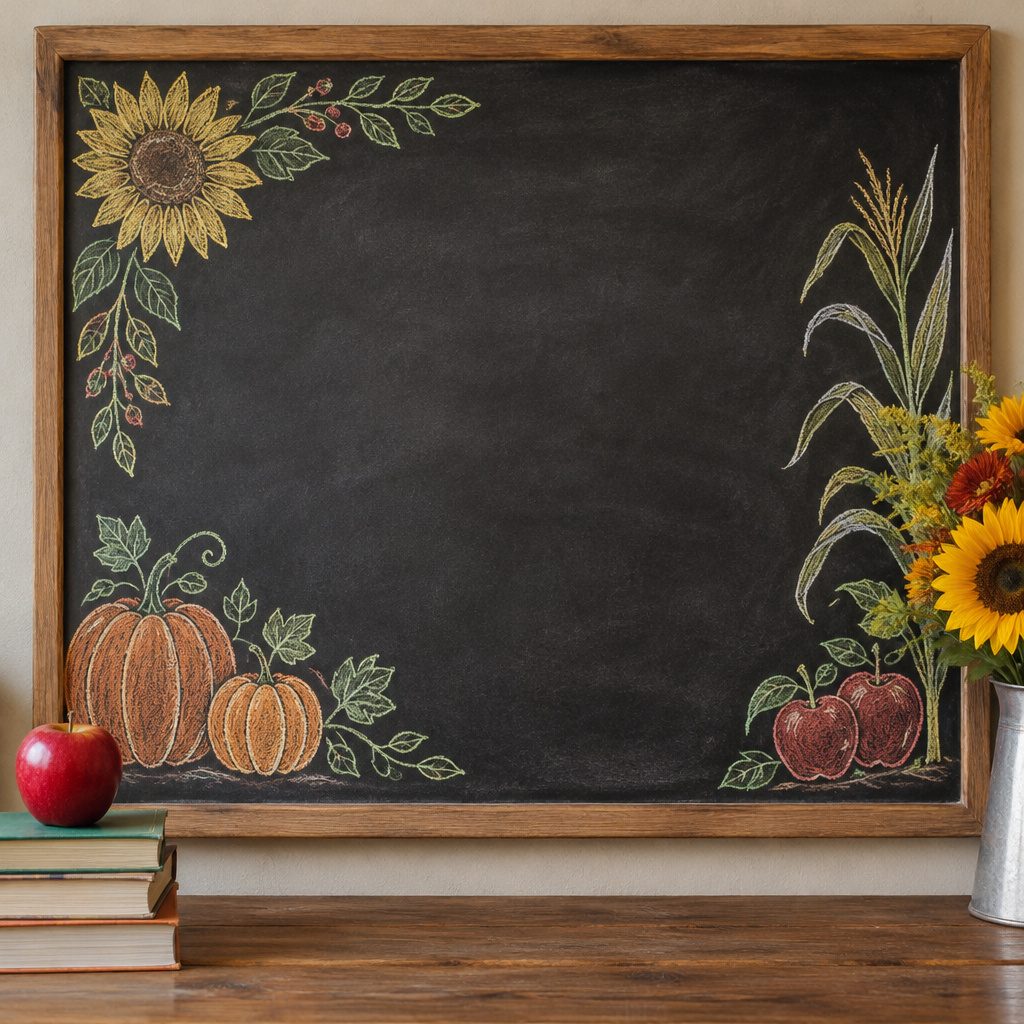
September mornings feel like a fresh page for your thoughts. A chalkboard can turn that feeling into something you can see and share.
1. Morning Coffee Countdown Quotes
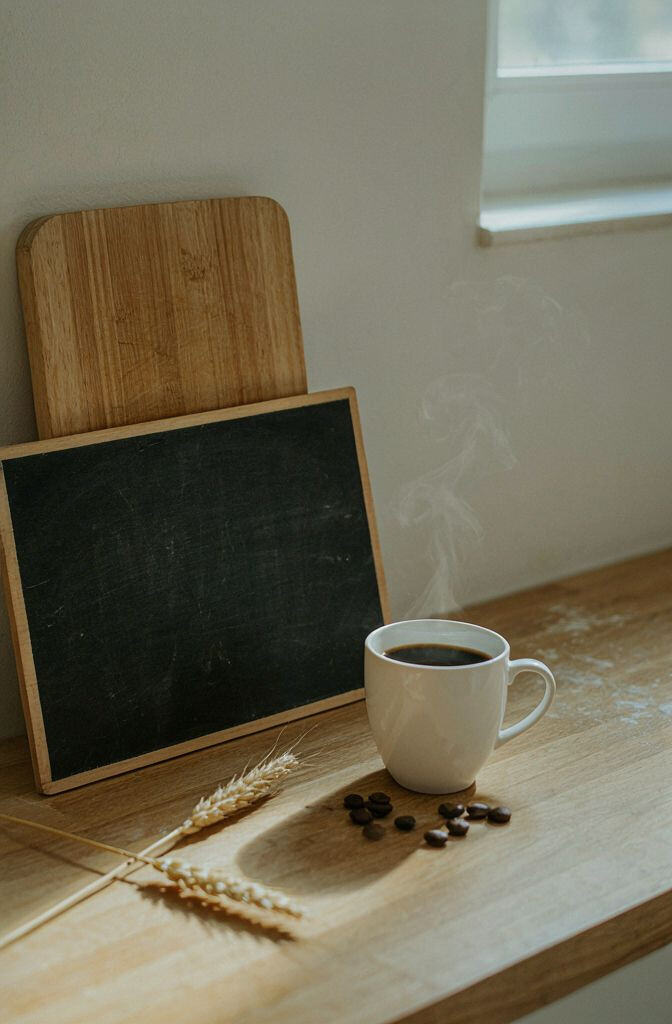
Write a simple clock circle at the top of your chalkboard. Then add a countdown with tiny icons for steam, beans, and a mug.
Choose one short quote for each segment, like “Slow is smooth” or “Warm thoughts only.” Keep the letters big enough to read from across the room. Every time you refill the kettle, you get a small creativity moment without extra planning.
2. Daily Weather + Mood Color Map
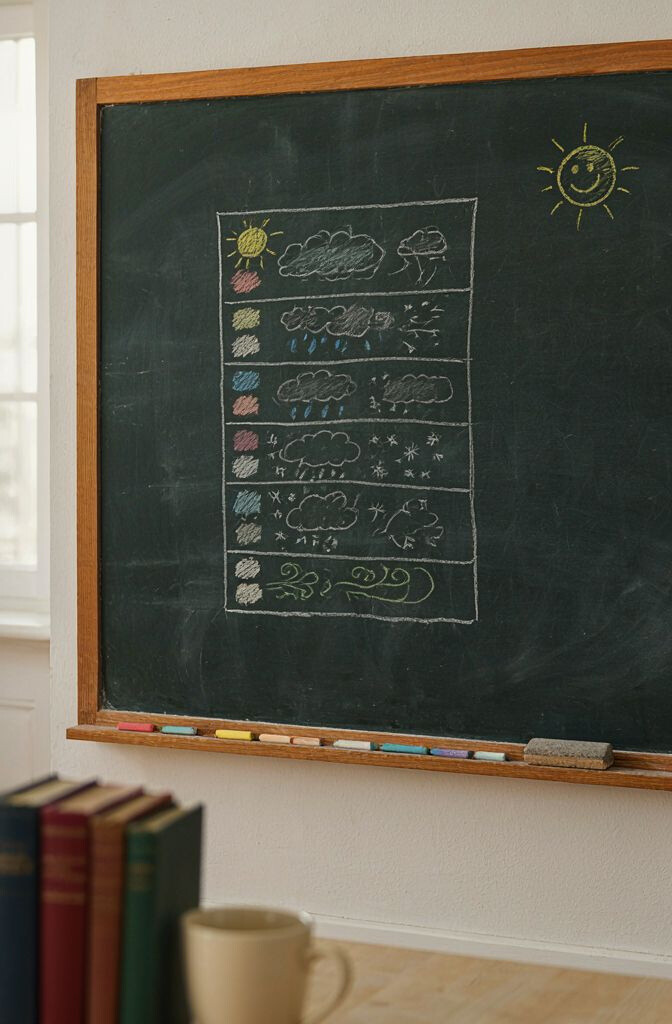
Draw a small grid with five columns for the day’s parts: morning, noon, afternoon, evening, and night. Color code each section with chalk that matches your mood rather than just the weather.
Use soft gradients, like pale blue for calm and bright yellow for energetic. To make it unique, let each color match a tiny symbol, such as a heart, star, or raindrop.
Tip: keep a key on the side so you can compare days over time. If chalk dust bothers you, lightly spray a fixative made for chalkboards, or wipe and redraw on fresh days. This works well for classrooms too because kids can practice observational thinking.
3. Handwritten “Micro Stories” Corner
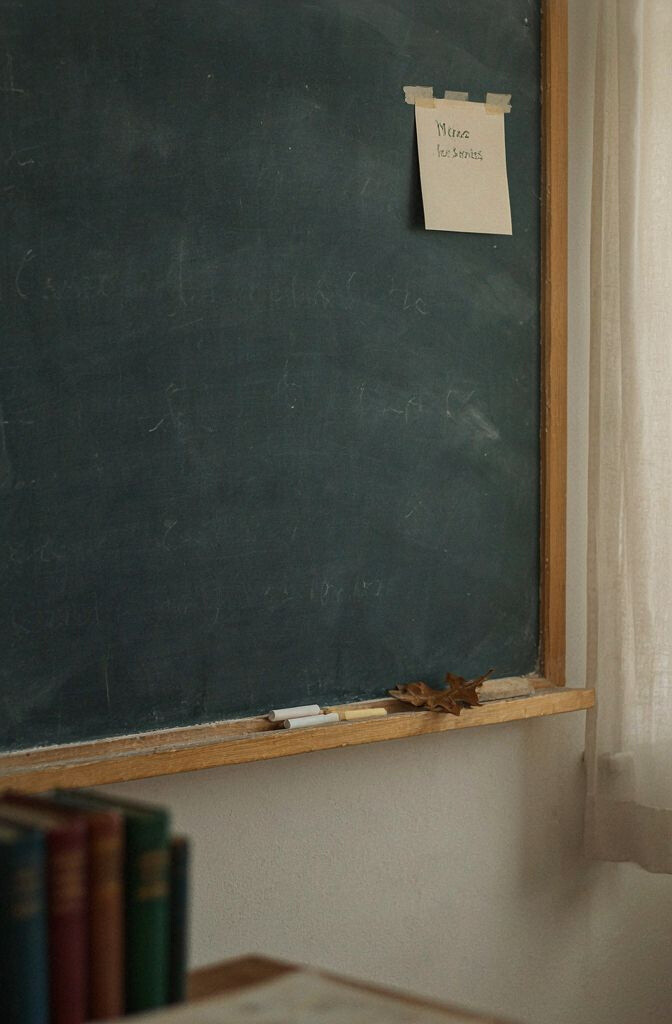
Create a boxed area labeled “One-Minute Stories.” Write a theme word in the corner, like “lost,” “found,” or “brave,” and keep the rest as blank space.
Now challenge yourself to fill that space with a tiny beginning, a twist, and an ending using only short lines. Make the writing playful by leaving intentional gaps for dramatic pauses.
What makes it special is that the board becomes an ongoing picture of your imagination. Try switching themes each week based on what you watched, read, or noticed outside.
For a budget-friendly twist, use colored chalk only for the theme word and the final sentence. You can also personalize it for family by inviting someone else to add one line at the end.
4. Gratitude Doorway with Sticky Notes
Draw a door outline in the center of the chalkboard and add a bold title like “My Gratitude Doorway.” Use small chalk shelves inside the door for “people,” “places,” and “moments.”
After you write each gratitude item, cover it with a sticky note that you can replace later. This is useful because you can reorganize quickly without starting over.
5. Weekly Habit Stamps and Tiny Rewards
Make a weekly calendar with seven boxes and draw a stamp icon for each habit. Use simple shapes like a leaf, shoe, book, or water drop to keep it fun.
Each time you complete a habit, “stamp” it with a colored chalk dust mark or a quick check in the corner. To keep it unique, design one stamp style per habit so you can tell them apart at a glance.
Try a small reward system, like earning a star sticker for finishing all seven days. If you want low cost, use index cards cut into mini reward labels instead of expensive charts.
6. Recipe Notes with Color Coded Steps
Write your recipe name in large letters and split the board into three sections: prep, cook, and serve. Color each section with chalk so you can follow along while your hands are busy.
For practical use, add one “watch out for” note under the cook step, like “don’t over-brown.” Keep instructions short, and let symbols do the work, such as a pot icon for boiling.
To personalize, include changes you made last time, like “less salt” or “add lemon zest.” This turns the board into your own cooking journal, and it keeps you from repeating mistakes.
7. Countdown to an Event with Map-Like Borders
Sketch a border around the chalkboard like a map frame, then write the event name in the center. Add dates around the border like markers on a trail.
Make the countdown feel real by adding a small “next step” note near each date, such as “buy tickets” or “pack snacks.” Use different chalk textures by pressing harder for important steps.
What makes it unique is the map style, which makes planning feel adventurous. If you’re working with a group, assign one step per person and let each person write their own marker.
8. Name Art Banner for Birthdays and Special Days
Design a banner that says the person’s name using big, wavy letters. Add simple doodles like balloons, confetti dots, or stars around the edges.
Write a short message underneath, but keep it flexible so you can update it as the day gets closer. Try swapping the message every morning to show your excitement building up.
Personalization ideas are endless: use the person’s favorite color for the border and their hobbies for the doodles, like a soccer ball or paintbrush. This can be surprisingly budget-friendly because chalk works even without printing supplies.
For trends, many people now use chalkboards in photos because the look is warm and handmade. Position it where sunlight hits lightly so your letters photograph clearly.
9. “If I Had a Superpower” Thought Lines
Draw a line across the board and label it “Superpower Thoughts.” Add three short prompts spaced apart so your writing doesn’t feel cramped.
Write one sentence for each prompt, like “I’d heal,” “I’d speed up time,” or “I’d talk to animals.” This is a great way to practice imagination and also learn what matters to you.
To make it more practical, end with one real-life action that matches your superpower idea, such as “be kinder today.” You can even keep the same layout weekly so your ideas form a visible pattern.
10. Chalkboard “Gallery Wall” for Student Work
Turn your board into a gallery by drawing picture frames, each one sized for a small caption. Even if you don’t print photos, you can write descriptions for what you made.
Add captions like “Best use of color,” “Strongest idea,” or “Most improved.” Then let each caption include one sentence about what you learned.
What makes this unique is that it treats writing as art, not just notes. For classroom trends, many teachers lean toward “process boards” where progress is celebrated more than grades.
11. Neighborhood Scavenger Hunt Clues
Draw a path from one corner of the board to the other, like you’re sketching a mini adventure route. Under the path, write clues for nearby objects you can actually see from your home.
Use clear visual hints, like “round leaves,” “red door,” or “quiet bench,” and keep each clue short. This encourages kids and adults to look closely at everyday details.
Personalize by changing clue types each week, such as adding sound clues, texture clues, or color clues. Cost stays low because you only need chalk and a phone for optional photo references.
If you want it to feel modern, allow people to “check in” by adding a quick tally mark for each clue found.
12. Focus Targets with Posture-Friendly Layout
Write three focus targets on the board, but place them at eye level and in separate zones. Use large headings like “Now,” “Next,” and “Later” so your brain can sort priorities fast.
Keep each target small, such as “send one email” or “write one paragraph,” so it feels doable. This is helpful because you build momentum instead of chasing huge tasks.
Make it unique by adding a tiny “why” under each target. Use a symbol for the reason, like a heart for relationships or a lightbulb for learning.
13. “Mood Menu” for Choosing Your Activity
Create a menu-style layout with sections like Calm, Energetic, Creative, and Cozy. In each section, write activities you can do right away.
Examples can include “10-minute sketch,” “music break,” “stretch and breathe,” or “write one thankful line.” This becomes a personal tool for managing attention without guilt.
For personalization, replace activities with your real favorites, and include one “wild card” idea that surprises you. If chalk is expensive where you live, use only one color for outlines and one for the active selection.
14. After-School Question Time Board
Draw a simple clock and write one question under it for “right now.” Use questions that invite conversation, like “What was the best part of today?” or “What’s one thing you’re curious about?”
Then leave space for answers so each person can add their thoughts in their own handwriting style. It’s unique because the board becomes a shared memory wall rather than a one-time prompt.
For practical tips, wipe and redraw on a schedule, such as every school day for two weeks, then switch to new questions. This keeps the idea fresh without overwhelming you with constant changes.
If you want a trend-ready touch, add a small “quote of the day” line at the bottom and rotate who writes it.